The Unnominated #17: Honkytonk Man (dir by Clint Eastwood)


Though the Academy of Motion Picture Arts and Sciences claim that the Oscars honor the best of the year, we all know that there are always worthy films and performances that end up getting overlooked.  Sometimes, it’s because the competition too fierce.  Sometimes, it’s because the film itself was too controversial.  Often, it’s just a case of a film’s quality not being fully recognized until years after its initial released.  This series of reviews takes a look at the films and performances that should have been nominated but were, for whatever reason, overlooked.  These are the Unnominated.

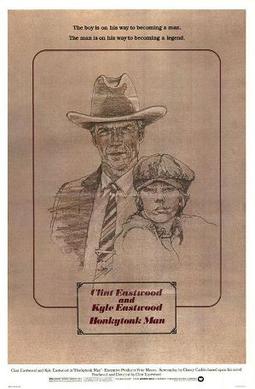
1982’s Honkytonk Man was a Clint Eastwood film that I had never heard of, until I came across it on Prime.  I decided to take a chance and I rented it.  I’m glad that I did because it turned out to be one of Eastwood’s best films.

Clint stars as Red Stovall, a country singer turned farmer during the Great Depression.  Kyle Eastwood stars as Red’s nephew, 14 year-old Whit “Hoss” Wagoneer.  When Red gets an opportunity to perform at the Grand Old Opry, he decides to head for Tennessee.  Since Red is dying of tuberculosis and barely knows how to drive a car, he is accompanied by Grandpa Wagoneer (John McIntire) and Whit.  Whit may be young but he knows how to drive and soon, he’s driving Red and Grandpa across the country.  When a highway patrolman (Tim Thomerson) stops them, he says that Whit is too young to drive.  After watching a speeding Red struggle to keep the car in the right lane, the patrolman pulls up beside them and says, “Let the kid drive.”

Honkytonk Man features an unexpected performance from Eastwood.  Typically, we think of Eastwood’s characters as being the epitome of cool.  Red is definitely not that.  Red is a screw-up, someone who gets arrested while trying to steal chickens and who frequently gets conned by those that he meets during his journey.  When the car breaks down in Arkansas, Red is too busy drinking to remember to catch the bus to Tennessee.  He spends the night with a hitchhiker named Marlene (Alexa Kernin).  The next morning, Whit wakes Red up and informs him that he only has a few minutes before the next bus leaves.  Marlene announces that she’s pregnant.  “HOLD THE BUS!” Red yells as he hastily puts on his clothes.

That said, Whit loves his uncle and the two Eastwoods, Clint and Kyle, both give excellent performances in Honkytonk Man.  In fact, his performance here is probably the best that Clint Eastwood has ever given.  Clint plays with his own image here.  Initially, the film almost feels like a satire of Clint’s hypermasculine persona.  (There is one scene where Eastwood handles a gun but it doesn’t play out the way that you might expect it to.)  But, as the film progresses and Red’s illness grows worse, we start to understand Red and his way of looking at the world.  Red is flawed but he loves his nephew and he loves music and, in the end, what’s important is not whether or not his song were recorded but instead that he spent his final days with Whit.  The film may start out as a comedy but it ultimately becomes a meditation on aging and how one faces the inevitability of death.

As a director, Eastwood takes his time.  He lets the movie play out slowly, with the casual pace of country story.  It’s a film full of wonderful performance and beautiful visuals and it more than earns our patience.  Wisely, Eastwood the director realizes that this story really isn’t about Red.  The story is about Whit (or Hoss, as he asks to be known) and his experiences with his uncle.  Whit worships his uncle but he also comes to learn that the most important thing is to be able to respect yourself.  In this film, Clint Eastwood knows the story that he’s telling and he knows exactly how to tell it.

Honkytonk Man went unnominated as far as the Oscars are concerned.  In the year when the well-intentioned but dramatically inert Gandhi dominated the awards and the nominations, Honkytonk Man was forgotten.  That’s a shame.
Previous Entries In The Unnominated:
  1. Auto Focus 
  2. Star 80
  3. Monty Python and The Holy Grail
  4. Johnny Got His Gun
  5. Saint Jack
  6. Office Space
  7. Play Misty For Me
  8. The Long Riders
  9. Mean Streets
  10. The Long Goodbye
  11. The General
  12. Tombstone
  13. Heat
  14. Kansas City Bomber
  15. Touch of Evil
  16. The Mortal Storm

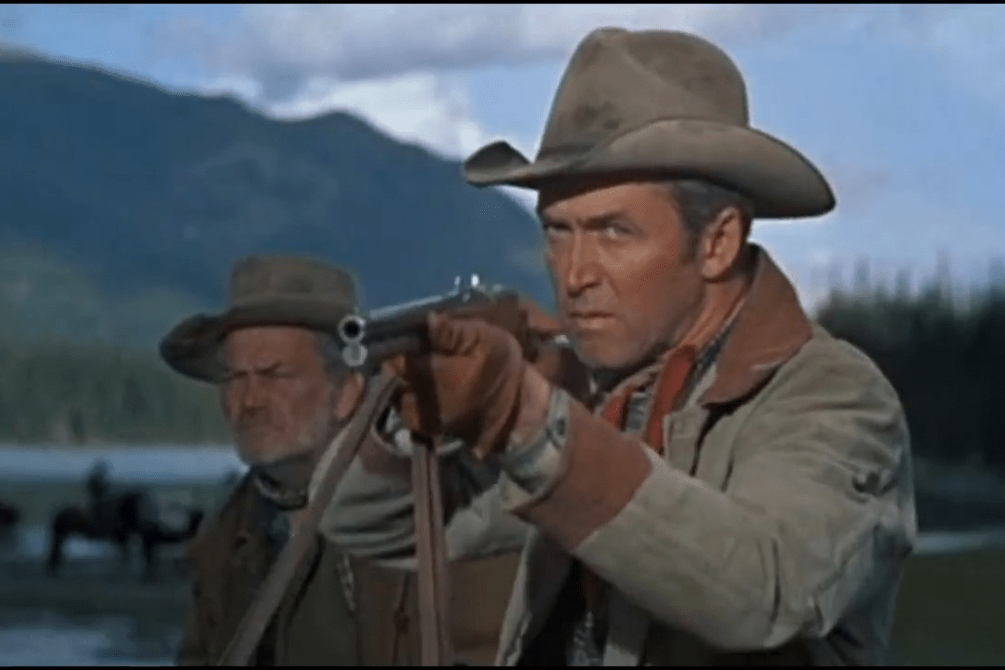
THE FAR COUNTRY (1954) – James Stewart and Walter Brennan head North to make their fortune!


James Stewart is one of the great movie stars of all-time. His work with Frank Capra (MR. SMITH GOES TO WASHINGTON, IT’S A WONDERFUL LIFE) and Alfred Hitchcock (REAR WINDOW, VERTIGO) is legendary. In my household, Stewart’s work with director Anthony Mann is celebrated just as much as those other classics. Mann and Stewart made five classic westerns, beginning with WINCHESTER ‘73 in 1950 and ending in 1955 with THE MAN FROM LARAMIE. I own them all on DVD and watch them quite often. It’s very cold in Arkansas today, so I decided to write about the Yukon-set THE FAR COUNTRY, from 1954. 

Jeff Webster (James Stewart) and his crusty ol’ coot of a partner Ben Tatem (Walter Brennan) head North towards Dawson City, in the Yukon Territory, with a herd of cattle. The two men encounter a variety of problems along the way, with the biggest being the corrupt Judge Gannon (John McIntire) of Skagway, Alaska. When Jeff finds himself in front of the judge for killing two cowhands who tried to steal his herd, Gannon acquits him on the charges but decides to keep his herd as payment for the court fees. With their cattle taken away from them, Jeff and Ben sign up to help business lady Ronda Castle (Ruth Roman) take supplies to Dawson City, where she plans to set up shop. After their first day on the trip, Jeff and Ben double back to Skagway and re-take their herd and take off towards Dawson as fast as they can go, with Gannon and his men in hot pursuit. They’re able to make it into Canada, so Gannon and his goons turn back, determined to hang the men if they ever come back through Skagway.

So Jeff and Ben make it to Dawson City with their cattle where they sell them off for $2 per pound to Ronda. Suddenly flush with cash, the two partners buy a gold claim and proceed to find some nice golden nuggets! When they head back into town, they find that Judge Gannon has now come to Dawson City and is in partnership with Ronda. Of course, that bastard immediately starts cheating the miners out of their claims, this time with gunman Madden (Robert J. Wilke) by his side, enforcing his corrupt actions with lead. Jeff and Ben decide they’re going to sneak out of town with their loot, but Gannon finds out about it and sends his men to stop them. Ben is killed in the process and Jeff is seriously injured. Jeff has tried his best up to this point to not get involved with the mess in Dawson City, but with his best friend now dead, he decides it’s time for Judge Gannon and his thugs to be stopped. 

James Stewart is just so good as Jeff Webster. The best thing about his work with Mann is how each of the movies would give him a meaty role that capitalized on his basic decency, while simultaneously making him a more complex, layered man, miles away from the likes of Mr. Smith or George Bailey. In THE FAR COUNTRY, he’s as tough as nails, but he really doesn’t want to get involved with the people around him. It takes the death of his best friend for him to finally commit to helping them stand up against the bad guys. Stewart’s work here, and in the other Mann westerns, ranks with his very best. 

The remainder of the cast is uniformly excellent. Three time Oscar winner Walter Brennan is always a welcome presence in a movie I’m watching. While he’d pretty much settled into the “old coot” role that would come to personify the later part of his career, his character is a valuable conscience for Stewart a couple of times in the story. I thought that John McIntire and Ruth Roman really stood out in their respective roles as the corrupt Judge Gannon and the stubbornly, independent businesswoman Ronda Castle. Both give excellent performances. The cast is rounded out with a who’s who of character actors like Jay C. Flippen, Harry Morgan, Robert J. Wilke, Royal Dano, and Jack Elam. It’s always nice seeing these familiar faces pop up in these old westerns.

I love it when movies are filmed on location in beautiful places. THE FAR COUNTRY was filmed at the Jasper National Park in Alberta, Canada, which added another interesting element to the film. The final thing I want to say about the film is that the screenplay for THE FAR COUNTRY was written by Borden Chase, who had penned RED RIVER a few years earlier. Not only would Chase write this movie, he would also write the screenplays for WINCHESTER ‘73 and BEND OF THE RIVER, both westerns that paired Anthony Mann and Jimmy Stewart. Chase was an excellent writer of western material, and his strong work in this group of films is crucial to their enduring success. 

Overall, I confidently recommend THE FAR COUNTRY to any person who enjoys westerns or Jimmy Stewart. I might rank THE NAKED SPUR and THE MAN FROM LARAMIE slightly above this one in the Mann / Stewart westerns, but the truth is that you can’t go wrong with any of them. 

I’m sharing the trailer for THE FAR COUNTRY below:

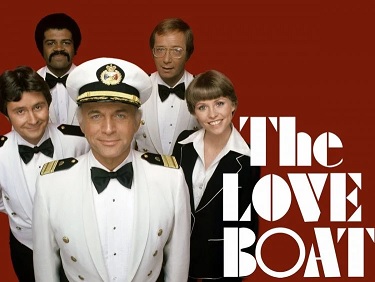
Retro Television Reviews: The Love Boat 2.12 “The Captain’s Cup/ The Folks From Home/ Legal Eagle”


Welcome to Retro Television Reviews, a feature where we review some of our favorite and least favorite shows of the past!  On Wednesdays, I will be reviewing the original Love Boat, which aired on ABC from 1977 to 1986!  The series can be streamed on Paramount Plus!

This week, the Love Boat departs on one weird cruise.

Episode 2.12 “The Captain’s Cup / The Folks from Home / Legal Eagle”

(Dir by Alan Rafkin, originally aired on December 2nd, 1978)

This was a strange episode.

Let’s start with the simplest of our three stories first.  Danny Holt (Bert Convy) is recently divorced and still crying over having to pay his wife alimony.  When he boards the boat, he specifically asks Gopher if there are any single men onboard who might be interested in marrying his ex-wife.  His ex isn’t even on the cruise!  Danny is one bitter passenger.  From the minute he boards the boat, he’s whining about how unfair his divorce was and how badly he was treated by his wife’s divorce lawyer, Ann Sterling (Leigh Taylor-Young).

Uh-oh, it turns out that Ann is one the cruise as well!  And she’s been assigned to be Danny’s dinner companion.  Danny isn’t happy about this but then, from out of seemingly nowhere, the two of them end of falling in love.  It’s hard to say why they suddenly fall in love.  Danny is superbitter over his divorce and Ann knows all of the details about what type of husband he was so it seems like the last thing that would ever happen would be them leaving the ship, arm-in-arm.  But somehow, that’s what happens.  It was a straight-forward story but it lacked any scenes that would have explained why the two of them fell in love.  They just did because they were characters on The Love Boat.  (It certainly wasn’t due to any noticeable romantic chemistry between Bert Convy and Leigh Taylor-Young.)  This story felt lazy and generic.

In the episode’s second storyline, Captain Stubing is excited because he’s due to receive the Captain of the Year Cup.  Diane DiMarzo (Florence Henderson, proving that former Bradys just cannot stay off The Love Boat) boards the ship with the Cup but she’s shocked to discover that 1) her boss — the guy who actually decided to give Stubing the Cup — will not be on the ship and 2) Stubing fully expects her boss to personally present him with the Cup.  Now, I’m not really sure how the logic works here but apparently, Diane could lose her job if her boss isn’t there to give Stubing the cup.  But why would that be Diane’s problem?  She did what she was supposed to do.  She boarded the ship with the Cup.  Her boss is the one who decided not to show up and he is the boss so it’s not like there was anything Diane could have done about it.

Anyway, Diane recruits one of the ship’s handymen to pretend to be her boss.  Though he works on the boat and the rest of the crew know him, it appears that the Captain himself has never met Hank Vosnik (Pat Harrington, Jr.), which kind of leads one to wonder if Stubing really deserves his award.  Anyway, Hank falls in love with Diane and is crestfallen when she turns down his marriage proposal.  (Seriously, at this point, they had only known each other for like three days so I’m not sure what Hank was expecting.)  But, despite being turned down, Hank still pretends to be Diane’s boss.  So, Diane decides that she might as well marry him.  WHAT!?

Finally, Doc Bricker is happy to meet two passengers from his hometown.  George (John McIntire) and Gloria (Jeanette Nolan) spend every moment with Doc and they even announce that, as far as they’re concerned, the 40-something Doc is a member of their family.  Doc is touched.  But then Gloria falls down a flight of stairs and Doc has to do emergency surgery on her.  Gopher calls a doctor in San Francisco and he talks Doc through the surgery.  Doc removes Gloria’s spleen and saves her life!  Yay!  Only at the end of the surgery does he get George to sign a consent form.  In real life, that would lead to Doc to losing his job and the cruise line getting sued.  But, on The Love Boat, it just leads to more laughter.

On the plus side, this storyline featured the charming performances of McIntire and Nolan, who were married in real life.  The story was also written by Fred “Gopher” Grandy and Bernie “Doc” Kopell so, not surprisingly, it actually allowed Grandy and Kopell to do something more than just leer at the passengers.  The show rarely gave Grandy or Kopell a chance to show off the fact that they were both capable of giving good dramatic performances so, whenever they got that rare chance to do so, they took advantage of it.  That said, it was still a bit awkward to see Doc suddenly performing major surgery in his tiny examination room.  It was all for the best on the show but, in real life, it would have led to a major lawsuit.  Even though Doc Bricker saved Gloria’s life, it still seems like the ship could probably be held liable for her getting injured in the first place.  I mean, the boat is in the middle of the ocean.  Shouldn’t there at least be a warning posted on the stairs?

Well, who knows?  Strange things happen at sea.  Let’s just be happy that everything worked out in the end.

Retro Television Reviews: Fantasy Island 2.16 “Photographs/Royal Flush”


Welcome to Retro Television Reviews, a feature where we review some of our favorite and least favorite shows of the past!  On Tuesdays, I will be reviewing the original Fantasy Island, which ran on ABC from 1977 to 1986.  The entire show is currently streaming on Tubi!

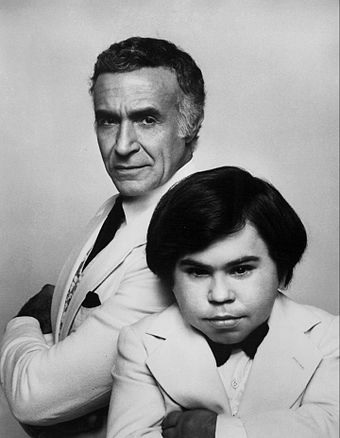
Smiles, everyone, smiles!  Especially you, Tattoo!

Episode 2.16 “Photographs/Royal Flush”

(Dir by Cliff Bole, originally aired on January 27th, 1979)

After announcing the arrival of the plane, Tattoo informs Mr. Roarke that he is reading a book on hypnotism.

“Ah, it’s hypnotism now,” Roarke replies, “To what end?”

Tattoo looks at a passing native girl as the cameraman gives the viewers a close-up of her sarong-covered behind.

Okay, 1979.  We see ya.

The less interesting of this week’s two fantasies involves the Fantasy Island poker tournament.  (Fantasy Island reminds a bit of Hell’s Kitchen, in that there’s always some weird theme night.)  Johnny Court (John Rubinstein) is an up-and-coming player whose fantasy is to play against the greatest poker player of all time, Victor Holly (John McIntire).  Johnny has borrowed a good deal of money from a group of gangsters in order to enter the tournament so, if Johnny doesn’t win, guess who is getting his fingers broken?

Complicating matters is that Victor travels with his daughter, Emily (Ronne Troup).  It doesn’t take long for Johnny to realize that Emily is helping Victor cheat but Johnny has also fallen in love with Emily.  To save his own life, he has to defeat Emily’s father but, if he does so, that’ll mean Victor will no longer have the money necessary to support his daughter.

This fantasy wasn’t terrible but it wasn’t particularly interesting either.  Rubinstein, McIntire, and Troup all gave good performances but the poker scenes were a bit draggy.  Perhaps it would have been more interesting to me if I was a poker player myself.  But I prefer craps, just because you get to jump up and down before rolling the dice.

The second fantasy was a bit more intruding.  Nancy Weston (Michele Lee) is photographer who has just returned from a trip to Europe and Asia, where she took many pictures.  When she got the pictures developed, she discovered that a mysterious girl appeared in almost all of the pictures, even though it would have been impossible for the girl to have followed her all the way from Stonehenge to Thailand without Nancy noticing.  Nancy’s fantasy is to know who the girl is and why she’s following her.

The girl shows up on Fantasy Island.  Her name is Allison (Elizabeth Cheshire) and, as Roarke explains, Allison is not only the daughter of a powerful psychic but she also has the power to speak to the dead as well.  And it turns out that one of the dead has a message for Nancy….

This fantasy was really well-done and nicely creepy.  At heart, it was a pretty basic ghost story but Michele Lee and Elizabeth Cheshire both gave good performances and some of the imagery — particularly of a white horse running in slow motion through a green field — was surprisingly effective.

All in all, one mild but well-acted fantasy and one memorably creepy fantasy came together and added up to one good episode of Fantasy Island!  These are the type of episodes that we fantasize about.

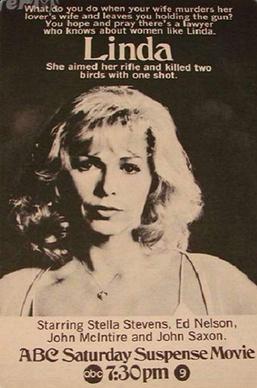
Retro Television Reviews: Linda (dir by Jack Smight)


Welcome to Retro Television Reviews, a feature where we review some of our favorite and least favorite shows of the past!  On Sundays, I will be reviewing the made-for-television movies that used to be a primetime mainstay.  Today’s film is 1973’s Linda!  It  can be viewed on YouTube!

If nothing else, Linda has a wonderfully opening.

Two couples are on the beach.  Paul Reston (Ed Nelson) is talking to Anne Braden (Mary-Robin Redd) about his troubled marriage and his plans to leave his wife.  Paul’s wife, Linda (Stella Stevens), is talking to Jeff Braden (John Saxon) and looking at the rifle that he’s just handed her.  It doesn’t take long to notice that Paul and Linda seem to be closer, respectively, to Anne and Jeff than to each other.

When Anne stands up and walks toward the ocean, Linda shoots her in the back.  When Jeff runs over to Anne’s body, Linda pulls the trigger again and Jeff collapses.  Stunned by his wife’s actions, Paul runs back to his car and drives into town to get the police.  (This is another one of those movies that could have only been made in the pre-smartphone era.)  When Paul and the police return, they find Anne’s body but Jeff and Linda are nowhere to be seen.

Suddenly, Linda and Jeff come walking down the beach.  Jeff is carrying a bunch of fish and a fishing pole.  They look shocked when they see the police.  Then, when Jeff sees Anne’s body, he accuses Paul of killing her and attacks him.  Paul is arrested and taken to jail.

As I said, it’s a wonderful opening, full of twists and entertaining overemoting.  In fact, it’s so good that it’s difficult for the rest of the film to keep up.  After being charged with Anne’s murder, Paul hires a folksy attorney named Marshall Journeyman (John McIntire).  Unlike everyone else, Journeyman believes Paul’s story that he’s being framed by Jeff and Linda.  Journeyman sets out to prove that Paul is innocent.

Of course, the audience already know that Paul is innocent because the audience saw exactly what happened.  Watching the film, it was hard for me to not to feel that the story would have benefitted by a little more ambiguity as to whether or not Paul was a victim or if he truly was the delusional madman that both Linda and Jeff tried to paint him as being.  We know from the start what Jeff and Linda are doing so the only question really becomes how Journeyman is going to trick them into revealing the truth.  Unfortunately, even getting them to do that turns out to be a bit too easy.  The movie suggests that Journeyman is a brilliant investigator but, in the end, it all really just comes down to the villains not being very smart.

That said, the film’s cast does a good job.  Ed Nelson is sympathetic as the confused husband and John McIntire brings so much homespun charm to Journeyman that I got the feeling that this film was probably designed to be a pilot for a possible series.  Best of all, John Saxon and Stella Stevens play the scheming couple.  Saxon gets to wear a swimsuit and dramatically shout to the Heavens as he pretends to be shocked over Anne’s murder.  Stevens smirks at every question and accusation and appears to be having a great time playing an old school femme fatale.  The cast makes this movie worth it.

Under the Sea: Goliath Awaits (1981, directed by Kevin Connor)


1939.  War is breaking out across Europe.  The British luxury liner Goliath is torpedoed by a German U-boat.  Presumed to be lost with the ship are a swashbuckling film star, Ronald Bentley (John Carradine), and U.S. Senator Oliver Barthowlemew (John McIntire), who may have been carrying a forged letter from Hitler to Roosevelt when the boat went down.

1981.  Oceanographer Peter Cabot (Mark Harmon, with a mustache) comes across the sunken wreck of the Goliath.  When he dives to check out his discovery, he is shocked to hear big band music coming from inside the ship.  He also thinks that he can hear someone tapping out an S.O.S. signal.  When he looks into a porthole, he is stunned to discover a beautiful young woman (Emma Samms) staring back at him.

Under the command of Admiral Sloan (Eddie Albert), who wants to retrieve the forged letter before it does any damage to the NATO alliance, Cabot and Command Jeff Selkirk (Robert Forster) are assigned to head an expedition to explore Goliath.  What they discover is that, for 40 years, the passengers and crew have survived within an air bubble.  Under the leadership of Captain John McKenzie (Christopher Lee), they have created a new, apparently perfect society within the sunken ship.  Cabot discovers that the woman that he saw was McKenzie’s daughter, Lea.

McKenzie is friendly to Cabot and his crew, explaining to them the scientific developments that have allowed the passengers and crew to not only survive but thrive underwater.  The only problems are a group of outcasts — the Bow People — who refuse to follow McKenzie’s orders and Palmer’s Disease, an infection that only seems to infect people who are no longer strong enough to perform the daily tasks necessary to keep McKenzie’s utopia functioning.   Even when people on the boat die, they continue to play their part by being cremated in Goliath’s engine room and helping to power the ship.

Everything seems perfect until Cabot announces that he has come to rescue the survivors of the Goliath.  Even though Goliath is starting to decay and will soon no longer be safe, McKenzie is not ready to give up the perfect society that he’s created.  McKenzie sets out to prevent anyone from escaping the Goliath.

Goliath Awaits is a massive, 3-hour production that was made for television and originally aired over two nights.  (The entire 200-minute production has been uploaded to YouTube.  Avoid the heavily edited, 91-minute version that was released on VHS in the 90s.)  It’s surprisingly good for a made-for-TV movie.  Because a large portion of the film was shot on the RMS Queen Mary, a retired cruise ship that was moored in Long Beach, California, Goliath looks luxurious enough that you understand why some of the passengers might want to stay there instead of returning to the surface.  Beyond that, Goliath Awaits takes the time to fully explore the society that McKenzie has created and what it’s like to live on the ship.  McKenzie may not be as benevolent as he first appears to be but neither is he a one-dimensional villain.

Mark Harmon is a dull lead but Robert Forster is just as cool as always and Christopher Lee is perfect for the role of misguided Capt. McKenzie.  The movie is really stolen by Frank Gorshin, who is coldly sinister as Dan Wesker, the Goliath’s head of security.  McKenzie may by Goliath’s leader but Wesker is the one who does the dirty work necessary to keep the society running.

Goliath Awaits also features several character actors in small roles, with John Carradine, Duncan Regehr, Jean Marsh, John McIntire, Jeanette Nolan, Alex Cord, Emma Samms, and John Ratzenberger all getting to make a good impression.  (Ignore, if you can, a very young Kirk Cameron as one of the children born on the Goliath.)

Goliath Awaits is far better than your average made-for-TV movie from the 80s.  With any luck, it will someday get the home video release that it deserves.


Cold in Them Thar Hills: THE FAR COUNTRY (Universal-International 1955)


gary loggins's avatarcracked rear viewer

James Stewart and Anthony Mann’s  fourth Western together, 1955’s THE FAR COUNTRY, takes them due North to the Klondike during the Gold Rush of 1896. It’s a bit more formulaic than other Stewart/Mann collaborations, but a strong cast and some gorgeous Technicolor photography by William H. Daniels more than make up for it. The film is definitely worth watching for Western fans, but I’d rank it lowest on the Stewart/Mann totem pole.

Jimmy is Jeff Webster, a headstrong cattleman who drives his herd from Wyoming to Seattle to ship up north to the beef-starved gold miners for a huge profit. Webster killed two men along the way who tried to desert the drive, and barely escapes Seattle before arriving in Skagway, Alaska. There, he unintentionally interrupts a hanging being conducted by crooked town boss ‘Judge’ Gannon, who confiscates Webster’s herd as a fine for spoiling his fun. Webster and his two…

View original post 473 more words

Dark Western Sky: James Stewart in WINCHESTER ’73 (Universal-International 1950)


gary loggins's avatarcracked rear viewer

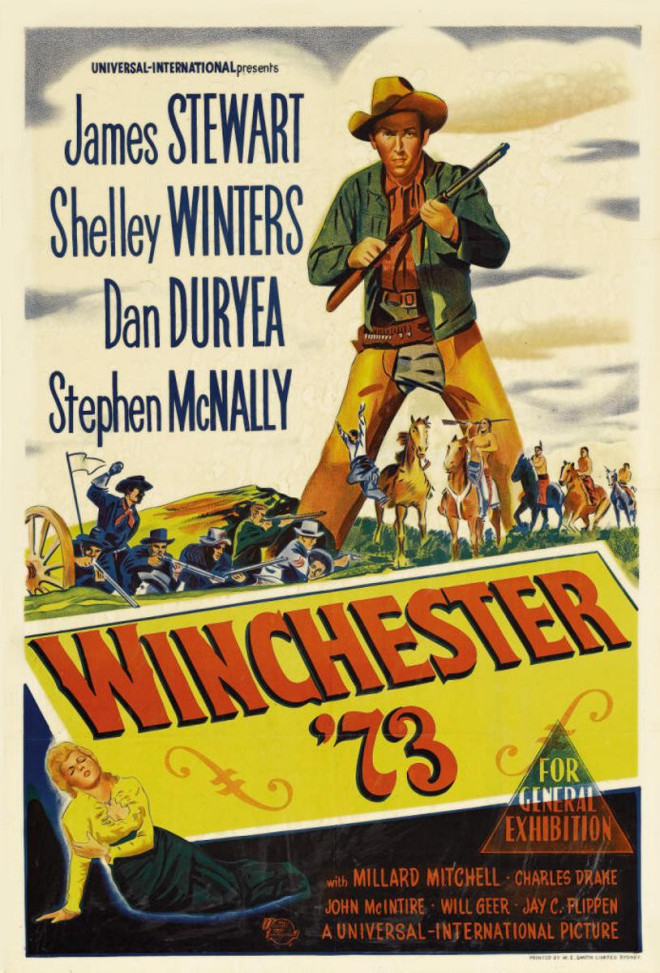
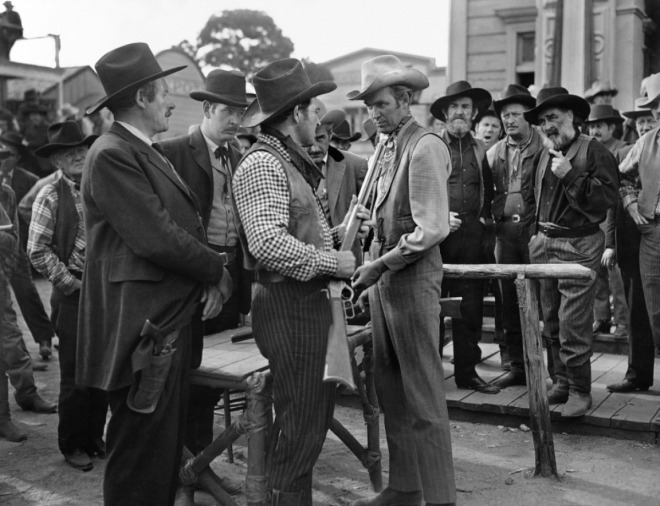
James Stewart  and Anthony Mann made the first of their eight collaborations together with the Western WINCHESTER ’73, a film that helped change both their careers. Nice guy Stewart, Hollywood’s Everyman in Frank Capra movies like MR. SMITH GOES TO WASHINGTON and IT’S A WONDERFUL LIFE, took on a more mature, harder-edged persona as Lin McAdam, hunting down the man who killed his father, Dutch Henry Brown (Stephen McNally ). As for Mann, after years of grinding out B-movie noir masterpieces (T-MEN, RAW DEAL ), WINCHESTER ’73 put him on the map as one of the 1950’s top-drawer directors.

The rifle of the title is the movie’s McGuffin, a tool to hold the story together. When McAdam and his friend High Spade (the always welcome character actor Millard Mitchell) track Dutch Henry to Dodge City, the two mortal enemies engage in a shooting contest judged by none other than Wyatt Earp (Will Geer)…

View original post 465 more words

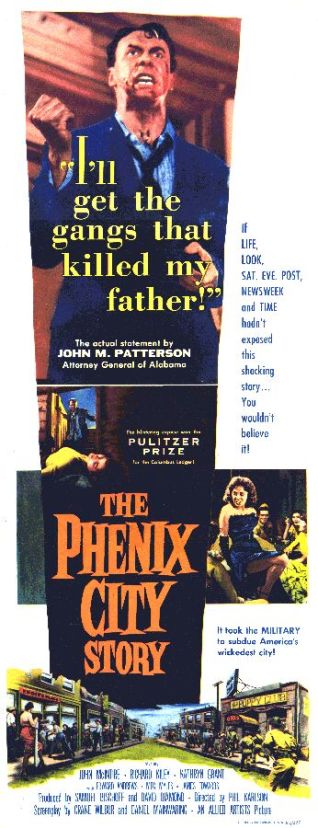
Shattered Politics #11: The Phenix City Story (dir by Phil Karlson)


PhenixCityPoster

If A Man Called Peter was the epitome of a stereotypical 1950s film, The Phenix City Story is the exact opposite.  Like A Man Called Peter, The Phenix City Story was released in 1955.  And like A Man Called Peter, The Phenix City Story is based on a true story.  However, beyond that, A Man Called Peter and The Phenix City Story might as well have been taking place on different planets.

And, in many ways, they were.  The Phenix City Story not only takes place in Phenix City, Alabama but it was filmed there as well and featured a few actual citizens in the cast.  Not only was The Phenix City Story telling a true story but the story was being told by some of the same people who actually lived through it.  That makes The Phenix City Story brutally realistic, with brutal being the key word.

And, just in case we have any doubt about the film’s authenticity, it actually opens with a 15 minute documentary in which Clete Roberts (who was an actual news reporter) interviews several citizens of the town.  All of them, speaking in thick Alabama accents and nervously eyeing the camera, assure us that what we are about to see is true.  Quite a few of them also tells us that they still live in fear of losing their lives as a result of everything that happened.

What’s amazing is that, once the actual film does get started, it manages to live up to all of that build up.  The Phenix City Story is a shocking film that remains powerful even 60 years after it was initially released.

As the film opens, we’re informed that Phenix City, Alabama is home to some of the most dangerous and violent criminals in the state.  From his club, crime boss Rhett Tanner (Edward Andrews) runs a shadowy organization that not only controls Phenix City but the entire state of Alabama as well.  The police ignore his crimes.  The majority of the town’s citizens are too scared to stand up to him.  When a returning veteran of the Korean War, John Patterson (Richard Kiley), tries to stand up to Tanner, the result is even more violence.  A young black girl is kidnapped and murdered, her body tossed on John’s front lawn as a warning.  John’s best friend is killed but Tanner uses his influence to have the death ruled accidental.

Finally, John and a group of other reformers convince John’s father — Albert Patterson (John McIntire) — to run for Attorney General.  Albert runs on a reform platform and exposes both the corruption of Phenix City and how Tanner’s power extends through the rest of the state as well.  When Albert wins the Democratic primary, he’s gunned down in the street and it’s up to John to avenge his death…

To say that The Phenix City Story is intense would be an understatement.  As directed by Phil Karlson, there’s not a single frame of The Phenix City Story that’s not full of menace and danger.  The stark black-and-white cinematography is full of shadows and the camera moves almost frantically from scene to scene, occasionally catching glimpses of dark figures committing acts of violence and cars speeding away from who knows what outage.  It’s a dark film but, ultimately, it’s also a hopeful one.  It suggests that evil will triumph when good men do nothing but that sometimes you can depend on good men — like Albert and John Patterson — to actually step up.

The Phenix City Story shows up on TCM occasionally and you should keep an eye out for it.  It’s one of the best B-movies ever made.