Late Night Retro Television Review: CHiPs 4.17 “New Guy In Town”


Welcome to Late Night Retro Television Reviews, a feature where we review some of our favorite and least favorite shows of the past!  On Mondays, I will be reviewing CHiPs, which ran on NBC from 1977 to 1983.  The entire show is currently streaming on Prime!
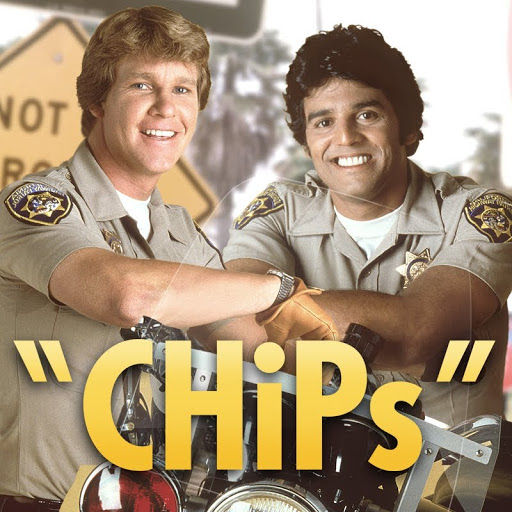
This week, there’s a new cop on the beat!

Episode 4.17 “New Guy In Town”

(Dir by Arnold Laven, originally aired on March 15th, 1981)

Ponch is upset because the new rookie on the team, T.C. Hunsacker (Joseph Hacker), is just too perfect.  He’s still on probation but he’s already good at his job.  He’s a professional.  He’s got a good sense of humor.  He’s a good bowler.  He’s as comfortable talking about classical music as he is talking about cars.  He’s not arrogant.  He’s nice to everyone.  Everyone likes him.  Ponch cannot stand that TC doesn’t seem to have a flaw.

Yeah, Ponch, it’s kind of annoying when someone knows everything and can do anything, isn’t it?  Seriously, who does this Hunsacker fellow think he is when we all know that this is….

Ponch has other things to be concerned about, though.  Martin Beck (Chris Connelly) and Lina Beck (Jenny O’Hara), the brother and wife of someone who died while being chased by Ponch and Baker, are determined to get revenge by killing both of them.  Baker is nearly taken out in a hit-and-run.  Ponch nearly gets blown up in his car.  Fortunately, TC was there to tell Ponch not turn the key in the ignition.  TC noticed some wires on the ground and immediately realized there was a bomb in Ponch’s engine….

Wow, is there nothing TC cant do!?

I really am starting to see Ponch’s point.  TC really is too good to be true.  According to the imdb, this was the only episode in which he appeared.  I know that Larry Wilcox and Erik Estrada apparently were not getting along during the filming of CHiPs and that Wilcox was threatening to leave the show because he thought the producers favored Estrada over him.  Maybe this episode was meant to set up Hunsacker as a possible replacement in case Wilcox did leave.  That’s really the only reason I can think of for this show to have devoted so much time to a character who has never been seen before and who, apparently, will never be seen again.

The focus on TC made this an uneven episode but there were a few good chase scenes and a slow-motion van crash.  And really, that’s all that one can really ask from this show.  An exciting chase can make up for a lot!

Made-For-TV Horror: Good Against Evil (dir by Paul Wendkos)


The 1977 made-for-TV movie Good Against Evil opens with a woman giving birth in a hospital.  Her baby daughter is forcefully taken from her and given to her father, the sinister Mr. Rimmin (Richard Lynch).

Two decades later, Jessica Gordon (Elyssa Davalos) has grown up and is working at a boutique in San Francisco.  When her car is rear-ended by a free-spirited, van-driven single guy named Andy Stuart (Dack Rambo), it’s love at first sight.  Jessica and Andy are so caught up in their whirlwind romance that they don’t even notice that there’s a schlubby guy following them everywhere that they go and that strangers are giving them dirty looks.  Someone does not want Jessica and Andy to end up together.

How could anyone object to two young people falling in love, you may ask.  Well, it turns out that Jessica is meant to be a bride of Satan and the plan is for her to eventually give birth to the Antichrist.  Everyone in Jessica’s life works for Mr. Rimmin …. or, at least, everyone but Andy.  Andy suddenly showing up and falling in love with Jessica throws a big old monkey wrench into Rimmin’s carefully crafted scheme.  Mr. Rimmin reacts by sending an army of adorable cats to harass Andy.

This might sound like it has the makings for a good made-for-TV horror film and, in fairness to Good Against Evil, the first 50 minutes or so are pretty well-done.  The movie does a good job of building up and maintaining an atmosphere of paranoia and I enjoyed watching all of the people attempting to discreetly keep an eye on Andy and Jessica whenever they went out.  When Mr. Rimmin finally abducted Jessica and took her back to his mansion, I was prepared to see Andy risk his life to rescue her….

That didn’t happen, though.  Instead, Andy got involved with the case of a little girl who was possessed.  (Again, in all fairness, he got involved because he read a news story about the girl drawing a pentagram while in a coma and he assumed that meant she was a victim of the same cult that abducted Jessica.)  Andy meets the girl’s mother (played by Kim Cattrall) and then helps an exorcist (Dan O’Herlihy) perform an exorcism.  The movie ends with Jessica, still in the clutches of Mr. Rimmin.

Good Against Evil was apparently a pilot for a television series that wasn’t picked up.  I assume the plan was that Andy would have a weekly supernatural adventure while trying to recuse Jessica from Mr. Rimmin.  The idea had some potential.  As always, Richard Lynch is a wonderfully sinister villain.  But the pilot shoots itself in the foot by getting distracted with the whole exorcism storyline.  It’s wonderful to see the great Dan O’Herlihy as a priest but the exorcism storyline really does come out of nowhere and the exorcism scene itself so blatantly copies The Exorcist that they really should have given William Peter Blatty an onscreen credit.  Sadly, because this was a pilot, the movie ends with the main storyline unresolved.  The joke is on us for caring about two people in love.

Good Against Evil is one of those films that can be found in a dozen Mill Creek box sets.  Ultimately, it’s as forgettable as its generic name.

Retro Television Review: St. Elsewhere 2.14 “Drama Center”


Welcome to Retro Television Reviews, a feature where we review some of our favorite and least favorite shows of the past! On Fridays, I will be reviewing St. Elsewhere, a medical show which ran on NBC from 1982 to 1988.  The show can be found on Hulu and, for purchase, on Prime!

This week, things get depressing.

Episode 2.14 “Drama Center”

(Dir by David Anspaugh, originally aired on February 15th, 1984)

This week’s episode opens with a disturbing scene in which a woman, trying to get her car to start on a snowy night, is attacked and raped in the parking lot of St. Eligius.  The rapist is wearing a green jacket and a ski mask.

At first, I assumed that the rapist was a random lowlife, someone who would likely never be seen again.  But then Dr. Cavanero’s wealthy boyfriend tried to force himself on her and I was left wondering if maybe he would be revealed as the man in the ski mask.  However, towards the end of the episode, there was scene featuring Dr. Peter White.  Having been banned from working in the ER and from prescribing medicine, White is now working in the morgue and, needless to say, he spends this entire episode bitching about it.  As the episode ends, we see that Peter is holding a capsule in his hand, suggesting that he is once again abusing drugs.  However, I also noticed that Peter was wearing the same green jacket as the man in the ski mask!

This was a good episode, well-written and well-acted.  It was also pretty depressing.  Dr. Westphall brings his severely autistic, noncommunicative son Tommy (Chad Allen) to St. Eligius so that Dr. Ridley can examine him.  Dr. Ridley warns Westphall that Tommy is aggressive and that Westphall might not be able to continue to care for him at home, despite the fact that Westphall’s daughter (Dana Short) is planning on forgoing her dream college to stick around and help.  Westphall ends his day reading Tommy a book (“Your mom bought you this book.”) and breaking down into tears and it made me cry a little too.

Meanwhile, a TV crew followed around Dr. Craig for a documentary.  Needless to say, they got in the way and they got on Craig’s nerves.  The director was played by Michael Richards, who, of course, is best-known for playing Kramer on Seinfeld and then having a racist meltdown when he got heckled at a comedy club.   In an episode that was, emotionally, pretty dark, it was almost a relief to get some scenes of Dr. Craig losing his temper with the documentary crew.  As someone who knows William Daniels best as the kindly Mr. Feeney from countless Boy Meets World reruns, it’s been a real pleasure to Daniels as the prickly and arrogant Dr. Craig.  Dr. Craig wouldn’t have had much use for the Matthews clan and all of their drama.

This was an intense and sad episode.  It was St. Elsewhere at its most emotional.

Late Night Retro Television Review: CHiPs 2.17 “The Matchmakers”


Welcome to Late Night Retro Television Reviews, a feature where we review some of our favorite and least favorite shows of the past!  On Mondays, I will be reviewing CHiPs, which ran on NBC from 1977 to 1983.  The entire show is currently streaming on Freevee!

This week, Jon and Ponch play matchmaker!

Episode 2.17 “The Matchmakers”

(Dir by Harvey S. Landman, originally aired on January 27th, 1979)

Cora (Jenny O’Hara) is an eccentric woman who lives in an old farmhouse with a bunch of animals.  Her landlord is evicting her and the county is planning to not only bulldoze her home but also take and possibly destroy all of her animals unless she can find a new place for them.  Twice, she tries to commit suicide by driving her truck recklessly.  Both times, she is saved by Ponch and Baker.

Dirk Hutchins (Gregory Walcott) is a crotchety old man who has served with the Highway Patrol for 30 years and is now on the verge of forced retirement.  He doesn’t know what he’s going to do with himself once he’s no longer on the job.  Hutchins spends his last work week taking outrageous risks, leading Ponch and Baker to worry that he’s trying to go out in a blaze of suicidal glory.

What solution do Ponch and Baker come up with for Cora and Dirk?  They decide to play matchmaker!  Cora ends up moving onto Dirk’s property (and brings along all of her animals) and maybe Dirk will end up falling in love with Cora.  And then, they’ll both have a reason to live!

Listen, this episode’s heart is in the right place.  I’m certainly not going to fault the intentions of any episode that features Ponch and Baker trying to help two suicidal people.  But, seriously, Cora was such an annoying character!  The show portrayed her as being so unhinged and so emotionally unstable that you couldn’t help but wonder if having her move in with grumpy old Dirk was really the best way to go about things.  Cora really did seem like she needed professional help, the type that went way beyond having a place to keep her animals.

As for Dirk, I was happy to see that he was played by Gregory Walcott.  As many of you already know, Walcott’s greatest claim to fame was starring in Ed Wood’s Plan Nine From Outer Space.  Walcott survived Plan Nine and went on to become a durable character actor, appearing in westerns and war films.  Walcott gives a believably ruggedly performance as Dirk, even if the character himself is not exactly someone you would want to get stuck on an elevator with.

There is a subplot involving a private investigator (Danny Wells) who had been hired to kidnap a kid and bring him back to his no-good father.  And there’s a fairly well-done scene where Dirk and Getraer work to keep a truck from turning over on top of a car.  There is a little action but still, this episode didn’t quite work.

Retro Television Review: The Hunted Lady (dir by Richard Lang)


Welcome to Retro Television Reviews, a feature where we review some of our favorite and least favorite shows of the past!  On Sundays, I will be reviewing the made-for-television movies that used to be a primetime mainstay.  Today’s film is 1977’s The Hunted Lady!  It  can be viewed on YouTube.

Detective Susan Reilly (Donna Mills) reluctantly teams up with a chauvinistic cop named Sgt. Arizzio (Alan Feinstein) to investigate a United States senator who has presidential ambitions.  Arizzio believes that the senator is being back by the Mafia and that it would be disastrous for the country if a mob-connected politician ended up in the White House.  (Being mob-connected didn’t seem to hurt John F. Kennedy but still….)

Now, Detective Reilly and Sgt. Arizzio working together to take down a corrupt senator sounds like an intriguing premise for a movie, right?  Well, oddly enough, that’s not what this movie is actually about.  Instead, it’s about Susan going on the run after she’s framed for Arizzio’s murder.  She escapes from police custody with the help of her father.  Though she’s still recovering from being shot earlier in the film, Susan makes her way to Reno and attempts to hide out from both the cops and the Mafia assassin that has been sent to kill her.

Susan hiding out in Reno.  Hmmm …. sound like an intriguing premise for a movie, right?  Well, don’t get to attached to Susan pretending to be a professional gambler because it turns out that bullet wound was more serious than she realized and she ends up passing out from blood loss.  When she awakens, she’s in a free clinic that is run by Dr. Arthur Sills (Robert Reed).  Dr. Sills doesn’t ask Susan too many questions about her past and even hires Susan on as a nurse.  Susan and Dr. Sills fall in love and try to clear the name of a Native American who has been accused of blowing stuff up.

Doing some research, I was not surprised to discover that The Hunted Lady was originally developed as a possible television show.  The show would have played out like a combination of Charlie’s Angels and The Fugitive, with Susan moving from town to town and getting involved with a new set of guest stars each week.  With both the police and the mob trying to track her down, Susan would try to clear her name while also helping out strangers.  Unfortunately, The Hunted Lady wasn’t exactly a hit in the ratings and Susan’s further adventures went untold.

The main problem with The Hunted Lady is an obvious one.  The idea of the Mafia trying to install one of their guys in the White House is considerably more intriguing that Susan falling in love with Dr. Sills while working at a free clinic.  The whole time that Susan was helping the doctor’s patients, I was thinking, “But what about the senator?”  Donna Mills was surprisingly convincing as a tough cop but she had next to no chemistry with Robert Reed.  If anything, Reed looked annoyed at just having to be there.

Anyway, here’s hoping that Susan cleared her name eventually.  You can only run for so long.

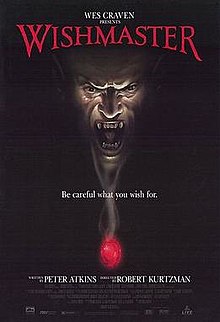
Horror Film Review: Wishmaster (dir by Robert Kurtzman)


Do you all remember Wishmaster?

Played by Andrew Divoff, the Wishmaster was a genie (or a djinn) who made his film debut in the 1997 film of the same name. The Djinn’s schtick is to randomly approach people and say something like, “Would you like to be rich?” or “Would you like all of your enemies to suffer?” He grants wishes but he does so in ironic ways. So, if you say want to be rich, you might very well turn into someone named Rich who is on the verge of getting hit by a bus. If you say that you want to escape from your mundane life, you might end up in a straight-jacket under water, struggling to perform one of Harry Houdini’s signature escapes.

I rewatched Wishmaster a few months ago and what I immediately discovered was the the Djinn wasn’t really that good at his job. He pretended to be clever in the way that he would fool humans but, honestly, it often seemed less like he was tricking people and more like he really wasn’t playing fair. Take the security guard who made the mistake of wishing for an escape. As I just mentioned, The Djinn immediately put him underwater in a straight-jacket. But the guard’s wish was not to have to escape. The guard’s wish was to simply escape. So, putting him in a life-and-death situation and telling him to figure it out for himself wasn’t fulfilling the guard’s wish. It just seemed like the Djinn wanted to drown someone and he decided to use his wish-granting job as an excuse.

The guard, by the way, was played by Tony Todd, one of the many horror icons who appeared in small roles in Wishmaster. (Today, Tony Todd is best known for the Final Destination films but, when Wishmaster came out, he was known for playing the Candyman.) Among the other cameos:

From Phantasm, Angus Scrimm provided the narration while Reggie Bannister played an unlucky pharmacist.

From Friday the 13th, Kane Hodder played a security guard who made the mistake of saying that he wished he could see the Djinn try to walk straight through him.

Day of the Dead’s Joseph Pilato played a crane operator.

John Carpenter vet George “Buck” Flower played an angry homeless man.

Sam Raimi’s brother, Ted Raimi, showed up long enough to get crushed by a crate.

And finally, Robert Englund played the somewhat pretentious professor who was responsible for bringing the Djinn to America in the first place.

As you can probably guess by looking at all of the cameos, Wishmaster is not a film that’s meant to be taken seriously. It’s often deliberately campy. Wes Craven may have produced it and was undoubtedly responsible for recruiting many of the actors who appeared in it but the film’s direction was handled by special effects maestro, Robert Kurtzman and he puts more emphasis on the visual effects than on any sort of serious exploration of the somewhat random series of events that make up the film’s storyline. Of course, when seen today, the film’s special effects look a bit cheap but, for many viewers (like me!), that’s actually a part of the film’s grisly charm.

Wishmaster does have a plot but it’s not particularly important. The Djinn tries to make Alexandra (Tammy Lauren) make three wishes so that he can unleash the forces of Hell. Why he spends all of his time granting wishes to other people instead of just concentrating on Alex is never really explained. It may be an often dumb movie but it’s also undeniably entertaining when taken on its own terms. Andrew Divoff is enjoyably sinister as the Djinn, playing the character with a sarcastic wit to go along with his evil schemes. It’s a fun movie to watch, even if it does feel like it was basically slapped together in a handful of days.

You should always be careful what you wish for but Wishmaster is still an entertaining piece of 90s horror.

(Author’s Note: Wow, this is embarrassing.  Right after I posted this review, I discovered that I previously reviewed Wishmaster in 2018!  Whoops!  Well, it’s nice to see that my thoughts on the film have remained consistent. — LMB)

Horror Film Review: Wishmaster (dir by Robert Kurtzman)


Remember the Wishmaster films?

There were four of them and they all deal with this ancient Djinn (Andrew Divoff) who, during each film, would escape from his magical prison and then wander around granting people their wishes.  Of course, since the Djinn was evil, there was always a catch.  He would either interpret the wish very literally or he would manipulate people into asking for the wish in the wrong way.  As a result, people would always get their wish but they’d get in a way that would make them suffer.

For instance, a typical Wishmaster conversation would go something like this:

“I wish I was a better actor.”

“Am I to understand that you wish you were John Wilkes Booth?”

“Wait …. what?”

“As you wish.”

Sic semper tyrannis!”

The first Wishmaster was released in 1997 while the fourth (and, to date, last) installment was released in 2002.  They’ve never gotten as much attention as some of the other horror franchises from that period, largely because there was really only so much that you could do with a character like the Djinn.  Part of the problem was that almost every scene depended on someone not understanding the importance of being clear when making a wish.  There’s only so many times that you can watch the Djinn trick people into saying, “I wish I never get old,” before the whole novelty of it all wears off.

That said, the Wishmaster films did have one thing going for them and that was Andrew Divoff.  A veteran character actor (and one who you might recognize from Lost, where he played a member of the Others who was both Russian and who had only one eye), Divoff was always creepy as fug in the role of the Djinn.  Whenever someone made the mistake of making a wish, this little smile would appear on Divoff’s face and you knew that someone was about to learn an important lesson about being careful what you wish for.  Divoff was seriously frightening of the Djinn, so much so that you regretted that the films themselves could never quite keep up with his performance.

Last night, I watched the first Wishmaster film for the first time in six years and it was actually a little bit better than I remembered.  The plot itself is typical Wishmaster stuff.  The Djinn is trapped inside of a gem that eventually makes it way to the United States.  An idiot lab worker attempts to experiment on it, which leads to the gem exploding, the Djinn getting free, and an epidemic of mass wish granting.  Nobody seems to have learned the lesson that the first thing you wish for is more wishes.

Wishmaster is stupid but fun.  The first film was produced by Wes Craven and perhaps that explains why the film is full of cameos from everyone who was anyone in low-budget 90s horror.  As a result, you’ve got Kane Hodder saying that he would “love it if” the djinn “tries to go right through him,” and Robert Englund playing a businessman and Tony Todd showing up as a doorman.  It’s nice to see them all, though ultimately the main reason to watch the film is for Andrew Divoff’s wonderfully smirky turn as the Djinn.  It’s hard not to wish that he had another horror franchise to dominate.

Be care what you wish for!

(Sorry, had to do it….)