I was just a kid, probably too young for the movie. My father rented Aliens from the local Blockbuster. It had been years since the movie had first come out but my father, who went to every Star Trek movie premiere and who still knows the lore of Star Wars better than I do, had never seen it and he was planning on correcting that oversight. My family gathered in the living room. We turned out all the lights. The tape was slipped into the VCR. Play was hit. Our boxy television turned into a movie screen and Aliens began.
And it scared the Hell out of me.
Today, I think people forget just how scary both Alien and Aliens are the first time that you watch them. After the first time, you at least know when the aliens are going to jump out at people and you also know who is going to survive. Today, if I rewatch Aliens, I know not to get to attached to the any of the Colonial Marines. I also know not to trust Carter Burke, even if he is played by Paul Reiser. I watch the movie in anticipation of Bill Paxton’s “Game over, man,” instead of dreading it. When I first watched it, all I knew is that the screen suddenly went dark, the soundtrack was full of screeches and the deaths of the Marines, and that the only thing scarier then being confronted with one alien was being confronted with a hundred of them at once. When I watch today, I know Bishop (Lance Henriksen) is going to prove to be a good android. I didn’t have the assurance when I first watched the movie. For all I knew, he was going to just abandon Ripley (Weave), Newt (Carrie Henn),and Hicks (Michael Biehn) on the planet.
Sigourney Weaver was the heart of that film. She went from being angry and bitter over what happened during then first Alien to still being angry and bitter but willing to risk her life to save Newt. From the start, she alone understood the Xenomorph threat and she was ultimately victorious because she was not only as determined and ruthless as the Queen but she actually had the heart that her opponent lacked. Ripley won because she was actually fighting for something more than just conquest. She was fighting to save Newt from becoming an incubator.
I usually think of Aliens as being the last Ripley film. I don’t acknowledge the third film because I find the idea of killing Newt and Hicks to be a betrayal of what made the first Aliens more than just a scary action movie. The fourth film, I don’t acknowledge because it asks me to believe that Winona Ryder would still be acting like Winona Ryder in the 23rd century. Aliens is a scary movie but it’s also a movie that ends with the promise of hope. After all that she’s been through, Ripley finally has a chance to start again with Newt, Hicks, and Bishop. That hope is something that is too often missing from the follow-ups.
Happy birthday, Sigourney Weaver! I’m going to go watch Aliens.
DONATO AND DAUGHTER tells the story of Los Angeles Police detectives, Mike Donato (Charles Bronson), and his daughter Dena Donato (Dana Delany). The two have a strained relationship mainly due to the mysterious death of Dena’s brother, Tommy, and Mike’s unwillingness to discuss the circumstances surrounding his death with her. When a serial killer (Xander Berkeley) begins targeting nuns, brutally raping and murdering them, Dena is asked to lead a task force to catch the killer. Her supervisor not-so-subtly requires that she include her father, a tough-as-nails and experienced cop, as part of the team. The remainder of the story focuses on two elements: 1) The investigation as it closes in on the extremely dangerous serial killer and 2) The family drama as Mike and Dena deal with their relationship issues. The two worlds eventually collide when the killer goes after Dena!
While he did work on a couple of theatrical films in the 1990’s, like Sean Penn’s THE INDIAN RUNNER (1991) and DEATH WISH 5: THE FACE OF DEATH (1994), Charles Bronson spent most of the decade making made-for-TV movies. Of course, as his biggest fan, I would always watch the movies on the night they premiered on TV, with THE SEA WOLF (1993) being the only exception as we didn’t have cable TV in Toad Suck. That means on September 21st, 1993, I was glued to my television set as the latest Charles Bronson film, DONATO AND DAUGHTER, premiered to a national TV audience on CBS. I specifically remember the network running warnings due to the disturbing and violent content of the movie. I also remember enjoying that first viewing, and I still enjoy the film to this day.
Even though he was in his early 70’s at the time, Charles Bronson still looked great in DONATO AND DAUGHTER. He gives a strong performance as both the cop trying to catch the killer and as the dad who doesn’t know how to open up to his successful, adult daughter who needs him more than he can comprehend. Dana Delany is an excellent actress, and she is able to balance her character’s determination to be the best cop possible to “show her dad,” with the vulnerability of a daughter who just needs to know he loves her. Their relationship has to work for the movie to work, and I think they both do a great job. The other standout performance in the film belongs to Xander Berkeley. His portrayal of a husband and businessman, who also happens to be a vicious serial killer, is truly creepy and gives the movie a disturbing edge. On a side note, Berkeley’s “wife” in the film is played by actress Kim Weeks. She and Charles Bronson would get married in 1998, and they would be together until his death in 2003.
Overall, I think DONATO AND DAUGHTER is well worth watching as both a cop thriller and a family drama, although I do think the thriller elements work the best. It’s not the most groundbreaking or original story you’ll ever see, but the film is elevated greatly by the iconic presence of Charles Bronson and the strong performances by Dana Delany and Xander Berkeley. I give it a solid recommendation! The trailer is included below:
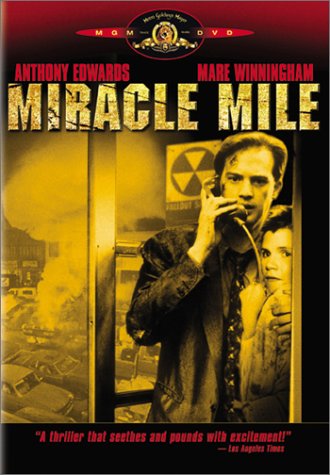
Last night, as I was watching the 1988 film, Miracle Mile, I found myself thinking about the fact that this film literally could not be made today.
No, it’s not because the film itself is about the treat of nuclear war. Though nuclear war may no longer be as much of a cultural obsession as it apparently was back in the 80s, the fact of the matter is that the U.S., Russia, the UK, France, and China all still have nuclear weapons. Pakistan, India, and North Korea all claim to have nuclear weapons. It’s believed that Israel also has a few. Iran is apparently working on developing an arsenal. It’s estimated that there are currently 13,865 nuclear weapons in existence, 90% of which are divided between the U.S. and Russia. That’s not even counting the threat of a terrorist group setting off a nuclear device. In short, the threat of nuclear war is still very much a real one.
Instead, what truly makes Miracle Mile stand out as a film of its time, is the fact that almost the entire plot revolves around the character of Harry (played by Anthony Edwards) answering a Los Angeles pay phone at four in the morning.
Why is Harry answering a pay phone at 4 in the morning? It’s because, earlier, he met Julie (Mare Winningham) at the La Brea Tar Pits and they fell instantly in love. After spending most of the afternoon together, they made a date to meet at the local diner where Julie worked as a waitress. Julie’s shift ended at midnight. Harry went home to get a quick nap before picking her up. Unfortunately, a power failure — one that was largely caused by Harry carelessly tossing away a cigarette — resulted in Harry’s alarm not going off. At midnight, while Julie was standing outside the diner, Harry was asleep.
Harry doesn’t wake up until well-past 3 a.m. After hastily getting dressed, Harry drives down to the diner. When he arrives, he bumps into a tree and three rats fall off the branches and land on his car, which is a bit of an ominous omen. (After watching the movie, I did a Google search and discovered that it’s actually not uncommon for rats to hang out in palm trees after dark. I had no idea. I’m glad I don’t live near any palm trees.)
By the time Harry arrives, Julie’s already gone. From the payphone outside the diner, Harry calls Julie and leaves an apologetic message on her answering machine. (Julie sleeps through it.) Within minutes of Harry hanging up, the pay phone rings again. Harry answers it, expecting to speak to Julie. Instead, he finds himself talking to a panicked soldier who was trying to call his father but who dialed the wrong area code. The soldier says that a war is about to break out and that everyone is going to die. Suddenly, Harry hears what sounds like a gunshot. Another voice gets on the phone and tells Harry to go back to sleep and forget about the call.
Of course, the reason why this story couldn’t take place in 2020 is pretty obvious to see. No one uses pay phones anymore. If the movie were made today. Harry would have just Julie on his own phone and then waited for her to call him back. The soldier would never have misdialed his father’s area code. Harry never would have gotten the message that the world was about to end and most of the subsequent events in Miracle Mile never would have happened. Harry would have just sat in the diner and had a cup of coffee and waited for Julie to call until the inevitable happened. In 2020, that would have been the movie.
So, let’s be happy that this film was made in 1988. during the time when pay phones were everywhere, because Miracle Mile is an excellent film. Miracle Mile starts out as a romantic comedy, with Anthony Edwards and Mare Winningham making for an incredibly adorable couple. Then, after Harry answers that pay phone, the movie grows increasingly grim as Harry desperately tries to make his way to Julie and arrange for the two of them to board a plane that a mysterious woman (Denise Crosby) has charted for Antarctica. The problem, of course, is that in order to reach Julie, Harry is going to need the help of the type of people who are typically up and wandering around at 4 in the morning in Los Angeles. Several people die as Harry tries to make it to Julie and, smartly, the film doesn’t just shrug off their deaths. For the majority of the film, Harry isn’t even sure if there’s actually going to be an attack and it’s possible that he’s not only panicking over nothing but that he’s causing others to panic as well. People are dying because of that phone call and Harry doesn’t even know whether it was real or not. Even when full scale rioting breaks out, Harry doesn’t know if it’s because the world’s ending or because of a bad joke that he took seriously. Transitioning from romantic comedy to dark comedy, Miracle Mile eventually becomes a nightmare as it becomes obvious that, even if Harry does reach Julie, escaping the city is not going to be easy. The sun is rising and the truth is about that phone call is about to revealed….
Miracle Mile is a film that will get your heart racing. On the one hand, Anthony Edwards and Mare Winningham have such a wonderful chemistry and they’re both just so damn likable that you want them to find each other and stay together. Even if it means running the risk of being incinerated in a nuclear explosion, you want Harry and Julie to be with each other. At the same time, you watch the movie with the knowledge that, even if they do manage to reunite, it might not matter because the world’s going to end. Remarkably, almost everyone who Harry talks to about the phone call believes him when he says that a war is about break out. Almost all of them have a plan to escape and, as a viewer, you get so wrapped up in the film that it’s only later that you realize that none of their plans made any sense. Hiding out in Antarctica? How exactly is that going to work? Antarctica’s not exactly a place to which you impulsively move. If there is truly no way to escape the inevitable, perhaps we should just be happy that Julie and Harry found love, even if it was right before the apocalypse.
What’s an Insomnia File? You know how some times you just can’t get any sleep and, at about three in the morning, you’ll find yourself watching whatever you can find on cable? This feature is all about those insomnia-inspired discoveries!
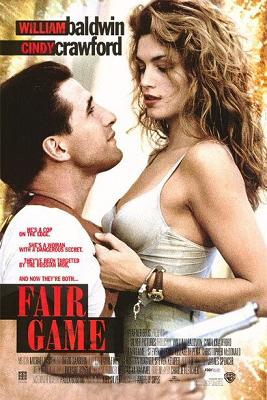
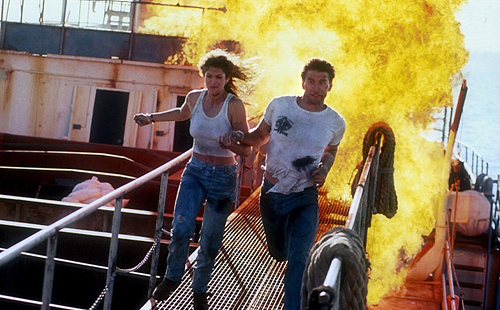
On Tuesday night, if you were suffering from insomnia at midnight, you could have turned over to HBO Signature (commonly listed as HBOSIG) and watched Fair Game, a remarkably mindless action film from 1995.
Originally, my plan was to start this review of Fair Game by telling you, in quite a bit of detail, just how sick I am of the Russian Mafia. Seriously, Russian mobsters have become the default villain for lazy crime films everywhere. And, quite frankly, I’m getting bored with them. I’m bored with how the head Russian mobster is always described as being “former KGB” and is always found sitting in the back room of restaurant, wearing an overcoat and smoking filterless cigarettes. I am bored with how his main henchman is always some big guy with a crew cut and that guy always has a thin sidekick who wears his hair in a pony tail and has a bad mustache. I’m sick of the overexaggerated accents of American and British accents trying to sound Russian and the way they’re always listening to EDM while driving. It’s all so predictable and tedious.
But then I considered that Fair Game was made 20 years ago. Even if the villains are Russian mobsters and even if they are some of the least interesting Russian mobsters in cinema history, it’s totally possible that, when Fair Game, was made, there was still some sort of novelty about the Russian Mafia.
However, even if we give Fair Game a pass on using the cliché of the Russian mob, the villains still weren’t particularly interesting. Kazak (Steven Berkoff) is … well, the film isn’t really that clear on what Kazak’s big plan is but he has a lot of henchmen and they certainly do end up killing a lot of people. Kazak runs his operations off of a yacht that belongs to a Cuban criminal named Emilio (Miguel Sandoval). Emilio is in the process of getting divorced and attorney Kate McQuean (model Cindy Crawford, who made her film debut here and has never played a leading role since) is determined to repossess his boat. So, Kazak decides that the perfect solution would be to murder Kate…
Which makes absolutely no sense. Kazak doesn’t want anyone to discover his operation so he decides to blow up a good portion of Miami, all in pursuit of one person. Wouldn’t it make more sense for Kazak to just blow up the boat and buy a new one?
Anyway, as the film opens, Kate is out jogging when suddenly someone driving by in a car opens fire on her. She ends up getting grazed in the arm, not that it seems to bother her. She wears a bandage for a few scenes but it soon vanishes. Kate is all business so, even after getting shot, she still goes into the office and starts to make plans to repossess that yacht. Personally, if anyone ever shot at me, I would probably be so freaked out that I would never leave the house again.
Now, you may be thinking that Kate was shot because of Kazak but actually, it turns out that the shooting was just a random thing that happened. Apparently, the shooter was trying to shoot someone else and Kate just happened to be in the wrong place at the wrong time. So, we never find out who actually shot Kate and that really bothered me, as that seems to be kind of a huge plot point to bring up and then refuse to resolve.
Anyway, Kate meets a detective named Max Kirkpatrick (William Baldwin) and, soon, they’re on the run from Kazak’s assassins. The majority of the film is made up of Max and Kate running from one location to another. One thing that really bothered me was that literally everyone that Max and Kate talked to ended up getting killed just a few minutes later. At one point, Kate flirts with a computer service expert to get him to help them out. The scene is played for laughs but then, five minutes later, that same innocent technician guy is being brutally tortured by a bunch of Russians and, though we don’t see it happen, it’s safe to assume that he was eventually murdered by them. And no point do Max or Kate appear to feel any guilt or concern about the number of innocent people who are killed just for associating with them.
Anyway, Fair Game is a completely mindless film that has a rather nasty streak of sadism to it. (I imagine, when this film was released, it probably set a record for close-ups of people getting shot and stabbed in the crotch.) William Baldwin and Cindy Crawford both have perfect bodies and give totally wooden performances, which leads to them having a dimly-lit sex scene that is both physically hot and emotionally cold at the same time.
(I have no idea what entropy at absolute zero means but it sounds like a pretty good description of the chemistry between Cindy Crawford and William Baldwin in Fair Game.)
One good note: Salma Hayek has a small role as Max’s ex-girlfriend. Whenever she shows up in the movie, she starts screaming at everyone. I don’t blame her.
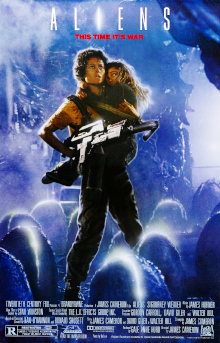 When I learned that today was Sigourney Weaver’s birthday, I flashed back to the first time I saw Aliens.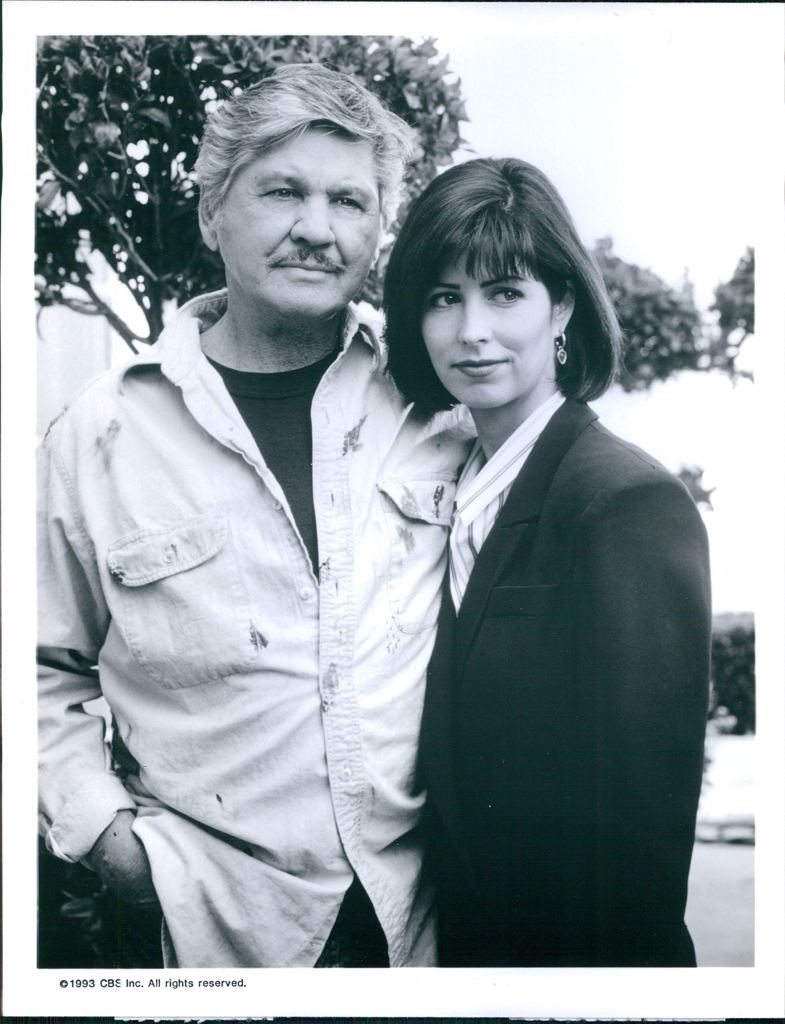
 Through the Shattered Lens