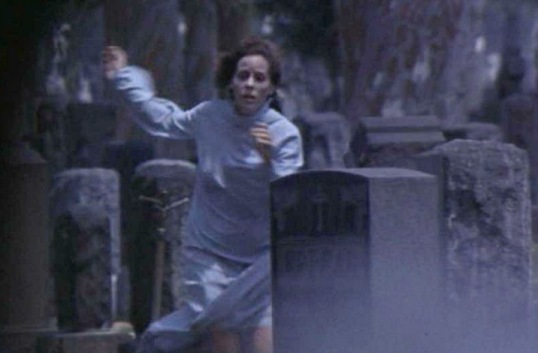
The Guns of Fort Petticoat (1957, directed by George Marshall)


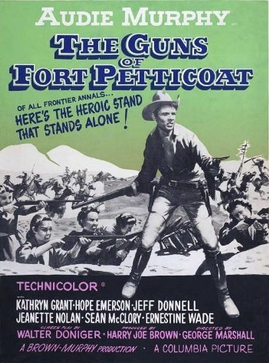
During the waning days of the Civil War, Lt. Frank Hewitt (Audie Murphy) is a man without a country.  A Texan, he joined the Union Army even as his home state was voting to secede from the United States.  In the Army, Hewitt is viewed with distrust by his autocratic superior, Col. John Chivington (Ainslie Pryor).  When Hewitt learns that Chivington has ordered a surprise attack on an unarmed local Indian tribe in order to drive them into Texas where they will attack the nearest settlement for revenge, Hewitt deserts the Army to warn the people left in his hometown.

When Hewitt arrives, he discovers that all of the men in town have left to join the Confederate Army.  Only their wives, mothers, and sisters remain.  Though Hewitt is, at first, accused of being a traitor, he sticks around and trains the women on how to fight not only the incoming Comanches but also any outlaws who ride into town looking to take advantage of the situation.

The Guns of Fort Petticoat is an interesting B-western that holds up well today.  Even though the film ends with a Comanche attack, it’s made clear that the attack would not have happened if not for the actions Col. Chivington.  Chivington, who doesn’t care that the victims of his actions would not be Confederate soldiers but instead just helpless woman and children, is the film’s true villain, even if he only appears in the first and final scenes.  Audie Murphy, who was America’s most decorated World War II veteran, not only starred in but produced the movie.  Murphy was a stiff actor but he looked believable in uniform and obviously knew how to convincingly shoot a rifle and that’s all this role really demands of him.  Kathryn Grant plays the woman who goes from distrusting Hewitt to falling in love with him and she and Murphy work well together.  The final battle between the women and the Comanches is exciting and well-shot by veteran western director George Marshall.  The movie’s final scene may not be totally believable but it’s still very satisfying.

Fans of the western genre and Audie Murphy will find much to enjoy about The Guns of Fort Petticoat.

Retro Television Review: Fantasy Island 5.17 “Funny Man/Tattoo, The Matchmaker”


Welcome to Retro Television Reviews, a feature where we review some of our favorite and least favorite shows of the past!  On Tuesdays, I will be reviewing the original Fantasy Island, which ran on ABC from 1977 to 1984.  Unfortunately, the show has been removed from most streaming sites.  Fortunately, I’ve got nearly every episode on my DVR.
Smiles, everyone!  Smiles!

Episode 5.17 “Funny Man/Tattoo, The Matchmaker”

(Dir by George W. Brooks, originally aired on February 20th, 1982)

For the second week in a row, Julie only appears in the stock footage at the start of the episode.  And again, for the second week in a row, no mention is made of her.  Mr. Roarke doesn’t say anything about why she’s not greeting the guests at the docks.  Tattoo doesn’t seem to care.

This is actually a big episode for Tattoo.  It turns out that Tattoo has a side hustle going.  He’s running a computer dating service!  (This isn’t surprising.  During the early seasons of the show, Tattoo always had some sort of extra money-making scheme going on.)  He’s invited both Harriet Wilson (Laurie Walters) and Claudette Mills (Misty Rowe) to the Island so that they can be set up with the perfect future husband.  Usually, Roarke isn’t happy when Tattoo invites people to the Island on his own but this time, he doesn’t seem to be too upset about it.  He tells Tattoo that the two women and their fantasies will be his responsibility.  At one point, Roarke even mentions that Tattoo is in charge of overseeing all of the weddings that occur on Fantasy Island.  Does that include Mr. Roarke’s wedding from a few seasons ago?

However, there’s a problem.  Tattoo’s big computer has decided that both Harriet and Claudette should marry Mr. Roarke.  Tattoo and his business partner, Ambrose Tuttle (Skip Stephenson), think that the computer must be malfunctioning but Tattoo did promise the women that he would set them up with the most charming man on the Island and what better description is there for Mr. Roarke?

Mr. Roarke is not particularly amused to discover that he is now expected to marry two women who he doesn’t even know.  Considering the tragic ending of Mr. Roarke’s previous marriage, this isn’t a huge shock.  Roarke tells Tattoo that he has to find other husbands for both Harriet and Claudia.  Fortunately, Amrbose Tuttle is single and a former football player (Russ Francis) has also come to the Island.  Can Tattoo pull it off and help all four of these people fall in love?  To quote Mr. Roarke, “Indeed, he can.”  This is Fantasy Island!

Along with learning about Tattoo’s computer dating operation, we also learn about Tattoo’s favorite comedian.  Beau Gillette (Jimmy Dean) has built a successful career telling jokes about his redneck family.  What he’s never told anyone, including his fiancée (Vicki Lawrence), is that his family is imaginary.  Beau grew up in an orphanage and created his family in his head so he wouldn’t be lonely.  Beau’s fantasy is for his family to exist, just so he can introduce them to his fiancée.  Mr. Roarke suggests that it might be a better idea for Beau to just tell the truth but Beau’s like, “Nah, let’s just bring imaginary people to life.”

While Beau’s performing his act, Uncle Jack (Morgan Woodward), grandma (Jeanette Nolan), and cousin Lindy (Linda Thompson Jenner) all come to life.  The only problem is that they all know that they’re really imaginary and they’re not happy that Beau’s been thinking less about them and more about his fiancée.  They decide that Lindy should break up Beau’s engagement by seducing him.  And if they doesn’t work, they can just kill Beau’s fiancée….

Wow, that got dark!

Actually, this isn’t a very dark fantasy at all.  Both fantasies are played largely for laughs.  Beau, realizing that his imaginary family has been a crutch that he’s been using for too long, confesses that they don’t really exist and, as a result, they all fade away.  Beau’s free to get married and I guess come up with new act.  Yay!

Much like last week, this episode felt like a throwback to the early seasons of Fantasy Island.  Tattoo got a storyline and Mr. Roarke was heavily involved in the fantasies, as opposed to just being a bystander.  Both Herve Villechaize and Ricardo Montalban appeared to be having fun in this episode and, as a result, it was fun to watch, even if it was hard to buy into the idea the Beau Gillette’s rather anodyne jokes about his redneck family would have made him into a star.  Largely due to Tattoo and his computer dating service, this was an enjoyable trip to the Island.
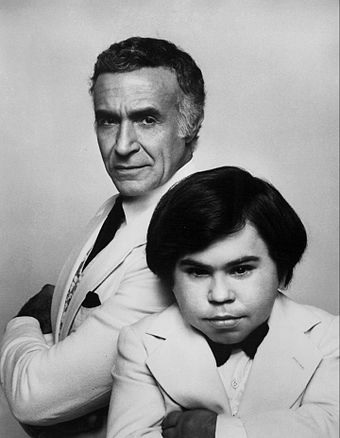
Retro Television Reviews: Fantasy Island 3.13 “The Inventor/On The Other Side”


Welcome to Retro Television Reviews, a feature where we review some of our favorite and least favorite shows of the past!  On Tuesdays, I will be reviewing the original Fantasy Island, which ran on ABC from 1977 to 1986.  Almost entire show is currently streaming is on Youtube!

This week’s trip to Fantasy Island is sadly forgettable.  Let’s find out why.

Episode 3.13 “The Inventor/On The Other Side”

(Dir by Earl Bellamy, originally aired on December 15th, 1979)

This week, there is no banter between Tattoo and Mr. Roarke before they head off to meet their guests.  In fact, Ricardo Montalban and Herve Villechaize barely look at each other.  It’s a shame because this is actually a pretty dire episode.  It could have used some passive-aggressive Tattoo/Roarke interaction.

The first fantasy features Arte Johnson as Professor Dwayne Clebe and Marcia Wallace as his assistant, Martha Meeks.  Professor Clebe is tying to develop a solution that, when sprayed on metal, will make it impervious to damage.  When he first arrives at Fantasy Island, the solution is called 2X76409, with the 9 signifying the 9 labs that have been blow up by Clebe’s experiments.  By the time he and Martha perfect the solution, it has become the 2X76411.  Fear not, no one is injured when the labs blow up.  Even though Clebe and Martha are both standing in the middle of these explosions, they always just end up with soot on their face.

Anyway, once the formula is perfected, leaders of both industry and the world’s trade unions travel to Fantasy Island to try to destroy it.  The industrialists think that it will drive down prices.  The unionists think that it will put people out of work.  Eventually, the Russians show up because they want the formula for themselves.  It all leads to a big chase and Prof. Clebe realizing that he loves Martha.

The whole fantasy was way too cartoonish and overwritten for its own good and it featured some of the worst acting that I’ve ever seen on Fantasy Island.  Let’s move on!

Unfortunately, the other fantasy really isn’t that great either.  Irma Gideon (Jeanette Nolan) was the wife of a medium.  When he died, he promised that he would contact her from the other side.  He hasn’t done so and Irma’s fantasy is to go to the other side, see her husband, and then return.  Mr. Roarke arranges for a séance but, when he suspects that Irma is planning on just going to the other side and staying there, he cancels the fantasy.  After Irma swears that she won’t stay in “the other side,” Mr. Roarke allows her to enter a death-like trance in a Fantasy Island laboratory.  When Irma goes to the Other Side and is tempted to cross a bridge and stay permanently, her grandson (Keith Gordon) enters into a trance of his own so that he can beg her to come back.

It all sounds like it should be interesting but the execution is lacking, with one scene featuring a painting of Irma’s husband speaking to her being so badly done that it makes it impossible to take the rest of the fantasy seriously.  Jeanette Nolan and Keith Gordon both give marginally better performances that Arte Johnson and Marcia Wallace did in the other fantasy but, in the end, the whole thing just falls flat.

Well, not every trip to Fantasy Island can be a winner.

Retro Television Reviews: The Love Boat 2.12 “The Captain’s Cup/ The Folks From Home/ Legal Eagle”


Welcome to Retro Television Reviews, a feature where we review some of our favorite and least favorite shows of the past!  On Wednesdays, I will be reviewing the original Love Boat, which aired on ABC from 1977 to 1986!  The series can be streamed on Paramount Plus!

This week, the Love Boat departs on one weird cruise.

Episode 2.12 “The Captain’s Cup / The Folks from Home / Legal Eagle”

(Dir by Alan Rafkin, originally aired on December 2nd, 1978)

This was a strange episode.

Let’s start with the simplest of our three stories first.  Danny Holt (Bert Convy) is recently divorced and still crying over having to pay his wife alimony.  When he boards the boat, he specifically asks Gopher if there are any single men onboard who might be interested in marrying his ex-wife.  His ex isn’t even on the cruise!  Danny is one bitter passenger.  From the minute he boards the boat, he’s whining about how unfair his divorce was and how badly he was treated by his wife’s divorce lawyer, Ann Sterling (Leigh Taylor-Young).

Uh-oh, it turns out that Ann is one the cruise as well!  And she’s been assigned to be Danny’s dinner companion.  Danny isn’t happy about this but then, from out of seemingly nowhere, the two of them end of falling in love.  It’s hard to say why they suddenly fall in love.  Danny is superbitter over his divorce and Ann knows all of the details about what type of husband he was so it seems like the last thing that would ever happen would be them leaving the ship, arm-in-arm.  But somehow, that’s what happens.  It was a straight-forward story but it lacked any scenes that would have explained why the two of them fell in love.  They just did because they were characters on The Love Boat.  (It certainly wasn’t due to any noticeable romantic chemistry between Bert Convy and Leigh Taylor-Young.)  This story felt lazy and generic.

In the episode’s second storyline, Captain Stubing is excited because he’s due to receive the Captain of the Year Cup.  Diane DiMarzo (Florence Henderson, proving that former Bradys just cannot stay off The Love Boat) boards the ship with the Cup but she’s shocked to discover that 1) her boss — the guy who actually decided to give Stubing the Cup — will not be on the ship and 2) Stubing fully expects her boss to personally present him with the Cup.  Now, I’m not really sure how the logic works here but apparently, Diane could lose her job if her boss isn’t there to give Stubing the cup.  But why would that be Diane’s problem?  She did what she was supposed to do.  She boarded the ship with the Cup.  Her boss is the one who decided not to show up and he is the boss so it’s not like there was anything Diane could have done about it.

Anyway, Diane recruits one of the ship’s handymen to pretend to be her boss.  Though he works on the boat and the rest of the crew know him, it appears that the Captain himself has never met Hank Vosnik (Pat Harrington, Jr.), which kind of leads one to wonder if Stubing really deserves his award.  Anyway, Hank falls in love with Diane and is crestfallen when she turns down his marriage proposal.  (Seriously, at this point, they had only known each other for like three days so I’m not sure what Hank was expecting.)  But, despite being turned down, Hank still pretends to be Diane’s boss.  So, Diane decides that she might as well marry him.  WHAT!?

Finally, Doc Bricker is happy to meet two passengers from his hometown.  George (John McIntire) and Gloria (Jeanette Nolan) spend every moment with Doc and they even announce that, as far as they’re concerned, the 40-something Doc is a member of their family.  Doc is touched.  But then Gloria falls down a flight of stairs and Doc has to do emergency surgery on her.  Gopher calls a doctor in San Francisco and he talks Doc through the surgery.  Doc removes Gloria’s spleen and saves her life!  Yay!  Only at the end of the surgery does he get George to sign a consent form.  In real life, that would lead to Doc to losing his job and the cruise line getting sued.  But, on The Love Boat, it just leads to more laughter.

On the plus side, this storyline featured the charming performances of McIntire and Nolan, who were married in real life.  The story was also written by Fred “Gopher” Grandy and Bernie “Doc” Kopell so, not surprisingly, it actually allowed Grandy and Kopell to do something more than just leer at the passengers.  The show rarely gave Grandy or Kopell a chance to show off the fact that they were both capable of giving good dramatic performances so, whenever they got that rare chance to do so, they took advantage of it.  That said, it was still a bit awkward to see Doc suddenly performing major surgery in his tiny examination room.  It was all for the best on the show but, in real life, it would have led to a major lawsuit.  Even though Doc Bricker saved Gloria’s life, it still seems like the ship could probably be held liable for her getting injured in the first place.  I mean, the boat is in the middle of the ocean.  Shouldn’t there at least be a warning posted on the stairs?

Well, who knows?  Strange things happen at sea.  Let’s just be happy that everything worked out in the end.

Film Review: Avalanche (dir by Corey Allen)


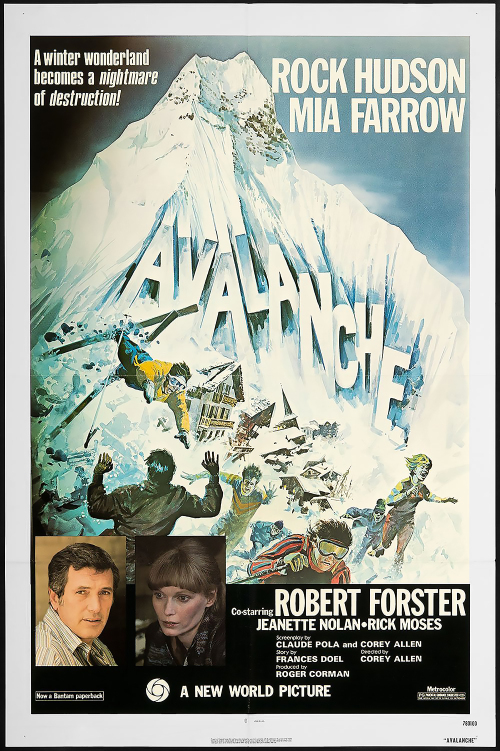
The 1978 film Avalanche tells the story of a beautiful resort that’s been built in the mountains of Colorado.  Self-righteous photographer and activist Nick Thorne (Robert Forster) keeps insisting that it’s not environmentally safe to build a resort up in the mountains.  According to him, there’s too much snow building up and it’s inevitably going to lead to an avalanche.

The owner of the resort, David Shelby (Rock Hudson), insists that Nick doesn’t know what he’s talking about.  Sure, David may have had to cut a few ethical corners to get his resort built and he may currently be under criminal investigation but that doesn’t make David a bad guy.  All he wants is to have a nice and expensive resort located in the most beautiful and dangerous place on Earth.  Does that make him a bad guy?

Unfortunately, if David was watching the film with the rest of us, he would be aware of all the shots of snow ominously building up on the side of the mountain.  However, David would still probably be distracted by the presence of his ex-wife, Caroline (Mia Farrow).  David would love to get back together with Caroline but Caroline finds herself growing attracted to Nick.  When David isn’t chasing after Caroline, he’s trying to keep his mother, Florence (Jeanette Nolan), from drinking all of the liquor in the resort.  Good luck with that!  Florence is an eccentric old person in a disaster film so, of course, she’s going to be drunk off her ass for the majority of the run time.

There are other dramas occurring at the resort, of course.  TV personality Mark Elliott (Barry Primus) is upset because his ex, Tina (Cathey Paine), is hooking up with arrogant skier Bruce Scott (Rick Moses).  Bruce is upset because Tina expects him not to cheat on her.  Ice skater Cathy Jordan (Pat Egan) is hoping to conquer her insecurities.  Rival ice skater Annette River (Peggy Browne) is …. well, she’s there.  To be honest, I’m not really sure what the whole point of the ice skating rivalry was since they all end getting buried in snow regardless.  Then again, maybe that is the point.  An avalanche doesn’t care about your personal dramas.  All it cares about is destroying tacky resorts that overuse wood paneling.

Yes, the avalanche does come crashing down the mountain eventually.  It takes a while, though.  There’s almost an hour of Rock Hudson walking around with a pained look on his face before the snow finally comes crashing down.  For all of Nick’s talk about how the avalanche would probably be the result of too many people skiing, it actually happens because someone crashes a plane into one of the mountains.

Obviously, the avalanche is the main reason why anyone would want to watch a movie called Avalanche.  Anyone with any knowledge of the disaster genre knows that no one watches these movies for the human drama.  They watch them because they want to see at least 10 minutes of solid destruction.  A disaster movie can get away with almost anything as long as the disaster itself looks good.

The disaster in Avalanche does not look particularly good.  This film was directed by Roger Corman and, despite being one of the most expensive films that Corman ever produced, the avalanche effects are definitely a bit cut-rate.  At the same time, the cheapness of the special effects does provide the film with its own odd charm.  Just consider the scene where one of the ice skaters gets covered in snow while spinning around with a triumphant smile on her face.  (Sure, she might be dead and she’ll certainly never make it to the Olympics but at least she finally mastered a fairly basic skating move.)  The avalanche effects are super imposed over the image of the skater spinning but it’s obvious that it didn’t occur to anyone to tell the skater, “Hey, act like there’s a gigantic amount of snow crashing down on you!”  It’s so inept as to be charming, like when a child draws a really ugly picture but it’s cute because at least they tried and, as a result, you wait until the child leaves your house before you throw it away.

The thing I love about Avalanche is how everyone is even more ineffectual after the avalanche than they were before it.  Usually, in a movie like this, the disaster leads to unexpected heroism and the villains getting the comeuppance.  In this one, the avalanche just inspires more stupidity.  Fire trucks and ambulances literally collide with each other while heading for the resort.  At one point, a group of fireman set up a net directly underneath someone falling out of a ski ramp chair just for the person to somehow land a few inches to the left of them.  Though the film sets David Shelby up to be the villain, it’s hard not to feel that everyone at the resort is just an idiot.

Listen, I love Avalanche.  It’s terrible but it’s a lot of fun and the less-than special effects go along perfectly with the overheated (or, in some cases, underheated) performances.  Rock Hudson wanders through the movie with a strained smile on his face that has to be seen to be believed while Mia Farrow and Robert Forster both try so hard to make their underwritten characters credible that you can’t help but kind of appreciate their devotion to a lost cause.  If nothing else, the shots extras reacting to superimposed shots of the avalanche makes this film worth a look.  This is a cheap and silly movie and if you don’t enjoy it, I don’t know what’s wrong with you.

TV Review: Night Gallery 1.1 “The Dead Man/The Housekeeper” (dir by Douglas Heyes and John Meredyth Lucas)


As I wrote yesterday, I recently decided to sit down and watch every episode of the horror anthology series, Night Gallery.  Yesterday, I watched and reviewed the pilot movie.  Tonight, I watched the first episode of the weekly series.

Though the pilot originally aired in 1969, Night Gallery did not start to air as a regular series until December of 1970.  The first episode of season one was broadcast on December 16th, 1970.  As all of the episodes did, it stated with Rod Serling walking through a dimly lit museum and inviting the audience to look at a macabre painting.  Each painting was inspired by a different story.  Or were the stories inspired by the paintings?  To be honest, I don’t think the show ever made that clear.

The first episode featured two stories, both of which dealt with mad scientists.

The Dead Man (written and directed by Douglas Heyes)

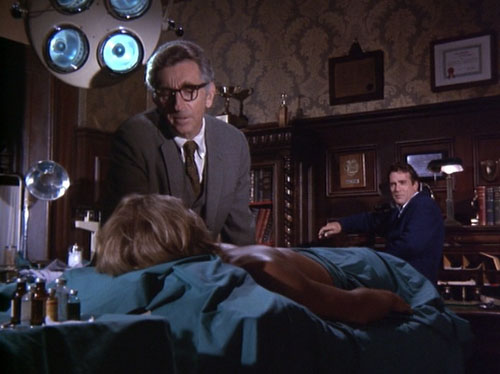
The first segment was The Dead Man, an enjoyably atmospheric if somewhat difficult-to-follow story about a scientist, a young man with an amazing ability, and the woman who is torn between the two of them.

Carl Betz plays Max Redford, a doctor who has discovered that, under hypnotic suggestion, John Michael Fearing (Michael Blodgett) can simulate any medical condition, no matter how severe.  When Max reveals his discovery to his associate, Dr. Talmadge (Jeff Corey), Talmadge is concerned that Fearing will suffer permanent damage as a result of Max’s experiments.  Nonsense! Max explains.  All he has to do is give Fearing the proper signal and he’ll pop right out of his condition, as good as new.

Max decides to put Fearing to the ultimate test by having him simulate death.  However, when Fearing goes under, he dies for real.  Was it just an accident or did Max — who suspects that Fearing was having an affair with his wife (Louise Sorel) — secretly mean for Fearing to die?

The Dead Man raises some intriguing questions about life, death, and medical ethics.  It also has a quartet of good performances with Carl Betz doing an especially good job as Max.  Michael Blodgett showed up in a lot of early 70s films and TV shows and he was always convincing as a decadent hedonist.  The entire segment is full of creepy atmosphere but the ending is a bit of a let down.  After a great set-up, the segment just kind of fizzles out.

The Housekeeper (written by Heyes, directed by John Meredyth Lucas)

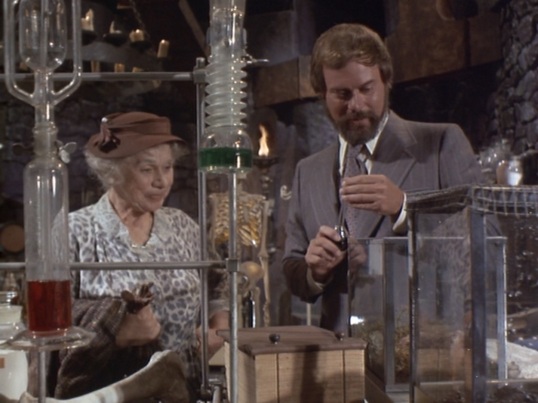
In the second segment, our mad scientist is named Cedric Acton (Larry Hagman).  Whereas Max Redford, in the previous segment, was misguided, Cedric Acton is just crazy.  Through the use of black magic (it involves a frog), Cedric has been experimenting with soul and brain transference.  (There’s an oinking chicken and a clucking pig in his laboratory, just in case anyone’s wondering how the experiments are going.)

Because Cedric loves his wife’s body but hates her personality, he wants to put the soul of his kindly housekeeper (Jeanette Nolan) into the body of his wife, Carlotta (Suzy Parker).  At first, the experiment is a success but things get complicated and …. well, I’m not really sure what it all leads to because this is one of those stories that just kind of ends without really offering up any type of resolution.

The Housekeeper is meant to be a comedy but it’s a bit too mean-spirited to really work.  This segment really calls out for karma to intervene and for Cedric’s soul to end up in something else’s body but instead it just ends with Cedric continuing his experiments.  It’s more than a little dissatisfying.  Larry Hagman does a good job playing Cedric, though.  He’s convincingly crazy.

Especially after the pilot, it’s hard not to be disappointed by the first episode of Night Gallery.  Both stories had potential but they were let down by weak endings.  Oh well.  Hopefully, tomorrow’s episode will be an improvement!

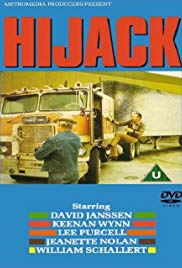
Hijack! (1973, directed by Leonard Horn)


Jake (David Janssen) is a down-on-his-luck trucker who is offered job by a mysterious man named Kleiner (WIlliam Schallert).  If Jake agrees to transport a cargo across the country, he will get not only $6,000 but Kleiner will also pull some strings get Jake back in the good graces of the trucking company.  If Jake takes the job, he will be given a slip of paper with a phone number on it and, according to Kleiner, that piece of paper will get him out of any trouble that he runs into along the way.  The only condition is that Jake is not allowed to know what he’ll be transporting.  Jake agrees and soon, he and his partner Donny (Keenan Wynn) are driving the truck through the desert.  They are also being followed by a group of men who will stop at nothing to steal the cargo.

This made-for-TV movie is called Hijack! but no one ever gets hijacked.  Instead, with the exception of a brief romantic interlude between Jake and a truck stop waitress (Lee Purcell), this is a nonstop chase movie but the chase itself is never exciting enough to justify that exclamation mark in the title.  It was probably made to capitalize on the success of Steven Spielberg’s made-for-TV classic, Duel, but it never come close to capturing the nerve or intensity of that film.  There’s one good scene where the bad guys come after the truck in a helicopter but otherwise, this is a pretty anemic stuff.  Even the eventual reveal of what Jake and Donny are hauling across the desert is a let down.

David Janssen specialized in playing grizzled loners and Keenan Wynn specialized in playing eccentric old coots so both of them are adequate in the main roles.  The bad guys are largely forgettable and, as she did in so many other TV movies in the 70s, Lee Purcell brings what life that she can to an underwritten role.

Under the Sea: Goliath Awaits (1981, directed by Kevin Connor)


1939.  War is breaking out across Europe.  The British luxury liner Goliath is torpedoed by a German U-boat.  Presumed to be lost with the ship are a swashbuckling film star, Ronald Bentley (John Carradine), and U.S. Senator Oliver Barthowlemew (John McIntire), who may have been carrying a forged letter from Hitler to Roosevelt when the boat went down.

1981.  Oceanographer Peter Cabot (Mark Harmon, with a mustache) comes across the sunken wreck of the Goliath.  When he dives to check out his discovery, he is shocked to hear big band music coming from inside the ship.  He also thinks that he can hear someone tapping out an S.O.S. signal.  When he looks into a porthole, he is stunned to discover a beautiful young woman (Emma Samms) staring back at him.

Under the command of Admiral Sloan (Eddie Albert), who wants to retrieve the forged letter before it does any damage to the NATO alliance, Cabot and Command Jeff Selkirk (Robert Forster) are assigned to head an expedition to explore Goliath.  What they discover is that, for 40 years, the passengers and crew have survived within an air bubble.  Under the leadership of Captain John McKenzie (Christopher Lee), they have created a new, apparently perfect society within the sunken ship.  Cabot discovers that the woman that he saw was McKenzie’s daughter, Lea.

McKenzie is friendly to Cabot and his crew, explaining to them the scientific developments that have allowed the passengers and crew to not only survive but thrive underwater.  The only problems are a group of outcasts — the Bow People — who refuse to follow McKenzie’s orders and Palmer’s Disease, an infection that only seems to infect people who are no longer strong enough to perform the daily tasks necessary to keep McKenzie’s utopia functioning.   Even when people on the boat die, they continue to play their part by being cremated in Goliath’s engine room and helping to power the ship.

Everything seems perfect until Cabot announces that he has come to rescue the survivors of the Goliath.  Even though Goliath is starting to decay and will soon no longer be safe, McKenzie is not ready to give up the perfect society that he’s created.  McKenzie sets out to prevent anyone from escaping the Goliath.

Goliath Awaits is a massive, 3-hour production that was made for television and originally aired over two nights.  (The entire 200-minute production has been uploaded to YouTube.  Avoid the heavily edited, 91-minute version that was released on VHS in the 90s.)  It’s surprisingly good for a made-for-TV movie.  Because a large portion of the film was shot on the RMS Queen Mary, a retired cruise ship that was moored in Long Beach, California, Goliath looks luxurious enough that you understand why some of the passengers might want to stay there instead of returning to the surface.  Beyond that, Goliath Awaits takes the time to fully explore the society that McKenzie has created and what it’s like to live on the ship.  McKenzie may not be as benevolent as he first appears to be but neither is he a one-dimensional villain.

Mark Harmon is a dull lead but Robert Forster is just as cool as always and Christopher Lee is perfect for the role of misguided Capt. McKenzie.  The movie is really stolen by Frank Gorshin, who is coldly sinister as Dan Wesker, the Goliath’s head of security.  McKenzie may by Goliath’s leader but Wesker is the one who does the dirty work necessary to keep the society running.

Goliath Awaits also features several character actors in small roles, with John Carradine, Duncan Regehr, Jean Marsh, John McIntire, Jeanette Nolan, Alex Cord, Emma Samms, and John Ratzenberger all getting to make a good impression.  (Ignore, if you can, a very young Kirk Cameron as one of the children born on the Goliath.)

Goliath Awaits is far better than your average made-for-TV movie from the 80s.  With any luck, it will someday get the home video release that it deserves.


Embracing The Melodrama Part III #7: True Confessions (dir by Ulu Grosbard)


The 1981 film True Confessions tells many different stories.

It’s a story about Los Angeles.  It’s not necessarily a story about Los Angeles as it exists.  Instead, it’s a story about Los Angeles as we always imagine it.  It’s the late 40s and, having vanquished the Nazis in Europe, men are returning to California and looking for a new life.  Meanwhile, aspiring starlets from across the country flood into Hollywood, looking for stardom.  It’s a city where glitz and ruin exist right next to each other.  It’s the mean streets that were made famous by Raymond Chandler and, decades later, James Ellroy.

It’s a murder mystery, one that is based on one of the most notorious unsolved homicides of all time.  The bisected body of woman named Lois Fazenda has been found in a vacant lot.  When the newspapers discover that Lois was both a prostitute and a Catholic, she becomes known as “the Virgin Tramp.”  One need not have an encyclopedic knowledge of unsolved crimes to recognize that Lois Fazneda is meant to be a stand-in for Elizabeth Short, the tragic and infamous Black Dahlia.

It’s a story about corruption.  Crooked cops.  Rich perverts.  Greedy politicians.  Sinful clergy.  They’re all present and accounted for in True Confessions.  As quickly becomes apparent, Los Angeles is a city where you can do anything as long as you have the money to pay the right people off.

And finally, it’s a film about two brothers.  Tom and Des Spellacy grew up in a strong Irish Catholic family but, as they got older, their lives went in different directions.  Tom (Robert Duvall) became a detective, the type who is willing to cut corners but who, in the end, takes his job seriously.  Des (Robert De Niro) entered the priesthood and is now a monsignor in the Los Angeles diocese.  Des is ambitious and he has a powerful mentor, Cardinal Danaher (Cyril Cusack).

Though Tom and Des have gone their separate ways, they are still linked by Jack Amsterdam (Charles During).  To the public, Jack is a wealthy and respected businessman.  However, Tom and Des both know the truth.  When Tom first joined the department, he worked as a bagman for Jack and he knows that Jack made most of his money through a prostitution ring.  Des know that Jack donates to the Church as way to cover up his own corruption but Des looks the other way.  The Cardinal, after all, wants Jack’s money.

When Tom starts to investigate Lois’s death, it doesn’t take him long to figure out that Jack is probably the one responsible.  Meanwhile, Jack and his lawyer (Ed Flanders) start to pressure Des to convince his brother to let the case go.  Finding justice for Lois Fazneda could mean the end of both Tom and Des’s career.

Based on a novel by John Gregory Dunne, which was adapted into a screenplay by Dunne and Joan Didion, True Confessions is an imperfect but intriguing film.  This is one of Robert Duvall’s best performances and he brings a manic edge to the role that keeps the audience off-balance.  In the role of Jack Amsterdam, Charles Durning is the epitome of casual corruption and Burgess Meredith does a good job as an aging priest.  On the other hand, Robert De Niro seems strangely uncomfortable in the role of Des and you never quite believe that he and Duvall are actually brothers.  Director Ulu Grosbard does a good job of creating a proper noir atmosphere but, at the same time, he denies the audience the dramatic climax to which the film appears to be building up to.

That said, for whatever flaws True Confessions may have, it’s an always watchable and thought-provoking film.

Horror on TV: Thriller 2.17 “La Strega” (dir by Ida Lupino)


For tonight’s excursion into televised horror, we have an episode of Thriller!

This episode is called T and it deals with an artist (Alejandro Rey) who saves a young woman (Ursula Andress) from drowning.  It turns out that the local villagers believe that the woman is a witch.  The artist has no time for superstition and takes the woman back to his home.  She starts as his model and then becomes his lover.  She may not be a witch but her mother (Jeanette Nolan) definitely is…

And, of course, this episode is introduced by the one and only Boris Karloff!

The episode premiered on January 15th, 1962.