Dune: Part One (dir. by Denis Villeneuve) Review


“I said I would not harm them and I shall not. But Arrakis is Arrakis and the desert takes the weak. This is my desert. My Arrakis. My Dune.” — Baron Vladimir Harkonnen

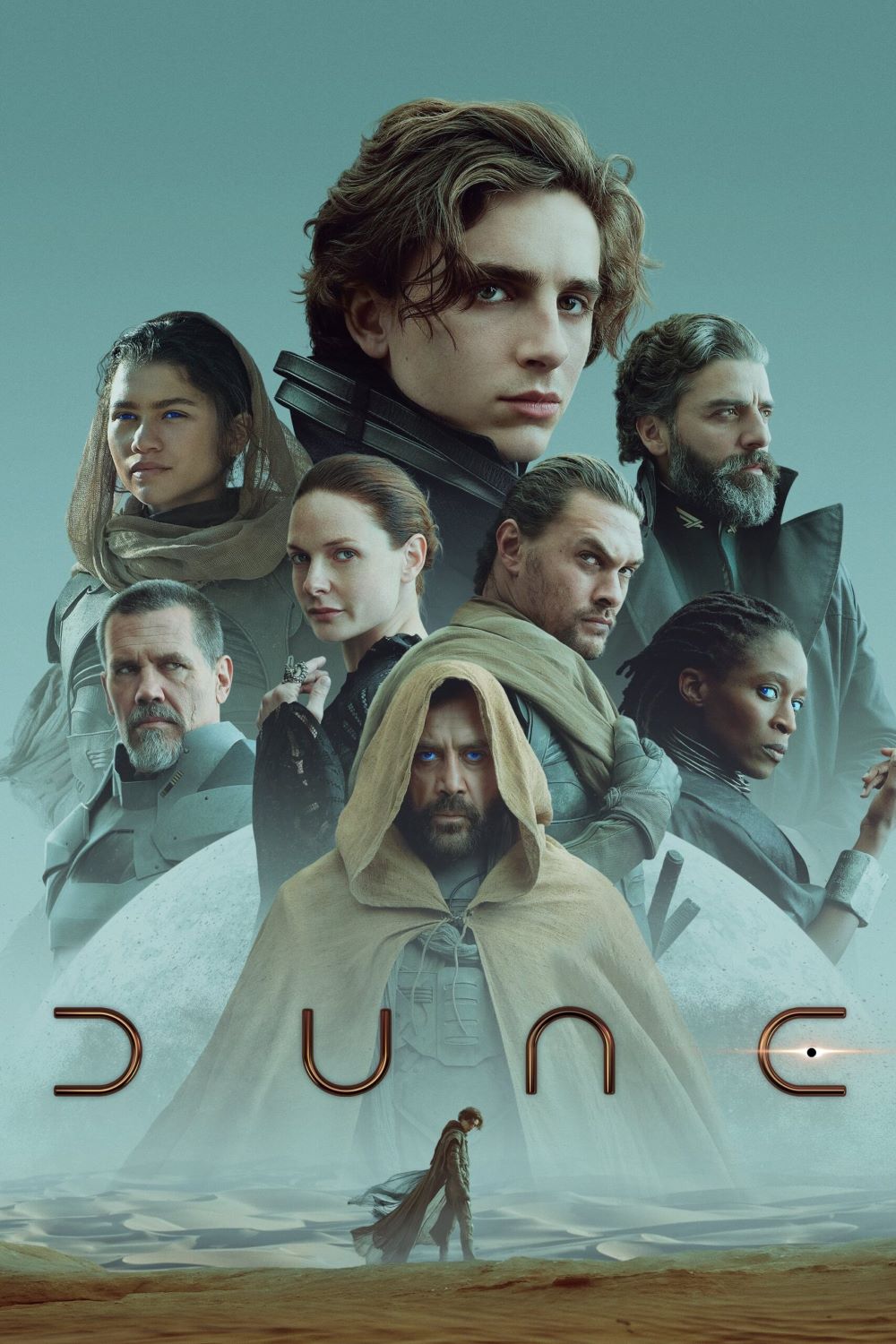
Denis Villeneuve’s Dune: Part One is one of those big, monolithic blockbusters that feels less like a movie night and more like being slowly lowered into someone else’s dream. It’s massive, deliberately paced, and sometimes emotionally chilly, but when it hits, it really hits, and you can feel a director absolutely obsessed with getting this universe right. The film adapts roughly the first half of Frank Herbert’s novel, following Paul Atreides, heir to House Atreides, as his family accepts control of the desert planet Arrakis, the only source of the spice melange that powers space travel and heightens human abilities. The setup is pure operatic space-feudalism: the Emperor orders House Atreides to take over Arrakis from their bitter rivals, House Harkonnen, in what is basically a beautifully staged death trap. Villeneuve leans into the political trap aspect; even if you’ve never read Dune, you can tell from minute one that this is not an opportunity, it’s a setup, and that sense of doom hangs over everything.

What Villeneuve really nails is the “ancient future” texture that people always talk about with Dune but rarely pull off on screen. The technology looks advanced but worn, ritualized, and heavy, from the gargantuan starships to the dragonfly-like ornithopters that rattle and pitch like actual aircraft instead of sleek sci-fi toys. The production design and Greig Fraser’s cinematography go all-in on scale: Caladan’s stormy oceans, Arrakis’s endless dunes, cavernous fortresses that make the human figures look insignificant. It’s not just pretty—it’s doing character work for the universe, selling you on the idea that people here live under forces (political, religious, environmental) that absolutely dwarf them. In theme terms, this is Villeneuve visually translating Herbert’s obsession with ecology and power structures, but he externalizes it more than the book: instead of living inside characters’ heads, you’re constantly being reminded how small they are against their environment.

All of that is backed by Hans Zimmer’s aggressive, sometimes overwhelming score, which sounds like someone trying to invent religious music for a civilization that doesn’t exist yet. It’s not subtle; there are bagpipes blaring on Caladan, guttural chants over Sardaukar warriors being ritually baptized in mud, and wailing voices that basically scream “destiny” every time Paul has a vision. But it syncs with Villeneuve’s approach: this is myth-making by way of blunt force, and the sound design and music are part of the same strategy of immersion and awe. Compared to the novel’s intricate, almost clinical tone, the film leans much harder into a mythic, quasi-religious mood. That means some of Herbert’s more sardonic or critical edges get smoothed out, but it also lets Villeneuve foreground the feeling of a civilization that already half-believes its own prophecies.

Narratively, Dune: Part One walks a weird tightrope. On one hand, this is a story about prophecies, chosen ones, and a messiah in the making, but on the other, the film quietly undercuts that fantasy. Villeneuve and his co-writers emphasize the Bene Gesserit’s centuries-long manipulation of bloodlines and myths, including seeding prophecies among the Fremen, so Paul’s “chosen one” status comes prepackaged with a lot of moral unease. That’s one of the places where Villeneuve stays very faithful to Herbert: the idea that religious belief can be engineered and weaponized. At the same time, by stripping out so much of the book’s interior commentary, the movie makes that critique more atmospheric than explicit. You feel that something is off about Paul’s destiny—the visions of holy war help with that—but you don’t hear the narrative voice outright interrogating the myth the way the novel does. It’s like Villeneuve wants the audience to experience the seduction of the messiah narrative first, and only slowly realize how poisonous it is.

Timothée Chalamet’s performance takes advantage of that approach by playing Paul as a kid who has been trained his whole life for greatness but absolutely does not want the role he’s being handed. Early on, he’s soft-spoken, almost recessive, but you see flashes of arrogance and temper, especially in the Gom Jabbar test and the later tent breakdown after his visions of a holy war in his name. Villeneuve doesn’t try to turn him into an instant charismatic leader; instead, he feels like a thoughtful, scared teenager caught in a machine that’s been running for centuries. That divergence from the source material is subtle but important: book-Paul, with all his internal analysis and mentat-like processing, comes off almost superhumanly composed. Film-Paul is less in control, more overwhelmed, which shifts the theme from “a superior mind learning to navigate fate” toward “a boy being crushed into a role he might never have truly chosen.”

The supporting cast is absurdly stacked, and the film uses them more as archetypes orbiting Paul than as fully fleshed-out characters, which is both a feature and a bug. Oscar Isaac’s Duke Leto radiates tired nobility, a man who knows he is walking into a trap but refuses to show fear because he needs his people to believe. Rebecca Ferguson’s Lady Jessica might be the most compelling presence in the movie: a Bene Gesserit trained in manipulation and control, visibly torn between her loyalty to the order and her love for her son. Ferguson gives Jessica a constant undercurrent of panic; even when she’s composed and commanding the Voice, you can feel the guilt and fear simmering underneath. In Herbert’s text, Jessica carries a heavy burden of calculation and self-critique through internal monologue; Villeneuve replaces that with rawer, more visible emotion. That choice makes Jessica more immediately relatable on screen but also shifts the theme slightly—from a cold, almost chess-like examination of breeding programs and long-term plans to a more intimate conflict between institutional programming and maternal love.

On the more purely fun side, Jason Momoa’s Duncan Idaho brings some sorely needed looseness and warmth. He’s one of the only characters who feels like he exists outside the grim political machinery, which makes his relationship with Paul read as genuinely affectionate instead of court-mandated mentorship. His big stand against the Sardaukar is shot like a mythic warrior’s last stand, and it sells Duncan as the kind of legend people would sing about after the fact. The tradeoff is that Duncan’s characterization leans into straightforward heroism; some of the book’s emphasis on the complexities and limits of loyalty gets compressed into a single grand gesture. Josh Brolin’s Gurney Halleck mostly glowers and shouts in this installment, but there’s enough there—especially in the training scene—that you get a sense of this gruff soldier-poet without the film ever stopping to spell it out. What’s missing, though, is the more overt sense of Atreides culture and camaraderie that the novel lingers on; Villeneuve sketches it, then moves on.

If the heroes lean archetypal, the villains almost go minimalistic to a fault. Stellan Skarsgård’s Baron Harkonnen is an imposing, bloated specter, more a presence than a personality; he spends a lot of time floating, brooding, and letting the makeup and lighting do the talking. In the book, the Baron is a much more talkative schemer, constantly plotting and vocalizing his nastiness, which underlines Herbert’s theme of decadence rotting the powerful from within. Here he’s closer to a horror-movie monster, which works visually but makes the political conflict feel a bit less textured. It’s a conscious trade: Villeneuve sacrifices some of Herbert’s satirical bite for a cleaner, more archetypal good-house-versus-evil-house dynamic. The Mentats, like Thufir Hawat and Piter de Vries, also get sidelined, and with them goes a lot of the book’s focus on human computation and the consequences of tech bans; the movie nods to that world-building but clearly doesn’t prioritize those themes.

Where Dune: Part One really shines is in its set-pieces that double as worldbuilding lessons. The spice harvester rescue sequence isn’t just about a sandworm attack; it’s a crash course in how dangerous Arrakis is, how unwieldy the spice operation can be, and how Paul reacts when the spice hits his system and his visions start intensifying. The hunter-seeker assassination attempt in his room does something similar for palace intrigue and surveillance, even if the staging (Paul standing unnervingly still as the device inches toward him) has rubbed some viewers the wrong way. These scenes make Arrakis feel like a living trap: environmental, political, and spiritual all at once. Compared to the novel’s detailed ecological and economic exposition, Villeneuve’s version is more experiential—you feel sandstorms and worm sign before you fully understand the larger ecological philosophy that Herbert spells out. That keeps the film more cinematic, but it also means the deeper environmental thesis is only hinted at rather than explored.

The downside of Villeneuve’s devotion to mood and worldbuilding is pacing. This is a two-and-a-half-hour movie that very much feels like “Part One,” and you can sense the absence of a conventional third-act climax. The story peaks emotionally with the fall of House Atreides—Leto’s death, Duncan’s sacrifice, Kynes’s end—but then keeps going, drifting into the deep desert with Paul and Jessica. The final duel with Jamis is thematically important—Paul’s first deliberate kill, a step toward becoming the kind of leader his visions imply—but as a closer for a blockbuster, it’s quiet and off-kilter. What’s interesting is how that duel distills one of Herbert’s key themes—the cost of survival and leadership—down to a single, intimate moment. The book wraps that in a ton of cultural detail and internal reflection; the film pares it down to body language, breath, and a few lines of dialogue. Villeneuve keeps the moral weight of the act but narrows the lens, trusting the audience to sit with what it means for Paul to cross that line without spelling it out.

If you come in as a Dune novice, the film is surprisingly navigable but not always emotionally generous. Villeneuve strips away the novel’s dense internal monologues and replaces them with visual suggestion and sparse dialogue, which keeps the movie from turning into a two-hour voiceover but also makes some motivations feel opaque. Characters like Dr. Yueh suffer the most from this approach; his betrayal happens so quickly and with so little setup that it plays more as a plot requirement than a tragic inevitability. That’s a clear case where the film discards a major thematic thread: Herbert uses Yueh to dig into ideas of conditioning, trauma, and the limits of “programmed” loyalty, but Villeneuve mostly uses him to push the plot into the Harkonnen attack. The tradeoff is understandable in a two-part film structure, but it’s a noticeable hollow spot for viewers who care about the story’s psychological underpinnings.

Still, as an opening movement, Dune: Part One feels like a deliberate choice to build the cathedral before lighting the candles. It’s more concerned with making Arrakis, its politics, and its religious machinery feel tangible than with delivering a neatly wrapped narrative. That can make it frustrating if you want a self-contained story, but it pays off in atmosphere: by the time Paul and Jessica join Stilgar’s Fremen and we get that final image of a sandworm being ridden across the dunes, you believe this is a place where myths can walk around as real people. Villeneuve stays true to Herbert’s broad thematic architecture—power, religion as control, ecology as destiny—but he discards a lot of the author’s density and interior commentary in favor of a more streamlined, sensory-driven experience. As a result, the film feels less like reading a dense political text and more like standing inside the legend that text would later be written about.

As a complete film, it’s imperfect—sometimes emotionally distant, sometimes so in love with its own scale that character beats get swallowed—but it’s also one of the rare modern blockbusters that feels handcrafted rather than committee-engineered. As an adaptation, it respects the spirit of Dune while making sharp, cinematic choices about what to emphasize and what to streamline, even if that means some beloved book moments get reduced or reconfigured. And as a foundation for a larger saga, it does exactly what “Part One” says on the label: it sets the board, crowns no clear winners, and leaves you with the distinct feeling that the real story—the dangerous one—is only just beginning.
Jack Black and Jason Momoa in the teaser for A Minecraft Movie!


Much like Fortnite, Minecraft is a game that everyone has either played or at least seen if they’ve kids in their vicinity. It’s basically a low resolution world building game where you face off against sprite skeletons and spiders if you either dig too deep underground or hang outside at night. It can be pretty fun, and is available on every platform from computers to the Nintendo Switch.

Jack Black seems like he’s out to cover every Video Game there is. With Super Mario Bros. and Borderlands under his belt, A Minecraft Movie is his next target. He’s not alone, though. Joining him are Jason Momoa (Fast X), Emma Myers (Netflix’s Wednesday), Emmy Winner Jennifer Coolidge (HBO’s The White Lotus), and Danielle Brooks (DC’s Peacemaker).

A Minecraft Movie will be in cinemas next April.

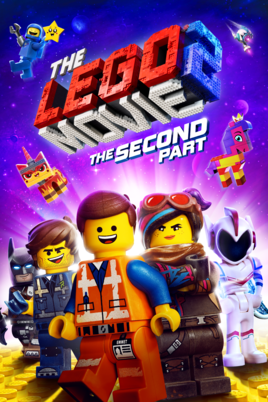
Film Review: The Lego Movie 2: The Second Part (dir by Mike Mitchell)


Sometimes, it’s hard not to feel that the Lego movies are their own worst enemy.

I mean, they’re just so cute and fun and likable and cheerfully dorky that it’s easy to overlook just clever they often are.  Everything is Awesome may have been a cute song but it was also a pitch perfect parody of mindless conformity.  And yes, The Lego Batman Movie got a lot of laughs out of Will Arnett’s guttural growl but it was also the best Batman film since The Dark Knight and it also had a lot to say about how lonely it can be when you’re an extremely paranoid super hero.  As for The Lego Ninjago Movie …. well, give me a minute and I’ll think of something.  Uhmmmm …. it had that cute kitty!  Woo hoo!

Beyond all that, all of the Lego movies — from the best to the less-than-the-best — celebrate imagination.  They celebrate being an individual and the joy of creating your own world as opposed to just conforming to someone else’s rules.  As much as I loved Chris Pratt as Emmett and Elizabeth Banks as Wyldstyle, the heart of the first Lego Movie is to be found in the scene where Will Ferrell essentially realizes that he’s being a jerk when he won’t let his son build what he wants to build.

That said, the main appeal of the Lego movies is that they’re incredibly cute.  Just take The Lego Movie 2: The Second Part for instance.  Especially when compared to the first Lego Movie and The Lego Batman Movie, this sequel has its flaws.  Admittedly, some of those flaws are unavoidable.  Just the fact that we start the movie knowing that everyone is in Will Ferrell’s house means that the sequel can’t take us as much by surprise as the first Lego Movie did.  Though the film’s original directors, Christopher Miller and Phil Lord, wrote the script and contribute some genuinely witty dialogue, the sequel’s pacing occasionally seems a little bit off.  There’s a few slow spots, the majority of which are really only noticeable when you compare the sequel to the flawlessly paced first film.  And yet, in the end, it’s such a cute movie that it’s easy to overlook those flaws.

The sequel begins immediately where the first ended, with Will Ferrell decreeing that both his son and his daughter are now allowed to play with his Lego collection.  Jump forward five years and this has basically led to chaos.  The Lego Universe is now a Mad Max-style wasteland.  Not surprisingly, both Wylstyle and Batman have really gotten into their new dystopian lifestyle.  Meanwhile, Emmett remains just as blindly cheerful and optimistic as ever.  He still feels that everything is awesome.

Or, at least Emmet feels that way until all of his friends are kidnapped to the Systar System, where Queen Watevra Wa’Nabi (Tiffany Haddish) wants to marry Batman.  Determined to rescue his friends, Emmett decides to travel to the Systar System himself.  Helping him out is Rex Dangervest, who seems like the type of adventurer that Emmett has always dreamed of becoming.  Chris Pratt voices both Rex and Emmett and the film has a lot of fun playing with Pratt’s post-Guardians of the Galaxy stardom.  Rex is not just an intergalactic explorer.  No, he’s also a cowboy, a dinosaur trainer, an archaeologist, a first baseman, and — we’re told — a script doctor.  (Those, of course, are references to Pratt’s roles in The Magnificent Seven, Jurassic World, and Moneyball.  Interestingly enough, his work in Passengers goes unmentioned.)  Rex pressures Emmett to become more cynical and ruthless in his efforts to save his friends and destroy the Systar System and Chris Pratt does a great job voicing both roles.  Indeed, if nothing else, this film will always stand as a tribute to the incredible and unending charm of Chris Pratt.

If Lego Movie 2 never reaches the glorious heights of the first film, that’s because the element of surprise has been lost.  There’s no moment  in the sequel that’s as memorable as when a live action Will Ferrell suddenly showed up in the first movie.  (In the second movie, Ferrell appears in a flashback and has a brief voice cameo as President Business.  Maya Rudolph does show up as his wife but the sequel’s live action scenes just don’t have the emotional impact of the first film’s.)  But, with all that in mind, it’s still an undeniably cute and entertaining movie.  All of your old favorites back — everyone from Channing Tatum and Jonah Hill as Superman and Green Lantern to Alison Brie as Unikitty to Charlie Day as the astronaut. (Sadly, Liam Neeson did not return as the Good Cop/Bad Cop and his absence is felt.)  The film is full of clever parodies, my favorite being the references to Mad Max: Fury Road.  There’s more than enough witty lines, visual gags, and sweet moments that Lego Movie 2 will hold your interest and bring a smile to your face.

At the box office, Lego Movie 2 fell victim to the same Lego fatigue that took down the Lego Ninjago film and it did not become quite the phenomenon that the first movie did.  Regardless, it’s still a worthy sequel.  I wouldn’t quite say it’s awesome but it’s definitely a lot of fun.

Courtesy of Zack Snyder’s Twitter Account, here’s some Aquaman Footage!


Apparently, this is the first footage that we’ve seen of Aquaman and … uhmmmm …. yeah.  This doesn’t look incredibly silly at all.

Hey, Zack, would it be too much trouble to get a Sucker Punch sequel?


Zack Snyder tweets Justice League Teaser for Comic-Con


Zack Snyder’s thrown his hat into the Comic Con fray with a special teaser trailer for Justice League, by way of a recent tweet. The film focuses on Bruce Wayne/Batman(Ben Affleck) and Diana Prince/Wonder Woman (Gal Gadot) as they gather a group of associates to defend against a great threat. So far, it looks interesting (if not a little rushed).

Also on board are Jason Momoa as Aquaman, Ezra Miller as The Flash / Barry Allen and Ray Fisher as Cyborg. The movie has a release date of November 17, 2017.

Batman v. Superman Latest Trailer Drops


BatmanvSuperman

Batman v. Superman: Dawn of Justice has been gathering steam and buzz since it was first announced a couple years ago at San Diego Comic-Con. The film is now just a little over 4 months away from release. The fact that we’re even talking about latest trailers and clips about this film was an accomplishment all on its own.

This was a project that had been talked about for so many years, but never got on track. While some DC fans might decry what I’m about to say I do think they should thank the success of the Marvel Studios-produced films for getting this film on the fast track to being made. It made DC and Warner Bros. realize they weren’t the big bully in the blockbuster block anymore and needed something monumental to catch up.

With Man of Steel dividing comic book fans this film had to be made whether it made sense narrative-wise or not. Another so-so Superman film would not do. So, what better way to juice up the Son of Krypton franchise than by pitting him against DC’s other juggernaut property: Batman.

So, without further ado, here is the latest trailer for Batman v. Superman: Dawn of Justice.

Batman v. Superman Finally States It’s Case to the Public


BatmanvSuperman

A funny thing happened to the Batman v. Superman: Dawn of Justice trailer that was set for a release at a special IMAX screening event next week. No one bothered to tell someone with a cellphone not to secretly record the trailer. A lo-res cam version of the first teaser trailer for Batman v. Superman: Dawn of Justice was leaked just hours after Disney released the second teaser trailer for the upcoming Star Wars: The Force Awakens.

Warner Brothers scrambled to take down the lo-res trailer and made sure to use their power to threaten with legal stuff if people continued to disseminate the illegal recording. During the 24 hours since the leak someone with a much more cooler head over at WB decided to just go the Avengers: Age of Ultron route (that film’s first teaser was also leaked ahead of a planned event) and release the hi-res version of the teaser trailer instead of waiting days for the planned screening event.

So, here’s the very first teaser trailer as Warner Bros. and DC Entertainment finally make their case that whatever Disney and Marvel can do they can do as well.

Batman v. Superman: Dawn of Justice is set for a March 25, 2016 release date.

Review: Game of Thrones S2E10 “Valar Morghulis”


“We are the watchers on the Wall.” — Qhorin Halfhand

[spoilers within]

With last week’s explosive ninth episode, “Blackwater”, it was going to take much to make tonight’s season finale to really stand out. Just like the first season’s finale we get an episode that deals with the aftermath of the previous episode and also goes a long way into setting up events for the upcoming third season.

“Valar Morghulis” is the title of tonight’s episode and it’s spoken by Jaqen H’ghar to Arya as the two part ways. It’s a saying in Essos from ancient High Valyrian (a Roman Epire-like civilization which perished centuries before the series’ timeline) that translated means “All men must die”. Jaqen sees potential in Arya in becoming like him, a Faceless Man, assassins who follow the teaching of the so-called Many-Faced Gods. While Arya seems intrigued by the offer her need to re-connect with her family takes precedence over everything else. As the two part ways Jaqen imparts to Arya a coin that should she ever need passage to Braavos to start her journey into becoming a Faceless Man. In another instance that this series still has magic in it’s DNA we finally see why Jaqen is a Faceless Man as he walks away from Arya and her group wearing a new face.

Tonight’s episode lays the foundation that next season magic and sorcery may become more common place than the first two season of the series. We see Daenerys finally make her way into the House of the Undying to retrieve her dragonlings from the warlocks of Qarth. It’s a sequence that’s akin to spirit journey for the Targaryen Queen-to-be and Mother of Dragons as she walks the darkened halls and corridors of the House of Undying until an egress suddenly takes her North of the Wall to find a Dothraki tent where she discovers the two most precious things she has lost since coming to Essos. In what I could only see as a surprise that was kept by showrunners Benioff and Weiss from the press and bloggers (a feat nowadays) Daenerys sees her husband Khal Drogo and who could only be their son both alive and waiting for her.

Her reaction to this event was both poignant and tragic in that she finally has a chance to be with those she loves most but must give up the quest to retake Westeros with her dragons. Her decision to leave the tent and leave behind those she loves comes as her character finally realizing that sentimentality and the needs of her heart must take a back seat and wait. Daenerys comes out the other side a more confident ruler and one whose magic really is stronger than those warlocks who scheme to keep her and her dragons captive for themselves. It really sets up the Daenerys character on a much stronger footing for next season just like last season’s finale did. For all the moping around Daenerys did for most of season 2 the pay off in the end goes a long way into forgiving the show’s writers in their inability to write her character’s motivations consistently. Most likely the naive young girl being used by others for their own agendas and ends would be seen less and less next season while the Mother of Dragons reasserts her authority.

The same can’t be said for one of the five kings vying for control of Westeros. For those who have read the third novel the scenes with King Robb Stark were full of sentimentality but lacking in the cold-hearted logic that rulers must use in order to play the game of thrones successfully. Even his mother, Catelyn Stark, sees danger in Robb’s actions with the Volanti healer Talisa Maegyr. Catelyn knows well enough that Robb could destroy everything he has won and worked for since war begun because he has thought with his heart and not with his head. In what could almost be seen as more doom coming for the House of Stark, Robb cements his relationship with Talisa in secret even though we’ve come to learn through two season of this show that nothing ever remains secret for long.

Back in King’s Landing we see the balance of power shift once more as Tywin Lannister’s opportune arrival to take victory from the jaws of defeat at the end of last week’s episode sees him back as Hand of the King to Joffrey. Tyrion has lost all the advantages he had worked and gamed for all season as even Bronn has been removed as Commander of the Goldcloaks. We’ve not seen Tyrion laid so low as we have in this episode and the horrible scarring of his face looks to go deeper as he finally realizes that as much as he would enjoy running away with Shae and leave the politicla intrigues and backstabbing of the kingdom it’s something that he would miss terribly because it’s the one thing he’s best at. With Tywin now in charge of the kingdom and Petyr Baelish having earned himself the king’s good graces for manufacturing the alliance between the two most powerful houses in the kingdom with the Lannisters (Baratheon by name only) and the Tyrell’s of Highgarden. It’s going to be interesting to see how Tyrion readjusts to the new power dynamics in King’s Landing for season 3. If there’s one thing we’ve come to learn about Tyrion over two season’s worth of episodes it’s that he’s a survivor first and foremost.

Lastly, we come to Jon Snow and his dilemma North of the Wall. A captive of the wildlings and seen as someone very important for the still unseen Mance Rayder the so-called King-beyond-the-Wall, Jon must do the only logical thing (something Qhorin halfhand agrees as the only thing that could save Jon and maybe give him time to warn the Wall) and earn the trust of Ygritte, Rattleshirt and the rest of the wildlings even if it means killing one of his own to do so. In what would be one of several sweeping scenes that show the epic nature of this series lest we forget Ygritte shows Jon over the lip of a glacier the army of wildlings Mance Rayder has gathered.

Yet, it’s not that army that gives tonight’s episode that cliffhanger send-off that last season’s finale did with Daenerys coming out of the funeral pyre with her three dragonlings perched on her unharmed body. No, tonight’s episode gets a cliffhanger that is more ominous and reinforces the House Stark motto of “Winter Is Coming”. We see poor Samwell Tarly (having been abandoned by the two other Night’s Watch Brothers once they heard the three horn blasts in the distance) scared out of his wits as he realizes that the three horn blasts that hasn’t been heard for thousands of years could only mean one thing: the White Walkers are on the march towards the Wall. In a final acknowledgement that as realistically the show has tried to portray the series in terms of warfare and political intrigue there’s no getting away from the fact that magic is still alive in this world born out of George R.R. Martin’s fevered mind as a massive army of undead slouches south towards the Wall and the kingdoms beyond it.

This scene just ups the ante on what we could only imagine what would be season three of the show. Across the Narrow Sea we have Daenerys Stormborn gradually detaching sentimentality from how she operates and this could only mean more bad news for the warring kingdoms of Westeros. The power struggles against King Joffrey looks to be going the mad king’s way as Lannisters and Tyrells ally together to retake the rest of the rebelling kingdoms. Now we have two armies, one living and preparing to go south towards the Wall (most likely to get away from the gathering White Walker horde) and the other undead and also heading towards the only bastion (one that is ridiculously undermanned) protecting the southern kingdoms from a gathering darkness.

If there was a complaint about this season’s storytelling it was that so much of the novel this season was based on was condensed to make it fit in a ten-episode season. Despite lulls in character development with Jon Snow and Daenerys we get major pay-offs for these two with tonight’s season finale. It’s good news that showrunner Benioff and Weiss has decided to split book three, A Storm of Swords, into two with the first half comprising season three with the latter half set aside for season four. Even with missteps along the way tonight’s season finale goes a long way into proving that HBO’s Game of Thrones is currently the best genre show on tv and one of the best tv shows airing now.

Now we have ten months of waiting to see how Westeros and Essos will deal with the events that ended season two. One thing for sure is that we’ll see more people die before all questions get answered if ever.

Review: Conan the Barbarian (dir. by Marcus Nispel)


In 1982 the duo of John Milius (director) and Arnold Schwarzenneger (actor) brought to the big-screen the first film adaptation of the classic, pulp character of Conan the Cimmerian by Robert E. Howard. The Milius-Schwarzenneger Conan the Barbarian was an instant hit and classic. It also made Schwarzenneger into an A-list superstar who would rule the 80’s and 90’s. This film was followed up by a lesser quality, though fun in its own way, sequel in 1984 with Conan the Destroyer. Milius saw this franchise as a trilogy with the third and final film to be called Conan the Conqueror. But a sort of blacklisting of Milius as a filmmaker and Schwarzenneger moving onto other projects killed the planned third film. The start of the new millenium saw an interest in restarting the third film, but after countless delays and changes in filmmakers and stars the project was once again shelved.

In 2010, the franchise which launched an Austrian-bodybuilder into superstardom was finally greenlit, but this time around it would be a reboot of the series with the film hewing coser to Robert E. Howard’s creation and world-building than the Milius version of 1982. To bring Conan the Cimmerian to life would be Hawaiian-Irish Jason Momoa (of Stargate Atlantis and Game of Thrones fame) with German-filmmaker Marcus Nispel taking on the directing reins. The film’s trio of writers (Thomas Dean Donnelly, Joshua Oppenheimer and Sean Hood) would literally take the world of the Hyborian Age which Howard had meticulously created for his Conan character and use that as the basis for this reboot.

Conan the Barbarian begins with a surprising introductory narration of the world of the Hyborian Age by none other than Morgan Freeman. This narration was one clue that while this film wouldn’t and shouldn’t be seen as thought-provoking and award-season fare it looks to try anything and everything to make it fun and relevant. The film succeeds in this respect in its own way. As we see Conan come into the world as a baby born of battle in the most literal way. It’s not often we see on the big-screen a pregnant mother delivering her child by way of battlefield C-section. From this moment forward this film will wallow in the bloody carnage and machismo-fueled world of Robert E. Howard to the nth degree.

The film’s Conan as played by Leo Howard as the younger version then to Jason Momoa as the adult version looks to be different than the Schwarzenneger one. While Momoa was still quite the physical specimen on the screen he also exuded a sense of fluid, athleticism like that of a sleek jungle cat whereas Arnold’s Conan was more of the big cat of the savannah. The stand out performance in the film comes from both Leo Howard (quite ferocious as the young Conan) and Momoa. The film lives or dies on whether we believe these two actors as the characters they inhabit. Not once during the near 2-hour running time do we not believe these two as Conan.

Conan the Barbarian as a film does have several weaknesses which could derail it for me. For one, the story itself is quite cliched as we see the typical hero’s journey coinciding with the goal of saving the world from an almost cartoonish villain (Stephen Lang clearly having fun as the warlord Khalar Zym) with an equally cartoonish sidekick (Rose McGowan who seemed out of place as Zym’s witch-daughter Marique). The story’s plot seems more geared like a video game where each sequence was there to put Conan in the best way possible to do what he does best and that’s kill enemies by the score and do it with bloody panache.

While the film will definitely not score very well with many people I think they will do so as they compare it to the original Milius film. I think the mistake they also will use as an excuse to not like the film is that it’s dumb and loud. I, for one, thought I would feel the same, but as I watched the film I acknowledged those very same criticisms, saw the flaws, but in the end I still enjoyed the film for what it was: an almost gleeful, throwback to the 80’s sword-and-sorcery exploitation film that tried to cash in on the success of the original Conan the Barbarian.

Nispel’s film may not stand the test of time as the original, but in the end he made a film that actually stayed true to the pulpy origins of the character (Robert E. Howard was never known as a subtle writer and this film reveled in his blunt-way of writing). This Conan the Barbarian was several steps above the usual sword-and-sorcery stuff which the SyFy Channel seems to churn out by the dozen each year and it’s steps below that of the original. What it does share with the 1982 film is a sense of fun even if it’s at the expense of story and character and at times I’m fine with that. Not everything has to be Inception or Pride and Prejudice.