Though the Academy of Motion Picture Arts and Sciences claim that the Oscars honor the best of the year, we all know that there are always worthy films and performances that end up getting overlooked. Sometimes, it’s because the competition too fierce. Sometimes, it’s because the film itself was too controversial. Often, it’s just a case of a film’s quality not being fully recognized until years after its initial released. This series of reviews takes a look at the films and performances that should have been nominated but were, for whatever reason, overlooked. These are the Unnominated.
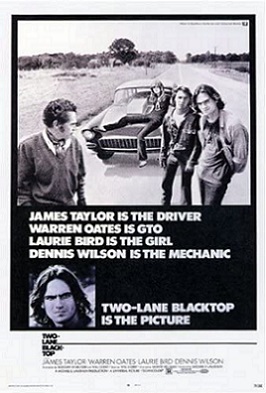
The 1971 road film, Two-Lane Blacktop, is a movie about four people whose real names are never revealed. Indeed, their names are never as important as what they’re driving.
Named after his car, GTO (Warren Oates) is a talkative man who likes to brag on himself and who picks up hitchhikers so he can talk to them. We don’t learn much about GTO’s background. For someone who talks as much as he does, GTO doesn’t reveal much about who he is when he’s not driving. It’s easy to imagine him as a salesman, traveling across the country and desperately trying to make his quota before the sun goes down. With the way that he picks up hitchhikers and his need to convince everyone of his own skill and prowess behind the wheel, it’s easy to imagine that he’s probably recently divorced and still dealing with suddenly being on his own. He seems to have something to prove, not only to everyone around him but especially to himself. One gets the feeling that the life he had suddenly collapsed and he took to the road to escape it all but he still hasn’t reached the point where he can handle truly being alone. For all of his talk, it doesn’t take long to notice that GTO isn’t quite as worldly as he claims he is.
A chance meeting leads to GTO getting into a cross-country race with The Driver (James Taylor) and the Mechanic (Dennis Wilson), two young men who are driving a 1955 Chevy and who make their money by engaging in street races. (They’re also quick to steal a license plate when no one’s looking.) The Driver and the Mechanic don’t talk a lot and, when they do, it’s in terse and somewhat awkward sentences. (Both Taylor and Wilson were musicians who made their acting debut with this film. Their natural stiffness and lack of emotion works well for their characters.) The Driver and the Mechanic seem to communicate solely through driving. They pick up The Girl (Laurie Bird) and both the Driver and the Mechanic seem to have feelings for her but it’s pretty obvious that their true love will always be for their car.
Two-Lane Blacktop is a road movie, a movie that really doesn’t have much of a plot (the cross-country race soon ceases to be a real race) but which does have some beautiful footage of America in 1971 and an outstanding performance from the great character actor, Warren Oates. EasyRider was advertised as being a film about a man who looked for America and couldn’t find it. That’s actually a better description of Two-Lane Blacktop, a film about three uniquely American men who have embraced the car culture that is at the center of life in America but who are still, more or less, lost in their home country. Oates, always talking and refusing to give up or even acknowledge the fact that he doesn’t really know much about how cars work, represents the so-called silent majority. Wilson and Taylor are the next generation, their long-hair branding them as outsiders while their skill with a car and their desire win represents what we’re told is the best of the American competitive spirit. What makes the film unsettling is the feeling that all three of them are using their cars as a way to avoid dealing with the reality of their lives.
Two-Lane Blacktop may sound a bit pretentious and it is. The metaphors get a bit heavy-handed. That said, as directed by Monte Hellman, it’s both a gorgeous travelogue and a valuable time capsule, a document of life in the late 60s and early 70s. Hellman directed the film on the road. When we see the Mechanic stealing a license plate so no one down south will know that he and the Driver are actually from California, it’s a powerful scene because it was actually filmed on location, in the South. This isn’t a film that was shot on a backlot. This is a film that was shot across America and it captures the country at a time when, much like today, no one was really sure what the future held for its politics or its culture. It may be a film about three men who are obsessed with cars but it’s also a portrait of a country in an almost directionless state of turmoil.
Two-Lane Blacktop was promoted as being the next Easy Rider but it turned out to be a notorious box office failure. James Taylor and Dennis Wilson never did another movie. Warren Oates continued as a busy character actor while Laurie Bird died of an intentional drug overdose in 1979. Director Monte Hellman’s directorial career continued but his days of being courted by the major studios were over. However, as the years passed, audiences started to discover Two-Lane Blacktop and now, it’s considered to be a cult classic.
Given its failure at the box office, Two-Lane Blacktop was ignored by the Academy. The Oscar for Best Picture went to another film that featured a memorable car chase, The French Connection. While Two-Lane Blacktop may not have deserved to win Best Picture (not over nominees like The French Connection, The Last Picture Show, Fiddler on the Roof, and A Clockwork Orange), it certainly is far more memorable movie than the fifth film nominated that year, Nicholas and Alexandra. If nothing else, Warren Oates deserved a nomination for his supporting performance. The Academy may not have embraced Two-Lane Blacktop but, fortunately, film lovers eventually would.
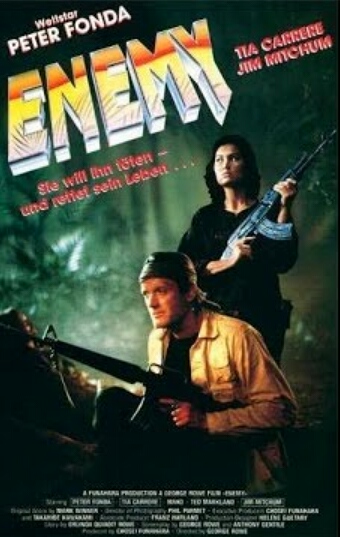
At the height of the Vietnam War, CIA agent Ken Andrews (Peter Fonda) disguises himself as a French journalist, slips into North Vietnam, assassinates a VC general, and then makes his escape into the jungle. Unfortunately, the helicopter that was meant to take Ken to safety is blown up, leaving Ken stranded in the jungle with a beautiful Chinese spy named Mai Chang (Tia Carrere).
With the VC after both of them, Ken and Mai will have to set aside their initial enmity and work together to make it out of North Vietnam. In between endless scenes of the two of them making their way through the jungle, there are battle scenes where the VC manage to shoot everything except for the two people that they’re after.
This cheap film was shot in 1988 but it sat on the shelf for two years. The script, which attempts to be a rumination on the nature of war, feels as if it was written even earlier. It will always be strange to me how Peter Fonda went from starring as bikers and aging hippies in films like Easy Rider and The Wild Angels to playing CIA agents and military officers in films like this one. Peter Fonda was a stiff actor but, in this case, it works for his character, who, after all, is meant to be a man who has to keep his emotions under control. Tia Carrere is beautiful and seems to be trying really hard to give a convincing performance despite being miscast as a grim spy. Fonda and Carrere do have a surprising amount of chemistry together. The romance that develops between them actually feels believable.
Enemy suffers from too much padding. It’s a two-person show and those two people spend a lot of time walking through the jungle. Some of the action scenes are exciting and the idea of an American spy falling in love with a Chinese spy is interesting but the ending, while action-packed, still feels like a cop out that’s designed to give Ken an easy out. You can almost hear Ken thinking to himself, “I really dodged a bullet there.”
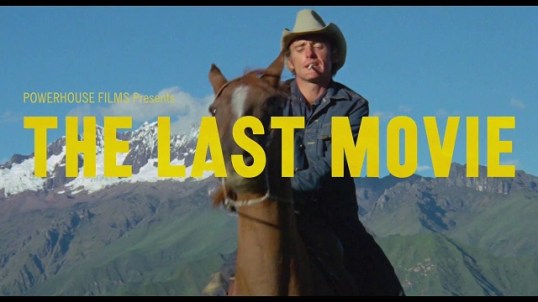
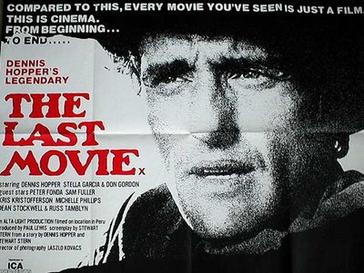
The story behind the making of 1971’s The Last Movie is legendary. It’s also a bit of a cautionary tale.
In 1969, Hollywood was stunned by the box office success of an independent, low-budget counter-culture film called Easy Rider. Easy Rider not only made a star out of Jack Nicholson but it was also the film that finally convinced the studios that the way to be relevant was not to continue to crank out big budget musical extravaganzas like Doctor Doolittle and Hello, Dolly! Instead, it was decided that the smart thing to do would be to hire young (or, at the very least, youngish) directors and basically just let them shoot whatever they wanted. The resulting films might not make much sense to the executives but, presumably, the kids would dig them and as long as the kids were paying money to see them, everyone would continue to get rich. Because Dennis Hopper had directed Easy Rider, he suddenly found himself very much in demand as a director.
Of course, almost everyone in Hollywood knew Dennis Hopper. Long before he became an icon of the counter-culture, Dennis Hopper had been a part of the studio system. John Wayne even referred to Hopper as being his “favorite communist.” Everyone knew that Dennis could be a bit arrogant. Everyone knew that Dennis was very much into drugs and that, as a result, he had a reputation for being a bit unstable. Everyone knew that Dennis Hopper deliberately cultivated an image of being a bit of a wild man and a revolutionary artist. But Dennis Hopper had just directed Easy Rider and Universal was willing to give Hopper some money to go down to Peru and direct his follow-up.
The Last Movie was a film that Hopper had been planning on making for a while. The film’s original script told the story of an aging and broken-down stuntman named Kansas who retires to Mexico and searches for a gold mine with a friend of his. Hopper first tried to get the film going in 1965, with Montgomery Clift in the lead role. After Clift died, Hopper tried to interest John Wayne in the starring role but, though Wayne enjoyed having Hopper in his films so that he could threaten to shoot him whenever Abbie Hoffman said something shocking, he had no interest in being directed by him. When Universal finally agreed to put up the money for the film, Hopper offered the lead role to Jack Nicholson. Nicholson turned it down and told Hopper that it was obvious that Dennis wanted to play the role himself. Dennis decided that he agreed with Nicholson and he cast himself as Kansas. Dennis also made the fateful decision to not only change the story’s setting to Peru but to also film on location.
Dennis and a group of friends flew down to Peru, which, at that time, was the cocaine capitol of the world. Drug use was rampant on the set, with Dennis reportedly being one of the main offenders. The cast and crew filmed during the day and partied at night and no one was particularly sure what the film was supposed to be about. Amazingly, Hopper finished filming on schedule and within budget but, much as he did with Easy Rider, he also overfilmed and ended up with 40 hours of footage. Not wanting to be bothered by the studios, Hopper edited the footage in his compound in Taos, New Mexico. Working slowly and continuing to consume a large amount of drugs and alcohol, Hopper still managed to put together a film that had a straightforward storyline. When Hopper showed his initial cut to filmmaker Alejandro Jodorowsky, the director of El Topo accused Hopper of being too conventional in his approach, which led to Hopper chopping up the film and reassembling it. Finally, after spending over a year working with the footage, Hopper turned in his final edit.
Universal had no idea what to make of the film that Hopper delivered to them. Still, they released it with the hope that the same crowd that loved Easy Rider would embrace The Last Movie. While the film did win an award at the Venice Film Festival, critics hated it and, even worse, audiences stayed away. The film’s reception was so overwhelmingly negative that Hopper found himself largely exiled from Hollywood, with only a few directors (like Francis Ford Coppola) willing to take the chance of working with him. It wasn’t until the 80s, when he finally got clean and sober, that Dennis Hopper was able to reestablish himself as a character actor and, ultimately, a beloved cultural institution.
But what about The Last Movie? Was is it really as bad as the critics claimed? Or was it, as some more recent reviewers have suggested, an unacknowledged masterpiece that was ahead of its time? I recently watched The Last Movie to find out for myself.
Despite its reputation, The Last Movie gets off to a pretty strong start. Samuel Fuller (playing himself) is directing a hilariously over-the-top and violent western in the mountains of Peru. Kansas (Dennis Hopper) is working as a stuntman. He’s fallen in love with a local sex worker named Maria (Stella Garcia). Kansas is meant to be an aging Hollywood veteran, someone who has broken a lot of bones and who carries a lot of aches as a result of his line of work. (One can see why Hopper initially imagined an actor like John Wayne in the role.) He knows that this is going to be his last job and, as we see over the first 25 minutes of the film, he feels alienated from the rest of the cast and crew. Admittedly, Hopper does appear to be a bit too young for the role. The ideal Kansas would have been someone like Ben Johnson, L.Q. Jones, or perhaps Warren Oates. But, still, Hopper does a good job of capturing Kansas’s mixed feelings about the western that’s being filmed around him.
A lot of familiar faces pop up in the film’s fictional western. Dean Stockwell plays an outlaw. Jim Mitchum, Russ Tamblyn and Kris Kristofferson plays his associates. Peter Fonda is the youthful sheriff. Michelle Phillips is the daughter of the town’s banker and apparently, she’s also the girlfriend of one of the outlaws. We watch as the actors pretend to shoot guns and kill each other while the cameras are rolling, just to get up off the ground once “Cut” is yelled. When a local Indian who has been cast as an extra grows upset at the violence, an assistant director explains to him that no one really dies while the cameras are rolling. When shooting wraps, the film company goes home but Kansas stays behind with Maria. One day, the local priest (Tomas Milian) warns Kansas that the local indigenous people have moved into the abandoned film set and are trying to shoot their own movie. Kansas discovers that they have built wooden cameras and wooden boom mics and that their chief is giving orders in the style of Sam Fuller. They’re also firing the guns that the Americans left behind.
The first part of the film works quite well. Hopper’s camera captures the beautiful and isolated Peruvian landscape. The violent western is a pitch perfect and affectionate parody of a generic studio film. Though Hopper is a bit too young for the role, he still does a good job of capturing Kansas’s alienation from his fellow Americans. Even more importantly, the first part of the film seems to have an identifiable theme. The American film crew invaded an isolated part of Peru and changed the culture of the natives without even realizing it. Now, they’ve left but the natives are still dealing with the after effects of the American “invasion.” It’s easy to see, within that part of the story, a critique of both American culture and American foreign policy.
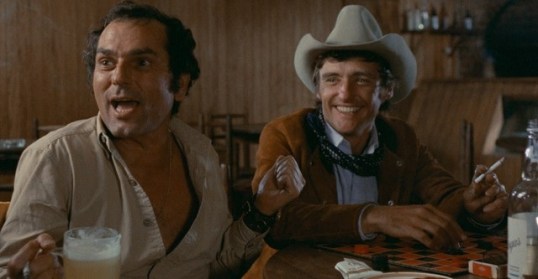
The second part of the film is where things start to fall apart. Kansas meets an old friend named Neville (Don Gordon). Neville has discovered a gold mine in the Peruvian mountains. With Kansas as his partner, he tries to get a businessman named Harry Anderson (Roy Engel) to invest in it. Kansas and Neville try to impress Harry and his wife (Julie Adams, best-known for being stalked by The Creature From The Black Lagoon). Kansas and Neville take the Andersons to a brothel and, in the process, Kansas offends Maria. Kansas then paws Mrs. Anderson’s fur coat and mentions that human beings are covered in hair. For all of their efforts, Harry will not invest, no matter how desperately Neville begs him to reconsider.
The second part of the film drags, with many of the scenes being obviously improvised between Hopper, Gordon, Garcia, Engel, and Adams. Unfortunately, the improved conversations aren’t particularly interesting and they tend to go on forever. Usually a reliable character actor, Don Gordon ferociously chews the scenery as Neville and it doesn’t take long before one grows tired of listening to him yell. (Gordon was far more impressive in Hopper’s Out of the Blue.) With the use of improvisation and overlapping dialogue, the second half of the film tries to feel naturalistic but instead, it’s a migraine-inducing method exercise gone wrong. It’s also during the second part of the film that a “scene missing” title card flashes on the screen, an indication that the discipline that Hopper showed as a director during the beginning of the film is about to be abandoned.
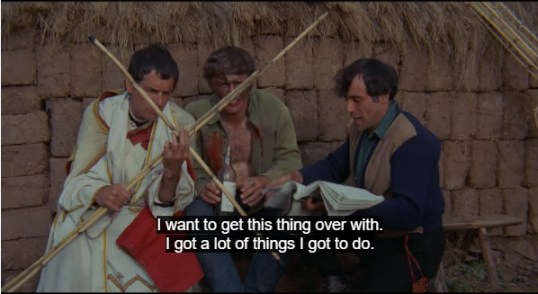
Finally, the third part of the film — well, who knows? The final 25 minutes of the film is collection of random scenes, some of which may be connected and some of which may not. The natives have decided that the only way to properly end their “film” is to kill Kansas. Kansas is shot several times and rides away on his horse. Suddenly, Kansas is back at his home and Maria is taunting him for getting shot. Then, Kansas is riding his horse again. Then suddenly, Dennis Hopper and Tomas Milian are laughing at the camera. A script supervisor tries to get Dennis to look at the shooting schedule while Dennis drinks. This happens:
Milian points out that the blood on Hopper’s shirt is dry. Hopper looks at his shoulder, where Kansas was previously shot, and says that someone needs to add his scar before he can shoot the scene. Ah! So, now we’re acknowledging that it’s all just a movie. Thanks, Dennis! Suddenly, Dennis is Kansas again and he’s collapsing over and over again in the dust. He appears to be dead but no, now he’s Dennis again and he’s standing up and smiling at the camera. And now, he’s singing Hooray for Hollywood. And now, suddenly, Kansas and Neville are talking about The Treasure of the Sierra Madre and then….
Well, let’s just say that it goes on and on before finally ending with a scrawled title card.
It’s a disjointed mess and it’s all the more frustrating because the first 30 minutes of the film is actually pretty good. But then, Dennis apparently remembered that he was supposed to be the voice of the counter-culture and he gave into his most pretentious impulses. Of course, just because a film is a mess, that doesn’t mean that it can’t be entertaining. And again, the first part of the film is entertaining and third part of the film is weird enough that it’ll hold most people’s attention for at least a few minutes. But the middle section of the film is so slow and pointless that it pretty much brings down the entire film.
In the end, what is The Last Movie about? In The American Dreamer(a documentary that was filmed while Hopper was editing The Last Movie in New Mexico), Hopper spends a lot of time talking about revolution and taking over Hollywood but The Last Movie is hardly a revolutionary film. The film is at its most alive when it is focused on the shooting of its fictional western. For all the satirical pokes that The Last Movie takes at the studio system, it’s obvious that Hopper had a lot of affection for Old Hollywood and for directors like Sam Fuller. Kansas may say “Far out,” but he’s hardly a hippie. Even the film’s jumbled finale seems to be saying, “It’s all Hollywood magic!” In the end, the film’s call for a new style of cinema is defeated by its love for the old style of cinema.
Instead, I think The Last Movie works best when viewed as a portrait of paranoia. Hopper himself admitted that he was naturally paranoid and the heavy amount of drugs that he was doing in the 70s didn’t help. One reason why Hopper filmed in Peru and edited in New Mexico was so the studios couldn’t keep track of him and, while directing, he worried about being arrested by the Peruvian secret police. As an actor, Hopper plays Kansas as being someone who views the world with caution and untrusting eyes. He doesn’t trust the other members of the film crew. He loves Maria but he’s still convinced that she’s going to betray him. Even the natives ultimately try to destroy him and the script supervisor tries to get him to stick to the shooting schedule. The film works best as a disjoined portrait of one man’s paranoid and fatalistic world view.
The Last Movie pretty much ended the studio’s attempts to harness the counter-culture by giving money to self-described revolutionaries. The new wave of directors — like Spielberg and Lucas — may have shared Hopper’s then-politics but they weren’t looking to burn down the system. (Hopper himself later became a Republican.) The Last Movie may not have been the literal last movie but it was, for a while at least, the last of its kind.
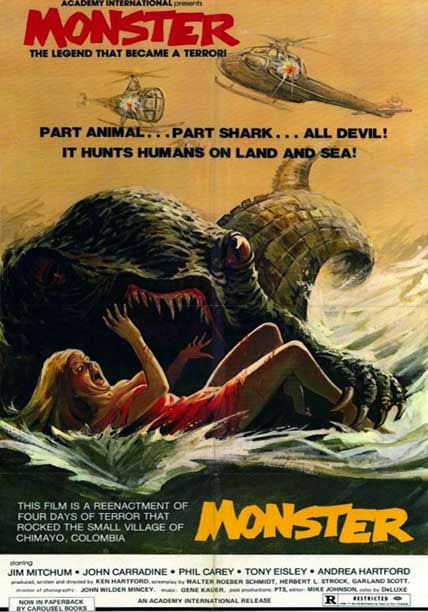
Today, we have a little indie film from 1980. This film was released under several names, including Monster. However, I prefer the title under which it has been included in several Mill Creek box sets: Monstroid: It Came From The Lake!
Monstroid tells the story of what happens when a monster emerges from a lake and starts killing people in Columbia. Superstitious villagers blame a local woman whom they believe to be a witch. Even though the town priest (and no horror fan should be surprised to discover that the priest is played by John Carradine) claims that he can exorcise the evil spirits that have possessed her, the villagers would rather burn her at the stake. Meanwhile, the local Big Evil Corporation has sent in Travis (James Mitchum) to take care of the monster!
And what a monster! Listen, there’s a lot of negative things that I could say about this low-budget film but the monster is simply adorable and must be seen by anyone who appreciates the rubber monsters that populated horror films in the days before CGI.
Plus, how can you resist a film that features not only Robert Mitchum’s son but John Carradine as well?
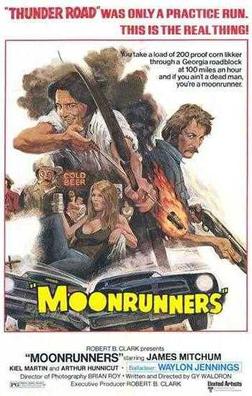
Grady and Bobby Lee Hagg (played by Kiel Martin and Jame Mitchum) are just some good ol’ boys, never meaning no harm, but they’ve still been in trouble with the law since they day they were born. They live in rural Georgia, on a farm owned by their Uncle Jesse (Arthur Hunnicutt). Uncle Jesse’s an expert on two things: the Bible and how to brew the best whiskey. Uncle Jesse is moonshiner with integrity. No one knows his formula and he won’t sell his moonshine to just anyone. He doesn’t want anything to do with the New York mob and their efforts to move in on the moonshine racket.
Uncle Jesse’s main rival is Jake Rainey (George Ellis), the corpulent county commissioner who used to be Jesse’s business partner but who now is in league with the Mafia. Jake and the Hagg boys have a rivalry that is sometimes friendly but still dangerous. Helping Jake control the county is a formerly honest lawman named Rosco P. Coltrane (Bruce Atkins).
The Hagg boys are on probation so they can’t leave the county and they can’t carry guns. Instead, they hunt with bow and arrow. They drive a fast car that they’ve named Traveller (after General Lee’s horse). Grady dreams of going to Nashville with Beth Anne Eubanks (Chris Forbes) and becoming a country music star. Bobby is a laid back race car driver who is having an affair with Jake Rainey’s wife.
The film follows the Hagg boys as they transport moonshine, outrun the police, and occasionally get into bar fights. The movie was shot on location on Georgia, features several car chases, and it’s narrated by country singer Waylon Jennings.
Moonrunners was filmed in 1973 but not released until 1975. It didn’t get much attention when it was released but it did go on to inspire a television series called The Dukes of Hazzard. Even considering the show’s popular success and current cult status, Moonrunners is still a largely unknown film. (It’s so obscure that Warner Bros. was reportedly shocked to discover that they were required to pay several million in royalties to the film’s producers before they could move ahead with their own film adaptation of The Dukes of Hazzard.) However, Moonrunners is superior to TheDukes of Hazzard in every way.
Of course, being better than The Dukes of Hazzard may seem like a low bar to clear but Moonrunners is still one of the better moonshiner films out there. The car chases are genuinely exciting and well-filmed and the cast feels authentic. Arthur Hunnicutt and George Ellis both seem like they naturally belong next to a still while James Mitchum and Kiel Martin are well-paired as Grady and Bobby Lee. Mitchum, in particular, channels the laconic charisma of his father, Robert. Not surprisingly, Moonracers is far rougher and has more of an edge than The Dukes of Hazzard. The TV show may have been for kids but the movie is not.
It’s a B-movie, of course. The soundtrack, which is full of outlaw country, is sometimes obtrusive. I burst out laughing at the film’s most dramatic moment because Waylon Jennings suddenly started singing a song called “Whiskey Man.” The DVD release appears to have been copied straight from a VHS tape so the images were often grainy. It’s not a perfect movie but I still enjoyed Moonrunners for what it was, a celebration of fast cars, pretty girls, and rebellious attitudes. Your collection of car chase films is incomplete without it!
Everyone’s favorite hippie action hero, Peter Fonda, plays Virelli, a long-haired Vietnam vet turned mercenary who is hired by a corrupt African general (Robert Doqui) to protect the construction of a dam that will result in the flooding of a native village. Got all that? Though Fonda is top-billed, he is not the star of the film. The star is Reb Brown, who plays T.J. Christian. T.J. starts out as a member of Fonda’s team but then he falls in love with a nurse (Joanna Weinberg) and he switches sides. The villagers need someone to lead their revolution and all it takes is hearing Reb Brown do one of his trademarks power yells to know that he’s the man for the job. Reb Brown was famous for yelling whenever he did anything and he yells a lot in Mercenary Fighters, even more than he yelled in Space Mutiny.
Mercenary Fighters is a typical Cannon film from the late 80s. Like many of Cannon’s mercenary movies, it was covertly filmed in South Africa, at a time when apartheid was still being enforced and Nelson Mandela was still sitting in a prison cell. (Cannon was not the only film company to secretly make movies in South Africa during the Apartheid Era. They were just the most blatant about it.) Richard Kiel apparently turned down Peter Fonda’s role. It’s hard to imagine Kiel in the role but perhaps that’s because Virelli is a quintessential Peter Fonda-in-the-80s role. Fonda glides through the film, delivering his lines like a California surfer who just smoked the kine bud. The presence of Ron “Superfly” O’Neal and James “son of Robert” Mitchum serves to elevate the film’s cool factor while Robert Doqui brings some “I’ve worked with both Robert Altman and Paul Verhoeven” credibility to his one-note role. Mercenary Fighters is good for anyone who is into either mindless Cannon action movies or Reb Brown yelling while shit blows up behind him.
Robert Mitchum puts the pedal to the metal as a moonshine runner at odds with both the Feds and gangsters in THUNDER ROAD. This is Mitchum’s most personal picture, not only starring but producing, writing the story (and two songs!), and, rumor has it, doing much of the directing. His notorious independent streak comes through in his character Luke Doolin, a Korean War vet who believes in the right of individual ownership, whether on his land or in his car, and free market enterprise, without interference from outsiders or the government. That’s right, Luke Doolin is a true Libertarian hero!
He’s also the best damn driver in River Valley, Kentucky, as we see in the opening scene, speeding down the backroads, eluding police with the greatest of ease. The Doolins have been making moonshine for generations, with daddy Vernon running the still, baby brother Robin the family mechanic, and mama Sarah praying for…
Hi there and welcome to October! This is our favorite time of the year here at the Shattered Lens because October is horror month. For the past three years, we have celebrated every October by reviewing and showing some of our favorite horror movies, shows, books, and music. That’s a tradition that I’m looking forward to helping to continue this year.
So, let’s start things off with a little indie film from 1980. This film was released under several names, including Monster. However, I prefer the title under which it has been included in several Mill Creek box sets: Monstroid: It Came From The Lake!
Monstroid tells the story of what happens when a monster emerges from a lake and starts killing people in Columbia. Superstitious villagers blame a local woman whom they believe to be a witch. Even though the town priest (and no horror fan should be surprised to discover that the priest is played by John Carradine) claims that he can exorcise the evil spirits that have possessed her, the villagers would rather burn her at the stake. Meanwhile, the local Big Evil Corporation has sent in Travis (James Mitchum) to take care of the monster!
And what a monster! Listen, there’s a lot of negative things that I could say about this low-budget film but the monster is simply adorable and must be seen by anyone who appreciates the rubber monsters that populated horror films in the days before CGI.
Plus, how can you resist a film that features not only Robert Mitchum’s son but John Carradine as well?


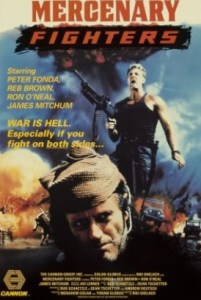 Everyone’s favorite hippie action hero, Peter Fonda, plays Virelli, a long-haired Vietnam vet turned mercenary who is hired by a corrupt African general (Robert Doqui) to protect the construction of a dam that will result in the flooding of a native village. Got all that? Though Fonda is top-billed, he is not the star of the film. The star is Reb Brown, who plays T.J. Christian. T.J. starts out as a member of Fonda’s team but then he falls in love with a nurse (Joanna Weinberg) and he switches sides. The villagers need someone to lead their revolution and all it takes is hearing Reb Brown do one of his trademarks power yells to know that he’s the man for the job. Reb Brown was famous for yelling whenever he did anything and he yells a lot in Mercenary Fighters, even more than he yelled in Space Mutiny.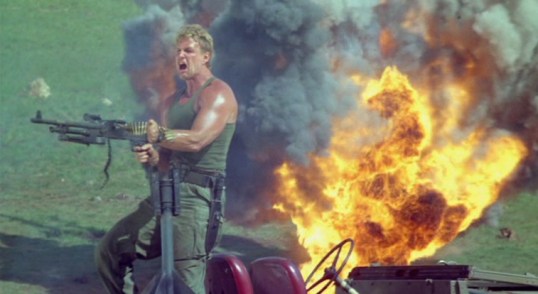


 Through the Shattered Lens