Late Night Retro Television Review: CHiPs 3.21 “The Strippers”


Welcome to Late Night Retro Television Reviews, a feature where we review some of our favorite and least favorite shows of the past!  On Mondays, I will be reviewing CHiPs, which ran on NBC from 1977 to 1983.  The entire show is currently streaming on Prime!
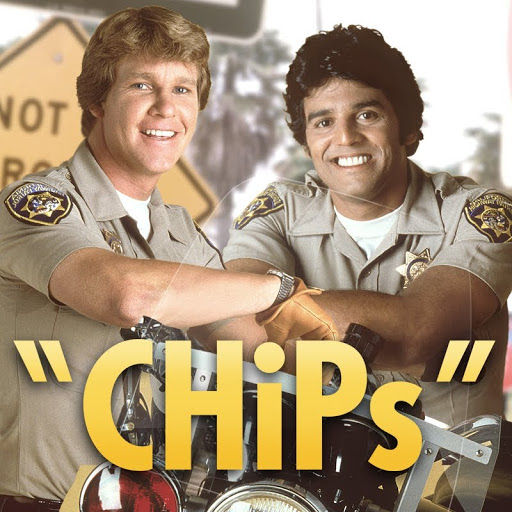
This week, the hills have eyes.

Episode 3.21 “The Strippers”

(Dir by Don Weis, originally aired on February 16th, 1980)

Calm down, boys, we’re not talking those types of strippers!

This episode of CHiPs finds Ponch and Jon searching through the California hill country for two rednecks who are stealing cars and stripping them for the parts.  One of the strippers is a fat guy who likes to sing while he’s working.  The other is a guy played by Evan C. Kim, who later played Clint Eastwood’s partner in The Dead Pool.  Baker’s girlfriend’s car gets stolen so this one is …. wait for it …. PERSONAL!  Of course, this being CHiPs, the episode is still mostly about Ponch even though Baker’s the one with a personal stake in the case.

It turns out that Ponch and Jon aren’t the only ones investigating crimes in the hills of California. The DEA is investigating a drug-running operation and they really don’t want to two motorcycle cops getting in the way.  (Doesn’t the DEA understand that motorcycles are cool?  At least they’re not bike cops like those schmucks on Pacific Blue.)  The head drug smuggler is played by Morgan Woodward, who was a veteran of the western genre.  The old cowboys are smuggling cocaine into Los Angeles.  It’s like an extremely depressing country song.  There’s no more cattle but there’s plenty of the devil’s dandruff to be sold.

If I seem to be rambling, it’s because there’s not really much to say about this episode.  Airing, as it did, late in the season, it’s hard not to feel that show’s writers were probably tired and out-of-ideas when it came to coming up with the plot for this one.  Ponch and Jon catch the car strippers who have information on the drug dealers.  The car strippers turn informant and hope that they’ll get a deal as a result.  Let’s hope so because prison is not a friendly environment to snitches.

This episode did feature one nicely-filmed accident scene, featuring multiple cars flying through the air (in glorious slo mo of doom!) and a bunch of broken glass.  Bonnie and Bear cleaned up the accident site so that Ponch and Baker could get back to searching for the car thieves.  That was nice of them.  It’s all about team work!
MURPHY’S LAW – Don’t F#&k with Jack Murphy!


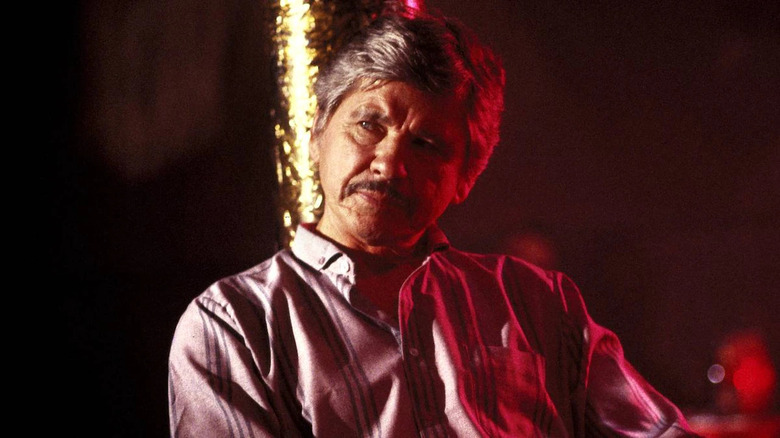
I became obsessed with actor Charles Bronson in 1986 after receiving a VHS copy of DEATH WISH 3 as a Christmas present. Going along with that obsession was my desire to see every Charles Bronson movie that had ever been made. As much as I enjoyed re-watching DEATH WISH 3, it was always a treat when I could rent a different Bronson film at the video store. The current Bronson movie at the video store in 1987 that appealed to me as a 13 year old boy was MURPHY’S LAW, so I wanted to rent it as often as possible. There were even a couple of times when different friends asked me to spend the night, and I had one requirement for saying yes… that we rent MURPHY’S LAW! Y’all, don’t think too bad of me for this admission. Remember, I was only 13 years old, I couldn’t drive, and I didn’t have a job so if I had to use a friend’s mom to get my Bronson fix, that’s just what I had to do! Based on the timing of my initial Bronson obsession, DEATH WISH 3 and MURPHY’S LAW are 1-2 in the films that I’ve watched the most times during my life.

In MURPHY’S LAW, Charles Bronson plays Jack Murphy, a tough cop who seems to be experiencing a series of unfortunate events:

  1. A thief named Arabella McGee (Kathleen Wilhoite) tries to steal Murphy’s car and drives it through the window of a pizzaria. We know that’s his car because he loudly proclaims, “That’s MY car!!” He even wastes money on a sack of groceries by throwing it at his car while she’s driving away. He’s able to chase her down on foot, but she kicks him in the testicles and runs off leaving him doubled over in pain, grocery-less, and clutching the family jewels!
  2. A mafia kingpin named Frank Vincenzo (Richard Romanus) wants to kill him because Murphy was forced to shoot and kill the kingpin’s brother. We know the cop and the kingpin don’t like each other, because a little before the shooting they have a slight disagreement in front of the mafioso’s mother over whether the brother is a scum-sucking pimp or a talent agent. Unable to resolve the debate amicably, the mafioso inquires as to whether or not Jack has ever heard of “Murphy’s Law, if anything can possibly go wrong it will?” Murphy responds with an alternative version of Murphy’s Law, the only law that he knows, and one that I greatly prefer. You get the feeling that this argument may be revisited later in the film.     
  3. Murphy’s now ex-wife Jan (Angel Tompkins) is performing extremely artistic striptease routines at a local club called Madam Tong’s. She’s also making love to the manager of the club. Rather than drinking at home alone until he passes out like most depressed men, Murphy hangs out at Madam Tong’s watching her shake her goodies for a bunch of horny lowlifes, before following them home and watching from outside until they turn off the bedroom lights. Very sad indeed.
  4. And here’s the worst part, on one of those typical nights where he’s obsessively stalking his wife, another mystery woman (Carrie Snodgress) knocks him in the head, shoots the slimy manager and Mrs. Murphy with his gun, and then frames him for their murders. Arrested for the murders and subsequently handcuffed to the thief who tried to steal his car, Murphy must stage a daring helicopter jailbreak in order to find out who framed him and clear his name before everything and everyone he holds dear is taken from him!

There are several reasons that I loved MURPHY’S LAW back in the eighties, and that I still enjoy it now. First, of course, is Charles Bronson. He was around 64 years old when he filmed MURPHY’S LAW, but he’s still in great physical condition in 1986. One of Bronson’s greatest strengths is his screen presence, and he still dominates each frame he’s in. Second, the film has an excellent supporting cast. Carrie Snodgress is having a ball playing the main villain in the film. I’ve seen her in quite a few movies, like PALE RIDER with Clint Eastwood, and 8 SECONDS with Luke Perry, but I’ve never seen her in a role like this. Snodgress was nominated for an Oscar for her role in a 1970 film called DIARY OF A MAD HOUSEWIFE. I’ve never seen that one before, but I should probably check it out! I love Kathleen Wilhoite as Arabella McGee, the thief who ends up handcuffed to Bronson. Her vocabulary, while probably not very realistic for the streets of LA at the time, was hilarious to me as a teenager. I enjoy calling the people I love “snot licking donkey farts” on occasion to this very day. It’s Kathleen Wilhoite singing the title song over the closing credits! And Robert F. Lyons is very special to me in his role as Art Penney, Jack Murphy’s partner. We got to interview him on the THIS WEEK IN CHARLES BRONSON podcast about his roles on DEATH WISH 2, 10 TO MIDNIGHT, and MURPHY’S LAW. He was so generous with his time, and just a hell of a nice guy! I’ve attached a link to the YouTube video of the interview with Mr. Lyons if you’re interested in the great stories he tells us about his time in Hollywood! Finally, MURPHY’S LAW was directed by J. Lee Thompson, my personal favorite director who worked with Bronson. Thompson directed Bronson in 9 different films, beginning with ST. IVES in 1976 and ending with KINJITE: FORBIDDEN SUBJECTS in 1989. No matter the material, you always knew that Thompson would deliver a film with a certain quality that made Bronson look good!

I’ll always be a fan of MURPHY’S LAW, partly for nostalgic reasons, but mainly because I think it’s an entertaining mid-80’s action film for Bronson at a time when he was one of the kings of the video store!

October True Crime: Killer’s Delight (dir by Jeremy Hoenack)


The 1978 film, Killer’s Delight, opens with the usual beautiful shots of San Francisco in the 70s.  It’s a lovely city, full of attractive people with their entire lives ahead of them.  The camera lingers on the Golden Gate Bridge.  If your movie doesn’t feature the Golden Gate Bridge, is it really set in San Francisco?

A van drives through the city and into the countryside.  My first instinct was to think, “Oh, that’s definitely a rape van,” and yes, it is.  (Seriously, don’t ever accept a ride from someone with a van.  Actually, you shouldn’t be hitchhiking to begin with!  Shame on you!)  The owner of the van, Danny (John Karlen), pulls over to the side of the road and tosses a naked woman’s body over the side of a cliff.

AGCK!

Now, I have to admit that Killer’s Delight (which is known by about a dozen other titles, including The Dark Ride) is a film that I’ve tried to watch several times but I’ve always struggled to make it all the way through.  That’s not because of the subject matter, though as a woman who once thought of herself as being invincible, I could certainly relate to many of the women who appeared in this film and made the fatal mistake of getting in that van.  No, the reason why I’ve always struggled with Killer’s Delight is because it’s a slow movie.  It’s not necessarily a bad film but it’s not one to watch if your eyelids are already starting to feel heavy.

This is an early serial killer film, made before it was decided that every killer should be portrayed as being an erudite and witty anti-hero.  Instead, the film’s killer is a loser named Danny (John Karlen) who has never gotten over his childhood and who, when he’s not killing, is busy sobbing.  It’s certainly a more realistic portrayal of a serial killer than anything that one might find in any of the films or books about Hannibal Lecter.  Danny has two skills.  He’s good at disguising himself and he’s fairly good at getting rid of bodies whenever there’s no one else around to see him.  Otherwise, he’s a total loser.  This realistic portrayal actually makes Danny into a very scary character.  You’re never going to meet Hannibal Lecter in real life.  That’s one reason why it’s so easy for some people to accept his crimes.  However, there are hundreds of people just like Danny out there.  There’s probably at least a few in your city right now.

The majority of the film is taken up with Sgt. Vince De Carlo (James Luisi) and his attempts to prove that Danny is the killer.  Vince is married and very protective of his daughters.  He’s also having an affair with a psychiatrist (Susan Sullivan) who runs the potential of becoming one of Danny’s victims.  Vince becomes obsessed with Danny but, much like Charles Bronson in Ten To Midnight, he knows that the justice system does not know what to do with a monster like Danny.

As I said, it’s a slow film but it is well-acted and, if you stick with it, it does cast an ever-growing atmosphere of doom.  It’s the type of film that will make you double-check the locks before you go to bed.

As for why this is a true crime film, it’s loosely based on the crimes of Edmund Kemper and Ted Bundy.  At the time the film was made, Bundy was still at large.  Killer’s Delight was the first film to be based on Bundy’s crimes, though Danny ultimately has more in common with Kemper than with Bundy.

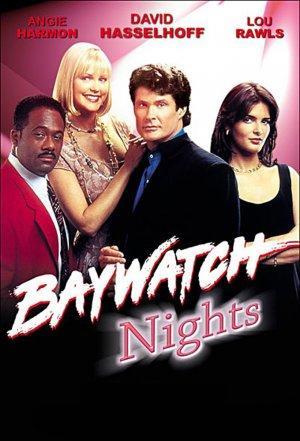
Late Night Retro Television Review: Baywatch Nights 1.13 “Payback”


Welcome to Late Night Retro Television Reviews, a feature where we review some of our favorite and least favorite shows of the past!  On Tuesdays, I will be reviewing Baywatch Nights, a detective show that ran in Syndication from 1995 to 1997.  The entire show is currently streaming on Youtube!

This week …. eh, I don’t know.  This is a messy episode.  Geraldo Rivera is in it for some reason.

Episode 1.13 “Payback”

(Dir by Reza Badiyi, originally aired on February 17th, 1996)

This episode was a mess.  It’s hard to know where to even start.

In a reminder that Baywatch Nights, during the second half of its first season, was trying to be more like the show it was spun off from, this episode begins with an extended sequence featuring a woman in a yellow bikini.  She swims.  She walks along the beach.  She washes the sand out of her hair in one of those beach showers.  And then an unseen person shoots her in the neck and the camera lingers on her body for an uncomfortable amount of time.  The mix of sex and violence doesn’t feel particularly appropriate for a show that, at its best, is essentially just a goofy detective show.

After this opening, we are presented with Ryan and Mitch at some sort of party.  Ryan has just come back from Catalina and, just as I would do, she took some Dramamine so she wouldn’t get car sick.  Unfortunately, she has a little bit too much champagne at the party and is soon in a daze.  Mitch takes her back to his place where Ryan demands to know why he’s never tried to “jump all over” her.  Ryan then strips down to her underwear and ends up in Mitch’s bed.

Mitch, it should be said, is a total gentleman and sleeps on the couch.  But, the next morning, he decides that it would be fun to keep Ryan in suspense as to whether or not they had sex the night before.

To any men reading: DO NOT DO THIS!

Seriously, this joke is totally out of character for Mitch.  For that matter, it’s a bit out of character for Ryan as well.  (Everything we’ve learned about Ryan would suggest that she would be smart enough to know better than to mix Dramamine and champagne.)  David Hasselhoff and Angie Harmon did have a likable chemistry.  It’s a shame that the show tried to rush things with stuff like this instead of letting it develop naturally.

As for the show’s plot, there are actually two cases.  The lesser of the two features Garner helping out a young photographer named Griff Walker (Eddie Cibrian).  Griff accidentally got a picture of a model’s murder and he’s worried that murderers are after him.  Garner confronts the model’s ex and tells him to back off on trying to intimidate Griff.  It’s a weird plotline that was obviously only included to introduce the character of Griff.  (This is the third episode to feature Cibrian in the opening credits but the first to actually feature his character.)

Meanwhile, a reporter named Albert Romero (Geraldo Rivera …. yes, the one and only) comes to Mitch after some mobsters kidnap his wife, Bobbie (Meilani Paul).  Bobbie was previously being used to smuggle drugs.  Now, they want to use her to smuggle a bomb.  Fortunately, the mobsters are pretty dumb and Mitch is easily able to thwart them.  Unfortunately, this storyline features a lot of Geraldo.  As anyone who has ever watched him do anything can tell you, Geraldo Rivera is a person who is incapable of sounding natural or sincere.  Everything about him is calculated and over-rehearsed and that certainly comes through in his performance here.  Only Geraldo Rivera could make overacting boring.

As I said, this was a messy and way too busy episode.  It’s also one that nearly sabotaged the most appealing part of the show, Ryan and Mitch’s friendship.  I can’t wait until the UFOs and the sea monsters and the Vikings show up during the second season.

Horror On TV: Circle of Fear 1.18 “Legion of Demons” (dir by Paul Stanley)


Shy Beth (Shirley Knight) is now to the city and still struggling to make friends.  Fortunately, her friend Janet gets her a nice corporate job.  Unfortunately, Janet then vanishes and Beth discovers that her co-workers are more than just office workers,  I won’t spoil the twist, since the title of this episode already did that.

Legion of Demons aired on February 2nd, 1973 and it undoubtedly led to a lot of viewers saying, “I think they filmed that at my office!”

Enjoy!

The Take (1974, directed by Robert Hartford-Davis)


Lt. Terrence Sneed (Billy Dee Williams), a tough and suave cop from San Francisco, is sent to New Mexico to help Police Chief Berrigan (Eddie Albert) take down the local crime syndicate.  No sooner has Sneed arrived in town than he’s helping to prevent a prison break and killing gangsters.  Berrigan is impressed and explains to Sneed that the local crime boss is Victor Manso (Vic Morrow).  Even though everyone knows that Manso is crooked, the police haven’t ever been able to put together a case that will stand up in court.  Maybe Sneed is the man who can do it.

What Berrigan doesn’t know is that Sneed is a crooked cop, himself.  As soon as Sneed leaves his meeting with Berrigan, he goes over to Manso’s office and collects his money.  Manso assigns Sneed to work with another crooked cop, Captain Dollek (Albert Salmi).  However, it turns out that Sneed has plans of his own.  While still on Manso’s payroll, Sneed starts to put together a case that might finally take Manso down.

The Take is full of good actors in small roles.  If you have ever wanted to see Billy Dee Williams share a scene with Frankie Avalon, The Take is the film for you.  Avalon plays Danny James, a small-time hood who is arrested and interrogated by Sneed.  At first, Danny is cocky and arrogant but, as soon as Sneed removes his jacket and his watch and makes a fist, Danny starts crying and begging Sneed not to beat him.  Danny is soon turned into an informant and then disappears from the movie.  The beautiful model Kathirine Baumann plays Danny’s girlfriend.  While only wearing a towel, she gives Capt. Dollek the finger and looks amazing doing it.  Sorrell Brooke, who later found fame as Boss Hogg on The Dukes of Hazzard, also has a few good scenes as Sneed’s deceptively respectable money launderer.

The Take can be a confusing film to watch because it’s never firmly established just how corrupt Sneed actually is.  Sometimes, Sneed just seems like he’s trying to make a little extra money and then, other times, he comes across as being a full-blown gangster.  Despite being on Manso’s payroll, Sneed seems to be determined to take him down and the film never makes clear why.  Billy Dee Williams is his usual supremely cool self but he seems almost too cool to play a morally ambivalent cop.  More impressive are Vic Morrow and Eddie Albert, who both shamelessly chew the scenery as two leaders on opposite sides of the law.

The Take is often mistakenly referred to as being a blaxploitation film but it’s really just a cop film with a lead actor who happens to be black.  Unlike the best blaxploitation films, there’s no political subtext to be found in the movie.  Sneed could just as easily be a corrupt white detective and, with the exception of one throwaway line, race is never mentioned.  While this is a minor cop film, it features a few good action scenes and, again, it’s your only chance to see two very different pop cultural icons, Billy Dee Williams and Frankie Avalon, acting opposite of each other.  That’s not a bad pay-off for 91 minutes of your life.