Late Night Retro Television Review: 1st & Ten 1.6 “You Are Who You Eat”


Welcome to Late Night Retro Television Reviews, a feature where we review some of our favorite and least favorite shows of the past! On Wednesdays, I will be reviewing 1st and Ten, which aired in syndication from 1984 to 1991. The entire series is streaming on Tubi.
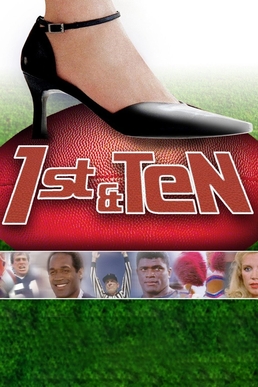
This week, Diana makes history!

Episode 1.6 “You Are Who You Eat”

(Dir by Bruce Seth Green, originally aired on December 30th, 1984)

Coach Denardo has a heart attack and is laid up in the hospital.  It looks like Diane is going to have to coach the team!

Wait?  What?

Listen, I’ll be the first to admit that I don’t know a lot about football but I do know that there is such a thing as an assistant coach.  And there’s also coordinators.  There’s a lot of coordinators and a lot of assistants and I imagine that a part of their job entails coaching whenever the head coach is in the hospital.  So, I’m not really sure how this episode went from “Coach Denardo can’t coach this weekend” to “The owner is going to have to do it!”

Still, Diana ends up on the sidelines as the “first female head coach in history!”  I remember that a few Super Bowls ago, they made a big deal about one of the teams having a female assistant coach and I was like, “Well, they better win or they’re never going to hire another woman.”  I think the team lost.  I don’t really follow football.

Anyway, Coach Denardo is on the phone with Diana for most of the game but, towards the end of the game, the connection goes down.  Denardo runs out of his hospital in his hospital gown and takes a taxi to the stadium.  Luckily, even without his help, Diana knew exactly which play to call and the Bulls win another game.

Yay, I guess.  This episode was pretty dumb.  If I was coaching a football team, I would just be like, “Have that guy run to the touchdown area and then throw him the ball.”  I think we would win easily.
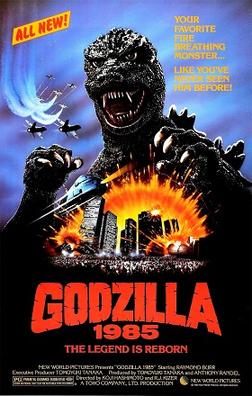
Horror Film Review: Godzilla 1985 (dir by R.J. Kizer and Koji Hashimoto)


Nine years after The Terror of Mechagodzilla, Godzilla finally returned to Japanese movie screens in The Return of Godzilla!

One year later, Raymond Burr joined him when The Return of Godzilla was released in the United States as Godzilla 1985.

The film’s plot is a simple one, though it does have an interesting subtext.  Godzilla is once again roaming the planet and, after spending the last few years as humanity’s champion, he is once again destroying everything in his path.  (This is a rare later Godzilla film that features only Godzilla.  Mothra, Rodan, Ghidorah, and that weird armadillo that always used to follow Godzilla around, none of them are present.  The son of Godzilla is not mentioned, to the regret of no one.)  Looking to prevent a mass panic, the Prime Minister of Japan tries to cover up the news of Godzilla’s return.  But when a Russian submarine is destroyed by Godzilla and the Russians blame the Americans and bring the world to the verge of atomic war, the Prime Minister is forced to reveal the truth.  The Super X, an experimental new airplane, is deployed to take Godzilla out but it turns out that Godzilla is not that easy to get rid of.

Now, as I said, there is an interesting subtext here.  If the first Godzilla films were all about the trauma of Hiroshima and Nagasaki, this version of Godzilla is all about being trapped between the whims of two super powers.  For the most part, Godzilla only attacks Japan.  At the time this movie came out, he had been attacking Japan for nearly 30 years and the rest of the world was content to allow Japan to deal with the consequences alone.  However, when Godzilla sinks that Russian sub, both the Russians and the Americans blame each other and bring the world to the brink of annihilation.  Japan, like the rest of the world, finds itself caught in the middle.  In the end, it’s up to Japan to not only defeat Godzilla but to keep the Americans and Russians from blowing up the rest of the world.  Godzilla may be bad, this movie tells us, but he’s nowhere near as bad as the idiots with all of the atomic missiles.

Of course, when The Return of Godzilla came to America, extra scenes were shot to make it clear that America had Japan’s back.  For that reason, Raymond Burr returns as journalist Steve Martin.  Martin is called in to share his first-hand knowledge of what Godzilla is capable of.  One has to wonder who thought that was a good idea as Martin basically comes across as being a grouchy crank who just wants to tell everyone to get off his lawn.  As opposed to the first Americanized Godzilla film, which was edited to make it appear as if Burr was actually talking to characters from Gojira, Godzilla 1985 just features a lot of scenes of Burr staring at a screen in the Pentagon and making ominous comments about what Godzilla is capable of doing.  It’s a wasted cameo but I guess the film’s American distributors didn’t have faith that Godzilla could pull in the audiences on his own.

Fortunately, Raymond Burr’s time-consuming cameo can’t keep this film from being a lot of fun.  It’s a Godzilla film, after all.  Godzilla stomps on a lot of buildings and breathes a lot of fire and wisely, the film doesn’t wait too long before allowing him to go on his rampage.  After spending several films as an almost comic character, this film reminds audiences that Godzilla was always meant to be frightening.  Of course, lest anyone take this film too seriously, the size of the Super X changes from scene to scene, depending on which miniature was being used.  Godzilla loses his temper and falls into a volcano but there’s never any doubt that he’ll be back.  You can’t stop Godzilla!

Previous Godzilla Reviews:

  1. Godzilla, King of the Monsters (1958)
  2. Godzilla Raids Again (1958)
  3. King Kong vs Godzilla (1962)
  4. Mothra vs. Godzilla (1964)
  5. Ghidorah: The Three-Headed Monster (1964)
  6. Invasion of the Astro-Monster (1965)
  7. Godzilla vs. The Sea Monster (1966)
  8. Son of Godzilla (1967)
  9. Destroy All Monsters (1968)
  10. All Monsters Attack (1969)
  11. Godzilla vs Hedorah (1971)
  12. Godzilla vs Gigan (1972)
  13. Godzilla vs Megalon (1973)
  14. Godzilla vs Mechagodzilla (1974)
  15. The Terror of Mechagodzilla (1975)
  16. Cozilla (1977)
  17. Godzilla vs. Mothra (1992)
  18. Godzilla vs. Destoroyah (1995)
  19. Godzilla, Mothra, and King Ghidorah: Giant Monsters All-Out Attack (2001)
  20. Godzilla (2014)
  21. Godzilla: Planet of the Monsters (2017)
  22. Godzilla, King of the Monsters (2019)
  23. Godzilla vs Kong (2021)
  24. Godzilla Minus One (2023)