Retro Television Review: The Night They Saved Christmas (dir by Jackie Cooper)


Welcome to Retro Television Reviews, a feature where we review some of our favorite and least favorite shows of the past!  On Sundays, I will be reviewing the made-for-television movies that used to be a primetime mainstay.  Today’s film is 1984’s The Night They Saved Christmas!  It  can be viewed on Tubi and YouTube.

The Night They Saved Christmas argues that there are two types of people in the world.

There are people who still believe in Santa Claus and all that he represents and then there are the people who gave up their belief a long time ago.  Those who believe in Santa Claus are still full of the Christmas spirit and, under the right circumstances, they might even get to meet the elves and the jolly old man himself.  Those who do not believe are destined to waste their holiday on focusing on material things that aren’t really important.

Petroleum engineer Michael Baldwin (Paul Le Mat) doesn’t believe in Santa Claus and that’s why he had no trouble moving his entire family to the North Pole so that they could freeze while he headed up an oil exploration project.  Michael and his boss, billionaire Sumner Murdock (Mason Adams), are determined to find oil and they’ve got an endless supply of dynamite with which to search for it.

Michael’s wife, Claudia (Jaclyn Smith), still believes in the spirit of Santa and she encourages their children to believe as well.  For that reason, Ed the Elf (played by singer Paul Williams), is willing to take Claudia and the kids to North Pole City.  They get to meet Santa (Art Carney) and they even learn how Santa uses satellite technology to deliver presents all over the world.  The city is really quite impressive, with the movie making good use of matte paintings and miniatures to create the impression of a magical metropolis.  And Santa turns out to be a pretty nice guy, even if he does tell the elves that he’s sick of them singing Jingle Bells.

Unfortunately, North Pole City is in danger!  Every day, the oil company’s dynamite causes a mini-earthquake.  With the dynamiting getting closer and closer to North Pole City, Santa and the elves worry that they might be on the verge of getting blown up!  Can Claudia and the kids convince Michael to stop blowing up huge chunks of the North Pole before Christmas is ruined!?

Well, listen — I don’t think it’s a spoiler for me to tell you that Christmas is not ruined.  It would be pretty cynical for the movie to end with Michael blowing up Santa Claus and cynical is one thing that The Night They Saved Christmas is not.  This is a very earnest film, full of cheery elves, a paternal Santa, and lots of Christmas music.  Even greedy old Mr. Murdock turns out to be not that bad of a guy.  In the end, this film says that Santa and the spirit of Christmas is for everyone and that’s certainly not a bad message.  It’s a likeable movie for the holiday season and Art Carney is a perfect Santa Claus, even if he does appear to be a little underweight for the role.  As played by Carney, Santa is welcoming, good-humored, and still enthusiastic about his job, even after centuries of doing it.  He’s exactly the way you would want Santa to be.  This is a film that earns the right to wish everyone a merry Christmas!

Retro Television Review: The Astronaut (dir by Robert Michael Lewis)


Welcome to Retro Television Reviews, a feature where we review some of our favorite and least favorite shows of the past!  On Sundays, I will be reviewing the made-for-television movies that used to be a primetime mainstay.  Today’s film is 1972’s The Astronaut!  It  can be viewed on YouTube!

NASA has successfully landed a man on Mars!  The entire world watches as Col. Brice Randolph (Monte Markham) makes his way across the Martian surface.  However, suddenly, the signal goes out.  Viewers are assured that this is the sort of thing that happens all the time with interstellar travel.  What they don’t know is that the signal went down because Brice suddenly died.  While the surviving members of the mission return to Earth, NASA tries to figure out how to keep anyone from finding out what happened to Brice.  NASA director Kurt Anderson (Jackie Cooper) knows that the President wants to cut the budget and the death of an astronaut would probably provide the perfect excuse for taking money away from NASA and canceling the Mars program.

Anderson’s solution is to recruit a substitute.  Eddie Reese (Monte Markham) has a slight resemblance to Brice, one that can be perfected through plastic surgery.  While the mission returns from Mars, Eddie goes through a crash course to teach him how to talk, walk, and think like Col. Brice Randolph.  Eddie is told that he’ll have to be Brice until the NASA scientists can figure out what led to Brice’s death.  Once they do know what went wrong with the mission, Eddie will have to go into NASA’s version of the witness protection.

Eddie proves to be a quick learner and it helps that he, like so many others, looked up to Brice.  However, while Eddie can fool almost everyone else, he cannot fool Brice’s wife, Gail (Susan Clark).  When Eddie actually treats Gail with kindness and shows sympathy for her nervous condition, she realizes that there’s no way that Eddie is actually her husband.  Apparently, Brice was not quite the saintly figure that the public believed him to be.  Eddie and Gail soon fall in love for real but when NASA finally discovers what led to Brice’s death, it looks like their new life together might be over as abruptly as it begun.

The Astronaut is a low-key conspiracy …. well, I hesitate to call it a thriller.  There’s little of the things that one typically associated with a conspiracy thriller.  There’s no black helicopters.  There’s no shadowy assassins.  There’s no army of men walking around in black suits.  Instead, there’s just a bunch of nervous bureaucrats who are desperate to keep the rest of the world from discovering just how much they screwed up.  As played by Jackie Cooper, the head of NASA isn’t so much evil as he’s just way too devoted-to-his-job for his own good.  In many ways, this is probably one of the most realistic conspiracies ever portrayed on film.

In the end, The Astronaut is a portrait of two lonely people who find love in the strangest of circumstances.  Susan Clark and Monte Markham make for a likable couple and the viewer really does hope that things will work out for them.  What this film lack in conspiracy thrills, it makes up for in human drama.  It appealed to both my romantic and my rabid anti-government sides.  What more could one ask?

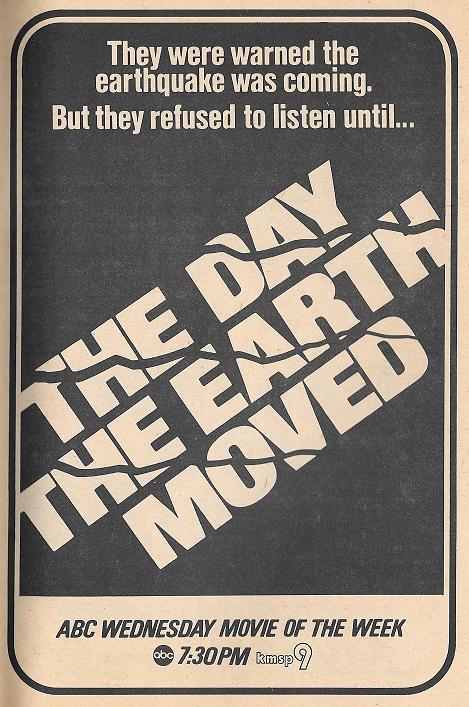
Retro Television Reviews: The Day The Earth Moved (dir by Robert Michael Lewis)


Welcome to Retro Television Reviews, a feature where we review some of our favorite and least favorite shows of the past!  On Sundays, I will be reviewing the made-for-television movies that used to be a primetime mainstay.  Today’s film is 1974’s The Day The Earth Moved!  It  can be viewed on YouTube!

Sitting in the middle of the Nevada desert, there’s a town called Bates.

Bates was once a thriving community but the years and the hot Nevada winds have not been kind to it.  Now, it consists of only a  few buildings and a speed trap.  Judge Tom Backsler (William Windom) is the most powerful man in this tiny community and he’s determined to return Bates to its former glory.  His plan is to open up a Christmas park and to remake Bates as “Santa Claus’s home away from the North Pole.”  In order to raise the money for that project, he and the police run an aggressive speed trap.  When pilot and photographer Steve Barker (Jackie Cooper) is caught in the speed trap, it turns out that he doesn’t have enough money to pay his fine.  So, his car is impounded and he’s put to work, sweeping up the dust and helping to get the Christmas park ready to open.

With the help of friendly little townsgirl, Steve is finally able to escape from Bates and return to his job.  He works with his wife, Kate (Stella Stevens), and his best friend, Harley (Cleavon Little), as surveyors.  When someone wants to buy a stretch of the Nevada desert, Steve and Harley fly over the land and take pictures.  Looking over the latest batch of pictures, Steve deduces that not only is there going to be an earthquake but it’s going to destroy the town of Bates!  Can Steve return to the town that once held him prisoner and convince the townspeople to leave with him before disaster hits!?

In many ways, The Day The Earth Moved is a standard made-for-TV disaster flick.  Only Steve and Kate realize what’s about to happen and they struggle to get anyone else to believe them.  Indeed, it seems like the world is almost conspiring to keep them from warning everyone about the incoming earthquake.  The film’s story checks off all of the expected disaster movie plot points.  That said, the town of Bates itself — with its gigantic Santa Claus standing in the middle of the desert — is a nicely surreal location and the repeated shots of a deserted farm being gradually destroyed by minor tremors achieve a certain ominous grandeur.  Jackie Cooper and Stella Stevens are believable as a husband and wife who love each other despite the fact that they’re often very annoyed with each other.  To the film’s credit, William Windom’s character is not portrayed as being a cardboard villain but instead as someone who simply wants to give his neighbors some place decent to live.  The Day The Earth Moved is predictable but well-done.

Of course, the main reason anyone will have to watch this film will be for the earthquake.  Unfortunately, this is where viewers will run into a common problem that has afflicted many made-for-TV movies.  The low-budget earthquake is just not that impressive.  For all the scenes of people yelling, it’s always pretty obvious that the camera is doing most of the shaking.  But you know what?  It’s a made-for-TV movie from 1974.  Cut it some slack and just go with it.

Horror On TV: Ghost Story 1.9 “Cry of the Cat” (dir by Arnold Laven)


On tonight’s episode of Ghost Story, a rodeo is terrorized by a series of cougar attacks.  Could it have anything to do with the cat-like wife of rodeo star Doug McClure?

This episode originally aired on November 24th, 1972 and it is kind of silly but …. hey, it’s Doug McClure.  It doesn’t get more early 70s than Doug McClure.

Enjoy!

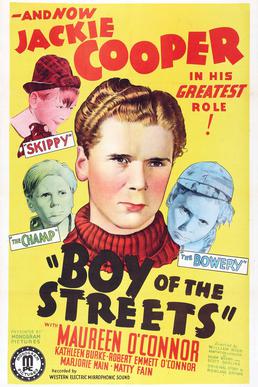
Cleaning Out The DVR: Boy of the Streets (dir by William Nigh)


Welcome to New York City, circa 1937!

It’s a place where the extremely wealthy carefully avoid the districts dominated by the extremely poor, like the Bowery.  In the Bowery, families live in tenements and worried mothers can only cry as they watch their sons join street gangs and their daughters settle for a life of abuse and loss.  Sure, there’s a few do-gooders.  Occasionally, there’s a cop who is convinced that no boy is a lost cause.  Sometimes, you’ll run into a doctor who is determined to provide adequate medical care to the inhabitants of the Bowery.  In fact, you might even see a rich person who is determined to spread about some charity.  But, for the most pat, life in the Bowery is just one hopeless day after another.

14 year-old Chuck Brennan (Jackie Cooper) lives in the Bowery.  He’s got a gang of boys who will do anything that he tells them to do and, despite the fact that Chuck is obviously smarter than almost everyone else around him, he has no interest in being a role model or decent citizen or anything else of that matter.  Chuck lives in a shabby apartment with his mother (Marjorie Main) and his father (Guy Usher).  Chuck looks up to his father who apparently knows important people and is often out of town on “business.”  However, when Chuck discovers that his father is actually a low-level hood who works for the local political machine, Chuck is not only disillusioned but also inspired to go find some gangsters to team up with himself.

The system says that Chuck is a hopeless case but not everyone agree.  Officer Rourke (Robert Emmett O’Connor) thinks that there’s hope for Chuck, he just needs something or someone to straighten him out.  (Like maybe a stint in the Navy….)  And then there’s Nora (Maureen O’Connor), the sweet Irish girl who lives in Chuck’s building and who is often heard singing to her deathly ill mother.

In the end, it’s all up to Chuck.  Will he pursue a life of crime or the life of an honest man?  Will he be a man like his father or will he end the cycle of crime and desperation?

Boy of the Streets is a low-budget, black-and-white film from 1937.  It was produced by Monogram Pictures and, much like Dead End (which came out the same year and featured a superficially similar storyline), it’s a film that mixes social commentary with a bit of gangster action.  The film’s low-budget doesn’t do it any favors and there’s nothing particularly surprising to be found in the film’s plot but child actor Jackie Cooper is convincingly cocky as the swaggering Chuck and Marjorie Main does a good job as his anguished mother.  (Interestingly, Main also played Humphrey Bogart’s mother in Dead End.)

Boy of the Streets is a good example of a film that I never would have seen if not for TCM.  (I recorded it off of TCM way back in June.)  That’s one reason why I’ll always be thankful for TCM.  At a time when so many people seem to be determined to destroy history, TCM is celebrating it.

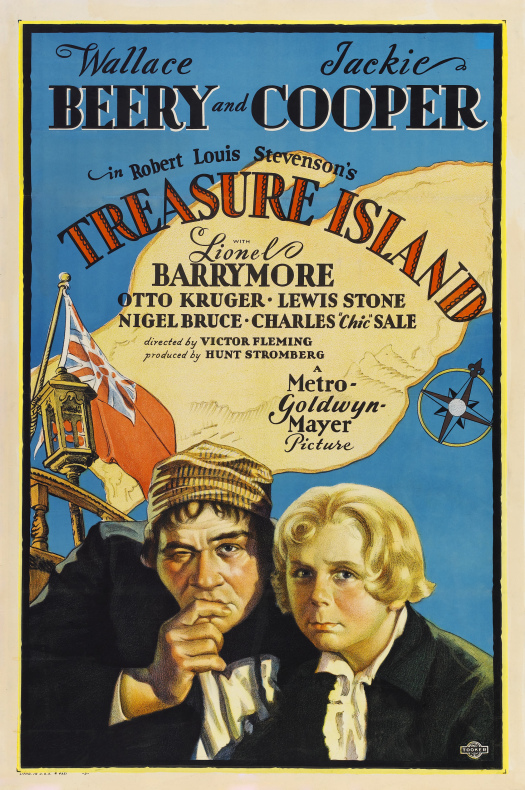
Yo-Ho-Hollywood!: TREASURE ISLAND (MGM 1934)


gary loggins's avatarcracked rear viewer

Robert Louis Stevenson’s  venerable 1883 adventure novel TREASURE ISLAND has been filmed over 50 times throughout the years, beginning with a 1918 silent version. There was a 1920 silent starring Charles Ogle (the original screen FRANKENSTEIN monster!) as that dastardly pirate Long John Silver, a 1972 adaptation with Orson Welles, a 1990 TV Movie headlined by Charlton Heston, and even a 1996 Muppet version! Most movie buffs cite Disney’s 1950 film as the definitive screen TREASURE ISLAND, with Bobby Driscoll as young Jim Hawkins and Robert Newton as Long John (and Newton would go on to star in the TV series LONG JOHN SILVER, practically making a career out of playing the infamous fictional buccaneer), but…

…a case can certainly be made for MGM’s star-studded 1934 interpretation of the story, teaming Wallace Beery and Jackie Cooper as Long John and Jim. This was the first talking TREASURE ISLAND, and the…

View original post 572 more words

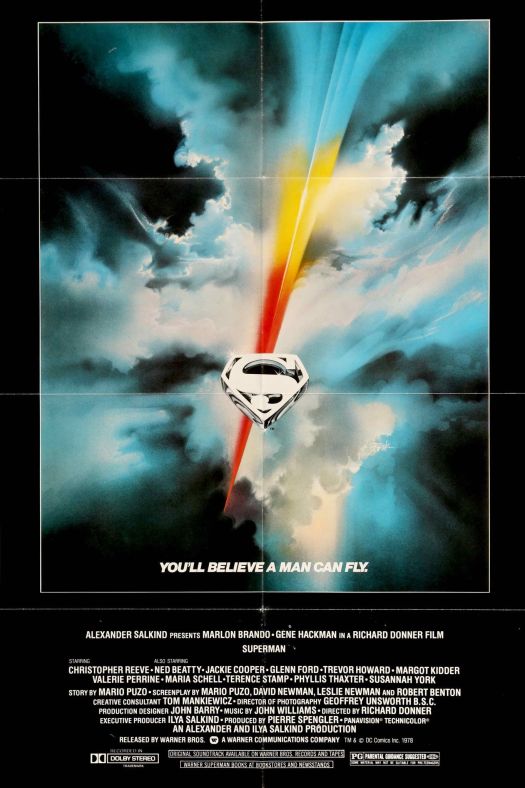
40 Years of SUPERMAN: THE MOVIE (Warner Brothers 1978)


gary loggins's avatarcracked rear viewer

Unlike today, when superheroes dominate at the box office and your local multiplex, costumed crusaders were dead as the proverbial doornail in theaters of the 1970’s. The last was 1966’s BATMAN, at the height of the camp craze, but after that zer0… zilch… nada. I didn’t care; my comic book reading days were pretty much at an end by 1978, driven away by other distractions, like making money, girls, beer, and girls. I had moved on.

But when Warner Brothers announced they were making a new, big budget Superman movie, I was intrigued. I’d always loved the old 50’s TV series starring George Reeves as the Man of Steel, corny as it was, and with a cast featuring Marlon Brando , Gene Hackman , and Glenn Ford , not to mention that girl from Brian DePalma’s SISTERS as Lois Lane, I wanted to see this new version. I also wanted…

View original post 979 more words

Lisa Reviews An Oscar Nominee: The Champ (dir by King Vidor)


the_champ_poster

“I want the Champ!  I want the Champ!”

Oh good God, shut up you little brat.

Now, nobody actually tells 8 year-old Dink (Jackie Cooper) to shut up at the end of 1931’s The Champ.  I’d like to think that I probably would have said those words if I had been sitting in the audience but, in all honestly, I probably would have been crying along with everyone else.  I’m sure that a lot of people probably cried when The Champ was first released.

And really, it’s probably unfair to criticize Jackie Cooper for repeatedly wailing, “I want the Champ!” during the film’s final five minutes.  It’s actually probably one of the few authentic moments in the film.  It’s just unfortunate that Cooper’s voice was a bit shrill and, as a result, I found myself covering my ears.

As for what The Champ is about, it’s the story of a boy and his alcoholic father.  Andy Purcell (played with loutish charm by the never particularly subtle Wallace Beery) is a boxer.  He used to be the world champion and people still call him The Champ.  Of course, it’s been a while since he’s been in the ring.  Now, Andy just drinks and gambles and continually lets down his son.  However, Dink is always willing to forgive Andy and Andy does truly love his son.  He even buys him a horse, which gets named Little Champ.

It’s while at the stables that Dink meets an upper class woman named Linda (Irene Rich).  What Dink does not realize is that Linda is … his mother!  She was once married to the Champ but his drinking led to divorce.  Linda wants to adopt Dink and perhaps she should because The Champ really is not a very good father.  He even loses Little Champ in a card game.

Fortunately, the Champ has a chance to win the money needed to buy back the horse.  All he has to do is reenter the ring and beat the Mexican heavyweight…

It all leads to “I want the champ!” being screamed several hundred times in a handful of minutes, enough times to make me fear that I would be deaf before the film ended…

The Champ is an old-fashioned and rather creaky melodrama, one that hasn’t aged particularly well.  Director King Vidor specialized in films about the “common man” and The Champ often feels like it was adapted from the first draft of an unproduced Clifford Odets play.  It’s all very sentimental and so thoroughly lacking in snark or cynicism that, for modern audiences, it’s difficult to relate to.  I’ll leave it to you to decide whether that’s a good or a bad thing.

The Champ does hold a place in Oscar history.  Wallace Beery won the Oscar for Best Actor but, for the first time in the history of the awards, there was a tie and Beery shared the Oscar with Fredric March, who won for Dr. Jekyll and Mr. Hyde.

The Champ was also nominated for best picture but it lost to Grand Hotel, which also features Wallace Beery.

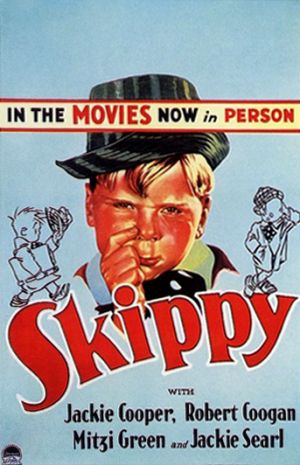
Lisa Reviews An Oscar Nominee: Skippy (dir by Norman Taurog)


Skippy1931

(SPOILERS BELOW!)

Oh my God, they actually killed the dog…

That was my main reaction, this morning, as I watched the 1931 film Skippy.  Skippy aired on TCM earlier this morning and I set the DVR to record it because, long ago, Skippy was nominated for best picture and, for quite some time, it has been my goal to see and review every single film ever nominated for the best picture.

And I have to admit that for the first hour or so, I wasn’t sure if I’d actually be able to get all the way through Skippy.  Skippy is very much a film of the early 30s and you never known how much you appreciate jump cuts, tracking shots, and even the occasional hand-held camera shot until you watch a movie that features none of them.  It’s definitely a different style of story telling and I sometimes found myself struggling to adjust to it.

Add to that, Skippy was a film about children and, while the film’s star, 9 year-old Jackie Cooper, was a natural before the camera, the other child actors often seemed forced.  There was a lot of overacting that, if nothing else, made me appreciate even more Jacob Tremblay’s subtle performance in Room.

There were a few things that I did appreciate about Skippy.  As I’ve stated on the site before, I love history and Skippy was definitely a time capsule.  The film follows 6 year-old Skippy (Jackie Cooper) as he leaves the safety of his upper class home and explores the poor side of the town and the film does a good job of contrasting Skippy’s sheltered home with the nearby neighborhood of Shantyown.  It’s while wandering around Shantytown that Skippy meets and befriend Sooky (Robert Coogan).  Skippy and Sooky accidentally break a windshield that belongs to the evil dogcatcher, Mr. Nubbins (Jack Rube Clifford).  Mr. Nubbins retaliates by taking away Sooky’s dog and demanding that the boys pay him 3 dollars for the dog’s freedom.  Though it’s a mighty struggle that involves many comedic schemes, the boys manage to raise the 3 dollars.  Mr. Nubbins takes the money, says that he’s going to use the money to buy a new windshield, and that he’s going to kill the dog anyway.  So, Skippy and Sooky have to raise three dollars more just to discover that Mr. Nubbins has already shot their dog.

As Sooky sobs, Skippy fights back tears and asks if they can at least have the dog’s body so they can give it a proper burial.

“It’s already been disposed of,” Mr. Nubbins snarls.

And, at this point, I was just sitting there and thinking, “What the HELL!?”  Seriously, I can only imagine what it must have been like to be a child in 1931, watching this film (which was based on a comic strip that all the kids probably read every day), laughing at jokes that were probably quite funny back then, and then suddenly being smacked in the face by Mr. Nubbins announcing that not only was the dog dead but his body had been cremated.  I can only imagine that amount of tears that were shed in those 1931 theaters!

(Making things even worse is the discovery that the town’s rules for dealing with stray dogs were written by none other than Skippy’s father.)

And as I thought more about it, it occurred to me that this is one thing that would never happen in a movie today.  You don’t kill the dog, unless you want Keanu Reeves to show up and kill you.

Sooky breaks into tears as soon as he hears that his dog has been killed.  Skippy manages to hold back until he gets home and then he breaks into sobs.  (According to Jackie Cooper, director Norman Taurog threatened to kill the dog in real life unless Cooper gave him authentic tears.)  Fortunately, all is eventually resolved by both Skippy and Sooky getting new dogs and Skippy’s dad beating up Mr. Nubbins.  Yay!

Anyway, for the most part, Skippy is one of those films that will mostly be interesting to Oscar completists for me.  However, I will always be stunned by the fact that, in the film, Mr. Nubbins actually killed that dog.

Horror on TV: Twilight Zone 5.28 “Caesar and Me”


TheTwilightZoneLogo


Tonight’s episode of The Twilight Zone might remind you of a previous episode entitled The Dummy. Once again, we have a story about a ventriloquist (Jackie Cooper) and a dummy who appears to have a mind of his own. (In fact, the same prop dummy was used in both episodes.) However, Caesar and Me is an even darker take on the conflict between puppet and puppeteer.


Seriously, don’t mess with Caesar.


This episode originally aired on April 10th, 1964.