4 Shots From 4 Films is just what it says it is, 4 shots from 4 of our favorite films. As opposed to the reviews and recaps that we usually post, 4 Shots From 4 Films is all about letting the visuals do the talking.
Today, we pay honor to one of my favorite genres, the disaster film!
It’s time for….
4 Shots From 4 Disaster Films
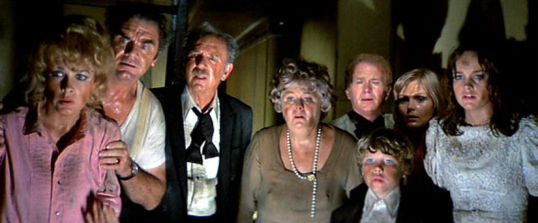
The Poseidon Adventure (1972, dir by Ronald Neame, DP: Harold E. Stine)
The Towering Inferno (1974, dir by John Guillermin and Irwin Allen, DP: Fred J. Koenekamp and Joseph Biroc)
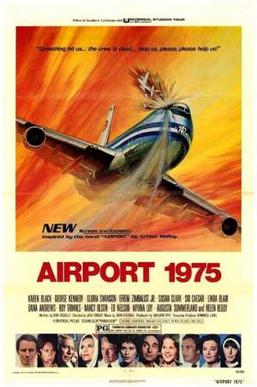
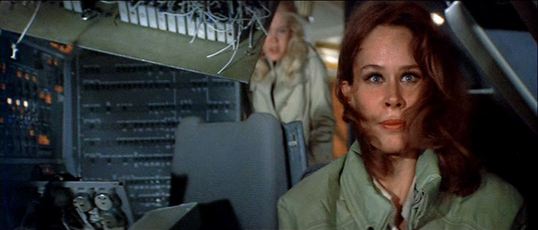
Airport 1975 (1974, dir by Jack Smight, DP: Philip H. Lathrop)
The Swarm (1978, dir by Irwin Allen, DP: Fred J. Koenekamp)
About halfway through 1974’s Airport 1975, Sid Caesar has one of the greatest lines in film history.
“The stewardess is flying the plane?”
Hell yeah, she is! After a collision with another plane takes out the crew of a Broening 747, it’s up to head flight attendant Nancy (Karen Black) to keep the plane from crashing until another pilot can somehow be lowered into the cockpit of the stricken airliner. Nancy’s never flown an airplane before but she is dating Al Murdock (Charlton Heston), who may be scared of commitment but who is still described as being one of the greatest pilots who has ever lived. None other than Joe Patroni (George Kennedy) says that no one knows more about flying than Al Murdock.
George Kennedy is the only cast member to return from the original Airport. When we previously met Patroni, he was the cigar-chewing chief mechanic for Trans World Airlines. In Airport 1975, he’s suddenly an executive with Columbia Airlines. His wife (Susan Clark) and his son (Brian Morrison) are also on the plane. Joe Patroni and Al Murdock are determined to bring that plane safely to the ground in Salt Lake City and if that means dropping a pilot into the cockpit from a helicopter, that’s what they’ll do. It’s all a question of whether or not Nancy can keep that plane from crashing while they round up a helicopter and a pilot.
Airport 1975 is so famous for being the movie where the stewardess is flying the plane that it’s often overlooked that it’s also the film where Linda Blair plays a young girl in need of a kidney transplant. When Sister Ruth (Helen Reddy) sees that the girl has a guitar with her, Ruth sings a folk song that has everyone on the airplane smiling. (If I was on a plane and someone started playing folk music, I’d probably jump out. That may seem extreme but seriously, you don’t want to test me on how much I dislike the folk sound.) This scene was, of course, parodied in Airplane! In fact, it’s pretty much impossible to watch Airport 1975 without thinking about Airplane!
It’s also overlooked that Gloria Swanson is one of the many stars to appear in this film but Swanson is the only one playing herself. Gloria Swanson starts as Gloria Swanson and I assume that this 1974 film was set in 1975 in order to generate some suspense as to whether or not Swanson was going to survive the crash. Swanson talks about how, in 1919, Cecil B. DeMille flew her over California. She does not talk about Joseph Kennedy or Sunset Boulevard and that’s a shame. As I watched Airport 1975, I found myself thinking about how different the film would have been if Gloria Swanson had been the one who had to pilot the plane instead of Karen Black.
“Gloria Swanson is piloting the plane?”
As entertaining as that would have been, it would have meant missing out on Karen Black’s intense performance as Nancy. At times, Nancy seems to be so annoyed with the situation that one gets the feeling that she’s considering intentionally crashing the plane into one of Utah’s mountains. At other times, she seems to be at a strange sort of peace with whatever happens. There’s a scene where she attempts to clear some of the clutter in the cockpit and an instrument panel falls on her head and it’s such a powerful moment because I know the exact same thing would have happened to me in that situation. There’s another moment where I’m pretty sure she accidentally kills the first pilot who attempts to drop into the cockpit and again, it’s a mistake that anyone could have made. The film doesn’t call her out on it because the film understand that none of us are perfect, except for Charlton Heston.
Speaking of which, Karen Black’s emotional performance contrasts nicely with the performance of Charlton Heston. This is perhaps the most Hestonesque performance that Charlton Heston ever gave. Al Murdock is confident, he doesn’t suffer fools, and he’s condescending as Hell. Every time he calls Nancy “honey,” you’ll want to cringe. And yet, it’s hard not to appreciate someone who can be so confident while wearing a tight yellow turtleneck. Charlton Heston watches as the first pilot to attempt to enter the cockpit plunges to his death and immediately declares that it’s his turn to try. “Get me in that monkey suit!” he snaps and it’s such a Heston moment that you have to love it.
There’s a ton of people in this movie. Norman Fell, Jerry Stiller, and Conrad Janis play three rowdy drunks. Erik Estrada, Efrem Zimbalist, and Roy Thinnes are the unfortunate members of the flight crew. Dana Andrews has a heart attack while piloting a small private plane. Myrna Loy appears not as herself but as Mrs. Delvaney, who spends almost the entire flight drinking. Christopher Norris plays Bette, who says that she may look like a teenager but she prefers to be called “Ms. Teenager” and that she’s trained in Kung Fu. Beverly Garland played Dana Andrews’s wife. Larry Storch is an obnoxious reporter. Character actor Alan Fudge plays Danton, the Salt Lake City controller who keeps Nancy calm until Charlton Heston can start snapping at people.
The first time that I watched Airport 1975, I was pretty dismissive of it but, over the years, I’ve rewatched it a few times and I have to admit that I’ve fallen in love with this wonderfully ridiculous film. There’s just so many odd details, like American Graffiti showing up as the plane’s in-flirt entertainment and Sid Caesar saying that he’s only on the flight because he has a small role in the movie and he finally wanted to see it. (It seems like it would have been cheaper to just go to a drive-in but whatever.) And there’s Karen Black, giving the performance of a lifetime and letting us all know that, in 1975, the stewardess flies the airplane!
4 Shots From 4 Films is just what it says it is, 4 shots from 4 of our favorite films. As opposed to the reviews and recaps that we usually post, 4 Shots From 4 Films lets the visuals do the talking!
It’s Twilight Zone Day! In honor of this site’s favorite anthology show, it’s time for….
4 Shots From The Twilight Zone
Twilight Zone 1.8 “Time Enough At Last” (1959, dir by John Brahm)
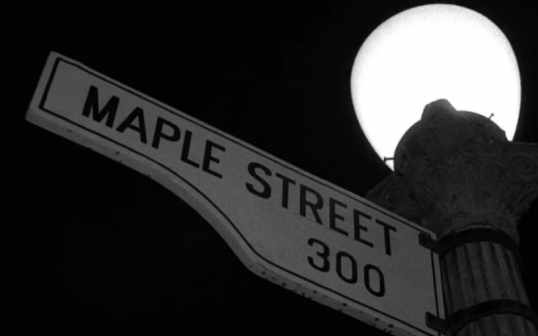
Twilight Zone 1.22 “The Monsters Are Due On Maple Street” (1960, dir by Ronald Winston)
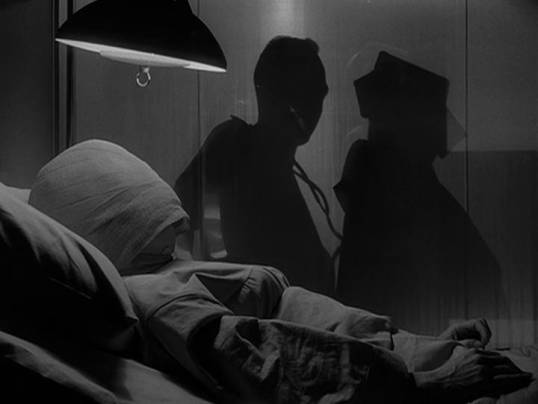
Twilight Zone 2.6 “Eye of the Beholder (1960, dir by Douglas Heyes)
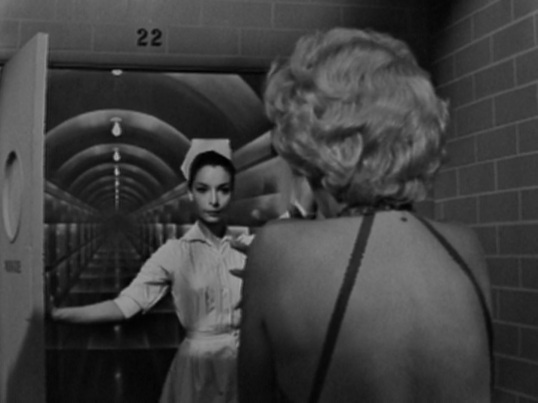
Twilight Zone 2.17 “Twenty-Two (1961, dir by Jack Smight)
4 Shots From 4 Films is just what it says it is, 4 shots from 4 of our favorite films. As opposed to the reviews and recaps that we usually post, 4 Shots From 4 Films lets the visuals do the talking!
According to CheckiDay, today is Twilight Zone Day! In honor of this site’s favorite anthology show, it’s time for….
4 Shots From The Twilight Zone
Twilight Zone 1.8 “Time Enough At Last” (1959, dir by John Brahm)
Twilight Zone 1.22 “The Monsters Are Due On Maple Street” (1960, dir by Ronald Winston)
Twilight Zone 2.6 “Eye of the Beholder (1960, dir by Douglas Heyes)
Twilight Zone 2.17 “Twenty-Two (1961, dir by Jack Smight)
Welcome to Retro Television Reviews, a feature where we review some of our favorite and least favorite shows of the past! On Sundays, I will be reviewing the made-for-television movies that used to be a primetime mainstay. Today’s film is 1972’s The Screaming Woman! It can be viewed on YouTube!
In this made-for-tv movie from 1972, the great Olivia de Havilland plays Laura Wynant. Laura is a wealthy woman who has just been released from a mental institution. She goes to her country estate to recuperate but, as soon as she arrives, she starts to hear a woman’s voice in the back yard.
“help me …. help me….” the voice cries.
Laura looks around and she soon realizes that the voice is coming from the ground! A woman has been buried alive in the backyard and will soon die if not rescued! At first Laura tries to dig up the woman on her own but her hands are crippled by arthritis. An attempt to get a neighborhood child to help her dig just leads to Laura being confined to her home, under doctor’s orders. No matter how much Laura tries to get the people around her to listen for the sound of the woman crying for help, everyone just assume that Laura must be imagining things.
Further complicating things is the fact that the person who put the woman in the ground is still out there. And, when he discovers that Laura has been hearing voices, he decides that maybe he needs to do something about both Laura and the screaming woman….
The Screaming Woman is an effective psychological thriller and, considering that it was made for early 70s network television, surprisingly suspenseful. If the film were remade today, I imagine it would try to keep us guessing as to whether or not Laura was hearing an actual woman or if it was all in her mind. However, by revealing early on that Laura actually is hearing what she thinks she’s hearing, The Screaming Woman puts us right into Laura’s shoes and we share her frustration as she desperately tries to get someone — anyone — to take her seriously. It helps that Laura is played by Olivia de Havilland, who gives a very sympathetic and believable performance. De Havilland, who started her career appearing in Errol Flynn movies back in the 30s and who most famously played Melanie in Gone With The Wind, was one of the longest-lived stars of Hollywood’s Golden Age, living to the age of 104 and winning two Academy Awards for Best Actress.
The film is based on a short story by Ray Bradbury. In the story, it’s a little girl — as opposed to an old woman — who hears the voice. I haven’t read the short story so I don’t know how else it compares to this adaptation but, as a film, The Screaming Woman is an entertaining and creepy thriller and, when viewed today, it serves as a reminder of what a good actress Olivia De Havilland truly was. She takes a simple thriller and turns it into a meditation on aging and the one person’s determination to do the right thing even when the entire world seems to be against her.
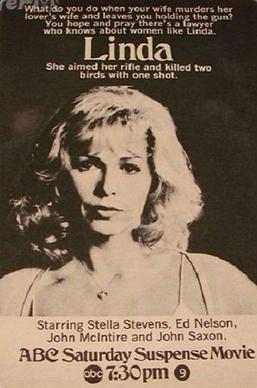
Welcome to Retro Television Reviews, a feature where we review some of our favorite and least favorite shows of the past! On Sundays, I will be reviewing the made-for-television movies that used to be a primetime mainstay. Today’s film is 1973’s Linda! It can be viewed on YouTube!
If nothing else, Linda has a wonderfully opening.
Two couples are on the beach. Paul Reston (Ed Nelson) is talking to Anne Braden (Mary-Robin Redd) about his troubled marriage and his plans to leave his wife. Paul’s wife, Linda (Stella Stevens), is talking to Jeff Braden (John Saxon) and looking at the rifle that he’s just handed her. It doesn’t take long to notice that Paul and Linda seem to be closer, respectively, to Anne and Jeff than to each other.
When Anne stands up and walks toward the ocean, Linda shoots her in the back. When Jeff runs over to Anne’s body, Linda pulls the trigger again and Jeff collapses. Stunned by his wife’s actions, Paul runs back to his car and drives into town to get the police. (This is another one of those movies that could have only been made in the pre-smartphone era.) When Paul and the police return, they find Anne’s body but Jeff and Linda are nowhere to be seen.
Suddenly, Linda and Jeff come walking down the beach. Jeff is carrying a bunch of fish and a fishing pole. They look shocked when they see the police. Then, when Jeff sees Anne’s body, he accuses Paul of killing her and attacks him. Paul is arrested and taken to jail.
As I said, it’s a wonderful opening, full of twists and entertaining overemoting. In fact, it’s so good that it’s difficult for the rest of the film to keep up. After being charged with Anne’s murder, Paul hires a folksy attorney named Marshall Journeyman (John McIntire). Unlike everyone else, Journeyman believes Paul’s story that he’s being framed by Jeff and Linda. Journeyman sets out to prove that Paul is innocent.
Of course, the audience already know that Paul is innocent because the audience saw exactly what happened. Watching the film, it was hard for me to not to feel that the story would have benefitted by a little more ambiguity as to whether or not Paul was a victim or if he truly was the delusional madman that both Linda and Jeff tried to paint him as being. We know from the start what Jeff and Linda are doing so the only question really becomes how Journeyman is going to trick them into revealing the truth. Unfortunately, even getting them to do that turns out to be a bit too easy. The movie suggests that Journeyman is a brilliant investigator but, in the end, it all really just comes down to the villains not being very smart.
That said, the film’s cast does a good job. Ed Nelson is sympathetic as the confused husband and John McIntire brings so much homespun charm to Journeyman that I got the feeling that this film was probably designed to be a pilot for a possible series. Best of all, John Saxon and Stella Stevens play the scheming couple. Saxon gets to wear a swimsuit and dramatically shout to the Heavens as he pretends to be shocked over Anne’s murder. Stevens smirks at every question and accusation and appears to be having a great time playing an old school femme fatale. The cast makes this movie worth it.
4 (or more) Shots From 4 (or more) Films is just what it says it is, 4 (or more) shots from 4 (or more) of our favorite films. As opposed to the reviews and recaps that we usually post, 4 (or more) Shots From 4 (or more) Films lets the visuals do the talking.
Though the name Jack Smight might not be a familiar one in the way the name of some directors are, this filmmaker was responsible for some of the most “fun” movies of the 60s and 70s. He was born 96 years ago, on this date, in Minnesota and he passed away in 2003. In between that time, he directed television shows, movies, and he was responsible for popularizing the deathless phrase, “The stewardess is flying the plane?”
In honor of Jack Smight, here are….
4 Shots From 4 Jack Smight Films
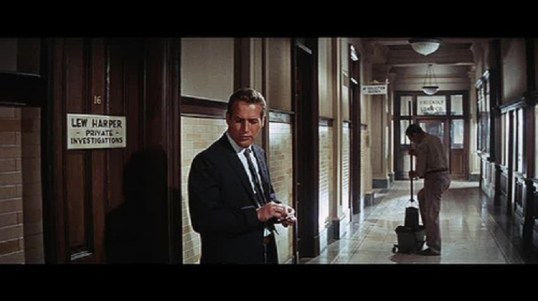
Harper (1966, dir by Jack Smight, DP: Conrad L. Hall)
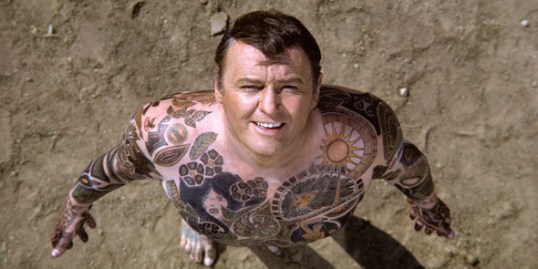
The Illustrated Man (1968, dir by Jack Smight, DP: Philip H. Lathrop)
Airport1975 (1974, dir by Jack Smight, DP: Philip H. Lathrop)
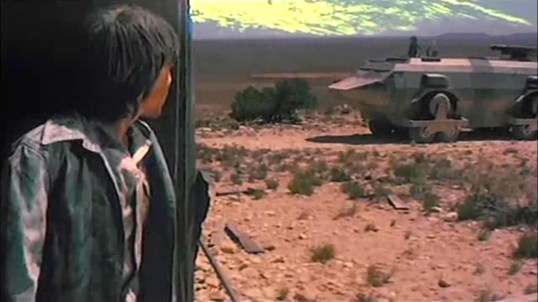
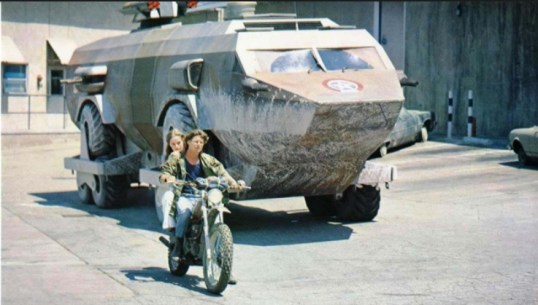
Damnation Alley (1977, dir by Jack Smith, DP: Harry Stradling, Jr.)
Today’s horror on the lens is The Screaming Woman, a 1972 made-for-TV movie that’s based on a Ray Bradbury short story.
Olivia de Havilland plays Laura Wynant, who has just returned home from a stay at a mental institution. Soon after her arrival, Laura starts to hear a woman crying for help. Laura becomes convinced that the woman has been buried alive on her property but, because of her debilitating arthritis, she can’t dig the woman up on her own. And, because of her own mental history, no one believes her when she tries to tell them about what she’s hearing!
The Screaming Woman features screen legend Olivia De Havilland giving a sympathetic performance as Laura. It also features two other luminaries of the golden age of Hollywood — Joseph Cotten and Walter Pidgeon — in supporting roles. It’s a good little thriller so watch and enjoy!
(And of course, I should mention that the great Olivia De Havilland is still with us, 103 years old and living in France.)
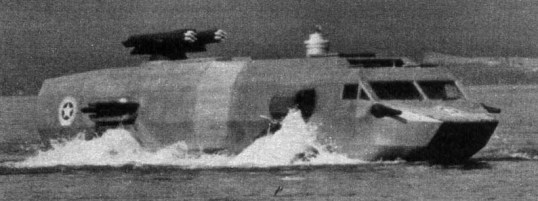
Anyone who has seen Damnation Alley knows that the only thing that matters is the Landmaster.
Damnation Alley has a slight plot. A nuclear war has knocked the Earth off of its axis. The skies are green and purple. The scorpions are huge and the cockroaches eat humans. Crazed survivors are living like savages, attacking anyone that they come across. When a radio signal seems to indicate that there might still be civilization in Albany, four military men (George Peppard, Jan-Michael Vincent, Paul Winfield, and Kip Niven) decide to drive across the country to check it out. To reach Albany, they will have to cross an inhospitable stretch of land called Damnation Alley. They will be making the journey in two Landmasters, amphibious vehicles that provide RV comfort with the extra advantage of a rocket launcher. Along the way, they fight scorpions, roaches, and pick up some extra passengers (Dominique Sanda and Jackie Earle Haley).
The radioactive sky looks cool but otherwise, the scorpions and the cockroaches are all obviously fake and no one in the cast makes any effort to do more than recite their lines. But no one who has watched Damnation Alley cares about any of that. We just want to drive a Landmaster.
There is nothing that the Landmaster cannot do. It can speed across desert sand. It can tear up city streets. It can break through walls. It can turn into a boat. It can fire missiles. It also appears to be bigger on the inside than the outside, just like the TARDIS. Either that or whoever did the set design for Damnation Alley was not detail-oriented.
Despite the awe-inspiring Landmaster, Damnation Alley was neither a critical nor a box office hit. It was one of two science fiction films released by 20th Century Fox in 1977. The other one was Star Wars, which was a good movie but didn’t have a Landmaster.
As for the Landmaster itself, it currently resides in California and has appeared in a handful of other movies. Sadly, it missed out on the opportunity to appear in any of the Smoky and the Bandit movies. Burt Reynolds driving a Landmaster? That would have been box office gold.
Number One With A Bullet is the story of two cops. Nick Barzack (Robert Carradine) is so crazy that the all criminals have nicknamed “Beserk.” (Who says criminals aren’t clever?) Nick’s partner, Frank Hazeltine (Billy Dee Williams) is so smooth that jazz starts to play whenever he steps into a room. Nick keeps a motorcycle in his living room, wants to get back together with his wife (Valerie Bertinelli), and has an overprotective mother (Doris Roberts). Hazeltine is Billy Dee Williams so all he has to worry about is being the coolest man on Earth. Their captain (Peter Graves!) may want them to do things by the book but Nick and Hazeltine are willing to throw the book out if it means taking down DaCosta, a so-called respectable citizen who they think is actually the city’s biggest drug lord.
It is natural to assume that, because of the whole crazy white cop/centered black cop storyline, this movie was meant to be a rip-off of a well-known film starring Mel Gibson and Danny Glover but actually, Number One With A Bullet was released a week before Lethal Weapon. As well, while Carradine’s Nick is almost as crazy as Mel Gibson’s Riggs, it is impossible to imagine Billy Dee Williams ever saying that he’s “too old for this shit.” Williams is having too good a time listening to jazz and picking up women. Whenever Hazeltine shows up, Number One With A Bullet feels like a Colt 45 commercial that somehow costars Robert Carradine. Whenever the film is just Carradine, it feels like an unauthorized sequel to Revenge of the Nerds where Lewis gets really, really pissed off.
Number One With A Bullet is a Cannon film and entertaining in the way that most late 80s Cannon films are. There is a lot of action, a little skin, and some dated comedy, much of it featuring Robert Carradine having to dress in drag. There is also a mud wrestling scene because I guess mud wrestling was extremely popular back in the 80s. They may not be Gibson and Glover but Carradine and Williams still make a good team and they both seem to be having a ball. For fans of cheap 80s action films, there is a lot to enjoy in Number One With A Bullet.







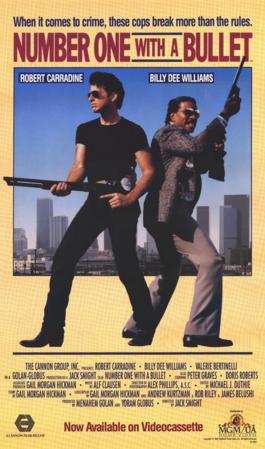 Number One With A Bullet is the story of two cops. Nick Barzack (Robert Carradine) is so crazy that the all criminals have nicknamed “Beserk.” (Who says criminals aren’t clever?) Nick’s partner, Frank Hazeltine (Billy Dee Williams) is so smooth that jazz starts to play whenever he steps into a room. Nick keeps a motorcycle in his living room, wants to get back together with his wife (Valerie Bertinelli), and has an overprotective mother (Doris Roberts). Hazeltine is Billy Dee Williams so all he has to worry about is being the coolest man on Earth. Their captain (Peter Graves!) may want them to do things by the book but Nick and Hazeltine are willing to throw the book out if it means taking down DaCosta, a so-called respectable citizen who they think is actually the city’s biggest drug lord.
 Through the Shattered Lens