Brad reviews THE STONE KILLER (1973), starring Charles Bronson!


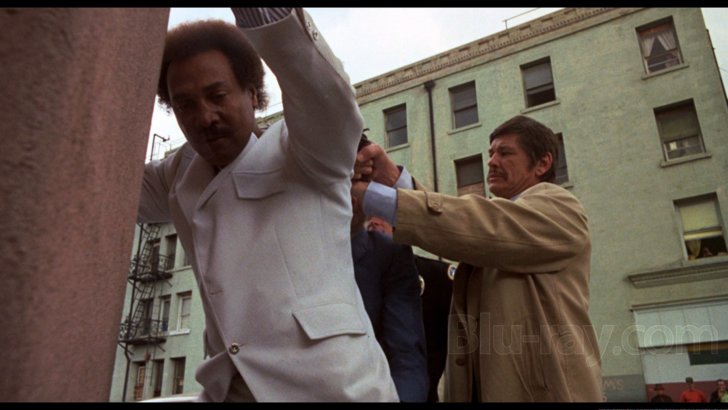
THE STONE KILLER opens in Spanish Harlem with detective Lou Torrey (Charles Bronson) following a young man, who had just shot a cop, into an abandoned building. When the young man refuses to turn himself in, and even tries to shoot Torrey, he gets blown away. In trouble with his superiors on the force, and being dragged in the press for the shooting, Torrey decides to change locations and continue his law enforcement career under his friend Les Daniels (Norman Fell) in Los Angeles. Soon after he arrives in Los Angeles, Torrey and his partner Mathews (Ralph Waite) are working a case against a drug dealer, when they arrest “Bootlace” Armitage (Eddie Firestone), a drug addict, but also a well-known hitman from New York. Torrey is delivering the “mechanic” back to New York for outstanding warrants when Armitage says that he is willing to give up some big information on “Wexton” in exchange for a reduced sentence. When Armitage is gunned down in what is obviously a professional hit, it’s clear that there is something going on that involves the name Wexton. We soon learn more as we meet mafia leader Al Vescari (Martin Balsam). As Vescari walks through a cemetery, he tells the leader of his operation, Lawrence (Stuart Margolin), of his plans to get revenge for a string of mafia killings that occurred 42 years earlier by using “stone killers,” in this case, former military men with no connection to the mob. As the film moves forward, Detective Lou Torrey and his fellow cops will eventually put the pieces together and find themselves taking on these “stone killers” and the mob! 

I’ll just go ahead and say up front that I’m a big fan of THE STONE KILLER these days, but that’s because the movie has grown on me over the years with repeat viewings. When I first watched the film as a teenager in the 1980’s, I enjoyed it as a tough cop film, but it wasn’t one of my favorites. I think that part of the reason I didn’t appreciate it as much back then is the more convoluted plot of the film. Most Bronson films have simple and easy to follow plot lines, but THE STONE KILLER includes a somewhat complicated mafia assassination plan, and it also sends the cops on wild goose chases that have nothing to do with the actual story. Watching the film as an adult, I appreciate Director Michael Winner taking us with him on some of those 1970’s flavored tangents that include getting to hang out with some hippies at an ashram, as well as some unjustly accused black militants. 

Even though the plot is more complicated than the average Charles Bronson film, director Michael Winner gives us some of the best action sequences of Charles Bronson’s career. There are two sequences in particular that stand out to me. After the impressive opening scenes where Torrey blows away the gun wielding young man in Spanish Harlem, it takes a while to get to the next extended action sequence, but it’s definitely worth the wait. The scene involves Detective Torrey in a car chase where he’s after one of the stone killers, Albert Langley (Paul Koslo), who’s on a motorcycle. In an era of great car chases, this is a doozy that features many amazing and dangerous stunts. The late 60’s and early 70’s are an embarrassment of riches for cinematic car chases and this one stands the test of time. The next great action sequence occurs later in the film when Detective Torrey and the cops bust the home and facility where the killers have trained for the planned massacre. Bronson is still in his physical prime in 1973, and his athletic prowess is clearly on display as he slides across floors, jumps on tables, and does anything else that is required to take down the bad guys. The film is not wall to wall action, but what’s here is as badass as it gets. 

Detective Lou Torrey is a really good role for Charles Bronson. In his best roles, Bronson is tough, but you can also tell that he cares about other people. That’s definitely the case here as he consistently shows empathy for some of the people he’s after. For example, at the beginning of the film, he has to shoot the young man in Spanish Harlem in self-defense, but he later explains to his sister that he didn’t want to do it, even expressing some understanding of how the young man may have found himself in that situation. A little later while arresting a drug dealer with his partner Mathews, Torrey is clearly disgusted when his partner uses racial slurs during the arrest. Torrey then talks to the man with respect and gets the needed information to arrest the man buying the drugs. There are further examples later in the film as he deals with other drug addicts and militants. I say none of this to insinuate that Bronson’s character is weak in any way. Rather, he seems to want to do his job and arrest criminals in a professional manner. He’s also a complex character in some ways as he will bend the rules to get what he needs if he has to. He does end up punching the car thief, Jumper (Jack Colvin), a couple of times during an interview. While this is definitely not legal, in the context of this film, it’s required in order to get to the facts of the case. Bronson is actually quite great in the film. 

Besides international superstar Charles Bronson, Michael Winner put together an amazing cast for THE STONE KILLER. Martin Balsam had won an Oscar a few years earlier, and he’s good here as the mafia boss with four decades worth of patience for revenge. Ralph Waite is also excellent as Bronson’s incompetent, racist partner Mathews. It’s hard to believe the guy would go on to play Papa Walton based on the ignorance he shows in both this film and in the Bronson/Winner collaboration CHATO’S LAND from the prior year. It’s fun watching both Norman Fell and John Ritter work together in this film, especially knowing that they would be making television history a few years later on the classic TV sitcom “Three’s Company.” The last two actors I want to mention are Stuart Margolin as the leader of the stone killers, Lawrence, and Paul Koslo as the bi-sexual badass musician Albert Langley. Both actors, especially Koslo, are good here and would have important roles with Bronson the next year as well. Margolin was an important character in DEATH WISH, and Koslo may have even outdone his work here the next year as a particularly slimy weasel in MR. MAJESTYK. Oh yeah, be sure to look for a short, uncredited cameo from B-movie queen Roberta Collins! I also want to shout out the musical score from Roy Budd, who also did the score for GET CARTER (1971). Thanks to Budd’s work, the opening credits are very cool and memorable. 

THE STONE KILLER was marketed as Charles Bronson’s “Dirty Harry” and meant to be his breakout hit in America. Unfortunately, while the film was an international hit, the actual grosses in the United States were respectable but not as much as the filmmakers had hoped for. As such, we didn’t get any more entries in the case log of Detective Lou Torrey and Bronson would have to wait another year for his American box office breakout with DEATH WISH. But that’s okay because THE STONE KILLER has stood the test of time as an excellent 1970’s cop film, emerging in my personal rankings as a major feather in the cap of Charles Bronson’s career. 
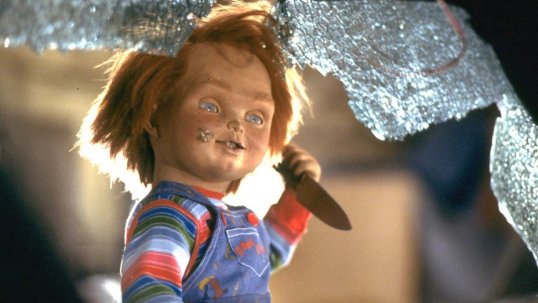
Horror Film Review: Child’s Play (dir by Tom Holland)


A few months ago, I rewatched the original 1988 Child’s Play.

I have to say that I was surprised by just how well the film held up.  Today, of course, everyone knows about Chucky.  Everyone know that Chucky was originally Charles Lee Ray (Brad Dourif), a serial killer who was chased into a toy store by police detective Mike Norris (Chris Sarandon).  Knowing that he had little chance of escaping and not wanting to go to back to prison or face the electric chair, Charles Lee Ray performed a quick occult ceremony.  While lighting crashed all around the store, Charles transported his soul into a “Good Guy” doll.

That doll was later purchased by a hard-working, single mom named Karen Barclay (Catherine Hicks).  She gave the doll to her six year-old son, Andy (Alex Vincent).  There was nothing that Andy wanted more for his birthday than a talking Good Guy doll.  Unfortunately, Good Guy dolls were also very expensive and Karen wasn’t sure if she’d ever be able to afford to buy one.  But, when she ran into a homeless guy who happened to be selling stolen merchandise out of his shopping cart, Karen was able to make Andy’s birthday a happy one!  Andy unwrapped the doll and smiled as the doll introduced himself as being “Chucky” and asked if he wanted to play.

Unfortunately, it soon turned out that Charles Lee Ray wasn’t going to stop killing people just because he was now trapped inside the doll.  If anything, being trapped in the doll made Ray even more homicidal.  It makes sense if you think about it.  I’m sure that Charles Lee Ray didn’t realize that performing that voodoo curse would cause him to wake up as a plastic toy wearing overalls and being expected to be a 6 year-old’s best friend.

Anyway, Chucky went on a rampage, killed several people, and everyone blamed Andy.  Not even Karen believed Andy when Andy explained that Chucky was the one killing people with toy hammers and blowing up houses.  Or, at least, Karen didn’t believe Andy until she herself was attacked by Chucky.  With Chucky freaking out about the prospect of being stuck in the doll’s body for the rest of his existence and wanting to possess his new owner instead, Karen and Mike teamed up to protect Andy from the world’s worst birthday present.

To be honest, Child’s Play shouldn’t work as well as it does.  The story is ludicrous, even by the standards of late 80s horror.  There’s no way that a doll should be able to do things like throw a hammer with enough force to send someone flying out of a window.  (Making the scene even stranger is the fact that it’s not even a real hammer but instead a little plastic Good Guy hammer.)  And yet, the film does work and not just as an example of nostalgic camp.  This is a scary and emotionally effective story, even if you already know the truth about Chucky.  It helps that Alex Vincent gives a totally natural, uncutesy performance as Andy.  Your heart really breaks for him as he begs the adults in his life to understand that it’s Chucky who is doing all of the bad things and not him.  As well, Catherine Hicks deserves a lot of credit for taking her role seriously.  And finally, the great Brad Dourif does wonders with just his voice.  At first, it’s undeniably funny to hear his angry voice coming out of Chucky but Dourif delivers his lines with such unhinged conviction that it’s actually rather frightening when he suddenly drops the act and starts cursing out Karen.  After all of the sequels and the subsequent television shows, Chucky himself has become a bit of a pop cultural icon.  He’s almost as lovable as Freddy and Jason combined.  But in the first Child’s Play, that doll is seriously scary.  He may be small but he has the energy and ruthlessness of a feral beast.  When he attacks, you have no doubt that he’s not going to stop until he’s gotten what he wants and what he wants is usually for someone to die.

The first Child’s Play earns its status as a horror classic by being surprisingly scary and also surprisingly emotional.  You really do end up caring about Karen and Andy.  When Karen finally went after that smug, murderous doll, I definitely cheered a little.  Take that, Chucky!

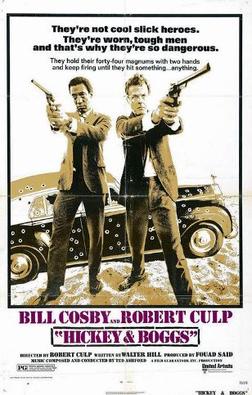
Hickey & Boggs (1972, directed by Robert Culp)


Frank Boggs (Robert Culp) and Al Hickey (Bill Cosby) are two private investigators who are constantly in danger of losing their licenses and going out of business.  Hickey is the responsible one.  Boggs is the seedy alcoholic.  When Hickey and Boggs are hired to track down a missing woman, their investigation lands them in the middle of a war between the mob and a group of political activists who are fighting over who is going to get the loot from a recent robbery.  Hickey and Boggs are targeted by the mob and soon, everyone is dying around them.

With its cynical themes and downbeat ending, Hickey & Boggs is very much a 70s film.  The script was written by future director Walter Hill and when it was eventually offered to Bill Cosby, Cosby agreed to star on the condition that his I Spy co-star, Robert Culp, be hired to direct.  Producer John Calley hired Culp but after Calley refused to provide the budget that Culp requested, Culp bought the script and raised the money himself.

There are a few problems with Hickey & Boggs, the main one being that the plot is next to impossible to follow.  As a director, Robert Culp apparently didn’t believe in either filming coverage or providing establishment shots so, especially early on, it is often impossible to tell how one scene is connected to another or even how much time has passed between scenes.  I don’t know if this was an intentional aesthetic decision or if the production just ran out of money before everything could be shot but it makes it difficult to get into the film’s already complicated story.  On a positive note, Culp did have a flair for staging action scenes.  The film ends with a shoot out on the beach that’s is handled with such skill that it almost makes up for what came before it.  Also, like many actors-turned-director, Culp proved himself capable of spotting talent.  Along with giving early roles to Vincent Gardenia, James Woods and Michael Moriarty, Culp also took the chance of casting sitcom mainstay Robert Mandan as a villain.  It was a risk but it worked as Mandan convincingly portrays the banality of evil.

Of course, the biggest problem with Hickey & Boggs is that it stars Bill Cosby as a straight-laced hero and that’s no longer a role that anyone’s willing to believe him in.  Cosby actually does give a convincing dramatic performance in Hickey & Boggs.  Just look at the final scene on the beach where Hickey has his “what have we done” moment and shows the type of regret that Cosby has never shown in real life.  The problem is that to really appreciate Cosby’s performance, you have to find a way to overlook the fact that he’s Bill Cosby and that something that I found impossible to do while watching Hickey & Boggs.  When you should be getting into the movie, you’re thinking about how many decades Bill Cosby was able to get away with drugging and assaulting women.  If not for a comment from Hannibal Buress that led to a social media uproar, Cosby would probably still be getting away with it.  If Buress’s anti-Cosby comments hadn’t been recorded and hadn’t gone viral, Bill Cosby would still be free and the media would probably still be holding him up as some sort of role model.

At the time Hickey & Boggs was made, both Bill Cosby and Robert Culp were at a career crossroads.  Cosby was hoping to transform himself into a film star.  Culp was hoping to become a director.  Hickey & Boggs, however, was disliked by critics and flopped at the box office.  Culp never directed another film and we all know what happened with Bill Cosby.  (Of course, it wasn’t just the box office failure of Hickey & Boggs that kept Cosby from becoming a movie star.  Say what you will about Robert Culp as a director, he had nothing to do with Leonard Part 6.)  Hickey  & Boggs is too disjointed to really work but Robert Culp and Bill Cosby were convincing action stars and the film’s downbeat style and cynical worldview is sometimes interesting.

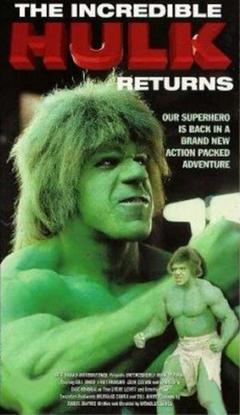
The Incredible Hulk Returns (1988, directed by Nicholas Corea)


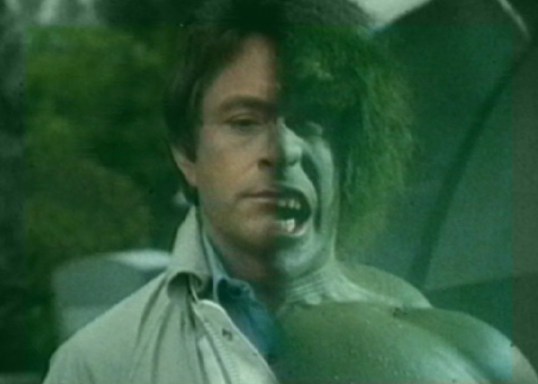
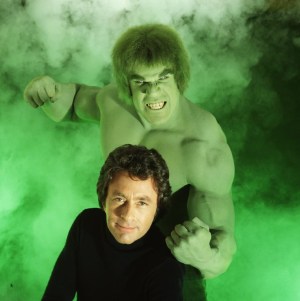
Scientist David Banyon (Bill Bixby) has a secret.  His real name is David Banner and he has spent the last ten years in hiding, traveling up and down the highway and searching for a cure to a very strange condition.  As the result of getting dosed with gamma rays, David Banner sometimes transforms into an angry green monster known as the Hulk (Lou Ferrigno).  The world believes that David Banner is dead and Banner must let them continue to believe that until he can find a cure for the monster within.

The Incredible Hulk Returns is a continuation of the old Incredible Hulk television series, which was the first (and, until the MCU came along, only) successful attempt to build a live action show around a Marvel super hero.  Premiering in 1978, The Incredible Hulk ran for 5 seasons and got good ratings and, for a comic book series, surprisingly decent reviews.  However, it was also expensive to produce and it was abruptly cancelled in 1982, before the show got a chance to wrap up David’s story.  When The Incredible Hulk ended, David Banner was still alone and hitchhiking from town to town.  Six years later, The Incredible Hulk Returns caught up with David and tried to sell viewers on a “new” Marvel hero as well.

David “Banyon” is now living in California and working at the Joshua-Lambert Research Institute.  It’s been two years since he last turned into the Hulk.  He controls his rage by being careful not to get involved in any dangerous situations.  He also has a girlfriend, Dr. Maggie Shaw (Lee Purcell).  David is designing the Gamma Transponder, which he thinks will cure him of his condition.  Life’s good until Donald Blake (Steve Levitt) shows up.

A student of Banner’s, Blake recognizes his former teacher and approaches him with a crazy story.  When Blake was in Norway, he stumbled across a tomb that contained a hammer that contained the spirit of Thor, a Viking warrior who was banished to Earth by Odin.  To prove that he’s telling the truth, Blake commands Thor to emerge from the hammer.  When Thor (played by Eric Kramer) does, he makes such a mess in the laboratory that David transforms into the Hulk.

Thor is not Banner’s only problem.  Jack LeBeau (Tim Thomerson!) and Mike Fouche (Charles Napier!!) want to steal the Gamma Transponder and turn it into a weapon.  Also, reporter Jack McGee (Jack Colvin) s back in town and still obsessed with proving that the Hulk exists.

The Incredible Hulk Returns may be a continuation of David Banner’s story but the main reason it was filmed was so it could serve as a backdoor pilot for a Thor television series.  The Thor TV series never happened and, for those who are used to Chris Hemsworth’s comedic take on Thor, it’s jarring to see Eric Kramer playing the role like a third-tier professional wrestler.  For fans of The Incredible Hulk TV series, it’s even more jarring to see the Hulk fighting alongside a viking.  Unlike the comic book, the TV series usually tried to ground its stories in reality, with Banner’s transformations into the Hulk serving as the show’s only concession to its comic book origins.  The villains played by Thomerson and Napier both seem like typical bad guys from the show’s heyday but Thor just doesn’t belong.  Fans of the show will resent Thor taking the spotlight away from David Banner and the Hulk while fans of Thor will notice that this version of Thor is apparently not the god of thunder but instead just an egotistical viking who got on Odin’s nerves.

Bill Bixby was always The Incredible Hulk‘s not-so-secret weapon, taking and playing his role very seriously.  He continues to do that in The Incredible Hulk Returns but how seriously can anyone come across when they’re speaking to Thor?  By the end of the movie, Thor and Blake head off on their own adventures while Banner resumes hitchhiking.  Thor and Blake would not be seen again but David Banner’s adventures would continue in The Trial of the Incredible Hulk.

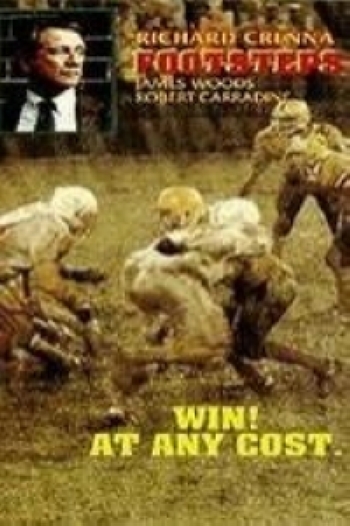
Footsteps (1972, directed by Paul Wendkos)


Paddy O’Connor (Richard Crenna) is a former football player-turned-coach whose record of success has been overshadowed by his own arrogance and heavy drinking.  O’Connor has such a bad personal reputation that he’s found himself unemployable.  Only one man is willing to give him a chance.  Jonas Kane (Clu Gulager) played football with Paddy and he’s now coaches for a small college.  Kane may not like O’Connor but he knows that O’Connor might be the key to turning around his team’s fortunes and, at the same time, saving Kane’s job.  Kane hires O’Connor to serve as a his defensive coordinator.

At first, O’Connor’s cockiness rubs people the wrong way.  It’s not until O’Connor moves offensive player J.J. Blake (Bill Overton) to defense that the team starts to win.  And once the team stars to win, everyone’s problems with O’Connor disappear.  Kane can only watch helplessly as O’Connor moves in on his girlfriend (Joanna Pettet), knowing that he owes his job to O’Connor remaining at the school.

However, when Blake gets a concussion, O’Connor is forced to decide whether or not to let him play.  Boosters like Bradford Emmons (Forrest Tucker) want Blake to play, regardless the risk.  The NFL scouts, who are looking for the next number one pick, want to see Blake on the field.  Blake says he wants to play but O’Connor can tell that he’s lying about the extent of his injury.  With everyone breathing down his neck and a syndicate of gamblers pressuring O’Connor to shave points so that the spread pays off, O’Connor has to decide what to do.

Though this made-for-TV movie may not be as well-known as some other films, it’s one of the best movies ever made about college football.  Though it may be short (only 74 minutes), it still examines all of the issues that have always surrounded college football.  Despite not getting paid for their efforts, the players risk serious and permanent injury during every game, just on the slight hope that they might someday make it to the NFL.  The coaches, who are supposed to be looking after the players, are more interested in padding out their win-loss record and hopefully moving onto bigger and better-paying jobs.  Meanwhile, aging alumni and boosters demand that the team win at all costs, regardless of what happens to the men on the field.  Footsteps intelligently explores all of those issues and suggests that the risks are ultimately not worth the rewards.

Along with an intelligent script, Footsteps is helped by a talented cast.  Crenna and especially Gulager both give excellent performance as the two rival coaches.  Al Lettieri (Sollozzo from The Godfather) plays one of the gamblers.  Beah Richards plays Blake’s mother, who makes the mistake of believing O’Connor when he says that he’s going to always have Blake’s best interests at heart.  Ned Beatty has a small role as another assistant coach who is forced to make an important decision of his own.  Keep an eye out for Robert Carradine and James Woods, both of whom have tiny roles.

As far as I know, Footsteps has never officially been released on DVD.  I saw it late one night on the Fox Movie Channel.

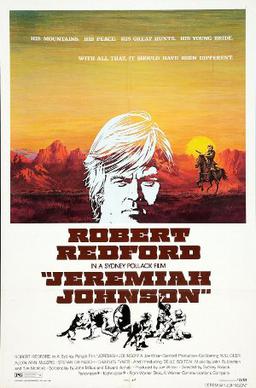
Jeremiah Johnson (1972, directed by Sydney Pollack)


In the 1840s, Jeremiah Johnson (Robert Redford) is a veteran of the Mexican War who wants to get away from civilization.  He sets up an isolated life for himself in the Rocky Mountains and looks to support himself by working as a trapper.  At first, he struggles but eventually he gets some much-needed help from a veteran trapped named Chris Lapp (Will Geer).  Along the way, Johnson discovers that life in the mountains can be harsh and violent.  He adopts a mute boy named Caleb, whose family has been killed by Blackfoot warriors.  Later, the chief of the local Flathead tribe “gives” Jeremiah his daughter.  Despite the language barrier between him and his new wife, Jeremiah is soon the head of a happy family.

One day, when the U.S. Calvary shows up and requests that Jeremiah guide them through the mountains so that they can rescue some starving missionaries, Jeremiah reluctantly leaves behind his family and helps them.  However, Lt. Mulvey (Jack Colvin) insists that Jeremiah lead them through a sacred Crow burial ground.  The Crow retaliate by killing Jeremiah’s family.  Driven mad by grief, Jeremiah sets out to kill every Crow that he can find.

Jeremiah Johnson is really two movies in one.  The story starts out with Jeremiah as a proto-hippie who wants to get away from the hypocrisy and violence of modern society.  Jeremiah takes care of the land, makes friends with other outcasts, and makes a good life for himself.  After Jeremiah’s family is killed, the movie turns into a Death Wish-style revenge thriller, with Jeremiah losing himself in his rage and killing almost everyone that he sees.  Redford is surprisingly convincing as the insane, murderous Jeremiah and the sudden outbursts of violence provide a strong contrast to the relatively peaceful first half of the film.

Jeremiah is a like a lot of the early American settlers.  He wants to get away from the world and start an entirely new life for himself.  He’s seen what the civilization has to offer and he would rather just build a cabin in the mountains and pretend that the rest of the world doesn’t exist.  If Jeremiah had been born earlier, he probably could have pulled it off.  But, by the time Jeremiah tries to go off the grid, it’s already too late.  Society is growing too fast for him to escape from it.  Jeremiah discovers that it’s impossible to truly cut yourself off from humanity. In the end, he’s much like the Crow Indians that he’s declared war upon.  His way of life is ending, whether he’s ready for it or not.  When he and the Crow chief greet each other with a raised open hand (meaning that they come in peace), they are both acknowledging that they are bonded as men whose time is coming to an end.

Jeremiah Johnson was the second of Robert Redford’s many collaborations with director Sydney Pollack and it’s one of their best.  This may be an epic film but it never loses its humanity and, for once, Redford plays someone who isn’t a cut-and-dried hero.  Jeremiah Johnson has recently been rediscovered because of a popular meme of a bearded Redford looking at the camera and nodding but people should know that it’s also a damn fine film on its own.


Lisa Cleans Out Her DVR: Scorpio (dir by Michael Winner)


(Lisa is currently in the process of cleaning out her DVR!  Having recorded over 150 movies since last January, she understands that this might be an impossible task but she’s going to try anyway!  She recorded the 1973 spy thriller, Scorpio, off of Retroplex way back on January 24th!)

On the surface, Jean Laurier (Alain Delon) would appear to be the perfect man.

He’s handsome.  He looks really good in a suit.  He’s wealthy.  He’s French.  And — get this — he loves cats!  He’s the type of guy who, when he discovers a stray cat in his hotel room, immediately starts to pet it and then gives it a saucer of warm milk.  He and his girlfriend (Gayle Hunnicutt) spend their spare time looking at cats and talking about how cute they are.  At one point, even though he’s just killed a man, Jean pauses when he sees a stray cat watching…

Oh, did I mention that Jean kills people for a living?  Well, he does but I’m sure they’re all bad guys.  Seriously, he’s just so charming (and he really, really loves cats) that you really can’t hold it against him that he’s an independent contract killer.  Add to that, his code name is Scorpio.

I have to admit that the film’s title — Scorpio — is the main reason that I chose to record this movie.  I’m a scorpio myself.  In fact, I’m such a scorpio that if I believed in astrology, I would point to my existence as proof that the stars actually do determine our fate.  Seriously, you don’t want to mess with us scorpios.  We’re scorpions.  We sting.

But anyway, back to the movie.

When Scorpio is busted on a trumped-up narcotics charge (or maybe it was a legitimate narcotics charge, it was kind of hard to keep track), the CIA gives him a choice.  He can either go to prison or he can do a job for them.  Apparently, the CIA believes that Scorpio’s friend and mentor, Cross (Burt Lancaster), is a double agent who has been selling information to the Russians.  They want Cross eliminated.

Scorpio takes the job but it’s not going to be easy.  Cross is a veteran spy.  He has connections all across the world and he’s a ruthless killer, the type who forces a man to swallow a cyanide pill and then says, “You’ve got 30 seconds to live.”  In fact, the only person that Cross seems to care about is his wife (Joanne Linville) but he still doesn’t hesitate to abandon her when he realizes that their house is being watched

Cross taught Scorpio everything that he knows but there’s one lesson that Scorpio is still learning and that is to trust no one.  Is Cross actually a spy or is he being set up?  And, if Cross is being set up, what’s to prevent the same thing from happening to Scorpio?

Scorpio is probably one of the most cynical films that I’ve ever seen.  If Scorpio was a political protest, it would be full of people carrying cardboard signs reading, “Nothing Matters” and “All Is Darkness.”  Remember that annoying as Hell scene in SPECTRE where James Bond got drunk and demanded to know who a rodent was working for?  Well, imagine the disillusionment of that scene stretched out for two hours.

Fortunately, no one in Scorpio is as whiny as Daniel Craig was in SPECTRE.  In many ways, Scorpio is a triumph of old-fashioned movie star charisma.  Burt Lancaster is perfectly cast as the world-weary Cross while Alain Delon makes for a compelling Scorpio.  Both of them are believable killers and the film becomes as much about the competition between Lancaster’s old school Hollywood style of acting and Delon’s more refined (and very French) style of cool as it is about the competition between Scorpio and Cross.

Scorpio‘s a good little spy thriller, more than worth keeping an eye out for.


A Movie A Day #145: The Incredible Hulk: A Death In The Family (1977, directed by Alan J. Levi)


Following the events of The Incredible Hulk and with the world convinced that he is dead, Dr. David Banner (Bill Bixby) is hitchhiking his way across California, hoping to reach a hospital where research is being done on the effects of gamma radiation.  When he stops off in an orange grove, he spots a young, crippled woman named Julie (Laurie Prange).  When Julie faints, David carries her back to her mansion.  It turns out that, after the mysterious death of her father, Julie stands to inherit millions.  David suspects that her doctor (played by William Daniels) may be poisoning her and he gets a job working on the grounds of her mansion.  At first, David thinks that his biggest problem is going to be the head groundskeeper (Gerald McRaney), who is jealous of David’s relationship with Julie.  But, actually, it’s Julie’s stepmother (Dorothy Tristan) that David has to watch out for.  When David tries to protect Julie and a bitter hermit (John McLiam) from the stepmother’s evil plans, he soon finds himself being pursued through the swampland by both men with guns and tabloid journalist Jack McGee (Jack Colvin).  They are all making David Banner angry and they’re about to discover that they wouldn’t like David Banner when he’s angry.

This was the second pilot for The Incredible Hulk.  It aired a week after the first pilot and, like that one, it was also given a theatrical release in Europe.  While the first movie established David Banner’s backstory and explained why he transformed into the Hulk whenever he bumped his head on a door frame or twisted his ankle, A Death in The Family is more typical of the series that would follow.  Like every subsequent episode, A Death In The Family opens with David Banner finding an odd job and ended with him walking down the road with his thumb stuck out.  In between, Banner helps a special guest star.

Watching the second pilot, it’s easy to see why CBS took a chance on The Incredible Hulk even though, at the time, comic book adaptations were considered to be a risk.  Both Bill Bixby and Lou Ferrigno really throw themselves into playing Banner and his alter ego and the show takes the idea seriously.

There’s nothing special about the pilot’s story.  The stepmother and the doctor are obviously guilty from the start.  But the plot (and the 90 minute running time) does allow for four appearances by the Hulk.  David Banner even gets attacked by a grizzly bear, which brings the Hulk right out.  David Banner always had the worst luck with wild animals and barbed wire.  The Hulk, though, just throws the grizzly bear over into the next pond.  The bear is not harmed.  The Hulk may have been angry but he was never really dangerous.

Finally, for the record, Death In the Family featured the first of many aliases that David Banner would assume over the next four years.  This time, he’s David Benton.

A Movie A Day #144: The Incredible Hulk (1977, directed by Kenneth Johnson)


It may seem hard to believe now but there was a time when comic book adaptations were considered to be a risky bet at best.  In 1977, Marvel Comics sold the television rights for four of their characters to Universal Productions. This led to three unsuccessful pilots (one for Dr. Strange and two for Captain America), a Spider-Man series that lasted for two seasons, and The Incredible Hulk.  As opposed to the other Marvel adaptations, The Incredible Hulk series was popular with fans and (some) critics and ultimately lasted for four seasons.
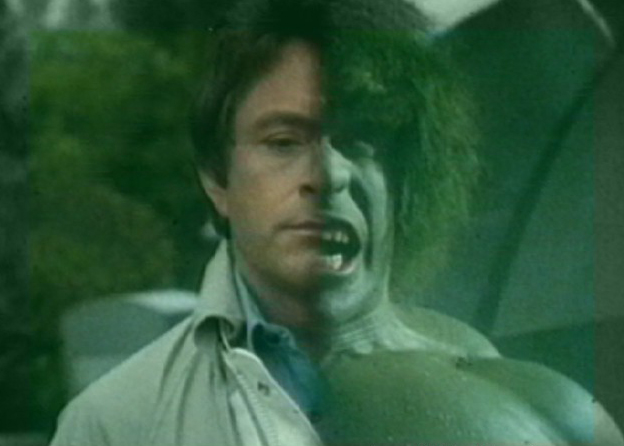
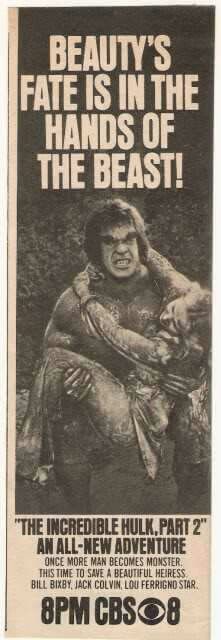
It all started with a 90 minute pilot that aired in 1977.  Haunted by the car accident that caused the death of his wife and his inability to rescue her, Dr. David Banner (Bill Bixby) is researching why, in times of extreme stress, ordinary people can suddenly experience moments of super human strength.  What he theorizes is that it is a combination of body chemistry and gamma radiation caused by sun spots.  Eager to test his theory, David straps himself into a chair and zaps himself with gamma radiation.  At first, it seems as if nothing has changed.  But when David’s driving home, he gets a flat tire.  When he struggles to change the tire, in the middle of a hurricane nonetheless, David gets mad.  Suddenly, his eyes turn green and soon so does the rest of him as David Banner is transformed into the Incredible Hulk (Lou Ferrigno, except for one shot where the Hulk is played by Richard Kiel).  The Hulk runs through the woods, accidentally scaring a girl and getting shot by a hunter.  When the Hulk falls asleep, he transforms back into David, who has no memories of what he did while he was the Hulk.  While David and his colleague, Elaina Marks (Susan Sullivan), investigate what happened to him, tabloid reporter Jack McGee (Jack Colvin) tries to uncover the results of David and Elaina’s research.

Other than introducing the Hulk and giving Banner a backstory, the pilot didn’t have much in common with the series that followed.  Along with being a comic book adaptation, the series was also a remake of The Fugitive.  With everyone convinced that the Hulk had murdered both him and Elaina, David was always on the run and trying to find a way to cure his condition.  Every episode would begin with David working a new odd job and getting involved in a new situation and almost every episode ended with David hitchhiking while the show’s famous piano theme played over the final credits.  Because David was always either getting beaten up or tangled in barbed wire, the Hulk would show up twice an episode.  David Banner just couldn’t catch a break.

The pilot seems to take forever to get going, devoting a lot of time to David and Elaina doing research.  In those days before the success of The Dark Knight and the MCU legitimized comic books as a cultural force, The Incredible Hulk was determined to show that it was not just a show for kids.  Today, the pilot is too slow-paced and self-consciously serious but still contains the elements that made the show itself became a success.  Bill Bixby takes his role seriously and Lou Ferrigno is the perfect choice for the Hulk.  Decades after they first aired, the Hulk-transformation scenes are still undeniably cool.  It was also during the pilot that Dr. Banner uttered those famous and oft-parodied words: “Mr. McGee, don’t make me angry.  You wouldn’t like me when I’m angry.”

As of this week, reruns of The Incredible Hulk are now being shown, daily, on both H&I and the El Rey network.  I will be watching.

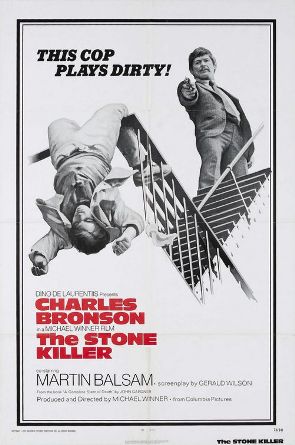
Bronson’s Best: The Stone Killer (1973, directed by Michael Winner)


Stone_killerAfter tough New York detective Lou Torrey (Charles Bronson) lands in hot water for shooting and killing a teenage cop killer, he moves to Los Angeles and gets a job with the LAPD.  Working under an unsympathetic supervisor (Norman Fell), saddled with an incompetent partner (Ralph Waite), and surrounded by paper pushing bureaucrats, Torrey still tries to uphold the law and dispense justice whenever he can.  When a heroin dealer is murdered while in Torrey’s custody, Torrey suspects that it might be a part of a larger conspiracy, involving mobster Al Vescari (Martin Balsam).
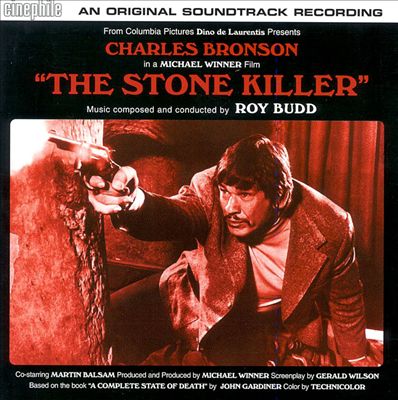
Vescari is plotting something big.  It has been nearly 40 since the “Sicilian Vespers,” the day when Lucky Luciano, Frank Costello, and Busy Siegel killed all of the original mafia dons at the same time.  Viscari has invited mafia leaders from across the country to attend a special anniversary dinner.  During the dinner, all of Vescari’s rivals will be assassinated.  To keep things a secret, Vescari will not be using any of his usual hitmen.  Instead, he has contracted a group of mentally unstable Vietnam vets, led by Lawrence (Stuart Margolin).

Charles Bronson has always been an underrated film star.  His legacy has been tarnished by the cheap films he made for Cannon and, unlike Clint Eastwood, he never got a chance to really take control of his career and reinvent his image.  But during the 1970s, not even Clint Eastwood was a more convincing action star than Charles Bronson.  Bronson may have never been a great actor but he was an authentic tough guy with a physical presence that dominated the screen.

It was during this period that Bronson made his first four movies with director Michael Winner.  Though Death Wish and The Mechanic are the best known, The Stone Killer may be the best.  Tough, gritty, and action-packed with a great car chase, The Stone Killer was filmed on location in Los Angeles and some of the best parts are just the scenes of Bronson awkwardly interacting with the local, California culture.  If you have ever wanted to see Charles Bronson deal with a bunch of hippies, this is the film to see.  The Stone Killer also has more of social conscience than the usual 70s cop film, with Bronson’s character not only condemning excessive police brutality but also his racist partner.

(Ironically, Bronson and Winner would follow The Stone Killer with Death Wish, a film that many critics condemned as being racist and which suggested that the police were not being brutal enough.)

The other thing that sets The Stone Killer apart is that it has a great cast, featuring several actors who would go on to find success on television.  Balsam, Fell, and especially Waite and Margolin are all great.  Keep an eye out for a very young John Ritter, playing one of the only cops in the film who is not portrayed as being either corrupt or incompetent.

Though it may not be as well-known as some of his other action films, The Stone Killer is one of Bronson’s best.