Welcome to Retro Television Reviews, a feature where we review some of our favorite and least favorite shows of the past! On Fridays, I will be reviewing St. Elsewhere, a medical show which ran on NBC from 1982 to 1988. The show can be found on Hulu and, for purchase, on Prime!
This week, a handful of doctors save two patients and lose one.
Episode 1.11 “Graveyard”
(Dir by Victor Lobl, originally aired on January 18th, 1983)
It’s the graveyard shift at St. Eligius. The halls and the cafeteria are dark. The ER is oddly calm. There are only a few patients to be looked after and most of the doctors are playing poker and talking about the rather boring subject of Dr. Samuels’s love life.
Only a handful of the series regulars make an appearance in this episode but that’s fine. This episode actually provides a nice break from having to keep track of where everyone is. Unfortunately, as I already said, a lot of this episode is centered around the character of Dr. Samuels. Nothing against the late David Birney, who did a perfectly acceptable job in the role, but Dr. Ben Samuels is just not that interesting of a character. He’s a dedicated surgeon who feels too much, drinks too much, and wants to sleep with his colleagues. That’s fine but I grew up watching General Hospital. I’ve seen a hundred doctors just like Samuels on television.
To me, the far more interesting characters are the people like David Morse’s Jack Morrison or Ed Begley, Jr’s Victor Ehrlich or even Terence Knox’s Peter White. They’re doctors who screw up and aren’t always brilliant and sometimes say the wrong things. They feel like real people whereas Dr. Samuels just feels like a cliche, a holdover from some other medical show. Samuels is not a particularly compelling character and, when I did some research, I was not surprised to discover that David Birney only appeared on one season of the show.
G.W. Bailey’s Hugh Beale also only appeared in the first season and that’s a shame because Bailey’s performance as Beale has been one of the first season’s real pleasures. Bailey plays Beale as a compassionate man who often pretends to be more naive than he is. As a Southerner, he’s an outsider on this Boston-set show and, being an outsider, he can often relate to the patients in the psych ward. Of course, that still doesn’t stop Dr. Beale’s main patient, Ralph the Birdman, from throwing himself off the roof of the hospital in this episode. To be honest, I already suspected things weren’t going to go well for Ralph on this show but his suicidal jump still upset me. As annoying as the character was, he was also finally making some progress. He finally admitted he wasn’t a bird. And then he proved it by showing that he couldn’t fly.
While Ralph plunged to his death, Dr. Samuels saved a gunshot victim (played by Tom Hulce). And Jack allowed the father (James Hong) of one of his comatose patients to perform a Chinese ritual that led to the patient waking up and eventually walking into the cafeteria, where the doctors were playing poker. “Who ordered the Chinese?” Fiscus asked and …. ugh. Not cool, Fiscus.
It was a night of triumph and tragedy. Ralph died but Dr. Samuels and Dr. Paxton agreed to give their relationship another try which …. eh. I don’t care about Samuels and Paxton. For the most part, though, I liked this episode. The smaller cast made it easier to keep track of things and the poker game banter reminded me that the doctors are all people too. Still, I have to feel bad for Ralph. All he wanted to do was fly.
Welcome to Retro Television Reviews, a feature where we review some of our favorite and least favorite shows of the past! On Fridays, I will be reviewing St. Elsewhere, a medical show which ran on NBC from 1982 to 1988. The show can be found on Hulu and, for purchase, on Prime!
This week, Dr. Ehrlich faints!
Episode 1.9 “Hearts”
(Dir by Mark Tinker, originally aired on January 11th, 1983)
Ralph, the guy who thinks that he’s a bird, is now running around the hospital and checking in on patients and signing his name as “Dr. Bullfinch.” I guess it says something about how big St. Elgius is that Dr. Chandler spends most of this episode asking people if they’ve ever heard of or met Dr. Bullfinch. The show plays this for humor. There’s only two problems.
First off, we’ve already done the fake doctor thing. Dr. Craig spent three episodes searching for Dr. Barnum, the fictional doctor who Mark thought was interested in buying his car. Since Chandler was a part of that whole practical joke, it surprised me that it didn’t occur to him that maybe Dr. Bullfinch also didn’t exist.
Secondly, Ralph is one of those character who was amusing at first but, after episode-after-episode of him disrupting the hospital and making the patients uncomfortable, I can’t help but feel that it’s time for Ralph to at least try to fly off into the sunset, even if it leads to him crashing to the pavement below. Dr. Westphall tells Dr. Beale to keep Ralph locked up in the psych ward or else Westphall will send Ralph to a mental hospital. I think Westphall should have just gone for it. I mean, does Westphall not realize the legal jeopardy that the hospital is now in because of Ralph’s continued presence?
While that was going on, an overweight woman (Conchata Ferrell) checked into the hospital with stomach pains and was shocked to discover that she was pregnant and going into labor. This was a heartbreaking story, largely due to the wonderful performance of Conchata Ferrell. No one — from her father to the nurses at the hospital — has ever treated her with any sort of compassion. In the end, she checks out of the hospital and abandons her baby in the maternity ward.
A new doctor (Dorothy Fielding) came to work at St. Eligius and — hey! — she has a romantic history with Dr. Samuels. *Yawn* Samuels is the most boring character on the show and I tuned out this storyline as soon as I realized he was going to be at the center of it.
Newly separated from his wife, Dr. White is having a nervous breakdown and has to abandon a patient so that he can cry in the stairwell. Dr. Westphall offers him some heartfelt advice but you can tell that Westphall thinks that White doesn’t have what it takes to be a doctor. I think Westphall is right.
Finally, an ill Dr. Erhlich tries to get out of assisting Dr. Craig with an operation. Craig tells Erhlich to man up. Erhlich faints during the operation. Surprisingly, Dr. Craig is not angry with Ehrlich because, as he explains it, the important thing is that the operation was a success. Seeing how sick Ehrlich has become, Craig tells Ehrlich to go home and get some rest.
“Do you have a car?” Dr. Craig asks.
“No, I usually ride the bus,” Ehrlich replies.
“Good,” Craig says, “you shouldn’t be driving in your condition.”
And I have to admit that exchange made me laugh. William Daniels gives such a good performance as the arrogant yet talented Dr. Craig that you can’t help but love the guy, no matter how much of a jerk he is. After knowing him best as the always compassionate Mr. Feeney on Boy Meets World, it’s been interesting to watch William Daniels play a character as thoroughly self-centered and vain as Dr. Craig. On the drama St. Elsewhere, William Daniels often provides some much-needed comedic relief. On the (very silly) sitcom Boy Meets World, Daniels was the dramatic relief. It’s a strange world.
This episode had a few too many plotlines that I either didn’t care about or which felt a bit played out (like Ralph the Birdman). It wasn’t St. Elsewhere at its best but William Daniels and Conchata Ferrell still saved the episode.
Welcome to Retro Television Reviews, a feature where we review some of our favorite and least favorite shows of the past! On Fridays, I will be reviewing St. Elsewhere, a medical show which ran on NBC from 1982 to 1988. The show can be found on Hulu and, for purchase, on Prime!
This week, a famous face shows up in the ER!
Episode 1.9 “Rain”
(Dir by Victor Hsu, originally aired on January 3rd, 1983)
Last night, after writing my review of Goodfellas, I watched the ninth episode of St. Elsewhere and there was Ray Liotta!
Liotta played Murray, a young man who came into the ER with a deep cut on his back. Orderly Luther took one look at him and decided that he was a member of the same gang who mugged Fiscus a few episodes ago. Luther then told Fiscus right before Fiscus was due to stitch Murray up. Murray was indeed rude but Fiscus wasn’t particularly polite to him. Fiscus didn’t stich up Murray’s wound but he did pull his gun on him. Murray fled the ER and, after knocking over several doctors who were in his way, he jumped out of a window and escaped from St. Eligius.
As for Fiscus, he got a stern talking to from Dr. Westphall. Westphall ordered Fiscus to get rid of the gun and told him that if he ever brought a weapon to work again, his residency would come to an end. Fiscus agreed to not bring the gun to the ER anymore but he later told Dr. Chandler that he was terrified for his life. I’ve been critical of Howie Mandel’s performance on this show but he actually did a pretty good job in this episode. He was able to hold his own while sharing the screen with Denzel Washington. That’s quite an accomplishment.
While Dr. Westphall yelled at Fiscus, Dr. Craig yelled at Ehrlich for spraining his pinkie while playing handball. Dr. Craig demands to know how Ehrlich will ever make it as a surgeon if he doesn’t protect his hands. Ehrlich spends the entire day trying to protect his hands and he continually fails. (Ehrlich’s a bit of a klutz.) Finally, Ehrlich storms into Craig’s office and interrupts a meeting to announce that he’s going to continue to play handball. Craig shrugs and dismissively says, “He’s from California.”
As for the rest of this episode, it took place over one very long and rainy day. Peter is still struggling as both a doctor and a husband. When his daughter (a very young Candace Cameron Bure) was rushed to the hospital after eating mothballs, Peter blamed his wife and his wife blamed Peter. Returning home from the hospital, Peter nearly hit his wife after she tossed his dinner on the floor. It was scary to watch. I’m getting a bad feeling about what’s going to happen with this marriage.
Dr. Morrison made the mistake of making a house call and soon, he discovered himself constantly being called by Mr. Lukovic (George Morfogen) whenever any of Lukovic’s neighbors were taken ill. Morrison kept telling Lukovic to take his friends to the hospital but Lukovic talked about how, in the past, doctors would always make house calls. When Morrison finally refused to go to Lukovic’s building, Lukovic brought his neighbor to the hospital. The neighbor was in cardiac arrest but Morrison managed to get his heart beating again. Rather than be thankful, Lukovic blamed Morrison for not responding to his call. Morrison lost his temper and told Lukovic that he couldn’t keep living in the past. “I will not call you again,” Lukovic replied. Roll the end credits!
This was a pretty good episode, one that not only answered the question of why doctors don’t make housecalls but also which featured Ray Liotta being tough and dangerous. There were a few annoying scenes involving the guy who thinks that he’s a bird but otherwise, this was a well-done and rainy hour.
Welcome to Retro Television Reviews, a feature where we review some of our favorite and least favorite shows of the past! On Fridays, I will be reviewing St. Elsewhere, a medical show which ran on NBC from 1982 to 1988. The show can be found on Hulu and, for purchase, on Prime!
Oddly enough, this week’s episode is not available on Hulu. I had to purchase it on Prime. I’m not really sure why this episode — and apparently this episode alone — wouldn’t be on Hulu. The world of Streaming is a strange and arbitrary place.
Episode 1.8 “Tweety and Ralph”
(Dir by Mark Tinker, originally aired on December 20th, 1982)
Dr. Craig is still trying to track down the mysterious Dr. Barnum, the man who says that he’s interested in Craig’s convertible. Dr. Craig is constantly getting messages from Barnum. He’s constantly hearing Barnum being paged on the PA. Craig has become obsessed with tracking down the elusive Dr. Barnum.
Of course, Dr. Barnum does not exist. What started as a practical joke on the part of Dr. Samuels has grown into a hospital-wide conspiracy of people playing with the emotions of the pompous and prickly Dr. Craig. Craig is so obsessed with selling his car that he even cuts his hand while working on the engine. Finally, Dr. Craig’s wife, Ellen (played by William Daniels’s real-life wife, Bonnie Bartlett), confronts Samuels and tells him that she knows what he’s doing. When Samuels hears that Craig cut his hand, he feels guilty. He knows how important a surgeon’s hands are. Samuels finally works up the courage to tell Craig the truth. Craig laughs. And then he punches out Dr. Samuels.
And you know what? Dr. Samuels totally deserved it. Good for you, Dr. Craig!
(Everyone seems to have forgiven Dr. Samuels for causing a VD break-out during the pilot. They’re very forgiving at St. Eligius.)
Meanwhile, the Legionnaire’s outbreak is finally contained, with the culprit being one dirty shower head. Ward 5 is re-opened! Yay! Dr. Westphall celebrates his victory but still comes across as being the most depressed man on the planet. While that goes on, Dr. Fiscus reveals that he now carries a gun so he won’t get mugged in the ER again and Dr. Cavanero considers her decision to devote her life to her career when a friend check into the hospital for hysterectomy.
That said, the majority of the episode centered around Ralph (Richard Marcus) and Jane (Laraine Newman), two psychiatric patients. Jane is pregnant and Ralph is the father. Ralph is a genius who graduated at the top of his class from MIT and who invented his own personal computer. Unfortunately, he also thinks that he’s a bird and has been stealing medical supplies to build a giant nest in one of the supply closets. Jane wants to marry Ralph but, when she and Ralph go out to dinner with Dr. Beale, Jane can only watch in horror as Ralph panics at the sight of a cat. “Caw! Caw!” Ralph shouts as he jumps up on a chair. The cat, for its part, just looks confused.
In other words, the marriage is off. Jane tells Ralph that she’ll always love him but that she can’t be with him anymore. The episode ends with a close-up of Ralph intensely staring at the camera. Uh-oh, that doesn’t look good….
This was a weird but ultimately effective episode. I really shouldn’t have been as emotionally moved as I was by Ralph and Jane’s story. Ralph’s behavior was more than a little cartoonish. But, I have to admit that I felt really sad as Jane said goodbye to Ralph. Richard Marcus and Laraine Newman did such a good job playing the characters that I couldn’t help but be sad that things weren’t working out for them.
Oh well. I guess that’s just another day at St. Eligius….
Welcome to Retro Television Reviews, a feature where we review some of our favorite and least favorite shows of the past! On Fridays, I will be reviewing St. Elsewhere, a medical show which ran on NBC from 1982 to 1988. The show can be found on Hulu!
This week, the hospital’s in chaos!
Episode 1.7 “Legionnaires: Part Two”
(Dir by Mark Tinker, originally aired on December 14th, 1982)
With one of the wards shut down due to a Legionnaires outbreak, the hospital is in crisis. All of the patients from the infected ward and their doctors have been moved to a new floor and now, everyone is stressed and overworked. Dr. Westphall insists to the Hospital Board that he has no regrets about shutting down the ward and that he did what he had to do. Westphall is vindicated when it turns out that he was correct about the Legionnaires outbreak but he still has to admit that administrator H.J. Cummings (Christopher Guest) has a point about Westphall’s actions causing a panic. Cummings argues that Westphall could have quietly closed the ward without alerting the media. In the end, it doesn’t matter as Cummings explains that he’ll be the one who gets fired over the bad publicity, not Westphall. The episode ends with Westphall returning to his small home, carrying the birthday present that he was supposed to give his son that day. Westphall has dedicated his life to the hospital and it’s obvious that his family has often had to wait until he has time for them.
(I’m starting to understand why Westphall always seems so damn depressed.)
Some people take advantage of the chaos. Two gang members (one of whom is played by a very young Robert Davi) hit Fiscus over the head and steal his wallet after Fiscus stitches up one of their hands. Peter White, eager to get away from his troubled marriage, shows up to work Morrison’s shift for him. Dr. Chandler glares at a nurse that he previously accused of unprofessional behavior. Dr. Craig tries to find someone foolish enough to buy his old convertible from him. And head nurse Helen Rosenthal finds herself being called over and over again to the room of patient Martha Mulvahey (Ann Bronston).
Poor Martha! She has a reputation for being a problem patient, because she’s always calling for the nurses and asking them to do things for her, like wash her hair or raise her bed. Only Helen is willing to put up with Martha but even Helen loses her temper when Martha asks for help putting on her makeup. Finally, Martha breaks down and explains that her arthritis is so severe that she can barely move her hands. She’s a librarian and she can’t even turn the pages of a book anymore. (Excuse me, I think I have something in my eye….) A friend is coming to visit her at the hospital and she just wants to look good for him because she doesn’t want him to remember her as someone who can’t even get out of a hospital bed. Helen helps Martha put on her makeup. At the end of the episode, the hospital may be in chaos but Martha gets to see her friend and that made me happy and brought even more tears to my eyes.
Meanwhile, psychiatric patient Jane Zontell (Laraine Newman) returns to the hospital and checks herself back in for treatment. Dr. Beale (G.W. Bailey) is shocked to learn that Jane is three months pregnant. But it’s only been two months since Jane was last a patient at St. Eligius so that father must be someone at the hospital. Uh-oh.
(Personally, I suspect Fiscus.)
This was a good episode. I cried for Martha. I felt bad for Westphall. I hope someone buys Dr. Craig’s car so he’ll stop bothering everyone else about it. This episode was about how bad things can get at a hospital but, with Martha and Rosenthal, it offered up some hope as well. All in all, it worked.
Welcome to Retro Television Reviews, a feature where we review some of our favorite and least favorite shows of the past! On Fridays, I will be reviewing St. Elsewhere, a medical show which ran on NBC from 1982 to 1988. The show can be found on Hulu!
This week, Peter White continues to disappoint everyone.
Episode 1.6 “Legionnaires: Part One”
(Dir by Thomas Carter, originally aired on December 7th, 1982)
Dr. Peter White (Terence Knox) is perhaps the most incompetent doctor at St. Eligius. Over the course of the first few episodes, we have watched as he’s taken advantage of his fellow residents, been rude to patients, misdiagnosed obvious medical conditions, and complained nonstop about how difficult his life is. Dr. White is struggling to balance the punishing schedule of being a resident with also being a husband and the father to a young girl and a newborn. He’s in over his head.
What’s interesting is that, despite all of his problems, he’s not a particularly sympathetic character and I don’t think he’s meant to be. He’s never going to be a good doctor and he doesn’t have the courage to admit it. Instead of finding a career for which he’s suited, he insists on being a doctor and risking the life of anyone unlucky enough to be his patient. What makes Dr. White an especially disturbing character is that there are probably a lot of doctors in the real world who are just like him. They’re overwhelmed and they make stupid mistakes. I get overwhelmed sometimes too, as does everyone. And, like everyone, I occasionally make mistakes. However, my mistakes usually amount to something like missing a cringey typo that causes me to feel embarrassment until I get a chance to fix it. A doctor’s mistake can lead to people dying.
This week, Dr. White attempts to give penicillin to a patient who is allergic. Fortunately, Dr. Westphall is able to stop White from putting his patient into a coma. Dr. White also manages to lose his hospital-issued pager and, when he’s told that it will cost him $300 to get a new one, he freaks out. A chance meeting with a lawyer in the hospital cafeteria leads White to offer to sell out the hospital by recommending the lawyer to anyone willing to sue because they ended up with a doctor like Peter White. White finally raises the money by donating his sperm. The nurse at the sperm bank says that it’s really generous for a doctor to donate. Not this doctor!
While Peter is screwing up his life, Dr. Westphall is dealing with what appears to be an outbreak of Legionnaire’s Disease in one of the wards. Westphall wants to immediately shut down the ward. Dr. Auschlander and board member H.J. Cummings (Christopher Guest — yes, that Christopher Guest) disagree. However, after another young woman dies of what appears to be Legionnaire’s, Westphall orders the ward to be closed and the patients to be relocated.
Meanwhile, Kathy Martin broke up with Fiscus because she felt their fling was turning into a relationship and Dr. Cavanero dealt with a nurse who disliked her. Neither one of those subplots did much for me, though Kathy is emerging as one of my favorite characters on this show. Before breaking up with Fiscus, she goes to a funeral of a stranger just so he won’t be buried without someone there to mourn him. She wears white to the funeral. One doctor comments that she’s never seen Kathy wear white before. Kathy’s a great character and deserves better than just being Fiscus’s girlfriend.
This episode was an improvement over the last episode I watched. According to the title, it’s also only “Part One” so I imagine there will be some fallout over closing that ward next week. We’ll see what happens.
Welcome to Retro Television Reviews, a feature where we review some of our favorite and least favorite shows of the past! On Fridays, I will be reviewing St. Elsewhere, a medical show which ran on NBC from 1982 to 1988. The show can be found on Hulu!
This week’s episode of St. Elsewhere featured Dr. Craig winning an award. Good for him!
Episode 1.5 “Samuels and the Kid”
(Dir by Thomas Carter, originally aired on November 30th, 1982)
This week’s episode of St. Elsewhere was kind of boring, It wasn’t a bad episode because the show was well-acted and even the boring subplots felt as is they were part of a bigger whole but, especially when compared to last week’s episode, Samuels and the Kid just wasn’t as compelling.
The Kid of the title is Robbie Durant (Jeremy Licht), a young patient who needs to have some minor surgery done on his ankle. Dr. Samuels take a really intense interest in the kid, bonding with him and even offering him tickets to a Patriots football game. At first, it seems like Samuels is just trying to be nice to a kid who is in a scary situation. (When I was growing up, I spent a few nights in the hospital because of my asthma and it always scared me to death.) But, at the end of the episode, it is revealed that Samuels had a son who was Robbie’s age who died in a freak accident. As for Robbie, the operation is a success but he still dies as the result of an embolism. It was sad but, at the same time, I knew Robbie was going to die as soon as he showed up in the hospital. I’ve seen enough medical shows to know.
Dr. Cavanero was at a bed-and-breakfast when she learned that one of her patients had gone into labor and was at her apartment alone. Cavenro had to beg people for change so that she could use a pay phone to call the patient’s neighbors so that she could talk them through delivering the baby. Seen today, the most interesting thing about this storyline is that it takes place at a time when people had to carry around quarters so that they could call each other in case of an emergency. (There is a very dusty old payphone a few blocks away from my house. I assume it doesn’t work and I don’t think it’s been touched by human hands since the 90s — and I’m certainly not going to touch it! — but it’s always interesting to see it sitting there like some haunted beacon of the past.)
Dr. Fiscus continued to have sex with Kathy Martin. Good for them but I really don’t know that I need to spend a good deal of time listening to Howie Mandel talk about his sex life.
Dr. Chandler (Denzel Washington) accused a nurse of being incompetent. Nurse Rosenthal (Christina Pickles) got mad at him for yelling at the nurse in the hospital hallway. Dr. Westphall mediated and agreed to move the nurse to another floor. Denzel Washington is always fun when he’s yelling at people.
There was one very funny scene. Dr. Craig won an award for surgeon of the year and gave an extremely long, pompous, and rather bitter acceptance speech. (The award was a plaster cast of his own hands.) William Daniels played the scene perfectly and I have a feeling that Dr. Craig is going to end up becoming my favorite character. As a bonus, Daniels’s wife, Bonnie Bartlett, appeared as Craig’s wife. By the middle of Craig’s speech, even she had stoppled listening and lit a cigarette.
As I said, this was a little bit of a boring episode. Still, I look forward to the future of the show!
Speaking of the future, this is my last St. Elsewhere review of 2024. My next review of this show will post on January 3rd!
Welcome to Retro Television Reviews, a feature where we review some of our favorite and least favorite shows of the past! On Fridays, I will be reviewing St. Elsewhere, a medical show which ran on NBC from 1982 to 1988. The show can be found on Hulu!
This week’s episode made me cry.
Episode 1.4 “Cora and Arnie”
(Dir by Mark Tinker, originally aired on November 23rd, 1982)
While orderly Luther (Eric Laneuville) practices his karate moves in the hallway and anesthesiologist Vijay (Kavi Raz) composes a letter to his family in India and Dr. Fiscus continues his sex-only relationship with Kathy Martin, four patients learn about life and death at St. Eligius.
One of them is an unnamed man (Lionel Mark Smith) who comes in with a complaint of backpain. Fiscus examines him and discovers that the man has been shot in the back. The man announces that he’s on parole and he doesn’t feel like going back to prison. Fiscus offers to admit him under an assumed name but the man says he already gave his real name to the front desk. The man tries to leave the hospital but collapses from pain and blood loss. Later, when the man wakes up, Fiscus tells him that the bullet has been removed and he’ll be fine. The man says he won’t be fine because he’s going to go back to prison as soon as he leaves the hospital.
Meanwhile, Kathleen McAllister, who has been in a coma ever since Andrew Reinhardt set off a bomb at a bank, finally dies. Reinhardt, when he’s informed of the news, sneers. He doesn’t care that she died. He’s all about the class struggle. (If this show was made today, he’d have thousands of followers on Bluesky.) When Dr. Beale tries to examine him to determine if he’s mentally ill, Reinhardt spits in his face. Reinhardt is convinced that nothing will ever happen to him but, after Kathleen dies, he’s informed that he’s being taken to prison. As Reinhardt is rolled out of his hospital room, Kathleen’s husband (Jack Bannon) appears in the hallway and shoots him dead.
George (Bernard Behrens) and Lillian Rogers (Anne Gerety) are tourists who are visiting Boston. When Lillian faints in her hotel room, George rushes her to the hospital. Lillian says she’s feeling fine but she still goes through a series of tests to determine why she fainted. In the end, the tests are inconclusive. No one can figure out why she fainted so she’s told to just see her family doctor when she returns home. When George and Lillian check out of the hospital, they are presented with the bill for all the tests. George freaks out when he sees that he’s being charged …. $1,380.90!
Now, admittedly, that is $1,380.90 in 1982 money. If George received the same bill today, it would be for $4,517.10. Still, considering all the tests that Lillian had done, that seems remarkable cheap, even by today’s standards. My father died in August and the majority of his medical costs were covered by insurance but his estate is still receiving bills from various hospitals, specialists, and ambulance services. I’ve been told that the same thing happened when my mom passed away in 2008. (Personally, I think if someone dies while in your care, you’ve forfeited your right to be paid.) By today’s standards, having to pay less that $5,000 feels like a bargain!
Finally, and most heart-breakingly, Dr. Morrison takes care of a homeless woman named Cora (Doris Roberts), who comes into the hospital with her companion, Arnie (James Coco). Due to a head injury, Arnie is almost childlike. While Cora learns that a case of gangrene is going to kill her unless she gets her foot amputated, Arnie repeatedly asks, “Can we go now?” In the end, Cora chooses not to have the surgery, leaving the hospital with Arnie. As she explains to Dr. Morrison, someone has to take care of Arnie and she can’t do that with just one foot. When Morrison tells Cora that she’s probably going to die in a year, Cora shrugs and says it won’t be any great loss.
OH MY GOD! Seriously, I was in tears at the end of this episode. The Cora and Arnie story had the potential to be a bit too schmaltzy for its own but Doris Roberts and James Coco both gave such incredibly moving performances that I couldn’t help but get emotionally involved in their plight. And I understood why Cora made the decision that she did. Having been rejected by both her family and society, Cora knew that there wouldn’t be anyone around to take care of her after the operation. So, she decided to accept things the way that they were and spend her last year with the one person who didn’t judge her, Arnie. (I’m getting teary-eyed just writing about it.) Playing out against all the other petty dramas going on at the hospital, this storyline was emotionally devastating.
This was a powerful episode. Watching it, I understood why St. Elsewhere is so often described as being one of the best medical shows of all time.
Welcome to Retro Television Reviews, a new feature where we review some of our favorite and least favorite shows of the past! On Fridays, I will be reviewing St. Elsewhere, a medical show which ran on NBC from 1982 to 1988. The show can be found on Hulu!
This week, William Daniels claims the show as his own.
Episode 1.2 “Bypass”
(Dir by Thomas Carter, originally aired on November 9th, 1982)
“Hey, it’s Tim Robbins!”
Yes, the future Oscar winner shows up in the second episode of St. Elsewhere, playing a rich kid-turned-terrorist named Andrew Reinhardt. Reinhardt, who no doubt learned all about Marxism during his first semester away at college, set off a bomb in a bank, killing two people and putting a woman named Kathleen McCallister into a coma. Both Reihnhardt and McCallister have been brought to St. Eligius. While Kathleen’s husband, Stephen (Jack Bannon), sobs in the hallway, Reinhardt acts like a petulant brat in his hospital room.
With the nurses refusing to change his sheets or even give him his morphine shots, it falls to Dr. Morrison to take care of him. Reinhardt is not at all appreciative and Morrison finds himself conflicted. How is he supposed to give proper medical treatment to someone who he despises? Morrison is so conflicted that he even goes to Dr. Westphall. Westphall responds by telling a long story about a time that he fell in love with a patient. I’m getting the feeling that Morrison feeling conflicted and Westphall telling long stories are both going to be regular features on this show.
(The correct answer to Morrison’s question about how he can take care of a bad person is as follows: It’s your job and you’re getting paid to do it.)
This episode also gave the viewer a chance to get to know Dr. Craig, the very talented but very egotistical head of surgery who is played by the great William Daniels. Dr. Craig holds a press conference to inform reporters about the conditions of both Reinhardt and Kathleen McCallister and declares that, despite its bad reputation, “St. Eligius is the place to be!” He then proceeds to get angry when the press is more interested in talking to the surgeon who actually saved Kathleen’s life than to him.
Dr. Craig browbeats a Mr. Broadwater (Robert Costanzo) into getting bypass surgery done. The surgery appears to have been a success but it’s hard to ignore that Craig essentially bullied the guy into getting a major operation, one that could have killed him if the least little thing had gone wrong. Resident Victor Ehrlich (Ed Begley, Jr.) assists in the operation and, at one point, Dr. Craig intentionally head butts him when Ehrlich cannot name all of the arteries leading into the heart. It’s a bit aggressive but, on the plus side, Ehrlich does learn all of the names. Afterwards, Dr. Craig brags about how his own son is following in his footsteps and tells Mr. Broadwater’s son that some day, a new Dr. Craig will operate on him. In other words, Dr. Craig is kind of a jerk but he’s good at what he does and he’s played by William Daniels so it’s hard to hold anything against him.
There were other subplots playing out in the background, the majority of which just seemed to be there to remind us that St. Elsewhere is an ensemble show and that, just because someone isn’t a major character in this episode, that doesn’t mean they won’t be important later on. Psychiatrist Hugh Beale (G.W. Bailey) attempted to learn how to swim and ended up taking a class with a bunch of children. Dr. Fiscus (Howie Mandel, the least convincing doctor ever) held court in the cafeteria and claimed that the hormones used in processing food were causing children to develop earlier than ever before. Dr. Peter White (Terrence Knox) wandered around with a bunch of X-rays and begged everyone he met to help him understand what he was (or wasn’t) seeing. If nothing else, this episode did a good job of capturing the idea of the hospital as being a place that’s always busy.
For the most part, though, it was Dr. Craig who carried this episode. While Morrison and Westphall ponderously considered the implications of doing their jobs, Craig was an arrogant, angry, and brilliant dynamo and William Daniels’s high-energy performance was a pleasure to watch. Whenever the episode started to slow down, Dr. Craig would liven things up by yelling at someone. The hospital was lucky to have Dr. Craig and St. Elsewhere was lucky to have William Daniels.
Welcome to Retro Television Reviews, a new feature where we review some of our favorite and least favorite shows of the past! On Fridays, I will be reviewing St. Elsewhere, a medical show which ran on NBC from 1982 to 1988. The show can be found on Hulu!
When I started reviewing Homicide, Jeff suggested that I should also review St. Elsewhere because the two shows shared a similar sensibility and a lot of behind-the-scenes personnel. (Homicide showrunner Tom Fontana started out as a writer on St. Elsewhere.) Apparently. a few characters from St. Elsewhere would eventually cross-over to Homicide. Since I’m planning on soon reviewing two shows that were descended from Homicide — Oz and The Wire — it only seemed right to also review a show that was Homicide’s ancestor.
Though the show aired largely before my time, St. Elsewhere is definitely a show that I have heard about. Everyone who follows American pop culture has either read about or seen the show’s infamous final episode and knows about the Tommy Westphall Universe Hypothesis. Obviously, I can’t get into it now because that would be a spoiler but we’ll discuss it when the time comes!
For now, let’s start at the beginning, with the pilot!
Episode 1.1 “Pilot”
(Dir by Thomas Carter, originally aired on October 26th, 1982)
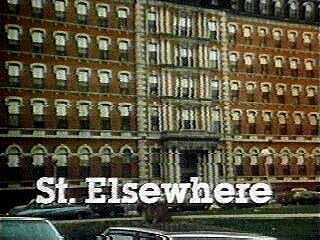
St. Eligius is a hospital in Boston that has obviously seen better days. From the outside, it looks old. On the inside, the hallways have the dim and dull look of a building that hasn’t been renovated in over ten years. As Dr. Mark Craig (William Daniels, long before he played Mr. Feeney on Boy Meets World) angrily puts it, the hospital gets no respect in Boston. It’s seen as being a “dumping ground” for patients who can’t afford anything better. Dr. Craig is world-renowned heart surgeon whose wealthy patients have donated what few improvements the hospital has seen over the past few years. (“All of our clocks now read the same time!” Dr. Craig brags at one point.) But not even Dr. Craig can change the hospital’s reputation as being secondary to Boston General.
There are actually a few good things about St. Eligius. For one thing, a young Denzel Washington is on staff, playing resident Phillip Chandler. Denzel doesn’t get to do much in the pilot but still, his presence fills the viewer with confidence. St. Eligius is also home to a world-renowned liver specialist, Dr. Daniel Auschlander (played by Norman Lloyd, who also worked with Hitchcock and Orson Welles). Auschlander has liver cancer but the hospital chief-of-staff, Dr. Donald Westphall (Ed Flanders), assures everyone that Auschlander will probably “out live us all.” (And he was right, to an extent. Norman Lloyd lived to be 106 years old before passing away in 2021. Ed Flanders died, tragically by suicide, in 1995.) St. Eligius is a teaching hospital and the residents want to make a good impression by keeping their patients alive. That’s always a good thing.
At the same time, how secure can you feel when Howie Mandel is one of the residents? Mandel plays Dr. Wayne Fiscus, who wears a baseball cap and acts …. well, he acts a lot like Howie Mandel. Like Washington, Mandel doesn’t do a lot in the pilot. He does get a subplot where he apparently has sex in the morgue with goth pathologist Cathy Martin (Barbara Whinnery) but otherwise, we don’t see him treating a patient or anything like that. Still, it’s a bit jarring to see Howie Mandel as a doctor. I would not necessarily want him for my doctor because he’s to be easily distracted. Maybe he’ll change my mind as the series progresses.
Speaking of sex, Dr. Ben Samuels (David Birney) has gonorrhea and spends most of the pilot approaching doctors and nurses and informing them of his conditions and suggesting that they might want to get tested themselves. That’s not exactly the best way to be introduced to a character but it also lets us know that this show is not just going to be about dedicated doctors who spend all of their time worrying about their patients and making amazing medical discoveries. Instead, this show is also about doctors who get venereal diseases. Has anyone checked on Fiscus in the morgue?
(That said, Dr. Samuels does get a scene where he saves the life of a woman who was injured in a terrorist bombing, as if the show does want to make sure that we know that he can do his job, even if he is spreading VD through the hospital.)
The majority of the episode follows Dr. Jack Morrison (David Morse), a first-year resident who has been working several 24-hour shifts and who complains, at one point, that he hasn’t seen his wife for days. Dr. Morrison gets upset when a surgeon wants to operate on one of his patients, a 15 year-old girl named Sandy (Heather McAdams). Morrison believes that surgeons always want to cut into somebody. Morrison gets even more upset when Sandy’s mother requests that Sandy be transferred to Boston General, which has a reputation for being a better, more modern hospital. In fact, Morrison is so upset and exhausted that he forgets to file a death certificate for a patient who dies during the night. As a result, it’s believed that the patient, who has a reputation for being violent, has gone missing and is stalking the hospital. Dr. Annie Cavanero (Cynthia Sikes) spends the entire episode looking for a dead man, which at least gives her an excuse to visit every ward and introduce the viewers to the members of the show’s ensemble cast.
Having lost my mom to cancer and now my Dad to Parkinson’s, I was hesitant about reviewing St. Elsewhere. (Actually, I was hesitant about reviewing any medical show.) When my Dad was in the hospital, I felt like I couldn’t get anyone to give me a straight answer about his condition and I often felt the doctors were talking down to me. To be honest, my worst conflicts were with the nurses, one of whom told me that I would have to “lose the attitude” before she would explain why my father had been moved to the Delirium Ward. (It didn’t help that, at the same time my Dad was in the hospital, there was a huge storm that left us without power for a week.) At the same time, there were other doctors who were helpful. The staff at the rehab center that my dad was sent to were also wonderful. I have my regrets about agreeing to hospice care but the nurse who was assigned to my Dad was very empathetic and totally understanding whenever I asked her for a cigarette. (Under normal circumstances, I don’t smoke because I have asthma but seriously, the stress was killing me.) I’m bitter and angry about a lot of what happened but I’m also thankful for the small moments of kindness.
Watching a show set in a hospital was not easy for me but the pilot of St. Elsewhere appealed to me with its mix of melodrama and humor. There was a quirkiness to it that I appreciated. William Daniels made me laugh with his annoyed rant about how little respect the hospital received. Most of all, I cared about whether or not Dr. Morrison would still be alive at the end of his shift. David Morse’s performance won me over. He’s the type of doctor that I would want to have. Well, actually, I’d probably want Denzel to my doctor but Dr, Morrison could assist. Just keep Dr. Howie Mandel away from me. Nothing against him but he seemed to be having way too much fun at the hospital….
 Through the Shattered Lens