Book Review: Shock Value by Jason Zinoman


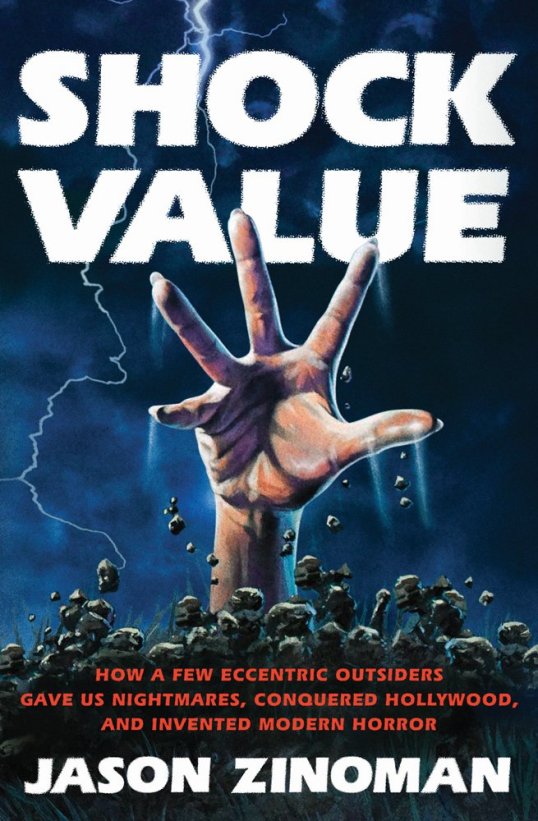
In the 1970s, there were two cinematic revolutions that forever changed the face of American culture.  They both occurred at the same time.  Some of the same people were involved in both.  The difference is that the revolution led by Francis Ford Coppola, Martin Scorsese, Steven Spielberg, and George Lucas is regularly celebrated as being a part of the Second Golden Age of Hollywood while the second revolution, the horror revolution, is often either ignore or only given the most condescending of phrase.

While Speilberg and Lucas were recreating the blockbuster, writers and directors like John Carpenter, George Romero, Wes Craven, and Dan O’Bannon were changing the way horror movies were made, marketed, and viewed.  Though many of them came from similar backgrounds as the storied “move brats,” they were rarely given the same critical respect.  Their accomplishments were often dismissed, even though they often made films that commented just as powerfully on the world of the 70s as Scorsese and Coppola did with films like Taxi Driver and Apocalypse Now.  Only a few directors, like Brian De Palma and William Friedkin, were allowed to live in both of the worlds of the horror visionaries and the movie brats.  And even De Palma struggled to convince the mainstream critics to take him and his films seriously while Friendkin himself only made one horror film in the 70s, albeit one of the most important films of all time.

First published in 2011, Jason Zinoman’s Shock Value pays tribute to those horror visionaries, finally giving them the credit that they and their films deserve.  The book tells the story of the generation of directors who made some of the best remembered films of the 70s.  John Carpenter, Wes Craven, Tobe Hooper, Brian De Plama, and many others move through the pages of this book, often working in the shadows of Hollywood and often finding themselves embraced by audiences even as they were screwed over by a film industry that wasn’t sure how to handle their unique outlooks and undeniable talents.  Perhaps the most talented of them is Dan O’Bannon, who emerges here as a tragic figure who, for all of his obvious ability, could never bring himself to play the Hollywood game.  Perhaps more than anyone, O’Bannon was responsible for the film that would eventually become Alien and yet, he received little of the credit that he deserved.

I probably use the term “must read” for too often but Shock Value is a must read for any lover of cinematic horror.
International Horror Film Review: The Awful Dr. Orlof (dir by Jess Franco)


This 1962 Spanish film opens with a village gripped by terror!  Someone is abducting young dancers from their apartments and sometimes straight off the street!  Who could be responsible for such a terrible act?  Could it be the Mafia?  Could it be the Communists?  Could it be a wayward jazz pianist or maybe an aspiring filmmaker who befriended Orson Welles when the latter moved to Europe to escape the IRS?  Or could it be that awful Dr. Orlof?

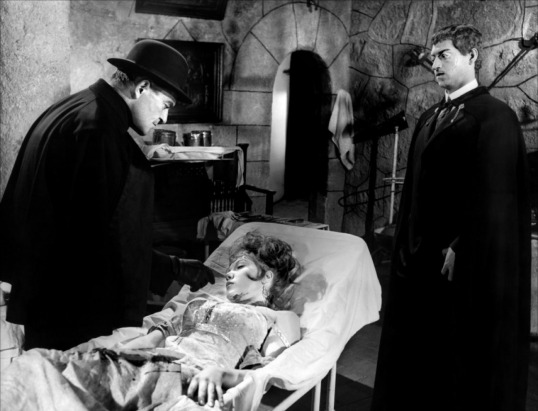
Who is Dr. Orlof, you may ask?  He’s a former prison doctor who retired after a fire disfigured his daughter.  Now, he lives in an isolated castle, where he cares for his daughter.  They say that his only companion is Morpho, a blind former convict who wears an emotionless mask over his features and who is often seen wandering around the village in the middle of the night.  Could it be that Dr. Orlof is responsible for the disappearances?

Of course it’s Dr. Orlof!  His name is right there in the title of the film.  In fact, it’s so obvious that Dr. Orlof is sending Morpho out in the middle of the night so that he can abduct beautiful women who are then used in experiments designed to restore the beauty of Orlof’s daughter that you have to wonder why the police just don’t arrest him as soon as the crimes start.  I mean, yes …. I assume that the police need to find some sort of evidence to prove that Orlof is behind the crime but then again, this film was shot in Spain during the years when General Francisco Franco was in charge of the country.  I’m sure the police could have done whatever they wanted.

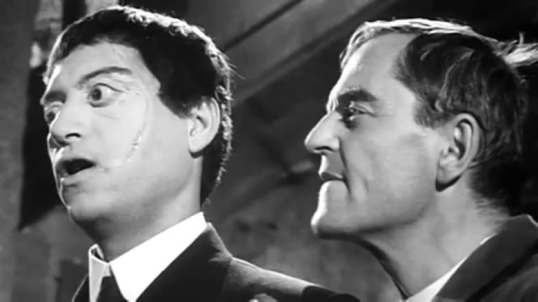
The Awful Dr. Orlof is considered by many to be the first Spanish horror film.  It was also one of the first films to be directed by Jess Franco, who was no relation to the general.  With both critics and at the box office, this was one of Jess Franco’s most successful films and it was one that he would remake several times over the course of his career.  Dr. Orlof, always played with decadent haughtiness by Howard Vernon, went on to appear in several other Franco films.  (In subsequent films, he added an extra F to his last name.  That’s probably because The Awful Dr. Orlof was released in some countries as The Awful Dr. Orloff.  The double F brings to mind Boris Karloff so it’s not a bad idea to spell it that way but all of the evidence that I’ve read and seen would suggest that Franco originally spelled the name Orlof, with only one F.)  For that matter, Morpho also appeared in quite a few films, some with Orlof and some without him.  In the Awful Dr. Orlof, Morpho is played by Ricardo Valle and he’s a genuinely creepy character.  The blank mask that he wears as he stalks through the night is perhaps the best-known image to come out of The Awful Dr. Orlof.  In fact, if you’ve only seen screenshots of the film, it’s easy to assume that Morpho is the title character, just because of how prominently he is featured in every shot.  It’s impossible to take your eyes away from him.

On the whole, Jess Franco does not have a great critical reputation.  He worked fast.  He made a lot of movies and occasionally, it was obvious that his main concern was getting a paycheck.  Especially when it came to his later films, Franco could be a sloppy and inconsistent director.  And yet, when Franco took his time and when he actually cared about the material, his talent was undeniable.  The Awful Dr. Orlof is one of Franco’s better movies.  While the story won’t win any points for creativity, Franco’s direction is atmospheric and, at it best, the movie feels like a filmed nightmare, full of slightly askew angles and menacing shadows.  The black-and-white cinematography helps, adding a touch of gothic class to the film.  Howard Vernon gives a multi-layered performance as Orlof.  He may be, as the title state, awful but there’s no doubt that his actions are the actions of a desperate parent.  And, of course, Morpho will haunt your nightmares.

All in all, The Awful Dr. Orlof is not awful at all.  It’s a good film to use if you’re tying to introduce Franco to someone who might not be familiar with his work.  Definitely show them Dr. Orlof before showing them A Virgin Among The Living Dead.  Just a suggestion.

8 Shots From 8 John Carpenter Films


4 Or More Shots From 4 Or More Films is just what it says it is, 4 shots from 4 of our favorite films. As opposed to the reviews and recaps that we usually post, 4 Shots From 4 Films lets the visuals do the talking!

Today, we are proud to honor one of the greatest and most influential of directors of all time, John Carpenter!  Carpenter is something of a patron saint around these parts.  He’s more than just a horror director but it would be foolish to pretend as if his horror films haven’t forever changed the genre.

It’s time to celebrate the man and his movie with….

8 Shots Form 8 John Carpenter Films

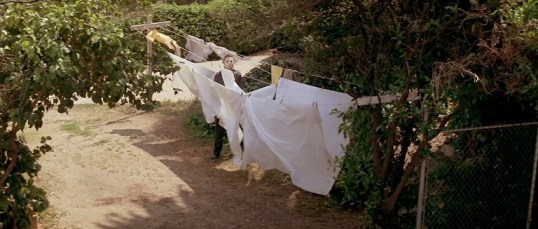
Halloween (1977, dir by John Carpenter, DP: Dean Cundey)

The Fog (1980, dir by John Carpenter, DP: Dean Cundey)

Escape From New York (1981, dir by John Carpenter, DP: Dean Cundey)

The Thing (1982, dir by John Carpenter, DP: Dean Cundey)

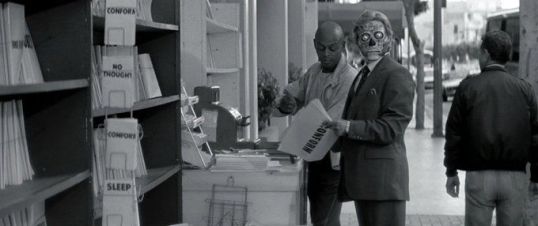
They Live (1988, dir by John Carpenter, DP: Gary B. Kibbe)

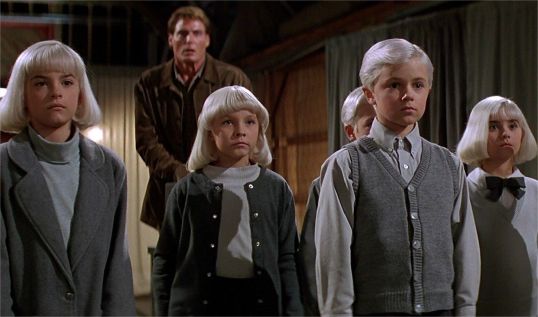
Village of the Damned (1995, dir by John Carpenter, DP; Gary B. Kibbe)

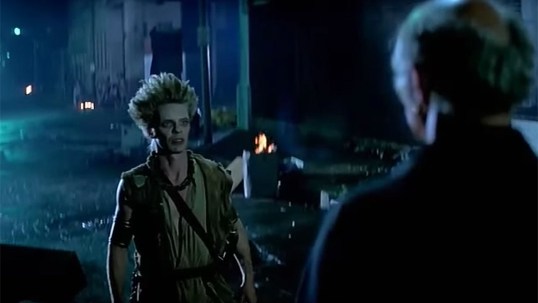
Escape From L.A. (1996, dir by John Carpenter, DP: Gary B. Kibbe)

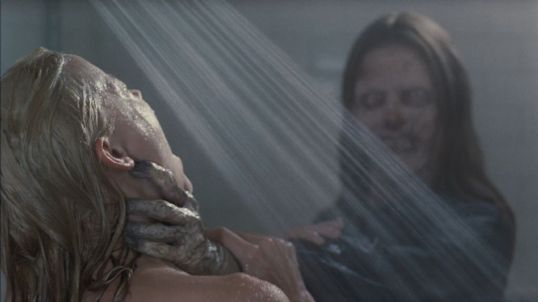
The Ward (2010, dir by John Carpenter, DP: Yaron Orbach)

A Blast From The Past: None For The Road (dir by Herk Harvey)


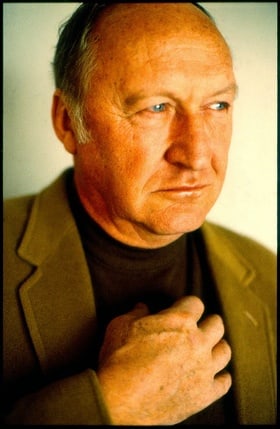
Director Herk Harvey

For today’s Herk Harvey-directed Blast From The Past, we have the 1957 short film, None For The Road. Produced by Centron, this was a film that was meant to make motorists aware of the dangers involved in drinking and driving. It’s a good message and, for once, the judgmental tone of the film is deserved. This isn’t about telling people not to have fun in school. This is about teaching people not to kill people through their own drunken stupidity! It may not be quite as effective as some of the Australian anti-drinking and driving commercials that I’ve seen but still, it’s a worthwhile message.

It’s also about a scientist who gets rats drunk so he can test their balance. That’s kind of weird and seems unnecessary but I guess maybe people were less aware of the dangers of excessive drinking in the 50s.

On another note, even though some of the college students in this film drink too much, I do appreciate their attempts to dress up before going out. They’re making an effort to get used to wearing a tie voluntarily before being forced to wear one at the office and I respect both their initiative and their understanding that the course of their life is already so predestined that they might as well be supporting characters in a Paul Schrader movie.

Of course, I would be amiss if I didn’t point out that, in its portrait of the road as being a path that can lead to either happiness or death, this short film shares a theme with Herk Harvey’s one feature film, Carnival of Souls. The drunken college kids in this film could be the same people we see harassing Candace Hilligoss at the start of Carnival of Souls. We’ll be sharing Carnival of Souls on Saturday.

Horror Film Review: Hellraiser (dir by Clive Barker)


On Monday night, Dancing With The Stars did a horror night, in which “the stars” did dances that were inspired by horror films. One of the first to perform was a professional wrestler who is apparently known as The Miz. When the Miz performed, he was dressed in black and he had several fake pins attached to his face.

After he danced, host Trya Banks asked The Miz what scared him. Obviously seeing a chance to suck up to the judges and the audience, the Miz grandly announced, “This! Doing this every week terrifies me! Dressing up like Hellraiser and dancing terrifies me….”

Uhmmm, excuse me, Mr. Miz — the character’s name is Pinhead. The movie is called Hellraiser. You were dressed up as Pinhead.

Seriously, I felt that the Miz should have been eliminated from the competition at that exact moment but no. His sucking up worked. Everyone laughed. Everyone applauded. No one called him out on his error. It upset me a bit. I was like, “Who are you to do horror night when you don’t even know the difference between the movie and the character!?”

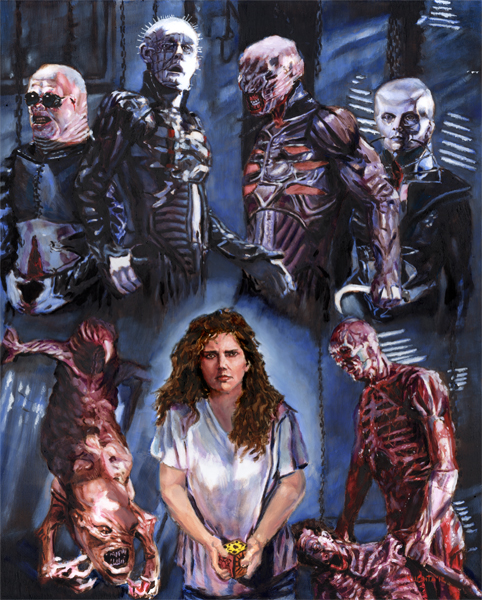
Really, they should all be forced to watch or rewatch Hellraiser. First released in 1987, the directorial debut of Clive Barker holds up pretty well as a blood-filled horror movie. It tells the story of Larry (Andrew Robinson), his daughter Kristy (Ashley Laurence), and his second wife, Julia (Clare Higgins). Larry’s ne’er-do-well brother, Frank (Sean Chapman), has died under mysterious circumstances so Larry moves into Frank’s old house and tries to renovate it. He hopes that this will somehow help his strained marriage to Julia, who was having an affair with Frank. Why Larry thinks this is a good idea is never quite clear. Larry seems to be a nice guy but it doesn’t take long for the audience to get the feeling that he might not be that smart.

Kristy, on the other hand, is much smarter than her father and she knows better than to trust Julia. In fact, Kristy refuses to even live in the same house as Julia. Still, Kristy does check in on her father occasionally and she quickly realizes that Julia is doing something strange. It turns out that Frank may be dead but his tortured, skinless spirit lives on. Julia has been picking men up in bars and bringing them back to the house so that Frank can steal their skin. On the one hand, you do have to feel kind of sorry for all of the people who die. On the other hand, Frank does look better with skin.

Frank ended up in his skinless state because he foolishly opened up a puzzle box. That’s where Pinhead (played by Doug Bradley) comes into the equation. Pinhead and the other Cenobites live in another demension and they’ve spent so much time “exploring” that they can no longer tell the difference between pain and pleasure. Pinhead’s face is covered in pins. (In fact, Pinhead started out as something of a fan nickname as Bradley is just credited with playing “the Lead Cenobite” in the film’s end credits.) The Cenobites are actually only in Hellraiser for a few minutes. The majority of the film is made up of Julia bringing strange men home and Frank attacking them. But it’s the Cenobites — and Pinhead in particular — who make the biggest impression. Beyond his bizarre appearance, Doug Bradley plays the character with such haughty arrogance that it’s hard not to be intrigued. He knows things.

Hellraiser holds up well. Andrew Robinson does his best but Larry is a bit of a moron. However, Clare Higgins has fun with her femme fatale role while Ashley Laurence is likable and sympathetic as Kristy. For the most part, the special effects hold up well and even the film’s slightly more cartoonish moments add to the feeling that the film takes place in a universe that is becoming increasingly unstable. The puzzle box is wonderful creation. It’s easy to say that you would never mess with something like that but most people would. The temptation would just be too great.

Watch Hellraiser and never get Pinhead’s name wrong again!

Horror on the Lens: The Last Man on Earth (dir. by Ubaldo Ragona and Sidney Salkow)


Hi there and Happy October 27th!  For today’s treat from the ranks of horror films that have fallen into the public domain, I present to you one of the most important films in horror history.  Though it wasn’t appreciated when it was first  released back in 1964, The Last Man On Earth was not only the 1st Italian horror film but George Romero has also acknowledged it as an influence on his own Night of the Living Dead.

It’s easy to be a little bit dismissive of The Last Man On Earth.  After all, the low-budget is obvious in every scene, the dubbing is off even by the standards of Italian horror, and just the name “Vincent Price” in the credits leads one to suspect that this will be another campy, B-movie.  Perhaps that’s why I’m always surprised to rediscover that, taking all things into consideration, this is actually a pretty effective film.  Price does have a few over-the-top moments but, for the most part, he gives one of his better performances here and the black-and-white images have an isolated, desolate starkness to them that go a long way towards making this film’s apocalypse a convincing one.  The mass cremation scene always leaves me feeling rather uneasy.

The film is based on Richard Matheson’s I Am Legend and no, it’s nowhere as good as the book.  However, it’s a lot better than the Will Smith version.

If you have 87 minutes to kill, please enjoy The Last Man On The Earth.

Horror Novel Review: Trapped by R.L. Stine


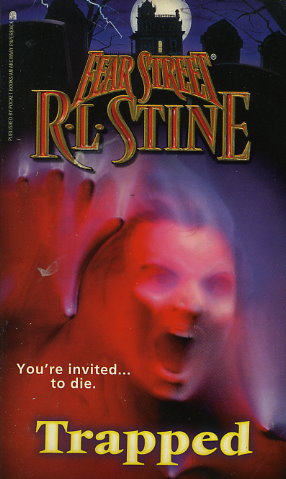
All good things must come to an end and so must all bad things. The original Fear Street series concluded with Trapped, an enjoyably macabre and kind of grotesque take on The Breakfast Club.

You know how these things go. You’ve got five students and they’re all stuck in detention. Elaine is the smart girl who failed to turn in her homework. (They give you detention for that?) The principal hopes that the other detainees won’t be a bad influence on her. (Then don’t give her detention in the first place, you jerk!) Darlene is the girl who doesn’t take any crap from anyone. Jerry is the Brain, who was sent to detention because he refused to dissect a frog. (I remember an entire episode of Saved By The Bell that dealt with the same issue.) Max is a spray paint artist who uses the school as his canvas. And Bo? Well, Bo’s a good-looking rebel who likes to burn stuff.

Anyway, detention is kind of boring and, since no one wants to have a therapy session like they did n the Degrassi episode that was based on The Breakfast Club, the students decide to explore the tunnels that are underneath Shadyside High. It’s rumored that some kids died down there in the 60s! Stupid hippies! Though some are initially hesitant, all five of the students end up in the tunnels. And that’s where they get trapped!

And, listen, I can understand how this happens. I get lost in mazes too. I once spent hours lost in a hedge maze and it was not fun. (I later got revenge by building a similar hedge maze in the Sims and then setting it on fire. The resulting inferno killed all of my Sims but, fortunately, their ghosts stuck around to haunt the house.) But it’s not just the maze aspect that makes the tunnels difficult to escape. There’s also this red mist that, when it envelopes you, snaps your bones and folds you into a tiny cube and basically kills you in the worst, most painful way possible.

AGCK!

Seriously, that mist is so viscous and the deaths are so drawn out and the book ends on such a downbeat note, I had to remind myself that I was reading a book by R.L. Stine and not Christopher Pike. There’s not much humor to be found in Trapped. Unlike other Fear Street novels, it doesn’t end on a note of hope. Instead, there’s just death, violence, and pain. It makes sense, I guess. This was the final Fear Street book so Stine wasn’t obligated to try to get people to come back for the next one. He could be as morbid as he wanted to be and the end result is actually pretty good. That red mist is actually pretty scary!

I enjoyed Trapped. I’m glad I never explored any of the underground tunnels under my school. Who knows what might have been down there! Hmmm …. now, I’m tempted to find out….

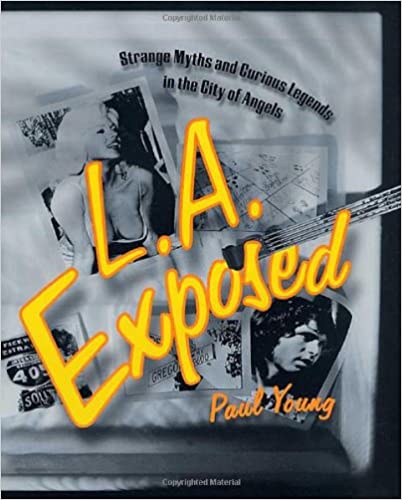
Book Review: L.A. Exposed: Strange Myths and Curious Legends in the City of Angels by Paul Young


Before I say anything about this book, I have to give out a shout out to Recycled Books of Denton, Texas.  Recycled Books is a huge used bookstore.  When I was going to college, I used to visit Recycled Books nearly everyday.  I loved the books.  I love the atmosphere.  I even loved the shag carpeting.  I’ve recently been trying to organize and read all of the books in my collection. As I’ve been going through them, I couldn’t help but notice just how many of them I purchased from Recycled Books!

And yes, L.A. Exposed is one of those books.

First published in 2002, L.A. Exposed is an enjoyably gossipy look at all of the legends and mysteries surrounding Los Angeles.  The book provides a nice mix of celebrity gossip, rock star decadence, and — most importantly — supernatural speculation.  I mean, yes, it was interesting to read about whether or not John Barrymore’re body was stolen from the morgue.  And I’m sure some people will automatically turn the chapter about whether or not Courtney Love had Kurt Cobain murdered.  There’s a lot about OJ Simpson and the corruption of the LAPD as well.  The deaths of Marilyn Monroe, Sam Cooke, and Bobby Fuller are all examined.  Was Charles Manson an FBI informant?  Read the book for yourself.

But, for me, the most interesting parts of the book were the sections dealing with haunted Hollywood, sea serpents, UFO sightings, Bigfoot spottings, cult activities, and the Lemurians.  Do you know who the Lemurians were?  They were like the people of Atlantis but, if you believe the legend, they were smart enough to sail for California before their continent sank.  And, according to some, they currently live inside a mountain near Los Angeles.  I imagine that’s a good way to avoid the IRS.

By this point, our regular readers should realize that I’m a natural skeptic.  I don’t believe in UFOs, ghosts, sea serpents, or Lemurians.  But they’re still a lot of fun to read about.  In fact, it’s even more fun when you don’t believe because you can enjoy the idea of Bigfoot without worrying actually meeting him.

Anyway, this is a fun book and good read.  Order a copy before your next California vacation.  And thank you, Recycled Books, for stocking it where I could easily find it, all those years ago!