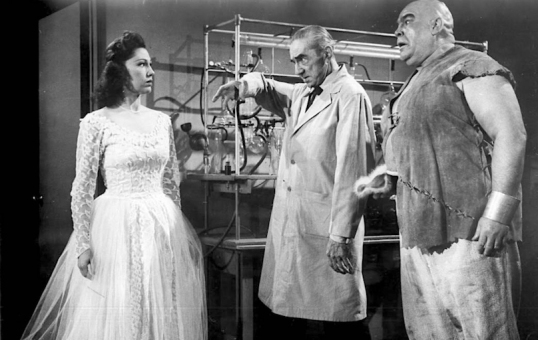
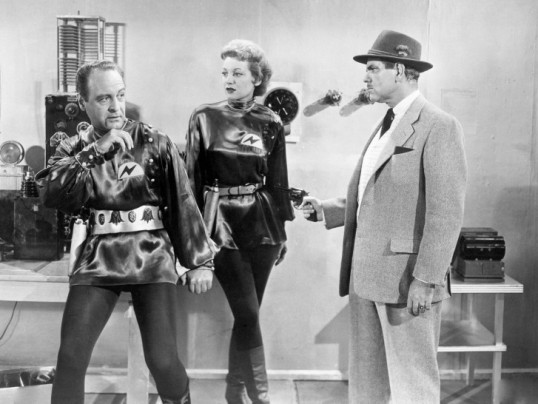
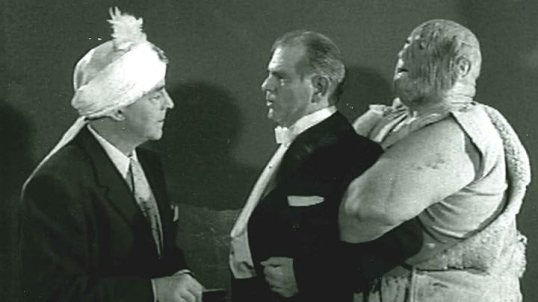
4 Shots From 4 Films is just what it says it is, 4 shots from 4 of our favorite films. As opposed to the reviews and recaps that we usually post, 4 Shots From 4 Films is all about letting the visuals do the talking.
This October, I am going to be using our 4 Shots From 4 Films feature to pay tribute to some of my favorite horror directors, in alphabetical order! That’s right, we’re going from Argento to Zombie in one month!
Today’s director: the great Ed Wood!
4 Shots From 4 Ed Wood Films
Bride of the Monster (1955, dir by Edward D. Wood, Jr. DP: William Thompson and Ted Allan)
Plan 9 From Outer Space (1956, dir by Edward D. Wood, JR., DP: William Thompson)
Night of the Ghouls (1958, dir by Edward D. Wood, Jr, DP: William Thompson)
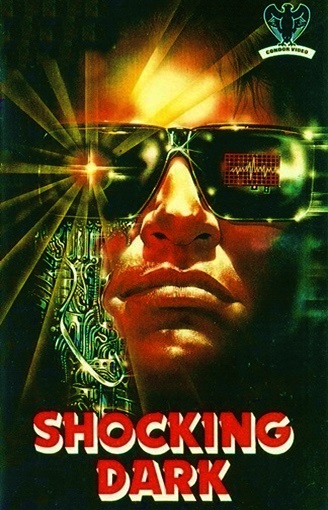
1989’s Shocking Dark opens with shots of my favorite Italian city, Venice! Unfortunately, a voice-over informs us that, due to the rising sea levels, Venice will no longer be inhabitable in the near future and instead, most of it will be underwater by the year 2000.
(For the record, everything seemed fine when I was there. I went to Italy the summer after I graduated from high school and I absolutely loved Venice. My first night in Venice, there was a thunderstorm and I can still remember standing underneath an awning while it rained and watching as the lightening was reflected in the waters of the Venice canals.)
Something strange has happened at one of Venice’s undersea labs. The scientists who were working on a top secret project have almost all disappeared and the only known survivor is ranting like a maniac. The Tubular Corporation arranges for a group of Megaforce Marines (seriously, that’s what their called) to enter the lab and discover what has happened. The Megaforce Marines, which include a tough-talking woman from New York and a joke-making hick from down South, claim that there is nothing they haven’t been trained to handle.
The marines may start out cocky but they soon find themselves being attacked by metallic monsters that nest inside of their victims and appear to be unstoppable. The only survivor of the monster’s attack is a young girl named Samantha (Dominica Coulson) who bonds with Sara (Haven Tyler), a member of the expedition. The marines also discover that a member of the expedition is actually a killer robot who has been sent by the Tubular Corporation to protect its interests.
Does all of this sound familiar? Like a lot of Italian horror films, Shocking Dark was released under several different titles. Here’s a few of them: Terminator II, Shocking Dark — Terminator 2, Aliens 2, Alienator, and Contanimator. Shocking Dark sold itself as being a sequel to every successful film that James Cameron had directed up until that point and it did so despite the fact that Cameron had nothing to do with the film. (Indeed, Terminator 2: Judgement Day came out two years after the release of Shocking Dark.) Shocking Dark rips off both Aliens and The Terminator, with the first half of the film being dominated by the tough-talking Marines and the second half being dominated by a relentless cyborg killer. Even by the standards of the Italian film industry, Shocking Dark is utterly shameless in the way it blatantly rips off Cameron’s two previous films.
Not surprisingly the film was directed by Bruno Mattei and written by Claudio Fragasso, a pair who made a very lucrative career out of making cheap versions of expensive American sci-fi and horror films. (Fragasso would go on to achieve his own immortality by directing Troll 2.) As with many of the Mattei/Fragasso collaborations, the dialogue is crude, profane, and fequently nonsensical. (Fragasso’s idea of writing like an American was to have the characters randomly insult and threaten each other.) The plot has an appealingly ramshackle feel. Towards the end of the film, two characters just happen to stumble across a time machine because …. hey, why not!? At least it allowed for a few scenes to be shot in what was then modern-day Venice.
As with many of the Mattei/Fragasso collaborations, the saving grace here is that Bruno Mattei directs with the confident swagger of someone who truly believes that he can rip-off James Cameron with half the budget and come up with something better than either Terminator or Aliens. The fact that Mattei fails to better either of those films is beside the point. What’s important is that Mattei seems to believe that he has. Mattei’s direction is shameless and unapologetic and, as a result, the film is far more watchable than perhaps it should be. It’s a film that the viewer enjoys, even though they might not want to.
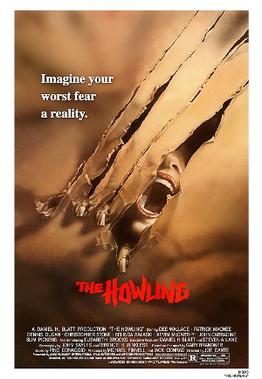
The 1981 film, The Howling, takes place at The Colony.
The Colony is a lovely place, a nice resort out in the middle of the countryside. It’s a place that celebrity therapist George Waggener (Patrick Macnee) sends his clients so that they can recover from trauma. It’s a bit of a grown-up version of the ranch to which Dr. Phil used to send juvenile delinquents. Of course, the Colony is full of adults and they’re an eccentric bunch. I mean, one of them — named Erle Kenton — is actually played by John Carradine! That’s just how eccentric the place is. Sheriff Sam Newfield (Slim Pickens) keeps an eye on the place but everyone knows that there’s nothing to worry about when it comes to The Colony. Dr. Waggner does good work.
Karen White (Dee Wallace) is a Los Angeles news anchor who was held hostage by a serial killer named Eddie Quist (Robert Picardo). While she was with Eddie, she was forced to not only watch videos of Eddie’s crimes but she also saw something happen with Eddie that terrified her to such an extent that she has blocked it from her mind. Karen was rescued by the police but she is haunted by nightmares. Dr. Waggner arranges for Karen and her husband, Bill Neill (Christopher Stone, who was married to Dee Wallace when they co-starred in this film), to spend some time at the Colony.
Bill loves the Colony, especially after he attracts the eye of Marsha (Elisabeth Brooks), the resort’s resident seductress. Karen, however, is less enamored of the place. The Colony feels off to her and she’s not happy about the howling in the distance or the fact that Bill has suddenly started to grow distant from her. Could it be that The Colony is actually crawling with werewolves and that Bill has become one of them? (It’s totally possible and, to The Howling‘s credit, it doesn’t waste any time letting us know that.) Karen’s friend, Terry Fisher (Belinda Balanski), and her boyfriend, Chris Halloran (Dennis Dugan), do some research of their own into Eddie Quist, The Colony, and whether or not werewolves exists and they meet a helpful bookstore owner named Walter Paisley (Dick Miller).
To understand the approach that director Joe Dante and screenwriter John Sayles take to The Howling, one needs to only consider the names of some of the characters. George Waggner. Bill Neill. Terry (which can be short for Terence) Fisher. Fred (or is that Freddie) Francis. Erle Kenton. Sam Newfield. Jerry Warren. All of these characters are named after horror film directors. This is the type of werewolf film where Chris Halloran has a copy of The Three Little Pigs sitting on his desk. Veteran actors like Kevin McCarthy, John Carradine, Slim Pickens, and Kenneth Tobey show up in small roles. Roger Corman mainstay Dick Miller plays yet another character named Walter Paisley and he kicks Forrest J. Ackerman out of his bookstore. Roger Corman himself plays a man making a phone call. After a werewolf is shot on live TV, the program immediately cuts to a dog food commercial and we see a blank-faced child telling his unconcerned parents that someone just turned into a wolf. The Howling was made by people who obviously love B-horror and that love is present in every frame of the film.
Like Dante’s Piranha, The Howling is a film with a sense of humor but it’s not a comedy. The werewolves are still impressive, even forty-two years after the film was first released. The character of Eddie Quist (“I’m going to give you a piece of my mind”) is a terrifying monster and the sight of his signature smiley face will fill you with dread, especially when it shows up in a place where it really shouldn’t be. The film cynically ends on a note of noble sacrifice that will apparently not make much difference, with the suggestion being that human beings are either too distracted or too jaded to realize that there are monsters among them. The Howling is a fast-paced and well-directed homage to B-horror and it’s still terrifically entertaining.
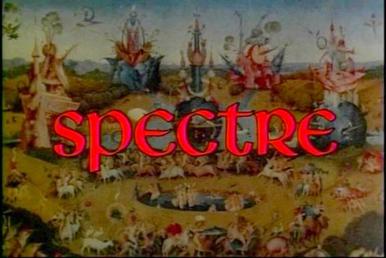
Produced by Gene Roddenberry and directed by Clive Donner, 1977’s Spectre was a pilot film for a television series about an occult detective (Robert Culp) who solved supernatural mysteries while dealing with a curse that had been put on him by the demon, Asmodeus.
In this film, Culp’s William Sebastian and his associate, Dr. Ham Hamilton (Gig Young) travel to the UK to investigate a supernatural case involving an old family. Despite the efforts of a succubus and a cursed airplane, Sebastian and Ham are determined to solve the mystery. John Hurt appears as a member of the cursed family.
This pilot was not picked up and developed into a series but it was popular enough that it was released as a theatrical film in Europe.
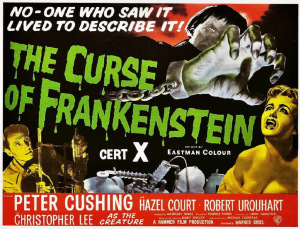
First released in 1957 and one of the films that put Britain’s Hammer Films on the map, The Curse of Frankenstein opens in Switzerland in the 19th century. It’s a time of superstitious villagers, judgmental priests, aristocrats who dabble in science, and lots of cleavage. It’s also a time when justice is harsh. That’s something that Baron Victor Frankenstein (Peter Cushing) has discovered as he sits in a cell in prison, awaiting his execution date.
Baron Frankenstein has been convicted of the murder of a maid named Justine and the public is eager to see this haughty and eccentric aristocrat put to death. Victor, however, claims that he is innocent of Justine’s murder. As Victor explains to a visiting priest (Alex Gallier), he is guilty of many things but he didn’t kill Justine.
The story that Frankenstein tells the priest is a familiar one. Victor inherited the Frankenstein estate when he was fifteen and, having always been interested in science, his hires a scientist named Paul Krempe (Robert Urquhart) to mentor him and ultimately collaborate with him on his experiments. Even as he falls in love with and become engaged to his cousin, Elizabeth (Hazel Court), Victor becomes obsessed with the idea of creating a human being from perfect parts collected from the dead.
Victor puts his creation together, piece by bloody piece. He has no trouble using a the body of a robber and the hands and eyes that purchases from the workers at the local morgue. But when it come time to pick a brain, he wants to use the mind of a distinguished scientist. Unfortunately, the scientist is still alive so Victor pushes him over a bannister. That kills the professor but the removal of the brain does not go quite as smoothly as Victor was hoping. The brain gets damaged when it’s removed. The Creature (an intimidating Christopher Lee) is eventually brought to life but, with that damaged brain, all it wants to do is destroy and kill. Victor isn’t happy about that but soon, he discovers that having a killer Creature has its uses.
As opposed to the well-meaning but obsessed version of the character that Colin Clive played in the original Frankenstein, The Curse of Frankenstein presents us with a Baron who is rather unstable from the start. It’s not just that the Baron is obsessed with bringing the dead back to life. It’s that he is fully willing to kill people for his experiment. Perhaps his only redeeming quality could have been his love for Elizabeth but he screws up even that by having an affair with the ill-fated Justine (Valerie Gaunt). From the start, the Baron’s main obsession is with his own power. Elizabeth is ultimately just another pawn for him to control.
Considering how evil this film’s version of Baron Frankenstein is, it’s a good thing that he’s played by Peter Cushing. Cushing gives an intense but charismatic performance as the Baron, capturing not only the character’s ruthlessness but also his fierce intelligence. The tragedy of the film’s version of the story is not that the Baron’s experiment goes wrong but that the Baron did actually have the potential to do a lot of good for the world. He’s smart and he’s determined but he’s lacking a conscience. If anything, the Creature he builds is a representation of his own dark thoughts and desires. The Baron is an aristocrat and the Creature is built out of common thieves and people who died in debt but they’re both different sides of the same coin.
Gory and fast-paced, The Curse of Frankenstein was a huge hit and it made stars out of both Cushing and Lee. I tend to prefer Hammer’s Dracula films to its Frankenstein film but The Curse of Frankenstein holds up well as a portrait of what happens when madness and science collide.
What’s an Insomnia File? You know how some times you just can’t get any sleep and, at about three in the morning, you’ll find yourself watching whatever you can find on cable or streaming? This feature is all about those insomnia-inspired discoveries!
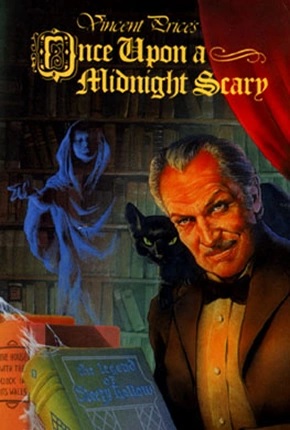
If you were having trouble getting to sleep last night, you could have gone over to YouTube and watched 1978’s Once Upon A Midnight Scary.
Made for CBS and featuring Vincent Price as the sardonic, cape-wearing host, Once Upon A Midnight Scary was a special designed to encourage young viewers to pick up a book and read. Price introduced three different stories, each centering around ghosts and each based on a book. In the first story, based on the book The GhostBelonged To Me, a young farmboy discovers a ghost hiding in a barn and becomes a hero when the ghost warns him about an impending disaster. The second story is an adaptation of The Legend of Sleepy Hollow and it features Rene Auberjonois as a rather neurotic Ichabod Crane, who finds himself being pursued by the headless horsemen. The third and longest story is an adaptation of The House With A Clock In Its Walls, featuring Severn Darden and a rather annoying child actor.
One thing you immediately notice about this show is that the special doesn’t actually reveal how any of the stories end. Instead, each story is basically a recreation of the most exciting or interesting parts of the larger story but, whenever it appears that we’re heading for a conclusion, Vincent Price suddenly appears and says, “What happened next, you ask? Read the book!” This special basically casts Vincent Price as the world’s most devilish book salesman and while that might be annoying if you’re watching the special because you want to see how the stories turn out, it’s a lot of fun if you’re just watching the show to watch Vincent Price act like Vincent Price. Vincent is not in the special as much as you might want but he still shows off his unique charm. It’s impossible to be in a bad mood while watching Vincent Price.
For today’s edition of Lisa Marie’s Favorite Grindhouse And Exploitation Film Trailers, we share some trailers from the maestro of Italian horror, Mario Bava!
Black Sunday (1960)
After starting his career as a cinematographer and a visual effects engineer, Mario Bava made his directorial debut with 1960’s Black Sunday, starring Barbara Steele!
2. Black Sabbath (1963)
In 1963, Bava directed one of his most popular films, the horror anthology Black Sabbath. The trailer put the spotlight on the great Boris Karloff.
3. Planet of the Vampires (1965)
One of Bava’s best films, Planet of the Vampires, was later cited by many as an influence on the Alien films.
4. Bay of Blood (1971)
One of the first slasher films, Bay of Blood was also a social satire that featured Bava’s dark sense of humor.
5. The House of Exorcism (1974)
When it was released in the United States, Bava’s Lisa and the Devil was re-titled House of Exorcism and, after new scenes were filmed, sold as a rip-off to The Exorcist.
6. Shock (1977)
Bava’s final film as a director was Shock, which starred Daria Nicolodi as a woman who is being haunted by the ghost of her first husband.
This music video represents the fantasy of almost every 80s kid, skateboard wherever you want, read a comic book about your favorite hero having an amazing adventure, and doing it all while your favorite band performs behind you.
Depending on what part of the world you were living in, Women was either the first or the second single to be released off of Dep Leppard’s best-selling album, Hysteria. Hysteria was a great album that was helped immeasurably by MTV. Fans of the band already knew that Def Leppard rocked but MTV gave everyone the chance to watch them as they did so.
This was the first Dep Leppard video to be filmed after Rick Allen lost his left arm. A good deal of the video’s popularity comes from Rick showing that he was still one of the best drummers in the business.



 Through the Shattered Lens