Scalplock (1966, directed by James Goldstone)


In this comedic western, gambler Benjamin Calhoun (Dale Robertson) wins big in a poker game.  Not only does he walk away with several thousand dollars but he also now owns his own railroad, the BP;S&D.  Calhoun celebrates the biggest win of his career by tossing ten dollar bills at the townspeople, recruiting a worshipful young assistant (Bob Random), and commandeering a private railcar that belongs to wealthy Burton Standish (John Anderson).  In the car, he finds Marta Grenier (Diana Hyland), a “working woman,” who has been hired to provide company for Standish.

Calhoun and Marta ride off to check out Calhoun’s new railroad.  What he discovers is that the railroad that he won is not only not completed but the workers are striking because they haven’t been paid in two weeks.  The quick-thinking Calhoun offers to make all of the workers part-owners of the railroad.  With construction once again starting, Calhoun tries to figure out how to keep his new business open.  He also meets a strong-headed storekeeper named Joanna Royce (Sandra Smith).

When Standish finally shows up, it turns out that he was originally planning on buying the BP;S&D.  Will Calhoun hold onto the railroad and honor the promise he made to the workers or will he sell out to Standish?

For all the talk about completing the railroad, Scalplock ends with most of the work undone.  That’s because Scalplock was a pilot for The Iron Horse, a television series that lasted for two seasons in the 60s.  Scalplock (and The Iron Horse) is mostly a showcase for Dale Robertson, a low-key but always convincing actor who specialized in westerns.  Usually, Robertson was cast as an upstanding citizen and law enforcement agent.  In Scalplock, he’s playing the type of genial rogue that James Garner played on Maverick and later in The Rockford Files.  Robertson is likable in Scalplock and even convinces us that Calhoun would choose his workers over a quick payday.  Fan of the genre will enjoy Scalplock, as long as they don’t get too invested in witnessing that last track of rail laid into the ground.

Dale Robertson, who started his career in the 40s, continued to act through the 90s, though usually as a guest star instead of a series lead.  Robertson eventually retired to Oklahoma where he owned a ranch that was home to over 200 horses.  He passed away in 2013 at the age of 89.

Airplane! (1980, directed by David Zucker, Jim Abrahams, and Jerry Zucker)


Airplane!, which may be the funniest movie ever made, has made me laugh every time that I’ve watched it.  And I’ve watched it a lot!

Whenever I’m getting ready to travel for my day job, I watch Airplane!  Whenever I’m going to Baltimore or West Virginia for the holidays, I watch Airplane!  Whenever I’m in a bad mood and I need something lighten me up, I watch Airplane!  Whenever I’m in a good mood and I want to be in an even better mood, I watch Airplane!

I can’t remember how old I was when I first saw Airplane! but I know I wasn’t yet ten.  While a lot of the humor went over my head at that young age, it did not matter because I laughed at all the sight gags, like the heart hopping around on the doctor’s desk and the line of passengers waiting to “calm down” the hysterical woman.  I laughed when Ted Stryker (Robert Hays) and Elaine (Julie Haggerty) got covered in seaweed while making out on the beach.  I laughed at the people dying while listening to Ted’s story, even though I didn’t fully understand that it was because of Ted boring them to death.  I loved it when Kareem Abdul-Jabbar got annoyed with the kid in the cockpit, even though young me really didn’t know who Kareem was other than he was a basketball player.  Otto the autopilot was the coolest character around.  Stephen Stucker’s Johnny made me laugh with his nonstop energy.  “Excuse me, stewardess, I speak Jive.”  “And don’t call me Shirley.”  “It looks like I picked the wrong time to stop sniffing glue.”  Every time I heard them, I laughed at all of those lines.  I didn’t have to understand why Lloyd Bridges was suddenly upside down.  I just knew it was funny.

As I got older and rewatched the film, I started to pick up on the humor that earlier went over my head.  I traveled to Turkey when I was twelve and our tour guide spent an hour telling us that Midnight Express was not a fair representation of her country.  After that, I suddenly understood why Captain Oveur (Peter Graves) wanted to know if Joey had ever been to a Turkish prison.  I came to appreciate Julie Hagerty and Lorna Patterson as the two flight attendants.  Airplane! still made me laugh but I came to understand that it was also a love story.  What adolescent boy watching Airplane! didn’t want to be Robert Hays, not only landing the plane but also getting kiss Julie Hagerty at the end of the movie?

And then, as I learned more about the movies, I realized that Airplane! was a pitch perfect parody of the disaster genre and I came to understand the brilliance of casting actors like Lloyd Bridges, Robert Stack, Peter Graves, and especially Leslie Nielsen in this film.  From the first time I saw the movie, Nielsen always made me laugh because he had the best lines and he delivered them with deadpan perfection.  But, as I got older, I came to understand that Nielsen was doing more than just saying funny things.  He was sending up his entire career.  I’m a part of the generation who grew up laughing at Leslie Nielsen the comedy superstar and it’s always strange for me to see him in one of his older, serious roles.  I have Airplane! to thank for that.

There’s so much to say about Airplane!  I could write a thousand words just talking about my favorite jokes and one-liners or how much I enjoyed Stryker’s flashbacks.  It’s my favorite movie and one that still makes me laugh even though I know all of the jokes by heart.  (I’ve always thought Howard Jarvis waiting for Stryker to return to the taxi was one of the best, though underrated, jokes in the movie.)  Airplane! is close to 50 years old and it’s still just as funny today as when I first saw it.

In fact, I think I’ll go watch it right now!

Retro Television Reviews: Death Sentence (dir by E.W. Swackhamer)


Welcome to Retro Television Reviews, a feature where we review some of our favorite and least favorite shows of the past!  On Sundays, I will be reviewing the made-for-television movies that used to be a primetime mainstay.  Today’s film is 1974’s Death Sentence!  It  can be viewed on YouTube!

There’s been a murder!

A young woman has been strangled in her own home.  The nosy neighbor (Hope Summers) testifies that the woman often argued with her woman and that she heard the woman yelling on the night of the murder.  The husband, John Healy (Nick Nolte), is found in a neighborhood bar and, when he’s brought back to his house, his drunken reaction to seeing his dead wife doesn’t do much to keep him from looking totally guilty.

However, the viewer knows that John is innocent because the viewer has already seen that the woman was murdered by Don Davies (Laurence Luckinbill), the man with whom she was having an affair.  She demanded that he leave his wife for her and Don, realizing that his cheating was about to revealed, responded by strangling her.

Don’s wife is Susan Davies (Cloris Leachman), who knows that she and Don have been going through a rough patch but who certainly had no idea that Don was cheating on her.  Shortly after the murder, Susan is called up for jury duty.  She’s placed on the jury and told that she will be an important part of a major trial.  As a result, she and the other jurors will be sequestered in a hotel….

And who is the defendant in this trial?  John, of course!

As opposed to the other members of the jury, who are ready to convict John even before the first bit of testimony is heard, Susan pays attention to what is said in the courtroom.  She listens to Lubell (Alan Oppenheimer), the prosecutor.  She listens to Tanner (William Schallert), the defense attorney.  She comes to believe that John is innocent but will she be able to hold her own against the rest of the jury?  And will she ever figure out that the murder was actually committed by her husband?

It’s an intriguing premise, even if it is a bit far-fetched.  I mean, it really is an amazing coincidence that Susan just happened to end up on the jury for a case involving a murder that was actually committed by her husband.  However, this is a made-for-television movie and, as soon as “Produced by Aaron Spelling” appears on the screen, most viewers should be savvy enough to know what they’re getting into.  Instead, the main problem with the film is that it opens by showing us who the murderer is.  Therefore, there’s really zero suspense as to who actually committed the crime.  Instead, the viewer spends the entire movie waiting for Susan to catch up.  Since the majority of the film takes place in court, it’s a very talky film but there’s no joy to be found in paying close attention to every word said and picking up on the details that will allow you to solve the crime for yourself.  This is a case where the film spoils its biggest twist and, despite good performances from Leachman and Luckinbill, it’s a bit dull.

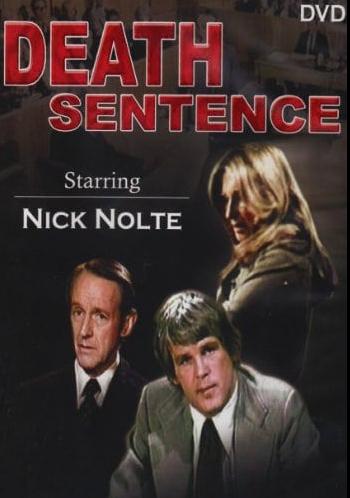
(Nick Nolte, for his part, spends most of the movie silently sitting in the courtroom.  He’s not bad and his look of anguish is believable but it’s hardly a starring role, regardless of what the film’s video packaging might otherwise claim.)

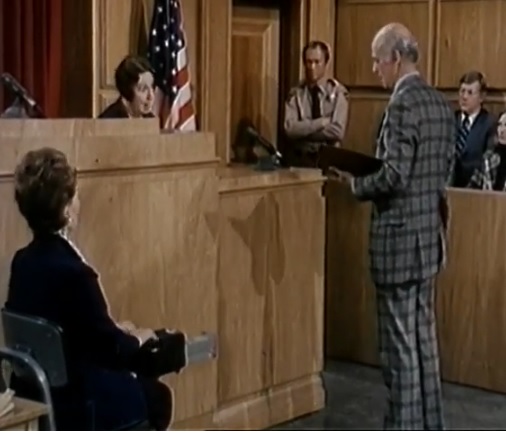
In the end, what I’ll mostly remember about Death Sentence were the atrocious fashion choices made by the prosecutor.  Seriously, would you trust a man wearing this suit?

Retro Television Review: Love Boat 1.21 “Taking Sides/Going By The Book/A Friendly Little Game”


Welcome to Retro Television Reviews, a feature where we review some of our favorite and least favorite shows of the past!  On Wednesdays, I will be reviewing the original Love Boat, which aired on ABC from 1977 to 1986!  The series can be streamed on Paramount Plus!

It’s time to once again experience the magic of The Love Boat!

Episode 1.21 “Taking Sides/Going By The Book/A Friendly Little Game”

(Dir by Richard Kinon, originally aired on February 18th, 1978)

This week’s episode begins with the extremely nerdy Howard Wilson (Harvey Jason) preparing to board the ship.  Before he does so, he’s approached by his best friend, Bernie (Paul Sylvan).  Bernie gives Howard a book on how to talk to women.  Apparently, this is something that Howard’s not good at but Bernie swears that the book will change his life.  There’s a Roy Lichtenstein-style picture of a man and a woman kissing on the cover of the book so Howard decides that Bernie knows what he’s talking about.

On the boat, Howard immediately notices Sheila Lawrence (Georgia Engel).  However, Sheila’s overprotective father (Herb Voland) has specifically asked Captain Stubing to make sure that no one seduces his daughter.  The captain assigns Doc Bricker (Bernie Kopell) to keep an eye on her, which makes absolutely no sense.  Over the course of the last twenty episodes, Doc has yet to meet a woman who he has not hit on.  Doc is a walking HR nightmare and quite frankly, I would be kind of uncomfortable going to him for a medical examination.  He seems like he would be a little bit handsy, if you get my drift.

Anyway, Doc turns out to be pretty bad at his job because Howard still manages to hit on Sheila.  Of course, Howard’s just doing what the book tells him to do.  Eventually, though, he realizes that he doesn’t need the book and Shelia realizes that she needs to spend more time on her own happiness and stop worry about what her father wants.  Yay!  It’s another Love Boat success story,

Meanwhile, Scott (Robert Urich) and Ellen (Diana Canova) are newlyweds who seem to be totally in love until they make the mistake of having dinner with an old married couple, Max (Robert Mandan) and Gladys (Audrey Meadows).  Listening to Max and Gladys bicker soon leads to Scott and Ellen bickering and it looks like their marriage might be over.  But again, the magic of The Love Boat leads to everyone realizing that bickering is a part of marriage and that you can still love someone even if you disagree with them.  Yay!  Robert Urich and Diana Canova were such a cute couple.  They just looked like they belonged together.

Finally, poor old Wendell Snead (Harry Morgan) is taking his wife on a cruise that he can’t really afford.  In fact, he secretly took out a mortgage on their house in order to buy the tickets.  Wendell has plan, though!  He has a set of marked playing cards and he beats Gopher at several games of gin rummy.  When the crew discovers that he’s been cheating, their initial reaction is to cheat back.  But when they learn why he’s been cheating, they give him all the money from the ship’s emergency fund.  Awwwwww!

This was a sweet episode.  Yes, the stuff with the book and the overprotective father was pretty stupid but the other two stories were entertaining.  Harry Morgan’s melancholy performance was the episode’s stand-out.  The fact that the crew gave him money instead of calling the cops brought tears to my mismatched eyes.  Nicely done, Love Boat.

What will happen next week?  We’ll find out in seven days!