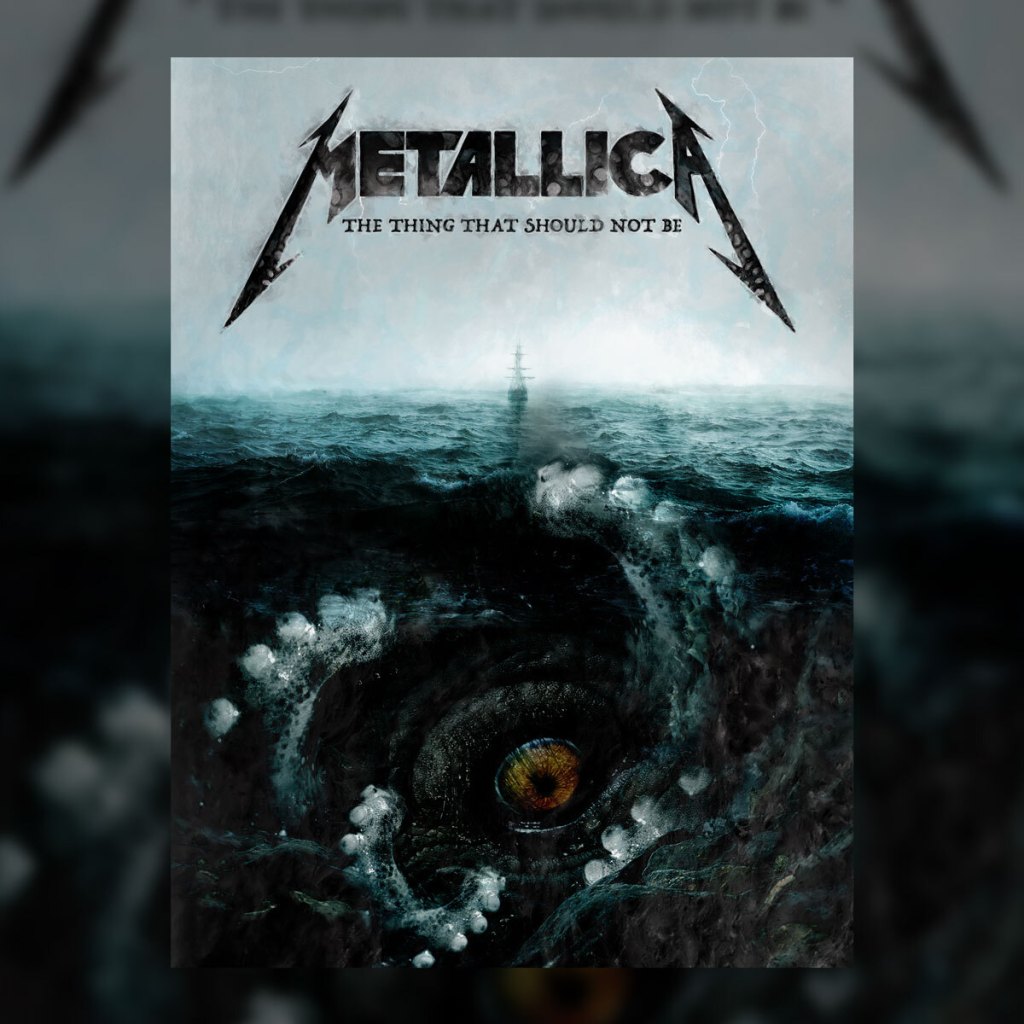
Horror Song of the Day: The Thing The Should Not Be (by Metallica)


If you’re into heavy music with a dark, spooky vibe, Metallica’s “The Thing That Should Not Be” is a must-listen. The song draws heavy inspiration from H.P. Lovecraft’s stories about ancient sea monsters and forbidden gods — you can feel that eerie cosmic horror flowing through the lyrics and music. Unlike their faster, thrashy songs, this one’s slower and heavier, building this oppressive, almost underwater atmosphere that really pulls you into a different world. The sounds perfectly suit a cosmic horror soundtrack, like you’re hearing something ancient waking up beneath the surface.

Every member of Metallica brings something special here. James Hetfield’s vocals nail that storytelling vibe, like he’s warning you about unspeakable horrors. Kirk Hammett’s guitar solo adds a weird, haunting layer with its echoing bends and wild tone, totally fitting the Lovecraftian theme. Cliff Burton’s bass work gives the song a thick, gnarly depth that makes everything feel huge and otherworldly, while Lars Ulrich’s steady drumming drives the mood without rushing it. Together, they craft this dense, crushing atmosphere that feels like it could be the soundtrack to a cosmic nightmare.

If you want to hear the song take on an epic new dimension, check out the S&M version with the San Francisco Symphony. The orchestra adds massive, cinematic power, turning the track into a full-on cosmic horror soundtrack. The strings and brass layer in this grand, haunting sound that makes the whole thing feel even more apocalyptic and intense. It’s like Metallica took their already heavy and spooky song and gave it the kind of scale and depth that only a symphony can provide. Definitely worth a listen if you want to experience cosmic horror in both metal and orchestral form.

The Thing That Should Not Be

Messenger of fear in sight
Dark deception kills the light
Hybrid children watch the sea
Pray for father, roaming free

Fearless wretch
Insanity
He watches
Lurking beneath the sea

Great old one
Forbidden site
He searches
Hunter of the shadows is rising

Immortal
In madness you dwell
Crawling chaos, underground
Cult has summoned, twisted sound
Out from ruins once possessed
Fallen city, living death

Fearless wretch
Insanity
He watches
Lurking beneath the sea

Timeless sleep
Has been upset
He awakens
Hunter of the shadows is rising

Immortal
In madness you dwell

[Guitar solo]

Not dead which eternal lie
Stranger eons death may die
Drain you of your sanity
Face the thing that should not be

Fearless wretch
Insanity
He watches
Lurking beneath the sea

Great old one
Forbidden site
He searches
Hunter of the shadows is rising

Immortal
In madness you dwell
4 Shots From 4 Films: Special H.P. Lovecraft Edition


4 Shots From 4 Films is just what it says it is, 4 shots from 4 of our favorite films.  As opposed to the reviews and recaps that we usually post, 4 Shots From 4 Films is all about letting the visuals do the talking.

This edition of 4 Shots From 4 Films is dedicated to H.P. Lovecraft, on the occasion of his 135th birthday.

4 Shots From 4 Films

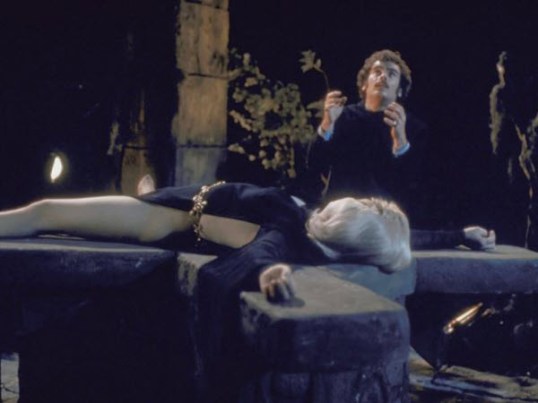
The Dunwich Horror (1970, directed by Daniel Haller)

The Dunwich Horror (1970, directed by Daniel Haller)

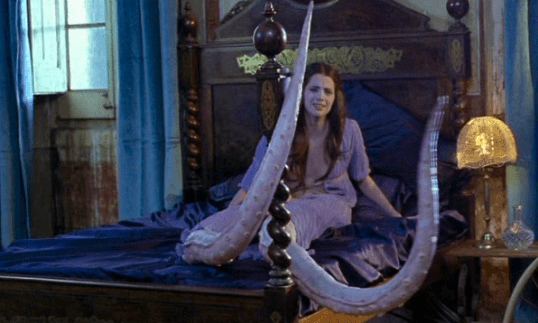
Dagon (2001, directed by Stuart Gordon)

Dagon (2001, directed by Stuart Gordon)

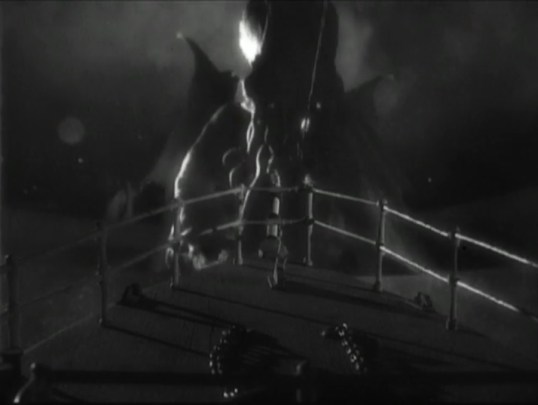
The Call of Cthulhu (2005, directed by Andrew Leman)

The Call of Cthulhu (2005, directed by Andrew Leman)

The Whisperer in Darkness (2011, directed by Sean Branney)

The Whisperer in Darkness (2011, directed by Sean Branney)

Horror Film Review: The Haunted Palace (dir by Roger Corman)


In the 18th century, the inhabitants of Arkham, Massachusetts yank Joseph Curwen (Vincent Price) out of his mansion and tie him to a tree.  They accuse Curwen of being a warlock who is in league with the devil and who has been bringing young women to his “palace,” and putting them in a trance.  They burn Curwen alive but, before the flames are lit, they also give Curwen a chance to speak and curse both them and their descendants.

You really do have to wonder about the logic behind witch (and warlock) burnings.  They seem counter-productive because they always give the accused just enough time to cast one final curse before being burned to a crisp.  Indeed, you have to wonder why witches and warlock were allowed any final words to begin with.  I mean, at some point, you would think everyone would notice that the final words were always a curse.

Anyway. 110 years later, Joseph Curwen’s descendant, Charles Dexter Ward (Vincent Price, again) rides into town with his wife, Anne (Debra Paget).  He is stunned to see that Arkham has apparently fallen on hard times, with many of the town’s people being horribly disfigured.  It’s explain to him that the disfigurements and the poverty are all a result of his ancestor’s curse.  That’s going to make things a bit awkward, considering that Charles Dexter Ward has not only inherited the Palace but he’s also inherited a copy of Necronomicon and a legacy of messing with Cthulhu.  The townspeople don’t want Ward around but he and Anne decide to spend the night in the Place regardless.

Of course, it doesn’t take long for Curwen’s spirit to possess Charles.  Soon, Charles is trying to resurrect Curwen’s mistress, Hester (Cathie Merchant) and pursuing Curwen’s goals of breeding a race of super humans by forcing the women of the town to mate with the fearsome Yog-Sothoth.  Charles also seeks vengeance on the descendants of those who burned Curwen at the stake, as if all of the poverty and the deformities aren’t punishment enough.  Again, this is why you don’t give warlocks and witches a chance to get out one last curse before being executed.

Though The Haunted Palace is usually considered to be a part of Roger Corman’s Edgar Allan Poe cycle, the story itself is actually based on H.P. Lovecraft’s The Case of Charles Dexter Ward.  (In Lovecraft’s novella, Ward seeks out his evil ancestor whereas, in the film, Ward is more or less an innocent victim.)  The film’s title comes from a Poe poem, which is recited at both the beginning and the end of the film.  But the film itself, with its references to the Cthulhu mythos and its hideous New England setting, is definitely a work of Lovecraftian horror.

Fortunately, it’s an effective work of Lovecraftian horror, one that captures the feeling of people unwisely trying to control a force of evil that they cannot begin to comprehend.  Roger Corman keeps the action moving quickly and creates a gothic atmosphere of impending doom.  Vincent Price, toning down his usual theatrics, is chillingly evil as Curwen and sympathetic as Charles.  The film’s strongest performance, however, comes from Debra Paget, who desperately tries to free her husband from Curwen’s control.  Any woman who has suddenly felt as if she can no longer recognize the man who she once loved will be able to relate to Paget’s performance.

The Haunted Palace is a strong entry in the films of Roger Corman and Vincent Price and one of the better adaptations of the work of H.P. Lovecraft.

Game Review: The Call of Innsmouth (2020, Tripper McCarthy)


The game is an entrant in the 2020 Interactive Fiction Competition.  All of the entries can be played here!

You are a private detective, working out of Arkham, Massachusetts.  Arkham is a town that’s notorious for its many mysteries.  The locals say that it is a town that’s been touched by the paranormal but you’re a detective.  You deal with the real world.  When a distraught mother hires you to find her missing son, you think that it will just be a routine case.  Instead, it leads you to the decaying port town of Innsmouth, a place that makes even Arkham look normal!

A prequel to H.P. Lovecraft’s The Shadow over Innsmouth, The Call of Innsmouth has all the elements that you would expect from a Lovecraft game.  There’s a trip to Miskatonic University.  There are references to cults, Cthulhu, and the search for ancient and maddening knowledge.  You can even chose to read the Necronomicon if you’re so inclined.  The game warns you not to read it but ultimately, the choice is yours.  Don’t worry though.  If you go crazy or get sacrificed, you always have the option to go back and make a different and hopefully better decision.  That’s a choice that most Lovecraft heroes don’t get.

I enjoyed this Twine game.  The Cthulhu mythos are always good source material for Interactive Fiction and The Call of Innsmouth does a great job of capturing the atmosphere of one of Lovecraft’s stories.  The Call of Innsmouth is a mystery and a game worth exploring.

It can be played here.

5 Days Til Halloween


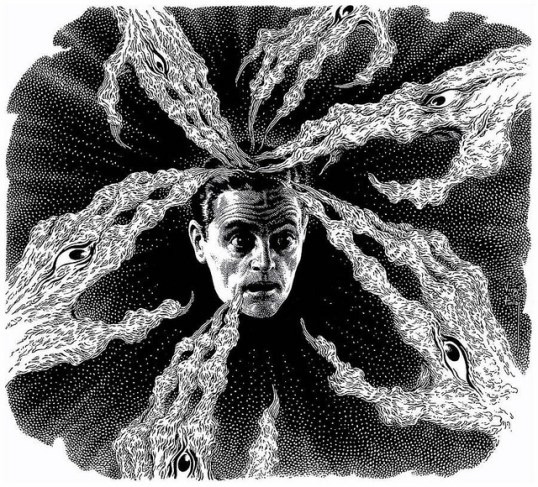
Shadow Out Of Time, by Harold V. Brown

“After twenty-two years of nightmare and terror, saved only by a desperate conviction of the mythical source of certain impressions, I am unwilling to vouch for the truth of that which I think I found in Western Australia on the night of July 17–18, 1935.”

— H.P. Lovecraft, The Shadow Out Of Time

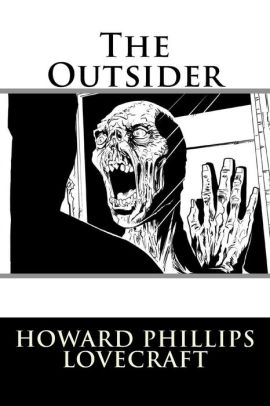
The Outsider, Review By Case Wright


hp4.jpg

Isn’t it just awkward when you’re trying to make friends and people run away because unbeknownst to you, you are an inter-dimensional-hell-beast?  It’s right up there with telling people that you’ve had the best barbecue ever and you’ve only ever been to Smokey Bones or having Nickelback as your ringtone or quoting “The Notebook”.  It’s just …GAH!

In “The Outsider”, Lovecraft tells the story from the monster’s POV.  Shelley did it for the first time in Frankenstein, but it is rarely done; we don’t want to put ourselves into the Devil’s shoes.  Even today, the Devil’s POV is scorned – see Joker reviews.  The creature in “The Outside” actually seems kinda nice, but lonely.  The monster-beast crawls and claws its way out of a crypt and goes up people in a church and wonders what must be chasing him because everyone is running for their lives.  This goes on for A WHILE! People flee and he has no idea what’s going on.

Finally, he sees the monster, he goes to touch the horrible creature, and his outstretched finger touches a mirror.  I enjoyed the twist.  If done right, the Devil is always appealing.  Breaking Bad made Bryan Cranston a total badass and he did terrible things, but we rooted for him.  Like Walter White who only felt akin to his blue meth at the end, this creature is scorned so he flees into the night doing whatever Hell-Beasts do; my guess it has something to do with making robocalls or working for Ticketmaster.

This Halloween season I’ve been strung out on short-stories for days because I’m amazed at the ability to convey a story in limited space like a Haiku.

See you, tomorrow.

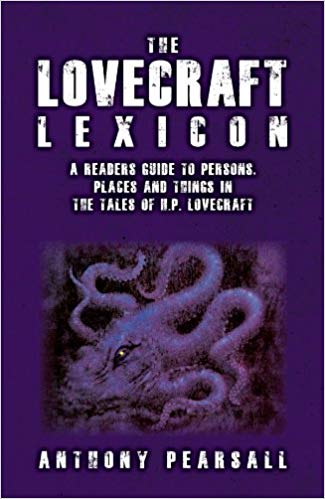
Horror Book Review: The Lovecraft Lexicon by Anthony Pearsall


Are you planning on searching for Cthulhu this October?

If you are, you might want to think again.  Seriously, Cthulhu does not like being woken up.  The majority of people who have gotten on Cthulhu’s bad side are dead and the one who survived have gone insane.  Add to that, it’s not always easy to track down Cthulhu.  I mean, sometimes it can be difficult to tell one lost city from another.  I guess you could try to track down your local Cthulhu cult or maybe you could summon Nyarlathotep and ask him for directions.  If I remember correct, I think that’s what Randolph Carter used to do.

If, despite all the warnings, you’re really determined to track down Cthulhu this summer, you need to order yourself a copy of Anthony Pearsall’s The Lovecraft Lexicon.  First published in 2005, The Lovecraft Lexicon contains all the information that you could possibly want about all of the persons, places, and things in the tales of H.P. Lovecraft.

It’s set up like an encyclopedia, with entries on …. well, everything.  You want to know about Charles Dexter Ward?  He’s in here.  Curious about Azathoth?  This book has all the information that you need to find.  Pearsall details the adventures of Randolph Carter and also sorts through the many legends about the Necronomicon.  This book is the next best thing to taking a course at Miskontic University.

However, the Lovecraft Lexicon is more than just an encyclopedia.  It’s also a reader’s guide, one that examines just what may have been going through Lovecraft’s mind when he wrote about some of his most infamous creations.  The book not only takes a look at Lovecraft’s work but also at the man himself and, to its credit, it’s honest about both Lovecraft’s flaws as a person and his strengths as a writer.  In the end, the book celebrates Lovecraft’s imagination and his influence on future writers.  Whether you’re a reader who is just now starting in on the works of H.P. Lovecraft or a writer looking to continue to tales of Cthulhu, The Lovecraft Lexicon is an invaluable resource.