4 Or More Shots From 4 Or More Films is just what it says it is, 4 shots from 4 of our favorite films. As opposed to the reviews and recaps that we usually post, 4 Shots From 4 Films lets the visuals do the talking!
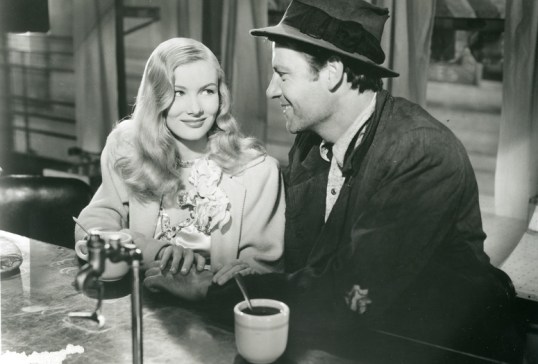
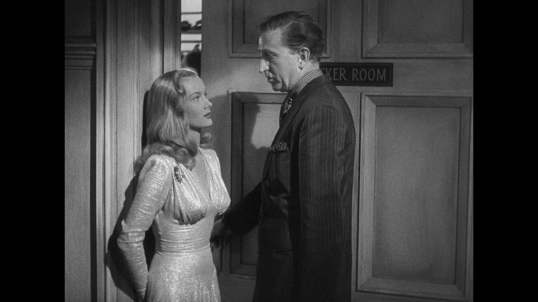
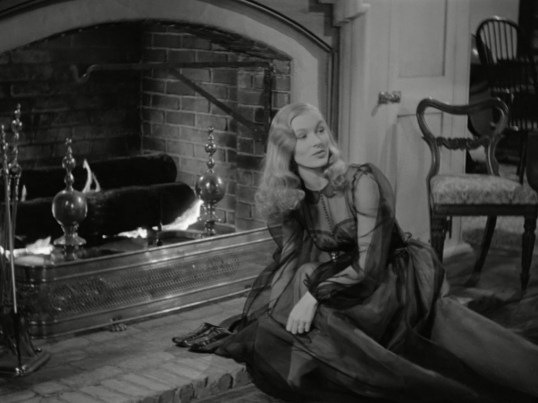
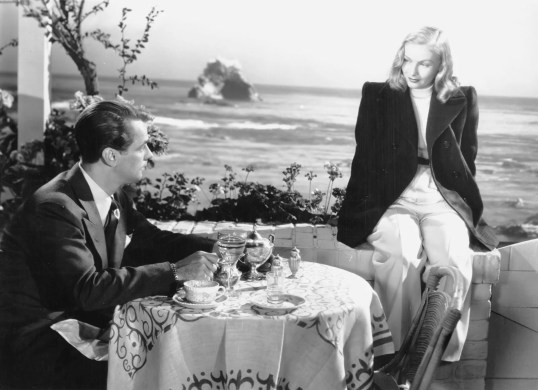
Today, we celebrate the birth of one of my favorite Golden Age actresses, Veronica Lake! It’s time for….
4 Shots From 4 Veronica Lake Films
Sullivan’s Travels (1941, dir by Preston Sturges, DP: John Seitz)
This Gun For Hire (1942, dir by Frank Tuttle, DP: John Seitz)
I Married A Witch (1942, dir by Rene Clair, DP: Ted Tetzlaff)
The Blue Dahlia (1946, dir George Marshall, DP: Lionel Lindon)
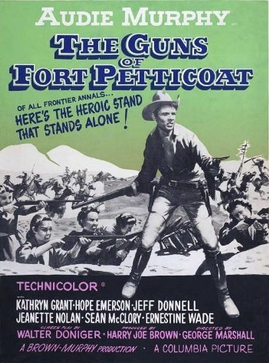
During the waning days of the Civil War, Lt. Frank Hewitt (Audie Murphy) is a man without a country. A Texan, he joined the Union Army even as his home state was voting to secede from the United States. In the Army, Hewitt is viewed with distrust by his autocratic superior, Col. John Chivington (Ainslie Pryor). When Hewitt learns that Chivington has ordered a surprise attack on an unarmed local Indian tribe in order to drive them into Texas where they will attack the nearest settlement for revenge, Hewitt deserts the Army to warn the people left in his hometown.
When Hewitt arrives, he discovers that all of the men in town have left to join the Confederate Army. Only their wives, mothers, and sisters remain. Though Hewitt is, at first, accused of being a traitor, he sticks around and trains the women on how to fight not only the incoming Comanches but also any outlaws who ride into town looking to take advantage of the situation.
The Guns of Fort Petticoat is an interesting B-western that holds up well today. Even though the film ends with a Comanche attack, it’s made clear that the attack would not have happened if not for the actions Col. Chivington. Chivington, who doesn’t care that the victims of his actions would not be Confederate soldiers but instead just helpless woman and children, is the film’s true villain, even if he only appears in the first and final scenes. Audie Murphy, who was America’s most decorated World War II veteran, not only starred in but produced the movie. Murphy was a stiff actor but he looked believable in uniform and obviously knew how to convincingly shoot a rifle and that’s all this role really demands of him. Kathryn Grant plays the woman who goes from distrusting Hewitt to falling in love with him and she and Murphy work well together. The final battle between the women and the Comanches is exciting and well-shot by veteran western director George Marshall. The movie’s final scene may not be totally believable but it’s still very satisfying.
Fans of the western genre and Audie Murphy will find much to enjoy about The Guns of Fort Petticoat.
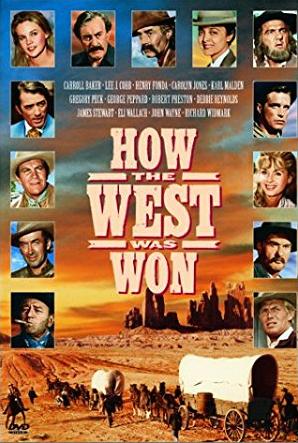
(With the Oscars scheduled to be awarded on March 4th, I have decided to review at least one Oscar-nominated film a day. These films could be nominees or they could be winners. They could be from this year’s Oscars or they could be a previous year’s nominee! We’ll see how things play out. Today, I take a look at the 1963 best picture nominee, How The West Was Won!)
How was the west won?
According to this film, the west was won by the brave men and women who set out in search of a better life. Some of them were mountain men. Some of them worked for the railroads. Some of them rode in wagons. Some of them gambled. Some of them sang songs. Some shot guns. Some died in the Civil War. The thing they all had in common was that they won the west and everyone had a familiar face. How The West Was Won is the history of the west, told through the eyes of a collection of character actors and aging stars from Hollywood’s Golden Age.
In many ways, How The West Was Won was the Avatar of the early 60s. It was a big, long, epic film that was designed to make viewers feel as if they were in the middle of the action. Avatar used 3D while How The West Was Won used Cinerama. Each scene was shot with three synchronized cameras and, when the film was projected onto a curved Cinerama screen, it was meant to create a truly immersive experience. The film is full of tracking shots and, while watching it on TCM last night, I tried to imagine what it must have been like to see it in 1963 and to feel as if I was plunging straight into the world of the old west. The film’s visuals were undoubtedly diminished by being viewed on a flat screen and yet, there were still a few breath-taking shots of the western landscape.
The other thing that How The West Was Won had in common with Avatarwas a predictable storyline and some truly unfortunate dialogue. I can understand why How The West Was Won was awarded two technical Oscars (for editing and sound) but, somehow, it also picked up the award for Best Writing, Screenplay or Story. How The West Was Won is made up of five different parts, each one of which feels like a condensed version of a typical western B-movie. There’s the mountain man helping the settlers get down the river story. There’s the Civil War story. There’s the railroad story and the outlaw story and, of course, the gold rush story. None of it’s particularly original and the film is so poorly paced that some sections of the film feel rushed while others seem to go on forever.
Some of the film’s uneven consistency was undoubtedly due to the fact that it was directed by four different directors. Henry Hathaway handled three sections while John Ford took care of the Civil War, George Marshall deal with the coming of the railroad, and an uncredited Richard Thorpe apparently shot a bunch of minor connecting scenes.
And yet, it’s hard not to like How The West Was Won. Like a lot of the epic Hollywood films of the late 50s and early 60s, it has its own goofy charm. The film is just so eager to please and remind the audience that they’re watching a story that could only be told on the big screen. Every minute of the film feels like a raised middle finger to the threat of television. “You’re not going to see this on your little idiot box!” the film seems to shout at every moment. “Think you’re going to get Cinerama on NBC!? THINK AGAIN!”
Then there’s the huge cast. As opposed to Avatar, the cast of How The West Was Won is actually fun to watch. Admittedly, a lot of them are either miscast or appear to simply be taking advantage of a quick payday but still, it’s interesting to see just how many iconic actors wander through this film.
For instance, the film starts and, within minutes, you’re like, “Hey! That’s Jimmy Stewart playing a mountain man who is only supposed to be in his 20s!”
There’s Debbie Reynolds as a showgirl who inherits a gold claim!
Is that Gregory Peck as a cynical gambler? And there’s Henry Fonda as a world-weary buffalo hunter! And Richard Widmark as a tyrannical railroad employee and Lee J. Cobb as a town marshal and Eli Wallach as an outlaw!
See that stern-faced settler over there? It’s Karl Malden!
What’s that? The Civil War’s broken out? Don’t worry, General John Wayne is here to save the day. And there’s George Peppard fighting for the Union and Russ Tamblyn fighting for the Confederacy! And there’s Agnes Moorehead and Thelma Ritter and Robert Preston and … wait a minute? Is that Spencer Tracy providing narration?
When Eli Wallach’s gang shows up, keep an eye out for a 36 year-old Harry Dean Stanton. And, earlier, when Walter Brennan’s family of river pirates menaces Karl Malden, be sure to look for an evil-looking pirate who, for about twenty seconds, stares straight at the camera. When you see him, be sure to say, “Hey, it’s Lee Van Cleef!”
How The West Was Won is a big, long, thoroughly silly movie but, if you’re a fan of classic film stars, it’s worth watching. It was a huge box office success and picked up 8 Oscar nominations. It lost best picture to Tom Jones.
(By the way, in my ideal fantasy world, From Russia With Love secured a 1963 U.S. release, as opposed to having to wait until 1964, and became the first spy thriller to win the Oscar for Best Picture.)
George Marshall has long been a favorite director of mine. Though he excelled in all genres (particularly Westerns), it’s his comedies that first caught my attention. Marshall guided W.C. Fields through his first for Universal, YOU CAN’T CHEAT AN HONEST MAN (with radio foils Edgar Bergen and Charlie McCarthy), did some of Bob Hope’s best films (THE GHOST BREAKERS, MONSIER BEAUCAIRE, FANCY PANTS), and directed MY FRIEND IRMA, the debut of Dean Martin & Jerry Lewis, later teaming with the pair for SCARED STIFF. He’s also responsible for the classic comic Western DESTRY RIDES AGAIN with James Stewart and Marlene Dietrich, and the remake with Audie Murphy. But his wackiest comedy is undoubtably the off-the-wall MURDER, HE SAYS.
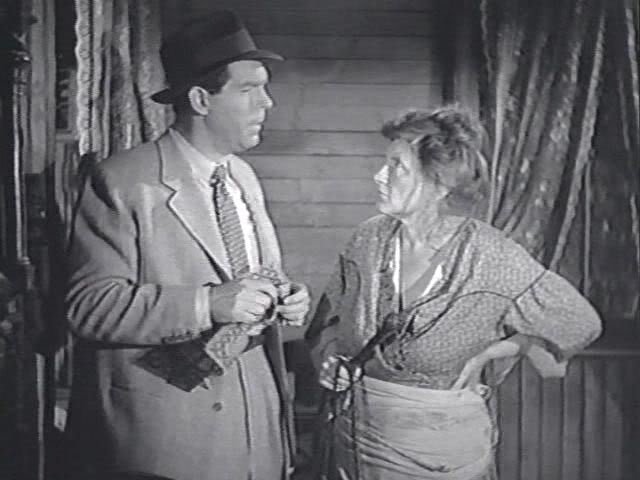
This black comedy gem stars the underrated Fred MacMurray as Pete Marshall, pollster for the Trotter company (“Like the Gallup Poll, but not as fast”), sent to tiny rural Potowanamie to find missing coworker Hector P…
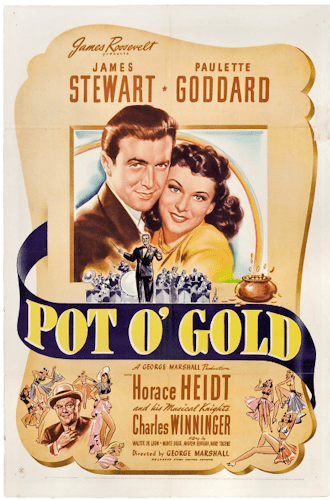
The 48th film in Mill Creek’s Fabulous Forties box set was 1941’s Pot O’ Gold. At first, I was really excited about watching Pot O’ Gold because it starred James Stewart, one of my favorite of the Golden Age stars. “Wow,” I thought, “James Stewart never made a bad movie! This is going to be great!” However, before watching the film, I looked Pot O’ Gold up on Wikipedia and I discovered that apparently, James Stewart considered Pot O’ Gold to be the worst film that he ever made.
After having watched the film, I think that Jimmy may very well have been correct in his assessment.
Pot O’ Gold is a musical comedy. Stewart plays Jimmy Haskell, the owner of a music store. Jimmy loves music but he’s a terrible businessman. Despite the fact that his store always seems to be full of quirky characters playing musical instruments, it still goes out of business. Jimmy is forced to go to work for his uncle, C.J. Haskell (Charles Winninger). C.J. not only owns a health food company but he also produces a radio show.
And, on top of all that, C.J. hates music!
Unfortunately, considering how much C.J. hates music, he lives right next door to the McCorkles, a family of Irish musicians. The McCorkles are constantly practicing in front of C.J.’s store and, as a result, C.J. is constantly forced to call the cops to make them go away.
When Jimmy first arrives at the store, he befriends the McCorkles. He even falls in love with Molly McCorkle (Paulette Goddard). Unfortunately, none of the McCorkles know that he is C.J.’s nephew and C.J. doesn’t know that his nephew secretly continues to love music. Meanwhile, C.J. is trying to catch the mysterious person who threw a tomato at him. What he doesn’t realize is that the tomato was thrown by … JIMMY!
And it just keeps going on and on from there. C.J. conspires to get rid of the McCorkles. Jimmy tries to bring peace between the two sided without the Molly discovering that he’s related to C.J. and without C.J. realizing that Jimmy threw that tomato. Jimmy eventually goes on C.J.’s radio show and soon, he’s using the show as a way to give away money to the needy. Meanwhile, he struggles to forge peace between the McCorkles and C.J. without Molly discovering his true identity and without C.J. finding out he threw that tomato. Will C.J. ever learn to love music and will it ever occur to anyone that this whole mess could easily be resolved by everyone making an effort not to randomly break out into song every time C.J. happens to be walking down the street?
Pot O’ Gold is an amazingly silly movie and I don’t mean silly in a good way. This is one of those films where every issue could be resolved if people just showed a little intelligence. It’s also a movie where everyone breaks into song every few minutes. The key to a successful musical is that the songs have to feel like the grow organically out of the action. The songs in Pot O’ Gold feel like they’re just there to be there.
Personally, I think James Stewart is one of those actors who can make any movie worth seeing. He is his normal, likable self in this film but Pot O’ Gold never seems worthy of his famous persona.
Incidentally, Pot O’ Gold’s credited producer was James Roosevelt, FDR’s wastrel son. I don’t know how much he had to do with the actual production but I’ve always wanted an excuse to use the word “wastrel” in a review.
At the start of The Sheepman, reformed gambler and gunslinger Jason Sweet (Glenn Ford) shows up in the middle of cattle country. He has won a herd of sheep in a poker game and he is planning on grazing them on the nearby public land. Knowing that he will face opposition from the local cattle ranchers, Jason asks the local towns people to direct him to the town bully. After Jason beats up Jumbo (Mickey Shaughnessy), Jason is invited to meet Jumbo’s boss, Col. Stephen Bedford (Leslie Nielsen).
As soon as Jason meets Bedford, he realizes that he is not a colonel and his name is not Bedford. Instead, he is an old friend from Texas, a former gambler and outlaw named Johnny Bledsoe. Like Jason, Bledsoe has also gone straight and is now the most powerful man in town. He is also engaged to marry a local girl named Dell Payton (Shirley MacClaine), to whom Jason has taken a liking. Bledsoe tells Jason to take his sheep somewhere else and when Jason refuses, Bledsoe threatens to have him, Dell, and his sheep killed.
Wait a minute, Leslie Nielsen is playing a bad guy?
Surely, you can’t be serious!
I am serious. And don’t call me Shirley.
(Sorry, had to do it.)
Leslie Nielsen is best remembered for being the deadpan comedian who could deliver the most ridiculous of lines with a totally straight face and who helped to make Airplane one of the funniest movies ever made. But before Nielsen recreated himself as a comedic actor, he was a dependably stiff supporting player and occasional leading man who appeared in nearly 100 dramatic pictures. The Sheepman is one of his “serious” roles.
Today, it is always strange to see one of Nielsen’s dramatic performances. Johnny Bledsoe is a standard western villain and Nielsen does okay with the role but, because his serious performances shared the same style as his comedic performances, it was impossible not to think of Dr. Rumack saying, “I just want to tell you both good luck. We’re all counting on you,” even while Johnny Bledsoe was offering to pay the outlaw Chocktaw (Pernell Roberts) to track down and kill Jason and his sheep.
The Sheepman is an average western and, as always, Glenn Ford is a good hero. But ultimately, the most interesting thing about it and the main reason to see it is to witness Leslie Nielsen doing his thing before he officially became the funniest man in the world. Leslie Nielsen was not a terrible dramatic actor but watching The Sheepman made me all the happier that he eventually got to show the world his true calling.
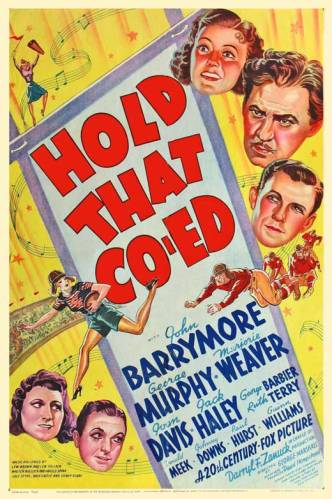
“Americans will put up with bad government but they won’t stand for bad sportsmanship!” — A political consultant in Hold That Co-Ed (1938)
Rusty Stevens (George Murphy) is the new head football coach at State University. (Which state? We never learn for sure, though the implication is that it’s somewhere near Louisiana.) From the minute that he arrives, Rusty discovers why State’s football program is so unheralded. Not only are the majority of the students lazy and unmotivated but the college can’t even afford to buy the players uniforms. The perpetually nervous Dean Thatcher (Donald Meek) is of no help when it comes to getting the university what it needs. Even worse, the state’s Governor, Gabby Harrigan (John Barrymore), is running for the senate and he has sworn that he’s going to solve the state’s budget crisis by cutting the football program!
(Cue dramatic music. Actually, not really. There’s not a single dramatic moment to be found in Hold that Co-Ed.)
Well, what can Rusty be expected to do, other than lead all the students on a march down to the capitol building where they demand to see Gov. Harrigan. However, Harrigan is busy giving an interview and he refuses to meet with the students. Instead, he tells a fawning reporter how he is going to introduce a bill in the U.S. Senate that will guarantee all retired people, “Not one, not two, not three, but a sum of 400 dollars every month!”
After the reporter leaves, his cynical (Is there any other type?) secretary Marjorie (Marjorie Weaver) asks Harrigan how the government will ever be able to afford his plan. Harrigan says that the government can’t but “isn’t it nice for” retired people “to have something to look forward to?”
(Gov. Harrigan sounds like he could be elected President in 2016.)
Meanwhile, the college students get rowdy in the front office and end up picking up the Governor’s aide, Wilbur (Jack Haley, who a year later would play The Tin Man in The Wizard Of Oz), and passing him around over their heads. Naturally, this gets the attention of the press and suddenly, the fate of State’s football program is a campaign issue.
Upon discovering that most voters like football, Harrigan declares himself to be State’s biggest supporter and soon starts to play a very prominent role in the football program. Not only does he arrange for Lizzie Olsen (Joan Davis) to become the only female to play on a college football team (When informed that Lizzie playing is against the rules, Harrigan replies, “I’ll change them!”) but he also pays players to come to State. (When informed that paying players is against the law, Harrigan replies, “I’ll change the law!”)
It all eventually leads to Rusty romancing Marjorie and a bet between Harrigan and his opponent in the Senate race in which the outcome of the big game will determine who withdraws from the race.
Because of course it does.
First released in 1938, Hold That Co-Ed is one of those strange films that seems like it could only have come out in the 1930s. Obviously, it’s primarily a college comedy. Yet, at the same time, it’s also a musical which features Rusty randomly breaking out into song and dancing. And then, on top of that, it’s a political satire. (Reportedly, Harrigan was based on Huey Long, who also served as the basis for a far more sinister character in All The King’s Men.)
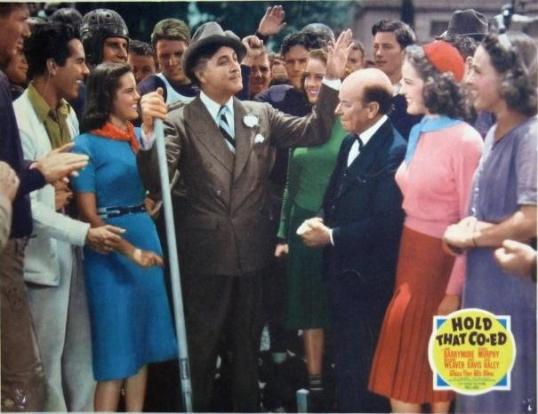
And, in its way, Hold That Co-Ed is a fun, little time capsule. If anything, the film’s political satire feels just as relevant today as it probably did when it was first released. As playing in grand theatrical fashion by John Barrymore, Gabby Harrigan could be any number of pompous, say-whatever-you-have-to-say demagogues.
What makes this film particularly interesting is just how much it’s on Harrigan’s side. Whereas most political films always feel the need to at least pretend to be on the side of “good” government, Hold that Co-Ed cheerfully celebrates Harrigan’s casual corruption. In this shrill day and age, there’s something refreshing about seeing a film that passes no judgment.
And speaking of politics, John Barrymore was never elected to political office. However, the film’s other star, George Murphy, was. He served in the U.S. Senate from 1965 to 1971.
Governor Gabby Harrigan (John Barrymore) in Hold That Co-Ed


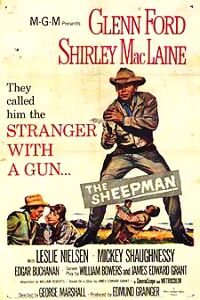 At the start of The Sheepman, reformed gambler and gunslinger Jason Sweet (Glenn Ford) shows up in the middle of cattle country. He has won a herd of sheep in a poker game and he is planning on grazing them on the nearby public land. Knowing that he will face opposition from the local cattle ranchers, Jason asks the local towns people to direct him to the town bully. After Jason beats up Jumbo (Mickey Shaughnessy), Jason is invited to meet Jumbo’s boss, Col. Stephen Bedford (Leslie Nielsen).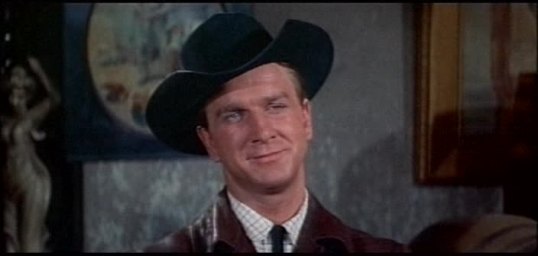
 Through the Shattered Lens