Bob Randall (John Wayne) is a coast guard boatswain, headquartered in Alaska where he and the members of his crew battle evil seal poachers like oily Phil Morgan (Russell Hicks). When Randall returns to port after his latest patrol, he has to deal with two disappointments. First off, he is passed over for a promotion to commanding officer, even though everyone knows that he deserves it. Instead, the promotion goes Lt. Commander Mays (William Blakewell), the son of a commander (George Irving). Mays doesn’t even want the job. He’s scared of the water and he’d rather fly airplane as a part of the Coast Guard’s aviation force. Bob is disappointed but he’s a professional and he’s going to support Mays. Secondly, Bob’s girlfriend (Nan Grey) witnesses a murder and is kidnapped by Phil Morgan. Bob and his sidekick (dependable western mainstay Fuzzy Knight) go undercover as fisherman to try to find her.
The Sea Spoilers was the first of six B-movies that John Wayne did for Universal. Wayne, who had been stuck in the B’s for a while, was trying to prove that he was more than just a singing cowboy so, in this one, he plays a tough and ready sailor. Wayne is convincing in the role, even if the movie is really just a western set in what was then modern day Alaska. Though only 30, Wayne shows the no-nonsense professionalism that would become his trademark once he became one of the world’s biggest movie stars. Unlike some of Wayne’s early films, it’s possible to see the icon that John Wayne would eventually become while watching him here. The Sea Spoilers is only 66 minutes long but fans of the Duke should enjoy it.
Finally, The Sea Spoilers was written by George Waggner. Waggner would later go on to direct the original Wolf Man.
The 1944 film, Lady in the Death House, tells the tragic and faintly ridiculous story of Mary Kirk Logan (Jean Parker).
The daughter of a small-time criminal, Mary has spent most of her life trying to escape from her family’s legacy of crime. She’s even got a job, working at the same bank that her father once tried to rip off. Of course, at work, everyone knows her as Mary Kirk and they have no idea that her father was the infamous Tom Logan. If that information got out, Mary would lose her job and no longer be able to take care of herself or her younger sister, Suzy (Marcia Mae Jones).
One night, Mary is out on a date with a clumsy man who takes her out to a nightclub and manages to accidentally set Mary’s dress on fire. Luckily, Dr. Brad Braford (Douglas Fowley) is there, having a drink with his friend, the famous criminologist, Charles Finch (Lionel Atwill). Brad jumps into action, extinguishing the fire and saving Mary’s dress. It’s love at first sight.
There’s just one problem. Dr. Bradford is studying ways to bring the dead back to life and, in order to raise money for his research, he’s been working as the state’s executioner. When someone goes to the electric chair, Brad is the one who pulls the lever. Mary says that she can only marry Brad if he gives up his electrifying night job.
However, before Brad can turn in his letter of resignation, Mary is arrested for the murder of Willis Millen (Dick Curtis), a crook who once knew her father. Mary swears that she’s innocent but there are two eye witnesses who testify that they not only heard Mary and Willis fighting but that they also saw the shadow of someone hitting Willis over the head with a lamp. It doesn’t take long for the jury to reach a verdict:
I have to admit that, when this newspaper appeared on-screen, I was actually more curious about the “youth” who was arrested for stealing glitter off of campaign signs. However, for whatever reason, the film declines to follow up on that story. Instead, we watch as Mary goes to death row, with the knowledge that she is to die “at the hand of the man I love.”
However, there may still be hope! Charles thinks that Mary is innocent. Though there’s only 24 hours left before Brad is scheduled to execute Mary, Charles launches an investigation of his own. But even if Charles is able to find the evidence that exonerates Mary, will he be able to contact the governor in time? Or will Mary go to the chair?
Well, regardless of what happens, rest assured that this World War II-era film will end with an appeal for all movie goers to do the right thing and buy war bonds.
Lady in the Death House is an entertaining but fairly ludicrous little movie. I mean, realistically, having the executioner execute his own fiancée is a huge conflict of interest. It seems like they could have gotten a substitute executioner, if just for one night. But, if they did that, we wouldn’t get the melodramatic highlight of Mary announcing that she’s scheduled to be killed “by the hand of the man I love.”
Lady in the Death House provides a rare chance to see Lionel Atwill in a heroic role. The British actor played a countless number of mad scientists, killers, and Nazis before his premature death in 1946. (Atwill’s promising career was derailed in 1943, when he accused of hosting orgies at home and was subsequently convicted of perjury. That’s one reason why Atwill turned up in a “poverty row” feature like this one.) Atwill is convincing as Charles Finch. The same superior attitude that made him a good villain also makes him believable as the only person capable of figuring out who murdered Willis Millen.
Taking on its own terms, Lady in the Death House is a fun movie. If nothing else, it provides a lesson on how to get a message to the governor, even if no one’s quite sure where he is for the evening. That’s an important lesson to learn!
Lisa asked me to review an old best picture nominee for today’s movie a day so I picked Here Comes The Navy, because hardly anyone has ever heard of it and I usually like old service comedies.
Chesty O’Connor (James Cagney) is a construction worker who thinks that he is tougher than anyone in the Navy. When Chesty gets into a fight with Chief Petty Officer Biff Martin (Pat O’Brien), Chesty enlists in the Navy just to get on his nerves. Chesty brings his friend Droopy (Frank McHugh) with him. With Biff determined to force him out of the service, Chesty bristles against the rules of the Navy. But then Chesty meets and falls in love with Dorothy (Gloria Stuart), Biff’s sister. Chesty loses his bad attitude, proves that his shipmates can depend on him, saves Biff’s life when an airship landing goes wrong, and even gets to marry Biff’s sister.
Here Comes The Navy is a typical 1930s service comedy, distinguished mostly by the wiseguy presence of James Cagney. It is the type of movie where men have names like Chesty, Biff, and Droopy. Warner Bros. made a hundred versions of this story and Here Comes The Navy was certainly one of them.
Here Comes The Navy was produced with the full cooperation of the U.S. Navy, so it’s not surprising that it feels like a recruiting film. The sailors are all happy to do their bit to protect the American way of life and the commanding officers are all tough but fair. The majority of the movie was filmed on the USS Arizona, which would be sunk seven years later during the Japanese attack on Pearl Harbor. Here Comes The Navy also features some scenes shot on the USS Macon, an airship that would crash a year later.
It’s hard to guess how Here Comes The Navy came to be nominated for best picture. It’s okay but, for the most part, it’s for James Cagney completists only.
I’m not just sharing this because it’s one of the best things that I’ve ever tweeted. I’m also sharing it because it’s a beyond perfect description of Jerry (played, in an Oscar-winning performance, by Norma Shearer), the lead character in The Divorcee. (Whenever you tweet something that is beyond perfect, you’ve earned the right to make sure everyone else knows it.) The Divorcee came out in 1930 so, needless to say, it’s a bit dated but I totally related to the character of Jerry and that’s perhaps the main reason why I enjoyed this film.
The Divorcee tells the type of story that, today, would probably make for a memorable Lifetime film. It’s a film that follows four friends over several years. They are the idle rich, the type who go to parties, dance on tables, and cheerfully ignore the ban on liquor. Jerry (Norma Shearer) loves Ted (Chester Morris). Dorothy (Helen Johnson) loves Paul (Conrad Nagel). However, Paul loves Jerry and when Jerry announces that she and Ted are engaged to be married, Paul doesn’t handle it well. In fact, Paul gets drunk, Paul drives a car with Dorothy in the passenger’s seat, and eventually Paul crashes the car, leaving Dorothy so disfigured that she spends the rest of the movie wearing a black veil.
The years pass. In order to make up for horribly disfiguring her, Paul agrees to marry Dorothy. Jerry marries Ted. They’re happy until they’re not. On the day of their third anniversary, Jerry discovers that Ted has been cheating on her. So, Jerry cheats on Ted. When Ted gets upset, they file for divorce.
Suddenly, Jerry is …. (dramatic music cue) … THE DIVORCEE!
Ted becomes an alcoholic, the type who makes scenes at parties and destroys ornate wedding cakes. In the past, I assume Jerry would have been forced to wear a scarlet D and she would have made it work because there’s nothing that Jerry can’t do. However, since this film takes place in the 1920s, Jerry spends her time flirting and plotting to steal Paul away from Dorothy.
And it would have worked too if not for the fact that Dorothy is a complete and total saint…
Drinking, sex, adultery, disfigurement, and Norma Shearer!? That’s right, this is a pre-code film! The Divorcee is actually a pretty typical example of a type of film that was very popular during the 1930s and actually remains rather popular today. This is a film where rich people do stupid things but look good doing it. When an audience watches a film like this, they can both look down on the rich and vicariously experience their lifestyle. No wonder these movies are so popular!
Anyway, I liked The Divorcee. It’s an incredibly silly little film but it’s hard for me not to enjoy something this melodramatic. Chester Morris and Conrad Nagel are stuck playing heels and Helen Johnson is a bit to saintly but it doesn’t matter because the film is pretty much designed to be a showcase for Norma Shearer, the most underrated of all of the Golden Age actresses. (Far too often, Shearer is dismissed as simply being Irving Thalberg’s wife.) Shearer gives a great performance. She seems to be having the time of her life and it’s fun to watch.
The Divorcee was nominated for best picture but it lost to a far different picture, All Quiet On The Western Front.
If you’re a regular reader of this site, it will not take you by surprise to learn that the 1933 Best Picture Nominee, 42nd Street, is one of my favorite films of all time.
I mean, how couldn’t it be? Not only is it a pre-Code film (and we all know that pre-Code films were the best) and one the features both Ginger Rogers and Dick Powell in early roles but it’s also a film that depicts the backstage world of a stage musical with such a combination of love and snark that it will be familiar to everyone from community theater nerds to Broadway veterans. 42nd Street is a classic musical, though I have to admit that I think the majority of the songs are a bit overrated. Even more importantly, 42nd Street is the ultimate dance film. The film’s big production number, choreographed and filmed in the brilliant and flamboyant Busby Berkeley style, is such an iconic moment that it’s still being imitated and lovingly parodied to this day.
Every dance movie owes a debt to 42nd Street but few have come close to matching it. Remember how much we all hated Smash? There were a lot of reasons to hate Smash but the main reason was because it tried to be 42nd Street and it failed. There can only be one 42nd Street.
It’s hard to estimate the number of show business clichés that currently exist as a result of 42nd Street. Then again, it can be argued that they were clichés before they showed up in 42nd Street but 42nd Street handled them in such an expert fashion that they were transformed from being urban legends to immortal mythology.
42nd Street takes place in the backstage world, following the production of a Broadway musical through casting to rehearsals to opening night. It’s an ensemble piece, one populated by all the usual suspects. Julian Marsh (Warner Baxter) is the down-on-his-luck producer who desperately needs a hit. Dorothy Brock (Bebe Daniels) is the celebrated star who is dating a rich, older man (Guy Kibbee, who made quite the career out playing rich, older men) while secretly seeing her ex, a down-on-his-luck Vaudevillian (George Brent). From the minute that we first see Dorothy, we know that she’s eventually going to end up with a boken ankle. It’s just a question of which chorus girl will be promoted to take her place. Will it be “Anytime” Annie (Ginger Rogers) or will it be the naive and wholesome Peggy (Ruby Keeler)? You already know the answer but it’s still fun to watch.
If you had any doubts that this was a pre-code film, the fact that Ginger Rogers is playing a character named “Anytime” Annie should answer them. 42nd Street is often described as being a light-hearted camp spectacle but there’s a cynicism to the film, a cynicism that could only be expressed during the pre-code era. The dialogue is full of lines that, just a few years later, would never have gotten past the censors.
(This is the film where it’s said that Anytime Annie “only said no once and then she didn’t hear the question!” This is also the film where Guy Kibbee cheerfully tells Annie that what he does for her will depend on what she does for him. Just try to get away with openly acknowleding the casting couch in 1936!)
The menacing shadow of the Great Depression looms over every glossy production number. Julian needs a hit because he lost all of his money when the Stock Market crashed and if the show is not a hit, everyone involved in the production will be out on the streets. The chorus isn’t just dancing because it’s their job. They’re dancing because it’s an escape from the grim reality of the Great Depression and, for the audience watching, the production numbers provided a similar escape. 42nd Street said, “Yes, life is tough. But sometimes life is fun. Sometimes life is sexy. Sometimes, life is worth the trouble.” Someday, 42nd Street promises, all the misery will be worth it.
Ultimately, 42nd Street is all about that iconic, 20-minute production number:
42nd Street was nominated for best picture but it lost to the nearly forgotten Cavalcade.
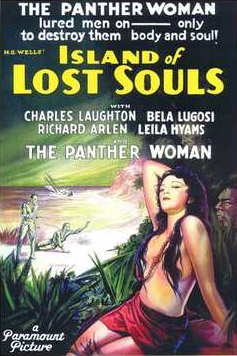
In the 1932 film Island of Lost Souls, Ruth Thomas (Leila Hyams) has reason to be concerned. She’s on the island of Samoa, awaiting the arrival of her fiancée, Edward Parker (Richard Arlen). When Parker’s boat doesn’t show up, it can only mean one thing. He’s been shipwrecked! Did he survive or was he lost at sea?
Well, Ruth need not worry. Parker did survive being shipwrecked. He was picked up by a freighter carrying a wide selection of animals to an isolated island. Unfortunately, when Parker complained about the way that Parker was abusing some of his admittedly odd-looking passengers, the captain responded by dumping Parker on that island as well.
On the island, Parker becomes the guest of Dr. Moreau (Charles Laughton) and his assistant, Montgomery (Arthur Hohl). Parker also meets and finds himself becoming attractive to the seemingly naive Lota (Kathleen Burke). Though Moreau seems to be a good host, Parker grows suspicious of him. It turns out that there’s a room in Moreau’s compound, a room that Lota calls “the house of pain.” At night, Parker can hear horrifying screams coming from the room.
Initially believing the Moreau is torturing the island’s natives, Parker soon discovers an even more disturbing truth. Moreau has been experimenting with trying to transform animals into humans. Lota, it turns out, was once a panther and the woods surrounding the compound are full of other Moreau creations. Though Moreau claims that his intentions are benevolent, he rules his island like a dictator. The animal-men are kept in line by the Sayer of the Law (Bela Lugosi) and any transgressions are punished in the House of Pain…
The Island of Lost Souls was the first cinematic adaptation of H.G. Wells’s The Island of Dr. Moreau. (Perhaps the most famous adaptation came out in 1996 and is the subject of Lost Souls, a fascinating documentary that, I believe, can still be found on Netflix.) I watched it last night on TCM and I have to admit that I had a mixed reaction to it. On the one hand, the film’s atmosphere of mystery and danger is palpable and Charles Laughton’s performance definitely set a standard for all misguided scientists to follow. The human-animals are fantastic creations and the film’s ending still has some power. Bela Lugosi’s performance of the Sayer of the Law was superior to his work as Dracula. (As shown by both this film and Ninotchka, Lugosi was an outstanding character actor.) Kathleen Burke also does a great job as Lota, which makes it all the more interesting that she was apparently cast as a result of winning a contest that was sponsored by Paramount Pictures.
(On a personal note, I always find it amusing that pre-code films always feature at least one scene of an actress removing her stockings, even if the scene itself has next to nothing to do with the rest of the film. In this case, the legs belong to Leila Hyams.)
On the negative side, Richard Arlen is not a particularly interesting hero and, from a contemporary point of view, Island of Lost Souls is a rather slow-moving film. Watching it today requires modern audiences to make a bit of an adjustment to their expectations.
With all that in mind, I still recommend Island of Lost Souls. Watch it for Charles Laughton and Bela Lugosi. Watch it as a valuable piece of cinematic history.
Well, maybe he did or maybe he didn’t. It all depends on how you interpret the 1943 film, Son of Dracula. In Son of Dracula, Lon Chaney, Jr. plays a vampire named Count Alucard. I get the feeling that it’s supposed to be a shocking moment when it’s pointed out that Alucard is Dracula spelled backwards but, since the movie is called Son of Dracula, I would think that most people would have already figured out the connection.
That said, when Alucard reveals that his true name is Dracula, he seems to be suggesting that he is the original Count Dracula. And yet the name of the film is Son of Dracula. At one point, two characters speculate that Alucard is a descendant of the original, just to be corrected by his bride. “He is Dracula!” she announces. Then again, she could just be bragging. If you’re going to marry a Dracula, wouldn’t you rather marry the original than a descendant?
If he is the original Dracula, you do have to wonder why he’s still alive. Since the film is a part of the Universal Dracula series, you have to wonder how he managed to survive being both staked by Van Helsing and having his body cremated by his daughter in Dracula’s Daughter. You also can’t help but notice that Alucard doesn’t bear much of a resemblance to Bela Lugosi. nor does he have a European accent. Instead, Alucard looks a lot like Lon Chaney, Jr. Chaney does not make for the most convincing vampire. As an actor, Chaney tended to project a certain “likable but dumb lug” quality that worked well for The Wolf Man and as Lenny in Of Mice and Men but it doesn’t quite work when he’s cast as a suave, Hungarian vampire.
Anyway, Son of Dracula finds Count Alucard in New Orleans at the turn of the century. He has specifically moved to the Deep South so that he can be with Katherine Caldwell (Louise Allbritton), a young woman who is obsessed with the occult. Katherine secretly marries Alucard. When her former boyfriend, Frank (Robert Paige), finds out about the marriage he decides that the best way to handle way things would be to get drunk and shoot the count. Unfortunately, since the Count is a vampire, the bullet passes through him and kills Katherine instead.
Or does it!?
Probably the most interesting thing about Son of Dracula is that it presents Alucard as being manipulated by a mortal. Usually, Dracula is the one doing the manipulating but in Son of Dracula, it’s suggested that a clever mortal can manipulate the undead jut as easily. GO KATHERINE!
Anyway, Son of Dracula is okay. It has some steamy deep south atmosphere and it’s fun in a campy, Universal sort of way. It has some historical significance because it was apparently the first film to actually feature a vampire transforming into a bat onscreen. For the most part, though, it’s a film that will best be appreciated by Universal horror completists.
That said, I kind of like the fact that nobody in the film could figure out that Alucard is Dracula spelled backwards. That was cute.
First released in 1933, Damaged Lives is a prototypical example of the social issue exploitation film. These were films that managed to escape the wrath of the censor by claiming to be an “educational” film that was specifically made to tell the public about a pressing social problem. As a result, audiences could go to a movie like Damaged Lives and see all of the innuendo (and occasionally even a hint of forbidden nudity) that were censored out of mainstream films. In return, the audience would have to spend five minutes or so listening to an authority figure talk about the dangers of juvenile delinquency, drug use, unplanned pregnancy, or venereal disease.
Damaged Lives deals with syphilis. Young executive Donald Bradley (Lyman Williams) has been dating Joan (Diane Sinclair) for a long time but she is hesitant to get married. This, despite the fact that she tells her best girlfriend that “I want a baby more than anything else in the world!” and, since this film is from 1933, good girls were apparently not allowed to have sex until getting married.
“Time for you two to get married!” another friend announces.
“What difference does it make?” Joan asks.
“A lot!” comes the reply.
“We should have been married a long time ago!” a bitter Donald exclaims.
Anyway, while waiting for Joan to finally be ready for marriage, Donald meets Elsie (Charlotte Merriam) and discovers that while good girls don’t have sex, bad girls do. And they give you syphilis! Unfortunately, Donald does not find out about the syphilis until after he and Joan have finally gotten married and Elsie has committed suicide.
What comes next? Scandal, of course! Suddenly, newsboys are screaming, “Extra! Extra!” and everyone in town knows that Elsie had syphilis. Donald doesn’t want to tell Joan that he slept with Elsie but then he’s taken on a tour through a hospital that’s full of people suffering from syphilis. We’re told that the first two people who Donald meets are “innocent.” They contracted syphilis accidentally, one by simply smoking a pipe after it had been used by an infected person. Then Donald sees a man who is in the final stages of illness.
“He got it from a streetwalker!” a doctor barks out, “NOT SO INNOCENT!”
When Joan finds out that both she and Donald have been exposed and that she may have to wait to have a baby, she promptly makes plans to kill all of them…
It may not be obvious from the description above but Damaged Lives is actually rather subdued when compared to some other educational exploitation films. This is no Reefer Madness. In fact, the film’s final scenes — which involve Joan plotting a permanent end to her troubles — have a tragic sort of grandeur to them. Damaged Lives is hardly an overlooked masterpiece but, as far as these type of films go, it’s not bad.
Interestingly enough, Damaged Lives was the first film to be directed by the legendary low-budget filmmaker Edgar G. Ulmer. (Ulmer first came to Hollywood to work on F.W. Murnau’s Sunrise.) Ulmer went on to direct such classic B-movies as The Black Cat, Detour, and The Man From Planet X.
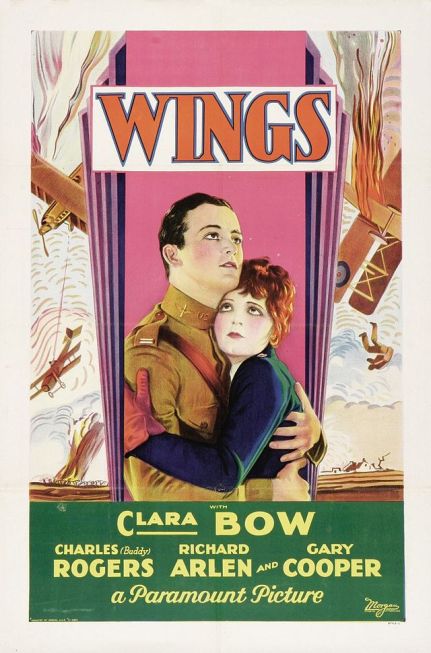
As I mentioned in my previous review, Sunrise may have won the 1927 Oscar for Unique and Artistic Production but the official winner of the first Academy Award for Best Picture was the silent World War I romantic melodrama, Wings. Wings is one of those films that doesn’t seem to get much respect from contemporary critics, many of whom are quick to dismiss the film as being corny and clichéd. It’s not unusual to see Wings cited as being the first example of the Academy honoring the wrong film.
Wings tells the story of David Armstrong (Richard Arlen) and Jack Powell (Charles “Buddy” Rogers), who both live in the same small town and who are both in love with the pretty but self-centered Sylvia (Jobyna Ralston). Sylvia, meanwhile, is in love with the wealthy David but, when Jack asks for a picture of her, she gives him one that she had been planning to eventually give to David. Meanwhile, Mary (Clara Bow), who is literally the girl next door, pines for Jack.
When World War I breaks out, both Jack and David join the Air Force. At first they’re rivals but, under the pressure of combat and the threat of constant death, they become friends. When David flies, he has a tiny teddy bear to bring him luck. Jack, meanwhile, has Sylvia’s picture. Meanwhile, their tentmate — Cadet White (Gary Cooper) — insists that he doesn’t need any good luck charms and promptly suffers the consequences for upsetting God.
Meanwhile, Mary has joined the war effort and is driving an ambulance around Europe. Will Mary ever be able to convince Jack that they belong together? Will David ever catch the legendary German pilot, Kessler? Perhaps most importantly, will this new bromance be able to survive both war and the charms of Clara Bow? And finally, will anyone be surprised when all of this leads to a tragic conclusion with an ironic twist?
Wings has got such a bad reputation and is so frequently dismissed as being the first case of the Academy picking spectacle over quality that I was actually shocked when I watched it and discovered that Wings is actually a pretty good movie. Yes, it is totally predictable. Every possible war film cliche can be found in Wings. (From the minute that handsome and confident Gary Cooper announced that he didn’t need any lucky charms, I knew he was doomed.) And yes, the film does run long and it does feature a totally out-of-place subplot involving a character played by someone named El Brendel (who was apparently a popular comedian at the time). This is all true but, still, Wings works when taken on its own terms.
Here’s the thing with Wings: the aerial footage is still impressive (all the more so for being filmed without the benefit of CGI) and both Charles “Buddy” Rogers and Richard Arlen are handsome and appealing in a 1927 silent film sort of way. In fact, the entire film is appealing in a 1927 silent film sort of way. This is a time capsule, one that shows what films were like in the 20s and, as a result of the combat scenes, also provides a hint of what lay in the future for the film industry. Most importantly, Wings features Clara Bow, who has been my silent film girl crush ever since I first saw It. Whether she’s attempting to flirt with the clueless Rogers or hiding underneath her ambulance and shouting curses at the Germans flying above her, Clara brings a lot of life to every scene in which she appears.
If you’re a film historian, Wings is one of those films that you simply have to see and, fortunately for you, it’s actually better than you may have been led to think.
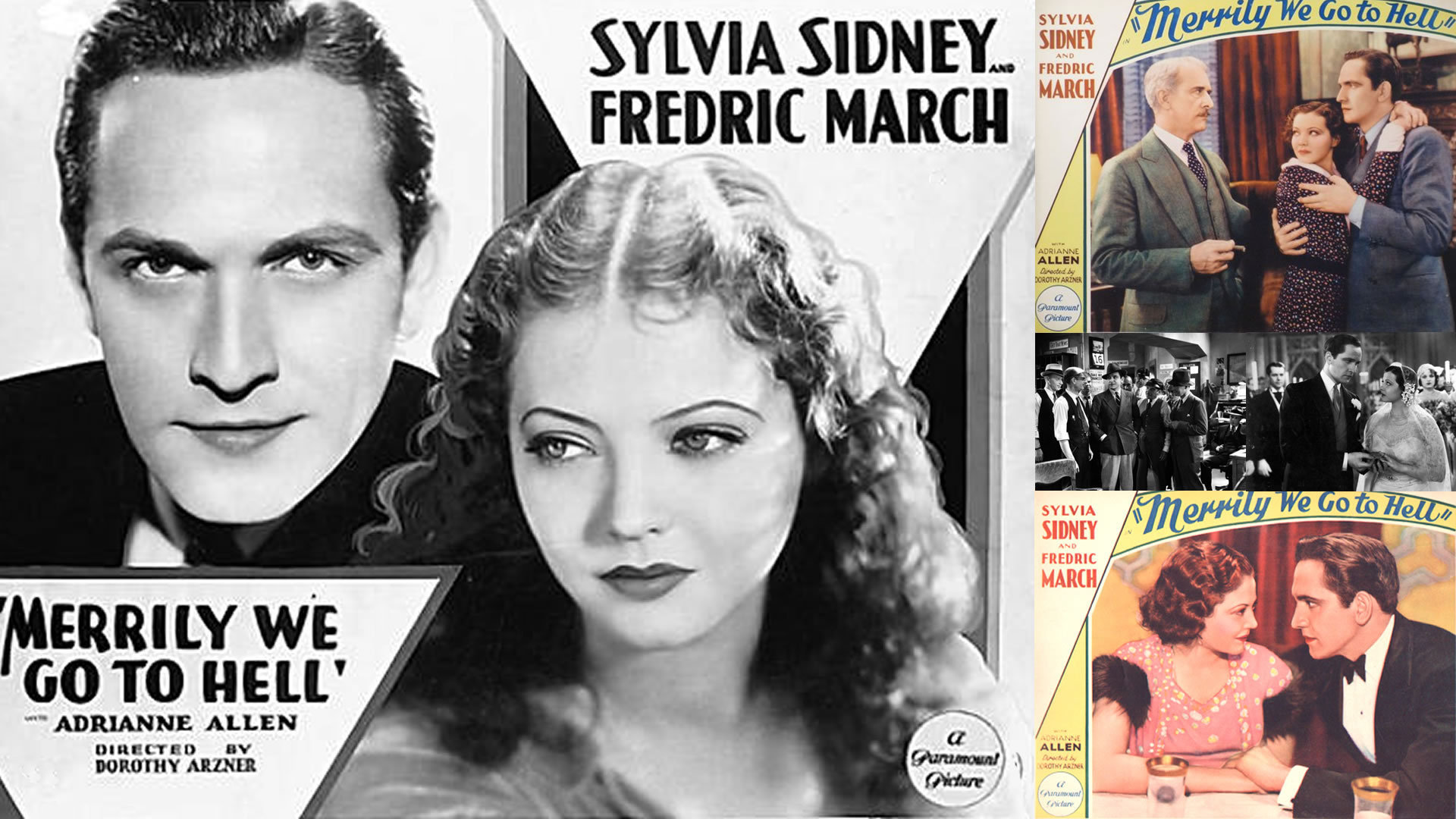
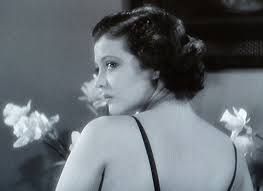
We conclude today’s melodramatic embrace by taking a look at another Pre-Code film. Released in 1932, Merrily We Go To Hell takes a look at one of the institutions that the Production Code was meant to save: marriage. It also takes a look at alcoholism, overprotective fathers, and what goes on backstage during a Broadway production. In many ways, this movie is a comedy but, at heart, it’s a melodrama through and through.
Everyone should have a catchphrase. Myself, for example, I tend to say “Stay Supple” a lot. It drives some people crazy but I like the way it sounds and I also happen to think that it’s a pretty good expression of how I view life. Alcoholic newspaper reporter Jerry Corbett (Fredric March) has a catch phrase of his own. Every time he takes a drink, he toasts with, “Merrily, we go to Hell.” Jerry has been haunted ever since he was dumped by his beautiful girlfriend, actress Claire Hempstead (Adrienne Ames), and he now spends all of his time drinking and dreaming of being a playwright.
However, things start to look up for Jerry when, at one of those decadent rooftop parties that always seem to show up in pre-Code films, he meets an innocent young heiress named Joan (Sylvia Sidney). Jerry and Joan fall in love and, despite the reservations of Joan’s disapproving father (George Irving), they marry. With Joan’s help, Jerry stops drinking and writes his play. It’s called “When Women Say No” and despite the creepy and misogynistic title, it becomes a huge success. Oh, did I say despite? I meant to say because of.
(For those you sitting at home, I am currently dramatically rolling my eyes and shaking my head.)
However, there’s a problem. Guess who is cast as the play’s leading lady? That’s right — Claire! Jerry may love Joan but he’s obsessed with Claire. Having again fallen under her spell, Jerry is soon drinking again and neglecting his wife. However — and this is what distinguishes Merrily We Go To Hell from even most films made today — Joan doesn’t just silently accept Jerry’s infidelity or sit around obsessing on how she can get her husband back. Instead, she decides that if he can do it, she can do it. And who can blame her when Charlie Baxter is around? Not only is Charlie suave and handsome but he’s played by none other than Cary Grant!
Merrily we go to Hell indeed!
Merrily We Go To Hell is available as a part of the Pre-Code Hollywood Collection and I think it makes for a good double feature with The Cheat. (The people who put together the Pre-Code Hollywood Collection obviously agreed with me because they put both films on the same disc.) While Merrily We Go To Hell is, at heart, a very serious movie, it begins with a deceptively light touch. Fredric March was such a charming actor and seems to be having so much fun playing Jerry as a charming and well-meaning fuckup, that you actually are surprised when the film reveals just how desperate a character he really is. This is the epitome of the type of film that makes you laugh at the start just so it can make you cry at the end.
Incidentally, Merrily We Go To Hell was directed by Dorothy Arzner, one of the only female directors to work in Hollywood during the studio era. As a director, she understands that, at heart, Merrily We Go To Hell is Joan’s story. Whereas a male director would probably have focused almost exclusively on Jerry and used Joan as a mere plot device, Arzner is more interested in exploring why Joan marries Jerry in the first place and how she deals with the inevitable discovery that there’s actually less to Jerry than first met the eye. It’s that perspective that ultimately elevates Merrily We Go To Hell above the level of being a mere domestic dramedy and makes it worth watching 82 years after it was first released.
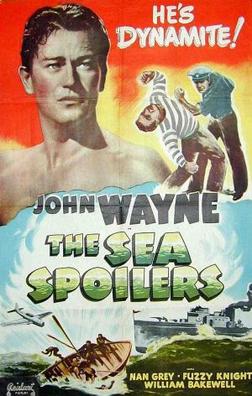 Bob Randall (John Wayne) is a coast guard boatswain, headquartered in Alaska where he and the members of his crew battle evil seal poachers like oily Phil Morgan (Russell Hicks). When Randall returns to port after his latest patrol, he has to deal with two disappointments. First off, he is passed over for a promotion to commanding officer, even though everyone knows that he deserves it. Instead, the promotion goes Lt. Commander Mays (William Blakewell), the son of a commander (George Irving). Mays doesn’t even want the job. He’s scared of the water and he’d rather fly airplane as a part of the Coast Guard’s aviation force. Bob is disappointed but he’s a professional and he’s going to support Mays. Secondly, Bob’s girlfriend (Nan Grey) witnesses a murder and is kidnapped by Phil Morgan. Bob and his sidekick (dependable western mainstay Fuzzy Knight) go undercover as fisherman to try to find her.


 Lisa asked me to review an old best picture nominee for today’s movie a day so I picked Here Comes The Navy, because hardly anyone has ever heard of it and I usually like old service comedies.



 Through the Shattered Lens