Retro Television Review: Fantasy Island 6.4 “The Angel’s Triangle/Natchez Bound”


Welcome to Retro Television Reviews, a feature where we review some of our favorite and least favorite shows of the past!  On Tuesdays, I will be reviewing the original Fantasy Island, which ran on ABC from 1977 to 1984.  Unfortunately, the show has been removed from most streaming sites.  Fortunately, I’ve got nearly every episode on my DVR.

This week, an angel comes to the Island.

Episode 6.4 “The Angel’s Triangle/Natchez Bound”

(Dir by Bob Sweeney, originally aired on November 6th, 1982)

Death takes a holiday!

Well, not literally.  The Angel of Death, Michael Eden (played by Gary Collins), does come to Fantasy Island but he’s working.  Years ago, he was meant to take soul of Catharine Harris (Carol Lynley), a woman who was in a car accident with her husband, Brent Harris (Doug McClure).  Michael could not bring himself to allow Catharine to die.  So, she miraculously survived.  But now, years later, Michael has been sent to collect the soul of Brent.  Brent and Catharine have come to Fantasy Island to have the honeymoon they missed out on due to the car accident.  Michael has come to make sure that the honeymoon is a tragic one.

Michael very much wants to take Brent’s soul.  If Brent’s dead than maybe Michael and Catharine could (somehow) be together.  But when Brent is taken ill and sent to the Fantasy Island hospital, Michael sees how much Catharine loves her husband.  And he allow Brent to live, which seems a bit unfair to …. well, like anyone.  Or at the very least, anyone who has ever died or lost a loved one.

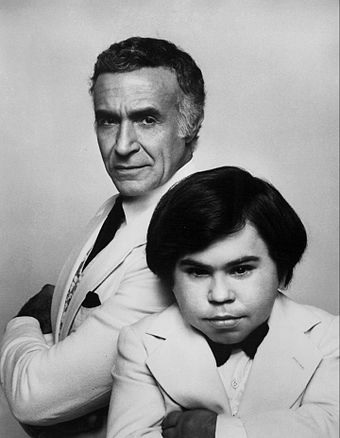
The interesting thing about this fantasy was that it established that Roarke is apparently not an angel.  When Roarke introduces Tattoo to Michael, Roarke says that Michael “is not like us.”  This leads to a funny moment in which Tattoo, upon hearing that Michael is the angel of death, announces that he some work to catch up on.  I always like it when Tattoo gets to do more than just wave at the airplane.  As for the rest of this fantasy, it wasn’t bad.  Carol Lynley did a good job as Catharine.  Gary Collins was a bit stiff but it kind of worked for his character.  Doug McClure was as goofy as ever.

The other fantasy features Jennilee Harrison as Jenny Ryan, a Vegas card dealer who wants to work on a Mississippi steamboat.  She gets her wish and promptly gets involved with helping a writer named Samuel Clemens (Stephen Shortridge, a.k.a. Beau on Welcome Back Kotter) and a kid named Huck Finn (Adam Rich) hide an escaped slave (Sam Scarber) from a dastardly gambler and slave hunter (Roddy McDowall).  Did I mention that Clemens is having trouble coming up with a plot for his new book?  Jenny inspires Mark Twain, helps Jim get to safety, and returns to the present with a pet frog.  Sure, why not?  This storyline was predictable, largely because I read Huckleberry Finn in high school.  However, Stephen Shortridge was, somewhat surprisingly given his work on Kotter, perfectly charming as Mark Twain and Roddy McDowall obviously enjoyed hamming up his villainy.  (To be honest, when I saw Roddy’s name in the opening credits, I was hoping he’d be returning as Satan.)

This was not a bad episode, especially compared to the previous season 6 episodes.  Both fantasies held me attention and apparently, the Angel of Death will leave you alone if he thinks you’re cute.  That’s good to know!

Retro Television Review: Getting Away From It All (dir by Lee Philips)


Welcome to Retro Television Reviews, a feature where we review some of our favorite and least favorite shows of the past!  On Sundays, I will be reviewing the made-for-television movies that used to be a primetime mainstay.  Today’s film is 1972’s Getting Away From It All!  It  can be viewed on YouTube.

For Fred Clark (Larry Hagman) and Mark Selby (Gary Collins), life is New York City just isn’t that much fun anymore.  The weather is terrible.  The traffic cannot be navigated.  The only people ruder than the cabbies are the doormen.  Fred and Mark have come up with the perfect plan.  They’ve decided to move to a small country town and purchase a house on a small island.  In fact, they’re going to buy the entire island!  It’s surprisingly cheap.  Fred and Mark don’t ever really stop to wonder why the island is available for so little money.  Seriously, if you’re buying an island, you should probably ask yourself those questions.

Mark’s wife, Alice (E.J. Peaker), is enthusiastic about the idea.  Less excited is Fred’s wife, Helen (Barbara Feldon).  Helen enjoys living in the city and having a nice job in an office building.  She gets along with her boss (played by Jim Backus, one of many veteran actors to show up in a small role in this film).  Perhaps hoping that Fred will change his mind once he’s confronted with the reality of actually living in the country, Helen finally gives in.

It does turn out that the island is not quite the paradise that Fred and Mark were expecting.  The only way to get out to the island is in a leaky rowboat.  The house is falling apart and, as Helen is disgusted to learn, it also doesn’t have indoor plumbing.  There’s no electricity either but fortunately, the local handyman is working on it.  His name is Herbie and he’s played by a very young and thin Randy Quaid.  If you’ve ever wanted to hear Randy Quaid speak with an exaggerated New England accent, this is the film for you.  There’s nothing convincing about Quaid’s accent but it still seems only fair, considering all of the Yankee actors who have butchered the Southern accent over the years.

Just when it looks like Fred and Mark have managed to make the Island livable, they get a disturbing letter.  As the new owners of the Island, they owe 20 years worth of back taxes.  As Fred puts it, the tax bill is more than either of them can afford.  If they can’t raise the money, the town will take back the Island.   Fred and Mark consider trying to get jobs but it turns out that neither one of them knows much about being fisherman.  They then decide to charm the town into nullifying the tax bill.  That turns out to be more difficult than either man imagines.

Getting Away From It All is a comedy that deals with a universal theme, the desire to escape from the harshness of everyday life and find a perfect place to which to escape.  That said, the film’s main reason for existing is a parade of comedic cameos.  Jim Backus, Vivian Vance, Joe E. Ross, Burgess Meredith, Paul Hartman, and J. Pat O’Malley all appear in small roles, appearing just long enough for 1972 viewers to say, “Hey, I recognize that person!”  The end result is a rather shallow film that has a few chuckle-worthy moments.  (Again, Randy Quaid pretending to be from Maine has to be worth something.)

In the end, for all of the film’s celebration of getting away from it all, it’s hard not to feel that Gary, Mark, Alice, and Helen will all end up back in Manhattan sooner than later.  Some people are just city folks.

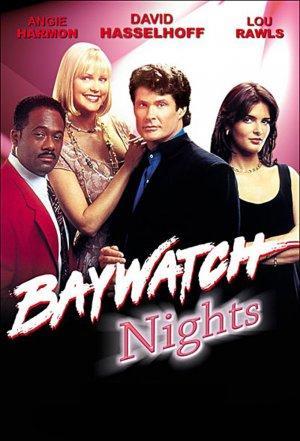
Late Night Retro Television Review: Baywatch Nights 1.21 “A Closer Look”


Welcome to Late Night Retro Television Reviews, a feature where we review some of our favorite and least favorite shows of the past!  On Tuesdays, I will be reviewing Baywatch Nights, a detective show that ran in Syndication from 1995 to 1997.  The entire show is currently streaming on You tube!

Mitch has yet another old friend who needs help!

Episode 1.21 “A Closer Look”

(Dir by Bernard L. Kowalski, originally aired on May 11th, 1996)

Another old friend of Mitch’s had a problem.

Seriously, how many old friends does Mitch have and why are all of them always getting involved in something dangerous?  And why is it always Mitch’s responsibility to help them out?  I mean, doesn’t Mitch ever just want to tell them to take care of their own problems?  Mitch isn’t Superman, after all.  He’s a middle-aged guy who is already struggling to balance his day job with his night job.  STAND UP FOR YOURSELF, MITCH!

Anyway, Dewey Morgan (Gary Collins, looking like Robert Redford in All Is Lost) is worried that his model wife, McKenna (Lisa Schad), has been replaced by an imposter.  As he explains it, she’s been different ever since she returned from a health spa.  She looks the same but there’s just all sorts of little differences.  It’s the type of things that only an intimate acquaintance — like a husband, for instance — would notice.

Mitch is skeptical.  He thinks that maybe Dewey is just upset because McKenna has recently left him and is now finding success as a model.  Still, Mitch decides to investigate because Dewey is an old friend.  It’s never really made clear how Mitch and Dewey became friends in the first place but Dewey does spend a lot of time in a wet suit and on a surf board.  So, I guess having a shared love of having a mid-life crisis on a beach is the bond that holds Mitch and Dewey together.

Personally, I think it would have been interesting if Mitch and Ryan had discovered that McKenna actually was McKenna and Dewey really was some sort of unbalanced stalker.  That would have been a nicely unexpected twist and it would also have forced Mitch to reconsider his loyalty to all of his old friends.  It would have given the show a chance to say something about the dangers of a beach bum having a mid-life crisis.  But that’s just not the Baywatch Nights way.  It turns out that the real McKenna is dead and the woman claiming to be Dewey’s wife is an imposter.

Usually, I enjoy melodramatic nonsense like this but this episode featured both a murder and an attempted murder and all of that violence felt somewhat out-of-place.  Baywatch Nights works best as goofy fun.  Having people actually die kind of takes away from the goofiness and it makes me wonder how Mitch is holding up mentally.  I mean, he just wanted to make some extra money as a private investigator.  Instead, he’s being regularly exposed to the worst that humanity has to offer.

The first season is nearly over and that’s good because, as this rambling review might indicate to the careful reader, I’m getting kind of bored with it.  The second season is a lot of fun because Mitch and Ryan spend 22 episodes dealing with aliens, vampires, and Vikings!  But, before we can get to all that, there’s one more first season episode to go.

We’ll deal with it next week.

Retro Television Reviews: Fantasy Island 3.10 “Class of 69/The Pug”


Welcome to Retro Television Reviews, a feature where we review some of our favorite and least favorite shows of the past!  On Tuesdays, I will be reviewing the original Fantasy Island, which ran on ABC from 1977 to 1986.  Almost entire show is currently streaming is on Youtube!

This week, boxing comes to Fantasy Island!

Episode 3.10 “Class of 69/The Pug”

(Dir by Earl Bellamy, originally aired on November 24th, 1979)

Once again, this episode opens with no banter between Mr. Roarke and Tattoo.  Instead, Tattoo announces the arrival of the plane and rings the bell and then he and Mr. Roarke head down to the docks to meet their guests.  This is the third episode in a row without any pre-guest banter and I have to admit that I’m really missing it.

As for this week’s guests, they’re an improvement on last week’s rather forgettable offering.

Joey Lee (Gary Collins) is a former heavyweight boxer who comes to the Island with his son, Mitch (K.C. Martel).  Joey thinks that he’s just been hired to serve as a sparring partner for the world champion, Jackson Malone (Fred Williamson).  Jackson has a title defense coming up, right on the Island.  What Joey doesn’t know is that Mitch’s fantasy is for his father to have a shot at the championship.  When Malone’s opponent has to drop out of the fight, Joey is named as a substitute.  Mitch is excited, until he finds out that Joey is being pressured to take a dive in the third round.  Will Joey throw the fight?  And, even if Joey doesn’t, how will Mitch react to seeing his father getting pounded in the face by the world champion?  Will Mitch learn that his love for his father is more important than his father’s championship?

This fantasy was a typical Rocky rip-off, right down to Fred Williamson doing a credible Apollo Creed impersonation.  The problem, of course, is that the middle-aged and mild-mannered Gary Collins was in no way credible as a heavyweight boxer.  The fact that the world champion was played by an actual athlete didn’t help matters.  (It’s true that Carl Weathers, like Williamson, was also a football player before he played Apollo but Sylvester Stallone himself had been an amateur boxer before he played Rocky so it was easier to buy the idea of their match going the distance.)  In the end, I liked the fact that Mitch realized that his father’s health was more important than being champion.  The fantasy had a nice ending, even if it’s difficult to buy the set-up.

The other fantasy featured Adrienne Barbeau as Brenda Richards.  When she first arrives on Fantasy Island, Tattoo comments on how obese Brenda is, even though she’s only a few pounds overweight.  (Adrienne Barbeau wears a very unconvincing fat suit.)  Mr. Roarke explains that Brenda was humiliated at her high school prom when her date, arrogant jock Lance (Tim Thomerson), tricked her into undressing in the gym before then bringing in the entire senior class in to laugh at her.  (Yikes!)  The high school reunion is being held on Fantasy Island and Brenda’s fantasy is to get revenge.  Roarke gives her a potion which allows her to be thin for 48 hours.  (In reality, Barbeau just ditches the fat suit.)

At the reunion, Brenda tricks Lance into taking off his wig.  The entire senior class discovers that Lance is totally bald and they laugh and laugh.  Everyone is impressed with Brenda’s revenge except for Brenda’s old high school friend, Bernie Drexel (Fred Grandy, taking a break from The Love Boat).  Brenda sees that she was just as cruel to Lance as he was to her back in high school so she makes a public apology and encourages everyone to be kind to one another.  Barbeau then puts the fat suit back on.  Bernie says that Brenda will always be the most beautiful woman that he knows.  Awwwww!

I actually liked this fantasy, largely because of the chemistry between Barbeau and Grandy.  Plus, Tim Thomerson made a great arrogant jock.  I know that some people will say that this episode featured too many jokes about Brenda’s weight (especially considering the fact that, even before drinking the potion, Brenda was hardly obese) but I appreciated the fact that it had an anti-bullying message.  And if her romance with Bernie inspires Brenda to eat healthy and start getting regular exercise, all the better!

At the end of the episode, Mr. Roarke tells Tattoo that beauty is in the eye of the beholder.  “To me,” Mr. Roarke says, “you are six feet two inches tall.”

Uhmmm….yeah, I don’t know how I feel about that ending.  It seems like the show, whether intentionally or not, is saying that Tattoo will be forever unloved because of his height.  Even without the pre-guest banter, Roarke is finding ways to passive-aggressively taunt his assistant.  That’s life on Fantasy Island.

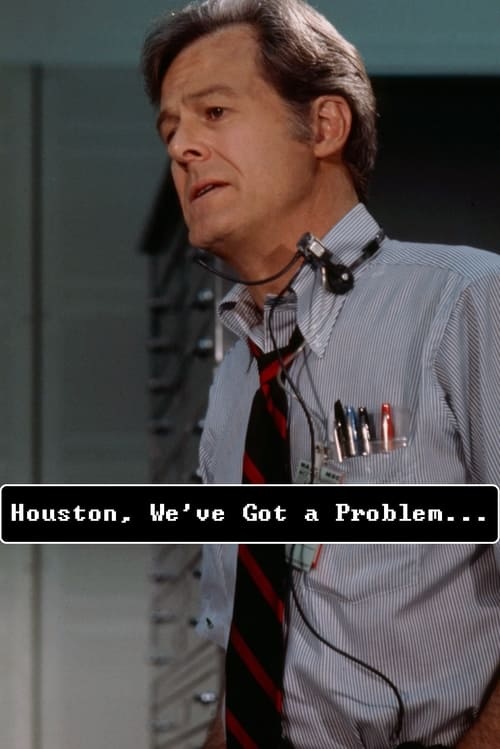
Retro Television Reviews: Houston, We’ve Got A Problem (dir by Lawrence Doheny)


Welcome to Retro Television Reviews, a feature where we review some of our favorite and least favorite shows of the past!  On Sundays, I will be reviewing the made-for-television movies that used to be a primetime mainstay.  Today’s film is 1974’s Houston, We’ve Got A Problem!  It  can be viewed on YouTube!

The year is 1970 and Apollo 13 is the latest manned NASA mission into space.  The head of the mission of Jim Lovell and the destination is the Moon.  Unfortunately, the American public has gotten so used to the idea of men going to the Moon that hardly anyone is paying attention to Apollo 13.  That changes when Lovell contacts mission control in Houston and utters those famous words, “Houston …. we’ve had a problem.”  An oxygen tank has exploded, crippling the spacecraft and leaving the three men in danger.  If Houston can’t figure out how to bring them home, Apollo 13 could turn into an orbiting tomb.

Yes, this film tells the story of the same crisis that Ron Howard recreated in Apollo 13.  The difference between Houston, We’ve Got A Problem and Apollo 13 (beyond the fact that one was a big budget Hollywood production and the other a low-budget made-for-TV movie), is that Apollo 13 largely focused on the men trapped in space while Houston, We’ve Got A Problem is totally Earthbound.  In fact, Jim Lovell does not even appear in the ’74 film, though his voice is heard.  (The film features the actual communications between the crew and Mission Control.)  Instead, the entire film follows the men on the ground as, under the leadership of Gene Kranz (Ed Nelson), they try to figure out how to bring the crew of Apollo 13 home.  Houston, We’ve Got A Problem is a far more low-key film than Apollo 13, one that features narration from Eli Wallach to give it an effective documentary feel but one that also lacks the moments of wit and emotion that distinguished Apollo 13.  

NASA cooperated with the making of the film and it works best when it focuses on the men brainstorming on how to solve the biggest crisis that the American space program had ever faced to that date.  The film is less effective when it tries to portray the effects of the men’s work on their home lives.  Sandra Dee is wasted as the wife who can’t understand why her engineer husband (reliably bland Gary Collins) can’t spend more time at home.  Clu Gulager plays the guy who fears he’s missing out on time with his son.  Robert Culp plays the man with a heart condition who places his hand over his chest whenever anything stressful happens.  Steve Franken has to choose between his religious obligations and his obligation to NASA.  The melodrama of those fictional moments are awkwardly mixed with the based-in-fact moments of everyone calmly and rationally discussing the best way to save the crew.  Jim Lovell, as a matter of fact, complained that Houston, We’ve Got A Problem did a disservice to the flight controllers by presenting them all as being hopelessly inept in their lives outside of mission control.  (Lovell was reportedly much happier with Apollo 13.)

Because it features the actual conversations between the crew and Mission Control, Houston, We’ve Got A Problem is interesting as a historical document but it never escapes the shadow of Ron Howard’s better-known film.

Retro Television Reviews: The Love Boat 2.7 “Ship of Ghouls”


Welcome to Retro Television Reviews, a feature where we review some of our favorite and least favorite shows of the past!  On Wednesdays, I will be reviewing the original Love Boat, which aired on ABC from 1977 to 1986!  The series can be streamed on Paramount Plus!

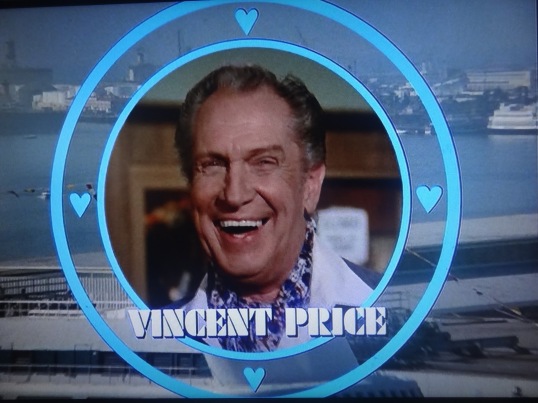
This week, Vincent Price comes aboard for a special Halloween episode!

This is actually, the second time that I’ve reviewed this episode.  I also watched and reviewed it back in 2021.  I enjoyed it the first time that I watched it and my opinion remained the same the second time I watched it.  Still, I’m glad that I rewatched the episode as opposed to trying to write a second review from memory.  There were a few details that I had forgotten.

Anyway, it’s time for…. SHIP OF GHOULS!

Episode 2.7 “Ship of Ghouls”

(Originally aired on October 28th, 1978, dir by Roger Duchowny)

It’s time for the annual Halloween cruise and Captain Stubing is super excited because he has hired The Amazing Alonzo (Vincent Price) to provide the cruise’s entertainment.  Alonzo is a master illusionist and hypnotist, who can trick people into seeing just about anything.  The episode really doesn’t explain just how exactly Alonzo is able to hypnotize people by just saying a few words to them but no matter.  This is The Love Boat and Vincent Price is …. well, he’s Vincent Price.  Vincent comes across like he’s having the time of his life in this episode and, as such, we accept that Alonzo can cause a bunch of people to think that Gopher and Doc have been turned into two donkeys.  We accept that he can fool the Captain into thinking that the ship’s pool has been turned into a giant ice cream sundae.  We even accept that he can make Isaac’s head appear in a glass of beer.  We accept all of it because it just feels wrong to get hung up on logic when Vincent Price is involved.

The Amazing Alonzo is having so much fun flirting with his elderly groupies and casting spells that his long-suffering fiancé, Ramona (Joan Blondell), dumps him and instead moves into the Captain’s quarters.  At first, Alonzo is jealous of the Captain but he soon comes to realize that the Captain is not romantically interested in Ramona and is just letting her stay in his quarters because she needs some place to stay.  Alonzo also discovers that he can no longer hypnotize people without Ramona’s support.  At the big Halloween party, Alonzo freezes time and apologizes to Ramona.  He also confesses to her that his real name is Wendell.  They walk out of the ship’s ballroom, hand-in-hand.  Yay!

Needless to say, Vincent Price was the highlight of this episode.  However, as was always the case with The Love Boat, there were other passengers on the cruise.

For instance, nine year-old Bobby Diller (Charlie Aikman) is a habitual liar and prankster.  His behavior may be bratty but that’s largely due to the fact that his parents (Gary Collins and Mary Ann Mobley) are getting back together after previously getting a divorce and he’s worried that they’re going to split up again.  Fortunately, Bobby’s lying comes in handy when he spots Karen (Barbara Anderson) preparing to throw herself overboard.   Bobby tells Karen that his mother committed suicide and that he’s never gotten over it.  Karen changes her mind about committing suicide.  Once Karen is safely back on deck, Bobby admits that he lied but then adds, “It’s the last lie I’ll ever tell!”

Why was Karen suicidal?  Karen was a model until a car accident left her with a scar on her face.  Karen is convinced that no one will ever find her to be beautiful again.  Of course, Gopher and Doc both find her to be beautiful and they spend the entire cruise hitting on her and arguing over which one of them has the right to dance with her and have dinner with her.  (As I’ve said in the past, The Love Boat really was a floating HR nightmare.)  Karen, unfortunately, thinks that they’re just doing this as a favor to Karen’s best friend, cruise director Julie.  Fortunately, Bobby’s lie convinces Karen that people can sincerely care about one another.  Also, Karen realizes that she’s too good for either Gopher or Doc.  Good for her!

This was a good episode.  Vincent Price was a delight as always and Barbara Anderson was sympathetic Karen.  All Halloween cruises should be as entertaining as The Love Boat‘s!

Retro Television Reviews: The Love Boat 1.25 “Pacific Princess Overtures / Gopher, the Rebel / Cabin Fever”


Welcome to Retro Television Reviews, a feature where we review some of our favorite and least favorite shows of the past!  On Wednesdays, I will be reviewing the original Love Boat, which aired on ABC from 1977 to 1986!  The series can be streamed on Paramount Plus!

The Love Boat

Today, we wrap up season one of The Love Boat!  All aboard!

Episode 1.25 “Pacific Princess Overtures / Gopher, the Rebel / Cabin Fever”

(Dir by Alan Baron, originally aired on May 20th, 1978)

As I sat down to watch this episode on Paramount Plus, I was once again confronted with that weird commercial featuring P!nk and Michael Phelps tossing a big red COVID germ at each other.  I’ve seen this commercial a few times.  It’s popular not only on Paramount Plus but also on Hulu and Peacock.  For a commercial that’s all about the terrors of COVID, I have to say that representing the risk by using a big rubber ball feels a bit …. well, counterproductive.  (Actually, perhaps silly would be a better way to describe it.)  To be honest, P!nk and Michael Phelps look like they’re almost having too much fun tossing COVID at each other.  Someday, someone will actually take a serious look at how and why the combined efforts of the media and the advertising industry struggled to convince people to take the vaccine and this commercial will hopefully be remembered.  Considering that it’s the elderly who are at the greatest risk when it comes to COVID, it’s interesting that almost all of the vaccination commercials that I’ve seen have been stylistically aimed at older millennials.  Michael Phelps saying that his depression puts him at a greater risk of COVID is not the sort of thing that’s going to convince an 80 year-old to get a booster.

Speaking of commercials, the first season finale of The Love Boat featured Antonio Fargas as an advertising exec named Lee Graham.  When we first see him, he’s saying goodbye to his wife as he boards the ship.  He tells her that he’ll miss her and that the only reason he’s going to be on the boat is because he’s working on ad campaign for the cruise company.  Of course, he’s lying.  He’s actually taking the cruise so that he can spend some time with his mistress, Andrea (Jonelle Allen).  Lee and Andrea are excited to finally have a few days where they can be with each other without feeling like they have to hide for everyone.  However, Lee soon discovers that his nosy neighbors (played by Kaye Bass and Elias Jacob) are also on the boat!  As a result, Lee doesn’t get a chance to cheat on his wife and, at the end of the cruise, he and Andrea realize that they don’t want to continue their adulterous ways.  Fortunately, it turns out that Lee’s wife already knew about the affair and is incredibly forgiving.  I’m not really sure why she’s so forgiving but hey, it was the 70s!  It’s not like The Love Boat is going to end with a divorce.  That’s more of a 90s thing.

While this is going, ruthless business tycoon Mr. Yamashiro (Pat Morita — yes, you read that correctly) is determined to convince Ruth Newman (Diane Baker) to sell him her late husband’s factory.  Yamashiro even orders his assistant, Ken Davis (Gary Collins), to trick Ruth by pretending to fall in love with her.  However, Ken really does fall in love with her and he loses his job as a result.  Fear not, though.  Ruth hires him and agrees to invest in a special, voice-activated word processor that he’s created.  Yamashiro is so impressed that he agrees to invest as well.  Yamashiro says that they can consider his investment to be a wedding present.  Ruth and Ken have only known each other for a few days but sure, why shouldn’t they get married?  I mean, it’s the 70s!  People get married about knowing each other for a weekend and then they forgive each other for cheating.  Love is all around, no need to waste it.  They’re all going to make it, after all.

However, none of those stories can compare to what happens to Gopher.  After starting the cruise in a bad mood because he feels that Captain Stubing doesn’t respect him,  Gopher falls for a young communist named Vanessa!  And Vanessa is played by Eve Plumb.  That’s right!  This episode features the original Jan Brady filling Gopher’s head with a bunch of Marxist nonsense!  Vanessa is traveling on the boat with her wealthy father (Don Porter) and she sure does resent all of the money that’s being spent on the cruise.  When she tells Gopher that he should stop taking orders from the Captain because, as “members of the Personhood,” no one has any right to order anyone else around, Gopher takes her words to heart and he ended up getting fired for insubordination!  Fortunately, it doesn’t take long  for both Vanessa and Gopher to see the errors of their ways and the Captain hires Gopher back, with the understanding that Gopher will never again bring a certain impractical economic theory.  It’s a bit like that episode where the Captain told Isaac that he was spending too much time learning about black history.  The Captain’s not going to let his purser go down the Marxist rabbit hole!

And so, the first season comes to a close.  This was a good episode with which to end the season.  Though his storyline was undeniably icky, Antonio Fargas proved himself to be a talented physical comedian as he tried to keep his neighbors from noticing his girlfriend.  The second story was a bit bland but Pat Morita transcended his stereotypical role.  And seriously, how can you not enjoy Eve Plumb radicalizing Gopher?

When The Love Boat began, the crew was unsure of how to react around Captain Stubing.  As the first season comes to a close, they’ve learned that Stubing will always have their back, as long as they don’t talk about Black History or Marxism.  What will the crew discover about their captain during season 2?  We’ll find out soon!

Retro Television Reviews: Quarantined (dir by Leo Penn)


Welcome to Retro Television Reviews, a feature where we review some of our favorite and least favorite shows of the past! On Sundays, I will be reviewing the made-for-television movies that used to be a primetime mainstay. Today’s film is 1970’s Quarantined! It can be viewed on YouTube!

The John C. Bedford Clinic sits atop a cliff overlooking the ocean.  Though it may be a small hospital, it’s also widely respected.  The clinic was started by John Bedford (John Dehner) and the majority of its employees are related to him.  His three sons — Larry (Gary Collins), Bud (Gordon Pinset), and Tom (Dan Ferrone) — are all doctors and they all work at the clinic.  Bud’s wife, Margaret (Susan Howard), is a psychologist and she also works at the clinic, encouraging the older patients not to give up hope in their twilight years.  John Bedford is a stern taskmaster and his youngest son, Tom, resents always having his father and his older brothers staring over his shoulder.  John and Larry explain that they are simply treating Tom the way that they would treat any new doctor.  Tom isn’t so sure.

When the Bedfords aren’t hanging out in the tasteful ranch house that sits next to the clinic, they’re checking on their patients.  As Quarantined opens, they’ve got quite a few to deal with.  The most famous is Ginny Pepper (Sharon Farrell), a film star who has come to the clinic because she’s been suffering from back pain.  Larry quickly diagnoses her as suffering from kidney failure and announces that she’s going to need to get an immediate transplant.  Ginny is not happy to hear that and spends most of her time trying to make both Larry and Nurse Nelson (Virginia Gregg) miserable.  Of course, it eventually turns out that Ginny’s not so bad.

Meanwhile, Margaret attempts to cheer up a dying old man named Mr. Berryman (Sam Jaffe) and an eccentric man named Wilbur Mott (Wally Cox) hangs out in the hospital hallway.  Martha (Terry Moore) and Lloyd Atkinson (Madison Arnold) are at the hospital to visit their son, Jimmy (Mitch Vogel).  Unfortunately, while in Jimmy’s hospital room, Lloyd suddenly collapses and subsequently dies.  John takes one look at Lloyd and announces that Lloyd might have Cholera and, as a result, no one can leave or enter the hospital until the test results come back.

In other words, the John C. Bedford Clinic is …. QUARANTINED!

If you’re thinking this sounds a little bit dull …. well, you’re not wrong.  Quarantined has a 73-minute running time and a large cast but it really does just feel like an episode of a not particularly interesting medical drama.  It wouldn’t surprise me to discover that this movie was actually meant to serve as a pilot for a show that would have followed day-to-day life at the clinic.  Each member of the Bedford family is given a hint of characterization, just enough to suggest what type of situations they would get involved in on a weekly basis.  Larry was the straight shooter who was dedicated to saving lives.  Bud was the well-meaning middle child while Margaret was the one who encouraged the men to talk about their feelings.  Tom was the idealistic but impulsive youngest child.  John was the wise patriarch.  They’re all kind of boring.

The same can be said of Quarantined as a movie.  As directed by Leo “Father of Sean” Penn, the movie promises a lot of drama but it never really delivers and there’s something rather annoying about how casually John announces that no one is allowed to leave the clinic.  He even calls the police and has them set up road blocks around the clinic.  On the one hand, John is doing the right thing.  No one wants a cholera epidemic.  On the other hand, everyone’s so quick to accept that idea of John being a benign dictator that …. well, one can only imagine what a pain in the ass the Bedfords would have been during the COVID era.

As far as I know, there was never a TV show about the Bedford family and their clinic on a cliff.  Personally, I’m okay with that.  

Retro Television Reviews: Fantasy Island 1.4 “Family Reunion/Voodoo”


Welcome to Retro Television Reviews, a feature where we review some of our favorite and least favorite shows of the past!  On Tuesdays, I will be reviewing the original Fantasy Island, which ran on ABC from 1977 to 1996.  The entire show is currently streaming on Tubi!

Smiles, everyone!  We have two very strange fantasies this week and a few memorable guest stars!

Episode 1.4 “Family Reunion/Voodoo”

(Directed by George McGowan, originally aired on February 18th, 1978)

Finally!  After four weeks of trying to figure out how exactly the island works, I finally watched an episode that explained what Tattoo’s actual job is.  Apparently, Tattoo is an accountant.  It’s his job to keep track of how much money the island has in its treasury and to order stuff for the resort.  It’s also his job to rent things for the fantasies.  This episode, he mentions that it’s not cheap to rent a bear.  Mr. Roarke gives him a slightly disapproving look but no matter.  Tattoo’s correct.  Bears are not cheap.

As for the fantasies, they’re both kind of strange in this episode.

The more peaceful of the fantasies involves Tony (Tom Fridley) and Ann (Kathy Kurtzman) and their desire for their parents, Harry (John Gavin) and Evelyne (Juliet Mills), to get back together.  The fantasy involves tricking Harry and Evelyne into returning to the summer camp where they first met and having them fall in love all over again.  (Yes, it’s The Parent Trap, all over again.)  Unfortunately, Harry and Evelyne are accompanied by their new significant others, Stuffy McBorington (David Hedison) and Slutty LaGolddigger (Mary Frann.)  Actually, I guess those weren’t really their names but they might as well have been.  Fortunately a sudden rain storm and a visit from the expensive bear convinces Harry and Evelyne to dump Stuffy and Slutty and give love another chance.  Yay!

Meanwhile, on the other side of the island, Mr. Roarke has recreated a Haitian rubber plantation!  Jane Howell (Lauren Tewes, who I’ve also been watching on The Love Boat) is an amnesiac who might be the daughter of the plantation’s owner.  She, her adoptive parents (Howard Duff and Marjorie Lord), and her fiancé (Gary Collins) spend the night at the plantation.  However, it turns out that they’re not alone.  Mr. Roarke has also brought over a voodoo priest (Ernie Hudson!) who is determined to drive Jane mad!  It’s a really weird story that ends with not one twist but two.  It’s also an effectively creepy story, which makes it all the stranger that it’s paired with a light-hearted Parent Trap homage.

To me, the most interesting thing about this episode is that so many of the guest stars were veterans of the horror (or at least, the supernatural) genre.  The Family Reunion storyline features Juliet Mills (Beyond The Door), David Hedison (The Fly), and John Gavin (Psycho).  (Interestingly enough, David Hedison played Felix Leiter in two James Bond films while Gavin would have played Bond in Diamonds are Forever if Sean Connery hadn’t agreed to return to the role.)  Meanwhile, Voodoo features Lauren Tewes (who appeared in Eyes of a Stranger and Twin Peaks: The Return) and Ernie Hudson (Ghostbusters).  It’s an interesting mix of actors and it’s fun to see them all wandering around the island at the same time.

I enjoyed this episode.  Family Reunion was agreeably silly while Voodoo was creepy and melodramatic.  Add to that, Ricardo Montalban seemed to be having a genuinely good time as the mysterious Mr. Roarke.  He made the island seem like a fun place to visit, even with the bears and the voodoo hijinks.

Next week, more fantasies!  And more smiles!

Lisa Reviews An Oscar Nominee: The Longest Day (dir by Ken Annakin, Andrew Marton, Bernhard Wicki, Gerd Oswald, and Darryl F. Zanuck)


As my sister has already pointed out, today is the 73rd anniversary of D-Day.  With that in mind, and as a part of my ongoing mission to see and review every single film ever nominated for best picture, I decided to watch the 1962 film, The Longest Day!

The Longest Day is a pain-staking and meticulous recreation of invasion of Normandy, much of it filmed on location.  It was reportedly something of a dream project for the head of the 20th Century Fox, Darryl F. Zanuck.  Zanuck set out to make both the ultimate tribute to the Allied forces and the greatest war movie ever.  Based on a best seller, The Longest Day has five credited screenwriters and three credited directors.  (Ken Annakin was credited with “British and French exteriors,” Andrew Marton did “American exteriors,” and the German scenes were credited to Bernhard Wicki.  Oddly, Gerd Oswald was not credited for his work on the parachuting scenes, even though those were some of the strongest scenes in the film.)  Even though he was not credited as either a screenwriter or a director, it is generally agreed that the film ultimately reflected the vision of Darryl F. Zanuck.  Zanuck not only rewrote the script but he also directed a few scenes as well.  The film had a budget of 7.75 million dollars, which was a huge amount in 1962.  (Until Steven Spielberg’s Schindler’s List, The Longest Day was the most expensive black-and-white film ever made.)  Not only did the film tell an epic story, but it also had an epic length.  Clocking in at 3 hours, The Longest Day was also one of the longest movies to ever be nominated for best picture.

The Longest Day also had an epic cast.  Zanuck assembled an all-star cast for his recreation of D-Day.  If you’re like me and you love watching old movies on TCM, you’ll see a lot of familiar faces go rushing by during the course of The Longest Day.  American generals were played by actors like Robert Mitchum, Robert Ryan, Henry Fonda, and John Wayne.  Peter Lawford, then the brother-in-law of the President of the United States, had a memorable role as the Scottish Lord Lovat, who marched through D-Day to the sounds of bagpipes.  When the Allied troops storm the beach, everyone from Roddy McDowall to Sal Mineo to Robert Wagner to singer Paul Anka can be seen dodging bullets.  Sean Connery pops up, speaking in his Scottish accent and providing comic relief.  When a group of paratroopers parachute into an occupied village, comedian Red Buttons ends up hanging from the steeple of a church.  When Richard Beymer (who is currently playing Ben Horne on Twin Peaks) gets separated from his squad, he stumbles across Richard Burton.  Among those representing the French are Arletty and Christian Marquand.  (Ironically, after World War II, Arletty was convicted of collaborating with the Germans and spent 18 months under house arrest.  Her crime was having a romantic relationship with a German soldier.  It is said that, in response to the charges, Arletty said, “My heart is French but my ass is international.”)  Meanwhile, among the Germans, one can find three future Bond villains: Gert Frobe, Curt Jurgens, and Walter Gotell.

It’s a big film and, to be honest, it’s too big.  It’s hard to keep track of everyone and, even though the battle scenes are probably about an intense as one could get away with in 1962 (though it’s nowhere near as effective as the famous opening of Saving Private Ryan, I still felt bad when Jeffrey Hunter and Eddie Albert were gunned down), their effectiveness is compromised by the film’s all-star approach.  Often times, the action threatens to come to a halt so that everyone can get their close-up.  Unfortunately, most of those famous faces don’t really get much of a chance to make an impression.  Even as the battle rages, you keep getting distracted by questions like, “Was that guy famous or was he just an extra?”

Among the big stars, most of them play to their personas.  John Wayne, for instance, may have been cast as General Benjamin Vandervoort but there’s never any doubt that he’s playing John Wayne.  When he tells his troops to “send them to Hell,” it’s not Vandervoort giving orders.  It’s John Wayne representing America.  Henry Fonda may be identified as being General Theodore Roosevelt II but, ultimately, you react to him because he’s Henry Fonda, a symbol of middle-American decency.  Neither Wayne nor Fonda gives a bad performance but you never forget that you’re watching Fonda and Wayne.

Throughout this huge film, there are bits and pieces that work so well that you wish the film had just concentrated on them as opposed to trying to tell every single story that occurred during D-Day.  I liked Robert Mitchum as a tough but caring general who, in the midst of battle, gives a speech that inspires his troops to keep fighting.  The scenes of Peter Lawford marching with a bagpiper at his side were nicely surreal.  Finally, there’s Richard Beymer, wandering around the French countryside and going through the entire day without firing his gun once.  Beymer gets the best line of the film when he says, “I wonder if we won.”  It’s such a modest line but it’s probably the most powerful line in the film.  I wish The Longest Day had more scenes like that.

The Longest Day was nominated for best picture of 1962 but it lost to an even longer film, Lawrence of Arabia.