October True Crime: The Chase (dir by Paul Wendkos)


When he died in 1988, Phillip Hutchinson was only 24 years old.

Born in Virginia, Phillip Hutchinson served in the U.S. Marines before he was discharged for desertion.  He went on to become a career criminal and a violent one at that.  By the time he was 24, he already had a long criminal record.  In Texas, he was convicted of aggravated assault and ended up with a life sentence.  He escaped from prison by stealing a truck.  (It was his third escape attempt.)  Fleeing Texas, he eventually ended up in Denver.  He is alleged to have robbed four banks in Denver before holding up the Rio Grande Operating Credit Union.  The 18 year-old teller was able to set off a silent alarm and Hutchinson ended up leading police on a chase through Denver.  Following Hutchinson in the air was a news helicopter.  At one point, Hutchinson crashed into an unmarked police car, killing Detective Bob Wallis.

After crashing his own car, Hutchinson continued to run on foot.  Eventually, he reached a trailer park.  He took John Laurienti as a hostage and forced the 73 year-old man to drive him past the police in his pick-up truck.  When the men in the news helicopter realized that the police didn’t realize that Hutchinson was in the truck, they dived down and blocked the truck from moving forward.  The cops, realizing their mistake, surrounded the truck and opened fire, killing Hutchinson while the cameraman in the helicopter continued to film.  John Laurienti escaped from the truck, uninjured.

Phillip Hutchinson really had no one but himself to be blame.  If he hadn’t robbed the credit union, he would have had the cops chasing him to begin with.  If he hadn’t rammed into the unmarked car and killed Bob Wallis, it’s possible that the police would have been more willing to negotiate before opening fire on him.  You can wonder what led to someone, by the age of 24, becoming a hardened criminal and that is something that should always be investigated.  In the end, actions do have consequences.

Phillip Hutchinson is one of those criminals who would probably be forgotten today if not for the fact that his death was not only captured on camera but also broadcast across the television airwaves.  Hutchinson has gone on to have a significant afterlife in various “documentaries.”  Remember World’s Wildest Police Videos?  (I’ve also read that the shoot-out is a popular video on various “forbidden” and “dark” websites but I’m not going to look to find out.)

1991’s The Chase was a made-for-television movie about Phillip Hutchinson and his final ride.  Casey Siemaszko plays Phillip Hutchinson as being a psycho redneck, which is probably not the far from the truth.  Siemaszko gives a good performance as Hutchinson but the majority of the film deals with the people who came into contact with Hutchinson on the final day of his life.  Ricki Lake plays the teller who set off the silent alarm.  Ben Johnson gives a moving performance as the old man who Hutchinson took hostage.  Barry Corbin plays Bob Wallis.  Megan Follows plays a drug addict who narrowly escapes Hutchinson.  Robert Beltran plays the man in the helicopter.  They all give good performances.  At the same time, for a film called The Chase, the Chase itself doesn’t actually start until we’re 70 minutes into the movie and it’s over pretty quickly.  If you’re watching this film for the action, you’ll probably be disappointed.

This film was written by Guerdon Trueblood, who also directed one of my favorite grindhouse films, The Candy Snatchers.  Trueblood’s script follows the standard disaster formula, in that there are a lot of subplots and filler leading up to the big event.  In other words, The Chase isn’t a film for everyone.  I’ll admit, though, that I teared up a little at the end.  Phillip Hutchinson may have been a violent criminal but his death brought a community together.
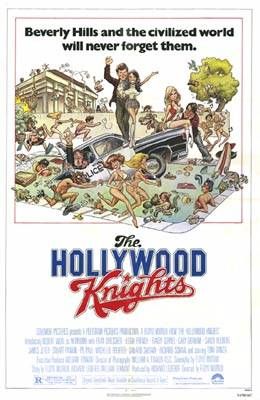
The Hollywood Knights (1980, directed by Floyd Mutrux)


Halloween Night, 1965.  While the high school holds a pep rally and the Beverly Hills Homeowners Association debate the best way to tackle the problem of juvenile delinquency, the Hollywood Knights hang out at Tubby’s Drive-In, their favorite burger joint.  The Hollywood Knights are a car club and a group of fun-loving rebels, determined to have a good time and to always humiliate Officers Clark (Sandy Helberg) and Bimbeau (Gailard Sartain).  In practice, this amounts to a lot of jokes about flatulence and Newcomb Turk (Robert Wuhl) mooning the cops every chance the he gets.  I’m hoping a stunt butt was used for the mooning shots.  If I had known watching Hollywood Knights would mean seeing Robert Wuhl’s bare ass a dozen times over 91 minutes, I wouldn’t have started the movie.

The humor is crude but the movie has a serious side, one that was cribbed from American Graffiti.  Duke (Tony Danza), a senior member of the club, is upset that his girlfriend (Michelle Pfeiffer, in her film debut) is working as a car hop.  He’s also sad that his buddy, Jimmy Shine (Gary Graham), is leaving in the morning for the Army.  Jimmy’s not worried about being sent to Vietnam because Americans are only being sent over there as advisors.  Hollywood Knights doesn’t end with a Graffiti-style epilogue but if it did, Jimmy would be the one who never came home.  The serious scenes work better than the comedy, due to the performances of Gary Graham, Michelle Pfeiffer, and Tony Danza.  I can’t believe I just said that either.  Danza, though he’s way too old to be playing a high school student, is actually really good in this movie.  Pfeiffer doesn’t get to do much but, from her first scene, it’s easy to see why she became a star.  The camera loves her and she brings her character to life, despite not having much screen time.

Unfortunately, the drama takes a back seat to a lot of repetitive humor.  The problem isn’t that the humor is crude.  One thing that has always been true is that, regardless of the year, teenage boy humor is the crudest humor imaginable.  Even back in prehistorical times, teenage boys were probably drawing dirty pictures on the walls of their caves.  The problem is that the humor is boring and Robert Wuhl is even more miscast as a high school student as Tony Danza was.  Fran Drescher plays a high school student with whom Turk tries to hook up.  Drescher, like Pfeiffer, comes across as being a future star in the making.  Robert Wuhl comes across as being the future creator of Arli$$.

The Hollywood Knights has a bittersweet ending, the type that says, “It’ll never be 1965 again.”  This movie made me happy that it will never be 1965 again.  1965 should have sued The Hollywood Knights for slander.  Hollywood Knights tried to mix the nostalgia of American Graffiti with the raunchiness of Animal House but it didn’t have the heart or creativity of either film.  At least some of the member of the cast went onto better things.


RIP, George Wendt: Guilty By Suspicion (1991, directed by Irwin Winkler)


George Wendt passed away in his sleep earlier today.  He was 76 years old.

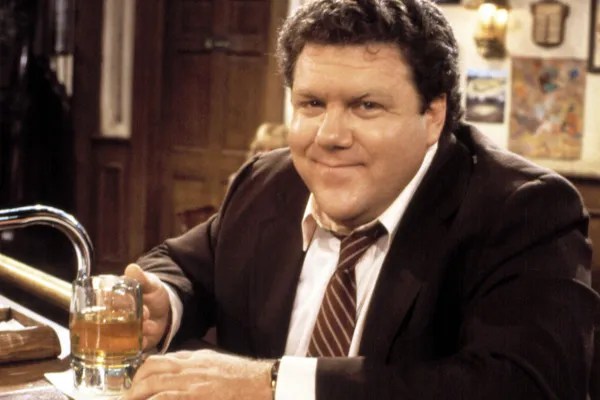
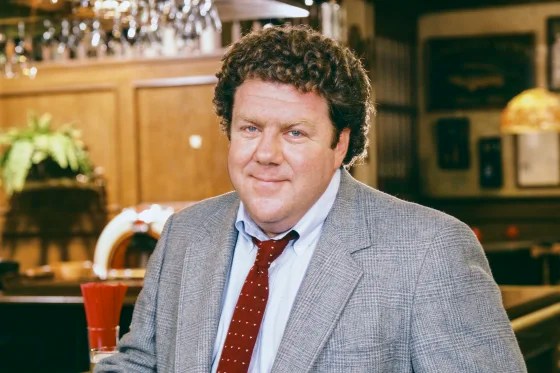
If you’re old enough to have watched Cheers when it originally aired or to have caught it in reruns, George Wendt will always be Norm Peterson, the beer-drinking accountant who spent all of his time at the show’s titular bar.  One of the show’s trademarks was that, whenever he entered the bar, everyone greeted him by shouting, “Norm!”  “How’s the world treating you?” a bartender would ask.  “It’s a dog eat world and I’m wearing milkbone underwear,” Norm once replied.

(One of my favorite joke from the series was when Norm went into a steakhouse and everyone inside was heard to yell, “Norm!” as the door closed behind him.)

If we’re going to be really honest, Norm was probably a high-functioning alcoholic and terrible husband.  (Wife Vera was often-mentioned but never seen.)  Wendt was so likable in the role and was so good at delivering those one-liners that it didn’t matter.  Watching the show, you never wondered why Norm was in the bar.  You were just glad he was.

George Wendt was also an accomplished stage actor.  (I saw him on stage when he was co-starring with Richard Thomas in 12 Angry Men.)  He appeared in several movies, usually playing the comedic sidekick or the hero’s best friend.  His film roles often didn’t ask him to do much other than be likable but one exception was his performance in 1991’s Guilty By Suspicion.

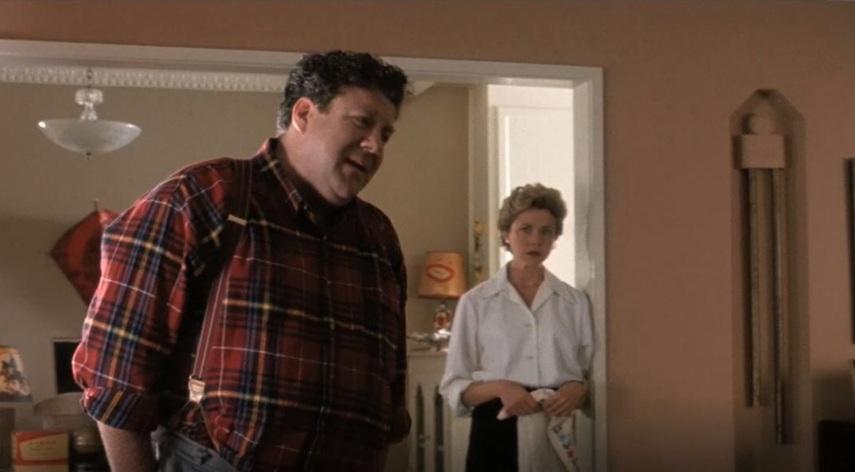
Guilty By Suspicion is a film about the McCarthy era, starring Robert De Niro as film director David Merrill, who is threatened with being blacklisted unless he names four of his colleagues as being communists.  George Wendt plays screenwriter Bunny Baxter, a childhood friend of David’s who attended a few communist rallies when he was younger, failed to mention it to the FBI, and who is now being investigated as a subversive.  The studio argues that David should name Baxter because his name is already out there.  When David refuses, he finds himself blacklisted and unable to make a living.  Bunny Baxter, meanwhile, is offered a similar deal.  Baxter can save his own career but only if he names David as a communist.  Unlike David, Baxter considers betraying his friend because it’s the only way that he can ever hope to work again.  “Your dead anyway,” Baxter says to David.

Guilty By Suspicion suffers from Irwin Winkler’s plodding direction but De Niro gives a good performance, as does Martin Scorsese who is cast as a director based on Joseph Losey.  The film is full of actors who would later become better-known, like Chris Cooper, Tom Sizemore, and Annette Bening.  Wendt, however, gives the film’s best performance as the screenwriter who is torn between protecting his career and maintaining his integrity.  The scene where he asks permission to name Merrill as a communist is powerful and it shows how good an actor George Wendt could be.  Bunny Baxter is asking his best friend to allow himself to be stabbed in the back.  Baxter is that desperate.  That he’s played by George Wendt, an actor who was everyone’s favorite likable barfly in the 80s, makes the scene all the more powerful.

George Wendt, RIP.  Thanks for the memories.

Guilty Pleasure No. 81: The Replacements (dir by Howard Deutch)


2000’s The Replacements finds America in crisis!

With the season already underway, football players are going on strike!  They want better contracts.  They want more money.  They want …. well, they want a lot of stuff.  Meanwhile, the fans just want to know who is going to make the playoffs.  There are only four games left in the season and the Washington Sentinels need to win three of them to make it into the playoffs.  The owner of the team (Jack Warden) recruits burned-out coach McGinty (Gene Hackman) to take over a team that will  be made up of replacement players.  McGinty says that he wants to pick his own players and he doesn’t want any interference from the team’s owner.  Anyone want to guess how long that’s going to last?

McGinty’s team is made up of the usual collection of quirky misfits who show up in movies like this.  Tight End Brian Murphy (David Denman, who later played Roy on The Office) is deaf.  One of the offensive linemen is a former SUMO wrestler.  Orlando Jones plays a receiver who has a day job at a grocery store.  The kicker (Rhys Ifan) is a Welsh soccer player.  (Okay, a footballer, I don’t care, call it whatever you want.)  Jon Favreau plays a berserk defender who is a member of the police force.  Leading them on the field is Shane Falco (Keanu Reeves), a quarterback with a confidence problem.  Cheering for them from the sidelines and falling in love with Shane is bar owner-turned-head-cheerleader Annabelle (Brooke Langton).  Backing up Annabelle is a cheer squad made up of former strippers, the better to distract the other teams.

It’s not often you see a film where the heroes cross a picket line but that’s what happens with The Replacements.  Then again, it’s not like the folks on strike are driving trucks or unloading freight for a living.  They’re multi-millionaires who want even more money and don’t even care about whether the team wins or loses.  When the replacement players actually start to win games and become beloved in the city, the striking players react by starting a bar brawl.  In the end, striking quarterback Eddie Martell (Brett Cullen) doesn’t even stick with his principles.  He crosses the picket line and creates a quarterback controversy, just in time for the last game of the season.

The Replacements is thoroughly predictable but also very likable.  The cast gels nicely, with Hackman especially standing out as the gruff but caring coach.  Keanu Reeves is not totally believable as a quarterback with a confidence problem.  You take one look at Reeves and you don’t believe he’s had an insecure day in his life.  But, as an actor, he’s so likable that it doesn’t matter.  The same goes for the entire cast, whether they’re on the playing field or singing I Will Survive in jail.  I don’t particularly care much about football but I did enjoy The Replacements.

Previous Guilty Pleasures

  1. Half-Baked
  2. Save The Last Dance
  3. Every Rose Has Its Thorns
  4. The Jeremy Kyle Show
  5. Invasion USA
  6. The Golden Child
  7. Final Destination 2
  8. Paparazzi
  9. The Principal
  10. The Substitute
  11. Terror In The Family
  12. Pandorum
  13. Lambada
  14. Fear
  15. Cocktail
  16. Keep Off The Grass
  17. Girls, Girls, Girls
  18. Class
  19. Tart
  20. King Kong vs. Godzilla
  21. Hawk the Slayer
  22. Battle Beyond the Stars
  23. Meridian
  24. Walk of Shame
  25. From Justin To Kelly
  26. Project Greenlight
  27. Sex Decoy: Love Stings
  28. Swimfan
  29. On the Line
  30. Wolfen
  31. Hail Caesar!
  32. It’s So Cold In The D
  33. In the Mix
  34. Healed By Grace
  35. Valley of the Dolls
  36. The Legend of Billie Jean
  37. Death Wish
  38. Shipping Wars
  39. Ghost Whisperer
  40. Parking Wars
  41. The Dead Are After Me
  42. Harper’s Island
  43. The Resurrection of Gavin Stone
  44. Paranormal State
  45. Utopia
  46. Bar Rescue
  47. The Powers of Matthew Star
  48. Spiker
  49. Heavenly Bodies
  50. Maid in Manhattan
  51. Rage and Honor
  52. Saved By The Bell 3. 21 “No Hope With Dope”
  53. Happy Gilmore
  54. Solarbabies
  55. The Dawn of Correction
  56. Once You Understand
  57. The Voyeurs 
  58. Robot Jox
  59. Teen Wolf
  60. The Running Man
  61. Double Dragon
  62. Backtrack
  63. Julie and Jack
  64. Karate Warrior
  65. Invaders From Mars
  66. Cloverfield
  67. Aerobicide 
  68. Blood Harvest
  69. Shocking Dark
  70. Face The Truth
  71. Submerged
  72. The Canyons
  73. Days of Thunder
  74. Van Helsing
  75. The Night Comes for Us
  76. Code of Silence
  77. Captain Ron
  78. Armageddon
  79. Kate’s Secret
  80. Point Break

Smokey And The Good Time Outlaws (1978, directed by Alexander Grasshoff)


After meeting a talent agent while spending a night in jail, aspiring singer J.D. (Jesse Turner) and his best friend, The Salt Flat Kid (Dennis Fimple), decide to leave Texas for Nashville.  J.D. wants to be a star and the Salt Flat Kid is a ventriloquist who doesn’t go anywhere without his dummy.

On the way to the Grand Old Opry, they pick up two women (Dianne Sherrill and Marcia Barkin), one of whom was engaged to marry the idiot nephew (Gailard Sartain) of Nashville’s Sheriff Leddy (Slim Pickens).  The sheriff sets out after the two men, planning on sending them back to Texas.

Despite the title and the subplot about the sheriff searching for his nephew’s former future wife, Smokey and the Good Time Outlaws doesn’t have much in common with Smokey and the Bandit.  J.D. has a Burt Reynolds-style mustache but he’s not a bandit.  He is just someone who wants to be a star and most of the movie is about him and the Salt Flat Kid tying to make their way onto the stage of the Grand Old Opry.  Helping them out is an eccentric woman named Marcie (who is played by Hope Summers, who older viewers will immediately recognize as having been Clara Edwards on The Andy Griffith Show).  When J.D. can’t get an audition, it occurs to him to just rush out on stage and start performing.

This film was a dream project for Jesse Turner, who was a real-life country musician.  He co-wrote and produced the film, as well as starred in it.  Jesse Turner wasn’t much of an actor but he’s surrounded by a good supporting cast.  Slim Pickens steals the show as a more menacing version of Buford T. Justice but he’s not in the film nearly enough.  Dennis Fimple is likable but appears to be too old to be known as “the Kid.”  You can tell this is a movie because no one is creeped out by the Kid’s ventriloquist dummy.

Smokey and the Good Time Outlaws was made for the Southern drive-in circuit and it is good-natured, even if the story is never that interesting.  Country music fans of a certain age will appreciate it.

(Not Quite A) Mardi Gras Film Review: The Big Easy (dir by Jim McBride)


One of the more surprising things about the 1987 film, The Big Easy, is that there aren’t any big Mardi Gras scenes.

Don’t get me wrong.  Several characters in the film mention Mardi Gras, usually in a semi-mocking way.  And there is a scene in a warehouse where Ellen Barkin and Ned Beatty walk past some fearsome looking floats which Beatty says are being stored there until Mardi Gras.  But that’s pretty much it.

Despite not having any huge Mardi Gras scenes, The Big Easy is essentially a cinematic love letter to New Orleans.  (In fact, one could probably argue that the film is so in love with New Orleans that, by not including any big Mardi Gras scenes, the film is saying, “There’s more to this wonderful city than just beads, boobs, and people throwing up i the streets!”)  While the film does have a plot — technically, it’s both a romantic comedy and a crime drama — the plot is ultimately less important than the city where it takes place.  The Big Easy was shot on location in New Orleans and the camera loves every single street, building, and bridge to be found in the Crescent City.  The Big Easy loves the distinctive music and dialect of New Orleans.  Even more importantly, The Big Easy loves the attitude of New Orleans.  This is perhaps one of the most laid back and nonjudgmental crime films to have ever been made.

Dennis Quaid plays Remy McSwain, a Cajun police detective with a nonstop grin and a cheerfully corrupt nature.  Today, we tend to associate Dennis Quaid with playing grim-faced authority figures and serving as the commercial spokesman for Esurance so it’s interesting to see him here, playing a lovable, charismatic, and undeniably sexy rogue.  Remy may be corrupt but he doesn’t mean any harm.  For the most part, he just takes the occasional bribe and sometimes looks the other way when it comes to certain crimes.  He used at least some of the money to put his younger brother through college so really, how can you hold his lack of ethics against him?

Ellen Barkin plays Anne Osborne, a state district attorney who has been sent to New Orleans to investigate allegations of police corruption.  Anne is serious about doing her job and exposing corruption.  At the same time, she also finds herself falling for Remy, even when she has to prosecute him on charges of taking bribes.  It doesn’t take them long to become lovers.

Together, they have great sex and solve crimes!

Actually, in this case, they really do.  The film opens with the murder of a local mafia boss.  (“We call them wise guys,” Remy says, at one point.)  When more drug dealers start to turn up dead, Remy’s boss, Captain Kellom (Ned Beatty), suspects that a gang war has broken out.  (Two of the drug dealers are found with their hearts missing from their bodies, which leads to a lot of talk about how one of the city’s biggest drug kingpins is into voodoo.  It’s not a New Orleans films without a little voodoo.)  Remy, however, has reason to believe that the murderers could be cops!

As I said before, the film’s plot is less important than the city where it takes place and the people who live in that city.  Director Jim McBride and screenwriter Daniel Petrie, Jr. do a good enough job with the crime plot but it’s obvious that they’re most interested in taking Remy and Anne and surrounding them with a host of eccentric, identifiable New Orleans characters.  As a result, the film is full of memorable performances from character performers like Ned Beatty, John Goodman, Lisa Jane Persky, and Grace Zabriskie.  Even Jim Garrison, the former New Orleans district attorney whose attempt to frame an innocent man for the murder of John F. Kennedy inspired Oliver Stone’s JFK, makes an appearance as himself.

Even without any big Mardi Gras scenes, The Big Easy is an entertainingly laid back tribute to New Orleans.

Shattered Politics #52: Blaze (dir by Ron Shelton)


Blaze_imp

Oh those crazy Southern politicians!

As I’ve mentioned in a few other reviews, filmmakers have always loved to make movies about the crazy demagogues that we have historically tended to elect down here in the South.  Sometimes, those movies are serious and thought-provoking, like All The King’s Men.  And sometimes, like in Hold That Co-Ed, a film will attempt to play up the inherent humor in rabble rousing.  And then you’ve got films like Ada and Hurry Sundown, which are so melodramatic that those of us down South just have to shake our heads in amazement that people up North actually believe this stuff.

The 1989 film Blaze (which is currently making the rounds on cable) is a part of this cinematic tradition of films about flamboyant Southern politicians.  It’s part comedy and part melodrama and, perhaps not surprisingly, it takes place in 1950s Louisiana.

(Why isn’t that surprising? Listen, my family used to live in Louisiana.  I still visit Louisiana on a fairly regularly basis.  Louisiana is crazy.  That’s one reason why I love it.)

Blaze is based on the true story of Gov. Earl K. Long (played here by Paul Newman).  The younger brother of former Governor Huey P. Long (who himself served as the basis for the character of Willie Stark in All The King’s Men), Earl served as governor for three non-consecutive terms.  He was a flamboyant populist, in the style of his older brother, the type who campaigned as one of the “common” people and who was either extremely corrupt or extremely progressive, depending on which historian you happen to be reading.

In Blaze, Earl is nearing the end of his third term.  Because the state’s constitution does not allow a governor to succeed himself, Earl is currently campaigning for lieutenant governor, with the plan being that one of Earl’s allies will be elected governor and will then resign so that Earl can succeed him.  While this is traditionally the sort of thing that voters in Louisiana would love, Earl is struggling because some voters are angry over his support for the civil rights movement.

Earl is also struggling because he’s just met Blaze Starr (Lolita Davidovich), a much younger stripper from West Virginia.  For Earl, it’s love at first sight and soon, Blaze feels the same way.  Soon, she and Earl are going across the state together.  However, after Earl’s opponents arrange for him to be sent to a mental asylum, Blaze is forced to consider that she might be too big of a political liability to remain with the man she loves.

If that all sounds incredibly romanticized — well, it is.  After I watched Blaze, I did a little bit research on Earl and Blaze.  To say the film is fictionalized would be an understatement.  (Though, interestingly enough, Earl actually was sent to a mental asylum while serving as governor.)  But is that really a surprise?  Would audiences rather watch a movie about a corrupt, old racist who regularly cheated on his wife or would they rather watch a romanticized love story with hissable villains and moments of crowd-pleasing comedy?

As for the film itself, it’s okay.  It moves a bit too slowly for its own good and it’s never quite as enthralling as you might hope it would be, but both Paul Newman and Lolita Davidovich are well-cast and have a likable chemistry.  I related to the film’s version of Blaze Starr, mostly because we’re both redheads with big boobs who have a natural distrust of authority figures.  If you’re into Southern politics and you’re not obsessed with historical accuracy, you might enjoy Blaze.

http://www.youtube.com/watch?v=dyK-cD5ffPo