Music Video of the Day: Frankenstein by Mani Blu (2018, dir by Bryce Poodleven)


I know, I know.

This song isn’t really about the Frankenstein that we all know and love, the one who reanimated the dead and who declared himself to be God.

Oh well, no matter!

It still feels appropriate for October.

Enjoy!

Book Review: Frankenstein: The First Two Hundred Years by Christopher Frayling


If you’re a fan of horror and more specifically the several different versions — both literary and cinematic — of Frankenstein’s Monster, Frankenstein: The First Two Hundred Years is a book that you simply must own.

It’s really two books in one.  The first half of the book deals with the original creation of Frankenstein.  It goes into a detail about not only the famous night and game that led to Mary Shelley writing Frankenstein but it also details everything that not only influenced Shelley’s imagination but which led to the world becoming fascinated by her creation.  How you react to this section of the book will largely depend on how interested you are in history.  Me, I’m an unapologetic history nerd so I loved it.

The second part of the book is a visual history of the Monster through the years, featuring everything from his many film appearances to his use in advertisements and political cartoons to his appearances in various comic books.  It’s not just a collection of pictures, though.  It’s also a testament to the power of Mary Shelley’s creation and how the Monster has come to be a universal figure, one who has been adopted by every culture and ideology.

Christopher Frayling is a witty and engaging writer, which helps to get through some of the denser sections of the first half of the book.  His love for the Monster comes through every page, which makes Frankenstein: The First Two Hundred Years a perfect celebration of the world’s most famous reanimated body.

Halloween Havoc!: FRANKENSTEIN (Universal 1931)


gary loggins's avatarcracked rear viewer

Two hundred years ago, Mary Wollstonecraft Shelley unleashed her novel FRANKENSTEIN upon an unsuspecting world. The ghastly story of a “Modern Prometheus” who dared to play God and his unholy creation shocked readers in 1818, and over the past two centuries has been adapted into stage plays, radio dramas, television programs, comic books, and the movies, most notably James Whale’s seminal 1931 FRANKENSTEIN, featuring not only a star-making  performance by Boris Karloff as the Creature, but ahead of its time filmmaking from Whale.

Director James Whale and his star

James Whale had directed only two films before FRANKENSTEIN (JOURNEY’S END and WATERLOO BRIDGE), but the former stage director certainly adapted quickly to the new medium of talking pictures. The story had been made three times for the silent screen, but the new sound technology adds so much to the overall eeriness of the film’s atmosphere. Whale was obviously influenced by…

View original post 580 more words

4 Shots From 4 Films: Special James Whale Edition


4 Shots From 4 Films is just what it says it is, 4 shots from 4 of our favorite films. As opposed to the reviews and recaps that we usually post, 4 Shots From 4 Films is all about letting the visuals do the talking.

This October, I am going to be using our 4 Shots From 4 Films feature to pay tribute to some of my favorite horror directors, in alphabetical order!  That’s right, we’re going from Argento to Zombie in one month!

Today’s director: James Whale!

4 Shots From 4 Films

Frankenstein (1931, dir by James Whale)

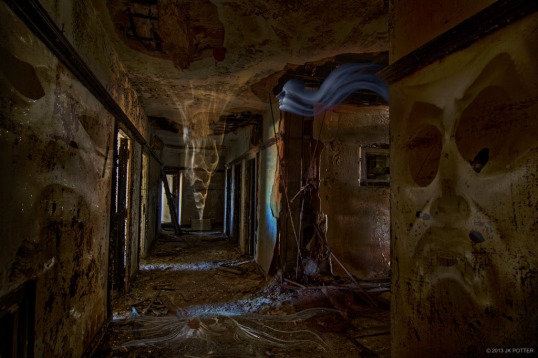
The Old Dark House (1932, dir by James Whale)

The Invisible Man (1933, dir by James Whale)

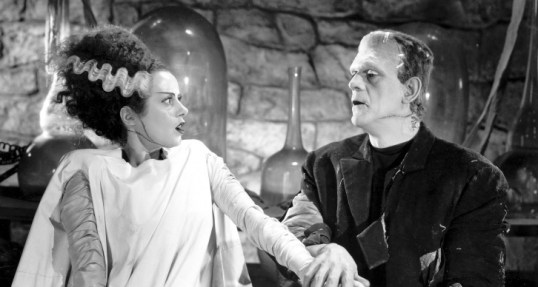
Bride of Frankenstein (1935, dir by James Whale)

Horror Scenes That I Love: The Monster Lives in Frankenstein


Today’s horror scene that I love comes from the 1931 Universal classic, Frankenstein!

Though it’s been parodied to death and often used out of context (for example, a few years ago, it was used in a freaking car commercial), the “It’s Alive!” scene from Frankenstein is still a classic piece of horror history.  Colin Clive is often unfairly criticized for going overboard in this scene but let’s be honest here: if you ever reanimated a corpse, you’d probably get pretty damn excited about it.

(After watching the scene, be sure to check out my review of this classic film by clicking here!)

(And if you want to see an alternative take on the creation of Frankenstein’s Monster, check out the 1910 silent version by clicking here!)

Horror Scenes That I Love: Thomas Edison’s Production of Frankenstein


Today’s horror scene that I love is, much like The Haunted Castle and The Monster, less a scene and more an entire movie.

In 1910, Thomas Edison produced what is thought to be the first ever film version of Mary Shelley’s Frankenstein!  Clocking in at 12 minutes and 41 seconds, this film was directed by J. Searle Dawley and stars Charles Ogle as the monster.

Admittedly, the surviving prints of this 107 year-old movie are not in the greatest condition.  But I still think it’s effectively surreal and, in its way, quite creepy.  While it always takes a while for modern audiences to get used to the more theatrical acting styles of the silent films, Charles Ogle still makes for a very memorable monster.  I especially enjoy the tinted scenes where the monster comes to life.  In the video below, it start around the 2:18 mark and it’s truly a scene that I love!

Enjoy this piece of film history!

10 Horror Films That Should Have Been Nominated For Best Picture


Horror films!

Audiences love them but the Academy has never quite felt the same way.  True, there have been a few horror films nominated.  The Exorcist was a major contender.  Jaws was nominated.  So was The Sixth Sense.  Silence of the Lambs won.

But, for the most part, horror films have struggled to get Academy recognition.  While the Academy has recently shown a willingness to honor science fiction, the horror genre has yet to benefit from the decision to increase the number of best picture nominees.

Because I love horror and I love movies and I love lists, here are ten horror films that I think deserved a best picture nomination:

  1. Frankenstein (1931)

One of the most popular and influential horror films of all time, Frankenstein was sadly ignored by the Academy.  It’s certainly better remembered than the film that won best picture of 1931, Cimarron.

Psycho

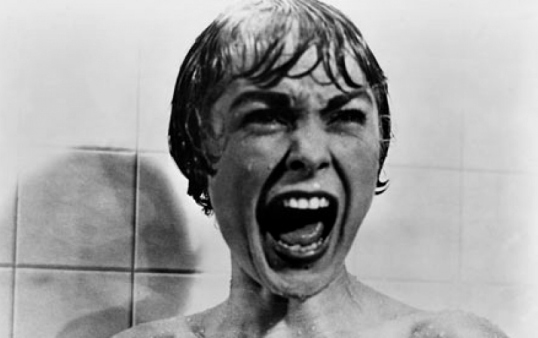
2. Psycho (1960)

Psycho may have received nominations for best director, supporting actress, cinematography, and art design but the film that made people afraid to take showers did not receive a nomination for best picture.  The winner that year was a legitimate classic, The Apartment.  But it’s hard not to feel that Psycho should have, at the very least, received a nominations over the other 4 films nominated.

429px-Night_of_the_Living_Dead_affiche

3. Night of the Living Dead (1968)

George Romero’s zombie classic may have set the standard for zombie movies to come but it was not honored the Academy.  The Academy was more comfortable with Oliver!

TheTexasChainSawMassacre-poster

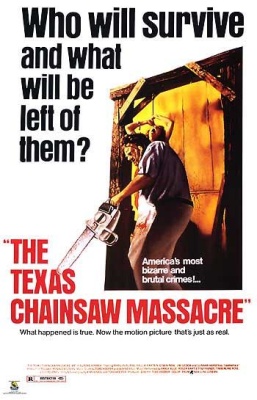
4. The Texas Chainsaw Massacre (1974)

1974 was a very good year for the movies and certainly, I would not argue that The Texas Chainsaw Massacre deserved a nomination over The Godfather Part II, The Conversation, or Chinatown.  But over The Towering Inferno?  That’s another story.

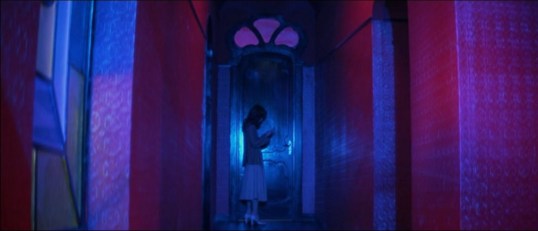
5. Suspiria (1977)

Oscar nominee Dario Argento?  In a perfect world, yes.

HalloweenIntro

6) Halloween (1978)

The night he came home … to Oscars!  If nothing else, John Carpenter’s score definitely deserved to win.

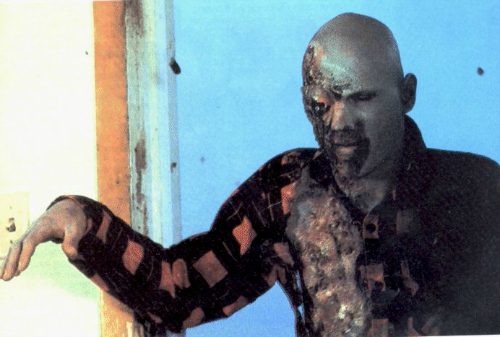
dawnofthedeadzombie

7) Dawn of the Dead (1979)

Few sequels have been nominated for best picture.  Dawn of the Dead definitely should have been one of them.  Who wouldn’t want to see, at the very least, Tom Savini’s speech as he accepted his special award for best makeup?

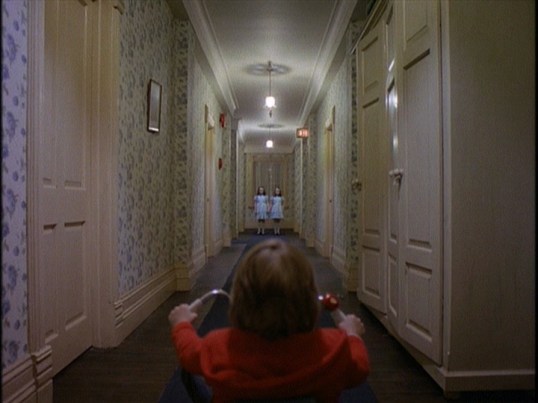
8) The Shining (1980)

Stanley Kubrick’s film may be recognized as a classic now but the reviews, when it was first released, were mixed.  So, I guess we shouldn’t be surprised that it wasn’t given any recognition by the Academy.  It’s a shame because I’ve watched The Shining a few dozen times and it still scares the Hell out of me.

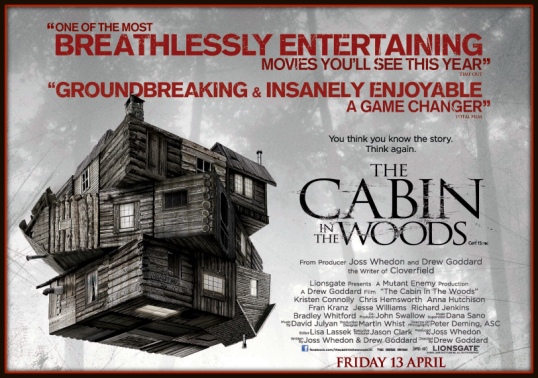
CabinInTheWoods

9) The Cabin In The Woods (2012)

One of the best films of the new century, this joyful tribute to the horror genre was sadly overlooked by the Academy in 2012.

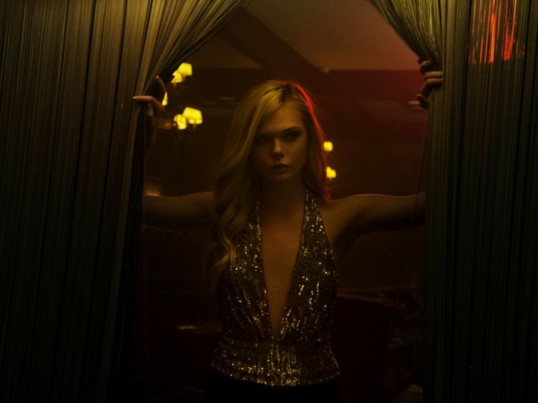
the-neon-demon-elle-fanning-900x0-c-default

10) The Neon Demon (2016)

Is Nicholas Winding Refn’s The Neon Demon truly a horror movie?  It’s close enough.  Though the film opened to mixed reviews, it’ll be recognized as a classic in another ten years.


Halloween TV Havoc!: Lon Chaney Jr in FRANKENSTEIN (Tales of Tomorrow 1952)


gary loggins's avatarcracked rear viewer

lcj

Early TV science fiction was dominated by kiddie programming like CAPTAIN VIDEO and TOM CORBETT, SPACE CADET. In 1951, a more adult oriented fantasy series called TALES OF TOMORROW made it’s debut on ABC. The live broadcast dramatized works by prominent writers like Arthur C. Clarke, Theodore Sturgeon, Jules Verne, and H.G. Wells. Big name stars such as Boris Karloff, Leslie Neilson, and Rod Steiger headlined many of the episodes. Lon Chaney Jr. starred in a half-hour adaptation of Mary Shelley’s FRANKENSTEIN, with John Newland (later host and director of ONE STEP BEYOND) as the scientist who creates a monster. It’s said Chaney was *ahem* a bit under the weather during this live performance (in other words, drunk as a skunk!).  I’ll let you be the judge. The quality of this kinescope-to-video isn’t great, but I hope you’ll enjoy watching Lon Chaney Jr. as the monster of FRANKENSTEIN!

View original post

Horror Film Review: The Bride of Frankenstein (dir by James Whale)


brideoffrankposter

1935‘s The Bride of Frankenstein is usually described as being a sequel to Frankenstein, but I think it would be better to call it a continuation.  In much the same way that all modern YA adaptations seem to be split into two parts, Universal split Mary Shelley’s Frankenstein into two separate films.  The bare basics of The Bride of Frankenstein‘s plot — the monster learns to talk and demands that his creator build him a mate — can all be found in the original novel.

(Of course, in the original novel, the monster somehow learns how to speaks like an Oxford grad and Dr. Frankenstein destroys the female monster before bringing her to life.  The monster responds by killing Elizabeth.  Seriously, Frankenstein is a dark book.)

Bride of Frankenstein features one of my favorite openings of all time.  Lord Byron (Gavin Gordon) and Percy Bysshe Shelley (Douglas Walton) are praising Mary Shelley (Elsa Lanchester) and the story that she’s told about how a dedicated scientist played God and created life.  Mary informs them that she’s not finished and then proceeds to tell them the rest of the story.  It’s a great opening because it lets us know that the rest of what we’re seeing is taking place directly inside of Mary’s mind.  It frees the film from the constraints of realism and allows director James Whale to fully indulge his every whim, no matter how bizarre.  When you’re inside someone else’s imagination, anything can happen and that’s certainly the feeling that you get as you watch The Bride of Frankenstein.

The Bride of Frankenstein opens with that burning windmill and a wounded Henry Frankenstein (Colin Clive) being carried back to his wife, Elizabeth (Valerie Hobson, replacing Mae Clarke).  Gone is the original film’s coda, in which Elizabeth announces that she’s pregnant.  And why shouldn’t it be gone?  It felt awkward in the first movie and, like any good writer, Mary Shelley is fixing her story as she goes along.

While Henry is recovering, he is approached by a former mentor, Dr. Pretorious (Ernest Thesiger).  Dr. Pretorious is undoubtedly an eccentric and definitely a little bit crazy but he believes in Frankenstein’s work.  In fact, Dr. Pretorious has even created life on his own!  He’s created a bunch of tiny people that he keeps in several glass jars.  They’re impressive but, sadly, they’ll never conquer the world.  Pretorious wants Frankenstein to, once again, work with him to create life.  As Pretorious explains it, it’s time to usher in a new age of “God and monsters!”

(Interestingly enough, one of Pretorious’s henchmen is played by Dwight Frye, who previously played Frankenstein’s henchman, Fritz, in the first film.  Frye dies in both films.  Reportedly, Universal bestowed upon him the nickname, “The Man of a Thousand Deaths.”  It can perhaps be argued that Dwight Frye was both the Steve Buscemi and the Giovanni Lombardo Radice of Universal horror.)

Meanwhile, the monster (Boris Karloff, credited with just his last name because, just four years after Frankenstein and the Mummy, he was already an icon) has survived the burning windmill.  He’s lonely, he’s afraid, and he actually kills more people in The Bride of Frankenstein than he did in Frankenstein.  And yet, he’s still the film’s most sympathetic character.  With everyone constantly trying to kill him, you can understand why the monster is quick to attack every human being that he sees.  He’s almost like a dog who, after years of abuse, automatically growls and bears his teeth at anyone that he sees.

And yet, the monster does eventually find a friend.  A blind hermit (O.P. Heggie) invites the monster into his own home.  (Of course, the hermit does not know who the monster is.  He just assumes that monster is a normal man who does not know how to speak.)  As time passes, the hermit teaches the monster how to say a few words and also tells the monster that there is nothing worse than being lonely.  The monster learns that “Friend good.”  The monster even learns how to smoke a cigar and Heggie and Karloff play these roles with such warmth (Bride of Frankenstein is not only the film where the Monster learns to talk, it’s also the one where he learns to smile) that you really start to dread the inevitable scene where everything goes wrong.

And that scene does arrive.  Two hunters stop by the hermit’s shack and immediately attack the Monster.  The Monster flees.  The shack burns down.  The hermit is led away from his only friend, apparently destined to be lonely once again.

Eventually, of course, the Monster does get his bride.  The Bride is such an iconic character that it’s easy to forget that she only appears in the final ten minutes of the film.  Elsa Lanchester plays both Mary and the Bride.  She screams when she sees the Monster.  “We belong dead,” the Monster replies and my heart breaks a little every time.

So, which is better?  Frankenstein or The Bride of Frankenstein?  I don’t think it’s necessary to choose one or the other.  To use a metaphor that might be appreciated by Henry and Dr. Petorious, Frankenstein is the brain while The Bride of Frankenstein is the heart.  They’re two good films that, when watched together, form one great film.