Film Review: Romeo & Juliet (dir by Simon Godwin)


It’s a shame, really.

RomeoJuliet, which as you can probably guess is a cinematic adaptation of Shakespeare’s classic play about the doomed lovers and the warring families, is one of the best films that I’ve seen this year.  Under normal circumstances, I would probably have it listed as the 2nd best film of the year so far, right underneath The Father.  Unfortunately, RomeoJuliet did not receive a theatrical release.  Instead, in the United States, it was aired on PBS.  Though it was submitted for Emmy consideration, it was unforgivably snubbed when the nominations were announced earlier today.

And that’s a shame because this film adaptation of RomeoJuliet is one of the best that I’ve seen, one that celebrates the story’s theatrical origins while also working as a wonderful display of cinematic artistry.

The production was filmed over 17 days at London’s Royal National Theater.  Because it was filmed at the height of the Coronavirus pandemic, there’s no audience.  Instead, the film opens with a small company of actors, all dressed in modern clothing, walking through the theater.  Director Simon Godwin emphasizes the emptiness of the theater and the almost eerie silence as the actors take their seats around a table and start to recite their lines.  We immediately recognize some members of the cast.  Jessie Buckley plays Juliet while Josh O’Connor plays the role of Romeo.  Adrian Lester is cast as the Prince while Tasmin Grieg plays Lady Capulet.  As the actors recite their lines, they stand up and start to move around the theater and, before our eyes, they transform from being actors to being the characters from Shakespeare’s play.  Suddenly, we’re no longer watching Jessie Buckley and Josh O’Connor.  Instead, we’re watching Romeo Montague and Juliet Capulet.

As the action moves to the stage, Simon Godwin continues to emphasize the eerie emptiness of the theater and the desolate look of the play’s ornate but still rather simple sets.  Even with the presence of the actors, the streets of Verona still seem as deserted as the streets of London and every other major city were during the worst days of the pandemic.  Watching the story unfold, it’s hard not to feel that Romeo and Juliet aren’t just rebelling against their warring families but they’re also rebelling against the sense of hopelessness that afflicted so many people in 2020.  Romeo and Juliet’s refusal to surrender their love takes on an extra poignancy when filmed against the backdrop of the pandemic.  At a time when many people were saying that civilization was collapsing and the world was on the verge of ending, Romeo and Juliet refuse to surrender their love.  If their world is going to end, it’s going to end on their terms.

As opposed to other cinematic adaptations of Shakespeare’s plays, this version of Romeo and Juliet does not attempt to hide its theatrical origins.  Instead, it embraces them, right down to the obviously fake moon that is lowered from the rafters whenever a scene takes place at night.  And yet, the actors give such good performances and Simon Godwin directs with such confidence and skill that the viewer still gets wrapped up in the story.  Like all good works of theater, Romeo & Juliet succeeded in convincing the viewer of two contradictory things, that they’re both watching a production in a London theater and that they’re watching the Capulets and the Montagues as they walk through the deserted streets of Verona.  This production of Romeo & Juliet is one that celebrate both the power of the stage and the power of cinema.  Perhaps most importantly, it celebrates the power of Shakespeare’s classic tale, with the mix of the actor’s modern costuming and Shakespeare’s Elizabethan language reminding us that great art is universal and timeless.

Jessie Buckley and Josh O’Connor both give compelling performances as the film’s doomed lovers, with Buckley bringing a good deal of inner strength to the role of Juliet while O’Connor wisely underplays the scenes that would tempt a lesser Romeo to go overboard.  As opposed to what we often see in lesser productions of this play, Buckley’s Juliet is never foolishly naïve and O’Connor’s Romeo never surrenders to shrill self-pity.  Instead, they’re two lovers who know what they’re getting into but who are still willing to take the risk, even at the most bleak of times.  When Buckley and O’Connor first show up in the film, walking through that empty theater, they look like themselves, two talented performers in their early 30s.  But, as they perform their roles, they transform before our eyes into Romeo and Juliet and it’s thrilling to watch.

One has to applaud the National Theatre for filming this production.  One also has to applaud PBS for airing it in the States.  But still, how I wish Romeo & Juliet had been given a theatrical release or, at the very least, a Netflix or Prime release!  This is a production that I wish more people had seen, a great work of theater, film, and art.

Romeo-and-Juliet-First-look-26.01.21-1-copy-1618268389

Here’s The Trailer for Memoria!


Tilda Swinton has several films coming out this year. Here’s the trailer for one of them!

In Memoria, Swinton plays a Scottish woman who has some strange sensory experiences while in the jungles of Colombia. The trailer does a very good job of keeping things vague. The title, itself, refers to memory so I’m going to guess that …. well, I’m not going to guess anything. It’s an intriguing trailer and I look forward to watching the film and discovering its secrets for myself.

Memoria will be premiering the Cannes Film Festival on the 15th.

Here’s The Trailer For Val!


This is one documentary that I’m truly looking forward to seeing. Val Kilmer is an intriguing figure, about who much has been written. His talent is legendary. So is his reputation for being a bit …. well, I guess eccentric would be a good way to put it.

I’m looking forward to hearing Val’s side of the story.

Here’s the trailer!

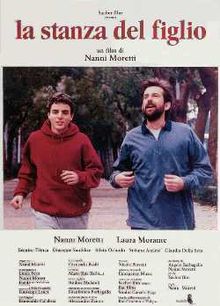
Lisa Reviews A Palme d’Or Winner: The Son’s Room (dir by Nanni Moretti)


With the 2021 Cannes Film Festival underway in France, I thought this would be a good opportunity to spend the next few days looking at some of the films that have won the Palme d’Or in the past.  As of this writing, 100 films have won either the Palme d’Or or an earlier version of the award like the Grand Prix du Festival International du Film.  Some of those films — like Parasite, The Tree of Life, The Piano, Pulp Fiction — went on to American box office success and Oscar renown.  Others, like 2001’s The Son’s Room, may have been snubbed by the Oscars but they went on to great success in their home country.  The Son’s Room, for instance, won Italy’s David Di Donatello award for the best film of 2001.

The Son’s Room is a film about a family trying to deal with an unimaginable tragedy.  Andrea (Giuseppe Sanfelice) is the 17 year-old son of therapist Giovanni (Nanni Moretti, who also directed) and Paola (Laura Morante).  Andrea, it is quickly  established, is an almost ideal teenager.  He doesn’t resent his parents.  He doesn’t get into any sort of major trouble, beyond stealing a valuable fossil as a part of a prank that goes wrong.  His parents know that he occasionally gets high but they also understand that it’s no big deal.  It’s just a part of being a teenager.

One day, when Giovanni and Andrea have made plans to go jogging, Giovanni gets a call from a patient who has received some troubling news and who needs to see him immediately.  Giovanni has to cancel their plans.  Andrea instead goes diving with a friend and, in a freak accident, drowns.  Giovanni, Paola, and and their daughter Irene (Jasmine Trinca) are left to mourn and to try to find some sort of meaning in Andrea’s death.

The Son’s Room is hardly the first film to be made about the untimely death of a family member.  In 1980, Ordinary People won the Oscar for Best Picture for telling a story about a similarly upper class family trying to come to emotional teams with the loss of a brother and a son.  What sets The Son’s Room apart from Ordinary People and other similar films is what doesn’t happen.  As opposed to what happens in so many other films about families dealing with loss, the death of Andrea does not reveal that his family was secretly dysfunctional.  His family doesn’t discover that Andrea was deeply depressed or that his death wasn’t a random accident.  Instead, the point of the film is that, even though the family was strong and even though Andrea was happy and had everything to look forward to it, he still died because sometimes, happy people die in freak accidents.  It’s not just dysfunctional families that suffer.  Even  a strong family struggles to deal with grief.

The film follows the family through the stages of grief.  At first, the family members fixate on imagining what life would be like if Andrea hadn’t gone swimming that day.  They resent Giovanni’s patient, even though the patient couldn’t have known what was going to happen.  They try to find someone to blame for Andrea drowning, just to discover that everyone did everything that they were supposed to do.  Andrea’s death was random, as death so often is.  Then, they’re contacted by a casual acquaintance of Giovanni, a girl named Arianna (Sofia Vigilar) and they’re finally given a chance to find some sort of meaning in what happened.

The Son’s Room is a deeply affecting movie, one that works because it largely eschews the type of melodrama that we’ve come to expect from films like this.  The film’s refusal to idealize, blame, or demonize any of its characters makes it a film to which anyone can relate.  It’s an honest look at grief but it’s also a film that earns the right to suggest that there’s no need to feel guilty about eventually moving on from sadness.  It’s a film that acknowledges that life can be random and scary but it can be pretty wonderful as well.

It’s an effective film, one that was reportedly a popular winner at the 2001 Cannes Film Festival, where its competition included Shrek, The Man Who Wasn’t There, The Piano Teacher, and Mulholland Drive.  (Fear not, Mulholland Drive still won the directing award for David Lynch.)  20 years after it was initially released, The Son’s Room holds up well as a look at both grief and the love of a strong family.

220px-La_stanza_del_figlio

Lisa Reviews a Palme d’Or Winner: Scarecrow (dir by Jerry Schatzberg)


With the 2021 Cannes Film Festival underway in France, I thought this would be a good opportunity to spend the next few days looking at some of the films that have won the Palme d’Or in the past.  As of this writing, 100 films have won either the Palme d’Or or an earlier version of the award like the Grand Prix du Festival International du Film.  Some of those films — like Parasite, The Tree of Life, The Piano, Pulp Fiction — went on to huge box office success and Oscar renown.  Others, like 1973’s Scarecrow, did not.

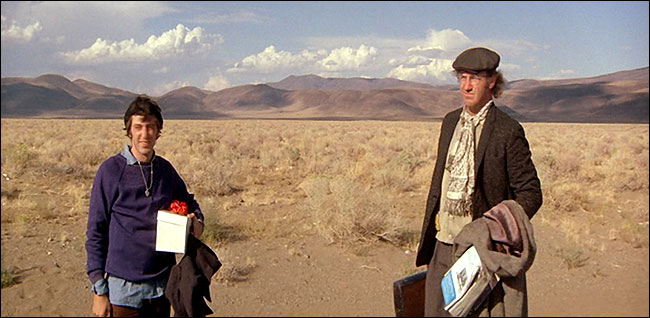
Scarecrow is an example of a type of film that was very popular in the 70s.  It’s a road film, one in which two or more people take a journey across the country and discover something about themselves and, depending upon how ambitious the film was, perhaps something about America as well.  Scarecrow centers on two drifters, who just happen to meet on a dusty road while they’re trying to hitch a ride.  Max (Gene Hackman, fresh off of winning an Oscar for The French Connection) is an ex-convict with a bad temper and a huge chip on his shoulder.  Lion (a young Al Pacino, fresh off of The Godfather) is an ex-sailor who views the world with optimism and who appears to be sweet-natured but simple-minded.  To be honest, it’s a little bit hard to believe that the perpetually resentful Max and the always hopeful Lion would ever become friends but they do.  They travel around the country, talking about their dreams of opening a car wash together.  They meet up with ex-girlfriends and ex-wives.  Eventually, they even end up in a prison farm together, where Lion, temporarily estranged from Max, is taken advantage of by a sadistic prisoner named Riley (Richard Lynch).

Scarecrow is an episodic film, one that moves at its own deliberate pace.  (If that sounds like a polite way of saying that the film is slow-moving …. well, it is.)  Director Jerry Schatzberg was a photographer-turned-director and, as a result, there’s several striking shots of Max and Lion standing against the countryside, waiting for someone to pick them up and give them a ride.  Whenever Max and Lion end up in a bar, the scene is always lit perfectly.  At the same time, Schatzberg also attempts to give the film a spontaneous, naturalistic feel by letting scenes run longer than one would normally expect.  There’s several scenes of Hackman and Pacino just talking while walking down a country road or a city street.  On the one hand, you have to appreciate Schatzberg’s attempt to convince us that Max and Lion are just two guys with big dreams, as opposed to two Oscar-nominated actors pretending to be societal drop-outs.  On the other hand, Schatzberg’s approach also leads to an interminably long scene of Gene Hackman eating a piece of chicken and if you think that Gene Hackman was the type of actor who wasn’t going to act the Hell out of gnawing on and gesturing with a chicken bone, you obviously haven’t seen many Gene Hackman films.

The main appeal of the film, for most people, will probably be to see Gene Hackman and Al Pacino, two of the top actors of the 70s, acting opposite of each other.  Reportedly, both Hackman and Pacino went full method for the film and spent their prep time on the streets of San Francisco, begging for spare change.  The end result is a mixed bag.  There are a few scenes — like when they first meet or when they’re in prison — in which Hackman and Pacino are believable in their roles and you buy them as two lost souls who were lucky enough to find each other.  There are other scenes where they both seem to be competing to see who can chew up the most scenery.   Sometimes, Pacino and Hackman are compelling acting opposite each other.  Other times, it feels like we’re just watching an Actors’ Studio improv class that someone happened to film.  Too often, Hackman and Pacino seem to be so occupied with showing off their technique that the film’s reality seems to get lost under all of the method showiness.  In the end, neither one of the film’s stars makes as much of an impression as Richard Lynch, who is genuinely frightening in his small but key role.

Scarecrow is an uneven film, one that is occasionally effective but also a bit too studied for its own good.  It wears it influences — Of Mice and Men, Midnight Cowboy, Five Easy Pieces — on its sleeve but it also fails to exceed or match any of those previous works.  That said, the film does have its fans.  (Schatzberg has been working on a sequel for a while.)  Certainly, the 1973 Cannes Jury (headed by none other than Ingrid Bergman) liked it enough to give it the Palme.

Scarecrow 2

Film Review: The Conjuring: The Devil Made Me Do It (dir by Michael Chaves)


The year is 1981 and Ed and Lorraine Warren (Patrick Wilson and Vera Farmiga, of course!) have just screwed up another exorcism.  Only Ed hears as Arne Johnson (Ruairi O’Connor) begs the demon that has possessed 8 year-old David Glatzel (Julian Hilliard) to enter him instead.  Unfortunately, Ed also has a heart attack and passes out before he can tell Lorraine what has happened.

The next month, a hollow-eyed Arne is walking down a road.  He’s just murdered his sleazy landlord, stabbing the man 22 times.  It seems like an open-and-shut case, except for the fact that Arne claims that he was possessed by a demon and that it was the demon who actually committed the crime.  At first Arne’s lawyer is planning to go for an insanity plea but then Ed and Lorraine invite her to come have dinner with them and to see their favorite doll, Annabelle.  The film immediately cuts to Arne’s visibly shaken lawyer announcing to the court that her client pleads “not guilty by reason of demonic possession.”

It’s a funny scene and I was a little bit surprised to see it because, in the past, The Conjuring films have always been distinguished by how seriously they took themselves.  The first two films both unfolded in atmospheres of growing dread, following families that not only had to deal with societal evolution but also with angry spirits.  The first two Conjuring films worked not only as horror films but also as period pieces, as stories about changing times.  Though Ed and Lorraine were always the main investigators, the first two films devoted as much time to exploring the dynamics of the haunted families as it did to portraying the Warrens.

The Conjuring: The Devil Made Me Do It (or, as we’ll call it in the interest of space, The Conjuring 3) takes a different approach, which I imagine has much to do with Michael Chaves directing the film instead of James Wan.  This time, Arne and the possessed family all remain ciphers.  We never learn much about who they are or who they were before they met the Warrens.  We don’t know what Arne was like before he became possessed and, as such, it’s hard to get emotionally invested in him once he does end up with a demon inside of him. 

Instead, the film emphasizes Ed and Lorraine Warren and their work to uncover the occultist who was behind the original possession.  Ed worries about Lorraine as she has psychic visions and wanders around yet another dirty basement.  Lorraine worries that Ed is going to give himself another heart attack as he hobbles through the woods in search of an evil spirit.  Lorraine proves her powers to a skeptical detective.  Ed complains that he doesn’t want people treating his wife’s abilities like a carnival sideshow but he still allows himself a slight smile when she selects the correct murder weapon.  Of course, at one point, Suspicious Minds is heard on the radio and we briefly flashback to Patrick Wilson singing the song in The Conjuring 2.  Once again, the film argues that Ed and Lorraine’s romance, their endless love, makes them uniquely capable of battling the Devil.

The film has its moments, largely because Patrick Wilson and Vera Farmiga are adorable as Ed and Lorraine.  At the same time, though, there’s a definite “greatest hits” feel to the third Conjuring film.  There’s little about the film that feels truly spontaneous or surprising and most of the scenes feel like reworkings of scenes that worked in the previous two films.  As good as Farmiga and Wilson are in their roles (and as much as I appreciate the idea of a Catholic super hero film franchise), Ed and Lorraine work best when they’re relating to and helping other characters.  The Conjuring 3 often solely focuses on them and the end result often feels more like an Insidious sequel than a Conjuring film.

The Conjuring 3 is enjoyable enough.  It gets the job done, while never reaching the emotional heights of the first two films.  It has enough jump scares to be a fun movie to watch on a rainy night but it’s not one that really sticks in your mind after it ends.

The_Conjuring_-_The_Devil_Made_Me_Do_It

The TSL’s Grindhouse: Omega Doom (dir by Albert Pyun)


Omega Doom!  What’s all that about?

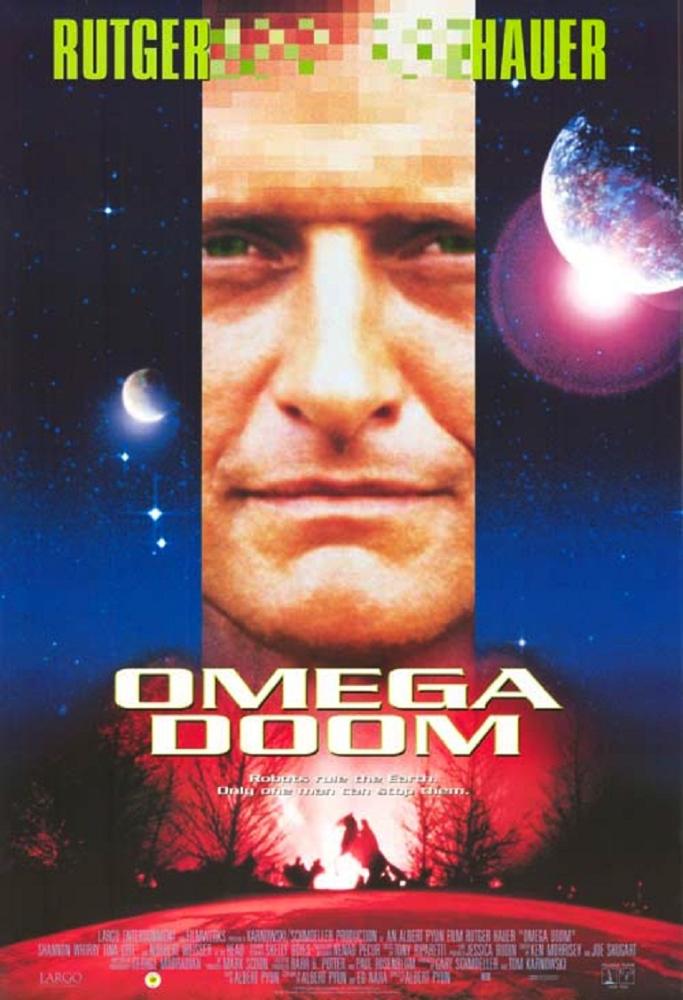
Seriously, don’t ask me.  I just watched this Albert Pyun-directed, 1996 sci-fi epic and I’m stil a bit confused as to what exactly was actually going on in the movie.  This is a movie that opens with a totally blank screen and then, eventually, two red suns appear in the sky.  The film takes place in the future, at a time when humans have nearly wiped themselves out of existence through their endless wars and the planet is now controlled by robots and cyborgs.  Omega Doom (Rutger Hauer) was a cyborg programmed to kill humans until he got shot in the head.  Apparently, taking a bullet to his cranium changed Omega’s programming and now….

Well, that’s the thing, isn’t it?  It’s kind of hard to say what exactly it is that Omega does now.  We do know that he spends a lot of time walking around because there’s a lot of scenes of him doing just that.  Eventually, he stumbles upon the ruins of a town that is now controlled by two warring bands of robots.  Before you can say Yojimbo or even A Fistful of Dollars, Omega is playing both sides against each other and …. well, I don’t know what the preferred outcome here is.  What is Omega Doom’s motivation?  He’s not making any money out of it because robots don’t need money and it’s not like there’s anything left to buy.  And he doesn’t seem to be interested in ruling the town himself because it’s kind of a dead end of a town.  I mean, there’s dead bodies and robotic parts all over the place.  It’s suggested that he might be looking for a secret stash of weapons that can be used to either kill or protect the remaining humans but, at the same time, we don’t ever really see any remaining humans and there’s no reason why Omega would care enough about them to get caught up in a war between robots on their behalf.

So, don’t ask me what’s going on.  I guess it really doesn’t matter because it’s not like you watch a film like this for the plot.  You watch it for the action!  Unfortunately, there’s not a whole lot of action to be found.  There’s a lot of scenes of robots talking about various exciting things that they could, in theory, be doing but no one ever seems to actually get around to doing any of that stuff.  Instead, all of the robots stay in their separate sections of the town and wait for everyone else to make the first movie.  Eventually, Omega makes a few moves but, even then, they’re not particularly exiting moves.  Omega carries a gigantic sword on his back and how I anticipated seeing what he was going to finally do with that sword.  Well, it turns out that Omega didn’t do very much with it at all.

Actually, the main reason you’re going to want to watch Omega Doom is because Rutger Hauer plays the title role and Hauer was always cool, even when he was appearing in a less than memorable film.  In Omega Doom, Hauer does a passable Clint Eastwood impersonation, delivering his lines with just the right amount of weary condescension.  Though you’re never quite sure why Omega is doing anything, Rutger Hauer is always watchable.

And, to be honest, I actually didn’t dislike Omega Doom as much as it may sound like I did.  It’s a slow movie and not much happens but, at the same time, I did like the look of the bombed-out city and, though the dialogue was largely forgettable, there was still the occasional line that suggested that Omega Doom had existential ambition, albeit unrealized ones.  “God took a vacation,” Omega says at one point and, for a split second, you get a hint of what Omega Doom could have been if it had a bigger budget and a better script.  It’s a film that had potential and it’s somewhat fascinating to consider how little of that potential was realized.

Of course, in the end, it all comes down to this: How can you possibly resist Rutger Hauer as a cyborg?

The Trailer For Clifford The Big Red Dog Features A Really Big Red Dog


Damn, that’s a big dog.

The movie looks like it might be cute for kids but I have to admit that I’ve never really been a dog person. In fact, I’m pretty much scared to death of dogs. I always have been. When I was like ten, I nearly got over my fear because my family went to the lake for the weekend and there was a dog there that was really friendly. But then, he took a nap and when he woke up, he looked at me and started to growl and my mom told me to hide behind the car while she shooed him away. Of course, as soon as I got behind the car, the dog lunged for me and I ran all the way down to the lake, with him barking after me. Later, his owners explained that he was a nice dog but that he could be unpredictable, especially when waking up. They didn’t really seem to be that concerned about the fact that I had been traumatized as a result of what had happened. That incident pretty much ended whatever chance there was of me ever becoming a dog person. That said, I’d probably like Clifford, just because he’s red.

According to my New York friends, the only thing more unrealistic than the big dog is the big Manhattan apartment.

Clifford The Big Red Dog will be charging into theaters on September 17th.

The Blind Murderer Is Now A Hero In The Trailer For Don’t Breathe 2!


To be honest, I’m probably being a bit too glib when I say that the fearsome blind kidnapper and murderer at the center of the original Don’t Breathe is now a hero. Though it appears that he’s now the hero based on what we see in the trailer for Don’t Breathe 2, it could just be a case where he’s a bad guy battling other bad guys.

At least, I hope that’s the case because, seriously, we all remember the turkey baster!

I really liked the first Don’t Breathe. I have to admit that I was kind of hoping that it would be one of those great thrillers that would never get a sequel because the first one pretty much worked because Stephen Lang’s character was a unique and unexpected villain. My feeling was that subsequent appearances by the character would only serve to make him less menacing. Though it looks like the film’s well-produced and Stephen Lang kicks all sorts of ass, the trailer for Don’t Breathe 2 still feels more like a sequel to Gran Torino than a sequel to the original Don’t Breathe. Let’s hope I’m wrong on that!

Don’t Breathe 2 will be released on August 13th, at which point we’ll see what’s going on.