The TSL’s Grindhouse: The Disturbance (dir by Cliff Guest)


One of my pet peeves, as someone who has watched her share of movies about disturbed men driven by madness to kill, is that serial killers are often presented as being far more interesting than they actually are.  Whereas the typical serial killer is someone who has never been able to maintain a relationship and who can’t hold down a job and who, in many cases, barely even graduated high school, movie serial killers always tend to be portrayed as being handsome, charming, witty, and diabolically clever.  Blame it on Ted Bundy.  Blame it on the popularity of Hannibal Lecter.  Blame it on the film industry’s embrace of clichés.  Blame it on whoever. or whatever  It’s annoying and it encourages the tendency of the media to focus more on the killers than on their victims.

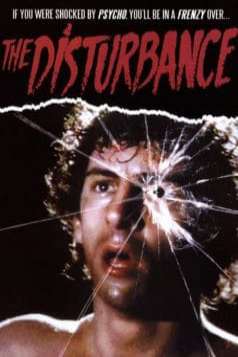
One good thing that you can say about the 1990 film The Disturbance is that it’s killer is no winner.  Clay Moyer (Timothy Greeson) is a schizophrenic who has just been released from a mental hospital and seems to be destined to soon return.  He’s someone who is haunted by hallucinations and violent fantasies.  At the same time, he’s also learned how to project enough superficial charm that he can actually interact with people.  When he meets Susan (Lisa Geoffrion) on the beach, he’s able to get a date and later, he’s even able to get a relationship.  But, as the film graphically shows, even when he’s making love to Susan, he’s fantasizing about killing her.  Even during the best moments of their relationship, he’s fantasizing about doing terrible things to the neighbor.  Because he’s extremely possessive while obviously hiding a huge part of his life from her, Susan eventually starts to pull away from him.  When he gets too pushy in his efforts to keep her around, she breaks it off.  Since the relationship was the only positive thing that Clay had in his life, he sinks further into madness and he eventually does some very bad things.  But, seeing as how Clay was having violent fantasies even while he was still dating Susan, it’s totally probable that his collapse was predestined.  If he hadn’t been triggered by the end of the relationship, he would have been triggered by something else.  There’s no hope for Clay, who was pretty much doomed from the minute he was born.

The budget of this Florida-shot indie is low and it’s obvious that most of the actors weren’t professionals.  And yet, the fact that the actors are occasionally stiff and awkward actually adds to the film’s authenticity.  If the film had been too slick, it wouldn’t have been as effective.  It would have felt like another overproduced Hollywood serial killer film.  Instead, The Disturbance feels like a journey into the mind of someone who actually is a ticking time bomb, reaching the end of his countdown.  It’s not a fun journey but then again, it shouldn’t be fun.  The mind of a sexual sadist is not going to be a pleasant place to visit.

The film works largely due to the lead performance of Timothy Greeson, who plays Clay as someone who desperately wants to be normal but who is very much aware that he never will be.  He’s a prisoner to his fantasies and, as much as he tries, he knows that he’s never going to escape his demons.  As an actor, Greeson is appealing enough that you can buy that Susan might go on a date with him while he also believably portrays the instability that leads to her dumping him.

It’s a well-done film, though a bit too disturbing to really be an entertaining viewing experience.  (On a personal level, there were several scenes involving a cat that I simply could not handle.)  I appreciated the film’s integrity far more than I enjoyed actually watching it but at least the movie refused to idealize its killer.

Horror Scenes I Love: The Arrival At Allerdale Hall in Crimson Peak


Since today is Guillermo del Toro’s birthday, it only seems appropriate that today’s scene that I love comes from my favorite del Toro film.

In this scene from Crimson Peak, Thomas bring Edith to Allerdale Hall for the first time and it’s both hauntingly beautiful and rather frightening at the same time.  The same thing can be said for this film itself and perhaps all of del Toro’s work.  I just love the gothic atmosphere of the location.  Edith is determined to see the positive.  Thomas’s personality is already starting to change as the weight of returning to Allerdale starts to push in on him.  The mansion has already started to sink back into the Earth.  It’s just a wonderfully put-together scene, one that sets the mood for the rest of this sadly underrated film.

International Horror Review: All the Colors of the Dark (dir by Sergio Martino)


It’s giallo time!

In this 1972 Italian film, Edwidge Fenech plays Jane Harrison.  Jane is haunted by both the murder of her mother and a more recent car accident, one that caused her to miscarry.  Jane has nightmares, featuring violent murders and lots of spilt blood.  Whenever Jane leaves her apartment, a mysterious man with piercing blue and perfect hair (played, of course, by the owner of the best head of hair in Italian cinema, Ivan Rassimov) follows her and threatens her.  Is the man real or is he just a figment of her imagination?  Her sister, Barbara (Susan Scott) insists that Jane see a psychiatrist.  Meanwhile, Jane’s boyfriend, Richard (the ruggedly handsome George Hilton) insists that the two of them can work through it.

However, Jane’s new neighbor, Mary (Marina Malfatti) has a suggestion that involves neither therapy nor love.  Mary suggests that Jane attend a black mass.  Jane agrees and …. wait, what?  A black mass?  Out of all the solutions that have been suggested, Jane decides to go with Satanism?  That seems like a bit of an extreme solution but then again, it was the 70s and it was Italy and maybe things were just different back then.  I’m just saying that I, personally, would not join a cult but obviously, some people do.  Maybe that’s how the Silent Hill cult got started.  Someone tried to be helpful by saying, “Let’s go to a black mass,” everyone said, “Sure!”  Who knows?

Anyway, Jane attends a few rituals, all of which will seem familiar to anyone who has seen Rosemary’s Baby.  She drinks the blood of a dog.  She takes part in an orgy.  Or does she?  The scenes are shot in such a fashion that we’re left to wonder whether they’re real or if they’re just taking place inside of Jane’s mind.  With her paranoia growing, Jane herself isn’t sure what’s really happening either.  All she knows is that it seems as if the members of the cult are everywhere and that the mysterious man still appears to be following her.  When people start dying in various gruesome ways, who is responsible?  Jane or the cult or someone else entirely?

All The Colors of the Dark is a favorite of mine, a stylish giallo with an insane plot, lots of sex and death, and killer performances from giallo regulars like Fenech, Hilton, and Rassimov.  The solution to this film’s mystery is actually pretty clever and — in a rarity for the giallo genre — it actually hold together when you think about it after the movie ends.  Visually, director Sergio Martino does a great job of creating an atmosphere of unease and suspicion and Jane’s dreams and visions are wonderfully executed.  My favorite moment is when Jane suddenly realizes that everyone around her is a member of the cult.  Are they really or is Jane just hallucinating?  Watch the movie to find out!

In October, it’s always nice to make some time for a good giallo, especially ones that feature George Hilton looking handsome and Ivan Rassimov looking dangerously intriguing.  All the Colors of the Dark is definitely one of the better ones.

4 Shots From 4 Guillermo del Toro Films


4 (or more) Shots From 4 (or more) Films is just what it says it is, 4 (or more) shots from 4 (or more) of our favorite films. As opposed to the reviews and recaps that we usually post, 4 (or more) Shots From 4 (or more) Films lets the visuals do the talking!

Today, the Shattered Lens wishes a happy 58th birthday to the one and only Guillermo del Toro!  Del Toro won an Oscar for Shape of the Water.  Rumor has it that, next year, he could very well win another one for Nightmare Alley.  He’s an innovator.  He’s a visionary.  He’s an artist.  He’s one of the reasons why sites like this one exist in the first place.  And today, we honor his life, his career, and his legacy with….

4 Shots From 4 Guillermo Del Toro Films

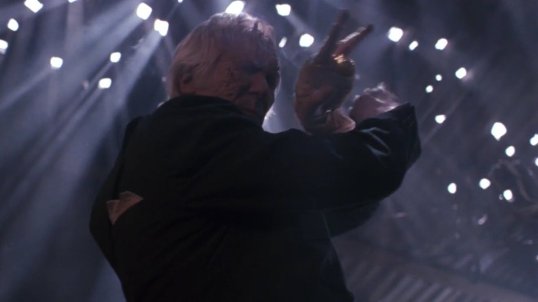
Cronos (1993, dir by Guillermo del Toro, DP: Guillermo Navarro)

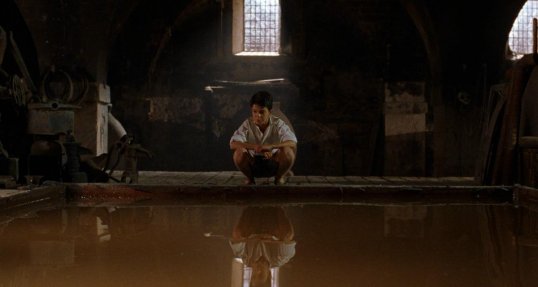
The Devil’s Backbone (2001, dir by Guillermo del Toro, DP: Guillermo Navarro)

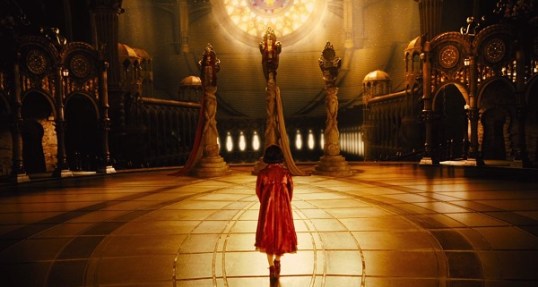
Pan’s Labyrinth (2006, dir by Guillermo del Toro, DP: Guillermo Navarro)

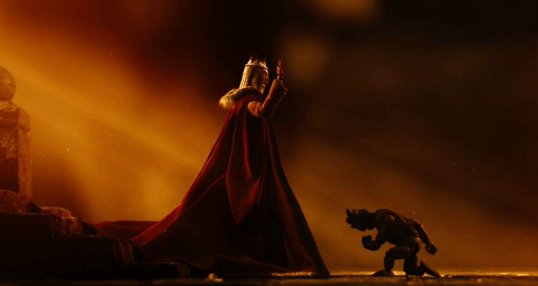
Hellboy II: The Golden Army (2008, dir by Guillermo del Toro, DP: Guillermo Navarro)

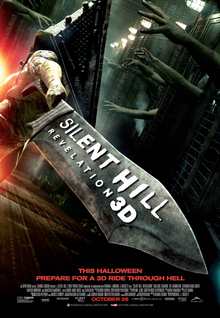
Horror Film Review: Silent Hill: Revelation (dir by M. J. Bassett)


The 2012 video game adaptation, Silent Hill: Revelation, is gloriously silly.

It’s also a sequel to the first Silent Hill. While many members of the original cast do return and while the sequel’s plot does directly follow up on the first film, Silent Hill: Revelation still feels like an all-together different film. Whereas the first Silent Hill was atmospheric and, with its 2 hour plus running time, a bit ponderous, the sequel is short, direct, and …. well, I hate to use that word again, a bit silly. It’s also undeniably entertaining.

Sharon (Adelaide Clemens) is now 18 and is currently using the name Heather. With her father, Harry (Sean Bean), Sharon/Heather has spent the last several years of her life moving from place to place and trying to keep one step ahead of the Order, the Silent Hill cult. Heather — let’s just use that name — tries to make the best of her situation but she is 18 and she would like a chance to do normal teenager stuff as opposed to just spending her life on the run.

Good luck with that! When Harry mysteriously vanishes, Heather finds a message telling her to go to Silent Hill. Teaming up with her classmate, the enigmatic Vincent (Kit Harrington), Heather heads back to Silent Hill. She hopes to find both Harry and Rose (Radha Mitchell) but the Order has other plans. Soon, Heather and Vincent are back in the alternate dimension, dealing with monsters and stabby blind nurses.

As is typical of horror films about cults, there’s a lot of talk about sacrifices and using blood to bring about a new age and everyone worships some mysterious God who doesn’t sound all that pleasant. Whenever I watch a movie like this, I find myself wondering how the cult got started in the first place. Who woke up one day and said, “I’m going to follow the demon that regularly kills all of his followers. Now, let’s go alter some adoption records!” I also can’t help but notice that cults can never do anything the simple way. Instead, there’s always some alternate dimension or some extremely complex ritual that has to be performed and it all has to be done at a certain time of the year. Maybe if they just simplified things, they wouldn’t have so much trouble getting stuff done. Maybe instead of always trying to steal new souls, they could just be happy with the ones they have. I mean, it’s just common sense.

But anyway, back to Silent Hill: Revelation. Silent Hill: Revelation usually gets dismissed as an inadequate sequel but I was entertained. The plot moves quickly and the film features some memorably gory scenes. The scene where Heather suddenly hallucinates about Silent Hill while walking through a mall was enjoyably gruesome. At the same time, I couldn’t help but regret that Revelation never quite succeeded in duplicating that ominous atmosphere of the first film. If the first film felt like a nightmare-come-to-life, Revelation feels more like the season finale of a long-running, supernatural-themed television show. It’s fun to watch but it’s not particularly challenging. That said, Adelaide Clemens gave a sympathetic performance as Heather, Sean Bean’s natural gravitas was put to good use, and Malcolm McDowell made a brief appearance. The film kept me entertained.

Horror on the Lens: Bride of the Monster (dir by Edward D. Wood, Jr.)


Bride of The Monster (1955, dir by Ed Wood)

Since tomorrow’s the great man’s birthday, it seems appropriate that today’s horror film on the lens is Edward D. Wood’s 1955 epic, Bride of the Monster.

(Much like Plan 9 From Outer Space, around here, it is a tradition to watch Bride of the Monster in October.)

The film itself doesn’t feature a bride but it does feature a monster, a giant octopus who guards the mansion of the mysterious Dr. Vornoff (Bela Lugosi).  Vornoff and his hulking henchman Lobo (Tor Johnson) have been kidnapping men and using nuclear power to try to create a race of super soldiers.  Or something like that.  The plot has a make-it-up-as-you-go-along feel to it.  That’s actually a huge part of the film’s appeal.

Bride of the Monster is regularly described as being one of the worst films ever made but I think that’s rather unfair.   Appearing in his last speaking role, Lugosi actually gives a pretty good performance, bringing a wounded dignity to the role of Vornoff.  If judged solely against other movies directed by Ed Wood, this is actually one of the best films ever made.

(For a longer review, click here!)

Scenes That I Love: Adam Driver Has Read The Script in The Dead Don’t Die


Jim Jarmusch’s The Dead Don’t Die is a film that has definitely grown on me. When I first watched it, I thought it was intriguing but perhaps a bit too cutesy and enamored with itself. However, I’ve subsequently come to realize that, actually, Jarmusch finds just the perfect tone for his look at our zombie-saturated culture.

In the scenes below, Bill Murray, Chloe Sevigny, and the wonderful Adam Driver all deal with the inevitability of doom that comes with being a character in a zombie film.


Horror on the Lens: Teenagers From Outer Space (dir by Tom Graeff)


Can Earth survive an invason of teenagers?

Watch today’s Horror on the Lens and find out! From 1959, it’s Teenagers From Outer Space! In this film, a bunch of teenage-looking aliens come to Earth so that they can raise lobsters. Things don’t really go as planned, of course. The teens have ray-guns that can transform anyone intto a perfectly preserved skeleton. It’s sad to think that they could come up with the technology to power their ray-guns and to pilot their spaceshiip but not to raise lobsters on their own planet.

It’s a damn shame.

Anyway, I hope you’re ready to cry because it’s time for …. TEENAGERS FROM OUTER SPACE!

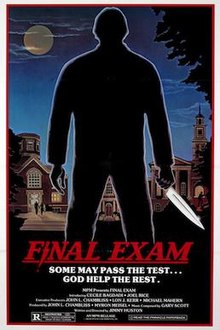
The TSL’s Grindhouse: Final Exam (dir by Jimmy Huston)


The 1981 slasher film, Final Exam, opens with a familiar scene.  A couple is making out in a car.  A man (played by Timothy L. Raynor) comes along and kills them both.

Why does the man do this?  Is he an escaped mental patient, like the killer who always appear in the urban legend about the man with the hook?  Is he an angry father, upset that students have been parking near his farm and corrupting his children with their sinful ways?  Is he an occultist, hoping that a blood sacrifice will bring about the end of the world?  Is he a jilted lover or an unemployed day laborer or a zombie or an international assassin or a former fat boy looking for vengeance on the students who pulled the prank that caused him to drop out of college?  Seriously, what is this guy’s deal!?

We never find out.  That, in itself, makes Final Exam unique.  The Killer is not only not given a motive, he’s not even given a name!  He’s just someone who shows up and starts killing.  No one knows him and he doesn’t appear to know anyone that he kills.  The fact that he’s so anonymous is actually a factor in the film’s favor.  The flamboyant motivations that are given to most slasher villains tend to serve as a distancing device for the audience.  It’s easy, for instance, to dismiss Jason Voorhees because we know that the idea of him drowning and then somehow showing up in the woods just doesn’t make any sense.  The convoluted backstory of Michael Myers (or at least the Myers who was present in the original, pre-reboot Halloween films) eventually became so ludicrous that it made it easier for audiences to say, “Well, it’s just a move.”  Final Exam‘s motiveless killer is actually far more true to life.  In real life, it’s rare that we ever learn the motives behind the crimes.  By making the Killer anonymous, Final Exam takes away one of the tools that the audience can use to assure themselves that it’s only a movie.

Unfortunately, the scenes following the opening murder are so inept that the audience is instantly reminded that they’re just watching a movie and not a particularly well-made one at that.  It’s final exam time on campus but several students aren’t ready to take their Chemistry exam.  So, a fraternity fakes a shooting spree — yes, you read that correctly — and manages to get the exam delayed for a day.  That means that, while all of the other students have gone home, the chemistry students stay on campus so that they can study for their final exam.  And, of course, the killer is on his way to the campus as well….

While the killer makes his way to campus, we sit through several scenes of campus hijinks.  It’s a weird mix of horror and comedy.  We meet a few students who are obviously destined to victims.  Neurotic Radish (Joel S. Rice) is likably nerdy.  Lisa (DeAnna Robbins) is having an affair with one of her professors, but at least she has a great first name.  The frat boys are doing steroids and tying each other to trees.  Apparently, spending the night tied to a tree is some sort of initiation ritual.  That’s not a good situation to find yourself in when there’s a killer stalking the surrounding area.

Yes, the killer does eventually arrive on campus but it seems to take him forever.  Once he does arrive, he starts killing everyone that he meets and, again, his lack of motivation makes him far more disturbing and frightening than he has any right to be.  It really is the ultimate nightmare.  Not only is someone trying to kill you but he’s doing it just because.  There’s no reason for his actions and therefore, there’s no way to talk him out of it.  There’s no secret to distracting or stopping him.  You just have to run and hope you can escape.  Cecile Bugdadi plays Courtney, who is pretty obviously destined to be the final girl.  She gives a good performance and you definitely want her to escape but again, the film is so poorly paced that, by the time she gets her chance to face the Killer, the majority of the audience will probably have checked out, either mentally or physically.

Final Exam has a cult following, which I kind of understand.  It really is the epitome of what people imagine when they imagine a typical, low-budget, early 80s slasher film.  It represents an era.  But for me, it’s just too uneven to work.

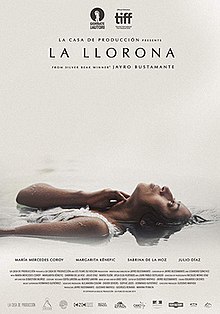
International Horror Review: La Llorona (dir by Jayro Bustamante)


Enrique Monteverde (Jose Diaz) lives in a mansion in Guatemala.  He’s an old man, one who look harmless on first glance.  He always has an Oxygen tank nearby.  His family says that he’s suffering from Alzheimer’s and, therefore, can’t always be held responsible for some of the things that he might say.  He shamelessly leers at the younger woman who work in his home.  His family says that he’s always been a flirt but he doesn’t mean any harm or offense.  His family insists that he’s just an old man with dementia who is hoping to pass away peacefully while surrounded by his loved ones.

The protestors who gather daily outside of Enrique’s mansion have a different opinion of the man.  They chant and hold up signs illustrated with the faces of their missing relatives.  Before he retired, Enrique was a general.  He fought the communist guerillas.  Previously, he was convicted of committing genocide against the indigenous people of Guatemala but his conviction was overturned by a higher court.  There are other retired generals who know that, if Enrique had gone to prison, it would not have been long until they followed him.  Just because people are going on trial and even getting convicted, that’s not guarantee of justice.

Enrique’s wife, Carmen (Margarita Kenefic)m insists that Enrique is innocent and that all of his accusers are lying.  Enrique’s daughter, Natalia (Sabrina De La Hoz), is less sure while his granddaughter, Sara (Ayla-Elea Hurtado), just thinks of Enrique as being her somewhat goofy grandfather.  Meanwhile, his housekeeper, Valeriana (Maria Telon), remains strangely devoted to him.  Even after a scared and confused Enrique fires a gun in the house because he swears he heard someone moving in the darkness, Valeriana stays.  The rest of the household staff quits.  Alma (María Mercedes Coroy), a young woman from Valeriana’s village, comes to the home to work as a maid.

Enrique continues to insist that some sort of curse has been placed over the mansion and that something evil has entered the house.  Is he just suffering, as his family assumes, from dementia or is he correct?  Even as the protests continue outside and the enigmatic Alma hints that she has a secret of her own, Carmen finds herself haunted by nightmares and visions of her husband’s crimes.

La Llorona is a film that combines two horrors, one legendary and one very real.  There is, of course, the legend of the weeping woman.  She is said to haunt the night, crying for her drowned children and, in some cases, killing anyone who tries to help her.  And there’s the very real horror of the war crimes that were committed, by various military dictatorships, against the indigenous people of Central and South America.  Though Enrique may be a fictional creation, the crimes that he and others committed were not.  La Llorona is more than just a haunted house story.  It’s a film about the crimes of the past and how those crimes continue to haunt the present.  Like many prominent men, Enrique is protected not by the loyalty of those he worked with but instead by the knowledge that the minute one guilty war criminal actually pays for his crimes, they’ll all end of paying.  The political and legal establishment will do what it has to do to protect itself by protecting men like Enrique.  But, as this film demonstrates, the sins of the past cannot be escaped in present.

Unfortunately, the premise is a bit more interesting than the execution.  The film’s deliberate pacing often lends La Llorona a dream-like feel but, in other scenes, the film just feels slow.  The idea of the legendary weeping woman acting as a sort of vigiliante is an interesting one but the story itself is a bit predictable.  That said, the cast all give strong and memorable performances and the film uses the horror genre to discuss disturbing truths that many would rather ignore.  Flawed or not, La Llorona is a good example of how the horror genre can be used to comment on the past and the present.

La Llorna was a Guatemala’s submission for the 2020 Oscar for Best International Film.  Though it deserved a nomination for ambition alone, it didn’t make it beyond the 15-film shortlist.  Fortunately, nominated or not, the film can currently be viewed on Shudder.