Lisa’s Editorial Corner: On Tornadoes, Rango, social media, and Charlie Sheen


Well, it had to happen but did it have to happen so soon?

So, here we are.  Just two weeks into doing Lisa’s Editorial corner and already, I’m worrying that I may have nothing to talk about.  Of course, some of that is because I’m a little bit preoccupied.  Somehow — don’t ask how unless you really want the details — I managed to sprain my foot on Saturday morning.  I stayed on the couch for the weekend but then, foolishly, I attempted to both work and dance on Monday.  So, right now, I am home, my foot hurts, and I’m having a hard time focusing on anything else.

(At the same time, I’ve lost track of how many times I’ve sprained my foot and/or my ankle.  It sucks right now but I’ll be okay soon.  I’m taking off work on Tuesday, which means that I’ll get to make even more progress in cleaning out the DVR!)

Plus, as I write this at 1:30 in the morning, we are currently under tornado watch!  If a tornado does decide to show up, I am not looking to forward to having to hop my way into the downstairs coat closet.  They say that, if you don’t have a storm bunker like the one Michael Shannon installed in Take Shelter, the downstairs closet is the safest place to get in case of a tornado.  I have never understood why.

This is why I sometime hate social media.

charlie-sheen-5240

Since Monday is always my crazy day, I was not on twitter when the whole “Charlie Sheen Has HIV” story broke.  In fact, I didn’t know a thing about it until someone mentioned it in passing that night and, at that time, I was so busy trying not faint from the pain of my sprained foot that it really didn’t register with me.

So really, it wasn’t until I got home, took a handful of Vicodin, and logged onto twitter that I was really aware of what’s been going on with Sheen.  Apparently, this Tuesday (i.e., today), Sheen is going to be on the Today Show and is going to reveal whether or not he has HIV.  There’s something really ghoulish about how much some people are anticipating Charlie Sheen announcing that he is HIV positive.

It’s also sad that, judging from many of the comments on twitter, a lot of people don’t understand that being HIV positive does not mean that Charlie Sheen has AIDS.  Check out a few of the comments:

https://twitter.com/shaner142/status/666523090810109952

https://twitter.com/channcorns/status/666519065117069312

https://twitter.com/MizzyII/status/666428045448867840

https://twitter.com/makzimiser/status/666448089847349248

Keep in mind that I’m writing this at 1:33 in the morning and Charlie Sheen has yet to officially announce anything.  By the time this post is published and you read it, Sheen will probably have announced whatever it is that he’s going to announce but, for now, nobody knows anything.  There’s just speculation.  For all we know, Sheen is going to announce that he’s HIV negative or that he wants to be Donald Trump’s running mate.

In fact, the only thing we know for sure is that a lot of people seem to be positively gleeful about the possibility of Charlie Sheen having HIV.  I’ve never been a fan of Charlie Sheen’s and I found his whole “winning” thing to be more pathetic than anything else.  But it has always disturbed me that his extremely self-destructive behavior has always been treated as a source of entertainment.  What’s particularly offensive is that many of the same people who loved to watch crazy old Charlie talk about “tiger blood,” are now gloating about how Sheen’s “lifestyle” has caught up with him.  It was a lifestyle that was largely dependent upon and made possible by American’s own twisted love/hate relationship with celebrity.

The blogger known as Jedadiah Leland and I have often debated whether or not social media is worth all the trouble.  Usually, I think I can make a pretty good case that twitter does enough good that it makes all the other bullshit worth it.  But, when I see thousands of strangers competing to come up with the best joke about someone being HIV-positive, I start to think that he may have a point.

And since I’ve just been critical of twitter, I’ll wrap this up with a tweet from my sister:

The best laid plans of Lisa…

Before I got caught up writing about Charlie Sheen, I was going to devote a bit of a space to talking about how much I hate it when people show up late for a movie.  I mean, seriously — we all know that, if a movie is listed as starting at 7:00, the movie isn’t really going to start until 7:20.  That’s a 20 minute grace period right there and there’s really no excuse for arriving at the theater after that grace period has ended.  If you’re going to be more than 20 minutes late, either go to a different showing or go back home.  But for God’s sake, don’t wander into the theater and go, “Oh, the movie’s started,” and then stumble around looking for a seat in the dark.

To be honest, I’d rather be stuck in a theater with a screaming baby than have to deal with people showing up 30 minutes late for the movie.

As long as we’re here, check this out!

The evil clown who pops up to sing ‘Get Yourself High‘ in the Chemical Brothers’ live show has his own Facebook page.  I am so happy right now!  Unfortunately, there’s not much information on the page about the clown but I liked it anyway.  You never know when the clown might decide to open up about his hopes and dreams.

Clown

FLASHBACK TIME!

You know what you should find time to do today?  You should take a trip into the past and read the very first review that Leonard Wilson ever wrote for this site.  I present to you … Leonard’s 2o11 review of Rango!

One Final Thought…

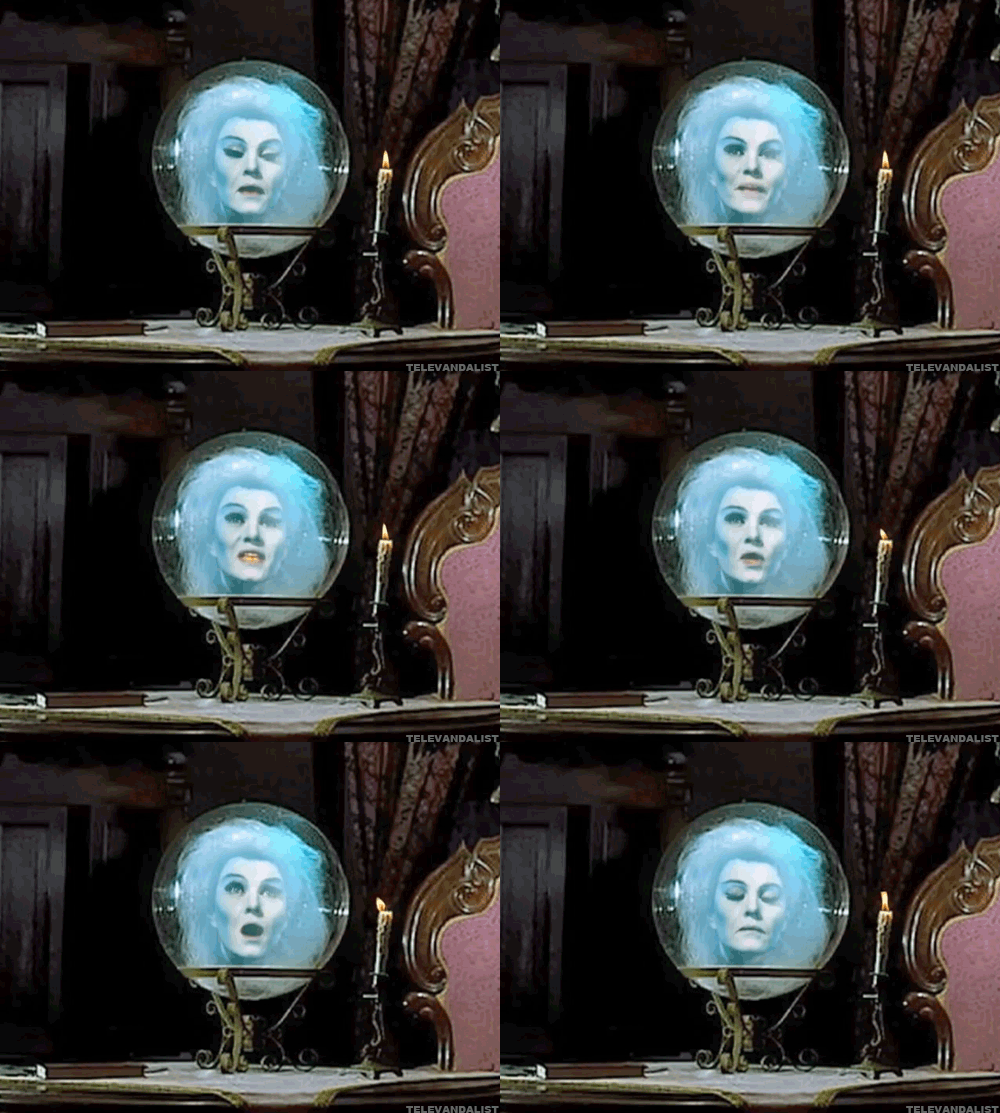
At any given time, I usually have about a week’s worth of blog posts scheduled to publish on the various sites that I write for.  So, if I died tomorrow, my writing would actually outlive me.  Think about it — I could be dead and still giving you my opinion.  And if I am dead and I tell you to see a movie, you better see it!
Ghost Critic

Have a great week!

Hagler vs. Hearns “The War” Is A Real Fight


CCqwYshUUAA6qes.jpg large

So, it looks like the fight of the century between Floyd Mayweather, Jr and Manny Pacquiao turned out to be more of a whimper instead of a bang.

Now, this short, but sweet 3-round fight from April, 15, 1985 was (and is) what a great fight looks like. It’s the kind of fight Floyd will never put himself in and the sort of fighters he would duck and dodge until they’re on the downside of their careers then he would agree for the money fight.

Floyd is not, as he proclaimed a couple weeks ago, the greatest fighter ever. He’s no Muhammad Ali. He’s no Sugar Ray Robinson. He’s not even in the same league as Sugar Ray Leonard, Roberto Duran, Marvin Hagler and Thomas Hearns.

The Eternally Frustrating Nicolas Cage


actor-nicolas-cage-discusses-his-2014-movie-left-behind

Just put yourself in my 4 inch heels for a moment.

You’re a film blogger who, though her tastes may be quirky, can usually defend her opinions fairly well.  You make an effort to see films that others may have missed and you pride yourself on your willingness to take and defend unpopular positions.

And let’s say that you’ve defied the conventional wisdom of so many of your fellow bloggers by declaring that Nicolas Cage is still a good actor and he still has something to offer the film world, beyond bad movies and weird performances.  You’ve even reviewed a film called Joe and triumphantly declared that this film proves that Nicolas Cage is a “great actor.”

And maybe, when certain people on Facebook laughed at you for using the terms “great” and “Nicolas Cage” in the same sentence, you argued that Cage is about to make a Matthew McConaughey-style comeback.  How?  By playing challenging roles in intelligent indie films.  You might have even said, “McConaughey had his Killer Joe and Nicolas Cage has Joe.”

And then this trailer for an upcoming film is released:

Nic, I still believe in you but, oh my God, you do test me sometimes.


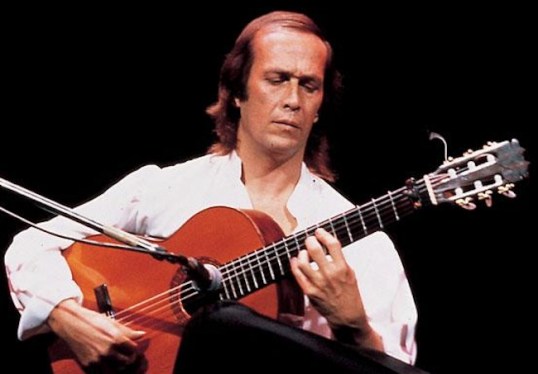
Song of the Day: Entre Dos Aguas (by Paco de Lucia – R.I.P)


paco-de-lucia

One of the great guitarists ever passed away (some would say he’s one of the greatest, if not the best there ever was) in the last 24 hours.

Paco de Lucia has passed on into legend as one of history’s greatest guitarist. He joins such fellow luminaries as Django Reinhardt, Jimi Hendrix, Andres Segovia, Stevie Ray Vaughan and Robert Johnson to just name a few now playing their guitars in the next life.

Paco came from a family of flamenco singers and guitarists. His musical upbringing was molded by his father Antonio Sanchez. He would take classic flamenco guitar playing and incorporate other musical genres such as jazz, classical and bossa nova. While flamenco traditionalists heaped criticisms at Paco de Lucia for incorporating the many different styles of guitar playing with flamenco the movement to create a new flamenco sound which still adhered to classic flamenco playing but with some added new sound to appeal to a new generation that was beginning to listen to a variety of musical styles.

While many young people would scratch their heads as to who this Spaniard was to be considered one of the greatest guitarist of all-time (I would remind such individuals that not all guitarists were playing rock or metal), I would suggest they listen to his most popular song and just marvel at the talent and legend that was Paco de Lucia.

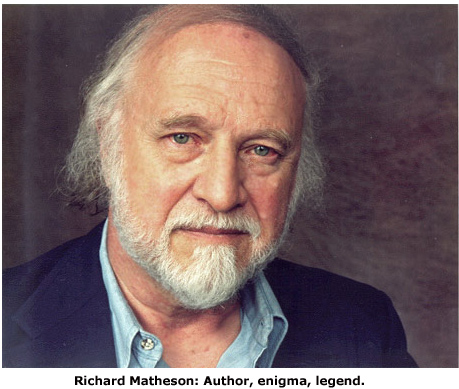
R.I.P. Richard Matheson


Richard-Matheson-author

News hit the internet today that legendary author Richard Matheson passed away at the age of 87.

Matheson has been instrumental and influential in horror and dark fantasy pop culture of the 60 or so years. Stephen King and George A. Romero, undoubtedly two of the most recognizable masters of horror of their generation, has called Matheson a major influence in their work. Where would the zombie genre of today be without Matheson’s groundbreaking vampire novel, I Am Legend, which gave Romero the idea to make his Night of the Living Dead. It is also this very same vampire novel whose influence could be seen throughout King’s own classic vampire tale with Salem’s Lot. Even King’s own foray into a zombie novel, Cell, would be dedicated to Matheson.

Yet, Matheson’s influence wouldn’t just be felt in the literary world. He would pen some of the best Twilight Zone episodes and would also provide Roger Corman with screenplay adaptations of Edgar Allen Poe’s short stories and novellas. He would also provide Hollywood with screenplays based on his own stories that would become classic horror and dark fantasy films in their own right.

There’s no way to quantify just how many people Richard Matheson has touched and influenced with his work, but one would be hard pressed not to find someone who hasn’t come across something that had Matheson’s fingerprint whether it was one of his stories, films based on his works or a tv episode that he didn’t have a hand in writing. Then there’s those who have seen or read something that had been influenced by his work.

Today the world has lost of the giant’s in his field of work. Yet, as his best known work says as it’s ending, Matheson will survive far longer than he had lived: HE IS LEGEND.

On a personal note, I count Matheson as one of the biggest influences in my life. Everything he has done or touched have had a hand in showing me the power of the written word. Much of what I watch and read has been influenced by his work. Where would horror and dark fantasy be without him to set the path for future writers and filmmakers. Whether they care to admit it or not they, just like myself, owe Richard Matheson a debt of gratitude for work in the field.

A giant of a man has passed into legend and it’s now up to us, his admirers and fans, to continue on his work of providing the world with quality genre entertainment.

The Case for Dredd 3-D


558551d83bc53bcdec27e79335a5e8bd

I don’t know that many people who, in the thrall of a weak September, dished out the $5, $10, $12, to see Dredd 3-D. This is curious, because I saw it the day that it came out, and I sang its praises til… wait, when am I writing this? I suppose the singing goes on. If you’ve seen Dredd 3-D, you probably had the same initial reaction I did – that this movie is much, much, much better than you ever thought it would be. But, having seen it three times in theaters, and roughly one billion times since the DVD release… there’s more to this movie. This is a truly great film. And since we’re in the season of handing out awards, and because movies like Dredd 3-D know from the moment of their inception that they will never sniff a nomination, it seems like a fine time to extol the virtues of what might be the best action movie made since the calendar flipped over from 1989.

If you’ve seen the film, I can probably spare you most of this song of praise. Of the few people that I know who have seen the film (most of them forced to see it by me), I have heard very few complaints. Of course, I have targeted the film’s audience amongst my own friends, and I’m not trying to win it the support of the Academy. But for a film to be so universally heralded amongst fans of a certain genre is actually fairly impressive in 2013, let alone for that very same film – a gritty B action film, by all accounts – to command a startling 77% fresh rating at Rotten Tomatoes, is nothing short of incredible.

For the uninitiated, let’s start at the beginning. What is Dredd 3-D?

Well, it’s an exploration of a dystopian future that is the primary subject of the long-running Judge Dredd comic strip, an American hero who has been published almost exclusively in the United Kingdom. Dredd is a living metaphor, he is blind justice, the implacable and unrelenting arm of the law. He is fearless, he is formidable… he is the law. In a desolate future, North America is a nuclear wasteland. Outside of the boundaries of the incredible Megacity One, all is irradiated desolation. The Megacity runs from Boston to Washington DC, and contains twice as many people as lived in all of North America in 2012. Within the city limits, only one organization is still fighting to maintain order… the Judges of the Hall of Justice. They are judges, they are juries, and if necessary, they are executioners.

In Dredd 3-D, this is effectively all of the exposition we need. Judge Dredd (Karl Urban) is the merciless reality of a law that is actively losing its struggle to serve and protect. Megacity One is falling apart day by day. But if Dredd himself is dismayed, he does not show it. Our opening sequence is a bloodbath of a high-speed chase through the streets of Megacity One that is given all the feel of a totally average day on the job. Innocent people die, vehicles are destroyed, drugs are consumed, and assault weapons are in abundance. So routine does the film make the bust feel, that it drew me into the world of Judge Dredd. Once I was there, and once the action started, the film never released its talons.

From there, Judge Dredd hauls rookie Judge-Candidate Anderson (Olivia Thirlby) out into the real world. As befits an assessment, Anderson takes the lead, committing herself and Dredd to respond to a multiple homicide at Peach Trees, one of the massive megastructures of Megacity One, a single tenement that houses over 75,000 people. Upon arrival, the Judges determine that the corpses – skinned and thrown off the balcony of Peach Trees’ level 200 – were executions, intended to send a message. From there, we’re off. The Judges fight their way up the megastructure and toward survival, battling against the savage druglord Ma-Ma (Lena Headley) and her minions. Most of the effects are practical, most of the dialogue is minimal, and while the story does have its emotional aspect, the action is the centerpiece of this film.

So, given that, why would I prop this film up as one of 2012’s best? Why would I, had I an Academy vote, have nominated Dredd 3-D for Best Picture (and probably Best Direction and Best Score, but probably nothing else). Because Dredd 3-D understands its genre, and its audience, and it attempts to be a perfect film within that framework. There is no pretension here. There are no regal accents, timeless proclamations of love, or elaborate Victorian costumes. That probably disqualifies Dredd from an award this year, but it shouldn’t. Because Dredd is a better film than Les Miserables (which, earnestly, has been done better more than once before). It is a better film than Lincoln (no one has ever claimed that they felt Dredd 3-D’s length)… because Dredd 3-D is a perfect action movie. If we do not ascribe any deeper motivations or requirements to a film than it be relentlessly entertaining and that it fill the basic requirements of its genre, there are few films ever made that will fill this criteria better.

Dredd 3-D sets up its scenario expertly, in a handful of scenes, and without much in the way of dialogue. Karl Urban has proved time and again that he is both versatile and talented (and criminally underrated, but that’s neither here nor there) but he is not asked to do much here. Dredd delivers his lines in the same tone of voice regardless of the situation. Where Dredd’s catch-phrases seemed campy and over-wrought in the 1995 adaptation starring Sylvester Stallone, Urban seems to have the better measure of his character. He is mercilessly deadpan, transforming one-liners into either tiny morsels of dry humour or vaguely ominous threats. Because Dredd’s persona is so unvarying, it never seems like he’s delivering a line. He is simply stating facts, as he observes them, and we are reacting in turn. Throughout the film, Dredd delivers roughly three facial expressions – a default look of grim severity, a look of significant disappointment (when a particular misfortune befalls rookie Judge Anderson) and one that I would not describe otherwise than grim fury (when a particularly more unfortunate misfortune befalls rookie Judge Anderson).

Dredd 3-D doesn’t demand much from its audience, but it outputs entertainment at an almost unvarying rate. The action scenes and set-pieces are actually remarkably varied (such as they can be) despite the confined nature of the film’s locations. As we watch, Dredd’s relentless implacability, and the sense that he literally cannot be stopped, actually become a fun part of the story. There is literally nothing to recommend the villains of the piece to us, despite a fairly layered performance by Lena Headley, who manages to be savage, determined, exhausted, and regretful basically all at once. This is one circumstance in which we very much want “the law” to prevail… and if what you hunger for is watching the law burn gang-bangers to death with incendiary ammunition, this film will grant you your fondest wish.

So, while Dredd 3-D may not have been nominated for any prestigious awards this season, please do it the favour of checking it out. It is a nearly-perfect action movie, and it is that way in spite of, not because of, its source material. Show it some love, and hope that the who’s-who of Hollywood realizes why this film is worth our time – and that they make many more films just like it.

Titanic In Retrospect


Recently, I tried to rewatch an obscure art film from 1997 called Titanic.  From the time I was 12 until I was 16, I watched this movie a lot and, without fail, I cried and cried at the movie’s end.  (Admittedly, it was pretty easy to make me cry back then.)  I decided to rewatch it because I was curious as to whether or not Titanic could still make me cry. 

For those of you who aren’t into art films, here’s a quick synopsis and review of Titanic.

The film’s plot: Bill Paxton and an obnoxious fat guy are held hostage on a submarine by a senile old biddy who insists on telling them the story of how she lost her virginity 98 years ago.

Meanwhile, in London, Leonardo DiCaprio steals some poor kid’s sketch book and then sneaks onto a cruise ship where, pretending to be an artist, he seduces and murders lonely widows. 

Also on the cruise ship is Kate Winslet.  Kate’s engaged to Billy Zane but she’s unhappy about it because — well, there’s some men you fuck and there’s some men you marry and let’s just say that you don’t marry Billy Zane.  Once the boat sets sail, Kate decides to jump overboard.  However, just before she can jump, she’s spotted by Leo.  Leo quickly tosses a burlap sack containing the corpse of Lady Astor into the Atlantic and then rescues Kate.

Kate rewards him by taking him down to her cabin and showing him a painting by Someone Picasso.  (Early on in the film, Billy correctly says that Someone Picasso will never amount to anything and that’s true.  Someone was always overshadowed by his older brother Pablo.)  Leo looks at the painting and says, “Look at what he does with color here.”  As a former Art History major, that line made me smile.  That’s the type of statement that is regularly uttered by people who can’t think of anything else to say.  When a guy looks at a painting and says, “Look at what he does with color here,” what he’s actually saying is, “Look, babe, I went to the damn art museum with you so there better be a blow job in my immediate future.”

Leo has dinner with Billy and Kate.  Leo says, “I’m just a tumbleweed blowing in the wind.”  Over at the next table, a shifty young man named Bob Dylan overhears and thinks, “That would make a good song.  But the little man must die so nobody knows I stole that line from him…”

Anyway, Leo eventually slips Kate a rohypnol, convinces her to pose naked while he secretly tapes her for Youtube, and then proceeds  to have sex with her in the back seat of a car.  Afterward, Kate says, “Do you want to hang out tomorrow?”  Leo replies, “Uhmm…I might be busy.  I’ll call you.”  “My God,” I said as I watched all this, “it’s like reliving my freshman year of college all over again.”

Anyway, 8 more hours pass.  All the rich passengers on the ship do rich things while all the poor passengers get drunk and trash the lower levels of the boat.  Suddenly, without warning, the boat is besieged by the living dead.  Billy Zane insists that they would be safer in the basement.  Leo disagrees while Kate says, “So, you think you can just fuck me and leave!?  No way!”

12 more hours pass.  The living dead manage to rip a hole in the side of the boat.  Billy chases Leo and Kate around the Titanic as it sinks.  “I hope you’ll be very happy together!” he screams.  Meanwhile, up top, two rich guys put on tuxedos and one of them says something like, “We’re going to die like gentlemen.”  Which I guess is what they end up doing though, honestly, it sounds to me like the guy’s just being a smartass.

Eventually, Kate and Leo end up sitting on an iceberg together.  Kate wonders if this is a dream.  Leo proceeds to spin a top on the ice to find out.  Suddenly, Bob Dylan floats by in a rowboat.  “This machine kills fascists!” he shouts as he shoots Leo with a crossbow.  Leo sinks into the water.  Bob Dylan smirks.  “How does it feel to be on your own?” he asks.

The end.

A quick review: I guess the easiest way to review Titanic is to answer my original question.  Does the film still make me, at the age of 24, cry like it did when I was 12?  No, it does not.  To be honest, the only tears that I shed while rewatching Titanic were tears of shame and boredom.  This is the movie that I once thought was the greatest thing ever?  True, I was young and stupid but still…

On the plus side, Kate Winslet gives a good performance even if her character is basically just a sexist male fantasy.  Billy Zane is also a lot of fun as her jilted suitor.

On the negative side, there’s everything else.  The script — written by Someone Cameron — is full of laughably bad lines and plotwise, the film has all the depth of a lanced boil.  The romantic elements of the plot made me cry back when I was 12 because I didn’t have a whole lot of real world experience to compare Titanic’s fantasy against.  Now, at the age of 24, I’ve actually had to deal with my fair share of guys who say actually do make dumbfug statement about things like being a tumbleweed blowing in the wind (not to mention being king of the world).  I’m not saying that a good movie can’t present a romantic idealization of reality.  I’m just saying that a good movie can do that without insulting the viewer’s intelligence like Titanic does.

One last note — Leo DiCaprio has become a great actor.  But, in Titanic, he just comes across like a shrill poseur.

I Learned Something Today Conclusion: Just because you and a million others think that a movie is great today, that doesn’t mean that the movie’s going to be anywhere near as good 12 years later.  In this age of Avatar and the Social Network, that’s a lesson that I think many self-appointed film “gurus” would do well to consider before they throw a hissy fit just because a complete stranger on the Internet disagrees with them.

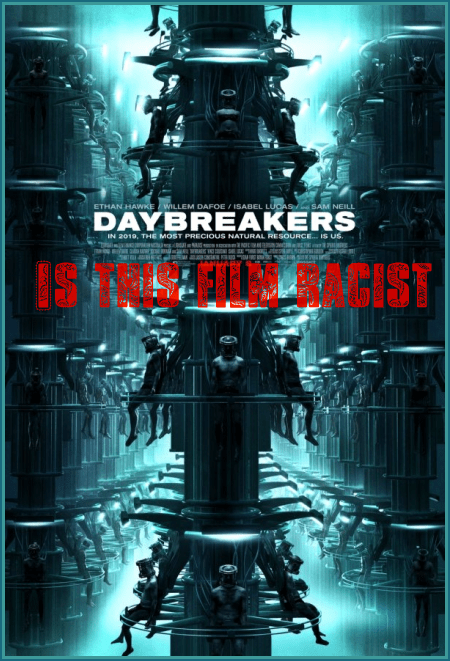
Daybreakers Perpetuates “White Man Guilt” (some spoilers)


While watching The Spierig Brothers’ latest genre offering something bothered me as I sat in the theater. The feeling of unease and discomfort was there (it may have been the theaters nachos but now I’m not so sure). It wasn’t until I was home from watching Daybreakers that it finally hit me. The film’s many social overtones in addition to the liberal amount of gore and blood displayed in the last half-hour also hid an insidious cliche that’s been used far too many times in genre storytelling. I speak of the “white man guilt” syndrome which pervades many popular stories and films.

How could I say that this little vampire scifi/horror film was perpetuating a racist tone in its storytelling? I assure you that it wasn’t easy to see but my eyes were finally opened up to that distinct possibility once I properly digested things.

First, let me give a brief synopsis of what the film is all about. Without going into too much detail about the plot not already spoiled in the trailers, Daybreakers tells the story of a future 2019 where a vampiric virus has swept across the globe, turning most of the population into vampires (with all the traditional colorings and habits). Humans are now the minority in this future Earth. Humans who have become the natural resource the world’s new dominant lifeform needs to consume. But this is a natural resource that is dwindling in supply as less and less humans have been found by the machinery of the vampire elite and overlords. Yadda-yadda and more yadda we’re introduced to one vampire who hates what he has become and hates even more what his kind has done to the minority that are the surviving humans. He wants to find a cure for what he and his race have become so as to make everything all better. Again after more stuff happens he soon comes across a band of these minority humans who suddenly trust the very thing they hate and fear the most. Soon one of these humans approaches him and tells him that he’s their only hope for survival. Lo and behold, he does end up helping them and thus he exsanguinates (literally at times) the guilt which had been eating in the inside.

Just recalling all of that makes me even more sure that Daybreakers is racist in how it portrays its main protagonist. Let’s start with the fact that the hero is white. He’s even whiter than usual since the vampire in him has made him averse to tanning. The head of the all-powerful military-industrial corporation (see they’re also military because they have security with guns and soldiers to find new resources) he works for is evil-incarnate and also white (thus we’re led to believe that being white means one is evil). This hero vampire wants to save the humans and thats why he refuses to drink human blood like the rest of his kind. He talks about his kind using up the blood resource without any thought that doing so means destroying this minority tribe of whats left of the human race.

While the cure he has been searching for to cure not just himself of vampirism but all others like him does get found it is this white vampire with a guilty conscience that ends up figuring out how to replicate the cure. While it was these minority band of humans who had it all along it took one of their enemy who has a change of heart to save them. By saving them he also sheds the guilt of his own majority race’s actions and behaviors toward this minority group by literally becoming one of them as well. By becoming one of them he’s experienced first-hand what this minority group has suffered at the hand of his kind. But in the end, he’s also the only hope this group has to ever living happily ever after.

Do you not see the pattern of “white man guilt” which insidiously weaves it’s way into a story where most people wouldn’t see without the help of those who sees them plain as day. The vampire society intent on exploiting the remaining minority tribe of humans sees themselves as civilized and even gave the humans a chance to assimilate (as told in the beginning), but being the “noble savages” that these humans are refuse to do so because they value the natural way of things before the virus which made humanity became crazed parasites.

Why did it take a white, angst-ridden, reluctant vampire to finally find the cure? Why not let the humans who actually had it in their possession to find it themselves and cut the middle-man out of it? It’s these questions which need to be asked to help initiate a dialogue about how racism is still prevalent in Hollywood and with the white people who help finance such films. People whose guilt about what their ancestors have done have made them genetically culpable of their racist sins. Anyone who can’t see this racism in this narratively-flawed, albeit very gory ending of a vampire flick are hiding in a cave and refuses to believe that racism exist in everything (as long as it’s told by a white person). If minorities refuse to sound out the clarion call to discuss such a divisive issue then it is up to those white people who feel such guilt about what their forefathers have done to do so. I mean, if the people being oppressed and belittled can’t see it for themselves, then the guilt-ridden white America will do it for them whether they want it or not.

So, just like James Cameron’s Avatar and Neill Blomkamp’s District 9 (both of which have been labeled as racist in their own way), I do believe that Daybreakers just continues to perpetuate the insidious evil that is racism by way of “white man guilt” in these films. The fact that the filmmakers are a couple of white brothers from Australia just makes the point even clearer.

In conclusion, as I read all that I just wrote I do believe that I’m nothing but full of political-correctness crap who shouldn’t be taken seriously when it comes to actually discussing race relations and how it affects current society. Maybe the fact that I’m not white made me open up my eyes to the load of crap I just wrote and that sometimes a film is just a film. I’m sure bringing that last part up would label me a racist as well.