Review: Blood Diamond (dir. by Ed Zwick)


“Sometimes I wonder… will God ever forgive us for what we’ve done to each other? Then I look around and I realize, God left this place a long time ago.” — Danny Archer

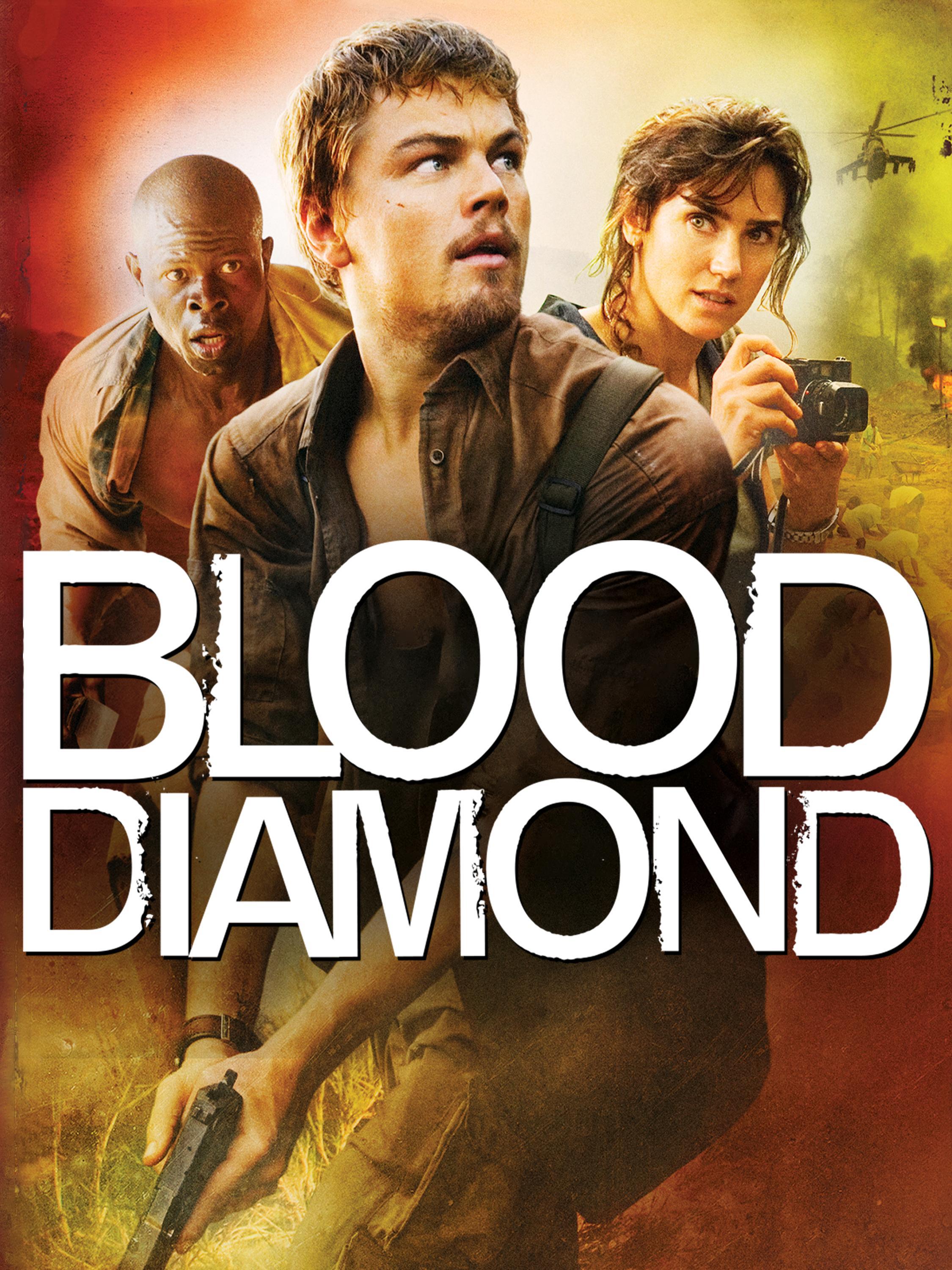
Edward Zwick’s 2006 film Blood Diamond is one of those big Hollywood productions that tries to be both a gritty, globe-trotting thriller and a politically conscious indictment of the diamond trade’s role in African civil wars. Set in Sierra Leone during the 1990s, it stars Leonardo DiCaprio as Danny Archer, a Rhodesian mercenary and diamond smuggler, and Djimon Hounsou as Solomon Vandy, a fisherman torn from his family by rebels and forced into brutal diamond mining. Rounding out the leads is Jennifer Connelly as Maddy Bowen, a tenacious reporter determined to expose the atrocities fueling the global supply of conflict diamonds. The film is ambitious, harrowing, and, at times, as slickly entertaining as it is bluntly didactic. But like many socially minded blockbusters, it walks a tightrope between genuine drama and Hollywood sensationalism.

The story kicks off with a bang—literally—as Solomon’s village is raided by Revolutionary United Front militants, a moment that quickly plunges the viewer into Sierra Leone’s chaotic civil war. Solomon’s family is fragmented: he ends up a slave at a rebel-run mining camp, his son is eventually brainwashed into a child soldier, and his wife flees for safety. Meanwhile, DiCaprio’s Archer lands in jail after a failed smuggling run—which sets the two men on a collision course. Archer learns of Solomon’s discovery of an enormous, rare pink diamond—a stone that could mean escape or redemption for both men but is a magnet for greed, violence, and compromise. Their uneasy partnership with Maddy Bowen, who’s chasing a story, adds layers as their individual motives collide and evolve.

The movie doesn’t shy away from illustrating the devastating effects of the diamond trade—child soldiers, forced labor, mass displacement, and political corruption. While most of the on-screen violence is handled to maximize emotional punch, it never lets the viewer forget the real-world stakes of the Blood Diamond narrative. The film ultimately points viewers toward the establishment of the Kimberley Process—a set of international regulations designed to combat the illicit diamond trade.

A lot of the film’s emotional weight lands on DiCaprio and Hounsou, and for good reason. Leonardo DiCaprio nabs the complex role of Danny Archer with a layered performance and goes the extra mile by working hard on the Zimbabwean (Rhodesian) accent. While accents in film can be divisive, DiCaprio immersed himself deeply, working with dialect coaches and spending time with people from the region to best capture the regional nuances. Although some viewers and critics felt the accent was uneven or shifted at points, many others praised him for nailing this challenging and rare dialect. For an American actor to convincingly embody a mercenary with roots in that part of the world is no small feat. DiCaprio’s commitment brings credibility to Archer’s character, who is morally ambiguous but immensely human.

Djimon Hounsou, playing Solomon Vandy, serves as the emotional core and grounding presence of the film. His portrayal of a man torn apart by civil war, who fights desperately to reclaim his family, is heartbreaking and physically compelling. Their scenes together create genuine tension, as trust is both scarce and necessary for survival. Jennifer Connelly’s Maddy Bowen, while less fleshed out, brings determination and serves as the moral compass driving the film’s exposé of conflict diamonds.

Director Edward Zwick has a way of blending spectacle with raw storytelling. The action sequences, especially the firefights and escapes, feel intense and immersive. The cinematography captures the lush, dangerous landscape of Sierra Leone vividly, contrasting beauty with brutality. Some technical aspects do show their age—like certain digital effects that can feel artificial—but these don’t significantly dampen the overall experience. The soundtrack by James Newton Howard underscores the drama without veering into heavy-handed territory.

Blood Diamond scores high on several fronts. The performances by DiCaprio and Hounsou are standout elements, their evolving relationship carrying the film’s emotional heft. The pulse-pounding action sequences inject thrills while highlighting the chaos of civil war. Perhaps most importantly, the movie exposes the grim realities behind the glittering allure of diamonds, educating audiences about child soldiers, forced labor, and the complicity of international markets in perpetuating violence. Though it sometimes leans into melodrama and moralizing dialogue, the film’s commitment to its message is fairly unambiguous and impactful.

That said, the film sometimes succumbs to the trappings of big-budget Hollywood storytelling. The plot can feel overly convenient, with coincidences and resolutions that stretch credibility. Supporting characters, aside from the leads, are underdeveloped, mainly functioning as plot devices. Dialogue can at times be heavy-handed, particularly in the final act where scenes verge on preachy. Some narrative contrivances—like the recovery and passing of the pink diamond—can feel forced even in a tense, action-driven context. On the technical side, a few CGI moments fail to hold up under scrutiny, but these are minor irritants in an otherwise immersive film.

An important and unavoidable observation about Blood Diamond is how, like many of Edward Zwick’s previous action-dramas, it leans heavily into the “white savior” trope, if not outright embodying it. This trope centers a white protagonist—in this case, Danny Archer—who becomes the crucial figure in the salvation or redemption of non-white characters and communities. While the film sheds light on the horrors and complexity of Sierra Leone’s civil war and the conflict diamond trade, the narrative perspective and moral center overwhelmingly revolve around Archer’s personal journey from cynical mercenary to reluctant hero. The African characters, though vital and powerful especially through Hounsou’s Solomon, are often cast in more reactive roles, with Archer positioned as the key agent for change. The film also features a white journalist, Maddy Bowen, reinforcing this pattern.

Zwick’s leanings toward this trope are not new or isolated. His earlier films Glory (1989) and The Last Samurai (2003) also engage with the white savior narrative. Glory, a Civil War epic about the 54th Massachusetts Infantry Regiment, tells a historically significant story but largely centers on Colonel Robert Gould Shaw, a white officer played by Matthew Broderick, as the story’s main emotional and narrative anchor. The film has been noted for respectfully addressing racism and heroism but still revolves around Shaw’s perspective and sacrifice as a key redemptive figure for the African American soldiers. The Last Samurai similarly places Tom Cruise’s character, an American military advisor, at the heart of a narrative about Japanese samurai culture and resistance, blending cultural appreciation with the problematic trope of the white outsider who becomes indispensable to a non-white community’s fate.

This approach, familiar in Hollywood, walks the line between broad audience engagement and ethical storytelling. Zwick’s films often balance studio and audience expectations with a desire to tell compelling stories about marginalized communities. Yet inevitably, this framing simplifies complex histories and contributes to critiques that such films center whiteness and diminish the agency of non-white characters.

Casually speaking, Blood Diamond is not subtle, but that directness is part of its appeal. For viewers looking for a gripping action drama with strong performances and an ethical core, it delivers. It entertains while providing a sobering look at the high cost of luxury goods. DiCaprio’s portrayal of Danny Archer, complete with an authentically worked-on accent from the region, puts to rest doubts about his action lead capabilities. Hounsou’s performance lingers emotionally, especially in scenes grappling with the trauma of child soldiering. The violence depicted is raw and unvarnished, contributing to a visceral sense of the film’s urgent themes.

Running for about two hours and 23 minutes, the film has plenty of time to develop its complex story and deliver tense action sequences without feeling rushed or padded. Ultimately, Blood Diamond is an effective historical thriller that balances high stakes and moral urgency. While it’s not nuanced in every aspect and occasionally tips into cliché and convenience, it makes a strong case for itself beyond mere entertainment. Whether you’re interested in history, action, or the human stories behind the diamond trade, this film offers a thought-provoking, emotionally resonant experience. Leonardo DiCaprio’s dedication to portraying a Rhodesian mercenary authentically, especially through his accent work, is a highlight that complements the film’s broader narrative ambitions.
Retro Television Review: Sawdust 1.1 “Pilot”


Welcome to Retro Television Reviews, a feature where we review some of our favorite and least favorite shows of the past!  On Thursdays, I will be reviewing Sawdust, which aired on CBS in 1987.  The entire show is currently streaming on YouTube!

From executive producer Ed Zwick, we have a show about a really terrible father.

Episode 1.1 “Pilot”

(Dir by Jeffrey Hornaday, originally aired on July 3rd, 1987)

We bought a circus!

That’s the premise behind Sawdust, in which an accountant named Max Galpin (James Eckhouse) buys a circus after the owner dies.  He then pulls his teenage children out of school and, along with his wife, he decides to live with and run the circus.

What!?

Like seriously, why would he do that?  Unfortunately, the purchase of the circus and the moment when Max tells his family that he’s ruined their lives all take place off-screen.  Max mentions them in his voice-over narration and he says something about how, at an auction of the former owner’s possessions, he bid on the circus but he was surprised when he won.  So, I guess maybe Max wasn’t actually planning on buying the circus but he just bid on it to …. what?  I mean, as a part of my day job, I have been to auctions before and I’ve bid on stuff for my boss.  It was fun and yes, sometimes people do make bids just to run up the price of something.  But I still find it hard to believe that someone could 1) accidentally buy a circus and 2) justify uprooting his family to run the circus.

At first, Max’s wife (Marsha Waterbury) and his daughter (Kellie Overbey) and his son (Bradley Gregg) are not happy with him but that changes once they actually arrive at the circus and get caught up in the excitement of putting on a show.  Max’s daughter takes the longest to come around, mostly because Max wants her to wear a skimpy outfit while walking across a tight rope that is suspended above the ground.  His daughter probably wouldn’t die if she lost her balance but still, it would be embarrassing and what type of father does that to his daughter?  I mean, is walking across a tight rope an easy thing to do?  Meanwhile, Max gets shot out of a cannon, his wife works with an elephant, and his son dresses up like a gorilla.  Max is willing to risk his daughter’s dignity but his son just has to dress up like a gorilla.  What the Hell?

Max gets to know the ringmaster, Serge (Elya Baskin), who quits in a huff but then comes back because the circus is all he knows.  And Leslie Jordan shows up, not saying a word but playing various musical instruments.  We also meet a man who has been hired to serve as the tutor for Max’s kids because again, Max has pulled them out of school so that they can join the circus.  Max really is a terrible father.  What a jerk.  Seriously, his children have not only left behind all of their friends but also whatever hope they may have had of getting into an Ivy League college.  Now, they’ll have to settle for a state school.  And why?  Because their father, despite having no circus experience, decided to run a circus.

This pilot was so weird.  There was a laugh track but the show took itself oddly seriously.  Max is a character to whom most viewers would have mixed feelings and the rather frantic performance of James Eckhouse does little to make him sympathetic.  There would not be a second episode.

A Movie A Day #15: Special Bulletin (1983, directed by Ed Zwick)


specialbulletin2

“We interrupt our regularly scheduled programming for a special report…”

Led by veteran anchor John Woodley, the RBS news team is providing continuing coverage of a developing crisis in Charleston, South Carolina, where terrorists are holding several members of the coast guard, a local new reporter, and his cameraman hostage on a small tugboat.  These are not typical terrorists, though.  Two of them are nuclear scientists.  One of them is a social worker.  Another one is a nationally-renowned poet.  The final terrorist is a former banker robber who was just recently released from prison.  This unlikely group has only two demands: that the U.S. government hand over every single nuclear trigger device at the U.S. Naval Base and that RBS give them a live television feed so that they can explain their actions to the nation.  If either of those demands are not met, a nuclear bomb will be detonated and will destroy Charleston.

This made-for-TV movie was shot on video tape, to specifically make it look like an actual news broadcast.  Though much of the movie seems dated when compared to today’s slick, 24-hour media circus, Special Bulletin was convincing enough that, when it was originally broadcast in 1983, it caused a mini-panic among viewers who missed the opening disclaimer:

specbull_disclaimer

Because the movie deals with the threat of nuclear terrorism instead of a U.S.-Soviet nuclear war, it still feels relevant in a way that many of the atomic disaster films of the 1980s do not.  Beyond making an anti-nuclear statement, Special Bulletin is also a critical look at how the news media sensationalizes every crisis, with the RBS news team going from smug complacency to outright horror as the situation continues to deteriorate.  David Clennon and David Rasche are memorable as the two most outspoken of the terrorists and Ed Flanders is perfectly cast as a veteran news anchor struggling to maintain control in the middle of an uncontrollable situation.  Special Bulletin won an Emmy for Outstanding Drama Special and can be currently be found on YouTube.

Keep an eye out for Michael Madsen, who shows up 57 minutes in and gets the movie’s best line: “That guy’s a total psycho ward.”

madsen-special-bulletin

Embracing the Melodrama Part II #89: Legends of the Fall (dir by Ed Zwick)


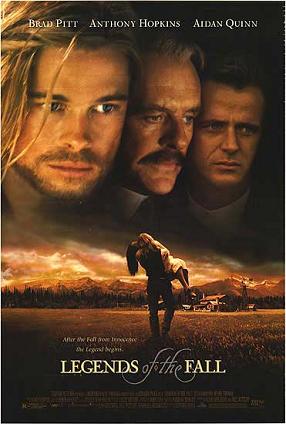
LegendsoffallposterWhen I first started to watch the 1994 film Legends of the Fall on Encore, I was a little bit concerned when I discovered that it was directed by Ed Zwick.  After all, Zwick also directed Love and Other Drugs, which is one of the worst and most insulting films of all time.  In fact, I nearly stopped watching when I saw Zwick’s name.  But, largely because I want to finish up this series of melodramatic film reviews at some point in the near future, I decided to go ahead and watch the film.

And it turned out that Legends of the Fall is not a bad film.  I probably would have enjoyed it more if I had seen it in a movie theater as opposed to on television but, considering that it was directed by Ed Zwick, Legends of the Fall is definitely watchable.  If nothing else, it’s better than Love and Other Drugs.

Legends of the Fall tells the story of the Ludlows, a family that lives on a Montana ranch at the start of the 2oth Century.  Starting with the final days of the Indian wars and proceeding through World War I and prohibition, Legends of the Fall covers a lot of historical events but does so in a very Hollywood way, which is to say that all of the main characters dress like they’re from the past but they all have very modern social attitudes.  In this case, Col. William Ludlow (Anthony Hopkins) may be a wealthy white military veteran but he’s also totally pro-Native American.  And, of course, all the local Native Americans love him, despite the fact that he’s a representative of the institutions that have destroyed their way of life.

Anyway, Col. Ludlow has three sons.  The oldest, Alfred (Aidan Quinn), is serious and responsible. The youngest, Samuel (Henry Thomas), is naive and idealistic.  And the middle child is Tristan (Brad Pitt), who is wild and rebellious and looks like Brad Pitt.  You have to wonder how the same gene pool could produce both Aidan Quinn and Brad Pitt.

As the film begins, Samuel has returned from studying at Harvard.  With him is his fiancée, Susannah (Julia Ormond, who has really pretty hair in this movie).  Though she loves Samuel, Susannah finds herself attracted to Tristan, largely because Tristan looks like Brad Pitt.  Tristan is also attracted to Susannah but he would never betray his younger brother.  In fact, when Samuel announces that he’s enlisted in the Canadian army so that he can fight in World War I, Tristan and Alfred soon do the exact same thing.

War is Hell, which is something that Samuel discovers when he’s gunned down by a bunch of German soldiers.  Tristan responds by cutting Samuel’s heart out of his body and sending it back to Montana.  He then proceeds to go a little crazy and when we next see Tristan, he’s uniform is decorated with the scalps of dead Germans.

Meanwhile, Alfred has been wounded in battle and is sent back to Montana.  Eventually, he ends up married to Susannah.  And then Tristan comes back home and…

Well, a lot of stuff happens after Tristan returns.  In fact, you could even argue that too much happens.  Zwick obviously set out to try to make Legends of the Fall into an old school Hollywood epic but far too often, it seems like he’s mostly just copying scenes from other films.  There’s a hollowness at the center of Legends of the Fall and the end result is a film that’s visually gorgeous and thematically shallow.

And yet, you should never underestimate the importance of looking good.  Legends of the Fall is a beautiful film to look at and so is Brad Pitt.  I wouldn’t necessarily say that Brad gives a particularly good performance here because, to be honest, Tristan is such an idealized character that I doubt anyone could really make him believable.  But the Brad Pitt of 1994 looked so good and had such a strong screen presence that it didn’t matter that he wasn’t as good an actor as the Brad Pitt of 2015.  Legends of The Fall is one of those movies that can get by on pure charisma and fortunately, Brad Pitt is enough of a movie star to make the film work.

Legends of the Fall is not a great film but it’s still not a bad way to waste 120 minutes.  (Of course, the film itself lasts 133 minutes but still…)

Film Review: Love and Other Drugs (dir. by Ed Zwick)


There is exactly one genuinely effective and emotionally (and intellectually) honest scene in the new film Love and Other Drugs.  It’s a scene that features people who actually have Parkinson’s talking about living life with this disease.  As they speak, they are watched by Anne Hathaway who is playing a character who has Stage 1 Parkinson’s.  Their words brought tears to my eyes but, at the same time, it also reminded me that, unlike them, Hathaway (who smiles throughout the entire scene like a Miss America runner-up) was merely playing someone with Parkinson’s.  It was hard not to think about the fact that while the people speaking are still dealing with the disease today, Hathaway is off shooting her next film.

That’s the type of film that Love and Other Drugs is.  It’s the type of film where the slightest amount of reality only serves to remind the viewer of how fake the rest of the movie is.

The movie stars Jake Gyllenhaal, who I will always love because he will always be Donnie Darko.  That’s why it pains me to say that Gyllenhaal’s over-the-top performance in this film is just a little bit awful.  He’s playing a compulsive womanizer who becomes a salesman for Pfizer in the 1990s.  The first fourth of the film is pretty much made up of him fucking every girl he meets and then abandoning her afterward.  However, the film suggests we shouldn’t hold this against him since apparently, every woman in America is presented as being a giggling, simple-minded whore.  Except, of course, for Anne Hathaway who is presented as being a depressed, angry, and sick.  Gyllenhaal falls in love with her and the subtext here, I guess, is that Gyllenhaal is redeemed because he’s willing to love a girl with a terrible disease.  So, in a way, Anne Hathaway’s character having a terrible disease is the best thing that could have ever happened to our protagonist.

At the same time this is going on, Gyllenhaal is trying to sell a new drug called Viagra which, once again, gives director Ed Zwick an excuse to show a bunch of frumpy women going nuts over a drug for men who can’ t get it up.  Interestingly enough, we don’t see any of the men with limp dicks obsessively taking the pills until all the blood stops flowing to their brains.  Gyllenhaal does have a scene where he can’t get it up but Hathaway (who doesn’t even get upset — now, that is confidence!) still manages to get him off after listening to him talk about how difficult it is to be a rich, white boy.  Later on, Gyllenhaal is tricked into taking Viagra (by a woman, naturally) and he ends up having to go to the ER with an erection that everyone tells us is very impressive.  They have to tell us because we don’t actually get to see it or any other cocks in this film though Anne Hathaway’s boobs are listed in the end credits.

Love and Other Drugs is one of those films that it so overwhelmingly bad that I’m sure it’ll have some passionate defenders who will probably bitch and moan about this review.  So, allow me to say a few things to them now so I won’t have to waste my time replying — when a movie introduces a bunch of senior citizens getting on a bus to go to Canada to get affordable medication just so that Jake Gyllenhaal can later chase the bus down in his Porsche and shout about how much he loves Anne Hathaway, the movie has got some issues.  When a movie features Anne Hathaway responding to getting a breast exam from a fake doctor by then agreeing to fuck the fake doctor, the movie has obviously been made by men who have never given one thought to the reality of breast cancer.  When a movie insists that Hathaway’s promiscuity is due to her being emotionally damaged but Gyllenhaal’s identical behavior is presented as being cute and funny then that essentially makes this movie a sexist fantasy.

As I said earlier, Jake Gyllenhaal gives a performance here that is just bad.  He’s miscast here.  The off-centered vibe that made him the perfect Donnie Darko doesn’t work here and he reacts by smiling during the comedic scenes and screwing up his face all weird-like during the dramatic ones. 

Anne Hathaway — who was so brilliant playing me in Rachel Getting Married — actually gives a pretty good performance but she’s constantly betrayed by the movie’s script and direction.  I was first diagnosed as being bipolar nine years ago and I can say that Hathaway perfectly captures both the shame and the defiance that comes from having a socially unacceptable disease.

The rest of the cast is made up of character actors playing thinly-drawn stereotypes.  Hank Azaria, however, has a few good scenes as a hedonistic doctor but then you have to deal with Gabriel Macht who plays a rival salesman who just happens to be Hathaway’s ex and a psycho.  Why do filmmakers never realize that giving their fantasy figures psychotic ex-boyfriends does nothing more than trivialize the entire plot?  For the entire film, I sat there and wondered, “But why would anyone go out with someone that evil in the first place?  Other than the fact that it’s convenient for the plot?”

I saw this movie with my very good friend Jeff and my sister Erin.  Since Erin is a pharmaceutical sales rep, I asked her how accurate this film was.  Erin smiled and replied, “Well, there is a company called Pfizer.”  I also asked Jeff if this movie was a realistic portrayal of how men see the world.  He declined to answer. 

Love and Other Drugs attempts, all at the same time, to be a romantic drama, an over-the-top comedy, a recreation of history, a political/social satire, and a well-intentioned piece of social advocacy.  Taken individually, each of those genres is difficult to pull off successfully.  Toss them all together and it’s nearly impossible.  Yes, it could be done but not by director Ed Zwick.