Retro Television Review: St. Elsewhere 3.3 “Two Balls And A Strike”


Welcome to Retro Television Reviews, a feature where we review some of our favorite and least favorite shows of the past! On Fridays, I will be reviewing St. Elsewhere, a medical show which ran on NBC from 1982 to 1988.  The show can be found on Daily Motion.
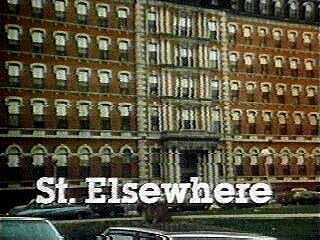
This week, the nurses go on strike.  Fire all of them!, I say.

Episode 3.3 “Two Balls and a Strike”

(Dir by David Anspaugh, originally aired on October 3rd, 1984)

It’s another depressing few days at St. Eligius.

When negotiations break down, all of the nurses — except for Shirley Daniels — go on strike.  Led by Nurse Rosenthal, they march out of the hospital and join a picket line in the rain.  Triumphant music plays on the soundtrack  Rosenthal gets on her bullhorn and announces that anyone making deliveries to the hospital will be crossing the picket line and not showing solidarity with the union.  Honestly, though?  Screw the union.  It’s a hospital!  It needs supplies.  There are people dying inside of that building and they’re not even going to have the dignity of clean linen because of Nurse Rosenthal and her stupid union.  And another thing …. Rosenthal is the head of union at St. Eligius.  So, why isn’t she marching in the rain and carrying a sign?  Why does she get to stand in the doorway and shout at people?  Get out there and suffer for your union, you British commie!

Obviously, the show wanted me to be inspired by Rosenthal and the union.  Whenever it switched over to the picket line, triumphant music started playing.  I’m with Nurse Daniels on this one, though.  Daniels didn’t vote the union so why should she have to suffer in the rain?  She stays on the job.  “Good luck,” Rosenthal tells her, “you’ll need it.”  And all I can say to that is that at least Shirley Daniels isn’t deserting the hospital’s patients.

While the nurses are on strike, Dr. Canavero is attacked by a hulking man wearing a ski mask.  Canavero is able to fight him off.  Westphall and everyone else at the hospital immediately assumes that the man was Peter White but Peter has an alibi.  He was in radiology when Canavero was attacked.  So, is there a new ski mask rapist haunting the hospital?  The first ski mask rapist storyline was pretty disturbing, especially since Peter got away with it.  I’m not sure I want to go through a second one.

Dr. Craig and Ellen went to couples therapy.  As usual, Dr. Craig got annoyed with the whole thing.  There’s really nothing more fun than watching Dr. Craig get annoyed.  No one gets annoyed better than William Daniels.  Still, it seemed to do Dr. Craig and Ellen some good, with Ellen making plans to go to Hawaii and Dr. Craig acknowledging that he’s not always the easiest person to deal with.

As for Dr. Westphall …. he spent most of this episode depressed.  Westphall is always depressed.

This is my final St. Elsewhere review for 2025.  Retro Television Review is taking a break for the holidays, so I can focus on Awards Season and Christmas movies!  St. Elsewhere will return on January 9th.

Retro Television Review: St. Elsewhere 3.2 “Playing God: Part Two”


Welcome to Retro Television Reviews, a feature where we review some of our favorite and least favorite shows of the past! On Fridays, I will be reviewing St. Elsewhere, a medical show which ran on NBC from 1982 to 1988.  The show can be found on Daily Motion.

This week, the hospital is a depressing place.

Episode 3.2 “Playing God: Part Two”

(Dir by Bruce Paltrow, originally aired on September 26th, 1984)

There was a lot going on in this episode.

Sister Domenica demanded that Sister Theresa be taken off of life support and she threatened to sue the hospital if it didn’t happen.  This led to Dr. Westphall telling another long and depressing story about his dead wife.  I don’t mean to be flippant about anyone’s tragedies but it’s hard not to notice that almost everything seems to lead to Westphall telling a depressing story.  Westphall is one of the most saddest television characters that I’ve ever come across.

The nurses are closer to striking.  A labor negotiator named Richard Clarendon (Herb Edelman) is brought in by the nurses and it’s hard not to notice that he looks a lot like Helen Rosenthal’s ex-husband.  I think I can already guess where this is heading.

A sick child was brought in by a woman (Tammy Grimes) who claimed to be his fairy godmother.  This gave Fiscus an excuse to get a consultation from Kathy Martin, who has abandoned the morgue for psychiatry and who is no longer dressing exclusively in black.

At home, Dr. Craig struggled with impotence.  At the hospital, Dr. Ehrlich gave an awkward lecture about whether or not one can have sex after heart surgery.

The firefighters are still recovering from their burns.

Clancy got an abortion, despite Morrison’s objections.

And yet, all that drama was overshadowed by the fact that the Dr. Peter White — the drug-addicted rapist who nearly killed more than a few patients due to his own incompetence — is once again walking the halls of St. Eligius.  White won his lawsuit.  I’m not really sure that I understand what the basis of his lawsuit was.  St. Eligius could only ask a select number of residents to return and, even if you overlook the fact that White was accused of rape, it’s not as if Dr. White was ever an especially competent doctor.  It would seem that just his struggle with drug addiction would be enough to justify not asking him to return.  And yet, somehow, Dr. Peter White is once again a resident at St. Eligius.  (The ruling was probably handed down by a Carter judge.)

“You just can’t admit that you were wrong about me!” White snaps at Westphall.

Westphall replies that White is a terrible human being and not worthy of being a doctor and that he will not be allowed to work with any patients at the hospital.  And, for once, I wanted to cheer Dr. Westphall.  He may be depressing but he understands exactly who and what Peter White is.

Whatever the future may hold for the hospital, I have a feeling that it’s not going to be happy.  Two episodes in and the third season has already settled into a pit of melancholy.  That said, melancholy is perhaps the right mood for a medical show.  When it comes to hospitals, there aren’t many happy endings.

Retro Television Review: St. Elsewhere 3.1 “Playing God, Part One”


Welcome to Retro Television Reviews, a feature where we review some of our favorite and least favorite shows of the past! On Fridays, I will be reviewing St. Elsewhere, a medical show which ran on NBC from 1982 to 1988.  The show can be found on Daily Motion.

Today, we start the third season of St. Elsewhere with some new opening credits!

Episode 3.1 “Playing God, Part One”

(Dir by Bruce Paltrow, originally aired on September 19th, 1984)

The opening of the third season finds that St. Eligius is just as depressing as it’s ever been.

Fiscus leads a group of new residents, including Dr. Elliott Axelrod (played by new series regular Stephen Furst), through the hospital.  Fiscus comes across as being an arrogant jackass.  I guess that’s the appeal of being a second-year resident.  You get to look down on all of the first-years.

Jack is still dating Clancy (young Helen Hunt).  When Clancy tells Jack that she’s pregnant, he’s shocked when she says she’s planning on getting an abortion.  Jack proposes to her.  Clancy says she’s not ready to get married and she’s not ready to have a baby.

Dr. Craig is still yelling at Dr. Ehrlich.  Dr. Ehrlich is still annoying the nurses.

Speaking of the nurses, they’re going on strike!

Three firefighters (one of whom is played by Erin Hudson) are injured while on the job and are rushed to St. Eligius with severe burns.  Luckily, plastic surgeon Bobby Caldwell (Mark Harmon, without that terrible mustache he wore during season two) is on call.

Dr. Peter White is working in a shady clinic and is still suing for his right to be a resident.

A traffic accident leaves one nun in a coma and apparently brain-dead.  Sister Doemnica (Michael Learned) wants to take her off life-support.  Westphall (Ed Flanders), who seems even more depressed than usual, disagrees.  It looks like there’s going to be some conflict about this.  For once, I’m on Westphall’s side.  I’m believer in hope.

Auschlander is still battling his cancer.

In other words, it’s another day at St. Eligius.  The third season premiere did a good job of re-introducing viewers to the hospital.  The snarkiness of Fiscus’s tour nicely balanced all of the more dramatic moments in the episode.  If anything has me worried, it’s the possible return of the loathsome Peter White.  How is the hospital going to deal with the return of a man who they all know is a rapist, even if he was somehow acquitted?  I guess we’ll find out.

Retro Television Review: St. Elsewhere 2.22 “Hello, Goodbye”


Welcome to Retro Television Reviews, a feature where we review some of our favorite and least favorite shows of the past! On Fridays, I will be reviewing St. Elsewhere, a medical show which ran on NBC from 1982 to 1988.  The show can be found on Hulu and, for purchase, on Prime!

This week, season two comes to an end.

Episode 2.22 “Hello, Goodbye”

(Dir by Linda Day, originally aired on May 16th, 1984)

Due to St. Eligius being structurally unsound, the first floor is temporarily closed.  The ER, which was the busiest part of the hospital, is no longer operative and Shirley Daniels is assigned to redirect any and all ambulances to Boston General.  As Joan explains it, either the first or the third floor had to be closed so that a team of engineers could strengthen the building.  The third floor is surgery, where all the money is made.  And so, it’s the ER that closes.  Joan, meanwhile, is designated as the scapegoat for all of the recent problems at St. Eligius.  She loses her job with the mayor’s office.

Fresh from interviewing a nervous Dr. Elliott Axelrod (Stephen Furst) for a position as a resident, Dr. Auschlander collapses.  Dr. Westphall fears that his old friend is going to die but finally, Auschlander wakes up and says that he’s not done fighting yet.  Neither is St. Eligius.

Luther finds a stuffed Cheshire cat for a young heart patient.  Dr. Craig finally starts to forgive his drug addict son, Stephen (Scott Paulin).  And Dr. Morrison takes his son on a walking tour of Boston and meets a college student named Clancy (a young Helen Hunt).  Even though Clancy label Morrison a “boomer,” she still spends the night with him.  Morrison finally takes off his wedding ring and appears ready to try to move on with his life.

The second season ends on a melancholy note.  Apparently, the show’s producers weren’t sure whether or not St. Elsewhere was going to be renewed for a third season and this episode was designed to work as both a season and a series finale.  Very few of the regular characters appear and the episode is dominated by Westphall and Morrison, both of whom tend to be rather somber.  In other words, this is a depressing episode but it’s not an episode without hope.  Auschlander does wake up.  Morrison does pursue a tentative relationship with Clancy.  Even with the hospital temporarily shut down, life goes on.  Unlike Wendy Armstrong, nobody gives up.  It’s sad but at least there’s a chance that things could get better.

Both this episode and the second season overall were a roller coaster, deftly mixing drama and comedy and giving the show’s ensemble cast a chance to shine.  Next week, we start season three!

Retro Television Review: St. Elsewhere 2.21 “Rough Cut”


Welcome to Retro Television Reviews, a feature where we review some of our favorite and least favorite shows of the past! On Fridays, I will be reviewing St. Elsewhere, a medical show which ran on NBC from 1982 to 1988.  The show can be found on Hulu and, for purchase, on Prime!

This week, St. Eligius loses a resident.

Episode 2.21 “Rough Cut”

(Dir by Eric Laneuville, originally aired on May 9th, 1984)

Bobby Caldwell and Joan Halloran decide to stop being Boston’s most boring couple by taking an impromptu trip to Paris.  But then Bobby catches himself in his zipper while trying to put on his pants sans underwear and the trip is cancelled.  Bobby spends the rest of the episode walking very carefully.

Fiscus agrees to pose for a story on eligible Boston bachelors and soon finds himself being photographed wearing only a bow-tie and a pair of black briefs.  That’s more of Howie Mandel than I’ve ever wanted to see.  Potential suitors start to call the hospital.  Fiscus is excited until his discovers that they’re all men.

Dr. Wendy Armstrong commits suicide.

St. Elsewhere was a show that frequently mixed comedy and drama but it was still undeniably jarring how this episode went from Howie Mandel getting half-naked and Mark Harmon stiffly moving down a hospital corridor to Dr. Armstrong downing a bunch of pills and dying in the OR.  Wendy killed herself after she was told that she would be invited back to do the second year of her residency.  (The first two seasons of St. Elsewhere represented a year in the life of its characters.)  Bulimic, feeling guilty about a patient who miscarried, and traumatized by her assault at the hands of Peter White, Wendy ended things.

Before Wendy’s suicide, Westphall, Auschlander, and Craig had decided to cut Morrison from the program.  While Craig and Auschlander respected Morrison as a person, they felt that he was still struggling as a doctor.  Seriously, Dr. Craig?  You took his dead wife’s heart but you won’t find him a place at the hospital?  However, with Wendy dead, Morrison is invited to take her spot.  Morrison accepts.  So, I guess that worked out for him.

To the surprise of no one, Dr. White is also cut from the program.  He loudly announces that he’s going to sue for his right to continue as a resident.  “I’ll be back,” he shouts, sounding like Warren Stacy at the end of 10 To Midnight Remember how that turned out?

10 To Midnight (1983, dir by J. Lee Thompson, DP: Adam Greenberg)

This was a good episode.  Even though I never really cared much for Wendy’s character, her death was still handled well and it was emotionally effecting.  Next week, the second season of St. Elsewhere comes to a close.

Retro Television Review: St. Elsewhere 2.20 “Cramming”


Welcome to Retro Television Reviews, a feature where we review some of our favorite and least favorite shows of the past! On Fridays, I will be reviewing St. Elsewhere, a medical show which ran on NBC from 1982 to 1988.  The show can be found on Hulu and, for purchase, on Prime!

This week, Peter White goes on trial.

Episode 2.20 “Cramming”

(Dir by Tim Matheson, originally aired on May 2nd, 1984)

Dr. Peter White finally goes on trial, charged with raping Kathy Martin and assaulting Wendy Armstrong.  For his attorney, he hires the same lawyer (Conrad Janis) who previously made the case against him at his disciplinary hearing.  The lawyer asks Kathy Martin about her own reputation at St. Eligius.  (“How many times have you had sex in the morgue?”)  Peter himself manages to pass a lie detector test.  (Sociopaths don’t have the same physical reactions to telling a lie as normal people.)  In the end, Peter is acquitted.

Shirley Daniels blames Kathy for the acquittal, saying that she should have come forward earlier.  As for Wendy, she deals with the trauma by binging and then purging.  When one of her patients miscarries after being admitted to the hospital, it’s determined that Wendy carelessly missed a heart murmur.  When Wendy argues that she’s been under pressure due to the trial, Dr. Craig points out that Wendy missed the heart murmur before the trial even started.  Wendy breaks down into tears.

I have to admit that Wendy Armstrong has never been one of my favorite characters on this show.  She’s the type of doctor who most people would dread having to deal with.  She knows all of the technical stuff but she has absolutely no idea how to relate to patients and she gets defensive whenever anyone disagrees with her.  Even if she hadn’t been attacked by Peter White, it seems like it was inevitable that she would eventually end up overlooking something with one of her patients.  That said, my heart still broke for her in this episode.  One gets the feeling that she’s one bad day away from breaking.

This episode ends with all of the residents taking their National Board exams.  The residents know that five of them will be cut from the program.  Having been acquitted, Dr. White approaches Westphall and Auschlander and announces that he doesn’t have any hard feelings towards them and he hopes that they’ll give him a fair shot.  “I’m innocent,” he lies.

Dr. Ehrlich is also nervous about his exams, cramming everything he can into his last minute study sessions.  His Aunt Cherise (Louise Lasser) comes to visit and help him deal with the end of his marraige to Roberta but Ehrlich is able to dump her off on Dr. Westphall.  After having an awkward dinner with the eccentric Cherise, Westphall realizes that he’s not ready to start dating again.

This episode left me reeling, to be honest.  The acquittal of Peter White was a gut punch.  I know he’s guilty.  Everyone in the hospital knows that he’s guilty.  But he’s acquitted.  Kathy Martin’s name is drugged through the mud.  Wendy Armstrong has gone from being determined to self-destructive.  But Peter White has not only gotten away with his crimes but he’s now apparently convinced that he can go back to being a doctor at St. Eligius.  And who knows?  He probably can.  It’s a messed up world.  It was messed up in 1984 and it’s messed up today.

Next week, we’ll find out which residents made the cut!

Retro Television Review: St. Elsewhere 2.19 “The Women”


Welcome to Retro Television Reviews, a feature where we review some of our favorite and least favorite shows of the past! On Fridays, I will be reviewing St. Elsewhere, a medical show which ran on NBC from 1982 to 1988.  The show can be found on Hulu and, for purchase, on Prime!

This week, St. Elsewhere tries something different.

Episode 2.19 “The Women”

(Dir by Bruce Paltrow, originally aired on March 28th, 1984)

Four women share a room at St. Eligius.

Evelyn Milbourne (Eva La Galliene) is elderly, headstrong, and rich.  She’s also about to lose her independence as it’s clear that she can no longer live on her own.

Rose Orso (Brenda Vacarro) is only in her 40s but is already showing signs of dementia.  She struggles to remember who she is.  Her husband is becoming a stranger.  At one point, she grabs some scissors.  At first, it seems like she might be planning on attacking one of the other women.  Instead, she cuts her hair and doesn’t do a very good job of it.

Paige (Blythe Danner) is in for a nose job and she tells a lot of stories about her glamorous life outside of the hospital.  Towards the end of the episode, she confesses that she’s actually a pathological liar who got her nose job because she didn’t have anything better to do.

The fourth woman never speaks.  She’s in a coma.  She dies in the middle of the night and is rolled out of the room with disturbing efficiency.

This episode was basically a play.  A few of the regulars got scenes of their own but, for the most part, the action stayed in that one hotel room and it focused on the four women.  When I first realized what this episode was going to be like, I really thought I was going to hate it.  It seemed like the sort of thing that would bring out the worst in the show’s writers.  Instead, it turned out to be a very well-done and extremely well-acted episode, one that reminded the viewer that every patient has their own story.  After spending most of this season focusing on the doctors, The Women announced that the patients matter too.

Retro Television Review: St. Elsewhere 2.18 “Equinox”


Welcome to Retro Television Reviews, a feature where we review some of our favorite and least favorite shows of the past! On Fridays, I will be reviewing St. Elsewhere, a medical show which ran on NBC from 1982 to 1988.  The show can be found on Hulu and, for purchase, on Prime!

This week, Peter White returns to the hospital.

Episode 2.18 “Equinox”

(Dir by David Anspaugh, originally aired on March 14th, 1984)

A college student (Thomas Byrd) comes in after taking a hit to the groin during a touch football game.  It turns out that he might have testicular cancer and it falls to Dr. Cavanero to let him know that he will soon be down a ball.

Dr. Chandler is upset when his new girlfriend prefers to hang out with Luther.  Chandler accuses Luther of “shuckin’ and jivin’.”  Chandler’s girlfriend dumps him for being “mean.”  In a well-acted scene, Chandler talks to Morrison about how he’s expected to act one way as a black man and another way as a black doctor.

Fiscus makes the mistake of giving Elliott Axlerod (Stephen Furst) his lucky baseball cap.  Axelrod spills a urine sample on it and then accidentally sets the hat on fire while attempting to dry it.  Axlerod is having a terrible day until a man dressed like Paul Revere brings his horse into the ER for treatment.  It turns out that Axlerod’s father was veterinarian.  Axlerod cures the horse but he still has to get Fiscus a new hat.

Finally, Dr. White returns.  His charges have been reduced from attempted rape to assault.  Wendy Armstrong is not happy and starts to binge eat.  (And yet, as several nurses point out, she doesn’t gain a pound.  We all know what that means….)  When Kathy Martin sees Peter in the cafeteria, she yells that he raped her.  “You’re crazy,” Peter lies.

The episode ends with Dr. Chandler going for a run outside, stopping, and screaming into the air.

This episode was a bit uneven.  The Axlerod story worked because of the likability of Stephen Furst and not because the story itself was particularly clever.  The Philip Chandler/Jack Morrison conversation was the highlight of the episode, though the ending with Chandler screaming into the void was a bit overdone.

As for Dr. White, I’ve reached the point where I can’t even stand to look at him and I feel foolish for having any sympathy for him earlier in the season.  Hopefully, this season will end with Dr. White going to prison for life because I’m not sure how many more episodes I can handle of him wandering around the hospital with that smug look on his face.

Seriously, St. Elsewhere, take care of this guy soon….

The Unnominated #20: The Ninth Configuration (dir by William Peter Blatty)


Though the Academy of Motion Picture Arts and Sciences claim that the Oscars honor the best of the year, we all know that there are always worthy films and performances that end up getting overlooked.  Sometimes, it’s because the competition too fierce.  Sometimes, it’s because the film itself was too controversial.  Often, it’s just a case of a film’s quality not being fully recognized until years after its initial released.  This series of reviews takes a look at the films and performances that should have been nominated but were, for whatever reason, overlooked.  These are the Unnominated.

Some films defy easy description and that’s certainly the case with 1980’s The Ninth Configuration.

The film opens with a shot of a castle sitting atop of a fog-shrouded mountain.  A voice over tells us that, in the early 70s, the castle was used by the U.S. government to house military personnel who were suffering from mental illness.  Inside the castle, the patients appear to be left to their own devices.  Lt. Reno (Jason Miller) is trying to teach dog how to perform Shakespeare.  Astronaut Billy Cutshaw (Scott Wilson) is haunted by the thought of being alone in space and refuses to reveal why he, at the last minute, refused to go to the moon.  The men are watched over by weary and somewhat sinister-look guards, who are played by actors like Joe Spinell and Neville Brand.

Colonel Kane (Stacy Keach) shows up as the new commandant of the the castle.  From the first minute that we see Kane, we get the feeling that there might be something off about him.  Though he says that his main concern is to help the patients, the man himself seems to be holding back secrets of his own.  With the help of Colonel Fell (Ed Flanders, giving an excellent performance), Kane gets to know the patients and the guards.  (Despite the objections of the guards, Kane says that his office must always be unlocked and open to anyone who want to see him.)  He takes a special interest in Cutsaw and the two frequently debate the existence of God.  The formerly religious Cutshaw believes the universe is empty and that leaving Earth means being alone.  Kane disagrees and promises that, should he die, he will send proof of the afterlife.  At night, though, Kane is haunted by dreams of a soldier who went on a murderous rampage in Vietnam.

The film start out as a broad comedy, with Keach’s smoldering intensity being matched with things like Jason Miller trying to get the dogs to perform Hamlet.  As things progress, the film becomes a seriously and thoughtful meditation on belief and faith, with characters like Kane, Billy, and Colonel Fell revealing themselves to be quite different from who the viewer originally assumed them to be.  By the time Kane and Cutshaw meet a group of villainous bikers (including Richard Lynch), the film becomes a horror film as we learn what one character is truly capable of doing.  The film then ends with a simple and emotional scene, one that is so well-done that it’ll bring tears to the eyes of those who are willing to stick with the entire movie.

Considering all of the tonal shifts, it’s not surprising that the Hollywood studios didn’t know what to make of The Ninth Configuration.  The film was written and directed by William Peter Blatty, the man who wrote the novel and the script for The Exorcist.  (The Ninth Configuration was itself based on a novel that Blatty wrote before The Exorcist.)  By most reports, the studio execs to whom Blatty pitched the project were hoping for another work of shocking horror.  Instead, what they got was an enigmatic meditation on belief and redemption.  The Ninth Configuration had the same themes as The Exorcist but it dealt with them far differently.  (Because he wrote genre fiction, it’s often overlooked that Blatty was one of the best Catholic writers of his time.)  In the end, Blatty ended up funding and producing the film himself.  That allowed him complete creative control and it also allowed him to make a truly unique and thought-provoking film.

The Ninth Configuration was probably too weird for the Academy.  Though it received some Golden Globe nomination, The Ninth Configuration was ignored by the Oscars.  Admittedly, 1980 was a strong year and it’s hard to really look at the films that were nominated for Best Picture and say, “That one should be dropped.”  Still, one can very much argue that both Blatty’s script and the atmospheric cinematography were unfairly snubbed.  As well, it’s a shame that there was no room for either Stacy Keach or Scott Wilson amongst the acting nominee.  Keach, to date, has never received an Oscar nomination.  Scott Wilson died in 2018, beloved from film lovers but never nominated by the Academy.  Both of them give career-best performances in The Ninth Configuration and it’s a shame that there apparently wasn’t any room to honor either one of them.

The Ninth Configuration is not a film for everyone but, if you have the patience, it’s an unforgettable viewing experience.

Previous Entries In The Unnominated:

  1. Auto Focus 
  2. Star 80
  3. Monty Python and The Holy Grail
  4. Johnny Got His Gun
  5. Saint Jack
  6. Office Space
  7. Play Misty For Me
  8. The Long Riders
  9. Mean Streets
  10. The Long Goodbye
  11. The General
  12. Tombstone
  13. Heat
  14. Kansas City Bomber
  15. Touch of Evil
  16. The Mortal Storm
  17. Honky Tonk Man
  18. Two-Lane Blacktop
  19. The Terminator

Retro Television Review: St. Elsewhere 2.17 “Vanity”


Welcome to Retro Television Reviews, a feature where we review some of our favorite and least favorite shows of the past! On Fridays, I will be reviewing St. Elsewhere, a medical show which ran on NBC from 1982 to 1988.  The show can be found on Hulu and, for purchase, on Prime!

This week’s episode was available on neither Hulu nor Prime.  I had to watch a really terrible upload that I found on Daily Motion.  Bleh.

Episode 2.17 “Vanity”

(Dir by Mark Tinker, originally aired on March 7th, 1984)

I was relieved to see that this episode featured Kathy Martin returning to the hospital.  I was seriously worried that Peter White had killed her.  With Peter in jail for attacking Wendy Armstrong, Kathy doesn’t tell anyone that Peter raped her.  From the minute we first see her, it’s clear that Kathy is suffering from severe PTSD.  As a character, Kathy Martin was not always treated well by this show.  During the first season, she was often portrayed as being a caricature, the quirky pathologist who liked to have sex in strange places.  This episode finally allowed Kathy to emerge as a fully-developed character and Barbara Whinnery gave a strong performance in the role.

Peter is in jail.  Despite Wendy’s anger, Dr. Morrison regularly visits him.  Morrison says that Peter is obviously sick and needs help but, at the same time, he hasn’t accepted that Peter is also the Ski Mask Rapist.  (Peter wasn’t wearing his mask when he attacked Wendy.)  As for Peter, he continues to feel sorry for himself.

Dr. Craig is upset when he receives a cop of the documentary about him and he discovers that he comes across like an arrogant martinet.  Dr. Craig threatens to sue the director (played, again, by Michael Richards) though one gets the feeling that Craig is mainly angry because he knows the documentary is true.

Nurse Rosenthal gets reconstructive breast surgery.  Joseph, the construction worker who has been having attacks of blindness, is successfully operated on.  Sometimes, things work out well at the hospital.  Not often, but sometimes.

Finally. Mr. Entertainment (Austin Pendleton) returns, singing to patients and upsetting his supervisor.  (Mr. Entertainment now works as a janitor at the hospital.)  To be honest, the majority of this episode was devoted to Mr. Entertainment and it was a bit too much.  Austin Pendleton is a good actor but Mr. Entertainment is such a cartoonish character that I mentally checked out of his story.

This was an odd episode.  There was a lot to work but it was almost all overshadowed by Mr. Entertainment.  Sometimes, you can tell a writer has fallen so in love with a minor character that they’ve forgotten about what the audience is actually interested in.  The episode felt like an example of that.