Cast A Spell With The Witches Of The Pulp Era


Artist Unknown

Witches were a popular subject during the pulp era, starring in stories and appearing on covers.  Sometimes, they were riding broomsticks and other times, they were just casting spells.  Whatever they were doing, they were always ready to work their magic on readers.

Today, it’s time to pay tribute to some of the witches of the pulp era!

Artist Unknown

by Earle Bergey

by Hannes Bok

by Jack Thurston

by Margaret Brundage

by Rudolph Belarski

by Tommy Shoemaker

Unknown Artist

Beware The Tentacles Of October!


by John Newton Howitt

Are you scared of tentacles?

Whether they’re reaching down from the sky or coming out of the water, the idea of being grabbed and, even worse, squeezed by several slimy tentacles is a scary one!  Perhaps that’s why it was such a popular image during the pulp age.  Below is just a sampling of some of the era’s tentacle horror, courtesy of some of the best artists to work in the pulps!

by Earle Bergey

by Alexander Leydenfrost

by Edmund Emshwiller

by Hugh Joseph Ward

by L.B. Cole

by Lou Fine

by Rafael DeSoto

by Robert Bonfils

by Ron Embleton

by Rudolph Belarski

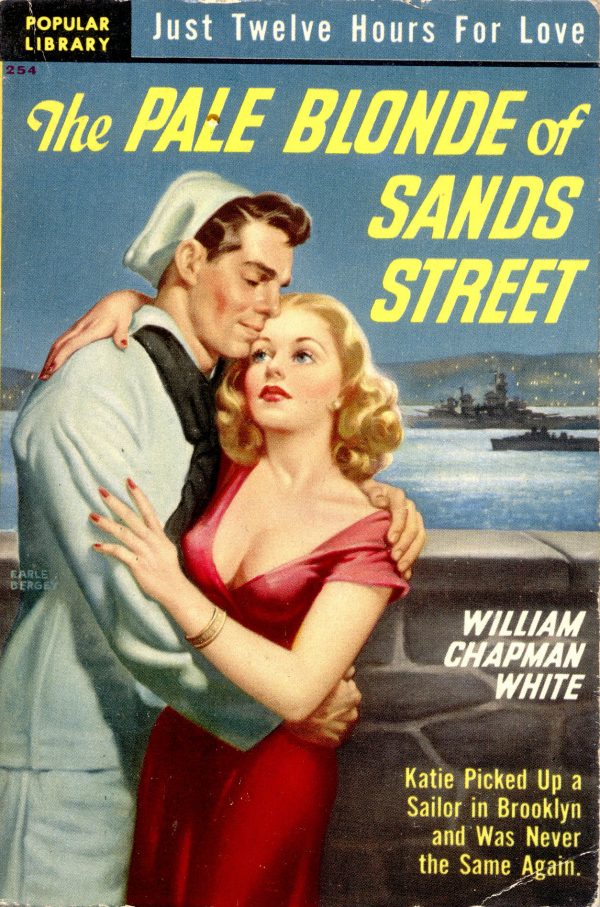
Artwork of the Day: The Pale Blonde of Sands Street (by Earle Bergey)


by Earle Bergey

“Kate picked up a sailor in Brooklyn and was never the same again.”

There’s so many ways to interpret those words that I don’t know if I should be happy for Kate or scared. Luckily “just 12 hours for love” indicates that I should be happy for Kate, even if she was operating under a time limit. I just like how the blurb makes it a point to say that she picked up the sailor “in Brooklyn.” I guess the story would have been different if he was a Staten Island sailor.

This book and cover are from 1950. The artist is Earle Bergey.

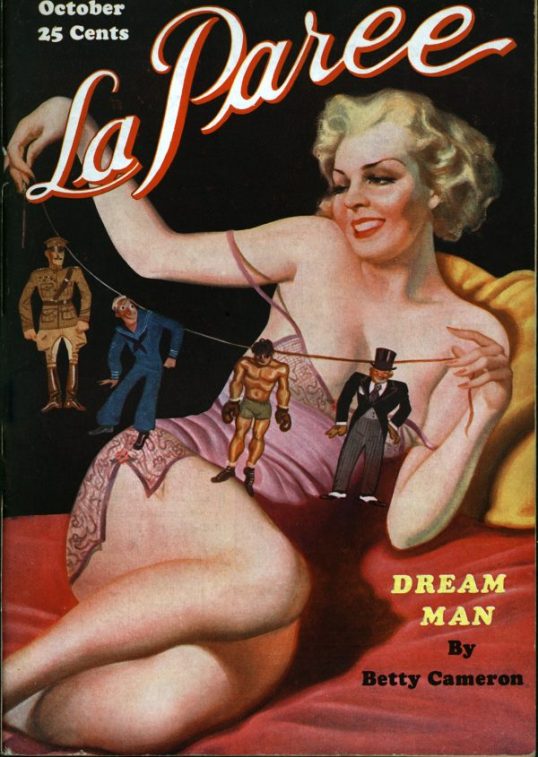
Artwork of the Day: La Paree (by Earle Bergey)


by Earle Bergey

This is one of my favorite pulp magazine covers.  She’s got a general, a sailor, a boxer, and Mr. Monopoly all on the same string!  Which one is her dream man?  I’m guessing Mr. Monopoly because he gets $200 every time he passes go.

La Paree was published from 1930 to 1938.  This issue is from October of 1935 and for a quarter, readers could learn how she managed to get all those men on the same string.  This cover was done by Earle Bergey, an artist who has been featured on this site many times in the past and who will probably be featured many more times in the future.

Artwork of the Day: Sport Story Magazine (by Earle Bergey)


by Earle Bergey

Happy Super Bowl Sunday!

This issue of Sport Story Magazine is from 1936.  As you can tell from the Earle Bergey-illustrated cover, football used to look much different.  I don’t know if those leather hats provided much protection.

Lt. Col. Gar Davidson, who wrote the featured story “How the Army Plays Football” was the coach of West Point’s football team.  He coached from 1933 to 1937 and compiled a 35-11-1 record.  Later, from 1956 to 1960, he served as the Superintendent of the United States Military Academy.

The Thrilling Covers of Thrilling Wonder Stories


Thrilling Wonder Stories was a pulp magazine that was published from 1936 to 1955.  It was one of several pulp magazines that had the word “thrilling” in its title.  The stories were mostly science fiction and I guess they were meant to be more thrilling than all of the other science fiction that was being published at the same time.  The stories were apparently thrilling enough for the magazine to run for 19 years.

Below are a few of the covers of Thrilling Wonder Stories, done by some of the best artists of the pulp era.

by Earle Bergey

by Earle Bergey

by Earle Bergey

by Earle Bergey

by Earle Bergey

by Gabriel Mayorga

by Hans Wessolowski

by Harold V. Brown

by Harold V. Brown

by Harold V. Brown

by Harold V. Brown

by Rudolph Belarski

by Walter Popp