Continuing our look at good films that were not nominated for best picture, here are 6 films from the 1970s.
Dirty Harry (1971, dir by Don Siegel)
“Well, I’m all torn up about his rights….” Detective Harry Callahan (Clint Eastwood) says after being informed that he’s not allow to torture suspects for information. Unfortunately, in this case, the Academy agreed with all the critics who called Harry a menace and this classic and influential crime film was not nominated. Not even Andy Robinson picked up a nomination for his memorably unhinged turn as Scorpio.
Carrie (1976, dir by Brian DePalma)
The Academy liked Carrie enough to nominate both Sissy Spacek and Piper Laurie for Best Actress and Best Supporting Actress, respectively. The film itself, however, went unnominated. It’s enough to make you want to burn down the prom.
Suspiria (1977, dir by Dario Argento)
In a perfect world, Goblin would have at least taken home an Oscar for the film’s score. In the real world, unfortunately, Argento’s masterpiece was totally snubbed by the Academy.
Days of Heaven (1978, dir by Terence Malick)
If it were released today, Terence Malick’s dream-like mediation of life during the depression would definitely be nominated. In 1978, perhaps, the Academy was still not quite sure what to make of Malick’s beautiful but often opaque cinematic poetry.
Halloween (1978, dir by John Carpenter)
“The night he came home!” should have been “The night he went to the Oscars!” The film received no nominations and it’s a shame. Just imagine Donald Pleasence winning for his performance as Loomis while John Carpenter racked up almost as many nominations as Alfonso Cuaron did this year for Roma.
Dawn of the Dead (1978, dir by George Romero)
If the Academy wasn’t willing to nominate Night of the Living Dead, there was no way that they would go for the film’s longer and bloodier sequel. But perhaps they should have. Few films are cited as an inspiration as regularly as Dawn of the Dead.
At the turn of the 20th century, the mayor and the business community of Cottonwood Springs, Texas are determined to bring their small town into the modern era. The Mayor (Larry Gates) has even purchased one of those newfangled automobiles that have been taking the country by storm. However, the marshal of Cottonwood Spings, Frank Patch (Richard Widmark), is considered to be an embarrassing relic of the past. Patch has served as marshal for 20 years but now, his old west style of justice is seen as being detrimental to the town’s development. When Patch shoots a drunk in self-defense, the town leaders use it as an excuse to demand Patch’s resignation. When Patch refuses to quit and points out that he knows all of the secrets of what everyone did before they became respectable, the business community responds by bringing in their own gunfighters to kill the old marshal.
Death of a Gunfighter is historically significant because it was the very first film to ever be credited to Allen Smithee. The movie was actually started by TV director Robert Totten and, after Widmark demanded that Totten be fired, completed by the legendary Don Siegel. Since Totten worked for 25 days on the film while Siegel was only on set for 9, Siegel refused to take credit for the film. When Widmark protested against Totten receiving credit, the Director’s Guild of America compromised by allowing the film to be credited to the fictitious Allen Smithee.
In the years after the release of Death of a Gunfighter, the Allen (or, more often, Alan) Smithee name would be used for films on which the director felt that he had not been allowed to exercise creative control over the final product. The Smithee credit became associated with bad films like The O.J. Simpson Story and Let’s Get Harrywhich makes it ironic that Death of a Gunfighter is not bad at all. It’s an elegiac and intelligent film about the death of the old west and the coming of the modern era. It also features not only one of Richard Widmark’s best performances but an interracial love story between the marshal and a brothel madame played by Lena Horne. The supporting cast is full of familiar western actors, with Royal Dano, Harry Carey, Jr., Larry Gates, Dub Taylor, and Kent Smith all making an impression. Even the great John Saxon has a small role. Though it may be best known for its “director,” Death of a Gunfighter is a film that will be enjoyed by any good western fan.
Across America, strange things are happening. Seemingly ordinary, middle-aged citizens are, without explanation, attacking formerly top secret government facilities. The attackers are from all different walks of life. One was an auto mechanic. Another was a priest. There was even a housewife who, after blowing up a power station, committed suicide with a poison pill that the KGB stopped issuing a decade ago. Before launching their attacks, each one of them received a phone call in which a Russian man recited a poem by Robert Frost.
The Americans may not understand what is happening but the Soviets do. Immediately after the Cuban Missile Crisis, the KGB planted sleeper agents across the United States. They hypnotized and brainwashed the agents so thoroughly that they no longer remember that they are agents. The Frost poem was the trigger designed to activate the agents, all of whom were meant to attack what were then valuable parts of America’s infrastructure. With the arrival of détente, the program was abandoned and the sleeper agents were simply left behind in the United States. But now, a former hardliner (Donald Pleasence), is activating the agents one by one. Because he has a photographic memory, KGB colonel Charles Bronson is sent to the United States to track down and kill Pleasence before the United States discovers the truth about what is happening. Lee Remick, as an American KGB agent, is assigned to work with him but is also ordered to kill him once the assignment has been completed.
That Telfon is one of Charles Bronson’s better post-Death Wish films is largely due to the presence of Don Siegel in the director’s chair. As a director who specialized in intelligent genre films and who helped to make Clint Eastwood one of the world’s biggest stars with Dirty Harry, Coogan’s Bluff, The Beguiled, and Escape from Alcatraz, Don Siegel was the ideal director to bring out the best in Bronson. Like St. Ives, Telefon features Bronson in an uncharacteristically cerebral role. For once, he spends more time analyzing clues than he does shooting people and Bronson is surprisingly credible as a man with a photographic memory.
As directed by Siegel, Telefon is almost a satire of the type of violent action films that Bronson usually made for directors like Michael Winner. In Telefon, both the bad guys and the good guys are equally clueless. All of the KGB sleeper agents are dumpy and middle-aged and the film continually emphasizes that they’ve all been brainwashed to attack targets that are no longer strategically important. Donald Pleasence, playing one of his raving villains, wears a blonde, Beatles-style wig for much of the film.
Though the ending is a let down, Telefon is still one of the best of Bronson’s late 70s films.
The place is Chicago. The time is the era of Prohibition. The head of the Chicago Outfit, Rocca (Ted de Corsia), has arranged for a career criminal named Lester Gillis (Mickey Rooney) to be released from prison. A crack shot and all-around tough customer, Gillis has only two insecurities: his diminutive height and his youthful appearance. Rocca wants to use Gillis as a hit man but Gillis prefers to rob banks. When Rocca attempts to frame Gillis for a murder, Gillis first guns down his former benefactor and then goes on the run with his girlfriend, Sue Nelson (Carolyn Jones). Because they are both patients of the same underworld doctor (played by Sir Cedric Hardwicke), Gillis eventually meets public enemy number one, John Dillinger (Leo Gordon). Joining Dillinger’s gang, Gillis becomes a famous bank robber and is saddled with a nickname that he hates: Baby Face Nelson.
While it is true that Lester “Baby Face Nelson” Gillis was an associate of John Dillinger’s and supposedly hated his nickname, the rest of this biopic is highly fictionalized. The real Baby Face Nelson was a family man who, when he went on the run, took his wife and two children with him. While he did get his start running with a Chicago street gang, there is also no evidence that Nelson was ever affiliated with the Chicago Outfit. (The film’s Rocca is an obvious stand-in for Al Capone.) In real life, it was Dillinger, having just recently escaped from jail, who hooked up with Nelson’s gang. The film Nelson is jealous of Dillinger and wants to take over the gang but, in reality, the gang had no leader. Because Nelson killed three FBI agents (more than any other criminal), he has developed a reputation for being one of the most dangerous of the Depression-era outlaws but, actually, he was no more violent than the typical 1930s bank robber. Among the era’s outlaws, Dillinger was more unique for only having committed one murder over the course of his career. In this film (and practically every other film that has featured Baby Face Nelson as a character), Nelson is a full on psychopath, one who even aims his gun at children.
Baby Face Nelson may be terrible history but it is still an excellent B-movie. Don Siegel directs in his usual no-nonsense style and Mickey Rooney does a great job, playing Baby Face Nelson as a ruthless but insecure criminal with a perpetual chip on his shoulder. As his fictional girlfriend, Carolyn Jones is both tough and sexy, a moll that any gangster would be lucky to have waiting for him back at the safe house. B-movie veterans like Thayer David, Jack Elam, Elisha Cook Jr., and John Hoyt all have colorful supporting roles but the most unexpected name in the cast is that of Cedric Hardwicke, playing an alcoholic surgeon with broken down dignity.
Don’t watch Baby Face Nelson for a history lesson. Watch it for an entertaining B-masterpiece.
Back in 1951, movie producer Walter Wanger (rhymes with danger) discovered his wife, actress Joan Bennett , was having an affair with her agent, Jennings Lang. The enraged husband tracked them to a parking lot, where Wanger shot Lang in the groin. That’ll teach him! Wanger was subsequently arrested, and sentenced to serve a four-month bid in a Los Angeles county farm. His stint in stir, though brief, affected him profoundly, and he wanted to make a film about prison conditions. The result was RIOT IN CELL BLOCK 11, a ripped-from-the-headlines prison noir that’s tougher than a two-dollar steak.
Wanger hired Don Siegel to direct the film. Siegel was gaining a reputation as a director of muscular, low-budget features, and RIOT IN CELL BLOCK 11 is a great early example of his harsh, brutal style. The movie’s sparse, shadowy setting was filmed on location at California’s infamous Folsom Prison thanks to…
THE BEGUILED was the third of five collaborations between star Clint Eastwood and director Don Siegel. It’s definitely the most offbeat, a Gothic Western set during the Civil War. Clint plays John McBurney, a wounded, half-dead Yankee found in the woods by one of the girls from Miss Martha’s Seminary for Young Ladies. What unfolds from there is unlike anything the duo ever did before or after, a tale of sexual desire and vengeance that’s one of the most unusual entries in the Western canon.
Clint Eastwood has one of his most unsympathetic roles as McBurney. Although we feel bad about the condition he’s in, we soon realize what an amoral, manipulative scoundrel he is. Flashbacks reveal his lies about his role in the Union Army. Even as he suffers some major “misery” (hint, hint) at the hands of Miss Martha, Clint’s McBurney isn’t a likeable figure. This offbeat casting probably contributed to the…
THE SHOOTIST is John Wayne’s valedictory statement, a final love letter to his many fans. The Duke was now 69 years old and not in the best of health. He’d had a cancerous lung removed back in 1964, and though the cancer was in remission, Wayne must’ve knew his days were numbered when he made this film. Three years later, he died from cancer of the stomach, intestines, and spine. There were worries about his ability to make this movie, but Wayne loved the script and was determined to do it. The result is an elegy to not only the aging actor, but to the Western genre as a whole.
The movie begins with footage of older Wayne westerns (EL DORADO, HONDO, RED RIVER, RIO BRAVO) narrated by Ron Howard (Gillom). “His name was J.B. Books…he wasn’t an outlaw. Fact is, for a while he was a lawman…He had a credo that…
“Dirty Harry is obviously just a genre film but this action genre has always had fascist potential and it has finally surfaced…Dirty Harry is a deeply immoral movie.” — Pauline Kael
“It’s not about a man who stands for violence. It’s about a man who can’t understand society tolerating violence.” — Clint Eastwood
I decided that I wanted to review the Dirty Harry film franchise about two seconds after Clint Eastwood finished giving his speech at the Republican National Convention last month.
It had nothing to do with the politics of Eastwood’s speech because, quite frankly, I think a good film is a work of art and art is always more important than politics. Instead, as I watched Eastwood give his speech, I was reminded that Clint Eastwood is about as close to a living icon as we have in America. There aren’t many actors who could get away with giving a speech to an empty chair and, despite the predictable outraged tweets from Roger Ebert, Eastwood is one of them. And, if Eastwood is an icon, Harry Callahan is perhaps the most iconic role of his career.
Now, I have to admit that, as I started this project, I knew more about Harry Callahan as a character than I did about the films he had actually appeared in. I had seen both Dirty Harry and The Dead Pool because, for whatever reason, they both seem to turn up on AMC every other week. I knew that Harry Callahan was a police inspector who was based in San Francisco. I knew that he was willing to go to extremes when it came to fighting criminals. I knew that, in his first film appearance, Harry had a really impressive head of hair that had pretty much vanished by the time that he reached his final appearance in The Dead Pool. And, finally, I knew that, at some point in the film series, Harry growled the line, “Go ahead, make my day.”
So, for me, reviewing every film in the Dirty Harry franchise gave me a chance to discover why Harry has become such an iconic character and why people still ask Eastwood to repeat that “make my day” line. When I started watching the films, Jeff warned me that the Dirty Harry films got worse as you went along and I discovered that, in many ways, he was right. But I still enjoyed the experience and I hope that you enjoy reading my reviews over the next few days.
But, first things first. Let’s take a look at the film that started the entire series, 1971’s Dirty Harry.
I have to admit that it’s a bit intimidating to try to review Dirty Harry because, quite frankly, what’s left to be said about this film? It’s one of the most influential movies of all time. Any time you see a cop in a TV show or a movie getting yelled at by his superiors for not going “by the book,” it means that you’re watching a movie or an episode that is directly descended from Dirty Harry. And yet, despite all the imitations, it’s a movie that remains as exciting and visceral today as when it was first released.
Dirty Harry tells the story of two outsiders, two men who seem to exist solely to reveal the dark impulses of conventional society. Both of these men are killers and both of these men are motivated by a rage against what they perceive society as being.
One of these men calls himself Scorpio. As played by Andy Robinson (who gives one of the definitive cinematic psycho performances here), Scorpio is a jittery mass of nerves, an unkempt man who wears a peace sign as a belt buckle but who also writes letters to the Mayor of San Francisco (played by John Vernon) in which he threatens to kill one innocent person a day unless he’s paid off. When he first appears, he’s on a rooftop, aiming a rifle at an unaware woman in a swimming pool. At one point, the phallic barrel of rifle seems to be pointed directly at the camera (and by extension, at us in the audience). When he fires the rifle, we see the mortally wounded woman silently sink under the water. It’s a scene that still disturbs me every time I see it, one that establishes early on that we’re all potentially vulnerable to the Scorpios of the world.
In the next scene, we see San Francisco Police Inspector Harry Callahan (Clint Eastwood, of course) investigating the crime scene. The difference between Harry and Scorpio is striking. Whereas Scorpio is only calm while killing, Callahan inspects the crime scene (and goes through almost the entire film) without showing a hint of emotion. While Scorpio looks like a madman, Callahan looks like a professional. And yet, when Callahan foils a bank robbery (and delivers his famous “Do you feel lucky?” monologue to wounded bank robber played by Albert Popwell), it becomes obvious that he does have something in common with Scorpio. They’re both willing to shoot to kill. The only difference is that, as a police officer, Callahan is ostracized for his willingness to kill while Scorpio, as an American citizen, is protected by the U.S. Constitution.
It would be foolish to pretend that Dirty Harry isn’t a political film. One need only watch the scene where a law professor explains to Harry why his pursuit and arrest of Scorpio violated Scorpio’s constitutional rights. (The way that Eastwood snarls during this scene is priceless.) As one can tell from the quote from Pauline Kael at the beginning of this review, Dirty Harry was a film that upset a lot of liberals when it was first released (much as Clint Eastwood’s empty chair speech managed to upset Roger Ebert). However, as the years have passed, Dirty Harry has come to be acknowledged as a classic by critics on both sides of the political divide.
The success of Dirty Harry goes beyond politics. I think any film students who aspires to direct an action film should be required to watch Dirty Harry a few dozen times before he graduates. What makes the film work is not just what director Don Siegel does but what he doesn’t do. As opposed to some of the later films in the franchise, Dirty Harry is a fast-paced film that tells its story with a minimum amount of padding. It’s hard to think of a single scene that isn’t necessary to tell the story that the film wants to tell. Even the oft-criticized scene where Harry, on a stake out, spies on some naked lesbians, works as a parallel to Scorpio’s own voyeurism at the start of the film.
Much as in a classic western, Harry and Scorpio are presented as two sides of the same coin. Both of them are outsiders who refuse to follow the rules of society and the film’s violent and mournful climax is powerful precisely because, by this point, the audience understands that the Scorpios of the world can not exist without the Harrys and vice versa.
Along with generated a lot of controversy, Dirty Harry was a huge box office success. Not surprisingly, a sequel would follow.
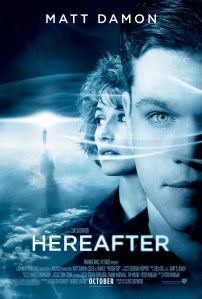
Hereafter is a very serious film about a very serious topic, death. Following three separate but ultimately connected stories, the film attempts to explore death and the question of what happens after death from three different angles — intellectually, emotionally, and spiritually. I really wanted Hereafter to be a great film. So did the film’s makers, which is precisely why Hereafter fails.
The intellectual consideration of death is represented by the character of Marie (Cecile De France), a French journalist who, at the start of the film, drowns in a tsunami and is, for a few minutes, clinically dead. Before she is eventually revived, she has a classic near-death experience: the bright light, the people waiting to greet her, the whole deal. After this experience, Marie is compelled to investigate whether or not there truly is such a thing as an afterlife. As she does so, Marie finds herself shunned by her resolutely secular friends and grows increasingly distant from her skeptical (and rather condescending) boyfriend.
The emotional response to death is represented in the story of twin brothers, Marcus and Jason (played by Frankie and George McLaren). The two boys live in London with their drug-addicted mother and share a strong (and, to be honest, kinda creepy) bond. Jason, while simply trying to return home with some drugs for his detoxing mother, is roughed up by some bullies and ends up running out into the middle of the street. Naturally, since this is a movie, Jason is hit by a truck as soon as he steps off the curb. Jason is killed and Marcus is taken away by social services and put into a foster home. Marcus continues to carry Jason’s cap with him and soon starts tracking down local English psychics in an attempt to talk to his brother again.
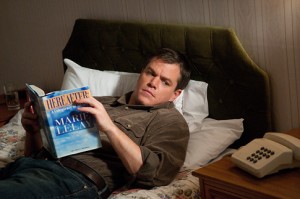
Finally, the spiritual aspect is detailed in the film’s most interesting story. This story features Matt Damon as George Lonegan, a psychic who can speak with the dead. After years of being a minor celebrity, George burned out and went into a self-imposed exile. He now works at a factory while his brother (Jay Mohr, who looks incredibly puffy in this movie) keeps trying to find ways to convince George to get back into the business of talking to dead for fun and profit. After George reluctantly gives a reading to Richard Kind, he finds himself being dragged back into his old life.
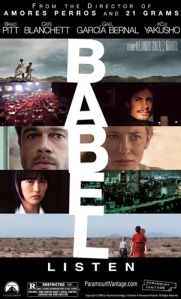
A lot of viewers and critics have compared Hereafter to Alejandro González Iñárritu’s 2006 masterpiece, Babel. Both films follow three separate but connecting stories and both films are concerned with the theme of death and how it connects us all. As well, Babel featured Brad Pitt in a serious role and Hereafter features Matt Damon. The main difference, however, is that Babel was a great film but Hereafter is basically an uneven mess.
Whereas Babel featured three strong stories, Hereafter features 1 compelling story (that would be Damon’s) which is compelling solely because Matt Damon is a talented enough actor that he can apparently perform miracles. He’s probably about as likable as he’s ever been in the role of George but he also wisely plays the role as being just a little bit off. Even though the film makes the mistake of never really going into the details of just what exactly caused George to give up being a psychic, Damon is so good in the role that you’re willing to take him at his word that he had a good reason. Probably the highlight of the film (and one of the few sections to really inspire any sort of real emotional response) is an extended sequence where Damon befriends and the manages to alienate an insecure, single woman played by Bryce Dallas Howard. Damon and Howard have a scene that involves eating while blind-folded that manages to be both powerfully erotic and wonderfully romantic at the same time. If the entire film had been about them, Hereafter would have been a much better movie.
Unfortunately, we’ve got to slog through two other stories.
Cecile La France gives an excellent performance as Marie and the opening tsunami scene is truly terrifying. For someone like me, who cannot swim and risks having a panic attack if she even stands near the deep end of a swimming pool, the tsunami scene was almost impossible to watch. I had to put my hands in front of my eyes and watch the scene through my fingers. However, once she drowns, Marie sees a vision of the afterlife that — as a harbinger of things to come — is rather dull. I mean, with everything that can supposedly be done in movies today, the best that Hereafter can give us is a bland white light. Once Marie returns to Paris and starts her investigation, La France remains a sympathetic presence and the film actually does a pretty good job of showing just how condescending most supposedly “liberal” men are whenever a woman starts to stray from the established orthodoxy. But, unfortunately, her story is just never that interesting. Marie decides to write a book about the afterlife. As a writer myself, I have to say that there is nothing more boring than watching someone else write.
As for Marcus, I was shocked just how little I cared about him or his attempts to contact his brother. I come from a very close family and I have a very strong bond with all three of my sisters and, among them, I am notorious for crying at any movie that deals with that sort of sibling bonding. Yet I sat through the saga of Marcus and Jason without shedding a tear and I felt terrible about it. I really wanted to cry. I really wanted to have some sort of emotional response to the story but I just never believed it. I hate to say this but honestly, a lot of this was due to the fact that the McLaren twins are such bad actors. Director Clint Eastwood has said that he specifically cast them because they weren’t professional actors and therefore, they wouldn’t introduce any false “sentimentality” into the mix. But dammit, it was a sentimental story. Sentiment is not necessarily a bad thing and just because something is sentimental, that doesn’t make it false.
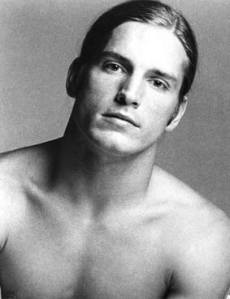
So, what exactly went wrong with Hereafter? The film opens strongly with a terrifying tsunami and the final 30 minutes are also undeniably touching (if also a bit contrived). It’s everything that happens in between those two points that ruins Hereafter. Director Eastwood, obviously looking to avoid that dreaded curse of being sentimental, keeps the whole film very low-key and realistic. Other than the opening tsunami, there are no big wow moments but to be honest, isn’t that what movies are for? If you’re going to make a movie that specifically shuns the wow moment, you better have something compelling (a perfect script or an entire cast giving a compelling performance as opposed to just a handful of them) to take its place. Hereafter doesn’t and, as a result, the movie drags. This, honestly, has got to be one of the slowest, most boring movies I’ve ever seen. If director Eastwood’s westerns and actions films can all be seen as homages to Sergio Leone and Don Siegel, I think Hereafter must be an homage to some of Andy Warhol’s intentionally dull films. Whereas Warhol, at the very least, gave us Joe Dallesandro to look at, Eastwood gives us Jay Mohr. It’s not a fair trade.
I don’t know how much of Hereafter should be blamed on Eastwood and how much should be blamed on the script written by Peter Morgan. Here’s a quote from Morgan that appeared in The Hollywood Reporter:
“It’s quite spiritual material, and quite romantic, too. It’s the sort of piece that’s not easy to describe and in the hands of different filmmakers could end up as wildly different films. Quite unlike some of my other material, which I think there were only certain ways that you could shoot it. It’s really not just another boring Hollywood movie with the same old boring Hollywood actors, although I see the point that the public and sick of paying $10.00 to see a movie with same old faces and the same gramma of story telling.”
And to that, all I can say is “Shut up, Peter Morgan!”
This is not spiritual material as much as it’s just a bunch of vaguely New Age platitudes being delivered by a mainstream screenwriter who apparently doesn’t have the guts to come down either firmly for or against an afterlife. This is the type of feel-good BS that leads to thousands of people every year giving up their life savings to some fraud who claims he can deliver messages from beyond. Morgan’s script goes out of its way not to actually define the afterlife. Is it heaven or is it Hell? Is there a God? Do the worthy go to Heaven? Are souls saved? Or are they just ghosts who are waiting for us to be willing to let them go? These are all questions that would have been considered by a good film but Hereafter doesn’t consider them. Oh, don’t get me wrong. It pretends to bring them up but only so the movie can shrug and go, “I guess nobody knows.” And to that I say, either take a position or don’t expect everyone else to pay money just to listen to you duck the question because you’re too scared of alienating mainstream critics or audiences.
(Myself, I do believe that those who love us are always with us in some way even if I don’t believe in a literal afterlife. And while I know that answer might seem vague, you should also consider that I’m not the one spending millions of dollars to make a movie celebrating that vagueness.)
Morgan’s script also make its a point to incorporate real-life events into his contrived narrative. As a result, the London Subway bombings and the Thailand Tsunami are both used as convenient plot points in much the same way that The Curious Case of Benjamin Button used Hurricane Katrina. I felt it was ghoulish when Button did it and, the more I think about it, it’s equally ghoulish in Hereafter. It’s hard not to feel that the film’s saying, “Too bad all those real people died but what’s important is how these events impacted the lives of a bunch of fictional characters.”
Hereafter’s main problem is that it simply tries too hard to be great. You get the feeling that every scene and line has been calculated to make you go, “Wow, what genius!” As a result, even the scenes that work still somehow feel very dishonest. The end result is a very insincere film about some very sincere concerns.


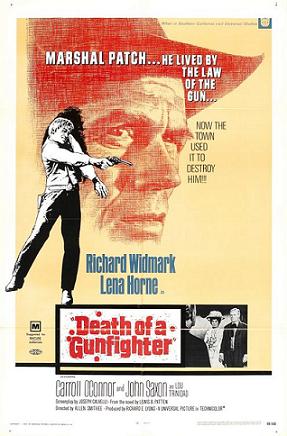 At the turn of the 20th century, the mayor and the business community of Cottonwood Springs, Texas are determined to bring their small town into the modern era. The Mayor (Larry Gates) has even purchased one of those newfangled automobiles that have been taking the country by storm. However, the marshal of Cottonwood Spings, Frank Patch (Richard Widmark), is considered to be an embarrassing relic of the past. Patch has served as marshal for 20 years but now, his old west style of justice is seen as being detrimental to the town’s development. When Patch shoots a drunk in self-defense, the town leaders use it as an excuse to demand Patch’s resignation. When Patch refuses to quit and points out that he knows all of the secrets of what everyone did before they became respectable, the business community responds by bringing in their own gunfighters to kill the old marshal.
 The place is Chicago. The time is the era of Prohibition. The head of the Chicago Outfit, Rocca (Ted de Corsia), has arranged for a career criminal named Lester Gillis (Mickey Rooney) to be released from prison. A crack shot and all-around tough customer, Gillis has only two insecurities: his diminutive height and his youthful appearance. Rocca wants to use Gillis as a hit man but Gillis prefers to rob banks. When Rocca attempts to frame Gillis for a murder, Gillis first guns down his former benefactor and then goes on the run with his girlfriend, Sue Nelson (Carolyn Jones). Because they are both patients of the same underworld doctor (played by Sir Cedric Hardwicke), Gillis eventually meets public enemy number one, John Dillinger (Leo Gordon). Joining Dillinger’s gang, Gillis becomes a famous bank robber and is saddled with a nickname that he hates: Baby Face Nelson.




 Through the Shattered Lens