4 Shots From 4 Films: Special Clint Eastwood Edition


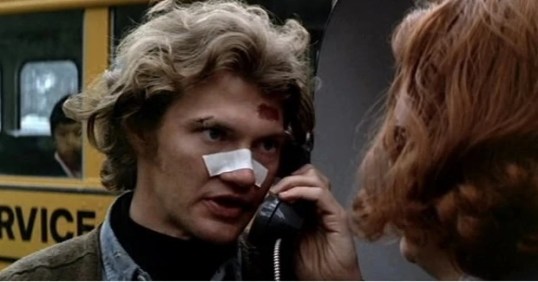
Clint Eastwood in Revenge of the Creature (1955)

4 Shots From 4 Films is just what it says it is, 4 shots from 4 of our favorite films. As opposed to the reviews and recaps that we usually post, 4 Shots From 4 Films lets the visuals do the talking!

Today is Clint Eastwood’s 95th birthday!

Though Clint famously had to go to Italy to really get his film career going, he’s gone on to become an icon of American film.  While his early films were often criticized as glorifying violence and of being reactionary, his later films have — more often than not — been meditations on aging, moral ambiguity, and what a lifetime of violence does to a person’s soul.  He’s a filmmaker whose legacy will be rediscovered and probably appreciated in the future.

Here are….

4 Shots From 4 Clint Eastwood Films

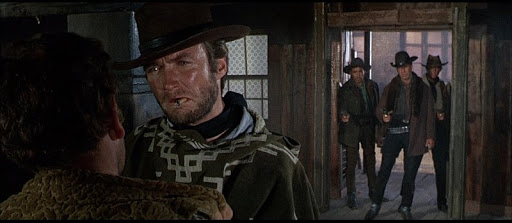
For A Few Dollars More (1965, dir by Sergio Leone)

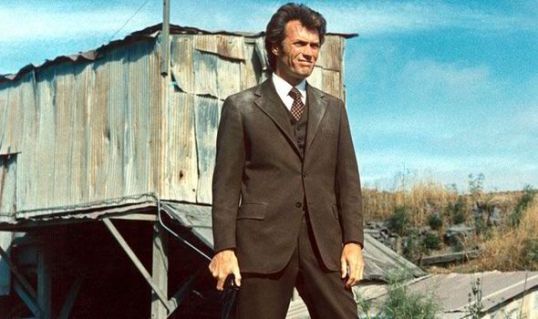
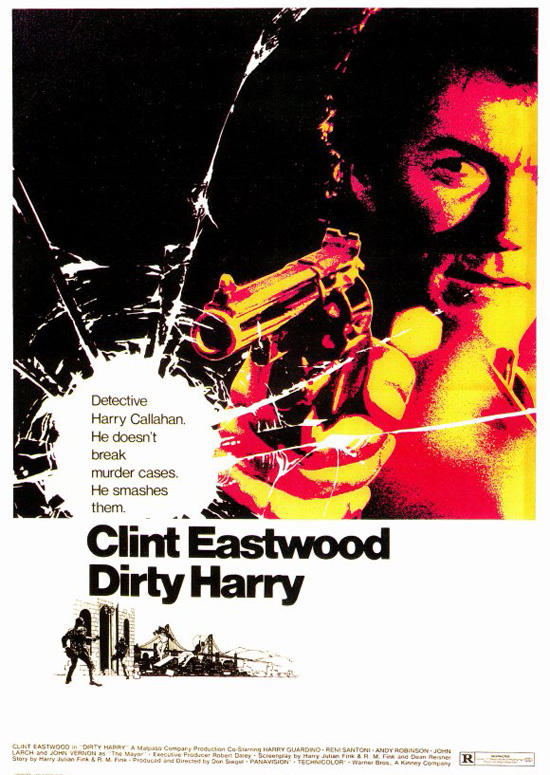
Dirty Harry (1971, dir by Don Siegel)

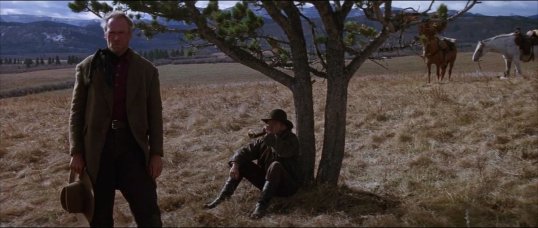
Unforgiven (1992, dir by Clint Eastwood)

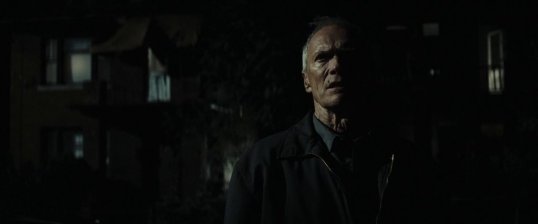
Gran Torino (2008, dir by Clint Eastwood)

Scenes that I Love: The End of Dirty Harry


Today’s scene that I love comes from 1971’s Dirty Harry, in which Clint Eastwood, as “Dirty Harry” Callahan finally confronts the the Scorpio Killer (Andy Robinson) and asks him if he feels lucky.  Eastwood himself later said that Callahan’s badge must have been attached to a rubber band because he was somehow able to get it back in time for Magnum Force.

Song of the Day: Main Title Theme From Dirty Harry by Lalo Schifrin


If there’s one man who would have stood with Marshal Kane, it was Harry Callahan.

In honor of the fact, today’s song of the day comes from 1971’s Dirty Harry. Composer Lalo Schifrin’s moody score remains one of the best cop film scores of all time.  It’s efficient, relentless, and deceptively low-key, just like “Dirty Harry” Callahan himself.


Live Tweet Alert: Join #FridayNightFlix for Dirty Harry!


As some of our regular readers undoubtedly know, I am involved in a few weekly live tweets on Twitter and Mastodon.  I host #FridayNightFlix every Friday, I co-host #ScarySocial on Saturday, and I am one of the five hosts of #MondayActionMovie!  Every week, we get together.  We watch a movie.  We tweet our way through it.

Tonight, at 10 pm et, #FridayNightFlix has got 1971’s Dirty Harry, starring Clint Eastwood!

If you want to join us this Friday, just hop onto twitter, start the movie at 10 pm et, and use the #FridayNightFlix hashtag!  It’s a friendly group and welcoming of newcomers so don’t be shy.

Dirty Harry is available on Prime!  See you there!

Scenes that I Love: The End of Dirty Harry


Today, we wish a happy 93rd birthday to Clint Eastwood!

Today’s scene that I love comes from 1971’s Dirty Harry, in which Clint finally confronts the the Scorpio Killer (Andy Robinson) and asks him if he feels lucky.  Eastwood himself later said that Callahan’s badge must have been attached to a rubber band because he was somehow able to get it back in time for Magnum Force.

10 Oscar Snubs From the 1970s


Ah, the 70s. The decade started with the collapse of the studio system and the rise of the so-called movie brats. For the first half of the decade, Hollywood was producing the type of challenging films on which they would never again be willing to take the risk. The 70s were indeed a second cinematic golden age, full of anti-heroes and dark endings. Then, in 1977, Star Wars changed all of that and ushered in the era of the blockbuster. The 1970s gave the world disco, The Godfather, and some of the best Oscar winners ever.  It also gave us more than a few snubs.

1971: Dirty Harry Is Totally Ignored

Dirty Harry may be one of the most influential films ever made but the Academy totally snubbed it.  My guess is that, with The French Connection coming out that same year, the Academy only had room for one morally amibiguous cop film in its heart.  Still, Dirty Harry has certainly held up better than the nominated Nicholas and Alexandra.  Both Clint Eastwood and Andrew Robinson gave performances that were award-worthy as well.  Say what you will about Eastwood’s range, I defy anyone not to smile at the way Harry snarls when he discovers that the man he’s talking to teaches a constitutional law course at Berkley.

1971: Gimme Shelter Is Not Nominated For Best Documentary Feature

Considering that Woodstock won the Documentary Oscar the previous year, it only seems appropriate the Gimme Shelter should have won the following year.  In the end, the Academy decided to celebrate the best of the 60s while snubbing the worst of it.

1972: Burt Reynolds Is Not Nominated For Deliverance

If you’ve ever seen Deliverance, you know how important a character Lewis Medlock (played by Burt Reynolds) was.  Not only was he the one who persuaded everyone to spend the weekend risking their lives on a canoeing trip but he also set the standard for “manlinness” that the rest of his friends tried to live up to.  When Lewis ends up getting a compound fracture and is forced to spend the rest of the film deliriously lying in a canoe, it’s a reminder that nature and fate don’t care how confident or outspoken you are.  Reynolds was perfectly cast.  1972 was a strong year with a lot of worthwhile nominations and, to be honest, there’s really not a bad or an unworthy performance to be found among the acting nominees.  Still, it’s hard not to feel that the Academy should have found some room for Burt Reynolds.

1974: John Huston Is Not Nominated For Chinatown

In the role of Chinatown‘s Noah Cross, John Huston gave one of the great villainous performances.  Cross represented pure avarice and moral decay, a man who committed terrible crimes but who, the film suggested, was also responsible for creating not only modern Los Angeles but also providing a home for Hollywood.  Admittedly, there were a lot of good performances to choose from and I certainly can’t complain that the Academy awarded the Oscar for Best Supporting Actor to Robert De Niro, who deserved it.  Still, in retrospect, John Huston’s evil turn was at least as strong as Fred Astaire’s likable (and nominated) turn in The Towering Inferno.

1974 and 1975: John Cazale Is Not Nominated For Best Supporting Actor

John Cazale had a brief but legendary career.  A noted stage actor, Cazale made his film debut in 1972 with The Godfather.  He played Fredo, the Corleone son who couldn’t get any respect.  He final film, released after his early death from cancer, was 1978’s The Deer Hunter.  Cazale appeared in a total of five films, every one of which was nominated for Best Picture.  That this talented actor was never nominated for an Oscar just doesn’t seem right.  But for which film should he have been nominated?

Godfather Part II received three nominations for Best Supporting Actor: Robert De Niro, Lee Strasberg, and Michael V. Gazzo.  Personally, I would probably replace Gazzo with Cazale.  Cazale’s performance as Fredo was one of the strongest parts of Godfather Part II.  Who can forget Fredo’s legendary meltdown about always being overlooked?  I would also say that Cazale deserved a nomination for his performance in Dog Day Afternoon, in which he played Sal and provided the film with some of its saddest and funniest moments.  Neither Fredo nor Sal survive their films and, in both cases, it’s impossible not to feel that they deserved better than the world gave them.
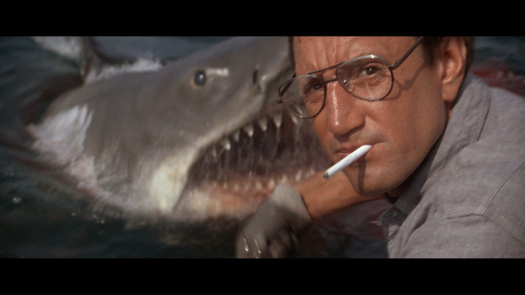
1975: Steven Spielberg Is Not Nominated For Jaws

Seriously, what the Heck?  Jaws totally reinvented the movies.  It received a deserved nomination for Best Picture but the true star of the film, Steven Spielberg, was somehow not nominated.

1976: Martin Scorsese is Not Nominates For Taxi Driver

Seriously, what the Heck?  Taxi Driver totally reinvented the movies.  It received a deserved nomination for Best Picture but the true star of the film, Martin Scorsese, was somehow not nominated.

1977: Harrison Ford Is Not Nominates For Star Wars

Harrison Ford, despite having had the type of career for which most actors would sacrifice their soul, has never had much success with the Oscars.  He’s been nominated exactly once, for Witness.  That he’s never won an Oscar just feels wrong.  The fact that he wasn’t even nominated for playing either Han Solo or Indiana Jones feels even more wrong.  In the role of Solo, Ford bring some much needed cynicism to Star Wars.  His decision to return and help the Rebels destroy the Death Star is one of the best moments in the film.

1978: National Lampoon’s Animal House Is Totally Ignored

This film deserved a nomination just for the scene in which John Belushi destroyed that annoying folk singer’s guitar.  Seriously, though, this is another film that, more or less, defined an era.  I’m not saying it deserved to win but it at least deserved a few nominations.

1979: Dawn of the Dead Is Not Nominated For Best Picture

Considering the Academy’s general resistance to honoring horror, it’s not really a shock that Dawn of the Dead was not nominated for Best Picture but still, it would have been nice if it had happened.

Agree?  Disagree?  Do you have an Oscar snub that you think is even worse than the 10 listed here?  Let us know in the comments!

Up next: The 80s arrive and the snubs continue!
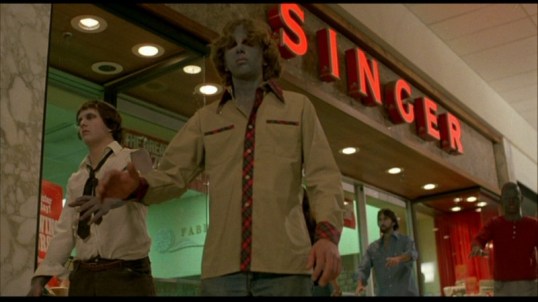
Dawn of the Dead (1978, dir by George Romero)

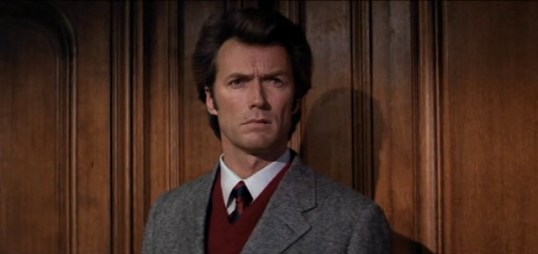
“Do ya feel lucky, Pilgrim?” What Dirty Harry Could Have Been


Paul Newman as San Francisco Police Detective Harry “Dirty Harry” Callahan?

Today, it sounds unthinkable that the outspokenly liberal Newman could ever have been a contender for the role of Harry Callahan, a police detective who is quick with a quip but even quicker on the trigger.  As everyone knows, Clint Eastwood played Harry and, as a result, he finally became as big of a star in the United States as he already was in Europe.  Today, it’s impossible to imagine anyone other than Clint Eastwood torturing the Scorpio Killer for information and then announcing himself to be “all torn up about his rights.”  Just try to imagine Paul Newman snarling as reflexively as Clint Eastwood did upon hearing that the whiny guy in the liberal office taught constitutional law at Berkeley.  Try to imagine Paul Newman calling someone “a punk” or bragging about the power of his gun.  It can’t be done.

And yet, as hard as it is to believe, Clint Eastwood was not the first choice for Harry Callahan.  In fact, Eastwood apparently wasn’t even on Warner Bros.’s list of contenders when they initially bought the rights for the script that would eventually become Dirty Harry.

Written by Harry Julian Fink and Rita M. Fink, that script was originally called Dead Right and it took place in New York.  In the original script, Harry Callahan was world-weary, veteran New York cop, in his 50s and just a few months away from retirement.  In the original script, Harry pursued a serial killer named Travis.  When Warner Bros. bought the script in 1969, they viewed it as being a potential vehicle for Frank Sinatra with Irvin Kershner directing.  (Kershner is probably best remembered for later directing The Empire Strikes Back.)  As was his habit, Sinatra immediately demanded rewriters.  John Milius wrote three drafts, each one expanding on the idea of Callahan as a rebel against the system.  Terrence Malick (yes, that Terrence Malick) was also brought it and came up with a storyline in which the serial killer would specifically be targeting mobsters and other people who had escaped justice.  Somewhere, amongst all the rewrites, the action moved from New York to Seattle.

After all that effort, why didn’t Frank Sinatra play Harry Callahan?  Reportedly, he broke his hand and, as a result, he was told that he wouldn’t be able to hold a microphone or a gun or anything else while it was healing.  Since you really can’t have Harry Callahan without a gun, Sinatra left the project and Irvin Kershner went with him.

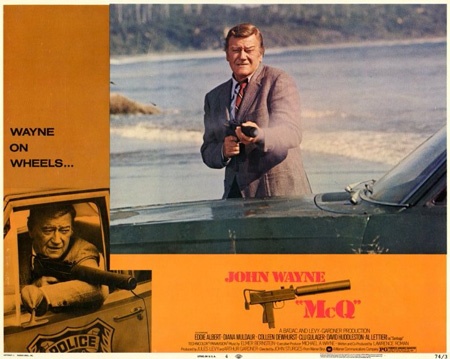
While trying (unsuccessfully) to recruit Sidney Pollack as their new director, Warner Bros. searched for a new leading man.  Reportedly, the script ended up on John Wayne’s desk.  Wayne later said that he turned down the role because he felt the violence was gratuitous.  Other sources indicate that John Wayne actually was interested in the role but that the studio didn’t consider him to be contemporary enough.  (After the success of Dirty Harry, Wayne would play a similar cop character in McQ and would provide a hint of what Dirty Harry starring John Wayne would have been like.)  Burt Lancaster turned down the role because he didn’t like the script’s politics.  Lee Marvin and Robert Mitchum both turned down the role because they refused to play cops.  George C. Scott reportedly refused the role because of the violence.  Marlon Brando was considered but, probably wisely, was never approached.

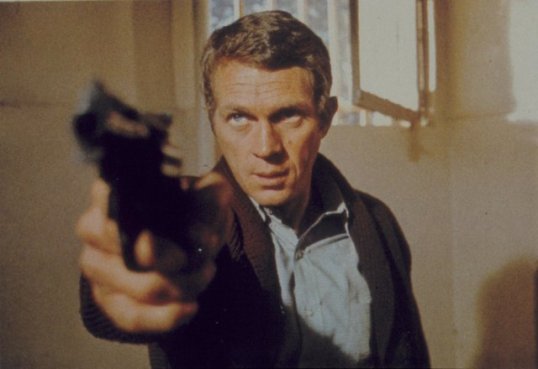
Having been turned down by all of the older tough guys, Warner Bros. went with the younger tough guys.  Steve McQueen turned down the role because he had already played a cop in Bullitt and he felt the critics would accuse him of repeating himself.  (He was probably right.)  Paul Newman refused the role on political grounds but, as he often tended to do whenever he turned down a role, he also recommended another actor for the part.  That actor was Clint Eastwood who was an old friend of Newman’s and who, obviously, had no problems with the film’s politics.

(Let’s take a moment to give some respect to Paul Newman, who was reportedly one of the nicest guys in Hollywood.)

Once Eastwood was on board, his requested that his friend and frequent collaborator, director Don Siegel, be hired to direct the film.  The script was again rewritten, moving the action to San Francisco and making Harry into a far less talkative character.  The serial killer known as Travis became the serial killer known as Scorpio.  The idea of the killer targeting criminals was abandoned at Siegel’s insistence, though Eastwood liked the idea enough to use it for Dirty Harry’s first sequel, Magnum Force.

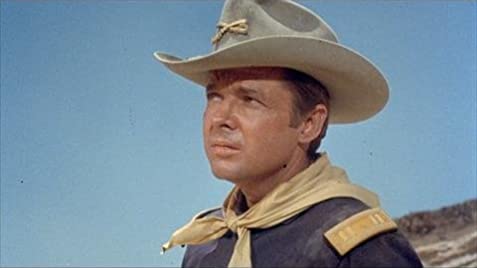
Audie Murphy

Originally, James Caan was approached for the role of Scorpio but Caan turned it down (which, of course, left him free to play Sonny in The Godfather).  Perhaps most intriguingly, Audie Murphy was offered the role.  Murphy was one of the most decorated combat soldiers of World War II.  He had gone from the Army to appearing in movies.  By the time Dirty Harry went into production, Murphy was largely appearing in B-westerns and was as known for his temper as his films.  (He was acquitted of attempted murder shortly before filming began on Dirty Harry.  Murphy said that his anger issues were largely due to the trauma of World War II and he was one of the first prominent people to openly speak about what has since become known as PTSD.)  Murphy undoubtedly would have been an intimidating Scorpio but he died in a plane crash before he could accept or refuse the role.

Instead, the role went to Andrew Robinson, who an unknown at the time.  He was also, in real life, a pacifist who had difficulty not flinching whenever he had to fire a rifle in the film.  That said, Robinson gave a brilliantly unhinged performance as Scorpio and reportedly had to get an unlisted telephone number because of all the angry and threatening phone calls that he received after the movie was released.

Now, I have to admit that I personally find the idea of Frank Sinatra/James Caan or, for that matter, a John Wayne/Audie Murphy police procedural to be kind of intriguing.  And goodness know, I would certainly like a chance to see Marlon Brando doing the “do you feel lucky, punk?” speech.  In the end, though, I think things turned out for the best.

4 Shots From 4 Films: Special Clint Eastwood Edition


Clint Eastwood in Revenge of the Creature (1955)

4 Shots From 4 Films is just what it says it is, 4 shots from 4 of our favorite films. As opposed to the reviews and recaps that we usually post, 4 Shots From 4 Films lets the visuals do the talking!

Today is Clint Eastwood’s 90th birthday!

Though Clint famously had to go to Italy to really get his film career going, he’s gone on to become an icon of American film.  While his early films were often criticized as glorifying violence and of being reactionary, his later films have — more often than not — been meditations on aging, moral ambiguity, and what a lifetime of violence does to a person’s soul.  Though Eastwood has fallen out-of-favor with a few critics as a result of the speech he gave at the 2012 Republican Convention (Film Twitter, to the shock of no one, had a particularly over-the-top reaction to it as many of them discovered, I guess for the first time, that not every artist is a Leftist), he’s a filmmaker whose legacy will be rediscovered and probably appreciated in the future.

Here are….

4 Shots From 4 Films

For A Few Dollars More (1965, dir by Sergio Leone)

Dirty Harry (1971, dir by Don Siegel)

Unforgiven (1992, dir by Clint Eastwood)

Gran Torino (2008, dir by Clint Eastwood)

Scenes That I Love: Harry Meets The Mayor From Dirty Harry


Today, we wish a happy 89th birthday to the one and only Clint Eastwood!

At this point of his career (from which he says he is now semi-retired), Clint Eastwood has become an American icon.  In many ways, his persona epitomizes all of the contrasts and extremes of the American experience.  A political conservative who specializes in playing taciturn and rather grouchy men, he is also one of our most humanistic directors, specializing in films that often question the traditional view of history and morality.  He may have first become a star in Europe but Clint Eastwood is definitely an American original.

In honor of his birthday, I’m sharing a scene that I love from 1971’s Dirty Harry.  In this scene, Detective Harry Callahan (Clint Eastwood) meets the Mayor of San Francisco (John Vernon).  The mayor is concerned that there’s a psycho on the loose, gunning people down and demanding money.  Callahan’s annoyed that he’s spent a lot of time sitting in a waiting room.  Things pretty much go downhill from there.

There’s so much that I love about this scene.  Both Eastwood and Vernon do a wonderful job playing off of each other.  The Mayor may be in charge of the city but Callahan probably didn’t vote for him.  One thing that I especially love about this scene is the look of annoyance that crosses Harry’s face whenever he’s interrupted.

And, of course, there’s that final line!  Eastwood does a great job explaining Harry’s “policy” but ultimately, it’s Vernon’s “I think he’s got a point,” that provides the perfect closing note.

Happy birthday, Mr. Eastwood!

6 Good Films That Were Not Nominated For Best Picture: The 1970s


David Niven at the 1974 Oscars

Continuing our look at good films that were not nominated for best picture, here are 6 films from the 1970s.

Dirty Harry (1971, dir by Don Siegel)

“Well, I’m all torn up about his rights….” Detective Harry Callahan (Clint Eastwood) says after being informed that he’s not allow to torture suspects for information.  Unfortunately, in this case, the Academy agreed with all the critics who called Harry a menace and this classic and influential crime film was not nominated.  Not even Andy Robinson picked up a nomination for his memorably unhinged turn as Scorpio.

Carrie (1976, dir by Brian DePalma)

The Academy liked Carrie enough to nominate both Sissy Spacek and Piper Laurie for Best Actress and Best Supporting Actress, respectively.  The film itself, however, went unnominated.  It’s enough to make you want to burn down the prom.

Suspiria (1977, dir by Dario Argento)

In a perfect world, Goblin would have at least taken home an Oscar for the film’s score.  In the real world, unfortunately, Argento’s masterpiece was totally snubbed by the Academy.

Days of Heaven (1978, dir by Terence Malick)

If it were released today, Terence Malick’s dream-like mediation of life during the depression would definitely be nominated.  In 1978, perhaps, the Academy was still not quite sure what to make of Malick’s beautiful but often opaque cinematic poetry.

Halloween (1978, dir by John Carpenter)

“The night he came home!” should have been “The night he went to the Oscars!”  The film received no nominations and it’s a shame.  Just imagine Donald Pleasence winning for his performance as Loomis while John Carpenter racked up almost as many nominations as Alfonso Cuaron did this year for Roma.

Dawn of the Dead (1978, dir by George Romero)

If the Academy wasn’t willing to nominate Night of the Living Dead, there was no way that they would go for the film’s longer and bloodier sequel.  But perhaps they should have.  Few films are cited as an inspiration as regularly as Dawn of the Dead.

Up next, in about an hour, the 1980s!