12 Trailers In Case of the Rapture, Part Two


Hi there!  It’s Saturday morning — are you still with us?  If you’re not, don’t worry.  You have all day to get raptured.  Until then, here’s the second part of this weekend’s edition of Lisa Marie’s Favorite Grindhouse and Exploitation Trailers.

(And if you haven’t read part one, it’s right here.)

Anyway, let’s waste no more time because who knows how long we’ve got left.

7) Requiem for a Vampire (1971)

Seeing as this could very well be the last things that I ever post or that you ever read pre-Rapture, there’s no way I can’t start things out without including this trailer for Jean Rollin’s unique, twisted, and very French vampire fairy tale, Requiem for a Vampire.  One thing to note here is that when this film was released in the U.S., the American distributor felt the need to emphasize that the two girls were virgins and even went so far as to retitle the film Caged Virgins.  However, the original French print of this film makes no reference to whether or not the girls are virgins and, despite all that happens to them in the film, the girls themselves are never presented as being helpless.  Whenever I feel the need to explain the difference between American culture and French culture, this is one of the examples I always cite.

8 ) Kenner (1969)

Jim Brown is Kenner!  And that’s about all I really know about this film.  Well, that and small bundles of heroin are worth millions…

9) The Three Dimensions of Greta (1973)

I was recently reading about 3-D Sex and Zen: Extreme Ecstasy, a movie from Hong Kong that is apparently setting box office records because it’s being advertised as the first 3-D pornographic film.  And, as the linked article shows, a lot of people are reporting that claim as fact.  And they’re wrong.  3-D Sex and Zen might be the first recent 3-D porn film but it’s hardly the first.  There was a spate of 3-D porn films in the mid-70s and one of my favorite trailers (which I can’t post here because 1) it’s too explict and 2) I can’t remember the title of the film) features a stereotypical, curly-haired, guy with a mustache type of porno actor going, “Soon, my giant schlong with be hanging right over the head of that redhead in the 3rd seat in the backrow.”  And of course, I was all like, “Oh my God, can he see me through the screen!?”   Anyway, the 3 Dimensions of Greta was a part of this wave.  This is another one of those trailers that will probably be yanked off YouTube in a few more days (assuming there isn’t a Rapture first).

(By the way, why were so many porno films made about girls named Greta?  I mean, was that name a turn-on?  Were the films of the 70s exclusively made by guys named Hansel?  Seriously, boys are weird.)

10) The Violent Professionals (1973)

They’re violent alright!  Before the Italian exploitation industry devoted itself to cannibals and zombies, they devoted themselves to ripping off The French Connection and The Godfather.  This film from Sergio Martino actually features Don Barzini himself, Richard Conte.

11) Wonderwall (1968)

If I didn’t tell you this film was from 1968, you’d guess it just from watching the trailer.  The soundtrack was done by George Harrison.  Though this film was certainly not designed to be an exploitation film in the way most of the other films featured here were, it definitely is one.

12) The Beyond (1981)

Can you believe I went this long without featuring the trailer for Lucio Fulci’s best known (after Zombi 2) film?  Well, I love Fulci, I love this film, and I was waiting for the right occasion to feature this trailer.  And the end of the possible end of the world seemed like the right time.  Anyway, this is one of those love it or hate it films (and I know that one of our regular readers is not a huge fan of this film but I love him anyway).  At his best, director Lucio Fulci made some of the most visually stunning and dramatically incoherent films ever and never was that more apparent than with the Beyond.  Out of the film’s cast, Catriona MacColl plays one of the few strong women to ever appear in a Fulci film while David Warbeck (a personal fave of mine) is the perfect hero.  My favorite performance in the film (and a lot of this has to do with the fact that she co-starred in one of my favorite movies ever, Beyond the Darkness) is given by Cinzia Monreale, who plays the blind Emily.

And so there you go.  If you do get raptured later today, thank you for reading.  It’s been a pleasure telling you about the films I love and hopefully, someday, we’ll all meet in the beyond.

And if, as I suspect, there is no rapture today, I look forward to sharing even more.

Ciao!

Film Review: The Mechanic (dir. by Simon West)


A few years ago, I declared that January should just be renamed Statham because seriously, Jason Statham was in like almost every single freaking movie released that month.  Seriously, it was like every time I turned on the TV, there was yet a new commercial featuring Jason Statham in some movie that I had absolutely no desire to see.  “Oh look,” I’d say, “that’s Jason Statham swinging a sword.  Oh, now he’s driving a car really fast.  Oh, wow, now Jason Statham’s looking off to the side and squinting…”

Well, this January, Jason Statham is only starring in one film and it might be the best of his career.  At the very least, it’s the first time I’ve been able to kind of see the guy’s appeal as a film star.  That film is The Mechanic and it opened this week.

In the Mechanic, Jason Statham plays a contract killer.  He’s known as a mechanic because he “fixes” problems.  After Statham’s mentor (Donald Sutherland) is killed, Statham takes the man’s son (Ben Foster) under his wing and starts to teach Foster the tools of the trade.  However, unlike the cool and detached Statham, Foster is a jittery and angry psychopath.  However, despite their differing approaches, they are forced to work together when the same man (Tony Goldwyn) who ordered Sutherland’s murder decides to come after them.

As I stated before, I’ve never quite gotten the appeal of Jason Statham as an actor.  In fact, as Jeff and I waited for the film to start, I said, “I’ve never really gotten Jason Statham.”  As soon as I said that, this woman sitting in front of us turned around in her seat and I swear to God, she rolls her eyes at me in this way that said, “Bitch, please.  Like Jason Statham would ever give your raggedy ass a second look.” 

I proceeded to narrow my eyes in a way that said, “You best be watching what you say, you nasty ass ho.”

She cocked her head in a way that said, “Oh, no you didn’t!”

I flared my nostrils in a way that said, “Oh yes, I did, you hootchie ass skank…”

She leaned forward as if to say, “Gurl, you need to get Jesus in your life…” 

I smirked as if to say, “Jesus?  What does Jesus have to do with this?”

Before she could answer, the movie started.

Anyway, what was my point?  Oh yes, Jason Statham.  In the past, I’ve never gotten his appeal but in this film, I did.  For the first time, I saw him as something other than just an expressionless English guy.  Statham is athletic but, unlike a lot of other action movie stars, he’s not so ludicrously muscle-bound that you can’t believe him as some guy you might run into out on the street.  Previously, I just thought that Statham was a bad actor but, with the Mechanic, I realized that, whereas other actors act with their eyes and their voice, Statham acts with his body.  You look at Statham with his constant scowl and his cold eyes and you believe that he could kill someone in real life as well as in the movies.  Statham is perfectly cast as a professional killer and The Mechanic wisely doesn’t try to suggest that the character is anything more than just a very disciplined sociopath.  Much like the best pulp heroes, Statham’s mechanic is a hero by default.  He’s a bad guy but everyone else in the movie is worse.

Also, there’s a scene about ten minutes into the film where Statham, fresh from killing a drug lord, changes clothes in a linen closet and as soon as he removed his shirt, I said, “Oh, I see the appeal now.”

Playing opposite of Statham, Ben Foster gives another one of his intense performances.  Throughout the film, Foster is perpetually on the verge of exploding and his typically high energy performance provides a nice contrast to Statham’s typical nonperformance.  He’s the Eli Wallach to Statham’s Clint Eastwood.  However, Foster doesn’t just rely on theatric for his character.  Instead, he gives a complex, multi-faceted performance as a character who, in the hands of a lesser actor, could have just been your average psychopath.  He even manages to win some sympathy for a character who, on paper, wouldn’t seem to deserve it.  Even more importantly, he brings out the best in Statham in a way that previous co-stars like Sylvester Stallone couldn’t. 

Director West keeps the action moving quickly without ever letting the movie degenerate into just a collection of over-the-top set pieces.  When the film does break out into action, West handles it like a pro and, as spectacular as the action may get, he still manages to keep things in the realm of the believable.  However, West also invests the film with a dark, almost grim atmosphere that fills every scene with a feeling of impending doom and growing paranoia.

The Mechanic is a fast-paced, unapologetic thriller that, in its way, ultimately becomes a masterpiece of the pulp imagination.   It’s very easy to imagine this as an Antonio Margheriti film from the early 80s, starring David Warbeck and Giovanni Lombardo Radice in the Statham and Foster roles.  Both director West and the cast deserve to be applauded for making a grindhouse film for the 21st Century.

6 Trailers While You Wait


So, I’m currently still working on my review of Black Swan, which I saw this weekend and loved so much that I ended up having an asthma attack at the end of it.  But anyway, as we wait for me to discover articulation, why not check out 6 more of my favorite grindhouse and exploitation film trailers?

1) Deathdream (a.k.a. Dead of Night)

Now, this is an interesting debut film from the prolific Canadian director Bob Clark (the man who later gave the world both Black Christmas and A Christmas Story).  A young soldier is killed in Viet Nam and shows up back in his hometown one night later without a soul.  The allegory is pretty obvious but it’s still effectively done and crawls under your skin.  This film was also one of Tom Savini’s early films.  The soldier’s father is played by John Marley who later appeared in The Godfather with a horse’s head in his bed.

2) Delinquent Girl Boss: Worthless To Confess

I’ve never seen this movie.  I just like the title.

3) The Black Cat

Director Lucio Fulci made this film around the same time he was making his more famous zombie films but it never got the same attention, despite starring David Warbeck.  I love the cat — he’s so cute and he reminds me of my own cat.  Plus, he’s quite effective at killing people.

4) School of the Holy Beast

Apparently, this is a nunsploitation film from Japan!  That nunsploitation was a very popular genre in Italy, Spain, and Ireland makes sense when you consider that those are three of the most Catholic countries on the planet.  But Japan?

5) The Blood Splattered Bride

The trailer for the 1971 Italian lesbian vampire film goes on for a bit too long but I think it has nice atmospheric feel to it (the same can be said of the film itself). 

6) The Dead Pit

Since we started with a zombie film, let’s end with one as well.  The Dead Pit is pretty silly but I enjoyed it and would happily star in a remake.  Plus, the trailer’s line about “the thickness of the door” just amuses me on so many levels.

10 (Plus) Of My Favorite DVD Commentary Tracks


It seems like I’m always taking a chance when I listen to a DVD commentary track.  Occasionally, a commentary track will make a bad film good and a good film even better.  Far too often, however, listening to a bad or boring commentary track will so totally ruin the experience of watching one of my favorite movies that I’ll never be able to enjoy that movie in the same way again.  I’ve learned to almost always involve any commentary track that involves anyone credited as being an “executive producer.”  They always want to tell you every single detail of what they had to do to raise the money to make the film.  Seriously, executive producers suck. 

However, there are more than a few commentary tracks that I could listen to over and over again.  Listed below are a few of them.

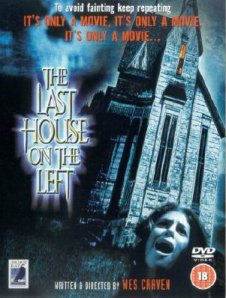
10) Last House On The Left (The Original) — Apparently, there’s a DVD of this film that features a commentary track in which stars David Hess and Fred Lincoln nearly come to blows while debating whether or not this movie should have been made.  The DVD I own doesn’t feature that commentary but it does feature a track featuring writer/director Wes Craven and producer Sean S. Cunningham.  The thing that I love about their commentary is that they both just come across as such nice, kinda nerdy guys.  You look at the disturbing images onscreen and then you hear Cunningham saying, “We shot this scene in my mom’s backyard.  There’s her swimming pool…”  Both Craven and Cunningham are remarkably honest about the film’s shortcomings (at one point, Craven listens to some of his more awkward dialogue and then says, “Apparently, I was obsessed with breasts…”) while, at the same time, putting the film’s controversy into the proper historical context.

9) Burnt Offerings — When Burnt Offerings, which is an occasionally interesting haunted house movie from 1976, was released on DVD, it came with a commentary track featuring director Dan Curtis, star Karen Black, and the guy who wrote the movie.  This commentary track holds a strange fascination for me because it, literally, is so mind-numbingly bad that I’m not convinced that it wasn’t meant to be some sort of parody of a bad commentary track.   It’s the commentary track equivalent of a car crash.  Curtis dominates the track which is a problem because he comes across like the type of grouchy old man that Ed Asner voiced in Up before his house floated away.  The screenwriter, whose name I cannot bring myself to look up, bravely insists that there’s a lot of nuance to his painfully simple-minded script.  Karen Black, meanwhile, tries to keep things positive.  The high point of the commentary comes when Black points out that one actor playing a menacing chauffeur is giving a good performance (which he is, the performance is the best part of the movie).  She asks who the actor is.  Curtis snaps back that he doesn’t know and then gets testy when Black continues to praise the performance.  Finally, Curtis snaps that the actor’s just some guy they found at an audition.  Actually, the actor is a veteran character actor named Anthony James who has accumulated nearly 100 credits and had a prominent supporting role in two best picture winners (In the Heat of the Night and Unforgiven).

8 ) Cannibal Ferox — This is a good example of a really unwatchable movie that’s made watchable by an entertaining commentary track.  The track is actually made up of two different tracks, one with co-star Giovanni Lombardo Radice and one with director Umberto Lenzi.  Lenzi loves the film and, speaking in broken English, happily defends every frame of it and goes so far as to compare the movie to a John Ford western.  The wonderfully erudite Radice, on the other hand, hates the movie and spends his entire track alternatively apologizing for the movie and wondering why anyone would possibly want to watch it.  My favorite moment comes when Radice, watching the characters onscreen move closer and closer to their bloody doom, says, “They’re all quite stupid, aren’t they?”

7) Race With The Devil Race with the Devil is an obscure but enjoyable drive-in movie from the 70s.  The DVD commentary is provided by costar Lara Parker who, along with providing a lot of behind-the-scenes information, also gets memorably catty when talking about some of her costars.  And, let’s be honest, that’s what most of us want to hear during a DVD commentary.

6) Anything featuring Tim Lucas — Tim Lucas is the world’s foremost authority on one of the greatest directors ever, Mario Bava.  Anchor Bay wisely recruited Lucas to provide commentary for all the Bava films they’ve released on DVD and, even when it comes to some of Bava’s lesser films, Lucas is always informative and insightful.  Perhaps even more importantly, Lucas obviously enjoys watching these movies as much as the rest of us.  Treat yourself and order the Mario Bava Collection Volume 1 and Volume 2.
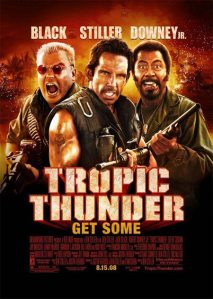
5) Tropic Thunder — The commentary track here is provided by the film’s co-stars, Jack Black, Ben Stiller, and Robert Downey, Jr.  What makes it great is that Downey provides his commentary in character as Sgt. Osiris and spends almost the entire track beating up on Jack Black.  This is a rare case of a great movie that has an even greater commentary track.

4) Strange Behavior — This wonderfully offbeat slasher film from 1981 is one of the best movies that nobody seems to have heard of.  For that reason alone, you need to get the DVD and watch it.  Now.  As an added bonus, the DVD comes with a lively commentary track featuring co-stars Dan Shor and Dey Young and the film’s screenwriter, Bill Condon (who is now the director that Rob Marshall wishes he could be).  Along with providing a lot of fascinating behind-the-scenes trivia, the three of them also discuss how Young ended up getting seduced by the film’s star (Michael Murphy, who was several decades older), how shocked Condon was that nobody on the set seemed to realize that he’s gay, and why American actors have so much trouble speaking in any accent other than their own.  Most memorable is Young remembering the experience of sitting in a theater, seeing herself getting beaten up onscreen, and then listening as the people sitting around her cheered.

3) Imaginationland — As anyone who has ever listened to their South Park commentaries knows, Matt Stone and Trey Parker usually only offer up about five minutes of commentary per episode before falling silent.  Fortunately, those five minutes are usually hilarious and insightful.  Not only are Parker and Stone remarkably candid when talking about the strengths and weaknesses of their work but they also obviously enjoy hanging out with each other.  With the DVD release of South Park’s Imaginationland trilogy, Matt and Trey attempted to record a “full” 90-minute commentary track.  For the record, they manage to talk for 60 minutes before losing interest and ending the commentary.  However, that track is the funniest, most insightful 60 minutes that one could hope for.

2) Donnie Darko — The original DVD release of Donnie Darko came with 2 wonderful commentary tracks.  The first one features Richard Kelley and Jack Gyllenhaal, talking about the very metaphysical issues that the film addresses.  Having listened to the track, I’m still convinced that Kelley pretty much just made up the film as he went along but its still fascinating to the hear everything that was going on his mind while he was making the film.  However, as good as that first track is, I absolutely love and adore the second one because it features literally the entire cast of the movie.  Seriously, everyone from Drew Barrymore to Jena Malone to Holmes Osborne to the guy who played Frank the Bunny is featured on this track.  They watch the film, everyone comments on random things, and it’s difficult to keep track of who is saying what.  And that’s part of the fun.  It’s like watching the film at a party full of people who are a lot more interesting, funny, and likable than your own actual friends.

1) The Beyond — This movie, one of the greatest ever made, had one of the best casts in the history of Italian horror and the commentary here features two key members of that cast — Catriona MacColl and the late (and wonderful) David Warbeck.  The commentary, which I believe was actually recorded for a laserdisc edition of the film (though, to be honest, I’ve never actually seen a “laserdisc” and I have my doubts as to whether or not they actually ever existed), was recorded in 1997, shortly after the death of director Lucio Fulci and at a time when Warbeck himself was dying from cancer.  (Warbeck would pass away two weeks after recording this commentary).  This makes this commentary especially poignant.  Warbeck was, in many ways, the human face of Italian exploitation, a talented actor who probably deserved to be a bigger star but who was never ashamed of the films he ended up making.  This commentary — in which MacColl and Warbeck quite cheerfully recall discuss making this underrated movie — is as much a tribute to Warbeck as it is to Fulci.  Highpoint: MacColl pointing out all the scenes in which Warbeck nearly made her break out laughing.  My personal favorite is the scene (which made it into the final film) where Warbeck attempts to load a gun by shoving bullets down the barrel.  The wonderful thing about this track is that Warbeck and MacColl enjoy watching it too.
My Top Ten Books About The Movies


I love movies and I love books so I guess it would stand to reason that I love books about movies the most of all.  (I also love movies about books but there are far fewer of those, unfortunately.)  Below are my personal favorites.  I’m not necessarily saying that these are the ten greatest film books ever written.  I’m just saying that they’re the ones that I’m always happy to know are waiting for me at home.

10) Soon To Be A Major Motion Picture by Theodore Gershuny — This is one of the great finds of mine my life.  I found this in a used bookstore and I bought it mostly because it only cost a dollar. Only later did I discover that I had found one of the greatest nonfiction books about the shooting of a movie ever written!  Gershuny was present during the filming of a movie called Rosebud in the early 70s.   I’ve never seen Rosebud but, as Gershuny admits, it was a critical disaster that managed to lose a ton of money.  The book provides a fascinating wealth of backstage gossip as well as memorable portraits of director Otto Preminger and actors Robert Mitchum (who was originally cast in the lead role), Peter O’Toole (who took over after Mitchum walked off the set), and Isabelle Huppert.   If nothing else, this book should be read for the scene where O’Toole beats up critic Kenneth Tynan.

9) Suspects by David Thomson — A study of American cinema noir   disguised as a novel, Suspects imagines what would happen if George Bailey from It’s a Wonderful Life fell in love with Laura from the movie of the same name.  Well, apparently it would lead to Sunset Boulevard’s Norma Desmond having an affair with Chinatown’s Noah Cross and to one of George’s sons, sensitive little Travis, getting a job in New York City as a Taxi Driver.  And that’s just a small sampling of what happens in this glorious mindfuck of a novel.

8 ) Profondo Argento by Alan Jones — Long-time fan Alan Jones examines each of Dario Argento’s films (even Argento’s obscure historical comedy The Five Days of Milan) and proceeds to celebrate and (in many cases) defend Argento’s career.  Jones also interviews and profiles several of Argento’s most frequent collaborators — Daria Nicolodi, Asia and Fiore Argento, Simon Boswell, Claudio Simonetti, Keith Emerson, George Romero, Lamberto Bava, Michele Soavi, and many others.  Jones’ sympathetic yet humorous profile of Luigi Cozzi is priceless.

7)  Spaghetti Nightmares by Luca Palmerini — Spaghetti Nightmares is a collection of interviews conducted with such Italian filmmakers as Dario Argento, Ruggero Deodato, Umberto Lenzi, Lucio Fulci, and others.  Among the non-Italians interviewed are Tom Savini (who, as always, comes across as appealingly  unhinged) and David Warbeck.  (Sadly, both Warbeck and Fulci would die shortly after being interviewed.)  What makes this interesting is that, for once, Argento, Fulci, et al. are actually being interviewed by a fellow countryman as opposed to an American accompanied by a translator.  As such, the subsequent interviews turn out to be some of the most revealing on record.

6) Sleazoid Express by Bill Landis and Michelle Clifford — Landis and Clifford’s book is both a history and a defense of the old grindhouse theaters of New York City.  Along with describing, in loving and memorable detail, some of New York’s most infamous grindhouses, they also write about some of the more popular movies to play at each theater.  Along the way, they also offer up revealing profiles of such legendary figures as David Hess and Mike and Roberta Findley.  Reading this book truly made me mourn the fact that if I ever did find myself in New York City, I won’t be able to hit the old grindhouse circuit.

5) Beyond Terror: The Films of Lucio Fulci by Stephen Thrower — Fulci has always been a terribly underrated director and, indeed, it’s easy to understand because, in many ways, he made movies with the specific aim of alienating and outraging his audience.  It requires a brave soul to take Fulci on his own terms and fortunately, Stephen Thrower appears to be one.  Along with the expected chapters on Fulci’s Beyond Trilogy and on Zombi 2, Thrower also devotes a lot of space to Fulci’s lesser known works.  Did you know, for instance, that before he became the godfather of gore, Fulci specialized in making comedies?  Or that he also directed two very popular adaptations of White Fang?  Thrower also examines Fulci’s often forgotten westerns as well as his postapocalyptic sci-fi films.  And, best of all, Thrower offers up a defense of the infamous New York Ripper that, when I read it, actually forced me to consider that oft-maligned film in a new light.  That said, Thrower does admit to being as confused by Manhattan Baby as everyone else.

4) Immoral Tales by Cathal Tohill and Pete Toombs — Tohill and Toombs offer an overview of European “shock” cinema and some of the genre’s better known masters.  The book contains perhaps the best critical examination of the work of Jean Rollin ever written.  The authors also examine the work of Jesus Franco and several others.  This is a great book that reminds us that the Italians aren’t the only ones who can make a great exploitation film.

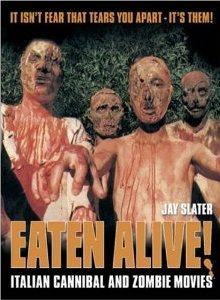
3) Eaten Alive by Jay Slater — This book offers an overview of the Italian film industry’s legendary cannibal and zombie boom.  Along with reviewing every Italian movie to feature even the slightest hint of cannibalism or the living dead (this is one of the few books on Italian cinema that discusses both Pasolini and Lucio Fulci as equals), Eaten Alive also features some very revealing interviews with such iconic figures as Catriona MacColl, Ian McCullough, and especially Giovanni Lombardo Radice.  Radice, in fact, also contributes a memorable “guest” review of one of the movies featured in the book.  (“What a piece of shit!” the review begins.)  Memorable reviews are also contributed by Troma film founder Lloyd Kaufman who brilliantly (and correctly) argues that Cannibal Holocaust is one of the greatest films ever made and Ramsey Campbell who hilariously destroys Umberto Lenzi’s infamous Nightmare City.

2) The Book of the Dead by Jamie Russell — If, like all good people, you love zombies then you simply must do whatever it takes to own a copy of this book.  Starting with such early masterpieces as White Zombie and I Walked With A Zombie, Russell proceeds to cover every subsequent zombie film up through George Romero’s Land of the Dead.  Russell offers up some of the best commentaries ever written on Romero’s Dead films, Fuci’s Beyond Trilogy, Rollin’s Living Dead Girl, and Spain’s Blind Dead films.   The pièce de résistance, however, is an appendix where Russell describes and reviews literally ever zombie film ever made.

1)  All The Colors Of the Dark by Tim Lucas  — This is it.  This is the Holy Grail of All Film Books.  If you’ve ever asked yourself if any book is worth paying close to 300 dollars, now you have your answer.  This one is.  Tim Lucas offers up the most complete biography of director Mario Bava ever written.  In fact, this may be the most complete biography of any director ever written!  Lucas examines not only Bava’s life but also every single movie that Bava was ever in any way connected to, whether as a director or as a cameraman or as the guy in charge of the special effects.  This is 1,128 pages all devoted to nothing but the movies.  This is the type of book that makes me thankful to be alive and I owe a huge debt of gratitude to Tim Lucas for writing it.