Music Video of the Day: Look Back In Anger by David Bowie (1979, dir by David Mallet)


Today’s music video of the day comes to us from David Bowie, who would have been 78 years old on this day.

Look Back In Anger has nothing to do with the John Osborne play of the same name but the music video is based on The Picture of Dorian Gray.

Enjoy!

Horror Song of The Day: Cat People (Putting Out Fire) by Giorgio Moroder and David Bowie


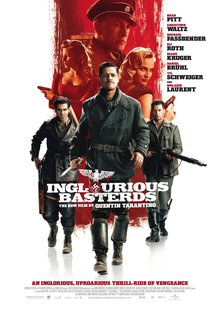
Today’s song comes the hypnotic soundtrack of Paul Schrader’s Cat People.  This song was so good that it later showed up and was used to equally strong effect in Quentin Tarantino’s Inglourious Basterds.

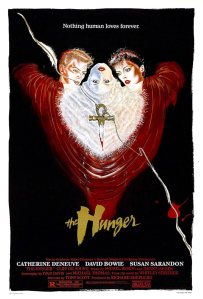
Horror Film Review: The Hunger (dir. by Tony Scott)


Whoa! Hold your horses! This isn’t the only review for The Hunger. Take a look at Lisa’s Review and if you’re so inclined, feel free to double back here.

It seems fitting that we start our descent towards Halloween with Tony Scott’s first feature film, The Hunger. As a fan of Vampires in general, it may not be a great film, but I feel like it does have a place in history where creatures of the night are concerned.

When I think of Whitley Streiber, Wolfen comes to mind and anyone who knows me also knows how much I adore that film. I don’t usually associate him with Vampires, but 1983’s The Hunger is pretty interesting. To me, there’s a nice beauty and mystery to the film as the undead involved could just be regular people asking the same questions about mortality we do, all to some beautiful movie throughout. They are practical vampires. There’s no real explanation as to how John and Miriam move about through the day. Rather than biting, they use small knives to acquire blood. The powers they wield are subtle, putting the story on par with Kathryn Bigelow’s Near Dark when it comes to avoiding vampire cliches. Additionally, this film also never mentions the word ‘vampire’.

Miriam (Catherine Deneuve, Belle de Jour) and John Baylock (David Bowie, Labyrinth) are vampires living in present day Manhattan. Enjoying their existence as any member of the undead would, they spend their nights mingling among the living and discarding bodies by dawn. What seems like a great unlife takes a turn when John finds himself unable to sleep. This restlessness escalates as he finds he’s losing his hair and gaining more wrinkles. The pair stumble on the Park West Sleep Clinic, and Dr. Sarah Roberts’ (Susan Sarandon, Blue Beetle) studies on sleep and aging. For me, one of the best scenes of the film was a parallel between John’s rapid aging while waiting in the Clinic alongside a lab monkey that is also suffering a similar issue. Sarah doesn’t really get to check in on John (who ages a quick 15 years during the wait), but their meeting does eventually introduce her to Miriam.

Miriam eventually loses John after he falls into a near mummified state. Although he becomes incredibly old, he’s still far from death’s touch. I love her explanation for him: “Humankind die one way, we another. Their end is final. Ours is not. In the earth, in the rotting wood, in the eternal darkness, we will see and hear and feel.” We also learn that this has happened with all of Miriam’s former lovers over the ages. Miriam then turns her sights on Sarah, which blossoms into a mix of a romance at first. Trivia fans will recognize the piano piece Miriam plays for Sarah (Lakme by Delibes), which Scott reused for True Romance. That was a nice touch. Needing a new partner, Miriam’s approaches become more predatory after Miriam’s true nature is revealed.

The cast in The Hunger all do well, but let’s face it, the real draw here was always Bowie (at least for me, anyway). It’s a shame his character doesn’t stay on screen for long, but he makes good use of the scenes he has and he’s there for at least half the movie. The film essentially belongs to Deneuve, who brings some charisma to Miriam’s character. Whether she’s being playfully flirtatious or deadly serious, she seems to be in control. I don’t have anything particular against Susan Sarandon as an actress. She’s quite good in this, but part me kind of imagined Lesley Ann Warren (Clue) doing all this a bit better.

Tony’s directing style is beautiful but slightly disjointed, with flashbacks giving an idea to Miriam’s past. On the one hand, they aren’t enough to be too revealing, but they’re also accompanied with some strange sound zingers that could be a bit off-putting. He moves quickly between scenes, but the general ideas of immortality and her longevity are suggested. Cinematographer Stephen Goldblatt (Outland) would go on to work on the Lethal Weapon films and Schumacher’s Batman films. There are some good uses of shadow and light here.

The music a mix of classical pieces, mixed with what sounds like either wind chimes and synth keyboards. The classical music stands out. The score, not so much. It’s not a terrible thing by any means, but it’s a strange selection of sounds. Other than the music, I was bothered by the film’s ending. What occurs seems like it could have happened at any time, and why it does is never explained in any way. I guess it worked. By the end, though, I felt like I watched something where the first 3 acts were fully thought out and the production team threw a dart at a board full of possible endings.

Overall, The Hunger is a interesting film to watch if you catch it late at night. Every director has to start somewhere, and while it’s a little sketchy in the end, there’s some style and grace to it all.
Music Video of the Day: Ashes to Ashes by David Bowie (1980, directed by David Bowie and David Mallet)


David Bowie was one of the first artists to truly understand the potential power of a good music video and, as can be seen in this video for Ashes to Ashes, he was an early pioneer of the form.  At a time when most music videos were just performance clips, Bowie put together a narrative that offered an artistic interpretation of the song’s lyrics and themes and which invited viewers to interpret the song on their own.

The video was largely shot on two beaches in the UK, at Beachy Head and Hastings.  Interior scenes were filmed on the set of the Kenny Everett Show.  Bowie’s followers were played by the Blitz kids, who were known for frequenting the Blitz nightclub in Covent Garden.

Bowie said that the video was meant to combine the past and the future, which is why Bowie not only appears as an astronaut but also as an Edwardian clown.  The scenes with Bowie as an astronaut are, as the lyrics make clear, a reference to Major Tom.  The look of the scenes was heavily influenced by H.R. Giger’s work on Alien.

David Mallet would go on to become one of busiest directors of music videos of the 80s, directing videos for Queen, Iron Maiden, AC/DC, and others.  David Bowie would also go on to play a huge role in MTV’s history, due to both his videos and his willingness to call out that station’s initial refusal to feature videos from black artists.

Enjoy!

Live Tweet Alert: Join #FridayNightFlix For Labyrinth


As some of our regular readers undoubtedly know, I am involved in a few weekly live tweets on Twitter and Mastodon.  I host #FridayNightFlix every Friday, I co-host #ScarySocial on Saturday, and I am one of the five hosts of #MondayActionMovie!  Every week, we get together.  We watch a movie.  We tweet our way through it.

Tonight, at 10 pm et, #FridayNightFlix presents 1986’s Labyrinth, starring Jennifer Connelly and David Bowie!

If you want to join us this Friday, just hop onto twitter, start the movie at 10 pm et, and use the #FridayNightFlix hashtag!  It’s a friendly group and welcoming of newcomers so don’t be shy.

Labyrinth is available on Prime and Tubi!  See you there!

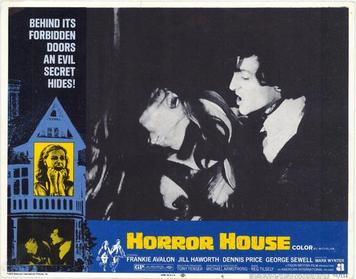
Horror On The Lens: Haunted House of Horror (dir by Michael Armstrong)


First released in 1969, The Haunted House of Horror features a group of 20-somethings who, bored with the usual parties, decide to that it might be a kick to hang out in a supposedly haunted mansion.  Once they’re in the mansion, they decide that it might be even more fun to hold a seance!

(Seriously, what is the deal with people holding séances in haunted mansions?  That really seems like the last place where you would want to mess with potentially malevolent spirits!)

The party becomes much less fun once someone starts killing off the group, one-by-one.

This film is notable for two reasons.  First off, it features Frankie Avalon in one of his attempts to break free of his Beach Party typecasting.  Secondly, the role of Richard, who is played by Julian Barnes, was originally offered to a young singer named David Bowie.  Reportedly, Bowie was quite excited about doing the film but, in the end, the producers worries that he and Frankie Avalon would not get along.  I’m not sure why.  David Bowie had a sense of humor and, judging from his Casino cameo, so does Frankie.

Scenes I Love: The Beginning of The Fifth Chapter of Inglourious Basterds


This is, without a doubt, one of the best sequences that Quentin Tarantino has ever directed.  Along with the perfect visuals of Shoshanna getting ready for the premiere, Tarantino makes perfect use of Theme From Cat People, reinventing the song from a somewhat silly horror theme to an anthem of revolution and revenge.

AMV Of The Day: Space Oddity (Cowboy Bebop)


In memory of David Bowie, on what would have been his birthday, here’s an AMV of the Day.

Anime: Cowboy Bebop

Song: Space Oddity (performed by David Bowie)

Creator: Gabriel Jimenez (please subscribe to this creator’s channel)

Past AMVs of the Day

Music Video of the Day: I’m Afraid of Americans by David Bowie (1997, dir by Dom & Nic)


Today would have been David Bowie’s 76th birthday so it only feels appropriate that our music video of the day should come from him.  In I’m Afraid of Americans, Bowie is pursued through New York City by Trent Reznor.

This is a song that has been interpreted and re-interpreted several times through the years.  Bowie himself indicated that the song wasn’t anti-American as much as it was about America’s cultural and commercial dominance over much of the world.  Of course, more recently, other critics have insisted in finding a message about the current state of American politics in the song’s lyrics, despite the fact that Bowie died before the start of our current political era.  Myself, when I watched the video, I immediately thought of the paranoia that many felt and some still feel about COVID, with Bowie representing the wealthy city dweller who finds himself fleeing from anyone who he fears might be unvaccinated or infected.  Like all great songs and videos, I’m Afraid of Americans can mean a host of different things depending on when you watch or listen to it.

Enjoy!

Music Video of the Day: Dancing in the Street, by David Bowie and Mick Jagger (1985, directed by David Mallet)


What do you get when you set David Bowie and Mick Jagger loose in an abandoned flour mill?

You get the video for their version of Dancing In The Street.  Their cover of the classic tune by Martha Reeves and the Vandellas was recorded to raise money for the Live Aid famine relief charity.  The video was shown twice during the Live Aid event and it also aired before theatrical showings of Ruthless People, a film for which Jagger had contributed to the soundtrack.  The video was also a hit on MTV, where it helped to introduce both Bowie and Jagger to a new generation of listeners.

The video was directed by David Mallet, who did the majority of Bowie’s videos in the 80s and 90s.

Enjoy!