Review: The Civil War (dir. by Ken Burns)


“We are not enemies, but friends. We must not be enemies. Though passion may have strained, it must not break our bonds of affection.” — Abraham Lincoln

Ken Burns’ The Civil War stands as one of those rare documentaries that completely reshapes how people think about both history and the craft of documentary filmmaking. Released in 1990, it’s been over three decades since it first aired, yet it still feels monumental in its reach and emotional resonance. Instead of serving as a dry classroom recounting of battles and dates, it’s an experience that makes you feel the war’s human dimension—the people who fought it, lived through it, and were changed forever by its violence and ideals. Burns manages to take America’s bloodiest conflict and give it a pulse, telling the story not only through historians and statistics but through letters, diaries, and voices that make you feel connected to the 1860s as if it all just happened yesterday.

One of the most defining parts of The Civil War is its look and rhythm. Burns’ now-famous visual style—those slow pans and zooms across black-and-white photographs—became such a signature technique that it’s now built into editing software as “the Ken Burns effect.” It might sound simple, but the way he moves those still images feels like breathing life into ghosts. Every slow zoom on a soldier’s uncertain face, every fade over an empty battlefield, has meaning. Before Burns, most historical documentaries presented facts through re-enactments or stiff academic interviews. Burns dared to make photographs speak on their own. The pacing he uses is hypnotic—deliberate, unwavering, and emotionally tuned to each shot. It’s a visual rhythm that invites reflection instead of speed. The whole thing feels like time itself has slowed down so history can whisper its fullest story.

The narration, provided by David McCullough, ties the sprawling story together with a sense of calm authority. His voice is warm, measured, and almost timeless, acting less like a narrator and more like an old friend who knows the past intimately but never overstates it. McCullough’s presence builds trust—no hype, no theatrics, just thoughtful storytelling. Burns pairs that voice with readings from letters, diaries, and contemporary accounts, delivered by a lineup of talented voice actors like Jason Robards, Sam Waterston, and Morgan Freeman. Their readings never feel like performances; they feel lived in, restrained, and sincere. This combination of voice and image creates a tone that is both haunting and beautiful, one that makes history feel alive but not romanticized.

A huge part of why the series feels so moving is Jay Ungar’s “Ashokan Farewell.” Oddly enough, it’s not a Civil War-era tune at all—it was written in the 1980s—but it fits so organically with the documentary’s mood that it’s impossible to think about the series without hearing it. The plaintive fiddle melody has a mournful warmth, evoking the loss and longing that defines the entire project. Burns and his team used it in just the right measure: when the music plays, it deepens emotion rather than dictating it. Combined with other period-appropriate folk songs, banjo pieces, and hymns, the soundtrack acts as the emotional current guiding the story through landscapes of death, courage, and change.

The structure of The Civil War is deceptively simple but brilliantly executed. Spanning nine episodes and over eleven hours in total, it charts the war from its earliest, uneasy beginnings in the political debates over slavery and statehood through to its catastrophic conclusion and fragile aftermath. Burns understood that history isn’t static; it’s emotional and cumulative. The early episodes almost feel optimistic—the tone of youthful bravado and national pride fills the air as both sides believe the conflict will end quickly. As the series progresses, though, the optimism curdles into fatigue, despair, and grief. By the time the war drags into its later years, the imagery, narration, and music all carry the weight of shared tragedy. You begin to see how idealism eroded into acceptance of horror. The careful pacing of each episode allows viewers to feel that arc not just intellectually but emotionally.

Among the many creative decisions Burns made, choosing to anchor the series around personal letters was perhaps the most effective. Through these letters, anonymous soldiers, wives, and family members speak across time. Their words carry more power than any historian’s commentary could. One of the most unforgettable moments comes from Union officer Sullivan Ballou’s letter to his wife, written shortly before he was killed. His words are devastating in their tenderness and resignation, summing up both love and mortality in a way that feels timeless. Burns threads similar letters throughout the series—from soldiers on both sides, from civilians caught in the middle, and from the enslaved people whose freedom hung in the balance. Their voices form the emotional backbone of the documentary, constantly reminding us that this was not just a war of strategy but a catastrophe of human consequence.

Alongside these voices, there’s a chorus of historians offering perspective and context. Shelby Foote, with his Southern drawl and gift for anecdote, became one of the documentary’s most recognizable figures. His storytelling bridges the gap between scholarship and folklore, even if some critics later accused him of romanticizing the Confederate perspective. Counterbalancing that, historian Barbara Fields provides some of the series’ most profound reflections, particularly regarding race and memory. Her insistence that the war’s legacy continues to shape American identity feels just as relevant now as it did in 1990. Their alternating viewpoints give the documentary balance—emotion on one side, intellect and conscience on the other.

Burns’ handling of tone is one of the most striking things on a rewatch. It’s both deeply romantic in its love of storytelling and brutally realistic in its depiction of suffering. It doesn’t sanitize the war, but it doesn’t exploit it either. You’re never shown battle reenactments, explosions, or gore. Instead, Burns conveys the violence and despair through letters, photos, and silence. He trusts the audience to fill in the horror. That’s uncommon in modern documentary work, where there’s often pressure to explain or dramatize everything. In The Civil War, silence becomes a storytelling device. The pauses between sentences, the long holds on a tattered flag or a battlefield grave, carry meaning. The documentary refuses to rush toward catharsis; it lingers in grief.

In today’s media landscape—where documentaries tend to move fast and fight for attention—Burns’ slower, more contemplative approach stands out. Back in 1990, it riveted viewers. An estimated 40 million people watched it on PBS, an unbelievable number for a historical series on public television. For many Americans, it became their most vivid introduction to their own national history. It made people talk about Gettysburg, Lincoln, emancipation, and the moral aftermath of the war in living rooms across the country. It even sparked renewed interest in Civil War books, memorials, and battlefield preservation. Burns had tapped into something rare: a collective need to understand who Americans are by understanding what nearly destroyed them.

Even decades later, The Civil War holds up both artistically and historically. Watching it now, its moral clarity about slavery as the war’s central cause feels vital, especially in a time when debates over monuments and racial politics remain heated. Burns never let the series fall into the “states’ rights” trap that muddied so many earlier narratives. He continually foregrounded the human cost of defending or destroying the institution of slavery. Still, modern viewers might wish for even more emphasis on the experiences of Black Americans, beyond the selected diaries and Douglass excerpts. The documentary touched these stories with respect but within the limits of its early-1990s format. Later historians have expanded upon what Burns began, but his foundation remains solid.

Technically, the documentary’s aged well. Restored versions bring new clarity to the old photographs, and the audio’s crisp enough to make the letters feel freshly read. The storytelling, slow-moving as it is, rewards patience. It’s not content to skim across major events; it expects you to sit with sorrow, fatigue, and loss. Watching all eleven hours feels like reading an epic novel: it’s best done gradually, letting each episode resonate before starting the next. The cumulative effect isn’t just historical understanding—it’s emotional exhaustion tempered by awe.

The Civil War remains one of the greatest nonfiction works ever broadcast. It’s not simply about battles or leaders but about the psychology of a country divided by ideals and identity. It asks questions rather than delivering verdicts—questions about sacrifice, belief, morality, and what it means to be American. Few documentaries manage to tell old stories in ways that still feel alive, but Burns achieved that through patience, empathy, and an unshakable faith in the power of storytelling. Even now, it’s hard to watch without feeling the echo of those voices—some hopeful, some broken—that seem to reach out from still photographs and faded ink. Burns didn’t just document history; he let history speak for itself. That’s why The Civil War endures.

Perhaps it’s even more important now than when it first aired. In a time when historical revisionism has begun to creep from the fringes into mainstream discourse and when the nation feels dangerously forgetful of its own moral and political lessons, Burns’ documentary serves as both a warning and a reminder. It shows what happens when ideology overtakes humanity and when a country forgets the cost of its own divisions. Watching The Civil War today feels less like revisiting the past and more like confronting the present—proof that the ghosts of that conflict remain, quietly urging us not to repeat what we once swore to never forget.
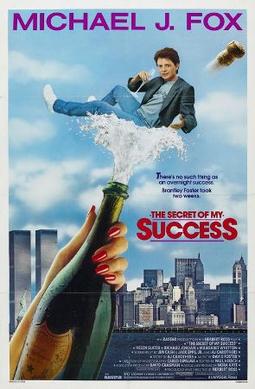
The Secret of My Success (1987, directed by Herbert Ross)


ȋ‚˜é

Brantley Foster (Michael J. Fox) heads to New York City with his business degree from the University of Kansas and the promise of an entry-level job as a financier.  He arrives to discover that the company that hired him no longer exists and that Brantley is out of a job.  New York is a harsh town for someone who is down on his luck and all of out of money.  Brantley eventually gets a job working in the mail room of a company owned by his wealthy uncle (Richard Jordan).  His uncle doesn’t even know who he is but soon, Brantley becomes just as rich and successful as he always dreamed.

What’s the secret of Brantley’s success?

Screwing his Aunt Vera (played by Margaret Whitton).

What’s the other other secret of his success?

Pretending to be named Carlton Whitfield and claiming that he’s a new executive at the corporation.

I remember when Kramer did the same thing on Seinfeld.  It didn’t work out for Kramer.  He got fired after turning in his first report.

“This is gibberish,” his boss said, “It’s almost as if you have no business training at all.  I’m afraid we have to let you go.”

“I don’t actually work here,” Kramer replied.

“That’s what makes this so hard.”

Seinfeld, never topped.

Back to The Secret of My Success, this is the most 80s film ever made, complete with montages of Brantley exploring New York and a saxophone playing on the soundtrack.  Brantley’s all about TCB, taking care of business.  He screws his aunt but falls in love with Christy Wills (Helen Slater).  Brantley doesn’t learn anything but he gets the best office and becomes a success without actually doing any real work.  It’s the ultimate fantasy and, like many fantasies, The Secret of My Success is superficially appealing.  Michael J. Fox is likable as Brantley.  Margaret Whitton is outrageously sexy as Vera.  Helen Slater is pretty and boring, traits that made her the ideal “good” girlfriend for Brantley’s story.

The Secret of My Success is your ticket to the 80s.

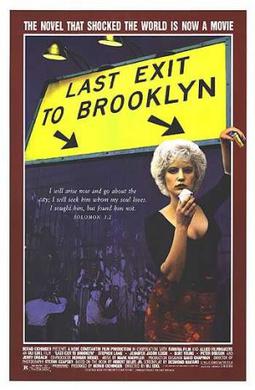
Icarus File No. 14: Last Exit To Brooklyn (dir by Uli Edel)


Welcome to Brooklyn!

The year is 1952 and one neighborhood in Brooklyn is on the verge of exploding.

A thug named Vinnie (Peter Dobson) holds court at a local bar.  (His associates include the moronic Sal, who is played by a very young Stephen Baldwin.)  Some nights, Vinnie and his associates mug people for money.  Sometimes, they just attack people for fun.

A strike at the local factory has entered its sixth month, with management showing no sign of compromising and Boyce (Jerry Orbach), the head of the union, showing little concern for the men who are now struggling to feed their families.  The local shop steward, Harry Black (Stephen Lang), is a self-important braggart who never stops talking about how he’s the one leading the strike.  At home, Harry ignores his wife, with the exception of a violent quickie.  On the streets, Harry embezzles money from the union and uses it to try to impress the men that he would rather be spending his time with.  But even the men who Harry considers to be friends quickly turn on him when he is at his most pathetic.

Big Joe (Burt Young) is a proud union member who is shocked to discover that his teenage daughter (Ricki Lake) is 8-months pregnant.  Despite being out-of-work and not caring much for Tommy (John Costelloe), Joe puts together the wedding that appears to be the social event of a shabby season.  But even at the reception, violence lurks below the surface.

Georgette (Alexis Arquette) is a transgender prostitute who loves Vinnie, even after he and his idiot friends stab her in the leg while playing with a knife.  Beaten at home by her homophobic brother (Christopher Murney), Georgette sinks into drug addiction.

Tralala (Jennifer Jason Leigh) is an amoral prostitute, one who specializes in picking up military men and then arranging from them to be mugged by Vinnie and his gang.  Sick of being exploited by Vinnie, Tralala heads to Manhattan and meets Steve (Frank Military), an earnest soldier from Idaho.  For the first time, Tralala is treated decently by a man but Steve is set to ship out to Korea in a few days and, as he continually points out, there’s a chance that he might not return.  For all of the happiness she finds in Manhattan, Tralala is continually drawn back to her self-destructive life in Brooklyn.

First released in 1989 and directed by Uli Edel (who directed another film about desperation, Christiane F.), Last Exit To Brooklyn is based on a controversial novel by Hubert Selby, Jr.  In fact, it was so controversial that the novel was banned in several countries and, for a while, was listed as being obscene by the U.S. Post Office.  I read the novel in the college and it is indeed a dark and depressing piece of work, one that offers up very little hope for the future.  It’s also brilliantly written, one that sucks you into its hopeless world and holds your interest no matter how bleak the stories may be.  Due to its reputation, it took over 20 years for Last Exit to Brooklyn to be adapted into a film.

The film is actually a bit more positive than the book.  One character who appears to die in the book manages to survive in the film.  The wedding subplot was a minor moment in the book but, in the film, it’s made into a major event and provides some mild comedic relief.  That said, the film is definitely dark.  Almost every character is greedy and angry and those who aren’t are victimized by everyone else.  Unfortunately, the film lacks the power of Selby’s pungent prose.  As a writer, Selby held your attention even when you want to put the book away.  When it comes to the film, the lack of Selby’s voice makes it very easy to stop caring about the characters or their stories.  Even with the attempts to lighten up the story, the film is still so dark that it’s easy to stop caring.  The non-stop bleakness starts to feel like a bit of an affectation.

And that’s a shame because there are some brilliant moments and some brilliant performances to be found in Last Exit To Brooklyn.  An extended sequence where the police fight the striking workers is wonderfully directed, with the police becoming an invading army and the men on strike being transformed from just factory workers to rebels.  The scene where Boyce informs Harry that he’s not as important as he thinks is wonderfully acted by both Jerry Orbach and Stephen Lang.  As Tralala, Jennifer Jason Leigh gives a raw and powerful performance, whether she’s shyly accepting Steve’s kindness or drunkenly exposing herself to a bar full of lowlifes.  In many ways, Tralala is the most tragic of all the characters to be found in Last Exit to Brooklyn.  She’s tough.  She’s angry.  But, in the end, she’s ultimately the victim of men who are too stupid to understand anything other than aggression.  The neighborhood applauds her when she confidently walks past a line of cops and strikebreakers but the same people who cheered for her later try to destroy her.

The film ends on an ambiguous note, with a peace that feels very temporary.  The message seems to be that men are at their worst when they’re bored so perhaps it’s best to keep them busy, whether with a job or perhaps a wedding.  It’s a flawed film but it sticks with you.

Previous Icarus Files:

  1. Cloud Atlas
  2. Maximum Overdrive
  3. Glass
  4. Captive State
  5. Mother!
  6. The Man Who Killed Don Quixote
  7. Last Days
  8. Plan 9 From Outer Space
  9. The Last Movie
  10. 88
  11. The Bonfire of the Vanities
  12. Birdemic
  13. Birdemic 2: The Resurrection 

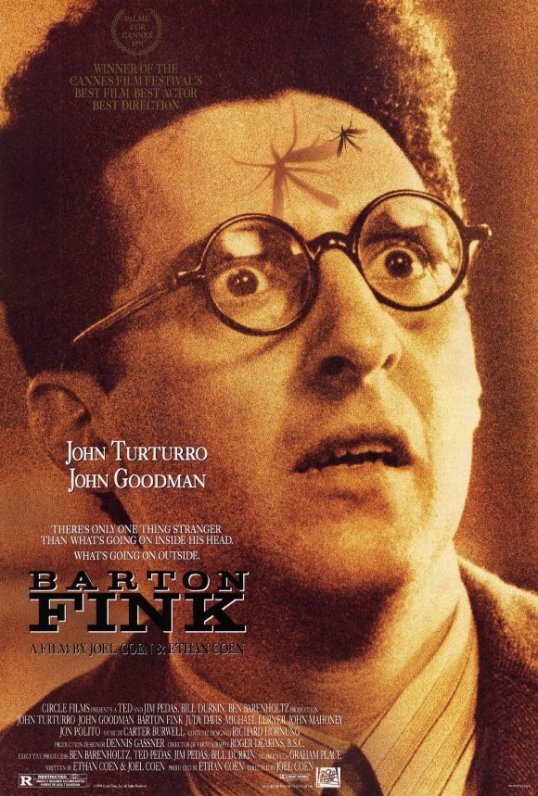
Lisa Reviews A Palme d’Or Winner: Barton Fink (dir by Joel and Ethan Coen)


With the Cannes Film Festival underway in France, I decided that I would spend the next few days watching and reviewing some of the previous winners of the Palme d’Or.  Today, I got things started with the 1991 winner, Barton Fink.

Directed by the Coen Brothers and taking place in the mythological Hollywood of 1941, Barton Fink tells the story of a writer.  Played by John Turturro, Barton Fink is a playwright who has just had a big hit on Broadway.  We don’t see much of the play.  In fact, we only hear the final few lines.  “No,” one the actors says, in exaggerated “common man” accent, “it’s early.”  From what we hear of the reviews and from Barton himself, it seems obvious that the play is one of those dreary, social realist plays that were apparently all the rage in the late 30s.  Think Waiting for Lefty.  Think Hand That Rocks The Cradle.  Think of the Group Theater and all of the people that Elia Kazan would later name as having been communists.  These plays claimed to tell the stories of the people who couldn’t afford to see a Broadway production.

Barton considers himself to be the voice of the common man, an advocate for the working class.  He grandly brags that he doesn’t write for the money or the adulation.  He writes to give a voice to the voiceless.  When his agent tells him that Capitol Pictures wants to put Barton under contract, Barton resists.  His agent assures Barton that the common man will still be around when Barton returns from Hollywood.  There might even be a few common people in California!  “That’s a rationalization,” Barton argues.  “Barton,” his agent replies with very real concern, “it was a joke.”  Barton, we quickly realize, does not have a sense of humor and that’s always a huge problem for anyone who finds themselves in a Coen Brothers film.

In Hollywood, Barton meets the hilariously crass Jack Lipnik (Oscar-nominated Michael Lerner).  Lipnik is the head of Capitol Pictures and he is sure that Barton can bring that “Barton Fink feeling” to a Wallace Beery wrestling picture.  Barton has never wrestled.  He’s never even seen a film.  The great toast of Broadway finds himself sitting in a decrepit hotel room with peeling wallpaper.  He stares at his typewriter.  He writes three or four lines and then …. nothing.  He meets his idol, Faulknerish writer W.P. Mayhew (John Mahoney), and discovers that Mayhew is a violent drunk and that most his recent work was actually written by his “secretary,” Audrey (Judy Davis).  He seeks help from producer Ben Geisler (Tony Shalhoub), who cannot understand why Barton is having such a difficult time writing what should be a very simple movie.  Barton sits in his hotel room and waits for inspiration that refuses to come.

He also gets to know Charlie Meadow (John Goodman).  Charlie is Barton’s neighbor.  Charlie explains that he’s an insurance agent but he really sells is “peace of mind.”  At first, Barton seems to be annoyed with Charlie but soon, Barton finds himself looking forward to Charlie’s visits.  Charlie always brings a little bottle of whiskey and a lot of encouragement.  Charlie assures Barton that he’ll get the script written.  Barton tells Charlie that he wants to write movies and plays about “people like you.”  Charlie shows Barton a wrestling move.  Barton tells Charlie to visit his family if he’s ever in New York.  Charlie tells Barton, “I could tell you some stories” but he never really gets the chance because Barton is usually too busy talking about his ambitions to listen.  Charlie tells Barton, “Where there’s a head, there’s hope,” a phrase that takes on a disturbing double meaning as the film progresses.  Just as Barton isn’t quite the class warrior that he believes himself to be, Charlie isn’t quite what he presents himself to be either.  Still, in the end, Charlie is far more honest about who he is than Barton could ever hope to be.

When it comes to what Barton Fink is actually about, it’s easy to read too much into it.  The Coens themselves have said as much, saying that some of the film’s most debated elements don’t actually have any deeper meaning beyond the fact that they found them to be amusing at the time.  At its simplest, Barton Fink is a film about writer’s block.  Anyone who has ever found themselves struggling to come up with an opening line will be able to relate to Barton staring at that nearly blank page and they will also understand why Barton comes to look forward to Charlie visiting and giving him an excuse not to write.  It’s a film about the search for inspiration and the fear of what that inspiration could lead to.  Towards the end of the film, Barton finds himself entrusted with a box that could contain his worst fears or which could cpntain nothing at all.  There’s nothing to stop Barton from opening the box but he doesn’t and it’s easy to understand why.  To quote another Coen Brothers film, “Embrace the mystery.”

There’s plenty of other theories about what exactly is going on in Barton Fink but, as I said before, I think it’s easy to overthink things.  The Coens have always been stylists and sometimes, the style is the point.  That said, I do think that it can be argued that Barton Fink’s mistake was that he allowed himself to think that he was important than he actually was.  Self-importance is perhaps the one unforgivable sin in the world of the Coen Brothers.  Like most Coen films, Barton Fink takes place in a universe that is ruled by chaos and the random whims of fate.  Barton’s mistake was thinking that he could understand or tame that chaos through his art or his politics.  Barton’s mistake is that he tries to rationalize and understand a universe that is irrational and incapable of being explained.  He’s a self-declared storyteller who refuses to listen to the stories around him because those stories might challenge what he considers to be the “life of the mind.”

Barton Fink is a film that people either seem to love or they seem to hate.  Barton, himself, is not always a  particularly likable character and the Coens seem to take a very definite joy in finding ways to humiliate him.  Fortunately, Barton is played by John Turturro, an actor who has the ability to find humanity in even the most obnoxious of characters.  (As obnoxious as Barton can be, it’s hard not to want to embrace him when he awkwardly but energetically dances at a USO club.)  Turturro has great chemistry with John Goodman, who gives one of his best performances as Charlie.  It’s putting it lightly to say that most viewers will have mixed feelings about Charlie but the film makes such great use of Goodman’s natural likability that it’s only on a second or third viewing that you realize that all of Charlie’s secrets were pretty much out in the open from the start.  Michael Lerner deserved his Oscar nomination but certainly Goodman deserved one as well.  The rest of the cast is full of Coen Brothers regulars, including Jon Polito as Lerner’s obsequies assistant and Steve Buscemi as Chet, the very friendly front deskman.  And finally, I have to mention Christopher Murney and Richard Portnow, who play two of the worst cops ever and who deliver their hardboiled dialogue with just the right mix of menace and parody.

Barton Fink won the Palme d’Or at Cannes, defeating such films as Spike Lee’s Jungle Fever and Lars Von Trier’s Europa.  It also won awards for the Coens and for John Turturro.  It’s perhaps not a film for everyone but it’s one that holds up well and which continues to intiruge.  Don’t just watch it once.  This isn’t a film that can fully appreciated by just one viewing.  This isn’t a Wallace Beery wrestling picture.  This is Barton Fink!

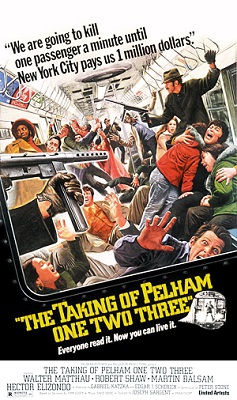
Film Review: The Taking of Pelham One Two Three (dir by Joseph Sargent)


Welcome to New York in the 1970s!  While the intellectuals flock to the latest Woody Allen movie and the wealthy throw radical chic parties in Manhattan and disturbed young men drive taxis at night and pray for a real flood to clear away all the vermin, most of the city’s citizens are just trying to make it through the day.  For many of them, that means spending an hour or two riding the subway.  In some ways, the subway is the great equalizer.  The minute that you sit down on a filthy train car, it doesn’t matter how old you are or how you vote or the color of your skin.  All that matter is finding a way to avoid making eye contact with anyone else.

Four men, all wearing obvious disguised, board the downtown Pelham 1-2-3 train.  They all look suspicious but, this being New York, no one wants to make eye contact.  Everyone just wants to reach their next stop.  The men — who are known as Mr. Blue (Robert Shaw), Mr. Green (Martin Balsam), Mr. Grey (Hector Elizondo), and Mr. Brown (Earl Hindman) — have other plans.  Revealing that they’re armed, they take the 18 passengers of the first car hostage.  Their leader, Mr. Blue, has a simple demand.  He wants a million dollars to be delivered to the car within an hour.  If the money’s late, he will kill one hostage every minute, until he receives what he wants.

While the cold-stricken mayor (Lee Wallace) tries to figure out how to 1) raise a million dollars and 2) handle the situation without losing any potential votes in his reelection campaign, Lt. Zach Garber (Walter Matthau) communicates with Mr. Blue via radio.  With Mr. Blue underground and Zach above ground, the two of them establish a cautious rapport.  Robert Shaw plays Blue as being efficient, polite, but ruthless while Walter Matthau plays Garber with his usual rumpled but intelligent style.  As embodied by Matthau, Garber is New York City in human form while Shaw is perfectly cast as the outsider who, for at least an hour or two, has managed to bring the city to its knees.

Even though the original The Taking of Pelham One Two Three is often described as being a Walter Matthau film or a Robert Shaw film, the film’s main character actually is the city of New York City.  The film portrays the city as being chaotic, angry, and unpredictable but, at the same time, also resilient and strong.  Yes, Garber may spend a lot of time bickering with his co-workers but, in the end, he and Lt. Rico Patrone (Jerry Stiller, another great New York figure) work together to do what has to be done to resolve the situation.  For all the time that’s spent on how Mr. Blue and his compatriots take that train hostage, just as much time is spent focusing on how the police, the politicians, and the Transit Authority react to what’s happened.  Not having any firsthand knowledge of the New York subway system (beyond being told not to use it when I was in NYC a few years ago), I can’t say whether or not the film is realistic but what’s important is that it feels realistic.  Even though the film is full of familiar character actors, it still seems as if you’re just watching a bunch of New Yorkers having a very long day.  Though guns are fired and there is a runway train, The Taking of Pelham One Two Three takes a refreshingly low-key approach to its story.  There’s no huge action set pieces.  The film’s classic final shot hinges not on Garber’s marksmanship but instead on his ability to remember the small details.

The Taking of Pelham One Two Three is one of my favorite heist movies.  It’s well-acted.  It’s got an interesting plot.  It’s got a few moments of unexpected humor.  Robert Shaw is a great (and, at times, almost compelling) villain while Walter Matthau and Jerry Stiller make for a great detective team.  The great Martin Balsam also turns in a wonderful turn and, even though he’s playing a bad guy, it’s hard not to sympathize him.  You need only see his apartment to understand why exactly he felt the city of New York owed him more than it had given him.  Best of all, The Taking of Pelham One Two Tree is a tribute to a great American city.  The Taking of Pelham One Two Three celebrates New York City in all of its rude, messy, and brilliant glory.

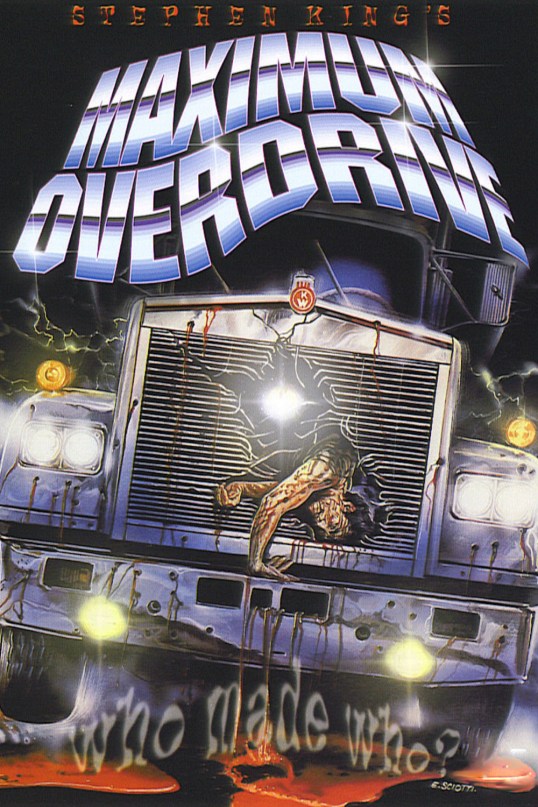
Icarus File No. 2: Maximum Overdrive (dir by Steven King)


mo

There is exactly one effective sequence to be found in Maximum Overdrive, a horror film from 1986 that attempts to show us what would happen if all of Earth’s machines decided to destroy humanity.

It takes place at the end of a little league game.  The coach, happy that his team has won, declares soda for everyone!  He walks over to the soft drink machine and puts in his coins and…nothing happens.  The coach stares at the machine perplexed.  His team gathers around him.

Suddenly, a can flies out of the machine and hits the coach in the groin.  Coach falls to his knees, just to get another can driven straight into his skull, leaving him with a big bloody hole in his head.  As the coach twitches, his teams starts to run away.  Suddenly, the machine is shooting cans out at them.  Some of the kids escape but quite a few don’t.

Suddenly, as the kids flee, a driverless steamroller crashes through a fence and drives across the field, graphically flattening one of the players…

It’s over-the-top, it’s kind of scary, it’s fun in a naughty sort of way, and it’s exciting to watch.  It’s totally absurd and yet it’s effective at the same time.  It’s a really brilliant scene, one that hints at what Maximum Overdrive could have been.  It hints that Maximum Overdrive‘s first-time director did have some potential and watching it, one is tempted to feel a pang of regret over the fact that he never directed another film after this one.

However, then you watch the rest of Maximum Overdrive and you realize that one effective scene was a total fluke.  To your horror, you realize that this film’s director (and screenwriter) has decided to set nearly the entire film in the ugliest and most disgusting truck stop in the world.  You realize that the director has no idea how to maintain suspense and that his idea of horror appears to be having a lot of trucks constantly circling the truck stop.  And then, worst of all, you realize that the unlikable caricatures inside the truck stop are meant to be our heroes!

And you find yourself wondering if things could possibly get any worse.  Well, believe me — they can.

First off, a guy named Camp Loman (Christopher Murney) shows up and reveals himself to be a total lech and then starts trying to sell bibles and really, what do you expect from someone named Camp Loman?  And, what’s annoying, is that the film’s director seems to think that he’s blowing our mind by presenting us with an hypocritical bible salesman.  I mean, seriously — the amount of time devoted to Camp Loman will make you nostalgic for scenes of a steamroller crushing a child.

And then Emilio Estevez shows up as our hero but he scowls through the entire movie and delivers all of his lines through gritted teeth, as if he’s pissed off about appearing in Maximum Overdrive and really, who can blame him?  That said, it doesn’t really make for an enjoyable performance.

But hey — Emilio’s not the only person in the truck stop.  There’s also Pat Hingle, playing the owner of the truck stop.  He’s overweight, wears a tie, smokes a cigar, and speaks with a vaguely Southern accent.  Hmmmmm, do you think he’s going to be a bad guy?

Oh!  And let’s not forget the waitress played by Ellen McElduff.  “WE MADE YOU!” she shouts at the machines and then she shouts it again and again and again and again and it’s almost as if the film is being directed by a guy so in love with his own dialogue that he doesn’t realize how annoying the same line gets when it’s screeched over and over again.

And I haven’t even gotten to the helium-voiced newlyweds yet…

When I recently watched Maximum Overdrive on Encore, there were a lot of things that annoyed me, such as the bad pacing, the bad acting, the bad dialogue, the bad special effects, the bad cinematography, and the bad everything else.  But what really got to me was just how inconsistent this movie was.  Some machines turned into killers but oddly, others did not.  At one point, a machine gun starts shooting at the people in the truck stop but the weapons that Pat Hingle keeps in the truck stop never turn on their human masters.  Seriously, if you’re going to make a terrible movie, at least be consistent.

So, you may be asking, why is this an Icarus File?  Well, it was directed by Stephen King, the writer who is routinely called the “master of horror.”  King may be a great writer but, judging from this movie, he was a really crappy director.  I imagine, when the film was in pre-production, the logic was that if King could write a scary book then he could definitely direct a scary movie.

Nope.

It turns out that, just as Icarus should never have gotten so close to the sun, Stephen King should never have directed a movie.

Previous Icarus Files:

  1. Cloud Atlas