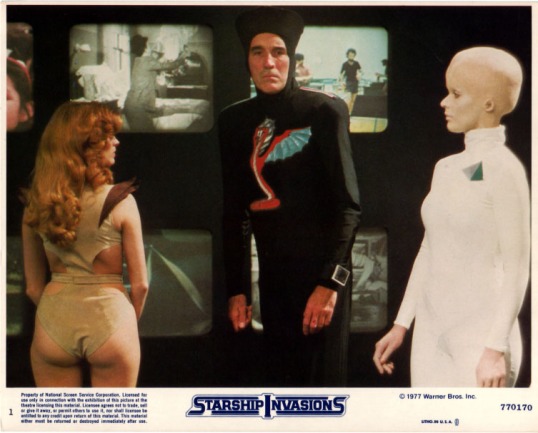
Today’s horror movie on the Shattered Lens is a 1977 Canadian film called Starship Invasions. While at first glance, Starship Invasions may appear to be more of a science fiction film than a horror film, things do get pretty horrific once Christopher Lee starts shooting his suicide ray.
Here’s what you need to know about Starship Invasions:
1) Judging from the look of the film, it must have cost hundreds of dollars to make.
2) All of the aliens communicate through telepathy so, while you get to hear Christopher Lee’s voice, you never actually see his lips move. I presume this was done because the filmmakers wanted to save money by shooting the majority of the film without sound.
3) In the UK, the film was released under the title Project Genocide, which just doesn’t have the same oddly generic charm as Starship Invasions.
4) Christopher Lee reportedly considers this to be one of his worst films.
5) However, the film is kind of fun in a bad, 1970s sort of way.
Add to that, how can you have a horror month without featuring at least one Christopher Lee film?
Of all the monsters who have appeared in horror cinema, Count Dracula is perhaps the most iconic. Reportedly, Dracula first appeared on film in 1920, in a silent Russian film that is now considered to be lost. In 1921, he would appear in a Hungarian film called Dracula’s Death and in 1922, he would be renamed Count Orlok for the German masterpiece Nosferatu. Indeed, by the time Bela Lugosi gave his famous performance in Tod Browning’s Dracula, the count had been appearing in films for at least 11 years. In nearly 100 years of filmmaking, a countless number of actors have brought Dracula to life.
We could spend hours debating who was the best Dracula and certainly, there are some worthy contenders. Bela Lugosi brought a continental sophistication to the role, while John Carradine was properly intimidating and theatrical. Udo Kier, Gary Oldman, Thomas Kretschmann, Leslie Neilsen, Zandor Vorkov, and Frank Langella have all played the prince of darkness, to varying degrees of success.
Yet for me, as worthy as any of those actors may be, there is only one true Dracula and he was played by Christopher Lee.
Lee famously played Dracula in seven movies for Hammer Films and, though he has often complained about the quality of these films (especially the later ones, which tended to mix Dracula with hippies), they were largely responsible for making Christopher Lee into the iconic figure that he remains today. It’s also largely due to Lee’s performance that horror fans like me continue to discover and appreciate the films of Hammer today.
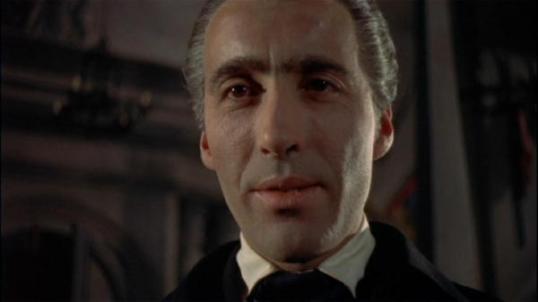
As played by Christopher Lee, Dracula was pure evil. Lee’s Dracula had no use for self-pity and one can only imagine what his reaction would have been if he had ever run into the self-torturing vampires of Twilight. Lee’s Dracula had no use for doubt or regret. Instead, he was a determined animal who was driven by a singular lust for blood.
And yet, at the same time, Lee brought an intelligence to the role that was often lacking in previous performances. Lee’s Dracula may have been an animal but he was a cunning animal. Whereas it’s easy for me to imagine escaping from the clutches of Bela Lugosi, I know that if Lee’s Dracula wanted me then he would have me. There’s no escape from Lee’s Dracula. He’s too quick, determined, and intelligent.
His animal nature made Lee’s Dracula frightening but it was his cunning and determination that made him dangerous and, ultimately, even sexy. (While I’ve read that audiences in 1931 swooned over Bela Lugosi, whatever sex appeal he may have had is lost on modern viewers like me.) It has often been argued that Bram Stoker meant for Dracula to be a symbol of all the desires that were repressed by Victorian society. That’s certainly true when it comes to Christopher Lee’s carnal and viscous portrayal of the character.
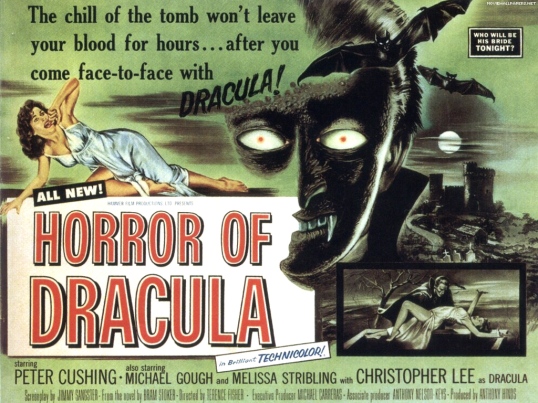
Of the seven Dracula films that Christopher Lee made for Hammer Films, the first remains the best. Released in 1958 and known as Dracula in the UK and the Horror of Dracula in the US, it revitalized the horror genre and helped to make stars of both Christopher Lee and Peter Cushing. Especially when compared to some of the sequels that Hammer subsequently produced, it remains one of the best Dracula films ever made.
The film is a very loose adaptation of Stoker’s original novel. Jonathan Harker comes to Dracula’s castle in Romania. Though posing as a librarian, Harker has actually come to the castle to drive a stake through the heart of both Dracula and his vampire bride. However, no sooner has Harker staked the bride than he’s overpowered and bitten by Dracula. Significantly, all of this occurs within the first 10 minutes of the film. As opposed to certain other Dracula films, Horror of Dracula gets straight to the point. And why shouldn’t it? After all, anyone watching the film already knows that Dracula’s a vampire so why waste time trying to convince us otherwise? We don’t watch Dracula for the familiar story as much as we watch to discover how different filmmakers will choose to tell that story.
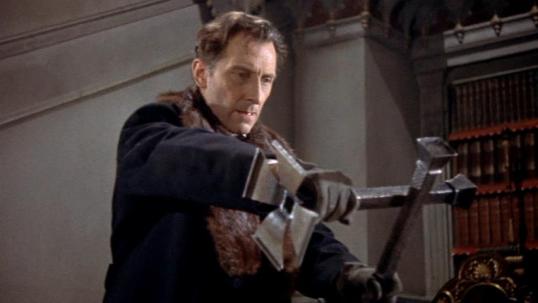
When Harker’s colleague, Prof. Van Helsing (played with the perfect amount of intensity by Peter Cushing) shows up at the castle, he discovers that Harker is now a vampire and that Dracula is nowhere to be found.
Dracula, needless to say, is out for revenge. He stalks Harker’s fiancee Lucy, as well as Lucy’s brother Arthur Holmwood (Michael Gough) and his wife Mina (Melissa Stribling). Much as in Stoker’s original novel, Lucy is eventually turned into a vampire and it’s up to Van Helsing and Arthur to stop both her and her new master.
(Of course, in Stoker’s original novel, Harker is not turned into a vampire and instead marries Mina while the aristocratic Arthur is one of Lucy’s three suitors. However, I have to say that I always thought the literary Harker was a bit on the dull side and that Arthur was always my favorite character so I’m happy that he gets to be the hero here.)
If I had to pick one film to epitomize everything that I love about the Hammer brand of horror, it would be Horror of Dracula. As directed by Terrence Fisher, the film moves at an exciting, non-stop pace while the traditionally lush cinematography is almost bombastically colorful. Cushing and Lee, who were the best of friends off screen, make for formidable opponents, with Cushing embodying good just as effective as Lee embodied evil. Though it’s been over 50 years since Horror of Dracula was originally released, the film remains effective and, not coincidentally, a lot of fun.
Quite simply put, this is a film that, for so many reasons, remains a true pleasure to watch.
One final note — I often find myself lamenting that I was born several decades too late and I realize just how true that is whenever I watch a film like Horror of Dracula. Seriously, I would have loved to have been a Hammer girl, showing off my cleavage and getting hypnotized by Christopher Lee.
Hi there! The name’s Bowman. Lisa Marie Bowman. Yes, I’ve made that joke a few times over the past two weeks but so what? Let me have my fun! And speaking of fun, we’ve been reviewing the entire James Bond franchise here at the Shattered Lens. Today, we’re going to take a look at 1974’s The Man With The Golden Gun, the 9th “official” James Bond film and the second Bond film to feature Roger Moore in the lead role.
The Man With The Golden Gun is Francisco Scaramanga (Christopher Lee), the world’s most feared assassin. Living on his own private island, Scaramanga is waited on hand-and-foot by a murderous dwarf named Nick Nack (Herve Villechaize) and his mistress Andrea Anders (played by Maud Adams, who, like me, is a member of the red-headed 2%). Every few days or so, Nick Nack arranges for a different gangster or spy to come to the island and fight a duel with Scaramanga. Much to Nick Nack’s disappointment, Scaramanga always manages to win each duel. However, Scaramanga remains a frustrated assassin because he’s never had the chance to take on (and kill) his hero, James Bond.
Just how obsessed is Scaramanga with Bond? Scaramanga has his own private funhouse set up on the island and the star exhibit at that funhouse is a wax figure of Bond that Scaramanga enjoys firing golden bullets at.
Meanwhile, in London, MI6 receives one of those golden bullets with “007” etched into the surface. M (Bernard Lee), not wishing to see his best agent killed, immediately relieves Bond from his current mission. Bond, along with a painfully dizzy British agent named Mary Goodnight (played by Britt Ekland), responds by setting off to track down Scaramanga on his own.
Bond eventually tracks Scaramanga down to Bangkok where Scaramanga is busy scheming to steal something called a Solex agitator which, depending on who is using it, can either be the key to solving the energy crisis or it can be a deadly, solar-powered weapon. Bond also discovers that the bullet wasn’t sent by Scaramanga but was instead sent by Andrea who wants Scaramanga dead.
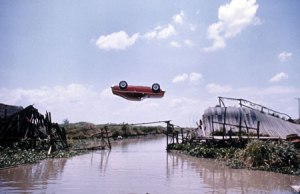
Not surprisingly, this all leads to what you would expect — an elaborate car chase, a Bond girl in a bikini, and a final duel between Bond and Scaramanga.
When The Man With The Golden Gun was first released way back in 1974, the film received some of the worst reviews in the Bond franchise’s history. A typical review came from Time Magazine’s Jay Cocks who complained that Moore “lacks all Connery’s strengths and has several deep deficiencies”, whilst Lee was “an unusually unimpressive villain.” In a complaint that would be made about the majority of the post-Connery, pre-Craig Bond films, Cocks also criticized the film’s plot for being too dependent on both Bond and Scaramanga using implausible gadgets.
While most of the Bond films were treated dismissively by critics when they were first released, the majority of them have also come to be seen in a more positive light as the years have passed. The Man With The Golden Gun, however, is an exception to that rule. Nearly four decades after first being released, The Man With The Golden Gun still has a reputation for being a disappointment. While Christopher Lee has rightly come to be recognized as one of the best Bond villains, the film itself is still regularly dismissed as one of the worst of the Bond films.
The Man With The Golden Gun‘s flaws are pretty obvious.
As played by Britt Ekland, Mary Goodnight is perhaps one of the most useless Bond girls ever and pretty much confirms every accusation of sexism that’s ever been made against the Bond films. It’s hard not to wish that the role of Goodnight had been played by Maud Adams who, as Andrea Anders, proves to be one of the best of the Bond femme fatales.
Redneck Sheriff J. W. Pepper (Clifton James) was an acquired taste when he first showed up in Live and Let Die and those who were annoyed by his character the first time will probably not be happy when he implausibly pops up in this film, vacationing in Bangkok and somehow getting involved in yet another car chase.
Finally, while Roger Moore’s performance as James Bond has always been rather underrated, it’s hard to deny that he looks a bit ill-at-ease in this film. As opposed to Live and Let Die (which was clearly written to match Moore’s interpretation of the role), The Man With The Golden Gun feels like it was written for Sean Connery’s more ruthless interpretation of the role. There’s a rather ugly scene where Bond roughly slaps Andrea to get her to tell him about Scaramanga. It’s the type of thing that you could imagine Connery doing without a second thought but Moore seems uncomfortable with it. His Bond simply doesn’t have the sadistic streak that hid underneath the surface of Connery’s interpretation.
That said, The Man With The Golden Gun is something of a guilty pleasure of mine. The Man With The Golden Gun is one of the Bond films that I always make a point to catch whenever it shows up on television and I certainly had a better time rewatching it than I did when I rewatched You Only Live Twice. The film moves along quickly enough, the car chases are a lot of fun, and Scaramanga’s funhouse is one of the best of the Bond sets.
For all of its flaws, The Man With The Golden Gun is saved by its trio of villains. Maud Adams, Herve Villechaize, and especially Christopher Lee give three of the most memorably eccentric performances in the history of the Bond franchise. They’re so much fun to watch that, if spending time with them also means spending time with Mary Goodnight and Sheriff Pepper, it’s a sacrifice that I’m willing to make.
The strength of Christopher Lee’s performance as Scaramanga cannot be understated. There’s something oddly touching in the contrast between Scaramanga the steely assassin with the golden gun and Scaramanga, the insecure killer who is apparently always comparing his accomplishments to the accomplishments of James Bond. Lee’s Scaramanga is such a compelling character that you almost regret that he can’t, in some way, be allowed to achieve some sort of victory at the end of the film.
But, of course, if that happened then it would no longer be a James Bond film.
As always, regardless of what the critics may have wished, James Bond would return. Ironically, Moore would follow-up a what many considered to be the worst James Bond adventure with a film that many consider to be one of the best. We’ll be taking a look at The Spy Who Loved Me tomorrow.
Until then, let’s enjoy one of the most underrated theme songs in the history of the Bond franchise.
It just a littleunder 3 months before Peter Jackson takes us back to Middle-Earth with the first of three films that will make up The Hobbittrilogy.
There’s not much else to say other than this latest trailer for The Hobbit: An Unexpected Journeyjust continues to whet the appetite for all things Middle-Earth. It’s much more action-packed with some nice new scenes instead of just rehashing what was in the original teaser trailer from year ago.
Enough words. Just watch the trailer below and decide for yourself whether another trip to Middle-Earth (before all the War of the Ring brouhaha of the first trilogy) is worth your monies.
The Hobbit: An Unexpected Journeypremieres worldwide on December 14, 2012.
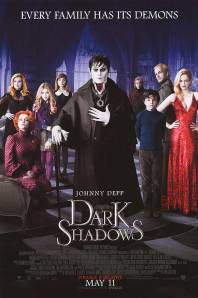
First off, a qualification : if you’re a lifelong (or thereabouts) fan of Dan Curtis’ classic Dark Shadows TV series, I can understand why you would hate Tim Burton’s new film of the same name. It’s many things, but old-school Dark Shadows isn’t one of them. Feel free, with my full blessing (whatever that’s worth), to absolutely despise this flick right down to a molecular level if you fit into this category of viewer. But if you don’t —
— then seriously, where is all this vitriol coming from? I’m not saying it’s a tremendous or important movie by any means, but it’s brainless, entertaining, heavy-on-the-camp fun that’s pretty solidly constructed Burton-by-the-numbers.
And maybe that’s the problem. Tim Burton’s work has, indeed, become almost relentlessly formulaic by this point : de-fang horror/gothic/50s-era sci-fi concepts to make them palatable to mainstream family audiences, concentrate heavily on the visuals, strenuously avoid even the hint of any political subtext, add in a dash of blatantly-obvious-but-ultimately-respectful-to-its-source self-satire, have your admittedly talented cast skew their performances toward the knowingly pantomime, and voila! You’ve got yourself morbidity for the masses.
Apparently this is now some sort of crime. Granted, Dark Shadows is no Ed Wood or Big Fish, but it doesn’t wallow in Burtonian excess the way that the more successful (as far as the box office goes) Charlie And The Chocolate Factory or the mega-successful Alice In Wonderland did. But judging by the reaction out there on Twitter and other “social media” sites, you’d think this was somehow the nadir or Burton’s career (how quickly we seem to forget Mars Attacks!) — in fact, it seems to be generating as much overly-malignant hatred as The Avengers is generating overly-effusive praise. But hell, at least this movie is recognizably the work of a singular creative vision (albeit not one operating at its peak) rather than pure CGI assembly-line product that could have been directed by any of dozens of different self-styled “action auteurs” (I’ve said it before and I’ll say it again — if The Avengers had been helmed by Jon Favreau, it would essentially be no different) who are ultimately as interchangeable as the material they produce.
The cast is the usual mix of Burton way-more-than-regulars (Johnny Depp in the title role of Barnabas Collins, Helena Bonham Carter as family doctor/lush Julia Hoffman, Christopher Lee in a terrific cameo — as opposed to his pointless quick turn in The Wicker Tree — as an “old man of the sea”-type), talented, well-cast veterans (Michelle Pfeiffer as tired family matriarch Elizabeth Collins Stoddard, Jackie Earle Haley as the hapless Willie Loomis) and up-and-coming talents (Eva Green as Barnabas’ principal object of love/hate, Angelique Bouchard, Bella Heathcote as his principal object of love only, Victoria Winters, Jonny Lee Miller as weak-willed family weasel Roger Collins, Chloe Grace Moretz doing her teen-with-a-‘tude thing as Carolyn Soddard), and while none are giving what could in any way be called inspired turns, all are solid and dependable.
As is the story, an uncomplicated affair about Barnabas emerging from the grave, vamped to the hilt, in the early 70s to help his fallen-on-hard-times clan rebuild their fishing and canning empire in the face of rival competition that’s equally supernatural in origin, with a little bit of reincarnation-themed romance thrown in for good measure. It’s hardly demanding stuff, of course, but it’s perfectly suited to function as precisely what it is — a distracted afternoon’s or evening’s summer lightweight entertainment. Joss Whedon does this with a team of super-heroes and we call him a genius. Tim Burton does it with harmless comic vampires and we say he’s jumped the shark. Go figure.
All of which goes to show nothing so much as the herd mentality so prevalent amongst today’s film-buff “community.” In truth, both Dark Shadows and The Avengers are cut from remarkably similar cloth — throwaway big-budget diversionary fare that demands nothing of its audience and gives you pretty much exactly what you figure to be in for when you buy your ticket. One is being praised for it because, hey, other people immediately started talking about how good it is, and one is reviled because, hey, other people immediately started talking about how stupid it was. But you know what? At least Dark Shadows has no pretense of being anything other than precisely what it is, and no army of zombies (or vampires) doing its studios’ dirty work for it and publicizing it like mad for free.
I freely admit that might be a big reason why I actually enjoyed this a little more than Marvel’s billion-dollar-bonanza, and I also freely admit that actions taking place off-screen should , by all rights, play absolutely no part in how I react to what’s taking place on-screen. But it’s not a perfect world. And Dark Shadows is far from a perfect film. But I ended up liking it it a lot more than I was honestly expecting to — and if you go into it with an open mind, who knows? Maybe you will, too.
Honestly, friends, sometimes a person just doesn’t even know where to begin. I suppose I could individually list the catalogue of atrocities that make up writer-director Robin Hardy’s The Wicker Tree, but frankly that would mean spending more time talking about this film than I really have the energy to, and besides, our nearest thing to a “star” critic here at Through The Shattered Lens, Lisa Marie Bowman, has already done a pretty damn fine job of performing a blow-by-blow dissection of this thing’s rotted corpse in her capacity as occasional scribe over at HorrorCritic.com, so there’s no real need to duplicate what’s been done before. Allow and/or indulge me, then, as I take a slightly different tack and document my personal journey of despair with Hardy’s exercise in highly confused pointlessness.
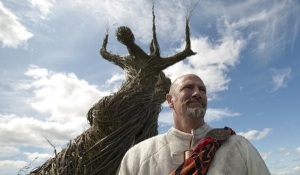
To begin with, I should point out that the original Wicker Man is quite likely one of my ten-or-so all-time favorite films. Critics who say it’s “not actually a horror movie” are quite right, of course — it’s a unique — hell, frankly singular — amalgamation of so many different styles that the end product is well and truly unclassifiable. Part horror flick, sure, but also part musical, part (very) black comedy, part clash-of-cultures melodrama, part satire on Christian piousness, and part period-piece-albeit-in-a-then-contemporary-setting, it stands on its own as the only thing quite like it ever made. Screenwriter Anthony Shaffer perhaps put it best when he stated that his main goal was to pen a meditation on the nature of sacrifice, and everything else just sort of took off from there.
Obviously, there are so many elements about the first film that the 2011 “thematic sequel” could never hope to duplicate — songwriter Paul Giovanni is no longer with us, so right off the bat we know the music’s not going to be nearly as good because, quite frankly, it can’t be. Anthony Shaffer has passed away and therefore whatever follow-up material comes about wouldn’t in any way be his vision for how the story could or should continue. Edward Woodward has likewise left behind this mortal coil, and his character died at the end anyway, so replicating his magnificently anally-retentive performance is probably going to prove to be out of the question, as well. Christopher Lee is, while still awesome as hell, also extremely frail and old at this point. And anyway — The Wicker Man still retains all its poignancy and power to this day and has only gained luster over the past 40 years. The abominable Nicolas Cage/Neil LaBute remake proved that revisiting the material was a lost cause, so why bother, five years on from that failed experiment, with any sort of a sequel, “thematic” or otherwise?
Unfortunately, Robin Hardy wrote a book some years back called Cowboys For Christ that updated some of the concepts from his earlier film and he got the notion that it would make a decent-enough little flick. He was able to scour up $7 million-plus worth of financing, and got the folks at Anchor Bay so interested they promised not only a widespread “home viewing platform” release (and I caught this on a free screener copy that was sent my way so therefore can’t fairly comment on any extras the DVD and Blu-Ray might contain), but a even a little theatrical run, as well. It never made it to my area, and disappeared after a week from the markets it did make it into, but still —the fact that they chose to give this thing some theatrical burn when it seemingly had DTV written all over it was enough for me to, foolishly, get my hopes up.
I guess we believe what we want to believe (which is rather one of the points of the first film, after all), and a steady stream of reviews for this one that placed it at the “embarrassingly bad” end of the spectrum at worst to “maybe not quite as horrible as I’d been fearing but still pretty goddamn awful” at best weren’t enough to dampen my enthusiasm at this point. I figured it just had to be better than most folks were giving it credit for, because there’s just no conceivable way it couldn’t retain, say, at least 1/100th of the darkly charismatic charm of the first film, even if entirely by accident, right? After all, the original director was on board, and Anchor Bay wasn’t so ashamed of his finished product that they tried to hide the thing away at the bottom of some film vault (although given that it’s shot on HD, perhaps a “film” vault wouldn’t be the right place to stick it in, anyway).
It’s certainly fair to say that I wasn’t expecting greatness, or even anything of the sort, but something that still somehow cleaved to even a miniscule fraction of the spirit of the original would have been good enough for me. Unfortunately, what I got was a story about two painfully stereotypical Jesus-lovin’ Texas yokels who have gone on a mission (more typical of Mormons than of born-againers, it must be said) to evangelize in some small Scottish town that apparently has never heard the “good news.” One of our less-than-convincingly-portrayed country bumpkins, Beth Boothby (Brittania Nicol), was apparently a famous country singer with something of a “reputation” before turning her life over to Christ, while the other, her fiancee Steve Thomson (Henry Garrett), is little more just a walking, talking cowboy hat. Once in the “heathen land” of Scotland, they enjoy the decidedly non-Southern hospitality of local nuke plant owner Sir Lachlan Morrison (Graham McTavish, in something more akin to a respectable performance than his colleagues seem capable of) and his OTT-in-the-deception-deaprtment wife, Delia (Jacqueline Leonard), but of course the dastardly couple, whose power plant has through some unexplained (and probably inexplicable, so it’s just as well Hardy doesn’t even try) means left the entire town sterile, have other plans for their simple-minded God-fearin’ visitors, plans that the Texas two-steppers are apparently too stupid to suss out even as they’re practically being openly prepared for the burning stake and, get this, the dinner table!
Yes, evidently the heathen folk of the United Kingdom’s northern reaches have taken to cannibalism in the four decades or so since our last visit, and while Hardy seems to think this somehow ups the “black comedy” factor of the proceedings, really it just serves as a cop-out by more clearly delineating who are the “good guys” here and who are the “bad guys,” a simple-minded, black-and-white approach that the first Wicker Man never resorted to even when Sgt. Howie was being burned alive (in, it must be said, one of the most visually dramatic sequences ever committed to celluloid).
And that’s a pretty much the problem at the crux of The Wicker Tree in a nutshell — sure, there are numerous and obvious others, ranging from wretched acting to dully-executed visuals to poor pacing to obvious run-time padding to inarticulate (at best) dialogue to recycled-into-a-less-involving-context story ideas to laughably one-dimensional caricatures standing in place of real, actual characters — but at the end of the day, it’s Hardy’s mistrust of his audience’s ability to make up our own collective mind, and the blatantly heavy-handed approach he takes in explaining everything for us that stems from that mistrust, that makes this such a condescending failure. I could live with the far-less-subtle approach to the “clash of cultures” theme that he takes here in comparison with the first film. I could live with the nowhere-near-as-compelling music. I could live with the rather — uhmmm — “broad strokes” with which he paints each and every character . I could live with the pointless and frankly even a bit insulting to the guy Christopher Lee cameo. Hell, I could even live with the Christian turning the tables on her pagan pursuers and winning in the end. But what I absolutely can’t abide is that Hardy thinks we’re all so unsophisticated and beneath the task of understanding his apparently-in-his-mind-quite-complex-and-challenging-themes that we need for him to hammer them home with a with a burning wicker stake through our heads. He’s had 40 years to think about how he wants to follow up a genuine, justly-lauded classic and this is what he comes up with? Set fire to me now, please, before the third installment, which he’s already working on, ever sees the light of day.
While Christopher Nolan’s The Dark Knight Rises is the most anticipated summer blockbuster for this upcoming 2012 then it would be safe to say that the most anticipated film for 2012 for some would be Peter Jackson’s The Hobbit: An Unexpected Journey.
This is a film that has been years in the making and even more years in development hell as the rights to J.R.R. Tolkien’s novel, The Hobbit, was entangled through many different studios. Once those entanglements were finally resolved and the film set to be put into production the film suffered more setbacks as budget and script rewrites kept things from starting. The original filmmaker picked to helm this two-part prequel, Guillermo Del Toro, had to back out after years of delays though he still remains as producer and his ideas and conceptual art and design has become the foundation for the film.
The film finally got the greenlight to start filming once Peter Jackson stopped searching for Del Toro’s replacement and took on the role as director once again. While Del Toro was a great choice I think most fans of the original trilogy were glad that Jackson decided to just take up the director’s chair once more. Who else knew the world of Middle-Earth on film better than the man who made what was called the unfilmable novel into the new millenium’s iconic film trilogy.
Like the production of the Lord of the Rings trilogy, Jackson and his geniuses at WETA have been pretty good with showing fans progress made on the films through video blogs released by Jackson himself. With just a year left to go before part one of this two-part prequel premieres we finally have the first official teaser trailer to the film and I must say that it’s great. Even from just snippets shown in the teaser one could see some of Del Toro’s more darker concepts and influence in the film’s look and tone. But then some of it also comes from Jackson himself whose early background as a filmmaker was all about dark, macabre subjects and themes.
The Hobbit: An Unexpected Journey is set for a December 14, 2012 release.
The Hammer Mummy films never get as much respect as the old Hammer Dracula and Frankenstein films. This is mostly because the Mummy films tend to drag and the Mummy never quite had the charisma of a Christopher Lee or a Peter Cushing. Still, mummies are pretty freaky. I’d probably be more scared of them if I lived in an area with a larger concentration of archeological digs.










 Through the Shattered Lens