Late Night Retro Television Review: Pacific Blue 3.7 “Repeat Offenders”


Welcome to Late Night Retro Television Reviews, a feature where we review some of our favorite and least favorite shows of the past! On Tuesdays, I will be reviewing Pacific Blue, a cop show that aired from 1996 to 2000 on the USA Network!  It’s currently streaming everywhere, though I’m watching it on Tubi.
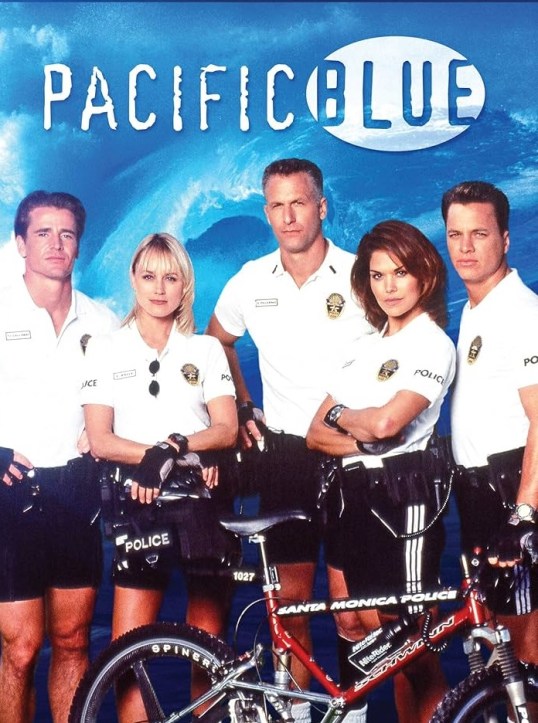
It’s a Chris epiosde. *Yawn*

Episode 3.7 “Repeat Offenders”

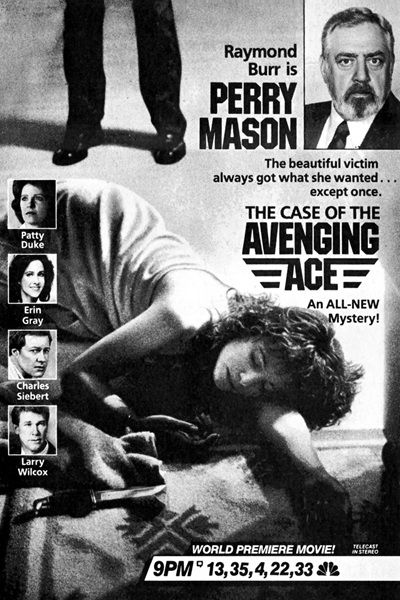
(Dir by Charles Siebert, originally aired on September 28th, 1997)

When this show first started, Chris Kelly was introduced as being a hotshot Navy pilot who was forced into reserve status due to her eyesight.  In this episode, it’s revealed that she actually left active duty because she was involved in an accident that was the fault of her commanding officer.  Rather than testify against him and run the risk of being crucified on the stand and then run out of the Navy, she instead took the blame.

Five years later, she discovers that another Navy pilot, Rebecca Santori (Liza Snyder), is facing the same dilemma.  Her commanding officer — who was also Chris’s commanding officer — screwed up and Santori is being pressured to take the blame.  Chris encourages Santori to fight for her right to fly.  Cory suggests that Chris is pressuring Snantori because Chris feels guilty about giving up when she was in the same position.  Cory suggests that Chris is putting Santori’s career at risk just to deal with her own anger and resentment.  Chris says that’s not true and the show seems to expect us to take her word for it.  Fortunately, things do work for Santori.  She is cleared in the accident and Chris is vindicated when its determined that their commanding officer has a long history of incompetence.

This storyline had potential but Chris is just such a one-note character that it’s hard to get excited about anything involving her.  Every week, it seems like Chris finds something new to get upset about and every week, anyone who suggests that Chris isn’t being totally honest about her motivations has to deal with the Chris Kelly glare of death.  In order to remain sympathetic while glaring at people and telling them that they’re idiots, you have to have some shred of charisma.  Chris does not and whenever she’s at the center of an episode, even when she’s in the right as with this one, I just find myself thinking about how much I would dread to have to work with her on a daily basis.

As for the other storyline, thieves are targeting foreign tourists on the boardwalk.  Palermo and TC put on Hawaiian shirts and pretend to be foreign tourists.  The thieves get arrested.  Yay.  How exciting.  Bike patrol does it again.

Late Night Retro Television Review: Pacific Blue 2.17 “Runaway”


Welcome to Late Night Retro Television Reviews, a feature where we review some of our favorite and least favorite shows of the past! On Tuesdays, I will be reviewing Pacific Blue, a cop show that aired from 1996 to 2000 on the USA Network!  It’s currently streaming everywhere, though I’m watching it on Tubi.

It’s time for more bicycle action.

Episode 2.17 “Runaway”

(Dir by Charles Siebert, originally aired on January 19th, 1997)

A teenage girl  (Boti Bliss) is missing on the boardwalk.  Maggie Garrity (Justina Vail), who runs the local shelter, is looking for her.  When she asks the bike patrol for help, TC is dismissive up until he looks up from his paperwork and sees Maggie.  I’ve noticed that this is a patten with the bike patrol.  It’s rare that they do anything until they see it will involve hanging out with an attractive members of the opposite sex.

TC recruits Chris to help him put up flyers.  Chris rolls her eyes because, seriously, why should a member of law enforcement be concerned with a teenage girl who has been abducted by a pimp (Gene Lythgow) and his psycho girlfriend (Ami Dolenz)?  Personally, I would dread working for Chris because she never stops complaining.  It says a lot about this show that the we’re nearly done with the second season and Chris still doesn’t have a personality beyond being whiny.

TC falls for Maggie but Maggie’s a nun!  After they manage to rescue the missing girl, TC asks Maggie if maybe she could stop being a nun for a new nights so that they could go out on a date.  Maggie says that it doesn’t work like that.  What I find interesting is that TC has no problem casually asking Maggie to give up her vows just because he wants to date her.  Hey, TC — this is why you’re single!

Meanwhile, Palermo has new expensive bicycle.  What a dork.  When the bike gets stolen, Victor has to find it.  Palermo sure is mad about his missing bike.  What a loser.

This show is not growing on me.

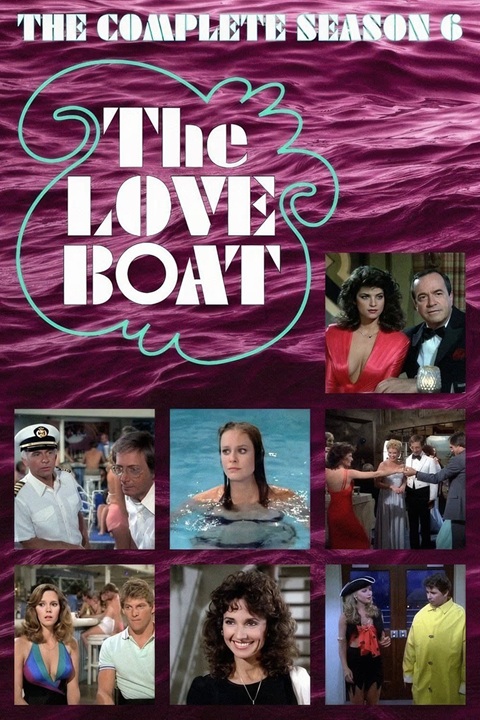
Retro Television Review: The Love Boat 6.4 “The Same Wavelength/Winning Isn’t Everything/A Honeymoon for Horace”


Welcome to Retro Television Reviews, a feature where we review some of our favorite and least favorite shows of the past!  On Wednesdays, I will be reviewing the original Love Boat, which aired on ABC from 1977 to 1986!  The series can be streamed on Paramount Plus!

Come aboard, we’re expecting you….

Episode 6.4 “The Same Wavelength/Winning Isn’t Everything/A Honeymoon for Horace”

(Dir by Robert Scheerer, originally aired on October 23rd, 1982)

Yeesh!  This episode!  Because I’m on vacation, I’m going to lay out the facts quickly and simply.

  • Julie’s hair still looks awful.  Seriously, she looks like she should be playing the demanding gymnastics coach in a Peter Engel-produced high school sitcom.
  • Horace (Jack Gilford) and Twinkie (Nancy Walker) board the boat.  They’re in their 80s and they’re newlyweds!  Awwwww!  Horace is nervous about his honeymoon because it’s been forever since he’s kissed a woman so he asks Julie if he can practice on her.  Julie, her eyes oddly glazed over, agrees.
  • Twinkie, who loves to party, tells Julie that she’s actually been married to Horace for 30 years and he just said that he was a newlywed to trick Julie into kissing him.
  • Later, when confronted by Doc and Julie, Horace and Twinkie confess that they’re not actually married.  However, they are brother and sister.  WHAT!?
  • Turns out that Twinkie “likes to party” and Horace “likes to kiss pretty girls” so they lied so that they could do both.
  • Horace, you’re going to jail!  Oh wait, no, he’s not.  The Love Boat crew has a good laugh over it and Julie, to be honest, seemed to be pretty coked up in this episode so perhaps she had a good reason for wanting to avoid dealing with the cops.  Okay, Julie, do what you have to do, I guess.
  • Meanwhile, psychic Tess Macgill (Connie Stevens) falls in love with passenger Mike Gordon (Charles Seibert).  Unfortunately, Mike is still in love with his wife, despite the fact that they’re now separated.  It’s a good thing that there’s a psychic on board to let Mike know that his marriage is over.
  • Finally, Jack Bronson (David Doyle) boards the boat with his teenage son, Chip (Matthew Labyorteaux).  Jack is an old friend of Captain Stubing’s and he’s convinced that winning is everything!  As for Stubing, he’s just happy that Vicki will finally have someone her own age to spend some time with.  I’m happy too.  Seriously, Vicki hardly ever gets to talk to anyone under the age of 50.
  • Jack is convinced that Chip is a world-class athlete but that’s just because Chip has been lying to his father.
  • Vicki is great a table tennis.  Jack pressures Chip to play her.  Chip fakes a wrist injury to get out of it.
  • Eventually, Chip tells his father the truth and Jack realizes that he’s been pushing his son way too much.  That’s not a bad lesson but David Doyle is miscast as a competition-obsessed father.  He comes across as being too nice.  Jack is a role for Bo Svenson.

This episode …. bleh.  The psychic story was bland and the story with the elderly siblings was creepy.  The Jack and Chip story was, at least, tolerable.  Julie’s terrible new haircut continues to annoy me.  This was not the best cruise in the history of The Love Boat.

Late Night Retro Television Review: Pacific Blue 2.4 “Bangers”


Welcome to Late Night Retro Television Reviews, a feature where we review some of our favorite and least favorite shows of the past! On Tuesdays, I will be reviewing Pacific Blue, a cop show that aired from 1996 to 2000 on the USA Network!  It’s currently streaming everywhere, though I’m watching it on Tubi.

This week, Victor gets a plot.

Episode 2.4 “Bangers”

(Dir by Charles Siebert, originally aired on September 14th, 1996)

Victor del Toro, who often doesn’t get to do much on this show, finally gets a storyline of his very own.  Unfortunately, it involves trying to keep a young man for his old neighborhood from joining a gang.  One thing that you can always count on whenever you watch any sort of cop show from the 90s, if there’s a Latino cop in the cast, he’s going to have to keep someone from joining a gang.  It was one of the biggest cliches on the 90s.

And don’t get me wrong.  Gangs are a reality in America and they are a problem.  At the same time, though, is there a reason why every time a Latino appeared on a show like this, they always seemed to either be in a gang or on the verge of joining a gang?  Not every Latino family is poor, not every young Latino male is struggling with the pressure to join a gang, and for that matter, not every Latino with a tattoo is a member of a street gang.

While Victor dealt with the gangs moving into the neighborhood, Chris and Corey decided to rent an apartment together.  Needless to say, things didn’t go well.  Corey reveals that she is hyperorganized and likes to keep every surface in the apartment clean and spotless.  (I don’t really see what that’s a problem.)  Chris is revealed to be a slob who hangs her clothes around the kitchen and who pours a box of cereal out on the floor because she’s tired of Corey always cleaning.  Isn’t Chris supposed to be a hotshot fighter pilot?  I mean, up until this episode, there was absolutely nothing about her character that would suggest that she was incapable of picking up her clothes.  I would think that, being a member of the Air Force, she would actually have had some sort of discipline drilled into her.  It’s kind of like how soldiers still tend to stand at attention even while visiting their families.  Anyway, this storyline ends with Chris throwing food around the apartment and Corey grabbing a pair of scissors and attacking Chris’s laundry …. wait, what?  I’m sorry, this is psychotic behavior.

Don’t worry, though.  Chris and Corey share a laugh about it and agree to remain friends but not roommates.  Uhm, Chris …. Corey took a pair of scissors to your clothes.  I mean, I don’t like sloppy people either but I generally don’t try to destroy their possessions.

Of course, the main problem with this episode is the same problem that all of the episodes have had.  They’re cops on bikes!  They wear shorts and polo shirts and they spend all of their  time insisting that they’re real cops even though it’s obvious that they aren’t.  Real cops don’t ride bicycles with baskets on the back.

This episode did not leave me with much confidence in California law enforcement.

Film Review: …. And Justice For All (Dir by Norman Jewison)


First released in 1979, ….And Justice For All will always be remembered for one scene.

Yell it with me, “YOU’RE OUT OF ORDER!  THE WHOLE TRIAL IS OUT OF ORDER!  THEY’RE OUT OF ORDER!”

When attorney Arthur Kirkland (Al Pacino) starts screaming in the middle of the courtroom, it’s a cathartic moment.  We’ve spent nearly two hours watching as Arthur deals with one insane situation after another.  One of Arthur’s partners, Warren (Larry Bryggman), cares more about his car than actually delivering the right documents to a judge.  Another of Arthur’s partners, Jay (Jeffrey Tambor), has a nervous breakdown and, after shaving his head, ends up throwing cafeteria plates at people in the courthouse.  Arthur has three clients, one of whom is indigent, one of whom is innocent, and one of whom is a wealthy and despised judge (John Forsythe) who has been accused of a rape that Arthur suspects he committed.  The system offers no mercy for Arthur’s innocent (or, at the very least, harmless) clients while going out of it’s way to defend the judge.  Meanwhile, another judge (Jack Warden), is driven to take suicidal risks, like flying a helicopter until it runs out of fuel and comes down in a nearby harbor.  The assistant district attorney (Craig T. Nelson) only cares about his political ambitions and finally, after one incident after another, Arthur snaps.  And it’s cathartic because we’re all on the verge of snapping as well.

That final moment, with its signature Al Pacino rant, is such a strong and iconic scene that it’s easy to forget that the film itself is actually rather uneven.  The script, by Barry Levinson and Valerie Curtin, owes a good deal to the work of Paddy Chayefsky.  Just as Chayefsky often wrote about men being driven mad by institutional failure, ….And Justice For All features character after character snapping when faced with the screwed-up realities of the American justice system.  The final “out of order” speech is obviously meant to be this film’s version of Howard Beale’s “I’m as mad as Hell and I’m not going to take it!” speech from Network and, much like George C. Scott in the Chayefsky-written The Hospital, Arthur spends a lot of time talking about what he doesn’t like about his job.  The thing that sets ….And Justice For All apart from the best works of Chayefsky is that Levinson, Curtin, and director Norman Jewison all take Arthur Kirkland at his word while one gets the feeling that Chayefsky would have been a bit more willing to call out Arthur on his self-righteousness.  Arthur has every right to be angry when Warren forgets to give a judge an important document while Warren is substituting for him in court.  At the same time, Arthur is the one who trusted Warren to do it.  In the end, the document was not about one of Warren’s client.  In fact, Warren knew absolutely nothing about the case or Arthur’s client.  The document was about Arthur’s client and Arthur was the one who decided trust someone who had consistently shown himself to not be particularly detailed-orientated.  One gets the feeling that Chayefsky would not have let Arthur off the hook as easily as Levinson, Curtin, and Jewison do.  Arthur’s perpetual indignation can sometimes be a little hard to take.

It’s a very episodic film.  Arthur goes from one crisis to another and sometimes, you do have to wonder if Arthur has ever had any human or legal interactions that haven’t ended with someone either going insane or dying.  There’s no gradual build-up to the film’s insanity, it’s right there from the beginning.  And while this means the narrative often feels heavy-handed, it also makes that final speech all the more cathartic.  It’s an uneven film and, of all of the characters that Pacino played in the 70s, Arthur is probably the least interesting.  But that final rant makes up for a lot and, fortunately, Pacino was just the actor to make it memorable.  For all it’s flaws, the final few minutes of ….And Justice For All make the film unforgettable.


Late Night Retro Television Review: Pacific Blue 1.11 “The Phoenix”


Welcome to Late Night Retro Television Reviews, a feature where we review some of our favorite and least favorite shows of the past! On Tuesdays, I will be reviewing Pacific Blue, a cop show that aired from 1996 to 2000 on the USA Network!  It’s currently streaming everywhere, though I’m watching it on Tubi.

A serial arsonist is setting Malibu on fire so, of course, the bike patrol is called in.

Episode 1.11 “The Phoenix”

(Dir by Charles Siebert, originally aired on May 11th, 1996)

Fires are breaking out all over Malibu.  Whoever the arsonist is, he seems to be targeting a shady businessman named Curtis Bilson (Michael Cavanaugh).  TC and Chris decide to start investigating the arsons themselves, even though neither one of them is in the arson division.  “Bike patrol?” the arson detective asks, when he first meets them.  However, because everyone respects Lt. Palermo, TC and Chris are allowed to investigate.  Chris, being a former jet pilot, is naturally an expert on accelerants.  “Smells like jet fuel.”  Wow, really?

(Basically, this is the equivalent of allowing a school crossing guard to head up the search for a serial killer.)

A surfer named Suicide (Sam Hennings) insists that he saw the fire being set by The Phoenix, a legendary arsonist who the police consider to be dead.  His real name was Willoughby (Tim DeZarn) and the official story is that he got caught in one of his own fires and his body was reduced to ash and that’s why he disappeared without leaving a trace behind.  That seems awfully convenient and really doesn’t make much sense when you think about it but, then again, Malibu has their bike patrol investigating a serial arsonist.  We’re through the looking glass here.

(Myself, I’m concerned by the fact that no one seems to find it weird that their source is nicknamed “Suicide.”  I’m going to guess that’s a surfer thing but still, I cringed every time TC said, “My friend, Suicide….”)

TC and Chris’s investigation leads them to Dr. Anton (Dennis Christopher), an arsonist who is currently in a mental hospital.  They try to do a Lecter/Clarice thing between Anton and Chris.  Dennis Christopher is a good actor and it appears that he was having fun playing a thoroughly demented character.  Jim Davidson and Darlene Vogel were very bad actors and it seems almost unfair to force them to share a scene like Dennis Christopher.  It’s like giving me a chance to play tennis on national television and then telling me, right when the cameras start rolling, that I’m going to be playing against the Williams sisters.  It’s just adding insult to injury.

Anyway, it turns out Willoughby is still alive and he’s targeting the businessman and he also kidnaps Lt. Palermo for some reason.  Chris and TC are able to save Palermo and the crooked guy from the inferno and Willoughby once again vanishes.  Because, of course, he does….

Meanwhile, Cory tries to catch a man who keeps bringing a snake to the boardwalk.  At one point, she accidentally gets doused in a wet t-shirt contest.  She’s win the trophy and then come back to the station without bothering to change shirts, which kind of goes against everything we’ve seen about Cory’s personality up until this point.  For some reason, Palermo also puts Cory in charge of catch a mouse that’s running around the station.  The snake, once captured, eats the mouse but then gets lost in the station.  That made me laugh just because I like it whenever its acknowledged that the bike patrol is totally incompetent.

Next week …. Chris has a new boyfriend!  Dr. Anton, maybe?  We’ll find out!


Retro Television Review: The Love Boat 4.24 “That Old Gang of Mine/Love with a Skinny Stranger/Vicki and the Gambler”


Welcome to Retro Television Reviews, a feature where we review some of our favorite and least favorite shows of the past!  On Wednesdays, I will be reviewing the original Love Boat, which aired on ABC from 1977 to 1986!  The series can be streamed on Paramount Plus!

This week, Vicki learns how to gamble.

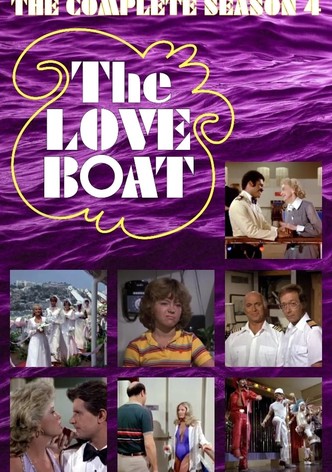
Episode 4.24 “That Old Gang of Mine/Love with a Skinny Stranger/Vicki and the Gambler”

(Dir by Richard Kinon, originally aired on April 11th, 1981)

It’s an anniversary cruise!

Captain Stubing and Vicki are celebrating the anniversary of Vicki coming to live on the boat with her father.  Captain Stubing has already picked out the gift that he’s going to give Vicki, a beautiful and valuable pearl necklace.  As for Vicki, there’s a watch in the boat’s gift shop that she would love to give her father but she can’t afford it.  Then again, Vicki is the Captain’s daughter.  Can’t she just take whatever she wants?  I mean, who is going to snitch on the Captain’s daughter?  Add to that, it was only two weeks ago that the manager of the gift shop was juggling three lovers on one cuise.  Who is she to judge anything Vicki might do?

Admirably, Vicki is an honest person and does not want to just steal something for her father.  But when her father’s old friend, Wade Hubbard (Gene Barry), boards the ship, he shows Vicki that she can easily make enough money to buy the watch by betting on a horse race!  Wade, it turns out, is a compulsive gambler and Vicki soon falls under his influence.  Captain Stubing is not happy about that so Wade pretends to lose all of his money (and Vicki’s necklace!) in order to trick Vicki into not only hating him but also hating gambling.

You know, Wade and Captain Stubing could have just told Vicki not to gamble anymore.  Vicki seems like she’s pretty smart and level-headed so I’m sure she would have listened if Wade and the Captain had just told her that they didn’t want her placing bets as a minor.  Instead, Wade created an elaborate lie and basically traumatized Vicki for life.  That seems a bit extreme to me but, then again, I don’t have a gambling problem.

As for the other passengers, Patty Beller (Vicki Lawrence) is stunned when she discovers that her long-distance boyfriend, Phil Manning (Charles Siebert), has spent the last month at a fat farm and is now totally athletic and handsome.  Patty always took it for granted that Phil would only have eyes for her but suddenly, every other woman on the cruise appears to be trying to get his attention.  This story would have perhaps worked better if Patty hadn’t come across as being so self-centered.  Phil explains that he lost the weight because he was worried about his health and tired of people making fun of him.  To me, it seems like Phil should be applauded for his self-discipline and his desire to make a better life for himself.  Instead, Patty gets upset that Phil is taking care of himself.  Seriously, Phil — you can do better!

Finally, three old-time crooks (Jack Gilford, Jesse White, and Kaye Ballard) board the cruise and make plans to rob the safe.  That shouldn’t be too hard since Gopher is the person in charge of watching the safe.  However, the crooks are all elderly and out-of-touch with life in the swinging 80s.  The safecracker has gone deaf and needs someone else to listen as he turns the dial.  It’s all a bit silly but it was kind of a sweet story, largely due to the performances of Gilford, White, and Ballard.

The safecracker’s story aside, this episode of The Love Boat was a bit of a sour ride.  Between Wade lying to Vicki and Patty wishing that her boyfriend was at risk for heart disease, this just wasn’t a very likable cruise.  Hopefully, next week will be a bit more fashionable.  Considering that the upcoming episode guest stars Glorida Vanderbilt, Bob Mackie, and Halston, I imagine it will be.

Film Review: Deadly Hero (dir by Ivan Nagy)


First released in 1975, Deadly Hero tells the story of Edward Lacy (Don Murray).

Lacy is an 18-year veteran of the New York Police Department and a proud family man.  Lacy is clean-cut, handsome in a blandly pleasant way, and he has a wife and several children.  He’s a member of the Knights of Columbus and there are times when he imagines himself pursuing a career in politics.  One of the first things that we see Lacy do is introduce an anti-crime mayoral candidate named Reilly (George S. Irving) at a Knights of Columbus rally.  Lacy goes out of his way to make sure that he and his family make a good impression but Reilly barely seems to notice him.

Lacy is also a racist who enjoys pulling and using his gun.  He was once a detective but a long string of brutality complaints has led to him being demoted back down to being a patrolman.  He and his partner (Treat Williams, making his film debut) spend their time patrolling the streets of New York City, getting dirty looks and verbal abuse from the people who they are supposed to be protecting.  Much like Travis Bickle in the following year’s Taxi Driver, Lacy obsesses on the crime and the decay that he sees all around him.

Sally (Diahn Williams) lives a life that is a hundred times different from Lacy’s.  She’s a cellist and a conductor.  She spends her days teaching and her nights conducting at an avant-garde theater.  Sally and Lacy have little in common but their lives become intertwined when Sally is attacked and briefly held hostage by a mentally disturbed mugger named Rabbit (James Earl Jones).  Responding to a call put in by Sally’s neighbor (Lila Skala), Lacy discovers Rabbit holding a knife to Sally’s throat in the hallway of Sally’s apartment building.  At first, Lacy handles the situation calmly and he manages to talk Rabbit into not only releasing Sally but also dropping his knife.  However, instead of arresting the now unarmed and docile Rabbit, Lacy shoots and kills him.

Knowing that he’s about to be investigated and that he’s made enemies in the department due to his political activities, Lacy convinces the still-shocked Sally to lie and say that she witnessed Rabbit lunging for Lacy’s gun before Lacy fired.  Lacy is proclaimed a hero and soon, Reilly is inviting him to appear at rallies with him.  Lacy’s political dreams seem to be coming true but Sally starts to feel guilty about lying.  Realizing that Sally is planning on revealing the truth about what happened, Lacy goes to extreme measures to try to keep her quiet.

Deadly Hero is an interesting film, one that is certainly flawed but which ultimately works as a portrait of the authoritarian mindset.  Ivan Nagy directs without much visual flair and, especially at the start of the film, he struggles to maintain a consistent pace.  For instance, the scene where Rabbit initially menaces Sally seems to go on forever, long beyond whatever was necessary to convince the audience that Rabbit was a dangerous guy.  (With the amount of time that Nagy lingers over shots of Sally being menaced by Rabbit, I was not surprised to read that Nagy and Dianh Williams apparently did not get along during filming.)  That said, the film’s low budget actually works to its advantage, with the grainy cinematography giving the film a gritty, documentary feel.  The film was shot on location in New York City and it’s interesting to watch the actors interact with real New Yorkers.  While Lacy is never a sympathetic character, seeing the actual streets of New York does go a long way to explaining why he’s so paranoid.  This is one of the many 70s films in which the overriding message seemed to be that New York City was the worst place on the planet.

The film is dominated by Don Murray, who plays Lacy as being a blue-collar fascist who has learned how to hide his anger and his hatred behind a quick smile and an outwardly friendly manner.  Feeling confident that everyone will back him up, he has no hesitation about executing an unarmed black man.  Even when it becomes obvious that Sally is not going to continue to lie about what happened, Lacy is still arrogant enough to assume that he can charm her into changing her mind.  When that doesn’t work, Lacy becomes increasingly unhinged and vindictive.  The film’s final ambiguous image suggests that there really is no way to escape the Edward Lacys of the world.

With its portrayal of a violent cop who is convinced that he will be protected by the system, Deadly Hero feels extremely relevant today.  Of course, Deadly Hero also suggests that the same system that Lacy is exploiting can be used to take him down, with Lacy eventually being investigated by both Internal Affairs and the District Attorney’s office.  The film leaves it ambiguous as to whether or not the rest of the police are as dangerous as Lacy.  Is Lacy a product of the system or is he just someone who has figured out how to exploit the system?  To its detriment, that’s a question that the film doesn’t answer.  Still, much like Harvey Hart’s similarly underappreciated Shoot, Deadly Hero is an always-interesting and occasionally insightful look at the authoritarian mindset.

Favorite Son (1988, directed by Jeff Bleckner)


During a reception on the steps of U.S. Capitol, an assassin kills Contra leader Col. Martinez (Geno Silva) and seriously wounds Sen. Terry Fallon (Harry Hamlin), an up-and-coming politician from Texas.  An eager media catapults Fallon to national stardom and the beleagued President (James Whitmore), who is facing a tough reelection bid, is pressured to replace the current vice president (Mitchell Ryan) with Fallon.

The FBI only assigns two of their agents to investigate the assassination, a sure sign that someone wants the investigation to just go away.  Nick Mancuso (Robert Loggia) is a crusty, hard-drinking veteran agent whose career is nearly at an end.  David Ross (Lance Guest) is his young and idealistic partner.  When Mancuso and Ross discover that Martinez was injected with the HIV virus just two days before the assassination, it becomes obvious that there is a bigger conspiracy afoot.  It all links back to Sally Crain (Linda Kozlowski), who is Fallon’s legislative aide and also his lover.  (Fallon has a wife but she’s locked away in a hospital.)  Sally has an interest in bondage, as Ross soon finds out.

Favorite Son was originally aired as a 3-night, 4 and a half-hour miniseries.  It was later reedited and, with a running time of less than two hours, released theatrically overseas as Target: Favorite Son.  As a miniseries, Favorite Son is an exciting conspiracy-themed film that is full of scheming, plotting, interesting performances, and pungent dialogue.  Target: Favorite Son, on the other hand, is disjointed and, unless you know the original’s plot, almost impossible to follow.  If you’re going to watch Favorite Son, make sure you see the original miniseries.  My mom taped it off of NBC when it originally aired.  That was the only way that I was able to originally see the film the way that it meant to be seen.  The entire miniseries has also been uploaded, in three parts, to YouTube.

Hopefully, the original miniseries will get an official release someday because it’s pretty damn entertaining.  Harry Hamlin isn’t really dynamic enough for the role of Fallon but otherwise, the movie is perfectly cast.  Robert Loggia is so perfect for the role of Nick Mancuso that it almost seems as if the character was written for him.  (Loggia did later star in a one-season drama called Mancuso, FBI.)  Linda Kozlowski seems to be destined to be forever known as Crocodile Dundee’s wife but her performance as Sally shows that she was a better actress than she was given credit for.  The supporting cast also features good performances from Jason Alexander, Ronny Cox, Tony Goldwyn, John Mahoney, Kenneth McMillian, Richard Bradford, and Jon Cypher.

Favorite Son may be over 30 years old but it’s still relevant today.  In the third part, John Mahoney gives a speech about how American voters are often willfully ignorant when it comes to what’s going on behind the scenes in Washington and it’s a killer moment.  Melodramatic as Favorite Son may be, with its portrayal of political chicanery and an exploitative national media, it’s still got something to say that’s worth hearing.


A Movie A Day #144: The Incredible Hulk (1977, directed by Kenneth Johnson)


It may seem hard to believe now but there was a time when comic book adaptations were considered to be a risky bet at best.  In 1977, Marvel Comics sold the television rights for four of their characters to Universal Productions. This led to three unsuccessful pilots (one for Dr. Strange and two for Captain America), a Spider-Man series that lasted for two seasons, and The Incredible Hulk.  As opposed to the other Marvel adaptations, The Incredible Hulk series was popular with fans and (some) critics and ultimately lasted for four seasons.

It all started with a 90 minute pilot that aired in 1977.  Haunted by the car accident that caused the death of his wife and his inability to rescue her, Dr. David Banner (Bill Bixby) is researching why, in times of extreme stress, ordinary people can suddenly experience moments of super human strength.  What he theorizes is that it is a combination of body chemistry and gamma radiation caused by sun spots.  Eager to test his theory, David straps himself into a chair and zaps himself with gamma radiation.  At first, it seems as if nothing has changed.  But when David’s driving home, he gets a flat tire.  When he struggles to change the tire, in the middle of a hurricane nonetheless, David gets mad.  Suddenly, his eyes turn green and soon so does the rest of him as David Banner is transformed into the Incredible Hulk (Lou Ferrigno, except for one shot where the Hulk is played by Richard Kiel).  The Hulk runs through the woods, accidentally scaring a girl and getting shot by a hunter.  When the Hulk falls asleep, he transforms back into David, who has no memories of what he did while he was the Hulk.  While David and his colleague, Elaina Marks (Susan Sullivan), investigate what happened to him, tabloid reporter Jack McGee (Jack Colvin) tries to uncover the results of David and Elaina’s research.

Other than introducing the Hulk and giving Banner a backstory, the pilot didn’t have much in common with the series that followed.  Along with being a comic book adaptation, the series was also a remake of The Fugitive.  With everyone convinced that the Hulk had murdered both him and Elaina, David was always on the run and trying to find a way to cure his condition.  Every episode would begin with David working a new odd job and getting involved in a new situation and almost every episode ended with David hitchhiking while the show’s famous piano theme played over the final credits.  Because David was always either getting beaten up or tangled in barbed wire, the Hulk would show up twice an episode.  David Banner just couldn’t catch a break.

The pilot seems to take forever to get going, devoting a lot of time to David and Elaina doing research.  In those days before the success of The Dark Knight and the MCU legitimized comic books as a cultural force, The Incredible Hulk was determined to show that it was not just a show for kids.  Today, the pilot is too slow-paced and self-consciously serious but still contains the elements that made the show itself became a success.  Bill Bixby takes his role seriously and Lou Ferrigno is the perfect choice for the Hulk.  Decades after they first aired, the Hulk-transformation scenes are still undeniably cool.  It was also during the pilot that Dr. Banner uttered those famous and oft-parodied words: “Mr. McGee, don’t make me angry.  You wouldn’t like me when I’m angry.”

As of this week, reruns of The Incredible Hulk are now being shown, daily, on both H&I and the El Rey network.  I will be watching.