I’ve been a fan of Tarantino since I first saw him reference Charles Bronson in the opening scene of RESERVOIR DOGS! Happy 63rd birthday, QT! Now the rest of y’all enjoy this incredible scene!
Tag Archives: Charles Bronson
Happy Birthday in Cinema Heaven, Al Lettieri!
Al Lettieri is one of my favorite cinematic bad guys based on his performance in MR. MAJESTYK (1974) with Charles Bronson. I’ll never forget how bad he wanted those Keys in the famous breakout sequence. Check it out!
The “This Week in Charles Bronson” podcast interviews actor Jordan Rhodes!
I was lucky to be part of a recent interview with actor Jordan Rhodes on the “This Week in Charles Bronson” podcast. Jordan worked with Bronson on two separate movies almost twenty years apart, MR. MAJESTYK (1974) and THE INDIAN RUNNER (1991), so he does offer valuable insight to my favorite actor. Jordan also worked with so many great actors like Joe Don Baker, Sean Penn, Andy Griffith, Gregory Peck, etc., etc. One of the most interesting works of his career is a stage play he developed about Ernest Hemingway entitled PAPA: THE MAN, THE MYTH, THE LEGEND. I’ve seen a filmed version of the play on DVD and I can confirm that it’s incredible. He toured this play for over 7 years, with the emergence of Covid in 2020 effectively ending its run. During those Covid years, Jordan did find time to write a biography entitled “The Life of a Blue Collar Actor,” which I also own and have read. It’s such an interesting take on what life is like for your basic working actor who never becomes a star, but somehow carves out a four decade career. I found it very entertaining.
If you’re interested in character actors like Jordan Rhodes, you should enjoy this. You’ll find that we do very little interviewing. He just gets to talking and it goes from there. I did want to point out that he does misspeak about a situation in Bronson’s personal life during the episode. He issued this statement on his Facebook page a few days after we recorded:
“I want to apologize for making a misstatement about the death of Charlie’s son, which I quoted as having shot himself on Charlie’s Vermont farm. I was given that misinformation by a producer prior to working with Charlie on a film, and it was incorrect. Charlie’s adopted son, Jason, died from an overdose, and I apologize for making the misstatement.“
We sincerely thank Jordan Rhodes for taking the time to speak to movie nerds like us! I hope you enjoy!
Happy Birthday in Cinema Heaven to Character Actor, Stuart Margolin!
I love the character actor Stuart Margolin. He’s well known for his work as Angel Martin on the James Garner TV series THE ROCKFORD FILES, but I’ll always appreciate him the most for his important performances with director Michael Winner and actor Charles Bronson in the movies THE STONE KILLER and DEATH WISH. Margolin passed away in 2022 but his legacy on film and TV live on forever!
For a bit of 70’s cinema trivia, if anyone ever asks you who gave Paul Kersey his Colt revolver in the original DEATH WISH, the answer is Aimes Jainchill, played by Mr. Margolin. Join me in celebrating his legacy by watching this scene from the vigilante classic!
Review: The Dirty Dozen (dir. by Robert Aldrich)
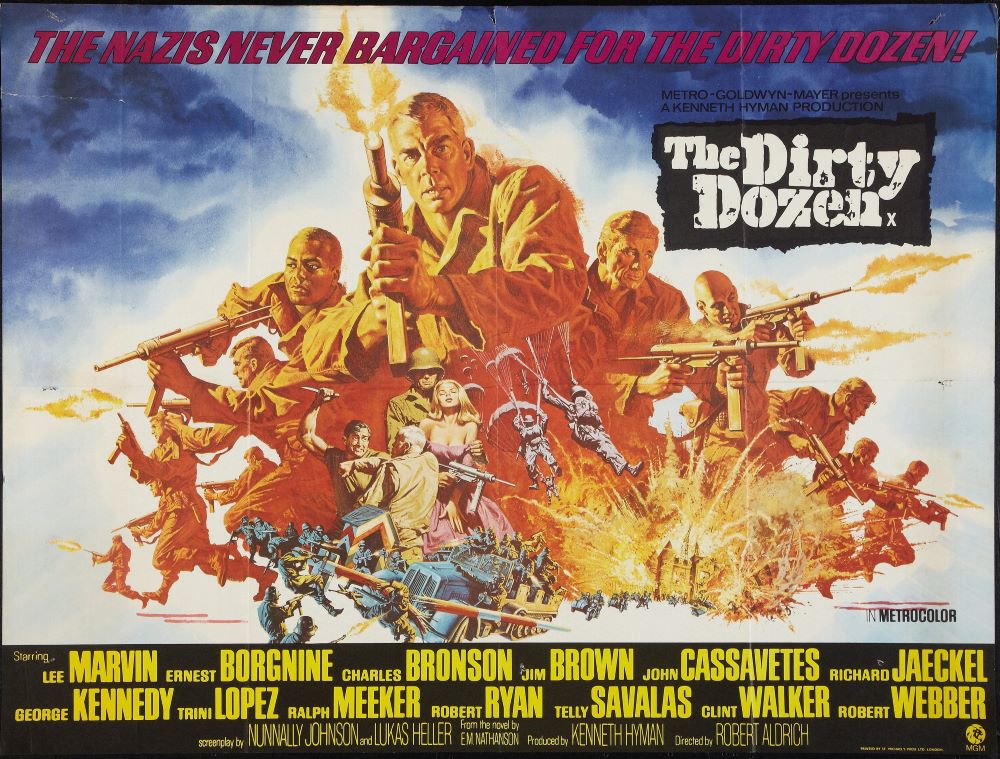
“And kill any officer in sight. Ours or theirs?” — Victor Franko
The Dirty Dozen is one of those war movies that feels like it was built in a lab for maximum “guys-on-a-mission” entertainment: big stars, a pulpy premise, plenty of attitude, and a third act that goes full-tilt brutal. It is also, even by 1967 standards, a pretty gnarly piece of work, and how well it plays today depends a lot on how comfortable you are with its mix of macho camaraderie, anti-authoritarian swagger, and disturbingly gleeful violence.
Directed by Robert Aldrich and released in 1967, The Dirty Dozen is set in 1944 and follows Major John Reisman (Lee Marvin), a rebellious U.S. Army officer assigned to turn a group of twelve military convicts into a commando unit for a suicide mission behind enemy lines just before D-Day. The deal is simple and grim: survive the mission to assassinate a gathering of German high command at a chateau, and your death sentence or long prison stretch gets commuted; fail, and you die as planned, just a little earlier and with more explosions. It is a high concept that plays almost like a war-movie prototype of the “villains forced to do hero work” formula that modern blockbusters keep revisiting.
The film’s biggest asset is its cast, stacked with personalities who bring a rough, lived-in charm to what could have been a lineup of interchangeable tough guys. Lee Marvin’s Reisman is the glue: a cynical, gravel-voiced officer who clearly hates bureaucratic brass almost as much as the criminals he is supposed to whip into shape, and Marvin plays him with a dry, weary sarcasm that avoids hero worship even as the film asks you to root for him. Around him, you get Charles Bronson as Wladislaw, a capable former officer with a chip on his shoulder; John Cassavetes as Franko, the volatile, insubordinate troublemaker; Jim Brown as Jefferson, whose physical presence and final-act heroics leave a strong impression; and Telly Savalas as Archer J. Maggott, a violently racist, fanatically religious, and almost certainly deranged soldier sentenced to death for raping and beating a woman to death. Savalas never softens that portrait, playing Maggott with a creepy combination of sing-song piety and sudden bursts of viciousness that makes him deeply uncomfortable to watch and the one member of the Dozen who feels like an outright monster even compared to the other killers. He sells Maggott’s self-justifying religiosity—quoting scripture, talking about being “called on” by the Lord—as both delusional and dangerous, so every time he starts sermonizing, it feels like a warning siren that things are about to go bad, and that pays off in the finale where his obsession with “sinful” women sabotages the mission. Even smaller roles from Donald Sutherland, Clint Walker, and others get memorable beats, which helps the ensemble feel like an actual crew rather than background noise.
For much of its runtime, the film plays like a rough-and-rowdy training camp movie, and that middle stretch is where a lot of its charm sits. Reisman’s solution to building teamwork is basically to grind the men down, deny them basic comforts, and force them to build their own camp, leading to the nickname “the Dirty Dozen” when their shaving kits are confiscated and they slip into permanent grime. The squad slowly gels through a mix of forced labor, competitive drills, and a memorable war-games exercise where they outsmart a rival, straight-laced unit led by Colonel Breed (Robert Ryan), which lets the film indulge in its anti-authority streak by making the rule-breakers look smarter than the regulation-obsessed brass. Savalas’s Maggott adds a constant sense of volatility to these scenes, his presence giving the group dynamic a genuine horror edge that keeps the movie from becoming a simple “lovable rogues” fantasy and making viewers eager to see him punished.
That anti-establishment energy is one of the reasons The Dirty Dozen hit so hard with audiences in the late 1960s, especially as public attitudes toward war and authority were shifting in the shadow of Vietnam. The movie clearly enjoys showing higher-ranking officers as petty, hypocritical, or out of touch, while Reisman and his misfit killers get framed as the ones who actually understand how war really works: dirty, improvisational, and morally compromised. Critics at the time noted that this defiant attitude, coupled with the convicts’ transformation into rough heroes, gave the film a rebellious appeal that helped it become a box office smash even as traditional war films were losing their shine.
Where the film becomes more divisive is in its moral perspective, or arguably its lack of one. From the start, these are not misunderstood saints: several of the men are condemned to death for murder, others for violent crimes and serious offenses, and the script never really suggests they were framed or unfairly treated. Yet once they are pointed at Nazis, the movie largely invites you to cheer them on, leaning into the idea that in war, the ugliest tools might be the most effective, and that conventional standards of justice and morality can be suspended if the target is the enemy. Maggott stands apart here as the line the film refuses to cross into sympathy, with Savalas’s committed and unsettling performance underlining how poisonous he is even to other criminals.
The climax at the chateau is where this tension really spikes. The mission involves infiltrating a mansion where German officers and their companions are gathering, rigging the place with explosives, and driving the survivors into an underground shelter that is then sealed and turned into a mass deathtrap with gasoline and grenades. It is a sequence staged with brutal efficiency and undeniable suspense, but it is also deeply unsettling, essentially pushing the protagonists into orchestrating a massacre that includes unarmed officers and civilians in evening wear, and the film offers minimal reflection on that horror beyond the visceral thrills. Maggott’s instability forces the team to react mid-mission, heightening the jagged tonal mix of rousing action and casual atrocity.
This blend of rousing action and casual atrocity did not sit well with many critics in 1967. Contemporary reviews complained that the film glorified sadism, blurred the line between wartime necessity and psychopathic cruelty, and practically bathed its criminals “in a heroic light,” encouraging what one critic called a “spirit of hooliganism” that was socially corrosive. Others, however, praised Aldrich for making a tough, uncompromising adventure picture that pushed back against sanitized war clichés, arguing that the cruelty and amorality felt like a more honest reflection of war’s ugliness, even if the film coated it in action-movie swagger and gallows humor. Savalas’s Maggott amplifies this debate, singled out by fans as a great, memorable character who adds real repulsion without turning into a cartoon.
From a modern perspective, the violence itself remains intense but not especially graphic by contemporary standards; what lingers is the attitude around it. The movie’s glee in letting some of these characters off the moral hook, contrasted with the genuinely disturbing behavior of someone like Maggott, creates that jagged tonal mix: part old-school “men on a mission” yarn, part cynical commentary on the kind of men war turns into tools. Depending on your tolerance, that mix either gives the film an edge that keeps it from feeling like simple nostalgia, or it plays as carelessly flippant about atrocities that deserve more introspection than a last-minute body count and a fade-out.
On a craft level, though, The Dirty Dozen still works surprisingly well. Aldrich keeps the film moving across a long runtime by building distinct phases: the recruitment and introduction of each convict, the training and bonding section with its rough humor and humiliation, and the final mission that shifts into suspense and near-horror. The action is clear and muscular, the editing sharp enough that you rarely lose track of who is where, and the sound design—even recognized with an Academy Award for Best Sound Effects—helps the chaos of the finale land with blunt impact.
At the same time, the structure exposes a few weaknesses. The early sections do such a good job of sketching out personalities that some characters feel underused or abruptly sidelined once the bullets start flying, and the film’s length can make parts of the training montage drag, especially if you are less enamored with its barracks humor and macho posturing. The writing also leans on broad types—psychopath, wisecracking crook, stoic professional—which the cast elevates, but the script rarely pushes them into truly surprising territory, beyond a few late-movie acts of sacrifice.
Still, as a piece of war-movie history, The Dirty Dozen earns its reputation. It helped popularize the template of the misfit team thrown into an impossible mission, a structure that later shows up everywhere from ensemble war pictures to superhero teams and modern “suicide squad” stories. Its mix of black humor, anti-authoritarian streak, and violent catharsis captures a specific late-1960s mood, even as its politics and ethics remain muddy enough to spark debate decades later. Savalas’s turn as Maggott ensures that edge never dulls, keeping the film’s thrills packaged with a moral outlook as messy and conflicted as the men it sends to kill.
For someone coming to it fresh now, the film plays as a rough, sometimes exhilarating, sometimes queasy ride: entertaining as pulp, compelling as an ensemble showcase, and troubling in the way it treats brutality as both a necessary evil and a spectator sport. If you are interested in the evolution of war cinema or the origins of the “ragtag squad on a suicide mission” trope, The Dirty Dozen is absolutely worth watching, with the understanding that its strengths—like Savalas’s chilling Maggott—come wrapped in those ethical ambiguities.
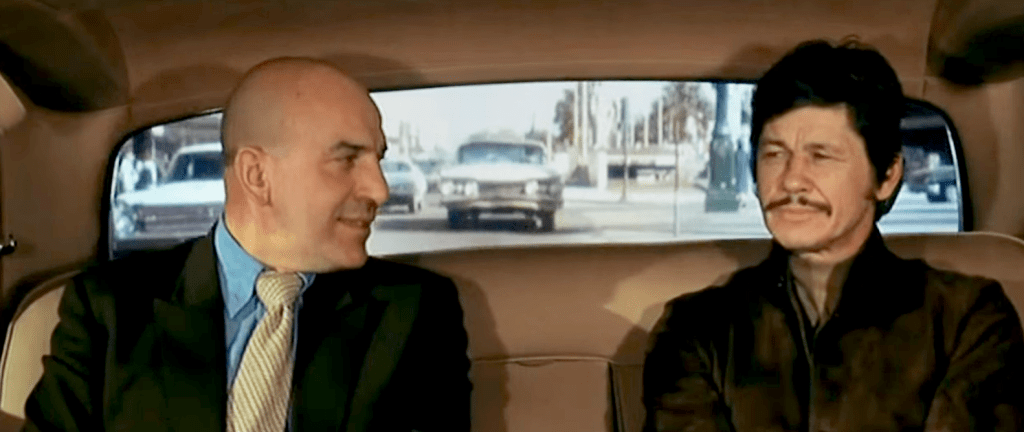
4 Shots From 4 Films: The Telly Savalas Edition! Happy Birthday, Telly!!
Telly Savalas would have been 104 years old today. He’s been in many of my favorite movies so I’m glad to celebrate him today with 4 Shots from 4 of my favorites!
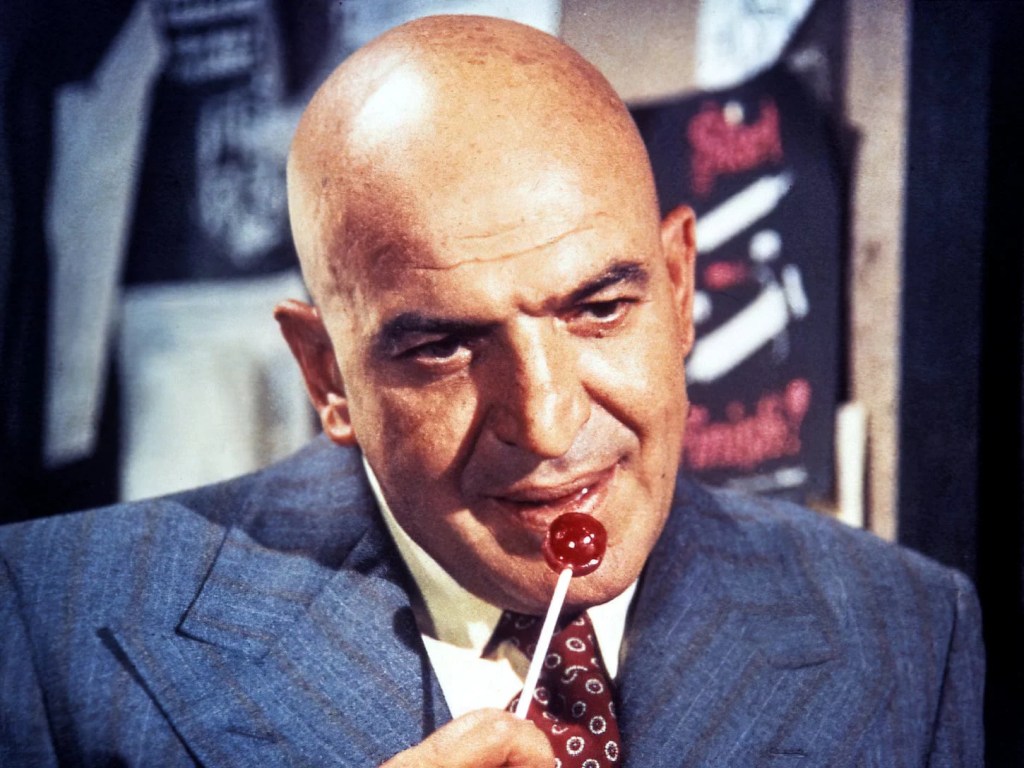
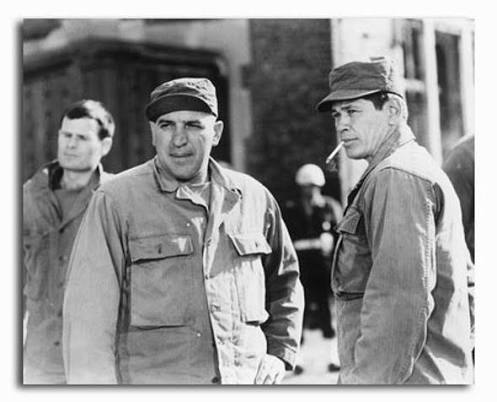
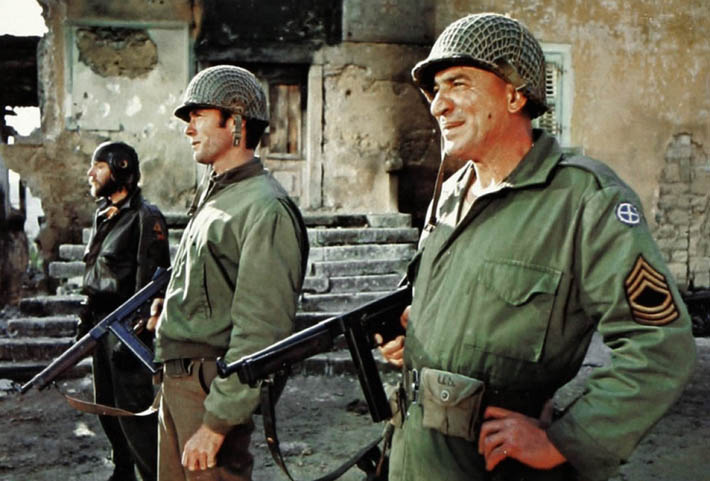
Did you know that Snake Plissken was almost played by….. CHARLES BRONSON?
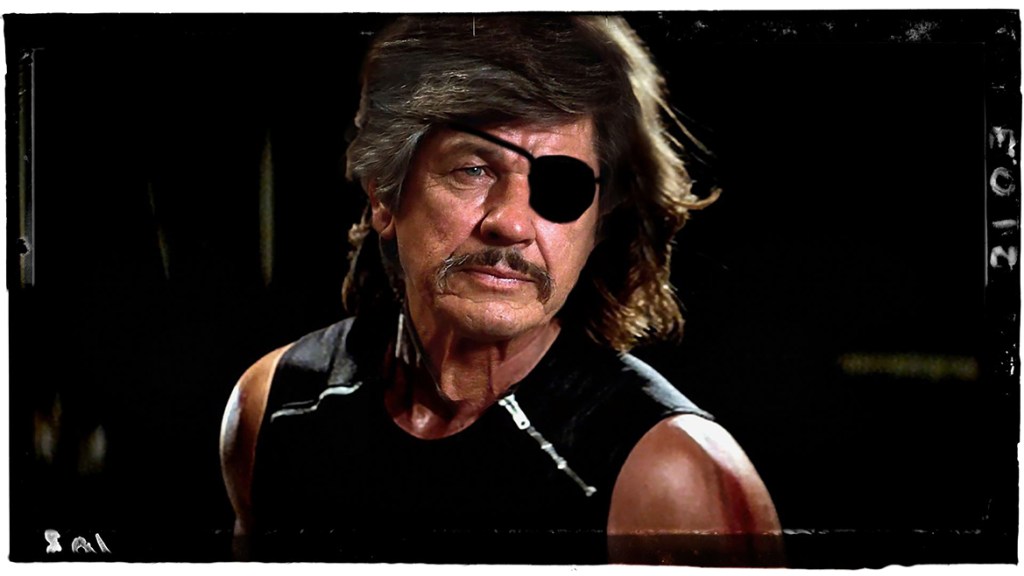
If you’re following the page today, you know that The Shattered Lens is celebrating the 78th birthday of legendary Director John Carpenter. Did you know that there was a time when the studio “suits” wanted Charles Bronson to play the role of Snake Plissken in Carpenter’s classic, ESCAPE FROM NEW YORK? A big star when the original idea of the film began kicking around, studio executives felt that an experienced, gritty actor like Bronson might be perfect for the role, especially since he was already a solid box office champ.
Carpenter, however, wanted a younger guy to play Plissken and may have even been a little intimidated to work with the veteran action star…
“Charles Bronson had expressed interest in playing Snake, but I was afraid of working with him. He was a big star, and I was this little-shit nobody.”
It all worked out well in the long run as Carpenter was eventually able to cast his first choice for the role, Kurt Russell, who was at an important stage in his own career as he was still in the process of reinventing his on-screen image from his days as a former child star and Disney star. John Carpenter had worked with Russell a couple of years earlier in the TV movie, ELVIS (1979), so he had confidence in the young actor. Russell turned out to be an incredible choice for the film and key to making it the classic it is today.
Still, for a Bronson fan like me, it’s quite interesting to know that there’s a multiverse out there that could have seen Bronson in the iconic role!
THE STONE KILLER – The Latest Episode of the “This Week in Charles Bronson” Podcast is Available Now!
It has been a while since the “This Week in Charles Bronson” podcast has dropped a new episode focused on a specific Charles Bronson film. That ends today as our episode on the excellent 1973 badass cop film THE STONE KILLER is here for your listening pleasure. Join me and our host Eric Todd, along with special guests “Fanacek” (who hosts one of my very favorite pop culture podcasts) and on-line film critic Robert Baum, as we discuss the film from many different facets. You never know what rabbit holes we’ll go down, what theories we’ll share, or which crazy directions the conversation may head. We’re just fans of Charles Bronson, movies and TV shows, and we love to share that with each other and all of you.
One of the best things about THE STONE KILLER is its incredible cast. Besides Charles Bronson, we get the opportunity to dive off into the careers of cast members like Three’s Company alums John Ritter and Norman Fell, Oscar winner Martin Balsam, the Incredible Hulk‘s nosy reporter Jack Colvin, Papa Walton, and even B-movie queen Roberta Collins. Plus, many more!
So, if you have a little time on your hands, and you think it might be fun to listen to some extremely cool folks (or maybe movie nerds depending on your way of thinking) talking about Charles Bronson’s THE STONE KILLER, I’ve linked to the YouTube version below. It’s also available on Spotify and Apple Podcasts!
Brad discusses THE MAGNIFICENT SEVEN (1960), directed by John Sturges!
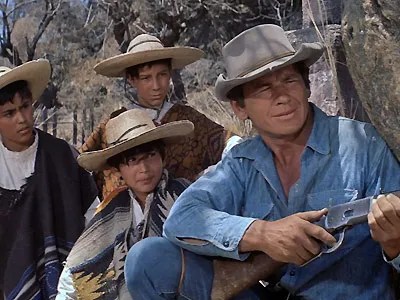
Way back in 1960, Director John Sturges took Akira Kurosawa’s timeless classic SEVEN SAMURAI (1954) and translated its themes of honor and sacrifice into the American western THE MAGNIFICENT SEVEN. A classic on its own, the film stars such cinematic legends as Yul Brynner, Steve McQueen, James Coburn, Eli Wallach, and Charles Bronson. The storyline of a small group of men protecting a village from bandits proved to be an irresistible subject once again, especially the way it was handled here. Its theme music by Elmer Bernstein is one of the most instantly recognizable pieces of music in western cinema. It’s not easy translating a masterpiece without suffering quite negatively in comparison, and I’ve always admired how Sturges and his team of writers were able to create a film that both honored the source material while successfully transferring its content to a different part of the world.
The lead performances of Yul Brynner and Steve McQueen anchor the film, and the screenplay masterfully takes the time to introduce us to each of the seven men and their myriad of reasons for taking on this mission. We care about the men because we get to know them. After Brynner and McQueen, we learn James Coburn is the most badass, Robert Vaughn is the most cowardly, Brad Dexter is the most money hungry, and Horst Buchholz is the most naive. Unsurprisingly, my favorite of the characters is Bernardo O’Reilly, played by Charles Bronson. In my opinion, the character of O’Reilly represents the heart of the story. His character is as tough as it gets and great with a gun, but it’s the way he cares for the actual people, especially the children of the village, that really stands out. It’s in these small moments and exchanges between Bronson and the kids, where the film seems to transcend the genre and become something even more reflective and meaningful. So when Bronson pays the ultimate price, it’s not for some grand purpose or ideal, it’s specifically for those kids, and the moment becomes powerful. For my money, Bronson gives one of the more moving turns in classic western cinema that remains under appreciated to this day.
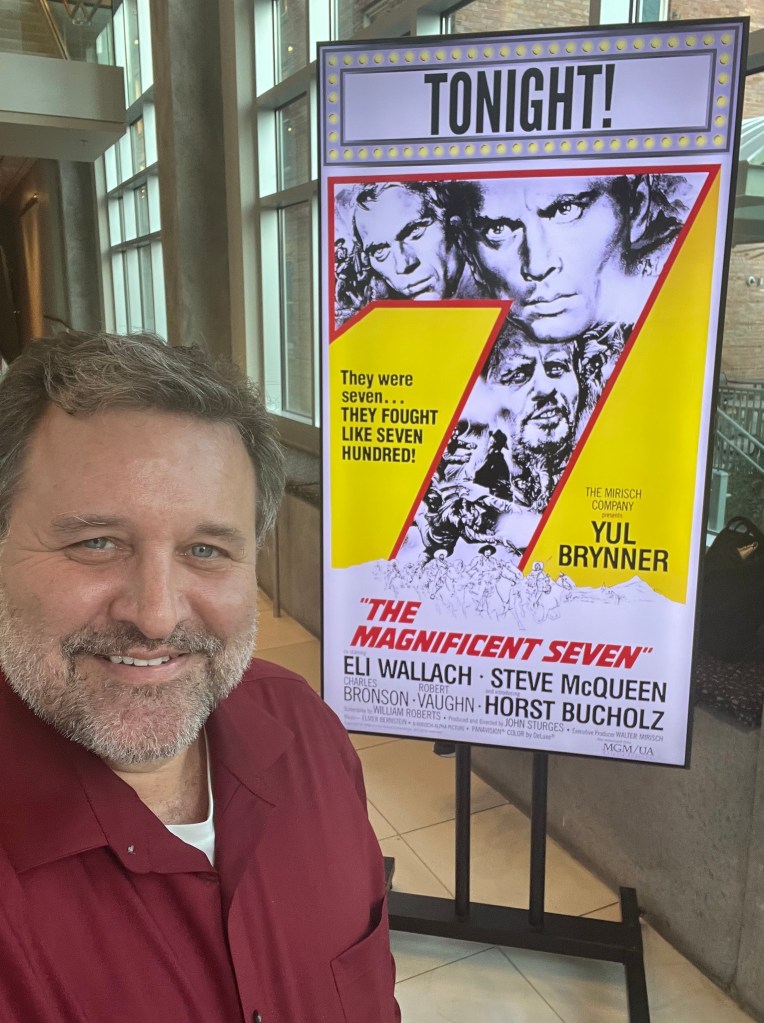
In 2025, THE MAGNIFICENT SEVEN celebrated its 65th anniversary, with many theaters around the country screening the film again. I was lucky enough to catch one of those screenings at a theater in downtown Little Rock. It was a wonderful night at the movies. Today, on what would have been his 116th Birthday, I celebrate Director John Sturges and this great film that has meant so much to me!
The “This Week in Charles Bronson” Podcast Christmas Episode!
Are you struggling to get into the Christmas spirit? Do you want to celebrate the holidays with a distinct Bronson flavor? Would you like to hear about the greatest Christmas present I ever received? Do you want to hear my thoughts on the Bronson Christmas classic, YES VIRGINIA, THERE IS A SANTA CLAUS?
If the answer is “Yes” to one or all of these questions, then I have the perfect gift for you! The “This Week in Charles Bronson” podcast has just dropped its Christmas episode! Check it out!!
 Through the Shattered Lens