Scene That I Love: Deborah Kerr and Burt Lancaster in From Here To Eternity


Today’s scene that I love is perhaps the most famous scene from 1953’s From Here To Eternity.  It’s amazing what you can do with Deborah Kerr, Burt Lancaster, the beach, and the ocean!


THE OSTERMAN WEEKEND (1983) – Rutger Hauer teams up with Sam Peckinpah!


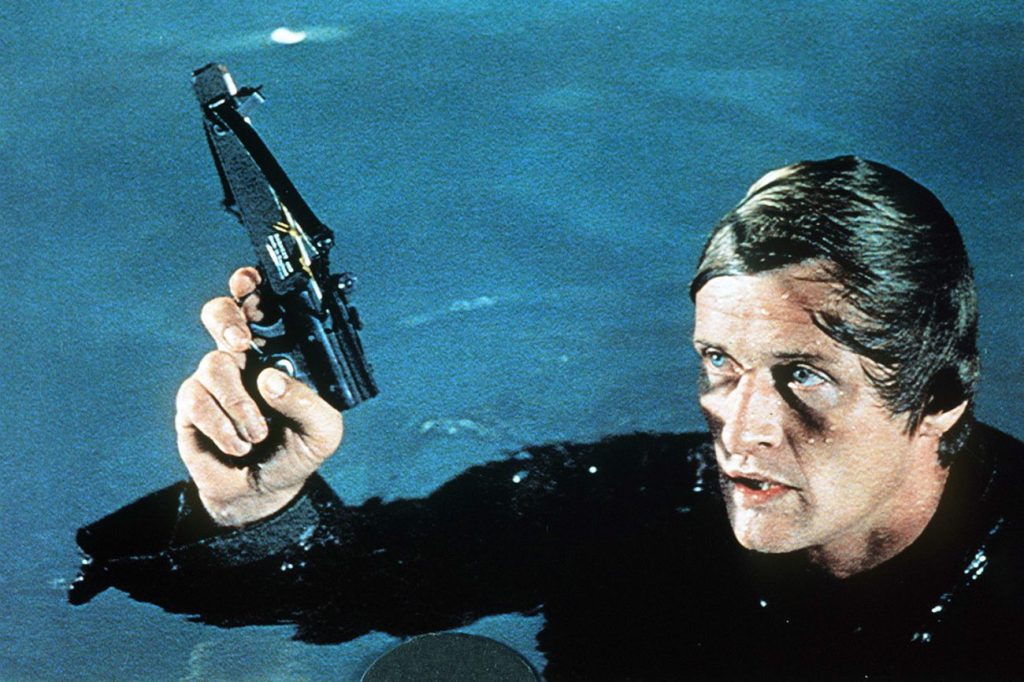
I’ve been having the best time reviewing Rutger Hauer films every Sunday. Today, I revisit THE OSTERMAN WEEKEND from 1983. Hauer made this film the year after BLADE RUNNER, so he was in the prime of his career. It also teams him up with an all-star supporting cast and master director Sam Peckinpah. 

THE OSTERMAN WEEKEND opens with CIA Director Maxwell Danforth (Burt Lancaster) watching a recording of agent Laurence Fassett (John Hurt) making love to his wife. When Fassett hits the shower, two KGB assassins come in and kill her. Consumed by grief, Fassett hunts down the assassins and uncovers a Soviet spy network known as Omega. Fassett has identified three American men as top Omega agents… television producer Bernard Osterman (Craig T. Nelson with an awful, glued-on mustache), plastic surgeon Richard Tremayne (Dennis Hopper) and stock trader Joseph Cardone (Chris Sarandon). Rather than arrest the men and risk alarming the KGB, Fassett proposes to director Danforth that they try to turn one of the three men to the side of the West in hopes that this person will provide the information needed to bring down the Omega network. 

Enter controversial television journalist John Tanner (Rutger Hauer). Fassett knows that Tanner has been close friends with Osterman, Tremayne, and Cardone since all four attended Berkeley together, and he believes that Tanner can successfully turn one of them. Although initially highly skeptical, the super patriotic Tanner begins to change his mind when Fassett shows him videotaped evidence of his old friends talking with a Russian agent in various capacities. Tanner reluctantly agrees to try turn one of his friends at their annual “Osterman Weekend” reunion which is coming up that week at Tanner’s house. He does have one condition… that Danforth, the CIA director will appear as a guest on his show. Danforth agrees to this condition. So that weekend, Tanner and his wife Ali (Meg Foster) welcome their old friends and their wives into their home, while Fassett has video camera equipment installed and hangs out in a van spying on the festivities. There’s no doubt it will turn out to be an awkward weekend, and you can’t help but wonder if Fassett may have more sinister motives than he’s letting on. 

I’ll go ahead and say that I had a great time watching THE OSTERMAN WEEKEND for the first time in thirty-plus years. I’ve often read a criticism that the plot of this film is “incomprehensible.” Based on a book by Robert Ludlum, the story is purposely designed to keep you guessing up until its big reveal, but I didn’t have any trouble following it all. I’d say the biggest issue is that it doesn’t really stand up under close scrutiny. Some of the actions of the various characters don’t always make a lot of sense in light of the movie’s big twist near the end, but that didn’t take away from my personal enjoyment of the film. I just went along with the plot wherever it took me, and that was easy for me to do based on the cast that we have assembled. Any movie that includes Rutger Hauer, Burt Lancaster, John Hurt, Craig T. Nelson, Dennis Hopper, Chris Sarandon, Meg Foster, Helen Shaver, and Candy Yates will get a watch from me. Heck, Tim Thomerson even shows up as a motorcycle cop at one point. It’s a who’s who of excellent actors who always make their films watchable. In my opinion, it’s Hauer, Hurt, Foster and Nelson who do the most with their characters and take home the acting honors for their work here. Burt Lancaster is one of the all-time greats, and he does a good job, but it’s a one note character so there isn’t much he can do. Hopper and Sarandon are also fine, but their characters don’t really stand out. Their screen wives, Shaver and Yates, seem to be here mostly for eye candy because their tops are off for an abnormally large amount of their screen time! Speaking of eyes, the Hauer / Foster team up has to be on the list of the most striking combo pair of eyes in the history of cinema. Foster has the most noticeable eyes of any actress I’ve ever seen. 

This is the great Sam Peckinpah’s final film, and I don’t agree with the people who complain that his career ended with a whimper. THE OSTERMAN WEEKEND is not in the same league as THE WILD BUNCH, RIDE THE HIGH COUNTRY, THE STRAW DOGS, or THE GETAWAY, but not many films are, including most of his own. And this movie is certainly visionary in one area, and that is found in its main theme about the damage that can be done with the manipulation of the media, including physical media, like videotape and audiotape. The primary driver of the film from the very beginning to the very end is the danger of false information that looks and sounds true. I can promise you that as I type this, and as you read it, there are people all over this world trying to make lies sound or appear true so they can share them on the news and on social media. I invite you to question everything you read, watch or hear on any outlet where you receive your news. Peckinpah’s final film beats this into our heads, just 40 years earlier. 

Sam Peckinpah was known for his stylish and violent action sequences. THE OSTERMAN WEEKEND is more of a paranoid thriller, but it does feature some good action. There’s a chase sequence early in the film where Hauer’s wife and son are kidnapped, and he’s forced to commandeer the truck of honeymooners John Bryson (a Peckinpah regular) and Anne Haney (Greta from LIAR LIAR) to take off in hot pursuit. The scene features Peckinpah’s signature stunts, slow motion, and a myriad of cool tracking shots. There’s another fun scene where Hauer is using a baseball bat to defend himself against his pal Craig T. Nelson, who’s been shown to be a martial arts expert. It’s an exciting scene even if Hauer does get his ass kicked, in slow motion no less. And I always appreciate a movie with some good crossbow action, especially when it’s being wielded by a lady. The poster of the film prominently features a lady with a crossbow and we get to see Meg Foster step into that role in the actual film. She gets one especially gruesome, blood gurgling kill. 

Overall, I think THE OSTERMAN WEEKEND is a good film. It is not nearly as bad as the critics of the time labeled it, and it’s not as good as Peckinpah’s best work, but you can certainly do a lot worse. It has a great cast, a timely message, a lot more sex and nudity than I remembered, and some cool action sequences. It’s definitely worth a watch!

Film Review: Buffalo Bill and the Indians, or Sitting Bull’s History Lesson (dir by Robert Altman)


1976’s Buffalo Bill and the Indians, or Sitting Bull’s History Lesson takes place in the waning years of the Old West.  Civilization is coming to America and the “wild” west’s days are numbered.  And yet, even as the days of outlaws and gunslingers come to an end, America is already in the process of building up its own mythology.

Buffalo Bill (Paul Newman) owns a popular wild west show, one where his stars put on a show that claims to recreate the great moments of western history.  The show is made up of a motely collection of performers, some of whom are more talented than others.  This is a Robert Altman film and, as usual, the emphasis is more on watching how his large ensemble of actors interact as opposed to highlighting any one actor.  Indeed, it can be hard to keep everyone in the film straight and one gets the feeling that this was intentional on Altman’s part.  Buffalo Bill and the Indians may be a revisionist western and a satire of American history but it’s also a showbiz film.  The emphasis is on people continually coming and going, sticking around long enough to either prove their worth as a performer or moving on to a hopefully more receptive audience.

Geraldine Chaplin plays Annie Oakley, the sharp shooter who takes joy in firing her gun and who barely seems to notice that her husband (John Considine) is terrified of getting shot.  Joel Grey serves as the unflappable manager of the show while Harvey Keitel is miscast as Buffalo Bill’s somewhat nerdy assistant.  (Keitel, with his natural intensity, seems like he’s desperately waiting for a chance to explode, a chance that never really comes.)  Burt Lancaster plays Ned Buntline, the writer who made Buffalo Bill into a celebrity and who provides a somewhat sardonic commentary as Bill’s current activities.  Shelley Duvall shows up as the wife of President Grover Cleveland (played by Pat McCormick), who comes to the show and is amused until an Indian points a gun towards the president.

Throughout it all, Buffalo Bill enjoys his fame and pushes his vision of the Old West on those who come to see his show.  Newman plays Bill as being a blowhard, an eccentric who is obsessed with opera and whose entire persona is a fake.  He can’t shoot straight.  He can barely ride a horse.  His trademark long hair is actually a wig.  The only people who take Bill seriously as those who come to see his show.  Those who know him view him as being a buffoon but they also understand that he’s a very successful and very famous buffoon and that ultimately matters more than any sort of historical truth.

What conflict there is in the film occurs when Sitting Bull (Frank Kaquitts) and his translator (Will Sampson) arrive on the scene.  Sitting Bull has agreed to appear in the show but only under his own terms.  Buffalo Bill grows frustrated with Sitting Bull and his refusal to pretend to be a savage but he also knows that this audience wants to see the last remaining great Indian chief.

It’s a big and sprawling film and it’s really not entirely successful.  Altman was an intelligent director who was willing to take risks and no one deserves more credit for popularizing the idea of the ensemble film.  That said, he could also be a bit heavy-handed and that’s certainly the case here.  It takes a certain amount of courage to cast a star like Paul Newman as a thoroughly unlikable character and it also took a bit of courage on Newman’s part to give the performance that he did.  At the same time, neither the shallow Buffalo Bill nor the dignified Sitting Bull are really compelling enough characters to carry a film that runs for more than two hours.  The film’s message is an obvious one and it’s also one that Altman handled in a much more memorable way with Nashville.

That said, the film is a memorable misfire.  It’s at its best when it abandons the politics and just concentrates on the community of performers that popular Buffalo Bill’s show.  The film’s best moments are not the ones with Paul Newman growling but instead the ones with John Considine hoping that Geraldine Chaplin won’t accidentally shoot him.  As with many of Altman’s film, Buffalo Bill and the Indians works best when it focuses on the misfit community at the center of its story.


Lisa Marie Reviews An Oscar Winner: From Here To Eternity (dir by Fred Zinnemann)


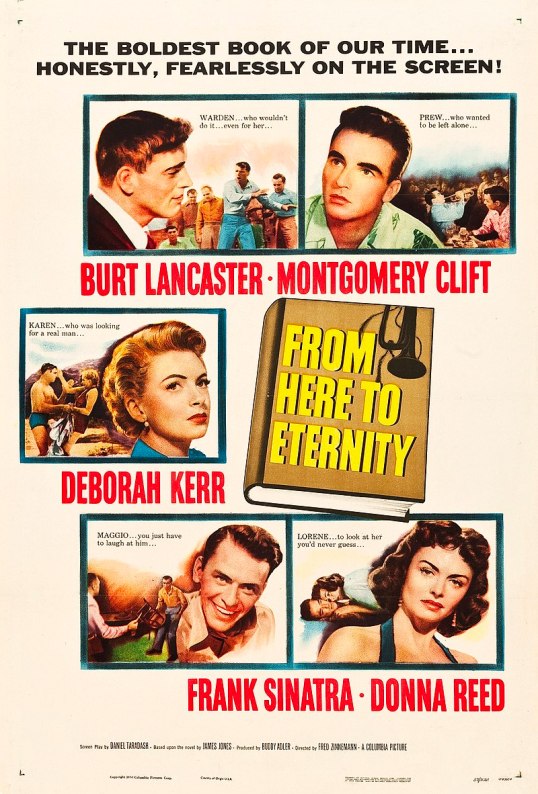
“The boldest book of our time,” shouts the poster art for 1953’s From Here To Eternity, “honestly, fearlessly brought to the screen!”

And indeed, James Jones’s novel was brought to the screen about as boldly as a studio film could be brought in 1953.  The book told the story of several soldiers in the days immediately before the attack on Pearl Harbor.  The Production Code was still in effect and, as a result, a few changes were made to the film’s plot.  Donna Reed played Lorene, a character who is described as being a “hostess” at social club but who, in the book, worked at a brothel that was popular with the soldiers from a nearby army base.  In the book, an unfaithful husband gives his wife a venereal disease that leads to her getting a hysterectomy.  In the movie, Karen’s (Deborah Kerr) hysterectomy was the result of a miscarriage that occurred after she discovered her husband was being unfaithful.  The book was critical of the Army and featured officers who faced no consequences for their actions.  The movie definitely presents the enlisted men as being at the mercy of officers but the worst of the officers is ultimately disciplined.  The movie was made with the cooperation of the U.S. Army and, as a result, the film’s villains — like Captain Holmes (Philip Ober) and the monstrous Fatso Judson (Ernest Borgnine) — were portrayed as being aberrations who did not represent the Army as a whole.  That said, the film version of From Here To Eternity is still a powerful, moving, and daring film.  What couldn’t be shown on screen is still suggested.  One might not see the specifics of what Fatso Judson does to Maggio (Frank Sinatra) in the stockade but it’s not difficult to figure out.

The film follows one company of soldiers as they laugh, fight, and fall in love while stationed in Hawaii.  They spend time training for a war that most of them think will never come.  Captain Holmes is more concerned with his regimental boxing team than the prospect of going to war and is confused when Private Prewitt (Montgomery Clift) refuses to stop back into the ring.  Prewitt, who takes pride in his ability as a bugler, quit boxing after he blinded an opponent in the ring but Holmes doesn’t care.  Holmes wants another trophy for his office.  He orders Sgt. Warden (Burt Lancaster) to make life Hell for Prewitt until Prewitt agrees to box.  Warden, who has seen a lot of officers come and go and who has been tempted to become an non-commissioned officer himself, is having an affair with Holmes’s wife, Karen.  Meanwhile, Prewitt and his friend Maggio spend their time looking forward to the weekends they’re allowed to spend off the base.  Prewitt has fallen in love with Lenore but, as with all the men in From Here To Eternity, Prewitt’s true love is for the army.  Even with Holmes pressuring him to box, Prewitt’s loyalty is to the men with whom he serves.  There’s a lot of drama, a lot of death, and a lot of romance.  This is the film in which Burt Lancaster and Deborah Kerr make out on the beach while the tide rolls in.  But, when Pearl Harbor is attacked, all of the drama and all of the romance is forgotten as America goes to war.

From Here To Eternity is one of the best films of the 1950s and certainly one of the more worthy winners for Best Picture.  Intelligently directed, wonderfully acted, deliriously romantic, and finally rather sad, it’s a film that embraces the melodrama without ever hitting a false note.  Burt Lancaster’s rugged weariness, Montgomery Clift’s method sensitivity, Frank Sinatra’s naturalism, Ernest Borgnine’s crudeness, Deborah Kerr’s classiness, and Donna Reed’s earnestness all come together to create a film in which the characters feel real and alive.  Warden, Prewitt, Lenore, Karen, and Maggio are all interesting, multi-faceted people, trying to find some sort of happiness in the shadow of an inevitable war.  The viewer may sometimes have mixed feelings about their actions (and Borgnine’s Judson is one of the most loathsome roles that the normally likable Borgnine ever played) but you never cease to care about them and their stories.  With all of the characters and the affairs and the secrets, From Here To Eternity can feel like a soap opera but it’s also a portrait of a world that is on the verge of changing forever.

A few years ago, I attended a screening of From Here To Eternity at the Dallas Angelika.  This is a film that definitely deserves to be seen on the big screen.  From the famous scene on the beach to the attack on Pearl Harbor to the tragic final moments, this is a big movie that deals with big emotions and big moments.  It’s one of the best.

Remembering Actor Earl Holliman (1928 – 2024) – 3 things I’ll remember him for!


I saw that actor Earl Holliman passed away on November 25th, 2024 at 96 years of age. For someone who loves movies as much as I do, Mr. Holliman has been a pleasant part of my life over the years, and it makes me sad that he’s gone.

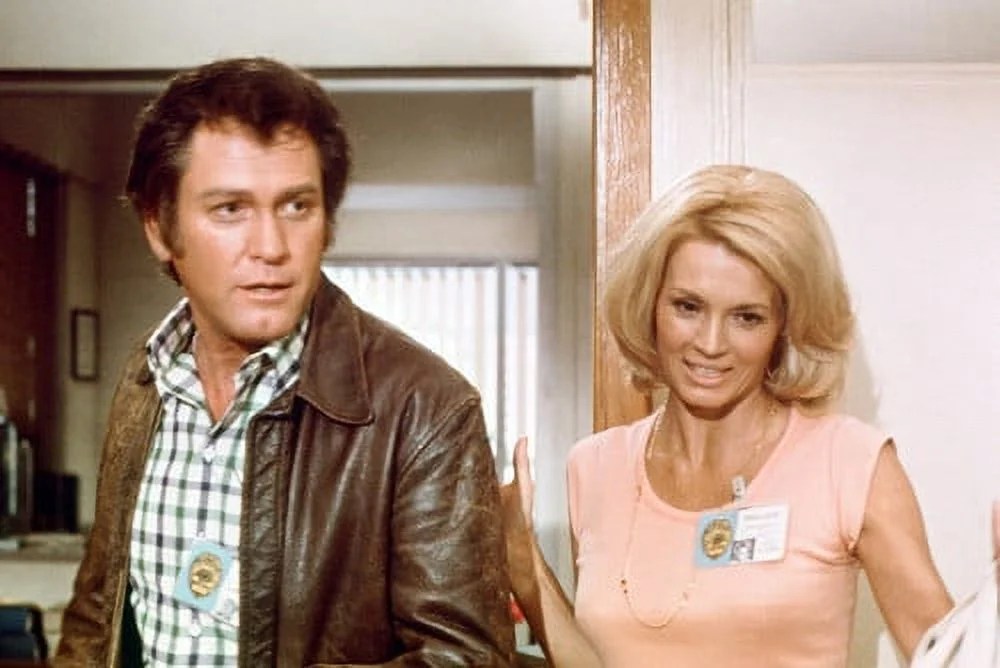
I first really noticed Earl Holliman as one of the sons of Katie Elder along with John Wayne and Dean Martin. I like John Wayne movies so I’ve watched it quite a few times over the years. There’s just something about Holliman that appeals to me, and his fate in the film still makes me sad. Later, in 2006, I acted in the Southwest Arkansas Arts Council production of THE RAINMAKER in Hope, Arkansas. The 1956 movie version stars Burt Lancaster, Katherine Hepburn, Lloyd Bridges and Earl Holliman. I played the Lloyd Bridges part, so I watched the movie several times to help me get into my character. Holliman was just so good in the movie. He won a Golden Globe for his performance in the film, and it just made me notice him that much more. Finally, as part of the THIS WEEK IN CHARLES BRONSON podcast, I had the opportunity to interview actor Jordan Rhodes who had worked with Charles Bronson in MR. MAJESTYK and THE INDIAN RUNNER. As part of the interview, Jordan told us some of the things that made him proud over the years during his time in Hollywood. He told us about the time that his mom was visiting him in Los Angeles, and how proud he was to be able to introduce her to Earl Holliman who was working on POLICE WOMAN with Angie Dickinson at the time. His story was complimentary of Mr. Holliman and just another really nice thing to hear. 

Thanks, Earl Holliman, for adding joy to my life over the years through your performances on TV and in the movies. Much love and respect for a job well done, sir. Rest in peace. 

The Island of Dr. Moreau (1977, directed by Don Taylor)


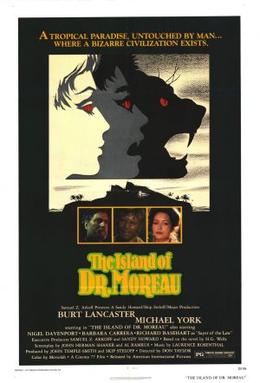
After the ship that he’s working on sinks, engineer Andrew Braddock (Michael York) washes up on an uncharted island. It’s a beautiful island but it quickly proves dangerous as another survivor of the sinking is killed by wild animals. The injured Braddock passes out and when he wakes up, he’s being cared for by a mysterious scientist named Moreau (Burt Lancaster).

Braddock discovers that the island is populated by creatures that are half-human and half-animal. Led by the Sayer of the Law (Richard Basehart), these creatures are the results of experiments conducted by Moreau and his assistant, Montgomery (Nigel Davenport).  Moreau’s experiments are expected to obey Moreau’s laws.  Should they fail, they will be taken to the House of Pain and punished.  When Baddock objects to Moreau playing God, Moreau plots to reverse the experiment on Braddock and turn him into an animal. Even as he falls in love with a former cheetah (played by Barbara Carrera), Braddock realizes that he must escape the Island of Dr. Moeau.

This is the forgotten adaptation of H.G. Wells’s classic novel, as well as being the most faithful. The Island of Lost Souls, from 1932, is considered to be a classic. The third version, directed by John Frankenheimer and starring Marlon Brando and Val Kilmer, is a legendary disaster. This version, though, is usually overlooked. It’s also my favorite of the three but that might be because it was the first version that I ever saw. It’s a straight-forward version of H.G. Wells’s story of science gone mad with director Don Taylor not wasting any time getting the action started. Michael York, always an underrated actor, convincingly portrays Braddock’s outrage and his struggle to maintain his humanity after Moreau starts to experiment on him while Carrera is beautiful and mysterious as Maria. Probably the film’s biggest surprise is Burt Lancaster, who turns out to be ideally cast as Moreau. More subdued than either Charles Laughton or Marlon Brando, Lancaster plays Moreau as a brilliant but callous man who is too arrogant to realize that he’s become as much of an animal as those he claims to be perfecting.  What makes Lancaster’s Moreau so disturbing is that he doesn’t have the excuse of being insane.  Instead, he’s just too stubborn to admit that he’s potentially made a huge mistake.

It may be forgotten but this still the version of The Island of Dr, Moreau that I would recommend.

(Trailer courtesy of Classic Movie Reviews)

Film Review: Mister 880 (dir by Edmund Goulding)


First released in 1950, Mister 880 is a wonderful surprise.

The film opens like a typical 50s crime drama.  We’re told that counterfeiting is a serious crime and that the dedicated agents of the Secret Service are working very hard to try to wipe out the scourge of fake money. We’re also told that Mister 880 is based on a true story and that it was produced with the full cooperation of the U.S. Treasury Department.  As a result, modern viewers will probably be expecting Mister 880 to be a work of pro-government propaganda, where wholesome treasury agents track down and stop soulless thieves.  Instead, Mister 880 turns out to be a wonderfully charming portrait of a criminal who doesn’t mean to cause anyone any harm.

Burt Lancaster stars as Steve Buchanan, a Treasury agent who is well-known for never letting a case go.  He’s developed a personal obsession with tracking down a counterfeiter who, for the last ten years, has been passing phony one dollar bills around a certain New York neighborhood.  The Treasury Department has named him Mister 880.  Mister 880 is definitely an amateur.  The money that he prints is sloppy.  At the same time, he also only prints one dollar bills and it appears that he only does so on occasion.  Just as no one can figure out his identity, everyone is also baffled by his motivation.  If he was looking to get rich through printing his own money, he would surely print more than just  a bunch of sloppy one dollar bills.

Investigating the neighborhood that he believes to be Mister 880’s base of operations, Buchanan meets and falls in love with Ann Winslow (Dorothy McGuire).  He also happens to meet Ann’s neighbor, Skipper Miller (Edmund Gwenn).  Skipper is an elderly man, a Navy veteran who lives with a dog and who says that he is financially supported by a rich cousin who nobody has ever met.  Skipper is a junk dealer and he’s a genuinely nice man.  Everyone in the neighborhood, including Ann, loves Skipper.  Buchanan soon comes to like the old eccentric as well.

Of course, as you’ve probably already guessed, Skipper is the counterfeiter.  He is Mister 880.  He doesn’t mean to cause any harm, of course.  He only prints money when he absolutely needs to and he always makes sure to not use too much of it.  He doesn’t want to steal from anyone.  He’s just an elderly man who wants to live out his days in peace and who doesn’t want to be a bother to anyone.

When Buchanan discovers the truth about Skipper, he’s faced with a dilemma.  Skipper is hardly a master criminal but Buchanan has sworn an oath and he has a job to do.  Not making things any simpler is that Skipper doesn’t deny what he’s done and he also says that he’ll plead guilty to his crime because …. well, he is guilty.  Skipper’s not a liar, despite the fake money.  Both Buchanan and Ann know that Skipper won’t survive spending years behind bars.  What do you do with a man who has broken the law but who, at heart, is not really a criminal?  Can a crime be forgiven just because the man who committed it is really, really likable?

Mister 880 is a sweet-natured comedy, one that doesn’t necessarily argue that Skipper’s crime should have been forgiven but which, at the same time, does make the case that not all law-breakers are created equal.  Gwenn, who is best-known for playing Santa Claus in the original Miracle on 34th Street, gives a wonderful performance as Skipper.  It’s hard not to love Skipper.  It’s not just that Skipper doesn’t make any excuses for being a counterfeiter.  And it’s not just that Skipper is an eccentric who loves his dog and has his own unique way of looking at the world.  It’s that Skipper is just a genuinely kind man.  He’s someone who would rather go to prison than be too much of a burden to the people who he cares about.  He’s the sweetest criminal you could ever hope to meet.

Gwenn was rightfully nominated for an Academy Award for his work in this film.  Not nominated but equally strong were Burt Lancaster and Dorothy McGuire.  Even though they don’t get any big, show-stopping moments like Gwenn does, both Lancaster and McGuire bring their characters to wonderful life and both do a great job of capturing their own mixed feelings about what should be done about Skipper.  Lancaster, in particular, is convincing as the by-the-book agent who is torn between his professional obligations and his feelings for both Ann and Skipper.

Mister 880 is one of my favorite movies, a wonderfully and unexpectedly good-hearted film about a real-life criminal who wasn’t the bad of a guy.  Emerich Juenetter, the real-life counterfeiter who served as the model for Skipper, reportedly made more money from the release of this film than he ever did over the course of his counterfeiting career.  After watching Mister 880, it’s hard not to feel that he earned every cent of it.

Valdez is Coming (1971, directed by Edwin Sherin)


Based on a western short story from the great Elmore Leonard, Valdez is Coming takes place in a small town on the border between the U.S. and Mexico.  Wealthy Frank Tanner (Jon Cypher, who later played Chief Fletcher Daniels on Hill Street Blues) claims that he’s spotted the man who murdered a friend of his.  Tanner and his gunmen have the man and his wife pinned down in a cabin.  The man is African-American while his wife is Native American and Tanner’s use of racial slurs quickly confirms that there’s more to his animosity towards the couple than just a desire to see justice done for his dead friend.

Because the sheriff is out of town, Mexican constable Bob Valdez (Burt Lancaster) is summoned to the scene of the stand-off.  Saying that he needs to see proof that the man is who Tanner claims he is, Valdez goes down to the cabin and manages to calm the man and his wife down.  However, one of Tanner’s gunmen, R.L. Davis (Richard Jordan), opens fire on the cabin while Valdez is talking.  Thinking that he’s been betrayed, the man opens fire on Valdez and Valdez is forced to kill the man in self-defense.

Feeling guilty about the man’s death (and also suspecting that the man was innocent of the crimes for which Tanner accused him), Valdez starts a collection for the dead man’s widow.  When he asks Tanner to donate $100, Tanner responds by having Valdez tied to a wooden cross (symbolism alert!) and sent into the desert.  Valdez nearly dies before he’s set free by a conscience-stricken Davis.

Still determined to get justice for the man that he killed, Valdez sets out after Tanner and his men.  Valdez kidnaps Tanner’s young bride, Gay Erin (Susan Clark), and lets Tanner know that he can either pay the $100 or he can die like a coward.

An American attempt to capture the feel of a Spaghetti western, Valdez is Coming has an interesting plot.  I liked the fact that, even after nearly being crucified, Valdez was still more concerned with making Tanner pay his fair share and getting justice for the people Tanner had hurt than with getting any sort of personal revenge.  The supporting characters also have more depth than is typical for a film like this.  Gay Erin is not as innocent as she first appears to be and R.L. Davis may work for Tanner but he’s still has enough personal integrity not to leave Valdez to die in the desert.

Unfortunately, the movie itself is slow and ponderous.  A big problem is that Burt Lancaster is miscast as Bob Valdez.  Valdez is a Mexican constable who has served in the U.S. Calvary.  Because he’s Mexican, the man in the shed is willing to briefly trust him.  Tanner continually underestimates and refuses to negotiate with Valdez because Valdez is a quiet and reserved Mexican.  Almost everything that happens in the film is in some way connected to Tanner’s refusal to negotiate with Valdez because Vadez is a Mexican.  Burt Lancaster is in absolutely no way Mexican and the unfortunate decision to have him wear brownface makeup only serves as a reminder of how miscast he is in the lead role.  The movie also concludes with the type of ambiguous ending that was very popular in the 70s but which is frustrating to watch today.  After 90 minutes of Valdez demanding that Tanner either die like a coward or pay $100, it’s frustrating that the film leaves it as an open question as to what eventually happened.

Valdez is Coming had the potential to be a western classic but it was done in by miscasting and questionable directing.  It’ll best be appreciated by western completists.

Film Review: Moses, The Law-Giver (dir by Gianfranco De Bosio)


I should probably start this review by admitting that there’s a legitimate question concerning whether or not 1974’s Moses, the Law-Giver should be considered a film or a miniseries.  Though there was an edited version of Moses that ran for 141 minutes and which was apparently released in theaters, the unedited version of Moses is 300 minutes long and was broadcast on television over a period of 6 nights.  The long, unedited version is the one that I watched on Prime for five hours on Friday.  Having watched the entire thing in one sitting, I personally consider Moses, the Law-Giver to be a film, albeit a very long one.

Moses, The Law-Giver tells the story of Moses and how he was exiled from Egypt, just to return years later to demand that Pharaoh set his people free.  The first two and a half hours deal with Moses and Egypt.  The second half of the film follows Moses and the Israelites as they seek the Promised Land.  Moses covers the same basic ground as The Ten Commandments, just in a far less flamboyant manner.

For instance, Charlton Heston was a powerful and fearsome Moses in The Ten Commandments.  In Moses, the Law-Giver, Burt Lancaster is a bit more subdued in the lead role.  Even though Lancaster was far too old to play the role, he still gives a convincing performance.  He plays Moses as a man who starts out unsure of himself but who grows more confident as the journey continues.  He’s also a man who is constantly struggling to control his emotions because he knows that he doesn’t have the luxury of showing any sign of weakness.  Whereas Heston bellowed in rage at the sight of the Golden Calf, Lancaster comes across more like a very disappointed father who is about to ground his children.  Lancaster’s low-key performance pays when, towards the end of the film, Moses is told that he will see the Promised Land but that he will not enter it.  The sudden look of pain on Moses’s face is powerful specifically because we’ve gotten so used to him holding it all back.  For a brief moment, he drops his mask and we realize the toll that the years have taken on him.

In The Ten Commandments, Yul Brynner was a determined and arrogant Pharaoh.  In Moses, the Pharaoh (who is played by Laurent Terzieff) is far more neurotic.  He’s portrayed as being Moses’s younger cousin and he seems to be personally hurt but Moses’s demand that the slaves be granted freedom.  It creates an interesting dynamic between the two characters, though it also robs the film of a credible villain.  Whereas Brynner’s Pharaoh was a fearsome opponent, Terzieff plays the character as being weak and indecisive.  Even if one didn’t already know the story, it’s till impossible to be surprised when Terzieff finally relents and allows the Israelites to leave Egypt.

Most importantly, Moses, The Law-Giver devotes more time to the relationship between Aaron and Moses than The Ten Commandments does.  In The Ten Commandments, John Carradine’s Aaron was an often forgotten bystander.  In Moses, Anthony Quayle plays Aaron and he’s pretty much a co-lead with Lancaster.  The film is as much about Aaron as it is about Moses and it actually takes the time to try to logically develop how Aaron could have been duped into creating the Golden Calf.  Quayle gives the best and most compelling performance in Moses, playing Aaron as a well-meaning and loyal sibling who, unfortunately, is often too worried about keeping everyone happy.  For all of his loyalty to Moses, Aaron still struggles with feelings of envy and Quayle does a wonderful job portraying him and turning him into a relatable character.

As a film, Moses, The Law-Giver is never as much as fun as The Ten Commandments.  It’s almost too subdued for its own good.  On the one hand, it’s possible to appreciate Moses for taking a somewhat realistic approach to the story but …. well, is that really what we want?  Or do we want the spectacle of decadent Egypt and the excitement of the red sea crashing down on Pharaoh’s army?  You can probably guess where I come down on that.

Of note to fans of Italian cinema, the film’s score — which is pretty good — was composed by Ennio Morricone.  The film’s special effects are credited to none other than Mario Bava!  This was one of Bava’s final credits.  Unfortunately, the special effects are never really that spectacular and there’s a few scenes where it’s obvious that stock footage has rather awkwardly been utilized.  But, no matter!  It still made me happy to see Bava’s name listed in the end credits.

Moses, The Law-Giver has its moments but, ultimately, The Ten Commandments remains the Moses film to watch.

18 Days of Paranoia #6: Scandal Sheet (dir by David Lowell Rich)


“So be it,” journalist Helen Grant dramatically announces as she lifts up her camera and starts snapping pictures of a body in a casket, “I’m …. a ….. WHORE!”

That is just one of the many wonderfully, over-the-top moments that can be found in the 1985 film, Scandal Sheet.  Directed by David Lowell Rich, Scandal Sheet stars Burt Lancaster as Harold Fallen.  If this movie were being made today, Fallen would be in charge of a TMZ-style website.  Since this movie was made in the 80s, Fallen is the publisher and editor of a sleazy tabloid magazine.  He specializes in stories about aliens and ghosts.  When someone brings him in a story about the ghost of Grace Kelly haunting the beaches of Malibu, he announces, “Front page!”  When someone else tells him about a woman who wants to marry a man from outer space but who can’t find anyone to perform the ceremony, Fallen arranges to get the woman a lawyer.

When Fallen isn’t tracking down ghosts and arranging for interplanetary marriages, he’s trying to destroy celebrities.  When the film begins, he’s obsessed with taking down Ben Rowan (Robert Urich).  We’re told that Ben Rowan is one of the world’s top movie star.  (It’s important that we’re told this because there’s nothing about Urich’s bland performance that would lead us to suspect that to be the case.)  Ben’s career is in trouble because he’s got a drinking problem.  He just got out of rehab but no insurance company is willing to insure him.  His wife, Meg North (Lauren Hutton), is demanding that Ben be cast in her latest movie.  Everyone in Hollywood is like, “No way.”

It has the potential to be a big story and Fallen wants to be the first to break it.  But to do so, he’s going to need an inside source.  That’s where Helen Grant (Pamela Reed) comes in.  Helen was Meg’s college roommate and she’s still friends with both her and Ben.  Fallen decides to hire Helen to work for his magazine.  The only problem is that Helen is a serious journalist.  She writes stories about homeless children.  She has no desire to work for a tabloid.

“I’ll pay you more than you’re making right now,” Fallen tells her.

Helen’s not interested.

“I’ll pay you $80,000 a year.”

Helen’s interested.

Against her better judgment, Helen accepts Fallen’s offer.  At first, things seem okay.  She’s a bit annoyed with having to work with a sleazy photographer named Simon (Peter Jurasik, giving a wonderfully reptilian performance) but she’s got a nice house and her son is going to a good school and she gets to use the company credit card and she even gets a housekeeper out of the deal!

Then Fallen tells her that her next assignment is to write about Meg and Ben.  Helen refuses but she soon discovers that Howard Fallen is not an easy person to refuse.  Not when he’s got people watching your every move, along with paying your housekeeper to spy on you.  When her former boss (Max Wright) angrily tells her that no reputable magazine will ever work with her again, Helen is left with only two options: Become a whore or starve.

Scandal Sheet is a lot of fun.  Just the fact that the main bad guy is named Howard Fallen should tell you almost everything you need to know about this movie.  He’s Fallen — as in a fallen angel.  At the end of the movie, he even wears all black with a white tie, which we all know is the typical modern-day costume of demons pretending to be human.  (At one point, Fallen even says that he’s going to make someone an offer that they can’t refuse, giving us all a chance to see what The Godfather would have been like if Burt Lancaster had played Don Vito.)  Lancaster gives a charismatic performance and he’s so effortlessly manipulative that it’s hard not to enjoy watching him, even if he is destroying innocent people.  The rest of the cast is okay.  As I said earlier, Robert Urich was a bit too bland to be a convincing film star but Pamela Reed does a good job of capturing Helen’s struggle to decide whether to side with good or evil and Lauren Hutton tears into the scenery with just the type of ferocity that a film like this requires.  Late in the film, when she spits in Helen’s face, it’s the most dramatic spitting that you’ll probably ever see.

Scandal Sheet is an enjoyably over-the-top, anti-press melodrama.  Watch it with someone who you would be willing to sell out for $80,000 a year.

Other Entries In The 18 Days Of Paranoia:

  1. The Flight That Disappeared
  2. The Humanity Bureau
  3. The Private Files of J. Edgar Hoover
  4. The Falcon and the Snowman
  5. New World Order