Lisa Marie Reviews An Oscar Nominee: In Old Chicago (dir by Henry King)


One of the ten films to be nominated for Best Picture of 1937, In Old Chicago tells the story of the O’Leary family.

When we first meet the O’Learys, they’re riding across the Illinois frontier in a covered wagon.  After patriarch Patrick O’Leary (J. Anthony Hughes) is killed in a freak accident, Hazel O’Leary (Alice Brady) decides to settle in the bustling town of Chicago.  Hazel and her three sons build a life for themselves in a poor, largely Irish neighborhood known as the Patch.  Hazel makes a living as a laundress and soon, her home is big enough for her to take in a cow named Daisy.  Better not put that lantern too close to Daisy, Mrs. O’Leary….

As for the O’Leary boys, they all build a life of their own in 19th century Chicago.

Free-spirited Dion (Tyrone Power) hangs out in the saloon owned by sinister Gil Warren (Brian Donlevy) and, to his mother’s consternation, he falls for a singer named Belle (Alice Faye).  Eventually, Dion and Belle open up their own saloon and go into competition with Warren.  Dion soon emerges as one of the leaders of the Patch, a rogue with a charming smile and zero ethics but a total love for his family.

The youngest, Bob (Tom Brown), falls in love with a German immigrant named Gretchen (June Storey).  Bob asks Gretchen to marry him while Mrs. O’Leary’s cow stares straight at camera.

Finally, the oldest of the O’Leary boys is Jack (Don Ameche).  Jack become a crusading lawyer and eventually, he runs for mayor on a reform ticket.  With Dion’s help, Jack is able to defeat Gil Warren.  But now that Jack is mayor, he immediately sets his sights on tearing down the Patch and, in his words, “starting over.”

In Old Chicago has a two-hour running time and a lot happens in those two hours.  Not only is there all the drama between the brothers but also there’s a handful of production numbers featuring Alice Faye.  (Considering that she’s performing at a saloon in the slums of Chicago, it’s impressive that Belle can put on such an elaborate show.)  Of course, anyone with a knowledge of history knows that every minute of In Old Chicago is building up to the moment when Mrs. O’Leary’s cow kicks over that lantern and all the wooden buildings in Chicago go up in flames.  In Old Chicago is an early disaster movie and, talented cast aside, the main reason that anyone will be watching will be for the recreation of the Great Chicago Fire.  As flames roar around them and cattle stampede through the streets, hundreds of extras run for their lives.  As Alice Brady, Tom Brown, and Alice Faye stare off to the horizon, the city of Chicago explodes in front of them.  Even today, the scenes of the city on fire are impressive.

As for the rest of the film, I enjoyed the melodramatic excess of it all.  The stars weren’t exactly the most dynamic actors of the 1930s but Tyrone Power and Don Ameche were both handsome and likable enough to carry the film and it’s easy to see why In Old Chicago was, at the time of its production, the most expensive film ever made.  It’s a big film, with ornate sets, hundreds of extras, and elaborate production numbers.  It’s entertaining, even though I did occasionally find myself growing impatient as I waited for the fire to finally start burning.

One thing this film is not is historically accurate.  Not only is it now generally agreed that Mrs. O’Leary’s cow was innocent of starting the fire but Mrs. O’Leary’s son was never mayor of Chicago.  It is true that Chicago caught fire in 1871 and that the mayor turned to General Philip Sheridan (played here by Sidney Blackmer) for help in both putting out the fire and keeping order in the streets.  For the most part, though, In Old Chicago is total fiction.  That didn’t bother me but then again, I don’t live in Chicago.

In Old Chicago was nominated for Best Picture of the Year but lost to The Life of Emile Zola.  However, Alice Brady won the Oscar for Best Supporting Actress.

Woman They Almost Lynched (1953, directed by Allan Dwan)


At the height of the Civil War, the small town of Border City, Missouri has declared itself to be neutral ground.  Mayor Delilah Courtney (Nina Varela) announces that anyone who enters her town looking to recruit for either the Union or the Confederacy will be arrested and will face the possibility of being hung from the noose in the middle of Main Street.

That doesn’t stop Charles Quantrill (Brian Donlevy) from coming to town.  Quantrill is a former Confederate officer who now terrorizes the Arkansas/Missouri border with his gang of thieves.  Accompanying Quantrill is his wife, Kate (Audrey Totter), who once lived in Border City and who still enjoys singing a song at the saloon.

Another new arrival is Sally Maris (Joan Leslie), who comes down from Michigan to help her no-account account, Bitterroot Bill (Reed Hadley), run his saloon.  Sally attempts to bring some order to the rowdy saloon, which makes an enemy out of Kate.  When Bill is killed in a gunfight, Sally takes over the saloon and soon, she is being challenged first to a fight and then to an actual duel by Kate.  With the disapproving Mayor Courtney watching all of the action from her office, it is obvious that one of the women is eventually going to be taken to the noose in the middle of the street but which one?

This is one of the best of the many B-westerns that Allan Dwan directed in the 1950s.  Though much of the emphasis is on the usual western action — Quantrill wants to take over a mine, there’s a Confederate spy in town, and both Frank and Jesse James appear as supporting characters — the film is really about the rivalry and eventual partnership between a group of strong-willed woman who aren’t going to let anyone tell them how to live their lives.  As tough as Kate is, Sally proves to be stronger than she looks and, in the end, they realize that they are stronger working together for a common goal than trying to tear each other down.  Audrey Totter and Joan Leslie both give sexy and tough performances as Kate and Sally.  They’re equally believable hanging out in a saloon, flirting with a cowboy, or drawing guns on each other in the middle of the street.

Along with taking a strong stand against vigilante justice, Woman They Almost Lynched features an exciting stage coach robbery, an intriguing story, and two very interesting lead characters.  It’s a western that deserves to be better known.


Horror On The Lens: Gammera The Invincible (dir by Noriaki Yuasu and Sandy Howard)


Okay, I’ll be the first to admit that 1966’s Gammera The Invincible is not really a horror film.  Maybe there was a time when people found the idea of a giant, fire-breathing turtle to be scary but I kind of doubt it.

But let’s think about this!  What better time is there to watch a movie about giant, fire-breathing turtle than in October?

Seriously, this is a fun movie and if you’ve got some time to kill this morning, I guarantee this movie will make you smile.

As I wrote in my 2014 review of this film, Gammera is one hell of a turtle.

Enjoy!

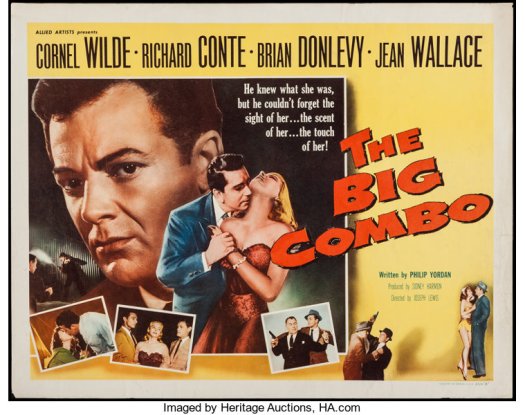
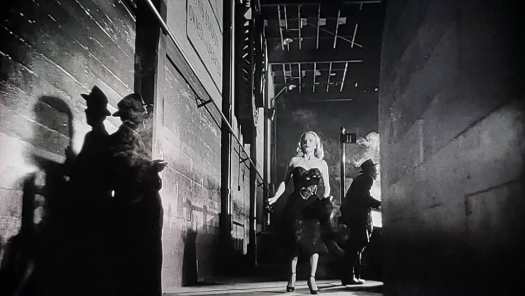
Happy Noir Year!: THE BIG COMBO (United Artists 1955)


gary loggins's avatarcracked rear viewer

(ATTENTION: There’s a surprise waiting for you at the end of this post, so read on…)

Joseph H. Lewis started his directing career with low-budget Westerns starring singing cowboy Bob Baker and East Side Kids programmers, and ended it back on the range doing epsiodes of THE RIFLEMAN, GUNSMOKE, and THE BIG VALLEY. In between, he created some of the finest films noir the genre has to offer: MY NAME IS JULIA ROSS , SO DARK THE NIGHT, THE UNDERCOVER MAN, and especially GUN CRAZY . His last big screen noir outing is the culmination of his work in the genre, 1955’s THE BIG COMBO.

The plot is fairly simple: Police Lt. Leonard Diamond is out to crack gangster Mr. Brown’s “combination”, which controls crime in the city. But Philip Yordan’s screenplay takes that plot and adds exciting twists and turns, indelible characters, and a level of violence audiences weren’t…

View original post 511 more words

New Recipe: HOW TO STUFF A WILD BIKINI (AIP 1965)


gary loggins's avatarcracked rear viewer

HOW TO STUFF A WILD BIKINI, the sixth entry in American-International’s “Beach Party” series, attempts to breathe new life into the tried-and-true  formula of sun, sand, surf, songs, and corny jokes. Frankie Avalon and Annette Funicello are still around as Frankie and Dee Dee, but in this go-round they’re separated; he’s in the Navy stationed on the tropical island of Goona-Goona, while Annette has to contend with the romantic enticements of Dwayne Hickman .

Frankie’s part amounts to a cameo, enlisting local witch doctor Buster Keaton (!!) to keep those girl-hungry beach bums away from Dee Dee (while he frolics unfettered with lovely Irene Tsu !). Keaton’s magic ain’t what it used to be, so he has his daughter conjure up a knockout named Cassandra, who first appears on the beach as an animated bikini. All the boys go ga-ga for Cassandra, including a go-go ad man named Peachy Keane…

View original post 455 more words

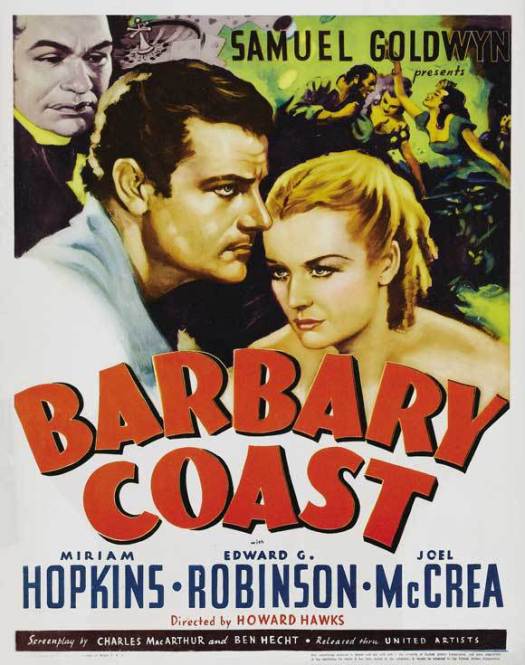
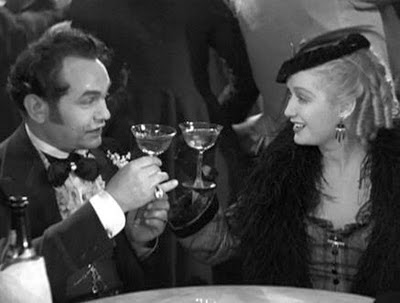
Fool’s Gold: BARBARY COAST (United Artists 1935)


gary loggins's avatarcracked rear viewer

BARBARY COAST probably would’ve been better had it been made during the Pre-Code era. Don’t misunderstand; I liked the film. It’s an entertaining period piece directed by Howard Hawks , with his trademark overlapping dialog and perfect eye for composition, rivaled by only a handful (Ford and Hitchcock spring immediately to mind). But for me, this tale of rowdy San Francisco during California’s Gold Rush was too sanitized by Hays Code enforcer Joseph Breen, who demanded major script changes by screenwriters Ben Hecht and Charles MacArthur.

The result is a film that’s just misses the classic status mark. It’s 1849, and Susan Rutledge arrives in Frisco to marry her rich boyfriend, who has struck it rich in the gold strike. When she finds out he’s been killed by gambling czar Luis Chandalis, owner of the Bella Donna saloon, avaricious Susan sets her sights on him. Chandalis becomes enamored of her…

View original post 495 more words

Horror On The Lens: Gammera The Invincible (dir by Noriaki Yuasu and Sandy Howard)


Okay, I’ll be the first to admit that 1966’s Gammera The Invincible is not really a horror film.  Maybe there was a time when people found the idea of a giant, fire-breathing turtle to be scary but I kind of doubt it.

But let’s think about this!  What better time is there to watch a movie about giant, fire-breathing turtle than in October?

Seriously, this is a fun movie and if you’ve got some time to kill this morning, I guarantee this movie will make you smile.

As I wrote in my 2014 review of this film, Gammera is one hell of a turtle.

Enjoy!

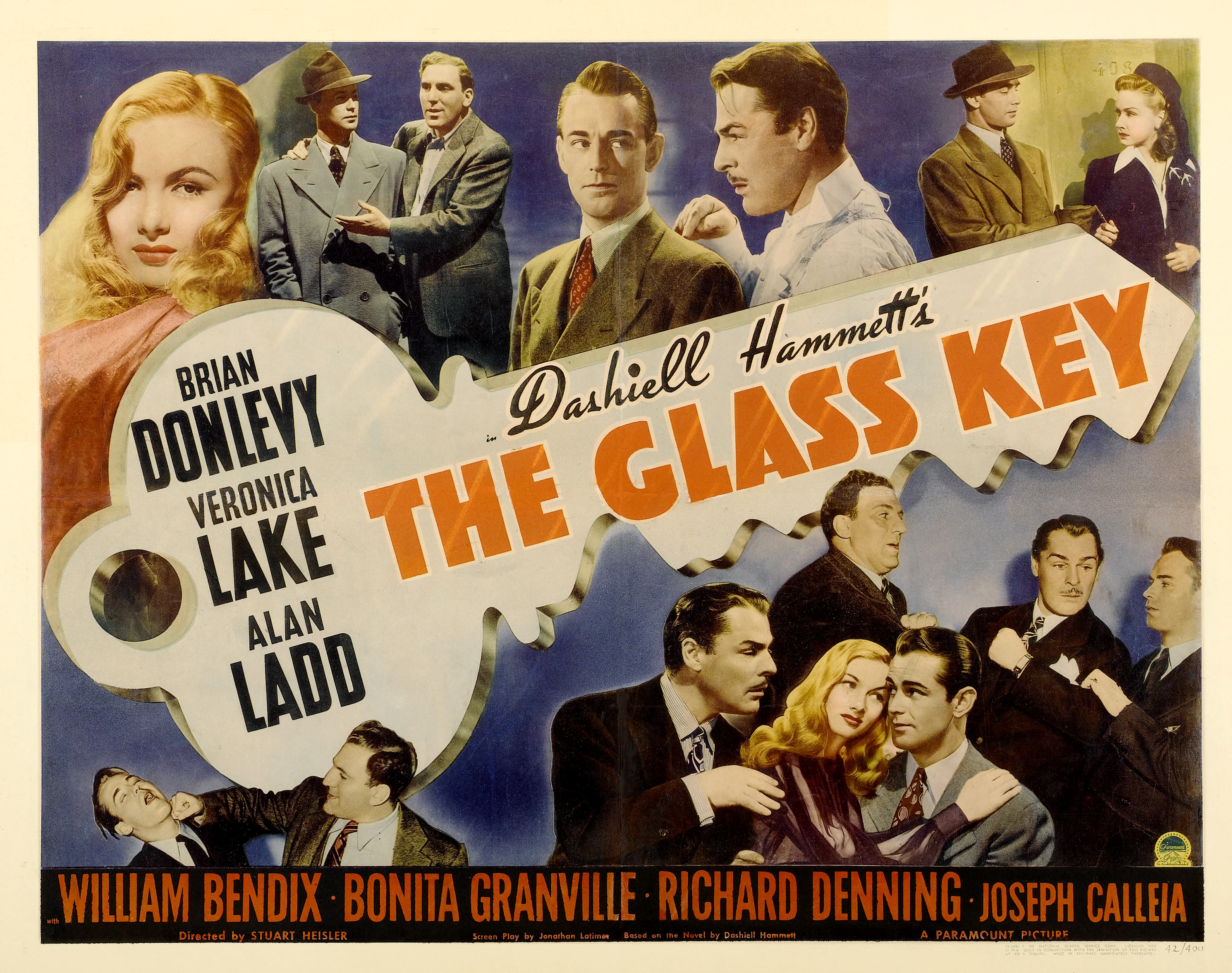
Strange Bedfellows: THE GLASS KEY (Paramount 1942)


gary loggins's avatarcracked rear viewer

glass1

Anyone who watches television, reads a newspaper, or surfs the Internet today knows the axiom “Politics is a dirty business” is dead on point. The mudslinging and brickbats are being tossed at record rates, and it just keeps escalating. Here at Cracked Rear Viewer, we’re just plain tired of all the nonsense. Ah, for the old days, when politics was much more genteel and civil, right? Wrong! Politics has always been a dirty business, proving another old adage, “There’s nothing new under the sun”. Case in point: the 1942 film THE GLASS KEY.

glass2

The story’s based on a novel by Dashiell Hammett, and was filmed once before in 1935 with George Raft, Edward Arnold, and Claire Dodd. In this version, Paramount chose to star their red-hot team of Alan Ladd and Veronica Lake, fresh off their hit THIS GUN FOR HIRE. Brian Donlevy takes the Arnold role as Paul Madvig, a…

View original post 909 more words

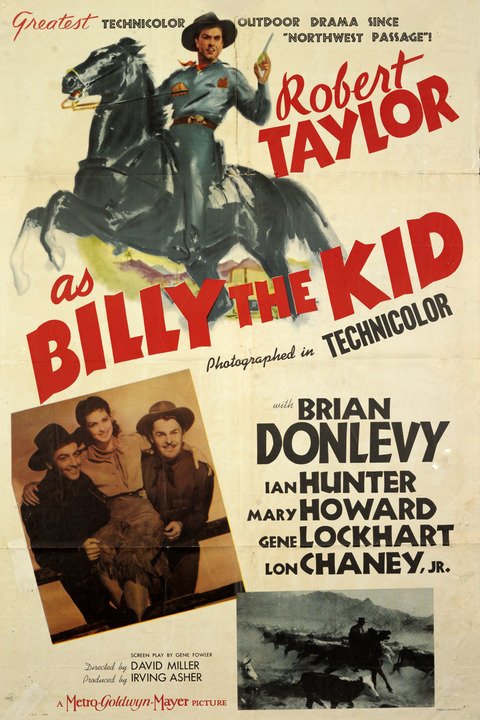
Saddle Sore: BILLY THE KID (MGM 1941)


gary loggins's avatarcracked rear viewer

billy1

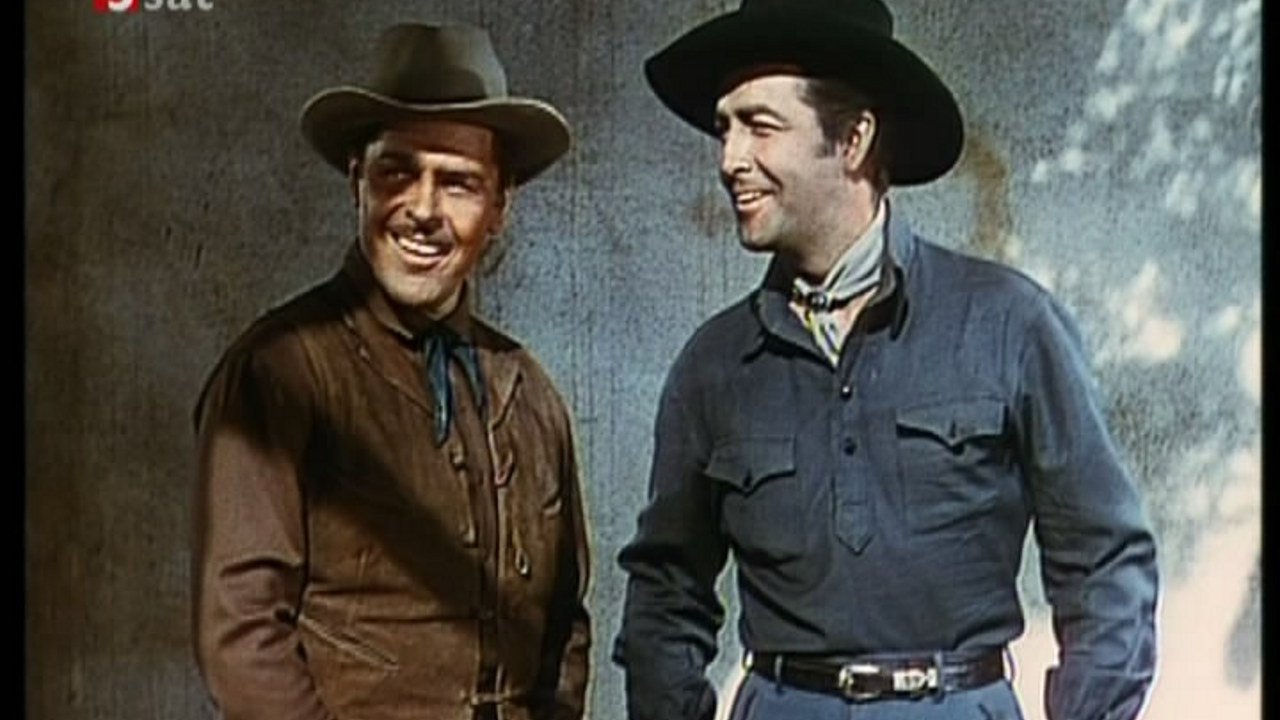
What kind of topsy-turvy world is this? Perennial bad guy Brian Donlevy is on the side of the law, loveable Gene Lockhart is the villain, and almost 30 Robert Taylor is BILLY THE KID. This 1941 Technicolor horse opera has only a passing resemblance to reality, and was actually a remake of a 1930 film starring Wallace Beery and Johnny Mack Brown, which depicted the outlaw’s legend a bit more truthfully… but not much!

billy2

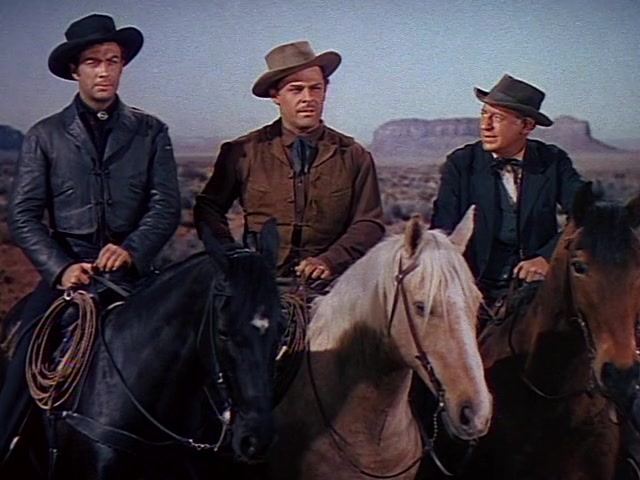
In this version, Billy joins up with ruthless cattleman Hickey, who’s out to takeover Lincoln County. They start a stampede of rival Keating’s cattle, and during the commotion Billy encounters childhood friend Jim Sherwood, now working for Keating. Billy and his pal Pedro switch sides, and Pedro takes a bullet for it. The Kid is out for revenge, but Keating’s cooler head prevails, and he sets out to seek help from the territorial governor.

billy3

But Keating doesn’t make it, as we…

View original post 534 more words

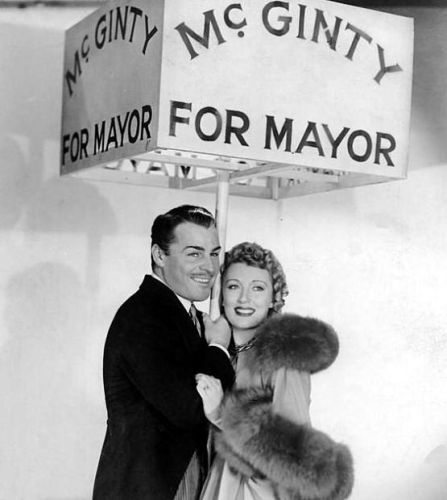
Shattered Politics #6: The Great McGinty (dir by Preston Sturges)


donlevy-angelus-mcginty_opt-1

 “This is the story of two men who met in a banana republic. One of them never did anything dishonest in his life except for one crazy minute. The other never did anything honest in his life except for one crazy minute. They both had to get out of the country.”

— The Great McGinty (1940)

For today’s final entry in Shattered Politics, we take a look at how elections are won north of the Mason-Dixon Line.

The Great McGinty begins in a bar located in an unnamed country in South America.  Tommy Thompson (Louis John Heydt) attempts to shoot himself but is stopped by philosophical bartender Dan McGinty (Brian Donlevy).  Tommy explains that he can never return to the United States because, in one moment of weakness, he stole some money.  McGinty replies that he can never return to the U.S. either.  Why?  “I was the Governor of a state, baby…” McGinty replies.

In flashback, McGinty explains how he came to power.  One day, while standing in a soup line, the homeless McGinty was approached by a local political operative (William Demarest) and offered $2.00 on the condition that he vote for a certain mayoral candidate.  McGinty agrees and then proceeds to vote 37 times.  When McGinty demands $74.00 for his efforts, he’s taken to the headquarters of the Boss (Akim Tamiroff, giving a wonderfully comedic performance).

The Boss is impressed with McGinty and, despite the fact that the two of them are constantly getting into fights with each other, he employs McGinty as a collector.  Eventually, he also arranges for McGinty to be elected alderman and then, running as a reform candidate, mayor.

Along the way, the Boss arranges for McGinty to get married.  McGinty’s wife (Muriel Angelus) originally has little respect for McGinty but, after they marry, she starts to realize that McGinty is not quite as bad as she originally assumed.  Eventually, she’s even impressed enough that she even stops seeing her boyfriend, George (Allyn Joslyn).

Meanwhile, the Boss arranges for McGinty to be elected governor.  However, once McGinty has won the election, he declares that he’s going to run an honest administration.  How does that turn out?  Well, it should be noted that the film opens with McGinty tending bar in South America…

The Great McGinty is a lot of fun and it’s interesting to think that this unapologetically sardonic look at American politics came out just a year after Mr. Smith Goes To Washington.  Imagine if Mr. Smith Goes To Washington had been told from the point of view of Edward Arnold’s Boss Taylor and you can guess what The Great McGinty is like.

If nothing else, The Great McGinty serves as a great reminder that political cynicism existed long before any of us cast our first vote.

http://www.youtube.com/watch?v=Nari4b23l6A