Today, the Shattered Lens wishes a happy birthday to the one and only Liza Minnelli. Here she is, in today’s scene that I love, performing Money with Joel Grey in 1972’s Cabaret.
Today, the Shattered Lens wishes a happy birthday to the one and only Liza Minnelli. Here she is, in today’s scene that I love, performing Money with Joel Grey in 1972’s Cabaret.
Though the Academy of Motion Picture Arts and Sciences claim that the Oscars honor the best of the year, we all know that there are always worthy films and performances that end up getting overlooked. Sometimes, it’s because the competition too fierce. Sometimes, it’s because the film itself was too controversial. Often, it’s just a case of a film’s quality not being fully recognized until years after its initial released. This series of reviews takes a look at the films and performances that should have been nominated but were,for whatever reason, overlooked. These are the Unnominated.
First released in 1983, Star 80 is an examination of fame, obsession, misogyny, and finally madness. All four of those qualities are exemplified in the character of Paul Snider (Eric Roberts), a man with a charming smile, a ludicrous wardrobe, and the personality of a pimp. When we first see Paul Snider, he’s naked and he’s covered in blood and he’s ranting about how the world is trying to destroy him. Even if he wasn’t holding a rifle, he would be terrifying. Suddenly, we flash back to a few years earlier. Snider is being dangled out a window by two men. Snider pathetically begs to be pulled back into the room. The men laugh at him before pulling him up. Snider, looking fairly ridiculous in a cheap suit that he probably thinks makes him look like a celebrity, fights off tears as he says he deserves to be treated with dignity.
Star 80 is based on a true story. Mariel Hemingway plays Dorothy Stratten, the actress and Playboy playmate who was murdered by Paul Snider. Snider, who often claimed credit for having “made” Dorothy, was married to her at the time, though Dorothy had filed for divorce and was dating director Peter Bogdanovich. Unwilling to let her go and return to being a small-time hustler, Snider shot Dorothy and then himself. Director Bob Fosse, who was best known for directing musicals like Cabaret and All That Jazz, was attracted to the story because he understood that type of world that produces sleazes like Paul Snider. According to Eric Robets, Fosse even said that he probably would have ended up like Paul Snider if not for his talent.
Snider, the film quickly establishes, really doesn’t have any talent beyond the ability to manipulate people who are too naïve to see through his bullshit. Snider wants to be a star. He wants to be rich. He wants people to kiss his ass. When he meets Dorothy, he sees her as his ticket. Dorothy’s mother (a poignant performance from Carroll Baker) sees straight through him from the start. Tragically, Dorothy doesn’t realize the truth abut who he is until they’re already in Hollywood. As Dorothy tries to break away from him, Paul desperately tries to find some sort of success, all the while complaining that the world is conspiring to keep him from being a man.
Eric Roberts dominates the film and it’s one of the scariest performances that I’ve ever seen. Roberts is convincing when he’s ranting and raving against the world that he feels is against him but what’s even more disturbing is that he’s convincing when he’s turning on the charm. Paul Snider may not be smart. Paul Snider may not be talented. But he know how to gaslight. He knows how to destroy someone’s fragile confidence, largely because his own confidence has been shattered so many times that he’s become an expert in exploiting insecurity. Snider is a tacky dresser and nowhere near as smooth as he thinks but, intentionally or not, he uses that to his advantage. He tries so hard to impress that it’s easy to see how someone could feel sorry for him and want to help him. However, because Fosse lets us know from the start what Snider is really going on inside of Sinder’s head, we never make the mistake of trusting him. We know who Paul Snider is because we’ve all known a Paul Snider.
Eric Roberts’s performance is so intense that it’s unfortunate but not surprising that it was overlooked at the 1983 Oscars. He was playing a truly repellent character and he did it so convincingly that I imagine many viewers had a hard time realizing that Eric Roberts was not Paul Snider but was instead an actor playing a terrible character. Some probably said, “Why should we honor such a loathsome character?” and again, the answer is because there are many Paul Sniders out there. Roberts captured much more than just one man’s breakdown. He captured a sickness at the heart of a fame-driven culture.
Of course, Paul Snider was not the only symptom of that sickness to be depicted in Star 80. Every man that Dorothy either uses her in some way or just views her as being a commodity. Hugh Hefner (Cliff Robertson) presents himself as being a fatherly mentor but Robertson plays him as being just as manipulative and ultimately narcissistic as Paul Snider. Director Aram Nicholas (Roger Rees, playing a character based on Peter Bogdanovich) seems to love Dorothy but their relationship still feels out-of-balance. Aram, afterall, is the director while Dorothy is the actress. The private detective (Josh Mosel) that Paul hires to spy on Dorothy seems to have no lingering guilty over the role he played. Even Snider’s roommate (David Clennon) is more interested in talking about his dog and his car then about the murder/suicide of two people with whom he lived.
It’s a dark film and not one to be watched when depressed. At the same time, it’s a portrait of obsessiveness, misogyny, and an overwhelming need to be “someone” that still feels relevant today. Along with Sweet Charity, it was the only Bob Fosse film not to be nominated for Best Picture. (This was back when there were only five best picture nominees. Three of the nominated films — Terms of Endearment, Tender Mercies, and The Right Stuff — hold up well. Two of the nominees — The Dresser and The Big Chill — are a bit more iffy.) Eric Roberts was not nominated for the best performance of his career. Again, it’s a shame but not a surprise. This was a dark and disturbing film, a true Hollywood horror story. One imagines that most members of the Academy wanted to escape it far more than they wanted to honor and be reminded of it.

Previous entries in The Unnominated:
“Bye bye life….
Bye bye happiness….
Hello loneliness….
I think I’m going to die….”
So sings Joe Gideon (Roy Scheider) at the end of the 1979 film, All That Jazz. And he’s right! It’s hardly a spoiler to tell you that All That Jazz ends with Joe Gideon in a body bag. It’s not just that Gideon spends a good deal of the film flirting with the Angel of the Death (Jessica Lange). It’s also that, by the time the film ends, we’ve spent a little over two hours watching Joe engage in non-stop self-destruction. Joe is a director and a choreographer who is so in love with both death and show business that his greatest triumph comes from choreographing his own death.
Joe wakes up every morning, pops a handful of pills, stares at himself in the mirror and says, “It’s showtime!” He spends his day choreographing a Broadway play. He spends his nights editing his latest film, a biopic about Lenny Bruce called The Stand-Up. He’s particularly obsessed with a long monologue that Lenny (played by Cliff Gorman) delivers about the inevitability of death. When he’s not choreographing or editing, he’s smoking, drinking, and cheating on his girlfriend (Ann Reinking). It’s obvious that he’s still in love with his ex-wife (Leland Palmer) and that she loves him too but she’s also too smart to allow herself to get fully sucked back into his self-destructive orbit. He loves his daughter (Erzsébet Földi) and yet still ignores her when she begs him not to die.
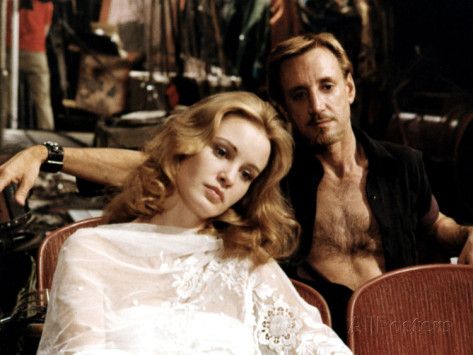
Joe and the Angel of Death
When Joe has a heart attack and ends up in the hospital, he doesn’t change his behavior. Instead, he and the Angel of Death take a look back at his youth, which was spent hanging out in strip clubs and desperately trying to become a star. Joe Gideon, we see, has always know that he’s going to die early so he’s pushed himself to accomplish everything that he can in what little time he has.
As a result of his drive and his refusal to love anyone but himself, Gideon is widely recognized as being an artistic genius. However, as O’Connor Flood (Ben Vereen, essentially playing Sammy Davis, Jr.) puts it, “This cat allowed himself to be adored, but not loved. And his success in show business was matched by failure in his personal relationship bag, now – that’s where he really bombed. And he came to believe that show business, work, love, his whole life, even himself and all that jazz, was bullshit. He became numero uno game player – uh, to the point where he didn’t know where the games ended, and the reality began. Like, for this cat, the only reality – is death, man. Ladies and gentlemen, let me lay on you a so-so entertainer, not much of a humanitarian, and this cat was never nobody’s friend. In his final appearance on the great stage of life – uh, you can applaud if you want to – Mr. Joe Gideon!”
Now, of course, Connor doesn’t really say all that. Gideon just imagines Connor saying that before the two of them launch into the film’s final musical number, Bye Bye Life. It should be a totally depressing moment but actually, it’s exhilarating to watch. It’s totally over-the-top, self-indulgent, and equally parts sincere and cynical. It’s a Bob Fosse production all the way and, as a result, All that Jazz is probably about as fun as a movie about the death of a pathological narcissist can be. This is a film that will not only leave you thinking about mortality but it will also make you dance.

All That Jazz was Bob Fosse’s next-to-last film (he followed it up with the even darker Star 80) and it’s also his most openly autobiography. Roy Scheider may be playing Joe Gideon but he’s made-up to look exactly like Bob Fosse. Like Joe Gideon, Bob Fosse had a heart attack while trying to direct a Broadway show and a film at the same time. Gideon’s girlfriend is played by Fosse’s real-life girlfriend. The character of Gideon’s ex-wife is clearly meant to be a stand-in for Gwen Verdon, Fosse’s real-life ex-wife. When the film’s venal Broadway producers make plans to replace the incapacitated Gideon, Fosse is obviously getting back at some of the producers that he had to deal with while putting together Chicago. It’s a confessional film, one in which Fosse admits to his faults while also reminding you of his talent. Thank God for that talent, too. All that Jazz is self-indulgent but you simply can’t look away.

It helps that Gideon is played by Roy Scheider. Originally, Scheider’s Jaws co-star Richard Dreyfuss was cast in the role but he left during rehearsals. Dreyfuss, talented actor that he was, would have been all-wrong for the role of Gideon. One can imagine a hyperactive Dreyfuss playing Gideon but one can’t imagine actually feeling much sympathy for him. Scheider, on the other hand, brings a world-weary self-awareness to the role. He plays Gideon as a man who loves his talent but who hates himself. Scheider’s Joe Gideon is under no illusions about who he is or how people feel about him. When Fosse’s own instincts threatens to make the film unbearably pretentious, Scheider’s down-to-Earth screen presence keeps things grounded.
I love All That Jazz. (Admittedly, a good deal of that love is probably connected to my own dance background. I’ve known my share of aspiring Joe Gideons, even if none of them had his — or Bob Fosse’s — talent or drive.) It’s not for everyone, of course. Any musical that features actual footage of open heart surgery is going to have its detractors. For the record, Stanley Kubrick called All That Jazz “the best film I think I’ve ever seen.” It won the Palme d’Or at Cannes and it was nominated for Best Picture, though it ultimately lost to the far more conventional Kramer vs. Kramer.
All that Jazz would be the last of Fosse’s film to receive a best picture nomination. (Fosse directed five features. 3 of them were nominated for Best Picture, with the other two being Cabaret and Lenny.) 8 years after filming his cinematic doppelganger dying during heart surgery, Fosse would die of a heart attack. Gwen Verdon was at his side.

Yes, it’s true. Long before the creator of The Marvelous Mrs. Maisel was even born, Lenny Bruce was a real comedian who was challenging the status quo and going to jail for using words in his routine that were, at the time, considered to be so obscene that they couldn’t even be uttered in public. Today, of course, we hear those words and they’re so commonplace that we barely even notice. But, in the 50s and the early 60s, it was not uncommon for Lenny Bruce to get arrested in the middle of his act. Club owners could literally be fined for allowing Lenny Bruce to perform on their stage. At the height of his fame, it was a struggle for Lenny to find anyone willing to even consider booking him.
Whether it was his intention or not, Lenny Bruce became one of the first great warriors for the 1st amendment. It made him famous and a hero to many. Many people also believe that the pressure of being under constant legal threat led to his death from a drug overdose in 1966. Lenny Bruce was only 40 years old when he died but he inspired generations of comedians who came after him. It can be argued that modern comedy started with Lenny Bruce.
Directed by Bob Fosse and based on a play by Julian Barry, 1974’s Lenny takes a look at Lenny Bruce’s life, comedy, legal battles, and eventual death. As he would later do in the thematically similar Star 80, Fosse takes a mockumentary approach to telling his story. Clips of Lenny Bruce (played by Dustin Hoffman) performing are mixed in with “interviews” with actors playing the people who knew him while he was alive. Because the story is told out of chronological order, scenes of a young and enthusiastic Lenny are often immediately followed by scenes of a burned-out and bitter Lenny reading from the transcripts of his trial during his stand-up. Fosse never forgets to show us the audience listening as Lenny does his act. Most of them laugh at Bruce’s increasingly outrageous comments but, to his credit, Fosse never hesitates to show us the people who aren’t laughing. Lenny Bruce, the film tells us, was too honest to ever be universally embraced.
The film doesn’t hesitate to portray Lenny Bruce’s dark side. For much of the film, Lenny is not exactly a likable character. Even before his first arrest, Lenny comes across as being a narcissist who is cruelly manipulative of his first wife, stripper Honey Harlow (Valerine Perrine). As opposed to the somewhat dashing Lenny of The Marvelous Mrs. Maisel, Dustin Hoffman’s Lenny Bruce comes across as someone who you would not necessarily want to be left alone with. The film’s Lenny is a hero on stage and frequently a hypocrite in his private life but that seems to be the point of the movie. Lenny argues that one of the reasons why Lenny Bruce could so perfectly call out society for being fucked up was because he was pretty fucked up himself.
As with all of his films, Lenny is as much about Bob Fosse as it is about Lenny Bruce. As a director, Fosse often seems to be more interested in Bruce’s early days, when he was performing in low-rent strip clubs and trying to impress aging vaudevillians, than in Bruce’s later days as a celebrity. (The world in which the young Lenny Bruce struggled was a world that Fosse knew well and its aesthetic was one to which he frequently returned in his films and stage productions.) It’s also easy to see parallels between Lenny’s uneasy relationship with Honey and Bob Fosse’s own legendary partnership with Gwen Verdon. The film’s grainy black-and-white cinematography captures not only the rough edges of Lenny’s life but also perhaps Fosse’s as well. Just as Lenny Bruce performed confessional stand-up comedy, Lenny feels like confessional filmmaking.
Of course, it’s not always a pleasant film to watch. Dustin Hoffman does a very good job of capturing Lenny Bruce’s drive but he doesn’t really have the natural comedic timing necessary to be totally convincing as a stand-up comedian. (The film sometimes seems to forget that, as much as Lenny Bruce was admired for his first amendment activism, he was also considered to be a very funny stand-up.) Still, it’s a valuable film to watch. It’s a document of history, a reminder of a time when you actually could get arrested for saying the “wrong” thing. Some people would say that we’re returning to those times and it’s easy to imagine that the real Lenny Bruce (as opposed to the idealized version of him) would not be welcome to perform on most college campuses today. One can only imagine how modern audiences would react to a part of Lenny’s stand-up where he repeats several racial slurs over and over again. (If Lenny Bruce had lived to get a twitter account, he would be getting cancelled every week.) Lenny‘s vehement celebration of freedom of speech is probably more relevant in 2020 than it was in even 1974.
Lenny received several Oscar nominations, including best picture. However, 1974 was also the year of both The Godfather, Part II and Chinatown so Lenny failed to win a single Oscar.
(Interestingly enough, Fosse’s previous film, Cabaret, was also prevented from winning the award for best picture by the first Godfather, though Fosse did win best director over Francis Ford Coppola. Five years after the release of Lenny, Fosse would make All That Jazz, which was partially based on his own health struggles that he suffered with during the filming Lenny. In All That Jazz, Cliff Gorman — who starred in the stage production of Lenny — is frequently heard reciting a Lenny Bruce-style monologue about death. Fosse’s All That Jazz would again compete with a Francis Ford Coppola production at the Oscars. However, Kramer vs Kramer — starring Lenny‘s Dustin Hoffman — defeated both All That Jazz and Apocalypse Now for the big prize. 22 years later, Chicago, which was based on Fosse’s legendary stage production and which featuring the song that gave All That Jazz it’s name — would itself win best picture.)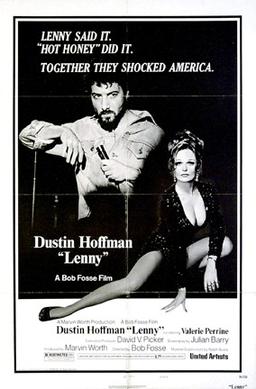
4 Shots from 4 Films is just what it says it is, 4 shots from 4 of our favorite films. As opposed to the reviews and recaps that we usually post, 4 Shots from 4 Films lets the visuals do the talking!
Eric Roberts, who turned 62 years old today, has appeared in over 500 movies since 1978. Here are 4 shots from 4 of them.
4 Shots From 4 Films

Star 80 (1983, dir by Bob Fosse)

Doctor Who: The Movie (1996, dir by Geoffrey Sax)

The Dark Knight (2008, dir by Christopher Nolan)

Stalked By My Doctor: The Return (2016, dir by Doug Campbell)
Tuesday night was election night so, of course, everyone on twitter was talking about politics. People were making fun of Chris Christie’s weight, accusing Barack Obama of being a communist, and going on and on about the Tea Party. Some of them were very liberal and some of them were very conservative and quite a few of them made a big deal about being in the middle. However, the one thing that many of them had in common was that, regardless of what they believed, they were convinced that they had the best plan for America and that anyone who disagreed with them had to be idiotic, evil, or both.
That, by the way, is why I tend to stay off of twitter whenever there’s something political going on. It’s far too stressful having to deal with so many people convinced that tomorrow belongs exclusively to them.
Myself, I believe in freedom of choice and the importance of the individual. That’s one reason why twitter bothers me when it comes to politics. Everyone has something to say but nobody says it as an individual. Instead, there’s a mob mentality that I find difficult to take.
Today’s scene that I love is all about that political mob mentality.
Bob Fosse’s 1972 film Cabaret takes place in pre-World War II Nazi Germany. In this scene, writer Brian (Michael York) and the decadent aristocrat Max (Helmut Griem) visit a Berlin beer garden. As they discuss their own personal concerns, they are interrupted by a boy who singing a patriotic song called “Tomorrow Belongs To Me.”
Fosse begins the song with a close-up of the boy’s angelic face, only gradually moving the camera to reveal that the boy is dressed in the uniform of the Hitler youth. As the boy’s singing steadily grows more and more strident, the other Germans at the beer garden join in. As more and more voices join in, the song goes from being hopeful and optimistic to being ominous and threatening.
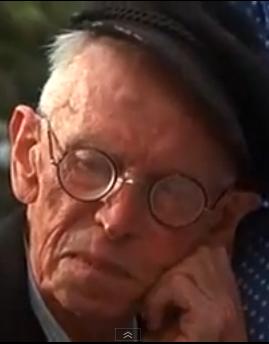
Most significantly, only one old man declines to join in. Instead, that man can only watch the scene with a weary sadness that indicates that he’s survived enough to know better.
It’s a powerful and disturbing scene and one that serves as a powerful warning against the political mob mentality.
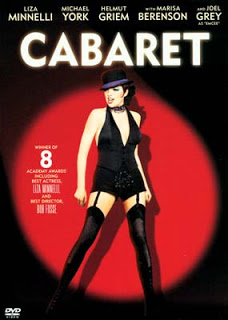
When I decided that I was going to post a series of dance scenes that I love, I knew I’d have to include at least one scene from Cabaret.
But which scene?
Bob Fosse’s 1972 film is a treasure trove for those of us who love dance.
In the end, I went with Money because it’s true.
Money does make the world go around.

