Porky’s (1981, directed by Bob Clark)


Porky’s.

On the one hand, it’s a crude, juvenile, and raunchy sex comedy where a bunch of teenagers in 1960s Florida think that it’s a hoot and not at all problematic to spy on the girls shower and to hire a black man to scare all of their (white) friends.

On the other hand, it’s a heartfelt plea for tolerance where Tim (Cyril O’Reilly) finally stands up to his abusive father (Wayne Maunder) and makes friends with Brian Schwartz (Scott Colomby), who is apparently the only Jewish person living in Angel Beach, Florida.

What’s strange about Porky’s is that everyone knows it for being the template for almost every bad high school film that followed, with tons of nudity, jokes about sex, and characters with names like Pee Wee, Miss Honeywell, Cherry Forever, and Porky.  But, when you sit down and watch the movie, you discover that, for all the raunchiness, it actually devotes even more time to Brian Schwartz dealing with the local bigots than it does to any of the things that it’s known for.  Everyone remembers the shower scene but it’s obvious the film’s heart is with Brian and his attempts to make the world a better place.  Porky’s is a sex comedy with a conscience.

Porky’s is an episodic film about a group of teenage boys trying to get laid and also trying to get revenge on the owner of the local brothel.  There’s a lot of characters but I’d dare anyone to tell me the difference between Billy, Tommy, and Mickey.  I went through the entire movie thinking that Billy was Mickey until I turned on the subtitles and discovered who was who.  Porky’s has a reputation for being a terrible movie but it’s actually a pretty accurate depiction of the way that most men like to imagine how their high school years went.  It captures the atmosphere of good-spirited teenage hijinks if not the reality.

One of the interesting things about Porky’s is that Bob Clark went from directing this to directing A Christmas Story.  The innocence of A Christmas Story might seem like it has nothing in common with raunchiness of Porky’s but, actually, they’re both nostalgic films that are set in an idealized past.  (If you still think A Christmas Story has nothing in common with Porky’s, just remember that Ralphie didn’t actually say “fudge.”)  Of course, A Christmas Story struggled at the box office and only became a hit when it was released on video while Porky’s is still the most successful Canadian film to ever be released in the U.S.  Sex sells.  As cool as it was to see Brian Schwartz stand up for himself, I doubt the people who made Porky’s a monster hit were buying their tickets because they had heard the film struck a blow against anti-Semitism.  They were going because they knew there was a shower scene.

Porky’s deserves its reputation for being a not-so great movie but I would be lying if I said that I didn’t laugh more than once while watching it.  (Of course, I still didn’t laugh as much as the characters in the films laughed.  I’ve never seen a cast that was as apparently amused with themselves as the cast of Porky’s.)  There’s a lot of bad moments but it’s hard not to crack a smile when Miss Honeywell demonstrates why she’s known as Lassie or when one of the coaches suggests that wanted posters can be hung around the school to help catch the shower voyeur.  Plus, everyone learns an important lesson about tolerance and how to destroy a brothel.  As bad as it is, it’s hard to really dislike Porky’s.

4 Shots From 4 Films About The London Fog: The Lodger, A Study In Terror, Murder by Decree


4 Shots From 4 Films is just what it says it is, 4 shots from 4 of our favorite films. As opposed to the reviews and recaps that we usually post, 4 Shots From 4 Films lets the visuals do the talking.

Today, we celebrate the horrors of the London Fog!

4 Shots From 4 Films About The London Fog

The Lodger (1927, dir by Alfred Hitchcock)

The Lodger (1944, dir by John Brahm)

A Study in Terror (1965, dir by James Hill)

Murder By Decree (1979, dir by Bob Clark)

4 Shots From 4 Films: Special Bob Clark Edition


4 Shots From 4 Films is just what it says it is, 4 shots from 4 of our favorite films. As opposed to the reviews and recaps that we usually post, 4 Shots From 4 Films is all about letting the visuals do the talking.

This October, I am going to be using our 4 Shots From 4 Films feature to pay tribute to some of my favorite horror directors, in alphabetical order!  That’s right, we’re going from Argento to Zombie in one month!

Bob Clark may be best remembered for directing the holiday classic, A Christmas Story, but he started out his career as a horror filmmaker.  Before he spread Christmas cheer with A Christmas Story, he spread Christmas fear with Black Christmas.

4 Shots From 4 Films

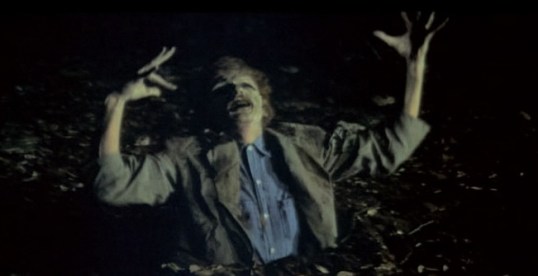
Children Shouldn’t Play With Dead Things (1972, dir by Bob Clark)

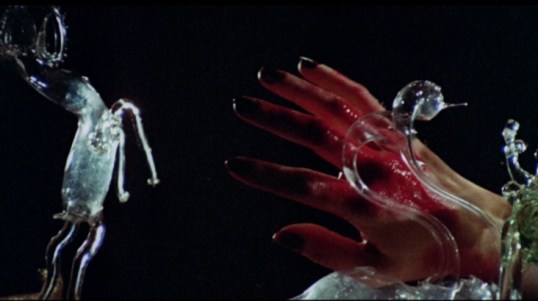
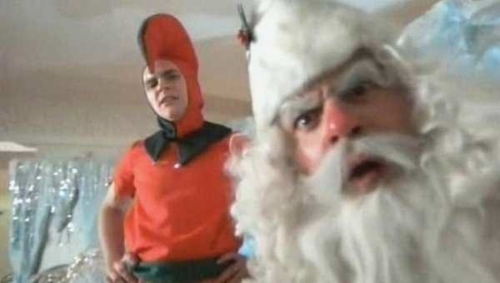
Black Christmas (1974, dir by Bob Clark)

Deathdream (1974, dir by Bob Clark)

Murder By Decree (1979, dir by Bob Clark)


4 Shots From 4 Holiday Films: A Christmas Story, Brazil, Die Hard, Christmas Vacation


4 Shots From 4 Films is just what it says it is, 4 shots from 4 of our favorite films. As opposed to the reviews and recaps that we usually post, 4 Shots From 4 Films is all about letting the visuals do the talking.

4 Shots From 4 Holiday Films

A Christmas Story (1983, dir by Bob Clark)

A Christmas Story (1983, dir by Bob Clark)

Brazil (1985, dir by Terry Gilliam)

Brazil (1985, dir by Terry Gilliam)

Die Hard (1988, dir by John McTiernan)

Die Hard (1988, dir by John McTiernan)

National Lampoon's Christmas Vacation (1989, dir by Jeremiah Chechik)

National Lampoon’s Christmas Vacation (1989, dir by Jeremiah Chechik)

4 Shots From 4 Holiday Films: Silent Night Bloody Night, Black Christmas, The Silent Partner, Christmas Evil


4 Shots From 4 Films is just what it says it is, 4 shots from 4 of our favorite films. As opposed to the reviews and recaps that we usually post, 4 Shots From 4 Films is all about letting the visuals do the talking.

4 Shots From 4 Holiday Films

Silent Night, Bloody Night (1972, dir by Theodore Gershuny)

Silent Night, Bloody Night (1972, dir by Theodore Gershuny)

Black Christmas (1974, dir by Bob Clark)

Black Christmas (1974, dir by Bob Clark)

The Silent Partner (1978, dir by Daryl Duke)

The Silent Partner (1978, dir by Daryl Duke)

Christmas Evil (1980, dir by Lewis Jackson)

Christmas Evil (1980, dir by Lewis Jackson)

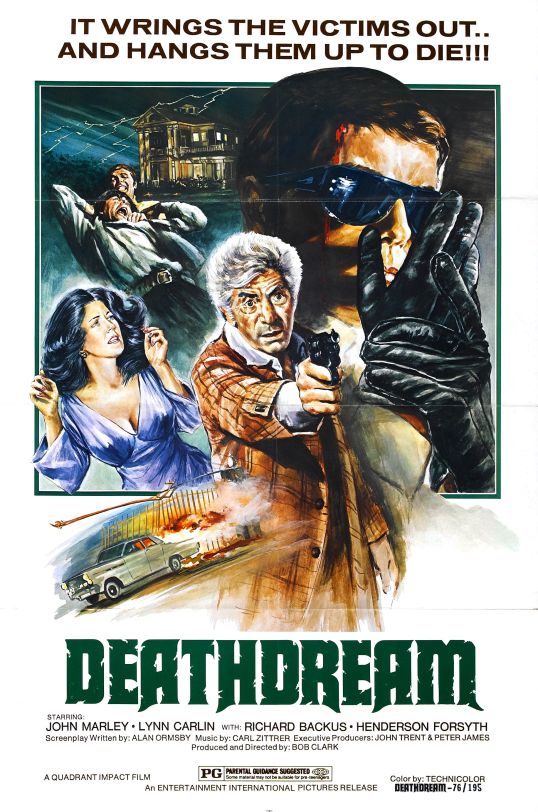
The TSL’s Daily Horror Grindhouse: Deathdream (dir by Bob Clark)


deathdream_poster_01

The 1974 film Deathdream opens with American soldier Andy Brooks (played by Richard Backus) on patrol in Vietnam. When he’s suddenly shot by an unseen sniper, he hears his mother’s voice calling out to him, telling him that he promised to come home. With the voice filling his head, Andy closes his eyes.

Sometime later, back in America, Andy’s family has been informed that Andy was killed in action. His father (John Marley, who you might recognize as the man who played Jack Woltz in The Godfather) and his younger sister (Anya Ormsby) have managed to accept the fact that Andy is dead but his mother (Lynn Carlin) remains in denial. Oddly enough, his mother is apparently proven to be correct in her doubts when Andy suddenly shows up at the front door.

The family (and, eventually, the entire community) welcomes Andy home but it quickly becomes apparent that Andy has returned as a far different person than when he left. Now pasty and emotionless, Andy spends most of his day sitting around listlessly. It’s only at night that Andy seems to have any energy and he spends those hours wandering around town and hanging out in the local cemetery.

It quickly becomes apparent to his father that Andy is no longer quite human. However, his devoted mother continues to insist that nothing is wrong with Andy and, once it becomes apparent just what exactly Andy is doing in order to survive, she becomes just as fanatical about protecting him as his father is about destroying him.

Not surprisingly, Deathdream is more than just a zombie film.  When Andy suddenly shows up on his family’s doorstep, he’s more than just a decaying monster.  He’s also a metaphor for the unease that viewers in the 70s would have felt about the state of American society.  (Of course, in many ways, contemporary viewers share that same unease.)  Andy goes off to war and it literally robs him of his humanity.  I would also argue that, in its way, Deathdream serves as a satire of the type of complacent society that sends young people off to fight for their lives and then expects them to come back exactly the same as they were before they left.  No matter how strange Andy’s behavior becomes, the people around him are willing to either ignore it or make excuses for it.  Andy’s mother emerges as a stand-in for everyone who willfully refuses to acknowledge the human consequences of war.

Deathdream is one of those wonderful horror films that deserves to be better known than it is. Deathdream was an early credit for the legendary effects artist Tom Savini and, while the film itself is not especially gory, Savini’s work can definitely be seen in the scenes where Backus’s body slowly decays. Screenwriter Alan Ormsby and director Bob Clark (who later went on to direct the far different A Christmas Story) perfectly creates and maintains a deceptively low-key atmosphere of perpetual unease while the cast elevates the entire film. Backus makes for an all-too plausible ghoul and Marley is great as a man struggling to understand what his son has become. The film is totally stolen, however, by Lynn Carlin who is both poignant and frightening as Andy’s devoted mother.

If you haven’t discovered Deathdream yet, this Halloween is the perfect season to do so.

http://www.youtube.com/watch?v=4oUyCQ0A3cs

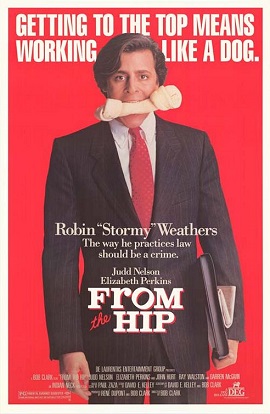
Insomnia File No. 8: From the Hip (dir by Bob Clark)


What’s an Insomnia File? You know how some times you just can’t get any sleep and, at about three in the morning, you’ll find yourself watching whatever you can find on cable? This feature is all about those insomnia-inspired discoveries!

From_the_Hip_(film)

Last night, if you discovered that you couldn’t get any sleep around two in the morning, you could have turned to Showtime and watched the 1987 film, From The Hip.

In From the Hip, Judd Nelson plays a character named Robin Weathers.  Of course, his nickname is Stormy.  Robin has just graduated from law school and is working at a prestigious law firm.  He’s ambitious, he’s outspoken, and he’s totally frustrated.  As his co-workers (played, quite well, by David Alan Grier and Dan Monahan) continually remind him, nobody gets to try a case during their first year out of law school.  They advise him to be patient and to wait his turn.

However, a man who is capable of being patient would not be nicknamed Stormy.  It just wouldn’t make any sense.  So, Stormy Weathers schemes his way into the courtroom.  One morning, he intentionally withholds information from the senior partners, going out of his way to keep them from realizing that a trial is scheduled to begin that afternoon.  When senior partner Craig Duncan (Darren McGavin) discovers what Stormy has done, he fires him and makes sure that he never get hired at another law firm … oh wait.  No, he doesn’t because that would make too much sense.  Instead, he allows Stormy to try the case because, at this point, Stormy is the only one who knows anything about it.

The case is a simple assault case that involves two bankers and should be resolved easily but Stormy manages to drag it out for several days and his flamboyant style catches the attention of the media.  The other partners in the law firm — who are all old and boring — want to fire Stormy but Stormy’s client says that, if Stormy is fired, he’ll take his business and his money elsewhere.  Stormy becomes a minor celebrity but — in a rather clever little twist — it turns out that he and the prosecuting attorney are old friends from law school and they conspired to make each other look good.

Anyway, Stormy is now so famous that he gets assigned to defend a college professor, named Benoit (John Hurt), who has been accused of murder.  When it quickly becomes obvious that Benoit is not only guilty but will probably murder again, Stormy is forced to choose between ambition and morality…

When my friend Evelyn and I first started to watch From the Hip last night, I really thought I was going to hate it.  The hot pink neon credits screamed, “Bad 80s movie!” and, because I happen to know quite a few lawyers, I tend to be a 100 times more critical of movies about lawyers than I am when it comes to movies about, say, homicidal fishermen.

And, honestly, From The Hip is a heavily flawed film.  Judd Nelson is miscast and the scenes with his politically conscious girlfriend (Elizabeth Perkins) are painfully shallow and reek of limousine liberalism.  But, if you can get through the weak opening, the film itself is watchable and enjoyable in a dumb sort of way.  John Hurt does a great job as a sociopath and, miscast as he may be, it’s still fun to watch Nelson go insane in court.

From The Hip is not a great film but, in its way, it’s an enjoyable little time capsule.  Believe it or not, there was a time when Judd Nelson starred in a movies that were actually released in theaters.

Previous Insomnia Files:

  1. Story of Mankind
  2. Stag
  3. Love Is A Gun
  4. Nina Takes A Lover
  5. Black Ice
  6. Frogs For Snakes
  7. Fair Game


And now…6 More Trailers


Hi, everyone!  Sorry for the delay in getting out this latest edition of Lisa Marie’s Favorite Grindhouse and Exploitation Film Trailers.  What can I say?  The holidays are a crazy, crazy time.  If you promise to keep reading and watching then I promise to not be late again in the future.  Deal?  Deal.

And now, without further delay, here’s 6 more trailers!

1) Silent Night, Deadly Night 3: Better Watch Out (1989)

This film was directed by Monte Hellman, who directed some of the best films of the 60s and 70s.  So, in case you were wondering what you get for directing a work of art like Two-Lane Blacktop, well, here you go.

2) Black Christmas (1974)

Continuing the holiday theme, here is the trailer for the original Black Christmas.  This film was directed by the late Bob Clark, who later went on to direct a totally different Christmas movie called A Christmas Story.

3) Madhouse (1974)

I love this trailer for the melodramatic opening.  I love the way the old grindhouse and exploitation movies would literally dare filmgoers to stay away.  That takes confidence!

4) The Freakmaker (1974)

With a title like The Freakmaker, it has to be good.

5) The Creatures The World Forgot (1971)

The World, I am sure, had its reasons for forgetting.

6) Prehistoric Women (1967)

This film is also known as Slave Girls and I’m sure there’s probably prints out there entitled Slave Women and Prehistoric Girls as well. 

Lisa Marie Does Murder By Decree (Dir. by Bob Clark)


A week ago, I had a very odd dream, one that was more disturbing than frightening.  I saw myself walking down a fog-covered street in London.  Simply by the way I was dressed and the distant sounds of horses crossing cobblestone streets, I knew that this was towards the end of the 19th century.  I walked down the street, aware that there were people near me who I could hear but couldn’t see because of the thick fog.  Finally, I reached a shabby-looking boarding house.  As I watched myself starting to open the front door, I realized that, in my dream, I was Mary Kelley, the final victim of Jack the Ripper.  And, by stepping into that boarding house, I was heading towards my own death.  That’s when I woke up.

Over on my twitter profile, I describe myself as being a “sweet little thing with morbid thoughts.”  I guess my fascination with the mystery of Jack the Ripper is an example of those morbid thoughts.  Out of all of the Ripper’s victims, Mary Kelley has always been the one that I’ve felt “closest” to.  She was murdered on November 9th, 1888.  I was born on November 9th, 1985.  Like me, she was a fallen Irish Catholic.  Like me, she had red hair.  While the other Ripper victims were all in their 40s, Kelley was only 25 years old and, for the longest time, I believed I was destined to die between my 25th and 26th birthdays.  (I’m 25 years old so hopefully, that was just my imagination working overtime.)  I think what truly made Kelly’s murder stand out in my mind is that she was killed in her own room, probably attacked while she was either asleep or passed out.  Being attacked while asleep has always been one of my phobias, one of the reasons why I’m often happier with insomnia than sleep.

Still, until my dream, I had given much thought to Jack the Ripper or any of his victims for quite some time.  After the dream, I ordered a copy of The Jack The Ripper Encyclopedia from Amazon and then I rewatched my personal favorite of all the Jack the Ripper films, Bob Clark’s Murder By Decree.

Released in 1979, Murder by Decree mixes the facts of the Ripper case and the fictional characters of Sherlock Holmes and Dr. Watson with the same Royal Conspiracy theory that lies at the heart of the better known film From Hell.  Unlike From Hell, Murder By Decree is an almost bloodless film.  Instead of emphasizing the savagery of the Ripper murders, Clark chose to focus on creating an oppresively grim and paranoid atmosphere.  Whether it’s the ominous image of the Ripper’s carriage slowly moving through the London fog or Holmes’ visit to a nightmarish insane asylum, Clark’s London is a grim and forbidding dreamscape that almost seems to have sprung from some lost example of German expressionism.

Into this dark and oppressive atmosphere, Murder By Decree drops the familiar and comforting characters of Holmes and Watson (played, respectively, by Christopher Plummer and James Mason).   I have to admit that I’ve never actually been able to bring myself to read any of the Holmes stories (though I’ve tried) but the characters are both so iconic that I feel as if I had.  Both Holmes and Jack the Ripper are characters that everyone feels they knew about even if they’re not sure when they first heard of them.   Though this might sound rather gimmicky to have these two characters meet, a good deal of the film’s strength comes  from the contrast between the nostalgic innocence of Holmes and Watson and the harsh reality of Jack the Ripper’s London.  By the end of the film, when Holmes’ voice cracks as he describes the conspiracy behind the Ripper movies, he’s gone from being an icon to being a stand-in for everyone who has ever been disillusioned by what they previously believed in.

Plummer makes for a surprisingly physical Holmes but he does a good job with the role, bringing a surprising vulnerability to the detective.  James Mason, meanwhile, makes for a perfect sidekick and he and Plummer both have the type of chemistry that Robert Downey, Jr. and Jude Law could only dream about.  The rest of the cast is made up of familiar English and Canadian character actors and they all give memorable performances.  Donald Sutherland is excellent as a haunted psychic but my favorite supporting performance probably comes from David Hemmings who plays a shadowy police inspector.  This is because every time I see Hemmings on-screen, I’m reminded of Dario Argento’s Deep Red 

If I do have any issues with this film, it’s that it promotes the long discredited Royal/Masonic Conspiracy as a solution.  (This theory will be familiar to anyone who has seen or read From Hell.)  However, of all the various solutions that have been offered up in an attempt to explain and understand Jack the Ripper, the whole political conspiracy angle is undoubtedly the most cinematic and Clark makes good use of it here.  This is a film in which a growing sense of paranoia and unease seems to pervasively fill every scene just as surely as the London fog.  The viewer, in the end, is thankful to actually have the familiar characters of Holmes and Watson to identify with because otherwise, the worldview of Murder By Decree is almost unbearably dark.

By the way, the role of Mary Kelley in this film is played by a fellow redhead, the Canadian actress Susan Clark who tended to show up in a lot of low-budget, Canadian movies in the 70s.  Though she doesn’t have many scenes, she is sympathetic presence and Plummer’s reaction to his inability to save her from Jack the Ripper is a scene that has haunted me since the first time I watched this movie and every time since.

6 Trailers While You Wait


So, I’m currently still working on my review of Black Swan, which I saw this weekend and loved so much that I ended up having an asthma attack at the end of it.  But anyway, as we wait for me to discover articulation, why not check out 6 more of my favorite grindhouse and exploitation film trailers?

1) Deathdream (a.k.a. Dead of Night)

Now, this is an interesting debut film from the prolific Canadian director Bob Clark (the man who later gave the world both Black Christmas and A Christmas Story).  A young soldier is killed in Viet Nam and shows up back in his hometown one night later without a soul.  The allegory is pretty obvious but it’s still effectively done and crawls under your skin.  This film was also one of Tom Savini’s early films.  The soldier’s father is played by John Marley who later appeared in The Godfather with a horse’s head in his bed.

2) Delinquent Girl Boss: Worthless To Confess

I’ve never seen this movie.  I just like the title.

3) The Black Cat

Director Lucio Fulci made this film around the same time he was making his more famous zombie films but it never got the same attention, despite starring David Warbeck.  I love the cat — he’s so cute and he reminds me of my own cat.  Plus, he’s quite effective at killing people.

4) School of the Holy Beast

Apparently, this is a nunsploitation film from Japan!  That nunsploitation was a very popular genre in Italy, Spain, and Ireland makes sense when you consider that those are three of the most Catholic countries on the planet.  But Japan?

5) The Blood Splattered Bride

The trailer for the 1971 Italian lesbian vampire film goes on for a bit too long but I think it has nice atmospheric feel to it (the same can be said of the film itself). 

6) The Dead Pit

Since we started with a zombie film, let’s end with one as well.  The Dead Pit is pretty silly but I enjoyed it and would happily star in a remake.  Plus, the trailer’s line about “the thickness of the door” just amuses me on so many levels.