Lisa Reviews An Oscar Nominee: The Emigrants (dir by Jan Troell)


(With the Oscars scheduled to be awarded on March 4th, I have decided to review at least one Oscar-nominated film a day.  These films could be nominees or they could be winners.  They could be from this year’s Oscars or they could be a previous year’s nominee!  We’ll see how things play out.  Today, I take a look at the 1972 best picture nominee, The Emigrants!)
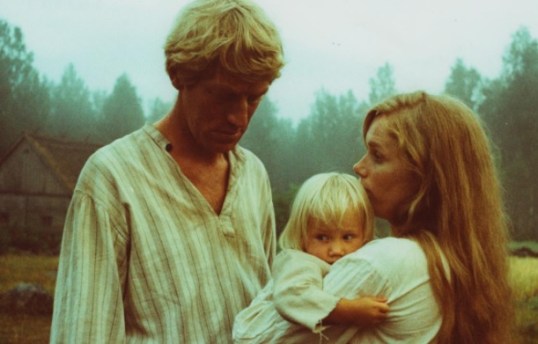
Since I’m currently dealing with either a really bad cold or the onset of the flu (let’s hope that it’s the former), I decided that Monday would be the perfect night to stay up extremely late and watch a 190-minute Swedish movie.

The Emigrants was released in Sweden in 1971 and it received an Oscar nomination for Best Foreign Language Film.  Then, it was released in the United States in 1972 and it managed to receive four more Oscar nominations, including one for Best Picture.  The Emigrants was the third foreign language film to be nominated for Best Picture, the first film to be nominated in multiple years, and also the first Swedish film to contend for the Academy’s top prize.  (The following year, Ingmar Bergman’s Cries and Whispers would also become the second Swedish film nominated for Best Picture.)  At the same time that The Emigrants was nominated for Best Picture, its sequel, The New Land, was nominated for Best Foreign Language Film.  1972 was an interesting year.

The Emigrants opens in 1844, in Sweden.  Karl Oskar (Max Von Sydow) has married Kristina (Liv Ullmann).  Like his father before him, Karl Oskar is a farmer.  It’s an exhausting life.  There is never enough food to eat.  The weather is perpetually gloomy.  The harvest is always disappointing.  As poor farmers, Karl Oskar and his family face constant prejudice.  In Sweden, the only thing more corrupt than the government is the church.  After one of his daughters starves to death, what choice does Karl Oskar and his family have other than to escape to America?

As Karl Oskar’s brother, Robert (Eddie Axberg), explains, the best rice comes from the Carolinas.  The best farmland is in America.  In America, anyone can become rich.  Anyone can walk up to the President and talk to him without running the risk of being imprisoned or executed.  (In 1844, ordinary citizens could stop by the White House and make an appointment to see the President.  This, of course, would change decades later, after a disgruntled office seeker shot President Garfield.)  In America, Robert says excitedly, no one works more than 14 hours a day!  Even slaves can own land and make their own money!

The Emigrants deals with their Karl Oskar and his family’s voyage to America.  Karl Oskar and Kristina do not travel alone.  Kristina’s uncle (Allan Edwall) is with them and hopes that, in America, he will be allowed to freely practice his religious beliefs.  A former prostitute, Ulrika (Monica Zetterlund), is also with them, hoping a new land will mean a better life for both herself and her daughter.  Even Robert’s best friend, Arvid (Pierre Lindstedt), going with them.  It’s not an easy journey.  Not everyone survives the voyage to North America but those that do soon find themselves in a young and untouched country where anything seems to be possible.

Swedish cinema has a reputation for being dark and brooding but those are two words that definitely do not apply to The Emigrants, which is about as positive a portrait of America as you could ever hope to see.  Regardless of whatever tragedy may occur during the journey, this movie leaves no doubt that the journey was more than worth it.  It unfolds at a pace that is perhaps a bit too leisurely but, at the same time, it’s also an achingly pretty movie with shots that bring to mind the best of Terrence Malick.  In fact, there are times when the film is almost too pretty.  It’s possible to get so caught up in looking at all the beauty around Karl Oskar and Kristina that you lose track of the story.  Max Von Sydow and Liv Ullmann are both achingly pretty as well and, even more importantly, they’re believable as a married couple who are often equally in love and equally annoyed with each other.

It was interesting to go from watching The Grapes of Wrath to watching The Emigrants.  If The Grapes of Wrath was an American nightmare, The Emigrants is about as pure a celebration of the American Dream as you’re going to find.  It lost the Oscar for Best Picture to a far different film about the immigrant experience in America, The Godfather.

Lisa Reviews An Oscar Nominee: The Grapes of Wrath (dir by John Ford)


(With the Oscars scheduled to be awarded on March 4th, I have decided to review at least one Oscar-nominated film a day.  These films could be nominees or they could be winners.  They could be from this year’s Oscars or they could be a previous year’s nominee!  We’ll see how things play out.  Today, I take a look at the 1940 best picture nominee, The Grapes of Wrath!)

How dark can one mainstream Hollywood film from 1940 possibly be?

Watch The Grapes of Wrath to find out.

Based on the novel by John Steinbeck and directed by John Ford, The Grapes of Wrath tells the story of the Joad family and their efforts to neither get sent to prison nor starve to death during the Great Depression.  When they lose their farm in Oklahoma, they head for California.  Pa Joad (Russell Simpson) has a flyer that says someone is looking for men and women to work as pickers out west.  The 12 members of the Joad Family load all of their possessions into a dilapidated old truck and they hit the road.  It quickly becomes apparent that they’re not the only family basing all of their hopes on the vague promises offered up by that flyer.  No matter how much Pa may claim different, it’s obvious that California is not going to be the promised land and that not all the members of the family are going to survive the trip.

Tom Joad (Henry Fonda) is the oldest of the Joad sons.  He’s just been released from prison and he’s killed in the past.  Having been in prison during the start of the Great Depression, Tom doesn’t realize how bad things truly are until he arrives home and sees someone he grew up with using a tractor to knock down a house.  (It’s just business, of course.  The owners of the house can’t pay their bills so the house gets destroyed.)  The film’s story is largely told through Tom’s eyes and Henry Fonda gives a sympathetic performance, one the gets the audience to empathize with and relate to a character who is a total outsider.

As for the rest of the Joad Family, Ma (Jane Darwell) is the glue who holds them together and who refuses to allow them to surrender to despair.  (And yet even Ma is forced to make some tough choices when the starving children of one work camp ask her to share her family’s meal with them.)  Rosasharan (Dorris Bowdon) is pregnant while Grandpa (Charley Grapewin) is too sickly for the trip but doesn’t have anywhere else to go.  And then there’s Casy (John Carradine), the former preacher turned labor organizer.  Casy is not blood-related but he soon becomes a member of the family.

The Joads have a healthy distrust of the police and other authority figures and that turns out to be a good thing because there aren’t many good cops to be found between Oklahoma and California.  Instead, the police merely serve to protect the rich from the poor.  Whenever the workers talk about forming a union and demanding more than 5 cents per box for their hard work, the police are there to break heads and arrest any troublemakers on trumped up charges.  Whenever a town decides that they don’t want any “Okies” entering the town and “stealing” jobs, the police are there to block the roads.

The Grapes of Wrath provides a portrait of the rough edges of America, the places and the people who were being ignored in 1940 and who are still too often ignored today.  John Ford may not be the first director that comes to mind when you think of “film noir” but that’s exactly what The Grapes of Wrath feels like.  During the night scenes, desperate faces emerge from the darkness while menacing figures lurk in the shadows.  When the sun does rise, the black-and-white images are so harsh that you almost wish the moon would return.  The same western landscape that Ford celebrated in his westerns emerges as a wasteland in The Grapes of Wrath.  The American frontier is full of distrust, anger, greed, and ultimately starvation.  (Reportedly, the film was often shown in the Soviet Union as a portrait of the failure of America and capitalism.  However, it was discovered that Soviet citizens were amazed that, in America, even a family as poor as the Joads could still afford a car.  The Grapes of Wrath was promptly banned after that.)  John Ford is often thought of as being a sentimental director but there’s little beauty or hope to be found in the images of The Grapes of Wrath.  (Just compare the way The Grapes of Wrath treats poverty to the way Ford portrayed it in How Green Was My Valley.)  Instead, the film’s only hint of optimism comes from the unbreakable familial bond that holds the Joads together.

As dark as it may be, the film is nowhere near as pessimistic as the original novel.  The novel ends with a stillborn baby and a stranger starving to death in a barn.  The film doesn’t go quite that far and, in fact, offers up some deus ex machina in the form of a sympathetic government bureaucrat.  (Apparently, authority figures weren’t bad as long as they worked for the federal government.)  That the book is darker than the movie is not surprising.  John Steinbeck was a socialist while John Ford was a Republican with a weakness for FDR.  That said, even though the film does end on a more hopeful note than the novel, you still never quite buy that things are ever going to get better for anyone in the movie.  You want things to get better but, deep down, you know it’s not going to happen.  Tom says that he’s going to fight for a better world and Fonda’s delivers the line with such passion that you want him to succeed even if you know he probably won’t.  Ma Joad says the people will never be defeated and, again, you briefly believe her even if there’s not much evidence to back her up.

Even when viewed today, The Grapes of Wrath is still a powerful film and I can only guess what it must have been like to see the film in 1940, when the Great Depression was still going on and people like the Joads were still making the journey to California.  Not surprisingly, it was nominated for best picture of 1940, though it lost to Alfred Hitchcock’s Rebecca.

Lisa Reviews An Oscar Nominee: Grand Illusion (dir by Jean Renoir)


(With the Oscars scheduled to be awarded on March 4th, I have decided to review at least one Oscar-nominated film a day.  These films could be nominees or they could be winners.  They could be from this year’s Oscars or they could be a previous year’s nominee!  We’ll see how things play out.  Today, I take a look at the 1937 best picture nominee, Grand Illusion!)

A few things to consider when watching Jean Renoir’s La Grande Illusion:

It is considered to be one of the greatest French films of all time and yet, at the outbreak of World War II, it was banned by France pour la durée des hostilités.  It was also banned by Nazi Germany, with Joseph Goebbles declaring it to be “Cinematic Public Enemy No, 1.”  Italy followed suit, banning the film as well.

It’s a pacifist film but all of the main characters are soldiers.

It’s a war film but we never see any battles.  We hear about them, of course.  Characters cheer when they hear that their country has taken another town.  Towards the end of the film, when a gun finally is fired, it’s jarring because it’s the first gunshot that we’ve heard throughout the entire film.

It’s a film about change, specifically the change brought about by the First World War.  Captain de Boeldieu (Pierre Fresnay) may be French and Major von Rauffenstein (Erich van Stroheim) may be German but they both share the bond of being aristocrats.  (After Rauffenstein captures Boeldieu, the two of them have a friendly conversation about their shared acquaintances.)  Both of them serve in the army, not for ideological reasons but because they consider themselves to be patriots and tradition holds that aristocrats go to war for their countries.  At the start of the film, both Boeldieu and Rauffenstein seem to be above the fighting but, in the end, both realize that the old ways — their ways — will not survive in the new world that’s being created by the Great War.

(In another scene, a group of Russian soldiers are excited to receive a care package from “the Czarina,” just to open up the box and discover that, instead of Vodka, they’ve been sent used textbooks.  The soldiers respond by setting the box on fire.  For audiences in 1937, it would be impossible to watch this scene without reflecting on the fact that the Czarina herself would soon be dead, executed by revolutionaries.)

Grand Illusion tells the story of three French officers, prisoners of war who hope to somehow escape and make their way to neutral Switzerland.  Unlike the aristocratic Boeldieu, Marechal (Jean Gabin) is a member of the working class, a mechanic.  Lt. Rosnethal (Marcel Dalio) comes from a wealthy family but, as a Jew, he is still viewed as an outsider.  (Reportedly, Renoir specifically made Grand Illusion‘s most sympathetic and generous character Jewish as a specific rebuke to Nazi Germany and their policies.)  It’s Rosenthal who gives meaning to the film’s title when he says, regarding the belief that the great war will end all other wars, “That’s just an illusion.”

All three of them are moved from prison camp to prison camp, until they eventually find themselves at the camp commanded by the man who first captured both Boeldieu and Marechal, Major van Rauffenstein.  Rauffenstein explains that he was given his new post after being seriously wounded in combat and his movements are sometimes so stiff that he almost resembles a marionette, suggesting that war has reduced this proud man to merely being a puppet for his government’s war machine.

Grand Illusion is a film about the forgotten people who get caught up in the madness of war.  The French POWs may say they want to return to the front but, when they meet a woman who has lost her husband and three brothers to the war, they are reminded that even “victory” comes with a steep price.  Rauffenstein and Boeldiue may share much in common but ultimately, the only thing that the world cares about is that one is French and one is German.  Grand Illusion was Jean Renoir’s eloquent plea for peace, issued a mere two years before Europe plunged into World War II.

In 1938, Grand Illusion was the first foreign-language film to receive an Oscar nomination for best picture.  However, it lost to Frank Capra’s You Can’t Take It With You.


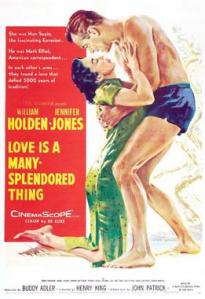
Lisa Reviews An Oscar Nominee: Love Is A Many-Splendored Thing (dir by Henry King)


(With the Oscars scheduled to be awarded on March 4th, I have decided to review at least one Oscar-nominated film a day.  These films could be nominees or they could be winners.  They could be from this year’s Oscars or they could be a previous year’s nominee!  We’ll see how things play out.  Today, I take a look at the 1955 best picture nominee, Love Is A Many-Splendored Thing!)

Before I talk about Love Is A Many-Splendored Thing, let’s play a little trivia game.

I’m going to list ten films.  Your job is to guess what they all have in common:

Did you guess?  All ten of these films came out in 1955 and not a single one of them was nominated for best picture.  That’s something that I found myself thinking about quite a bit as I watched Love Is A Many-Splendored Thing on TCM last night.  Of course, at this point, everyone knows that deserving films are often ignored by the Academy and that what seems like a great film during one year can often seem to be rather forgettable in subsequent years.

So, you can probably guess that I wasn’t terribly impressed with Love Is A Many-Splendored Thing but, before I get too critical, I want to start things off on a positive note.  William Holden was, without a doubt, one of the best actors to ever appear in the movies.  He started his film career in the 1930s and worked regularly until his death in 1981.  Just consider some of the films in which Holden appeared: Golden Boy, Our Town, Sunset Boulevard, Stalag 17, Sabrina, Picnic, Network, and so many others.  Of course, not every film in which Holden appeared was a masterpiece.  He made his share of films like Damien: Omen II and When Time Ran Out.  But the thing is that, regardless of the film, Holden was always good.

That’s certainly the case with Love Is A Many-Splendored Thing.  It’s not one of Holden’s better films but William Holden is his usual dependable self.  He plays Mark Elliott, a rugged American correspondent who is living in Hong Kong in the 1940s.  While the Chinese Civil War rages nearby, Mark deals with his failing marriage.  His wife is back in the States.  They’re separated but not quite divorced.  Mark owns a really nice car and, since he’s played by William Holden, he delivers the most world-weary of lines with an undeniable panache.  He also appears shirtless for a good deal of the film.  Between this and Picnic, 1955 was the year of the shirtless Holden.

The problem with Love Is A Many-Splendored Thing is not with William Holden.  Instead, the problem is with the miscasting of Jennifer Jones as Han Suyin, the woman with whom Mark Elliott falls in love.  Han Suyin was a real-life person, a doctor who wrote the autobiographical novel on which Love Is A Many-Splendored Thing was based.  Han Suyin was Eurasian.  Jennifer Jones most definitely was not.  Throughout the film, Han Suyin and Mark often discuss what it’s like to be Eurasian and to be in the middle of two very different cultures.  There’s even a discussion about whether Han Suying should try to pass as European.  It all has the potential to be very interesting except for the fact that Jennifer Jones, who was so good in so many films, is in no way convincing in her role.  Whenever she mentions being Eurasian, which she does frequently, the film come to a halt as we all stare at Jennifer Jones, one of the first film stars to ever come out of Tulsa, Oklahoma.

It all leads to a rather strained movie, one that never really drew me into its cinematic world or story.  (For the record, a lot of people on twitter disagreed with me on this point.)  Ultimately, the main reason to watch it was for William Holden.  According to the film’s Wikipedia entry (how’s that for in-depth research), Holden and Jones reportedly did not get along during filming, with Jones apparently chewing garlic before their love scenes and there was a definite lack of chemistry between them.  Maybe I got spoiled by William Holden and Kim Novak dancing in Picnic but I never believed that Mark and Han Suyin were attracted to each other.  Interestingly, Jones and Holden would later both appear in another best picture nominee, 1974’s The Towering Inferno.  However, they didn’t share any scenes.

Love Is A Many-Splendored Thing was nominated for best picture but it lost to a far different love story, Marty.  This was also the final film directed by Henry King to be nominated for best picture.  Previous King films to be nominated included State Fair, In Old Chicago, Alexander’s Ragtime Band, The Song of Bernadette, Wilson, and Twelve O’Clock High.

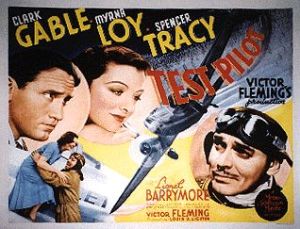
Lisa Reviews An Oscar Nominee: Test Pilot (dir by Victor Fleming)


(With the Oscars scheduled to be awarded on March 4th, I have decided to review at least one Oscar-nominated film a day.  These films could be nominees or they could be winners.  They could be from this year’s Oscars or or they could be a previous year’s nominee!  We’ll see how things play out.  Today, I take a look at the 1938 best picture nominee, Test Pilot!)

Test Pilot is all about charisma.

It tells a fairly simple story.  I imagine that the plot seemed just as familiar in 1938 as it does in 2018.  Jim Lane (Clark Gable) is a test pilot.  In the early days of aviation, long before people took the idea of flight for granted, Jim Lane is a hero and celebrity.  Whenever a new aviation technique is developed, Jim is the one who tests it.  He’s the one who makes sure that it’s safe.  Every day, when Jim goes to work for Mr. Drake (Lionel Barrymore), there’s a chance that he might not make it home.  Not surprisingly, he’s cocky, reckless, and not prone to commitment.  He’s also handsome, charming, manly, and quick with a quip.  In short, he’s Clark Gable.

When the movie starts, Jim has only one real friend.  Gunner (Spencer Tracy) is his mechanic.  Gunner is a by-the-book, no-nonsense professional.  He might enjoy a drink every now and then but Gunner knows his job and he knows his planes and, even more importantly, he knows Jim.  Gunner’s a man of unimpeachable integrity, the type who will always call things as he sees them.  In short, he’s Spencer Tracy.

One day, while on a test flight, Jim is forced to make an emergency landing on a farm in Kansas.  That’s where he meets Ann Barton (Myrna Loy).  Ann is beautiful and outspoken.  She quickly proves that she can keep up with Jim, quip-for-quip.  In short, she’s Myrna Loy and, before you know it, she and Jim are in love.  Just as quickly, Jim and Ann are married.

The movie starts out as a bit of domestic comedy.  Jim may know how to fly a plane but it quickly becomes obvious that he doesn’t know much about commitment or being a husband.  When Jim attempts to buy his wife a nightgown, he doesn’t even know how to pronounce the word lingerie.  (He asks a store clerk for help in finding the “lonjur department.”)  However, Jim soon starts to find that married life agrees with him.

Of course, that’s a problem when your job requires you to defy death on a daily basis.  Ann worries that Jim is going to go to work and never come home, fears that are intensified after a race with another airplane ends in a terrible and (for the other pilot) fatal crash.  Gunner, meanwhile, starts to fear that there’s only so many times that Jim can cheat fate.  Both Ann and Gunner promise that they will never leave Jim’s side.

Well, you can probably already guess everything that’s going to happen.  Test Pilot is not exactly the most narratively adventurous movie ever made but, when you’ve got Gable, Tracy, Loy, and Barrymore all in the same film, you don’t really need to break any new ground, storywise.  Test Pilot is an example of the power of pure movie star charisma.  It’s watchable because the performances are just as entertaining today as they were in 1938.  The film features Gable doing what he did best and Tracy doing what he did best and Loy and Barrymore all doing what they did best.  In this case, that’s more than enough.

When it comes to the film’s numerous flight sequences, it’s perhaps best to try to put yourself in the shoes of someone seeing the film in 1938.  Today, of course, we’ve been spoiled by CGI.  We tend to assume that literally anything can happen in a movie.  In the 30s, however, people couldn’t take special effects for granted.  When they watched the flight footage in Test Pilot, they did it with the knowledge that it was filmed by people who actually were putting their lives at risk to get it.  At a time when commercial aviation was considered to be a luxury, Test Pilot provided audiences with a view of the world in the sky and of the world below, a view that they probably wouldn’t have gotten a chance to see otherwise.

A huge box office success, Test Pilot was nominated for best picture but lost to another film featuring Lionel Barrymore, Frank Capra’s You Can’t Take It With You.

Lisa Ranks Every Best Picture Winner From Best To Worst!


Oscars

Though it won’t be posting for a while, I am writing this at 12:22 on Sunday afternoon.  I am so confident that La La Land is going to win Best Picture later tonight that I am including it in the list below.  If I’m wrong … well, have fun in the comments!

(Agck!  Moonlight won!  That’ll teach me to get arrogant about my predictive powers.  Fortunately, I was able to correct the list before this post published.)

Anyway, this is my ranking.  It’s strictly my opinion.  Not everyone here at the Shattered Lens is going to agree with me but … well, what can I say?  I love movies.  I love the Oscars.  I love lists.

  1. All About Eve (1950)
  2. The Godfather (1972)
  3. It Happened One Night (1934)
  4. The Godfather, Part II (1974)
  5. Sunrise (1927-1928)
  6. West Side Story (1961)
  7. Schindler’s List (1993)
  8. No Country For Old Men (2007)
  9. From Here To Eternity (1953)
  10. Casablanca (1943)
  11. 12 Years A Slave (2013)
  12. Annie Hall (1977)
  13. The Silence of the Lambs (1991)
  14. All Quiet on The Western Front (1929–1930)
  15. Moonlight (2016)
  16. The Best Years of Our Lives (1946)
  17. The Apartment (1960)
  18. The Lord of the Rings: The Return of the King (2003)
  19. Chicago (2002)
  20. Midnight Cowboy (1969)
  21. The Lost Weekend (1945)
  22. Gone With The Wind (1939)
  23. Rebecca (1940)
  24. Grand Hotel (1931–1932)
  25. An American In Paris (1951)
  26. Shakespeare in Love (1998)
  27. The French Connection (1971)
  28. Unforgiven (1992)
  29. The Artist (2011)
  30. Amadeus (1984)
  31. The King’s Speech (2010)
  32. Million Dollar Baby (2004)
  33. Ordinary People (1980)
  34. Lawrence of Arabia (1962)
  35. The Bridge on the River Kwai (1957)
  36. Slumdog Millionaire (2008)
  37. Ben-Hur (1959)
  38. Terms of Endearment (1983)
  39. On The Waterfront (1954)
  40. Hamlet (1948)
  41. Wings (1927-1928)
  42. Argo (2012)
  43. One Flew Over the Cuckoo’s Nest (1975)
  44. The Departed (2006)
  45. A Beautiful Mind (2001)
  46. Driving Miss Daisy (1989)
  47. All The King’s Men (1949)
  48. Rain Man (1988)
  49. The Hurt Locker (2009)
  50. The Deer Hunter (1978)
  51. A Man For All Seasons (1966)
  52. The Greatest Show On Earth (1952)
  53. Forrest Gump (1994)
  54. The Sting (1973)
  55. Gigi (1958)
  56. Tom Jones (1963)
  57. You Can’t Take it With You (1938)
  58. Marty (1955)
  59. Gentleman’s Agreement (1947)
  60. Going My Way (1944)
  61. Birdman (2014)
  62. Braveheart (1995)
  63. Platoon (1986)
  64. In the Heat of the Night (1967)
  65. Spotlight (2015)
  66. How Green Was My Valley (1941)
  67. Mutiny on the Bounty (1935)
  68. The English Patient (1996)
  69. Chariots of Fire (1981)
  70. Mrs. Miniver (1941)
  71. Titanic (1996)
  72. Oliver! (1968)
  73. The Great Ziegfeld (1936)
  74. My Fair Lady (1964)
  75. Dances With Wolves (1990)
  76. Out of Africa (1985)
  77. Rocky (1976)
  78. Patton (1970)
  79. The Last Emperor (1987)
  80. Around The World in 80 Days (1956)
  81. The Life of Emile Zola (1937)
  82. Kramer vs. Kramer (1979)
  83. The Sound of Music (1965)
  84. Cavalcade (1932–1933)
  85. Gladiator (2000)
  86. Gandhi (1982)
  87. The Broadway Meloday (1928–1929)
  88. Cimarron (1930–1931)
  89. American Beauty (1999)
  90. Crash (2005)

8 Films That Should Never Have Been Nominated For Best Picture


Sometimes, the Academy gets it wrong.

For instance, these 8 films have two things in common:

  1. They were all nominated for best picture.
  2. They shouldn’t have been.

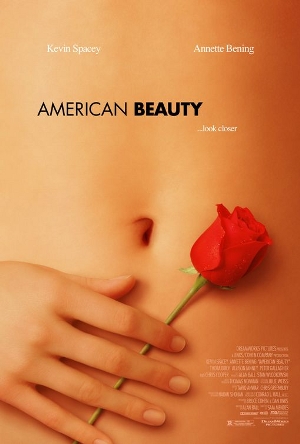
American_Beauty_poster

  1. American Beauty (1999)

Shallow, pretentious, and more than a little misogynistic, American Beauty was somehow not only nominated but won as well.

crash-2004 4

2. Crash (2005)

Oh my God.  How the Hell did this mess of a movie win?


3. Avatar (2009)

Yawn.  I’ve written at length about my dislike for this film so I’m not going to waste too much more space on it.  It would be nice if James Cameron was capable of writing dialogue that didn’t sound like something that would get a failing grade in a high school creative writing class.

Kids_are_all_right_poster

4. The Kids Are All Right (2010)

Acclaimed when first released, The Kids Are All Right was forgotten fairly quickly.  When seen today, it comes across like a sitcom version of life among the wealthy and out of touch.  I don’t think any film featuring an organic food restaurant is going to age well.

extremely_loud_tambourine_a_l_0

5. Extremely Loud and Incredibly Close (2011)

In the wake of 9/11, an extremely annoying brat bothers random people in New York.  One of the worst films ever.

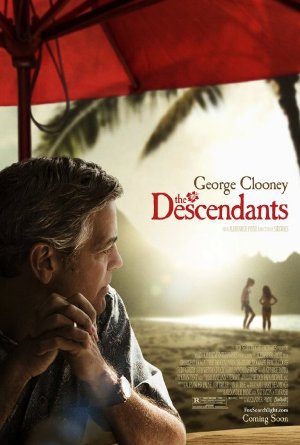
The Descendants

6. The Descendants (2011)

Alexander Payne’s comedy of tragedy and infidelity isn’t terrible but it wasn’t that great either.

7. Birdman (2014)

While it’s nice that Michael Keaton made a comeback, this is still one of the most overrated films of all time.  Will anyone care about Birdman in ten more years?

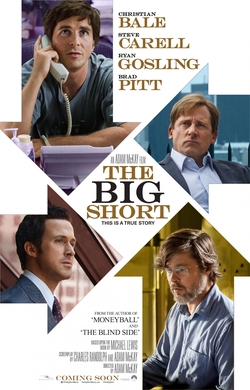
The_Big_Short_teaser_poster

8. The Big Short (2015)

The worst thing about the economic crash?  It gave us a movie like The Big Short.

Check Out This Montage Of Every Best Picture Nominee!


2013 oscars

So, I was searching for short films about the Oscars on YouTube and look at what I came across.  This video was put together by All About The Oscar.  It’s a montage of every film nominated for best picture between 1927 and 2015!

Seriously, I love this!

Watch it below:

How many of these films have you seen?  I’ve still got a way to go but someday, I will be able to say that I’ve seen every single one.

(Except, of course, for The Patriot…)

My Personal Top Ten Oscar Winners for Best Picture


gary loggins's avatarcracked rear viewer

oscar1

Watching movies, like appreciating any art form, is a purely subjective experience. My idea of a great film could be your idea of a stinkeroo. After all, my two favorite directors are John Ford and Ed Wood! Keeping that in mind, I’ve decided to do something different here. Since I’ve viewed 61 of the 87 Best Picture winners, I’ve come up with a Top Ten list of the all-time best Best Pictures I’ve seen. And here it is:

oscar2

  • 10- *tie* REBECCA (1940) and ON THE WATERFRONT (1954). This may be cheating, but I really couldn’t pick between the two. Hitchcock’s American film debut is simply a masterpiece of suspense, while Marlon Brando leads a powerhouse cast in Elia Kazan’s powerhouse drama. Both deserve to make the list.
  • 9- RAIN MAN (1988). I could watch this movie over and over and never get tired of it. Dustin Hoffman has never been better. “Uh-oh, two minutes…

View original post 339 more words

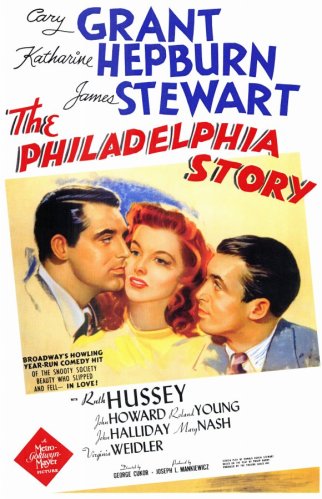
Lisa Reviews The Oscar Nominees: The Philadelphia Story (dir by George Cukor)


The-Philadelphia-Story-(1940)

There are a few reasons why The Philadelphia Story was one of those films that I had been meaning to watch for a while.  For one thing, The Philadelphia Story was nominated for best picture of 1940 (it lost to Alfred Hitchcock’s Rebecca) and my ultimate goal is to see and review every single film ever nominated for best picture.  The other reason is that Jimmy Stewart won an Oscar for his performance in The Philadelphia Story and anyone who doesn’t love Jimmy Stewart has obviously never seen Anatomy of a Murder (not to mention It’s a Wonderful Life!).

Well, The Philadelphia Story was on TCM last night and I finally got to see it and what can I say?  I absolutely loved it.  For a 74 year-old, black-and-white comedy, The Philadelphia Story is still a lot of fun.

The Philadelphia Story tells the story of Tracy Lord (Katharine Hepburn), a wealthy socialite who is engaged to marry George Kitteridge (John Howard), a self-described “man of the people,” who is widely respect for both his strong moral character and the fact that — unlike most of Tracy’s friends — he made his fortune as opposed to inheriting it.

It would be tempting to reach into the bag of simplistic blogging clichés and call the Lords a 1940s version of Khardashians but I’m not going to do that because the Lords have a lot more wit and class.  My favorite member of Tracy’s family was Dinah (Virginia Wiedler), her teenage sister who is sarcastic, cheerfully cynical, and has no problem demanding to be the center of attention.  My sister Erin claims that the reason I liked Dinah is because I saw a lot of myself in the character and that’s probably true.  However, I have to say that the great thing about both Tracy and Dinah is that they were both wittier, classier, and better dressers than all of the Khardashians and Jenners combined.

Anyway, the evil editor of Spy Magazine, Sidney Kidd (Henry Daniell), wants to get pictures of Tracy’s very exclusive and very private wedding so he sends two of his reporters in under cover.  Mike Connor (James Stewart) is a frustrated writer who hates having to lower himself to writing for a tabloid.  Photographer Liz (Ruth Hussey) is secretly in love with Mike.  Helping Mike and Liz pass themselves off as friends of the family is Tracy’s ex-husband, C.K. Dexter Haven (Cary Grant).

As quickly becomes obvious, Dexter is still in love with Tracy.  However, Tracy divorced Dexter because Dexter was an irresponsible alcoholic and, even though Dexter has changed his ways and she is still obviously attracted to him, Tracy is now engaged to the morally upright but boring and judgmental George.

However, Tracy is not just torn between George and Dexter.  She is attracted to Mike as well, to the extent that Tracy even takes the trouble to read some of Mike’s short stories.  For only the second time in her life, Tracy gets drunk and goes for a midnight swim with Mike.  This, of course, leads to the best scene in The Philadelphia Story: Jimmy Stewart singing Somewhere Over The Rainbow.

Seriously, the scene made my entire night.

The Philadelphia Story is based on a play and the film itself is rather stagey in that way that films from the 40s often appear to be to modern viewers.  But, once you get used to the fact that the movie was made in 1940 and not 2014, it’s a real delight.  The dialogue is funny and it’s delivered by one of the best casts ever.  Playing a role that was specifically written for her, Katherine Hepburn is brilliant as the strong-willed but unapologetically romantic Tracy and Cary Grant is just as charming as you would expect Cary Grant to be.  Best of all, you’ve got Jimmy Stewart singing Somewhere Over the Rainbow and seriously, how can you not love that?