Miniseries Review: Death by Lightning (dir by Matt Ross)


Death by Lightning, a four-episode miniseries that recently dropped on Netflix, tells the story of two “forgotten men,” as the show itself puts it.

Michael Shannon plays James A. Garfield, the Ohio farmer and former Congressman who, despite attending the 1880 Republican convention solely to give the nominating speech for Secretary of Treasury John Sherman (Alistair Petrie), found himself nominated for President after the convention found itself deadlocked between supporters of Former President Grant (Wayne Brett) and Senator James Blaine (Bradley Whitford).  Garfield did not want to run for President and he certainly did not want to run with Chester A. Arthur (Nick Offerman), an associate of New York political boss, Roscoe Conkling (Shea Whigham).  However, in November of 1880, James Garfield was narrowly elected the 20th President of the United States.

Matthew MacFayden plays Charles J. Guiteau, a failed lawyer and self-proclaimed newspaper publisher who felt that a stump speech he had given at a small rally was responsible for Garfield’s victory.  Guiteau expected to be appointed to a position in the Garfield administration, perhaps as Consul to France.  In those days of no Secret Service protection and an open White House, Guiteau was one of the many random office seekers who managed to get a face-to-face meeting with Garfield.  What Guiteau did not get was a job.  While Guiteau may have deluded himself into thinking that he was an inside player, everyone else viewed him as being a pesky and disreputable character.  On July 2nd, 1881, Guiteau shot Garfield in the back.  After Garfield died in September, Guiteau was convinced that he would be pardoned by the newly sworn-in President Arthur.  Instead, Guiteau was hanged on June 30th, 1882.

(It’s now generally agreed that Guiteau was such a bad shot that Garfield would have survived his wounds if not for the incompetence of his doctors, who probed his wounds with their bare hands in an effort to extract the bullet.  Garfield died as a result of multiple infections caused by his medical treatment.)

Again, Death by Lightning describes Garfield and Guiteau as both being forgotten men.  That’s not quite true.  I knew who both of them were before I watched the miniseries but then again, I’m also a history nerd.  As much as I don’t want to admit it, it is true that the majority of today’s Americans don’t know either Garfield or Guiteau.  And yet, in 1881, America revolved around them and their fate.  Everyone checked every day for news on Garfield’s health and Guiteau’s trial was heavily covered by the press.  That’s something to remember whenever you hear people talking about how “history will remember” whatever may be happening in the news today.  History may remember but people are quick to forget.

As for Death by Lightning, it does a good job of telling not only the stories of Garfield and Guiteau but also Chester Arthur as well.  The miniseries takes place at a time when political machines dominated American politics and also at a time when the Spoils system and the widespread corruption that it engendered were both accepted as immutable political realities.  Guiteau, having spent his life seeing other people receive jobs for supporting the right candidate, felt that he was naturally entitled to whatever position he requested.  Guiteau’s actions actually did lead to reformation of the Spoils system, with President Arthur emerging an unlikely reformer.  Never again would a random office seeker by allowed through the front doors of the White House and never again would a President casually walk around Washington D.C. without some sort of guard.  With a smart script, good performances, and even a few moments of unexpected cringe humor, Death by Lighting recreates that moment in American history and it pays tribute to James A. Garfield, who was universally described by his contemporaries as being a decent man who was struck down before he could reach his full potential.

How historically accurate is Death by Lightning?  That’s a fair question.  Death by Lightning sticks to the established facts about Garfield and Guiteau but a scene in which Garfield’s daughter argues with him about immigration is undoubtedly meant to be more of a commentary on 2025 than 1880.  I think it can be argued that no film or series can be 100% historically accurate because those who actually witnessed the events in question are no longer with us.  Inevitably, the past is always viewed and recreated through the filter of the present.  And indeed, it is tempting to compares Garfield and Guiteau to our modern-day politicians and activists.  Guiteau, with his constant excuses for his own dumb decisions and his ranting and raving about how he speaks for the people, was a particularly familiar character.  As for the modest and honest Garfield, it’s sadly difficult to think of any modern-day politicians from the same mold.

As a final note, my favorite part of this miniseries occurred during the first episode.  The recreation of the 1880 Republican Convention is wonderfully entertaining.  It’s amazing to think that, in the days before television coverage required political conventions to become carefully choreographed and tightly controlled, there actually was legitimate suspense about who would end up being nominated.  Sadly, those days seem to be over.
April Noir: Collateral (dir by Michael Mann)


In 2004’s Collateral, Jamie Foxx stars as Max, a taxicab driver who is hoping, in those days before Uber, to start his own limousine company.  When we first see him, he’s giving a ride to a federal prosecutor named Annie (Jada Pinkett Smith) and he’s even getting her phone number after he drops her off at work.  Unfortunately, for Max, his next passenger is a bit less friendly.

Vincent (Tom Cruise), with his gray hair that matches his suit, is polite, quiet, and direct when he speaks.  He carries a briefcase with him everywhere that he goes and anyone who tries to take the briefcase soon discovers just how far Vincent will go to hold onto it.  Vincent pays Max $600 to drive him around Los Angeles for the night.  Vincent has a lot of business that he needs to attend to.  Max agrees, not realizing until it’s too late that Vincent is a hired assassin and that his business is killing people.  Vincent has been hired to wipe out a collection of crooks and lawyers and, though Vincent is careful not to reveal his emotions, it’s obvious that he’s looking forward to the challenge.

To his credit, Max doesn’t really have any interest in being a part of Max’s killing spree but he soon finds himself unable to escape from Vincent and being forced to drive from location to location.  Along the way, Vincent and Max engage in debates of both morality and philosophy.  Vincent sees death as just being a part of the job.  Max is horrified, especially when people who haven’t done anything wrong end up as collateral damage in Vincent’s killing spree.  The truth of the matter is that, even if Max hadn’t picked up Vincent, there’s no guarantee that he wouldn’t have picked up some other madman.  As a taxi driver, Max surrenders his control once he unlocks the door and allows someone to get in the backseat.  Sometimes, he gets a passenger like Annie.  Other times, he’s going to get a passenger like Vincent.  Somewhat improbably, Vincent and Annie turns out to be connected and Max’s chance encounter with her becomes even more important.

Because this is a Michael Mann film, Los Angeles is as much a character in this film as Max and Vincent.  Mann captures the shadowy darkness of the city at the night and the feeling that both opportunity and danger could lurk around every corner.  Claustrophobic scenes in the taxi cab are mixed with scenes in an equally claustrophobic (though for different reasons) club.  The film’s haunting final image takes place not in the cab but instead on a train.  Everyone is heading somewhere and, at some point during the film, both Vincent and Max deal with the feeling of having no control over where they’ll end up.

When Collateral first came out in 2004, I remember that a lot of people were shocked to see Cruise playing a villain.  Cruise does give one of his best performances here, playing yet another one of Mann’s cool and efficient professionals.  Strangely enough, Jamie Foxx is the one who was nominated for an Oscar, even though he’s actually a little on the boring side as Max.  (In all fairness, Max is meant to be the conventional member of the film’s involuntary partnership.)  The film is dominated by Cruise and his performance is still powerful to this day.

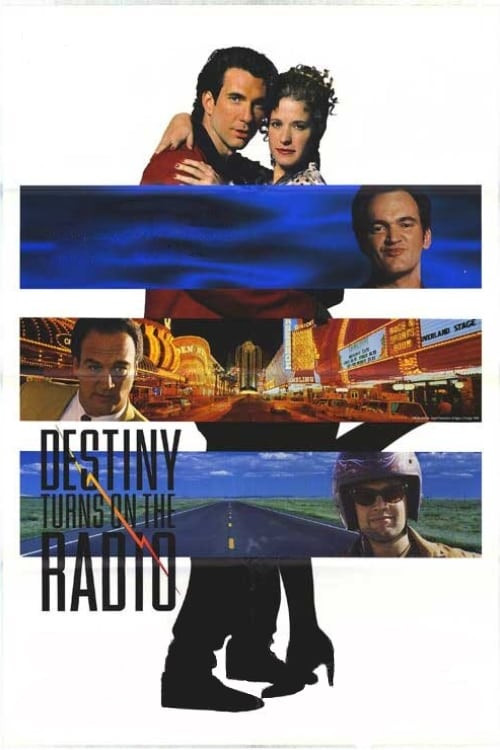
Destiny Turns On The Radio (1995, directed by Jack Baran)


Today, it can be easy to forget what an impact Quentin Tarantino had on pop culture in the 90s.  The one-two punch of Reservoir Dogs and Pulp Fiction inspired a generation of young and aspiring filmmakers to believe that anyone could make their own film.  Suddenly, you didn’t have to be a film school graduate to call yourself a filmmaker.  You could just be someone who loved movies and who was willing to keep hustling until you had something you could slip into Sundance.  That was the feeling, anyway.  The 90s were full of films about eccentric criminals who talked a lot and who loved pop culture, only three of which were directed by Quentin Tarantino.  Some of them were good.  Most of them were not.

Destiny Turns On The Radio was one of the first films to rip-off Pulp Fiction and it felt more cynical than most because it was directed by Jack Baran, who wasn’t even a video store clerk.  He was a producer of films like The Big Easy and Barfly, an industry veteran ripping off two films directed by someone who was, at that time, still an outsider.  The film tells a story that had plenty of Tarantino elements, including Quentin Tarantino himself.  Tarantino signed to play Johnny Destiny right after Pulp Fiction won the Palme d’Or at Cannes.

Johnny Destiny is a gambler who is apparently also a God.  He emerges from a lightning-filled pool and his dialogue is full of pseudo-philosophy.  He is driving through the desert when he picks up Julian (Dylan McDermott) and gives Julian a lift to Las Vegas.  Johnny Destiny is taking prison escapee Julian on a ride so that Julian can face his destiny.  Julian wants to recover some money from a bank job that he pulled off with Thoreau (James Le Gros) but it turns out that, when Johnny Destiny emerged from that pool, he also stole all the money.  (There’s no specific reason for Thoreau to be named after the famous philosopher, beyond the film trying to make itself seem deep by drawing in everyone who read Walden in AP English.)  Julian wants to get back together with Lucille (Nancy Travis), a singer who performs songs more appropriate for a 20s speakeasy than a Las Vegas lounge.  Lucille is involved with a gangster (Jim Belushi).  Belushi sings Vivia Las Vegas but otherwise, this is one of his more boring performances.

Like so many of the Pulp Fiction rip-offs of the 90s, Destiny Turns On The Radio is all self-conscious attitude and cool style, full of references to pop culture that fall flat because there’s no real thought behind them.  Reservoir Dogs and Pulp Fiction were full of style but they also told compelling stories.  Destiny Turns On The Radio is all style and little else and the cast never comes together the way that the actors in Tarantino’s first two movies did.  Watching this film, I realized why Dylan McDermott and Nancy Travis both found more success on television than in feature films.  The film posits Tarantino (as Johnny Destiny) as the epitome of cool but it then burdens him with the type of dialogue that he would have cut by the time he started a second draft.

Coming hot on the heels of the success of Pulp Fiction, Destiny Turns On The Radio actually led to a few years where many critics assumed Tarantino would be a two-trick wonder.  It was thought lightning struck twice but it would never strike a third time and Tarantino would spend the rest of his career as almost a parody of his earlier success.  Luckily, Tarantino proved them wrong and Destiny Turned On The Radio turned out to be not his career’s destination but instead just a detour.

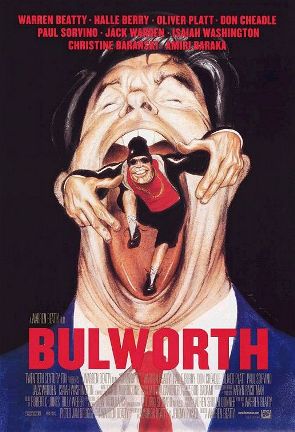
Shattered Politics #62: Bulworth (dir by Warren Beatty)


BulworthSo, if you’ve ever wondered what happened to Robert Redford’s Bill McKay after he was elected to the U.S. Senate at the end of The Candidate, I imagine that he probably ended up becoming something like the protagonist of 1998’s Bulworth, U.S. Sen. Jay Bulworth.

As played by Warren Beatty, Bulworth is a veteran senator.  A former liberal firebrand, he may still decorate his office with pictures of him meeting Bobby Kennedy and Martin Luther King but Bulworth sold out a long time ago.  Now, he just says whatever has to say in order to get elected, including pretending to have a happy marriage. He has become a part of everything that’s wrong with Washington.

Sick of both politics and life in general, Bulworth decides that he’d rather be dead.  But, in order to make sure that his daughter collects on his $10,000,000 life insurance policy, Bulworth cannot commit suicide.  Instead, he arranges for a contract to be taken out on his life.  In two days, Bulworth will be assassinated.

Returning to California for his campaign, Bulworth gets drunk and suddenly starts to say what he actually believes.  He attacks the Washington establishment.  He attacks the voters.  He attacks the insurance companies and comes out for single payer health insurance.  With his desperate press secretary (Oliver Platt) chasing behind him, Bulworth spends the night dancing at a club where he discovers marijuana and meets a girl named Nina (Halle Berry).

(Platt, meanwhile, discovers that he really, really likes cocaine.)

Soon, Nina and Bulworth are hiding out in the ghetto, where Bulworth meets both Nina’s brother (Isiah Washington) and local drug dealer, L.D. (Don Cheadle), and gets a lesson about how economics actually work in the ghetto.  Soon, Bulworth is appearing on CNN where he raps his new political platform and suggests that the solutions for all of America’s problems would be for everyone to just keep having sex until eventually everyone is the same color.

Of course, what Bulworth doesn’t know is that Nina also happens to be the assassin who has been contracted to kill him…

I have mixed feelings about Bulworth.  On the one hand, the film starts out strong.  You don’t have to agree with the film’s politics in order to appreciate the film’s passion,  Bulworth is an angry film and one that’s willing to say some potentially unpopular things.  It’s a film about politics that doesn’t resort to the easy solutions that were proposed by some of the other films that I’ve reviewed for Shattered Politics.  Warren Beatty does a pretty good job of portraying Bulworth’s initial mental breakdown and Oliver Platt is a manic wonder as he consumes more and more cocaine.

But, once Warren Beatty starts rapping, the film starts to fall apart and becomes a bit too cartoonish for its own good.  You get the feeling that Warren Beatty, at this point, is just trying to live out the liberal fantasy of being the only wealthy white man in America to understand what it’s like to be poor and black in America.

Bulworth starts out well but ultimately, it begins better than it ends.

http://www.youtube.com/watch?v=-0SgQKpWGD4

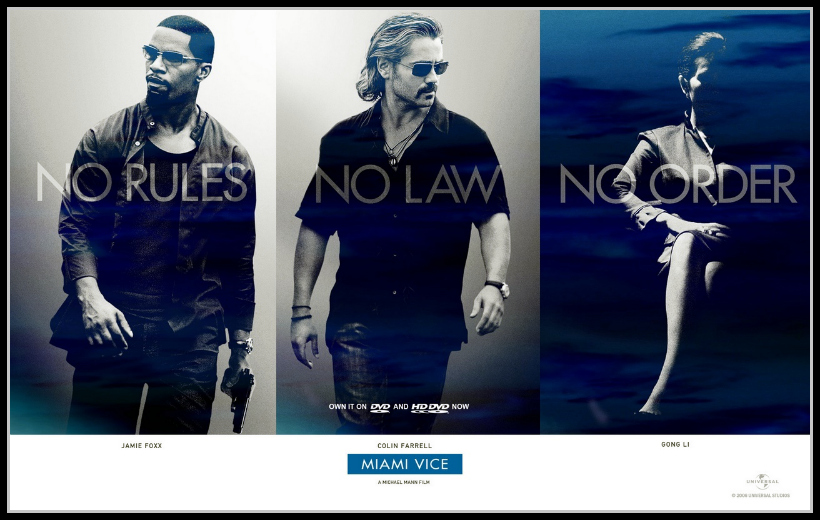
Review: Miami Vice (dir. by Michael Mann)


Michael Mann has always been in the forefront of experimenting and trying out new film techniques and styles to tell his stories. 2003’s Collateral was a veritable masterpiece of directing of a modern, urban noir. He even made Tom Cruise very believable as a sociopathic character. In 2006, Michael Mann followed up Collateral with another trip down the darkside of the law and crime. Taking a concept he made into a cultural phenomenon during the mid 80’s, Mann reinvents the show Miami Vice from the pastel colors, hedonistic and over-the-top drug-culture Miami of the 1980’s to a more down, dirty and shadowy world of the new millenium where extremes by both the cops and the criminals rule the seedy, forgotten side of the city.

Michael Mann’s films have always dealt with the extremes in its characters. Whether its James Caan’s thief character Frank in Thief, the dueling detective and thief of Al Pacino and Robert DeNiro in Heat, up to Foxx and Cruise’s taxi driver and assassin in the aforementioned Collateral. They all have had one thing in common. They’re individuals dedicated to their chosen craft. Professional in all respect and so focused to doing their job right that they’ve crossed the line to obsession. It is this obsession and how it governs everything they do which almost makes it into their own personal form of drug.

This theme continues in Mann’s film reboot of his TV series Miami Vice. The characters remain the same. There’s still the two main characters of Vice Detectives Sonny Crockett and Ricardo Tubbs. This time around these titular characters were played by Colin Farrell (in a look that echoes Gregg Allman more than Don Johnson) and Jamie Foxx. From the first moment the first scene suddenly appears all the way through to the final fade to black in the end of the film, the audience was thrust immediately into the meat of the action. Mann dispenses with the need for any sort of opening credits. In fact, the title of the film doesn’t appear until the end of the film and the same goes for the names of all involved. I thought this was a nice touch. It gave the film a stronger realism throughout.

The film’s story was a mixture of past classic episodes rolled into one two-hour long film with the episode “Smuggler’s Blues” being the main influence on the story. The glamour and glitz that were so prevalent in the original series does show up in the film, but it’s not used too much that it turned the characters of Crockett, Tubbs and the rest of the cast into caricatures. The glamour seems more of a thin veneer to hide the danger inherent in all the parties involved. These people were all dangerous from the cops to the criminals. There’s a lot of the so-called “gray areas” between what makes a cop and what makes a criminal. Mann’s always been great in blurring those lines and in showing that people on either side of the line have much more in common than they realize.

Miami Vice‘s story doesn’t leave much for back story exposition for the main leads. Michael Mann takes the minimalist approach and just introduces the characters right from the beginning with nothing to explain who they were outside of the roles they played — whether they were law-enforcement or drug dealers. The script allows for little personal backstory and instead lets the actors’ performance show just what moves, motivates and inspires these characters. Again, Jamie Foxx steals the film from his more glamorous co-star in Colin Farrell. Farrell did a fine job in making Crockett the high-risk taking and intense half of the partnership, but Foxx’s no-nonsense, focused intensity as Tubbs was the highlight performance throughout the film.

The rest of the cast do a fine job in the their roles. From Gong Li as Isabella, the drug-lord’s moll who also double’s as his organization’s brains behind the finances to Luis Tosar as the mastermind drug kingping Arcángel de Jesús Montoya. Tosar as Montoya also does a standout performance, but was in the screen for too less a time. Two other players in the film I have to make mention of were John Ortiz as Jose Yero who was Montoya’s machiavellian spymaster and Tom Towles in a small, but scary role as the leader of the Aryan Brotherhood gang hired by Yero to be his Miami enforcers. Both actors were great in their supporting role and more than held their own against their more celebrated cast mates.

This film wouldn’t be much of a police crime drama if it was all talk and no action. The action in Miami Vice comes fast and tight. Each scene was played out with a tightness and intensity which prepped the audience to the point that the violence that suddenly arrives was almost a release. Everyone knew what was coming and when the violence and action do arrive it goes in hard and fast with no use of quick edits, slow-motion sequences or fancy camera angles and tricks like most action films. Instead Michael Mann continues his theme of going for realism even in these pivotal moments in the film.

The shootouts doesn’t have the feel of artificiality. The gunshots inflicted on the people in the film were brutal, violent and quick. The camera doesn’t linger on the dead and wounded. These scenes must’ve taken only a few minutes of the film’s running time, but they were minutes that were executed with Swiss-like precision. The final showdown at an empty lot near the Miami docks was organized chaos with the scene easy to follow yet still keeping a sense of anarchy to give the whole sequence a real sense of “in the now”.

The look of the film was where Mann’s signature could be seen from beginning to end. He started using digital cameras heavily in Collateral. His decision to use digital cameras for that film also was due to a story mostly set at night. The use of digital allowed him to capture the deepest black to off-set the grays and blues of Los Angeles at night. Mann does the same for Miami Vice, but he does Collateral one better by using digital cameras from beginning to end. Digital lent abit of graininess to some scenes, but it really wasn’t as distracting as some reviewers would have you believe. In fact, it made Miami Vice seem like a tale straight out of COPS or one of those reality police shows.

Michael Mann stretches the limits of what his mind and technology could accomplish when working in concert. Mann’s direction and overall work in Miami Vice could only be described as being as focused and obsessive over the smallest detail as the characters in his films. This is a filmmaker who seem to want nothing but perfection in each scene shot.

With Miami Vice, Michael Mann has done the unthinkable and actually made a film adaptation of a TV show look like an art-film posing as a tight police drama. Everyone who have given the film a less than stellar review seem to have done so because Mann didn’t use the 80’s imagery and sensibilities from the original show. There were no pastel designer clothes and homes. There was no pet alligator and little friendly banter and joking around. Mann goes the other way and keeps the mood deadly serious. This was very apropo since the two leads led mortally dangerous lives as undercover agents who could die at the slightest mistake. The fun and jokes of the original series would’ve broken the mood and feel of this film. I, for one, am glad Mann went this route and not paid homage to the original series. This some saw as a major flaw, but I saw it as the main advantage in keeping Miami Vice from becoming a self-referential film bordering on camp.

Miami Vice was a finished product thats smart, stylish, and innovative crime drama. This was a film that people would either love despite some of the flaws, or one people would hate due to not being like the original TV series. Those who decide to skip watching Miami Vice because of the latter would miss a great film from one of this generation’s best directors. Those who do give this version of Miami Vice a chance would be rewarded with a great tale of cops and criminals and the obsession they have in their set roles.