Film Review: Maggie (dir by Henry Hobson)


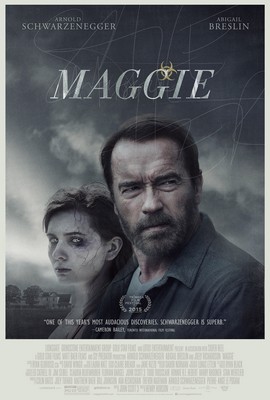
Maggie_(film)_POSTERMaggie is a terrific and sad film about a father who finds himself helpless as his teenage daughter slowly dies.  It’s a thoughtful and heart-rendering film and it’s one of the best of the year so far.  Unfortunately, you wouldn’t necessarily know that from looking at some of the reviews.

Of course, there’s nothing new about a good film getting bad reviews.  I’m actually surprised that anyone even bothers with reviewers anymore, considering just how often they get things wrong.  There are any number of reasons why good films get dismissed.  Some movies are genuinely ahead of their time.  Some critics prefer to judge based on genre than by what they actually see on screen.  Occasionally, a critic feels obligated to like or dislike a movie based on the politics or culture of the moment.  The fact of the matter is that most film critics like to feel important and the easiest way to feel important is to hop onto a bandwagon with all of the other critics.

So, what’s the excuse as far as Maggie is concerned?  Why does Maggie, one of the best films of the year so far, only have a rating of 51% on rotten tomatoes?  In Maggie‘s case, it’s a combination of genre (Maggie is a zombie film and there’s a lot of critics who still feel guilty over liking The Walking Dead) and star.  Maggie has been promoted as being an Arnold Schwarzenegger film, even though his role is essentially a supporting one.  The majority of critics have been willing to admit that Schwarzenegger gives a good performance but they always have to qualify the praise.  As a result, you have critics at both Hitflix and the A.V. Club writing that Schwarzenegger’s performance works because his character is designed to take advantage of Schwarzenegger’s limitations as an actor, as if all good performances aren’t, to some degree, the result of good casting.  In order to make up for praising Schwarzenegger (who is not only an action star but a Republican as well, which is a combination that many reviewers — especially those who work exclusively online — will never be able to see beyond), many critics undoubtedly feel obligated to be overly critical of Maggie.

(What does that 51% mean anyway?  That Maggie is 51% good?)

Maggie_1

As for the film itself, it tells a simple story, one to which a lot of people will undoubtedly relate.  As the film opens, we learn that the zombie apocalypse has already begun.  The world has been hit by a virus.  The infection spreads slowly, forcing the victims and their loved ones to watch as the infected are gradually transformed into mindless and cannibalistic zombies.  However, the U.S. government has reacted with swift and ruthless efficiency.  Martial law has been imposed.  The infected are allowed to say with family up until the disease enters its final stages.  At that point, they’re taken into quarantine and are euthanized.  Though we never actually see a quarantine center, we hear enough about it to know that there is nothing humane about it.  (Indeed, one reason why Maggie is so effective is because we know that the real-life government would probably be even less humane than the film’s government.)  Society has contained the plague but it’s done so at the cost of its own humanity.

College student Maggie (Abigail Breslin) has been infected.  She was bitten by  a zombie and, as a result, she now has a grotesque black wound on her arm.  As the virus moves through her body, her eyes grow opaque.  Her veins blacken.  When she breaks a now dead finger, she reacts by chopping it off with a kitchen knife.  As there is no cure, all Maggie can do now is wait until she is sent to quarantine.

Her father, a farmer named Wade (Schwarzenegger), brings Maggie back to his farm with him so that he can take care of her during her final days.  Wade knows what quarantine is like and he has no intention of forcing his daughter to go through that.  With government doctors and police officers constantly and, in some cases, forcefully demanding the he give her up, Wade protects Maggie as best he can.  He sleeps with a rifle at his side, knowing that eventually he’s going to have to use it on his own daughter.

And I’m crying again.  Between this review and the one I did for Terms of Endearment, my face is going to be a mascara-smeared mess.

arnie-crying-e1427327024932

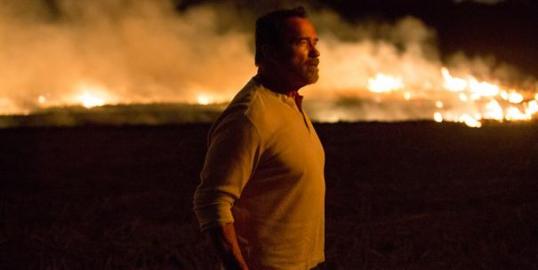
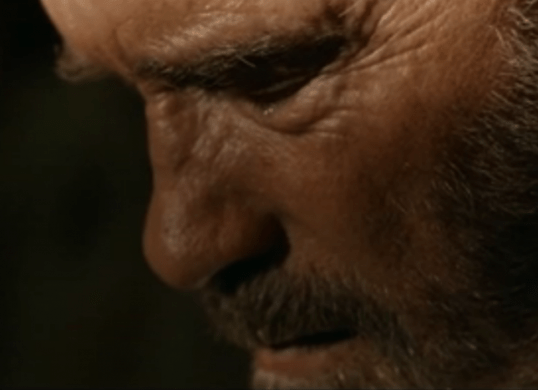
Maggie is a low-key and thoughtful film, a meditation on life, love, family, and death.  Though the film does feature Schwarzenegger fighting zombies, most of the action happens off-screen.  Instead, we just see the haunting aftermath.  Schwarzenegger doesn’t deliver any one liners in this film and the film deliberately plays down his action hero past.  He’s still got the huge body and the muscles but, in Maggie, they’re not intimidating.  Instead, they’re evidence that Wade has spent his life working the land and they actually emphasize just how helpless Wade is in the face of Maggie’s disease.  Director Henry Hobson makes good use of Schwarzenegger’s heavily-lined and weather-beaten face.  His sad and suspicious eyes communicate everything that we need to know.  When he cries, you don’t consider that you’ve never seen him cry before.  Instead, the moment captures you because the tears and the emotions behind them are real.

Breslin

But really, the film ultimately belongs to Abigail Breslin.  It’s appropriate that the film is named after her character because the film really is her story.  Maggie is about how she deals with knowing that she’s going to die and how she searches for meaning in her final days.  It’s a good and heartfelt performance, one that reminded me of Brigitte LaHaie’s poignant work in Jean Rollin’s Night of the Hunted.

So, ignore the critics.

Ignore that stupid 51% on Rotten Tomatoes.

See Maggie.

Arnold-Schwarzenegger-in-Maggie


Arnold Schwarzenegger Will Win An Oscar In 2016…


449214529

Okay, probably not.

But still, the former governor of California has been getting some unexpectedly good buzz for his performance in the upcoming film zombie film Maggie.  In a role that reportedly emphasizes honest emotion over crowd-pleasing action, Schwarzenegger plays a small-town farmer whose daughter (Abigail Breslin) has been infected with a zombie virus.  The trailer, which was released today, seems to hint that Maggie is going to be a bit more thoughtful than your average Arnold Schwarzenegger zombie film.

Maggie is scheduled to be released on May 8th and, hopefully, it won’t be too overshadowed by the 2nd weekend of Avengers: Age of Ultron.

Terminator Genisys — The Super Bowl Ad!


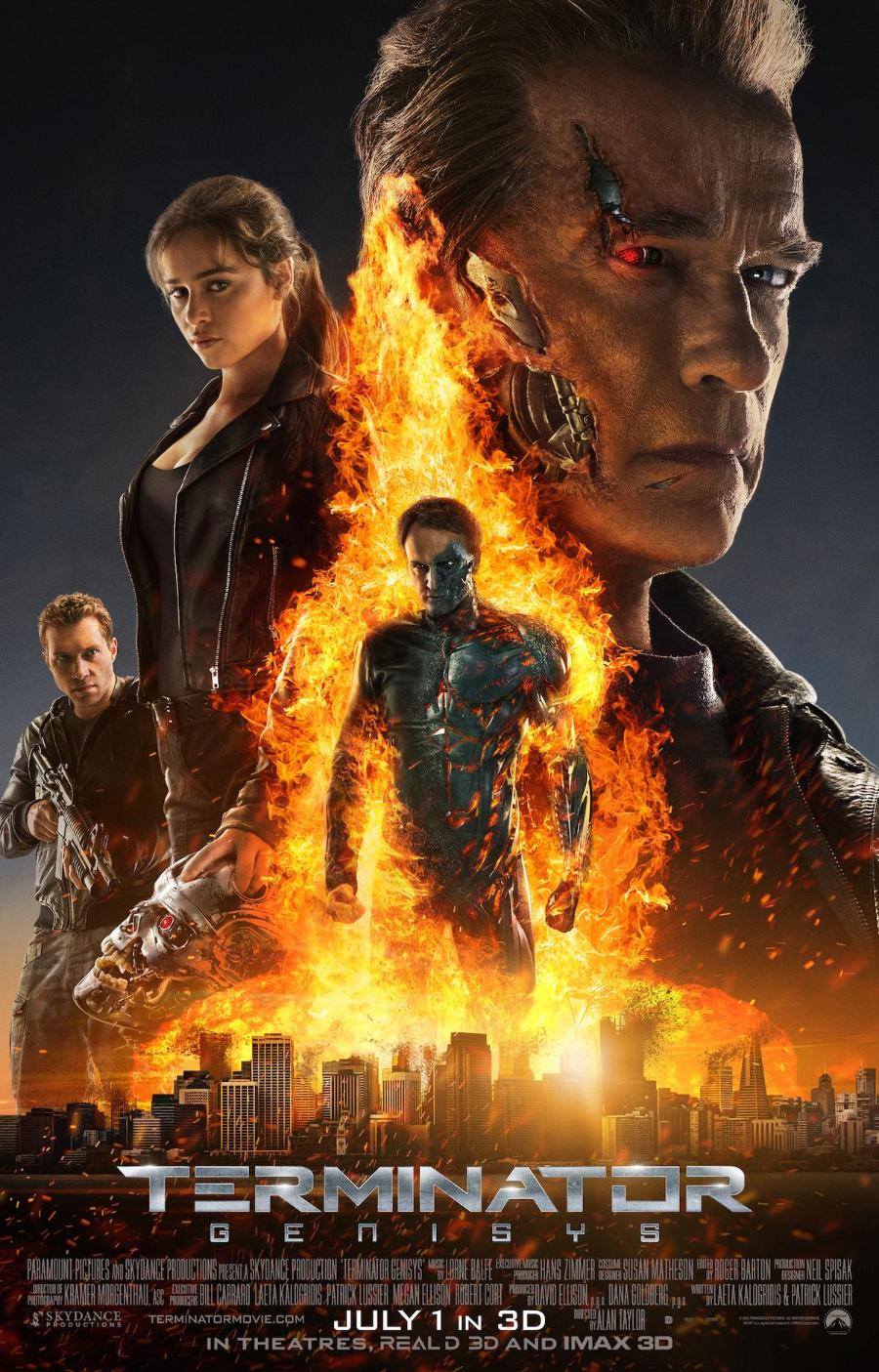
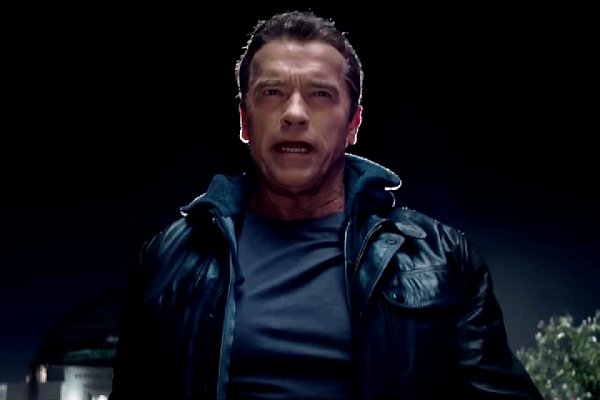
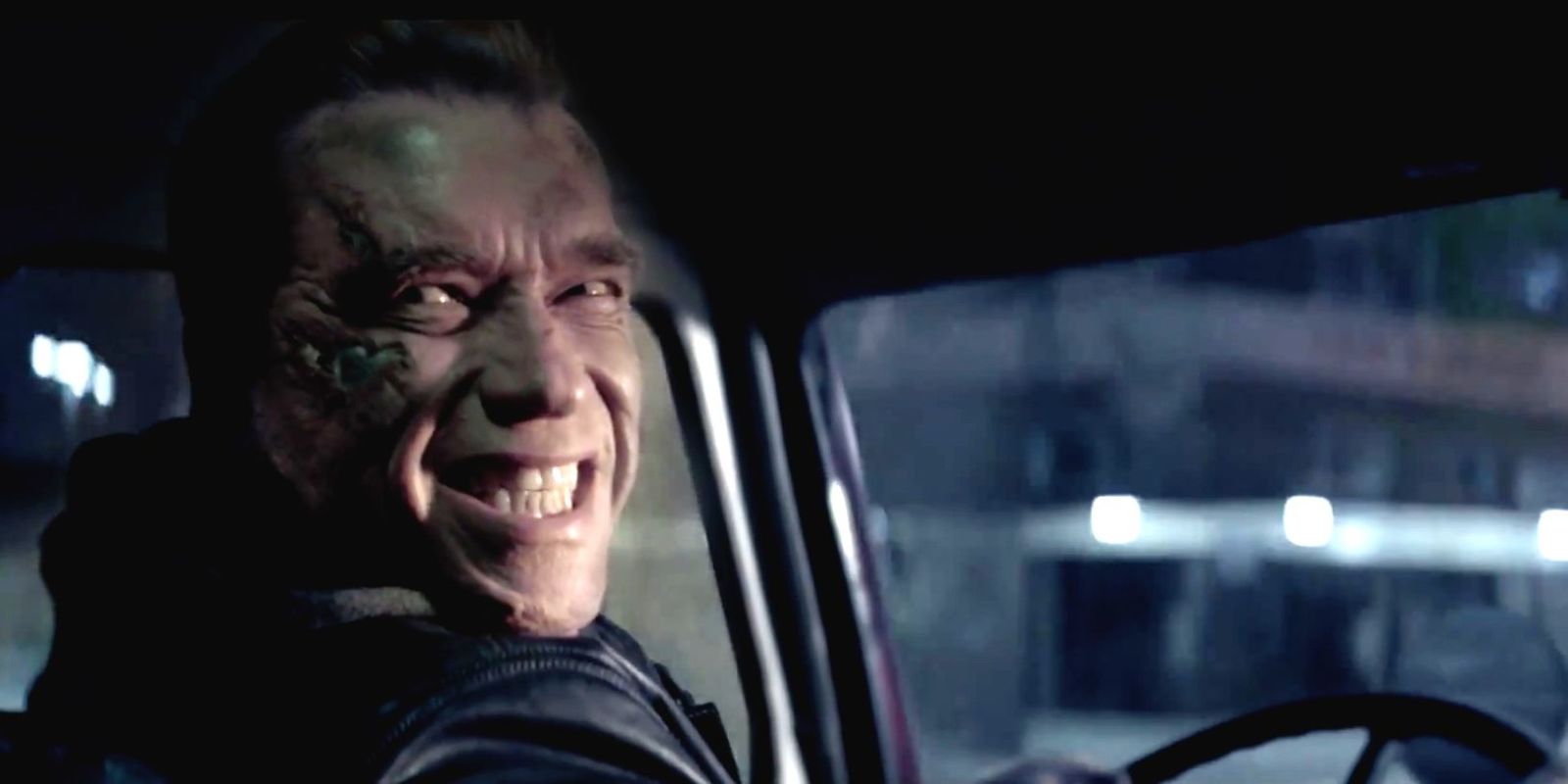
Here’s the Super Bowl Ad for Terminator Genisys, which features the former governor of California fighting a younger version of himself.  In case anyone was wondering, we now have confirmation that Arnold Schwarzenegger will be saying, “I’ll be back.”

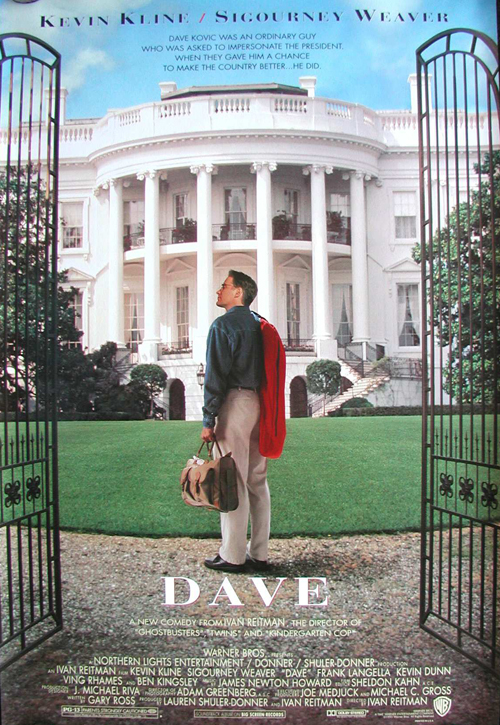
Shattered Politics #54: Dave (dir by Ivan Reitman)


Dave Poster

Way back in 1919, the terrible U.S. President and tyrannical dictator Woodrow Wilson* suffered a stroke that left him semi-paralyzed and unable to perform his duties.  By all standards, Wilson should have been removed from office, if just temporarily.  However, in those pre-Internet days, it was a lot easier to hide the truth about Wilson’s physical and mental condition.  While Wilson spent his days locked away in his bedroom, his wife Edith would forge his signature on bills.  Whenever anyone asked for the President’s opinion, Edith would give her opinion and then assure everyone that it was actually the President’s.

(And really, as long as you were promoting eugenics and white supremacy, it probably was not difficult to imitate Wilson’s opinions.)

Of course, back then, people were used to the idea of never seeing their President in public.  Hence, it was very easy for Wilson to remain sequestered in the White House.  If a similar situation happened today, it’s doubtful that anyone could successfully keep the public from finding out.  When we don’t see the President every day, we wonder why.  How, in this day and age, could a Presidential incapacitation be covered up?

The 1993 film Dave offers up one possible solution.

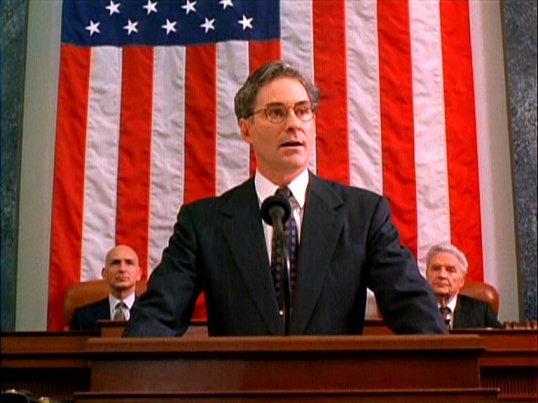
Dave is the story of two men who happen to look exactly like Kevin Kline.  One of them is named Bill Mitchell and he’s the arrogant and corrupt President of the United States.  The other is named Dave Kovic.  He’s a nice guy who runs a temp agency and who has a nice side job going as a professional Bill Mitchell imitator.

So, when Bill has a stroke while having sex with a white house staffer (Laura Linney), it only makes sense to recruit Dave Kovic to pretend to the President.  White House Chief of Staff Bob Alexander (played by Frank Langella, so you know he’s evil) tells Dave that Vice President Nance (Ben Kingsley) is insane and corrupt.  Dave agrees to imitate the President.  Of course, Alexander’s main plan is to convince Nance to resign and then get Dave to appoint him as Vice President.  Once Alexander is Vice President, it will be announced that Mitchell has had another stroke and then Alexander will move into the Oval Office.

However, what Alexander did not take into account was just how much Dave would enjoy being President.  From the moment that he joyfully shouts, “God Bless, America!,” Dave’s enthusiasm starts to win the public over.  Suddenly, people are realizing that President Mitchell isn’t such a bad President after all.  Even more importantly, Dave wins over the first lady (Sigourney Weaver) who, previously, had little use for her philandering husband.  When Alexander claims that there’s no money in the budget to continue funding a program for the homeless, Dave calls in his best friend, an accountant named Murray (Charles Grodin), and has him rewrite the budget…

And you know what?

Dave is one of those films that tempts me to be all cynical and snarky but, ultimately, the film itself is so likable and earnest that I can even accept the idea that one accountant could balance the budget through common sense alone.  I’ll even accept the idea that Dave could come up with a program that would guarantee everyone employment without, at the same time, bankrupting the country.  Kevin Kline is so enthusiastic in the lead role and the film itself is so good-natured that it almost feels wrong to criticize it for being totally implausible.

Sometimes, you just have to appreciate a film for being likable.

Dave—–

* For those of you keeping count, that’s the third time in two weeks that I’ve referred to Woodrow Wilson as being  a dictator.  Before anyone points out that some historians rank Wilson as being in the top ten of President, allow me to say that I don’t care.  I DO WHAT I WANT!

Scenes I Love: Conan the Barbarian


Just been watching The Social Network on Starz and I couldn’t help but think back to this important scene from one of my favorite films of all-time. It was the film which propelled Arnold Schwarzenegger from just being a bodybuilding icon but into superstar film icon. The scene occurs during the part of the film where Conan has just gone through years of becoming the best pit-fighter in all the lands and now repaing the accolades from other warriors, warlords and women. One of the warlords (looking like a Mongol horselord) asks the important question that everyone should be asking: “What is best in life?”

The scene finishes with Conan answering this important life question. An answer which actually has it’s roots from a much more detailed quote from the greatest conqueror in history: Genghis Khan. A quote that goes like so…

“The greatest pleasure is to vanquish your enemies and chase them before you, to rob them of their wealth and see those dear to them bathed in tears, to ride their horses and clasp to your bosom their wives and daughters.” – Genghis Khan

Conan’s answer is quite similar but has been simplified for the film, but still retains it’s impact. This is a life lesson everyone should live by. Mark Zuckerberg definitely lives by them.

Film Review: The Expendables (Dir. by Sylvester Stallone)


I know that I really should have hated The Expendables.  For one thing, it’s a very, traditional, let’s-blow-up-Eric-Roberts-and-save-the-damsel-in-distress action film.  Storywise — well, there really isn’t a story beyond a bunch of inarticulate, muscle-bound men blowing shit up.  The Expendables is perhaps the most hyper-masculine film since Avatar, the type of movie that was obviously not made with anyone possessing a brain or a vagina in mind. 

In short, the Expendables is the type of mainstream, action movie that — based on everything I’ve ever written on this site — I should have hated.  But you know what?  I didn’t hate it.  I’m not saying that I loved the movie (because I certainly did not) but on the whole, The Expendables is a fun movie and sometimes, that’s more than enough.

The Expendables are a group of mercenaries, led by Sylvester Stallone and Jason Stathan.  They are, of course, the best at what they do.  They must be as their existence is apparently a well-kept secret despite the fact that they all have prominent Expendables tattoos and all they drive motorcycles covered with colorful Expendable decals.  So, the question is — can you accept the fact that the movie tells us the Expendables are a secret even though they clearly would never be able to pull that off in real life?  If the answer is yes, read on.  And if the answer is no, please don’t ever talk to me because you probably lack a proper appreciation for the absurd.

Anyway, The Expendables are hired by Mr. Church.  Mr. Church is played by Bruce Willis who, in his very short scene, manages to chew up more scenery than a termite in heat.  (That’s a lot of scenery.)  Mr. Church wants the Expendables to go to a poor, island nation and overthrow the military dictator.  Or something like that.  To be honest, I never really figured out what the exact mission was other than it involved blowing a lot of shit up. 

Oh, I nearly forgot to mention that Eric Roberts is on the island too.  He’s a bad guy.  You know he’s a bad guy because he’s always stopping the action to tauntingly explain his evil plans.  (It also helps that he’s played by Eric Roberts.)  Roberts is a bit of let down as a villain and its hard not to feel that his performance was basically made up of deleted scenes from The Dark Knight.  Then again, in Roberts’ defense, he’s having to compete with memories of Jason Patric playing a similar character in The Losers.

If Roberts’ villain is disappointing, the Expendables themselves are played well enough.  While Sylvester Stallone is hardly a great actor, he knows how to play an action hero and he brings just the right mix of self-aware parody and self-righteous fury to his role.  His second-in-command is played by Jason Stathan who displays something resembling charisma for the 1st time in his odd film career.  The other Expendables don’t get much to do beyond deliver a few quirky lines of dialogue and blow stuff up.  One of them is played by Jet Li who dominates his few scenes even though he doesn’t really get to do much.  Another Expendable is played by the Old Spice Guy who, according to Wikipedia, is actually a pro-athlete named Terry Crews.  However, all of the Expendables appear to enjoy hanging out together.  You get the feeling that they had a good time making this movie and, as a result, you feel almost guilty for worrying about stuff like logic or ambiguity.

The main selling point of The Expendables is that it apparently features every single action star in existence.  Even Arnold Schwarzenegger gets to make a largely pointless cameo and deliver the film’s worst one liners while, in real life, the state he’s supposed to be running descends further and further into financial doom.  While I recognized Stallone, Stathan, Willis, Roberts, Mickey Rourke, and Jet Li, apparently everyone else in the cast used to be someone at some point as well.  Luckily, I saw this movie with my friend Jeff who got very excited as he explained to me who everyone was and why their presence on-screen was making all the men in the audience so positively giddy.  To be honest, I think I probably actually understood a little less than a fourth of the information that Jeff provided me with but he was so incredibly cute trying to explain it all.

(I imagine I probably gave him the same look that he gave me when I attempted to explain Sex and the City 2 to him.)

As I explained at the start of this review, the Expendables is not, technically, a good film but it is a lot of fun.  As opposed to the Avatars of the world, the Expendables is a movie that is at peace with what it is.  There’s no attempt to try to fool the audience into thinking that they’re seeing a work of art.  There’s something to be said for that type of honesty, especially when you consider that we’re approaching that time in the film season when every movie is going to be marketed as a sure-fire Oscar contender.

And if the film is a hyperactive overload of testosterone — well, it is what it is.  After sitting through hundreds of films based on books by Nicholas Sparks, all featuring Miley Cyrus, Emma Roberts, or Amanda Seyfried haunting the beach all to win the love of some sensitive lifeguard eunuch, there’s something undeniably appealing about watching a bunch of guys acting like guys.  Zac Efron might have the heart and soul of poet but can he blow shit up?

The Daily Grindhouse: The Sword and The Sorcerer (dir. by Albert Pyun)


It’s been awhile since I picked a film for the Grindhouse of the Day feature. For this go-round I will go into the little-known grindhouse fantasy subgenre.

Grindhouse flicks seem to always deal with horror, blaxploitation, Italian murder mysteries and scifi, but the fantasy subgenre has always been kept from the conversation. This is a shame since there’s been some very good (in grindhouse terms) flicks in the fantasy genre that could qualify as grindhouse. I would especially point out the ones made after the release of the very popular Conan the Barbarian. The one I chose is from that grindhouse master of the 1980’s: Albert Pyun. I speak of his 1982 sword and fantasy flick, The Sword and the Sorcerer.

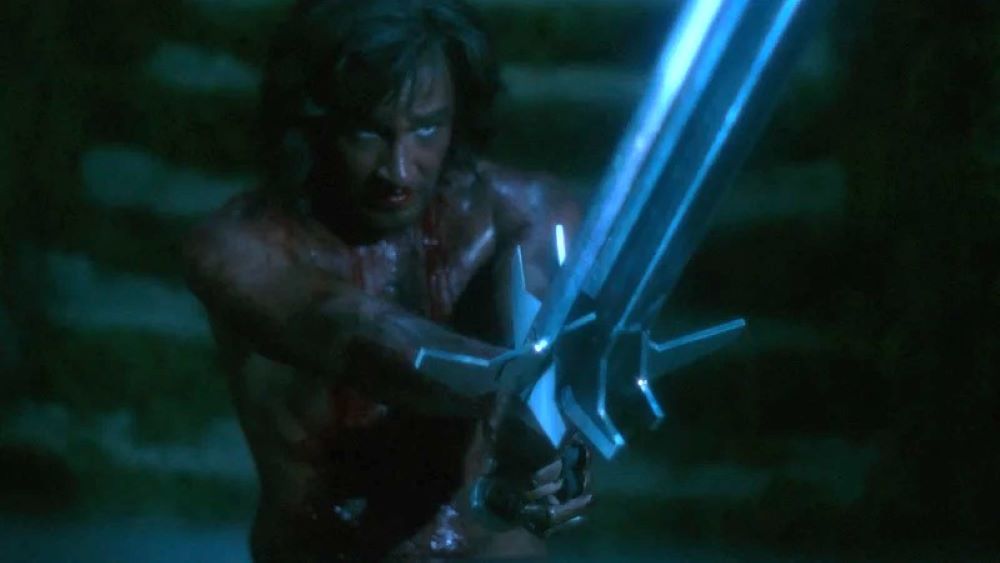
The film definitely riffs-off of the Schwarzenegger-Milius fantasy epic. We have a kingdom conquered and destroyed by an evil tyrant who uses black-armored soldiers in addition to getting the help of an undead sorcerer. This time around the Conan-archetype is played by 80’s TV star Lee Horsley who does a valaint effort to affect a Shakespearean speech pattern (for some reason when people think fantasy they instantly try to speak like they were in a Shakespearean production). Baddie icon Richard Lynch plays the evil tyrant and he definitely looked like he was having the time of his life in the film despite the corny dialogue. There’s an abundance of graphic violence, nudity and magic spells (done in early 80’s heavy metal effects).

One thing this flick does have which made it a cult classic for fans of the fantasy genre is the sword in the title. The main character of Talon wielded a three-bladed sword. Let me repeat that: A THREE-BLADED SWORD. The sword wasn’t just sporting three blade but the wielder has the ability to shoot two of the blades at someone. Definitely puts to shame those sissy Spetnaz ballistic knives. Arnold may have had an Atlantean-forged blade in Conan the Barbarian, but Lee Horsley definitely outsworded him in his flick.

Another thing about this flick which makes it a favorite of mine is the poster art created for it. The producers of the film did one other thing right outside of populating the film with a kick-ass sword, much nudity and violence. I talk of the Frank Frazetta painted posters done up for the flick. More than one version were done depending on the region. The one above which was the original was the best and the film definitely lives up to what Frazetta painted.