Anime You Should Be Watching: Memories


“Memories… memories are not to be toyed with!” — Heinz

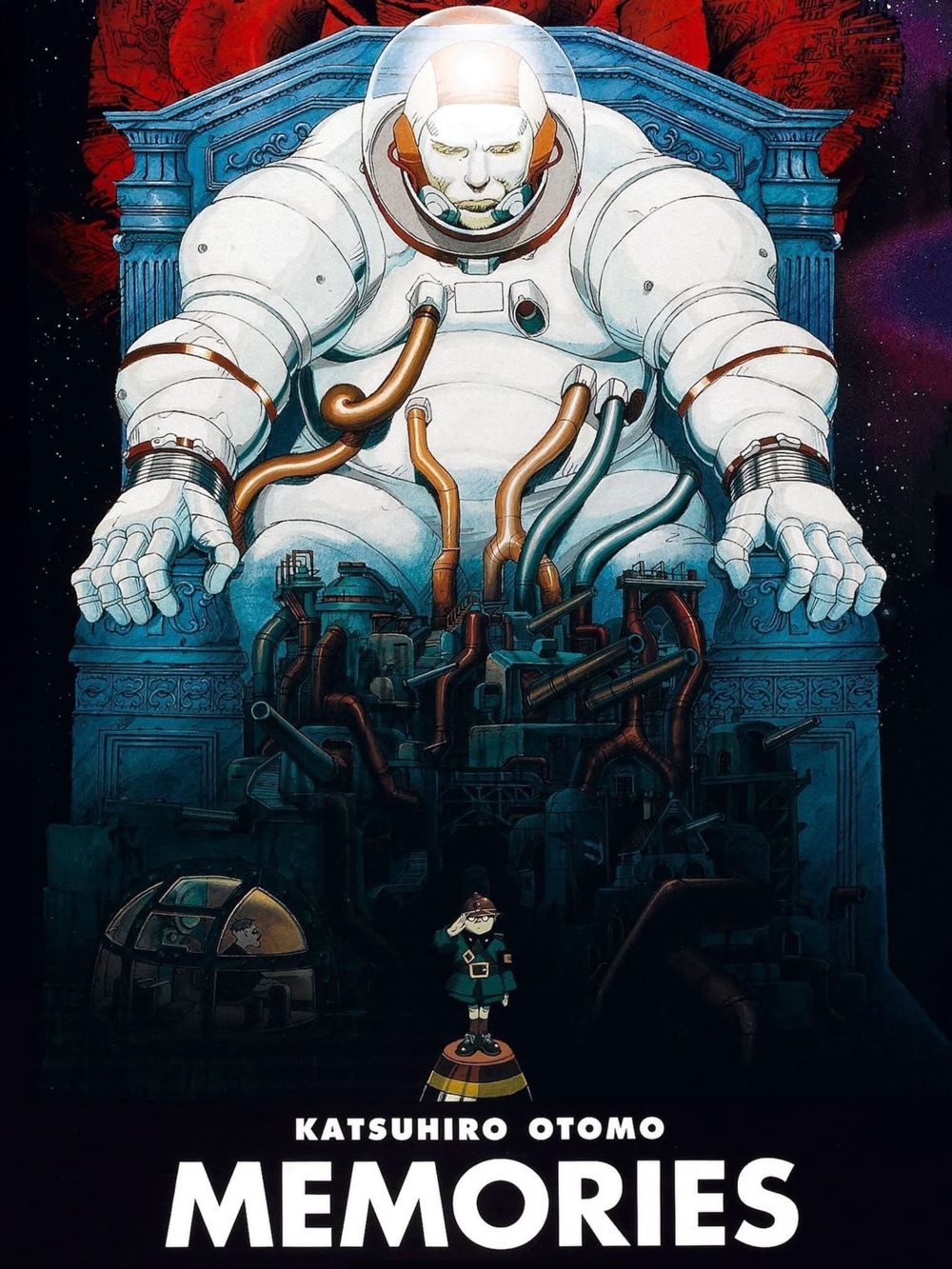
Memories is a mid‑90s anime anthology that feels like a snapshot of how wild and experimental the medium could be when a bunch of heavy hitters got to play in the same sandbox. It’s made up of three separate stories—“Magnetic Rose,” “Stink Bomb,” and “Cannon Fodder”—that don’t connect plot-wise but circle around similar ideas: how technology intersects with memory, systems, and human weakness. The end result is uneven in spots but consistently interesting, and when it clicks, it’s honestly outstanding.

“Magnetic Rose” is the clear showpiece. Directed by Kōji Morimoto and written by Satoshi Kon, it follows a deep-space salvage crew that investigates a distress signal and discovers a derelict structure haunted by the lingering memories of a famous opera singer. The visual approach blends cold, utilitarian sci‑fi hardware with crumbling, ornate interiors, so it feels like the crew is trespassing inside someone’s decaying mind as much as an abandoned ship. The way the environment morphs and lies to the characters, folding past and present together, already hints at the kind of reality‑slipping storytelling Kon would later become famous for.

The sound design and score really push this one over the top. Yoko Kanno leans into big, emotional, opera‑flavored cues that give the segment a tragic, almost theatrical sweep rather than just standard genre tension. Instead of simply backing up jump scares or space thrills, the music amplifies the grief and obsession at the heart of the story, so it plays less like straightforward sci‑fi horror and more like a ghost story built out of longing and denial. The characters themselves are drawn pretty broadly—they mostly function as recognizable types (the seasoned veteran, the younger hothead, the crew just doing their job) rather than deep, fully explored people—but that simplicity keeps the short moving and leaves room for the atmosphere to breathe. In practice, the combination of visuals, sound, and escalating psychological pressure makes “Magnetic Rose” feel rich and layered even without a lot of explicit character backstory.

After that, Memories swerves sharply into “Stink Bomb,” a dark comedy directed by Tensai Okamura. The premise is almost absurd on its face: a lab worker accidentally turns himself into a walking biohazard and slowly becomes the epicenter of a massive crisis. The tone is much lighter, even cartoonish, but there’s a sharp satirical edge underneath. Most of the jokes come from watching institutional systems totally fail to understand or handle what’s happening, ramping up their response in increasingly overblown ways while the poor guy at the center of it all has no idea how dangerous he’s become. It’s a fun, briskly paced piece that lets the animators go wild with chaos and destruction.

That said, “Stink Bomb” is also the segment that feels the most limited conceptually. Once the central gag is in place—this one ordinary guy unintentionally leaving disaster in his wake while officials keep making things worse—the short mostly riffs on variations of that idea. The animation stays lively and the satire lands, and there are flashes of real bite in how it portrays bureaucracy and military decision‑making. But compared to the emotional and thematic density of “Magnetic Rose” or the chilling world‑building of “Cannon Fodder,” it leaves less to chew on once the credits roll. It’s enjoyable, just not as haunting.

“Cannon Fodder,” directed by Katsuhiro Otomo himself, is the quietest but in some ways the most unsettling of the three. It takes place in a city whose entire existence revolves around firing gigantic cannons at an enemy no one ever actually sees. Everything—from education to labor to family routines—is oriented toward that single, unexamined purpose. Visually, it stands apart from the rest of the film: the designs are rougher and more stylized, drawing on European comic and industrial influences rather than sleek anime polish. The big stylistic flex is the way the segment is staged to feel like one continuous movement, with the “camera” drifting through streets, factories, and cramped apartments, watching people go through their day.

There isn’t much conventional plot here, and that’s intentional. The story follows workers and a single family long enough to show how thoroughly the ideology of constant war has soaked into everyday life. Kids learn artillery math at school; adults talk about shell trajectories like it’s the weather. Because the short avoids big twists or overt exposition, it hits more like a living political cartoon: the point is how normalized the whole nightmare has become. Some viewers might find the slower, observational rhythm a bit dry or abstract, especially coming after two more immediately engaging segments. But if the mood clicks, “Cannon Fodder” leaves a lingering, uneasy aftertaste that fits the anthology’s preoccupation with systems and dehumanization.

Stepping back, the three shorts show off just how flexible this medium can be. You get operatic space horror, satirical disaster comedy, and austere anti‑war parable in a single package. There is no explicit framing device tying them together, and the shifts in tone are dramatic, so the film doesn’t feel “smooth” in the way a more unified narrative would. That can be a downside if you’re expecting a cohesive movie rather than a curated set of pieces. On the other hand, that variety is a big part of the appeal: each segment has its own personality and agenda, and the anthology structure lets them coexist without compromise.

On a technical level, Memories holds up surprisingly well. The hand‑drawn animation retains a level of texture and physicality that still looks great today, and the layouts and background work in all three segments are consistently strong. “Magnetic Rose” in particular could be screened alongside other top‑tier anime films from the era and not feel out of place. “Cannon Fodder” still feels formally bold because of its faux‑continuous-shot approach and its distinct visual tone. If anything has aged, it’s more about pacing—modern viewers used to ultra‑fast editing and constant exposition might find some stretches slower than expected—but the film rewards anyone willing to lean into its rhythms.

In terms of accessibility, Memories isn’t the most beginner‑friendly anime film. The first segment leans into psychological horror and tragedy, which can be intense if you’re mostly used to lighter or more straightforward sci‑fi. The comedic whiplash of “Stink Bomb” right after might feel tonally off if you’re still processing the emotional punch of “Magnetic Rose.” And “Cannon Fodder” asks you to be okay with a more metaphor‑driven, open‑ended piece rather than a neatly resolved story. That mix means the anthology is more likely to resonate with viewers who are already interested in anime as a cinematic form and are curious to see different approaches pushed side by side.

What really makes Memories feel important, though, is the cluster of talent involved and what they went on to do. Katsuhiro Otomo brings the weight of Akira and uses this film as a space to experiment with scale and structure. Kōji Morimoto’s work here sits right in the trajectory of his later, more explicitly experimental projects. Satoshi Kon’s script for “Magnetic Rose” reads almost like a prototype for the identity‑fracturing stories he’d later build entire films around. Tensai Okamura and Yoshiaki Kawajiri bring a sensibility for action and genre that gives “Stink Bomb” its bite, and Yoko Kanno is already showing the range and emotional intelligence that would make her one of anime’s most beloved composers. Even if you stripped away the historical context, the film would still be worth watching—but knowing what these creators went on to do makes it feel like catching a moment just before a lot of big ideas fully explode.

Taken as a whole, Memories plays like a compact tour through different corners of what anime could do in the 1990s when it wasn’t worried about franchising or playing it safe. It’s not flawless, and not every segment will work equally well for every viewer, but the high points are strong enough that the anthology earns its reputation. For anyone interested in the evolution of anime as an art form—especially on the sci‑fi and psychological side—it’s absolutely worth the time, both as a film in its own right and as a window into a formative creative era.

Anime You Should Be Watching: Tokyo Godfathers (Tōkyō Goddofāzāzu)


“I’m scared of my family, but I want to go home.” — Miyuki

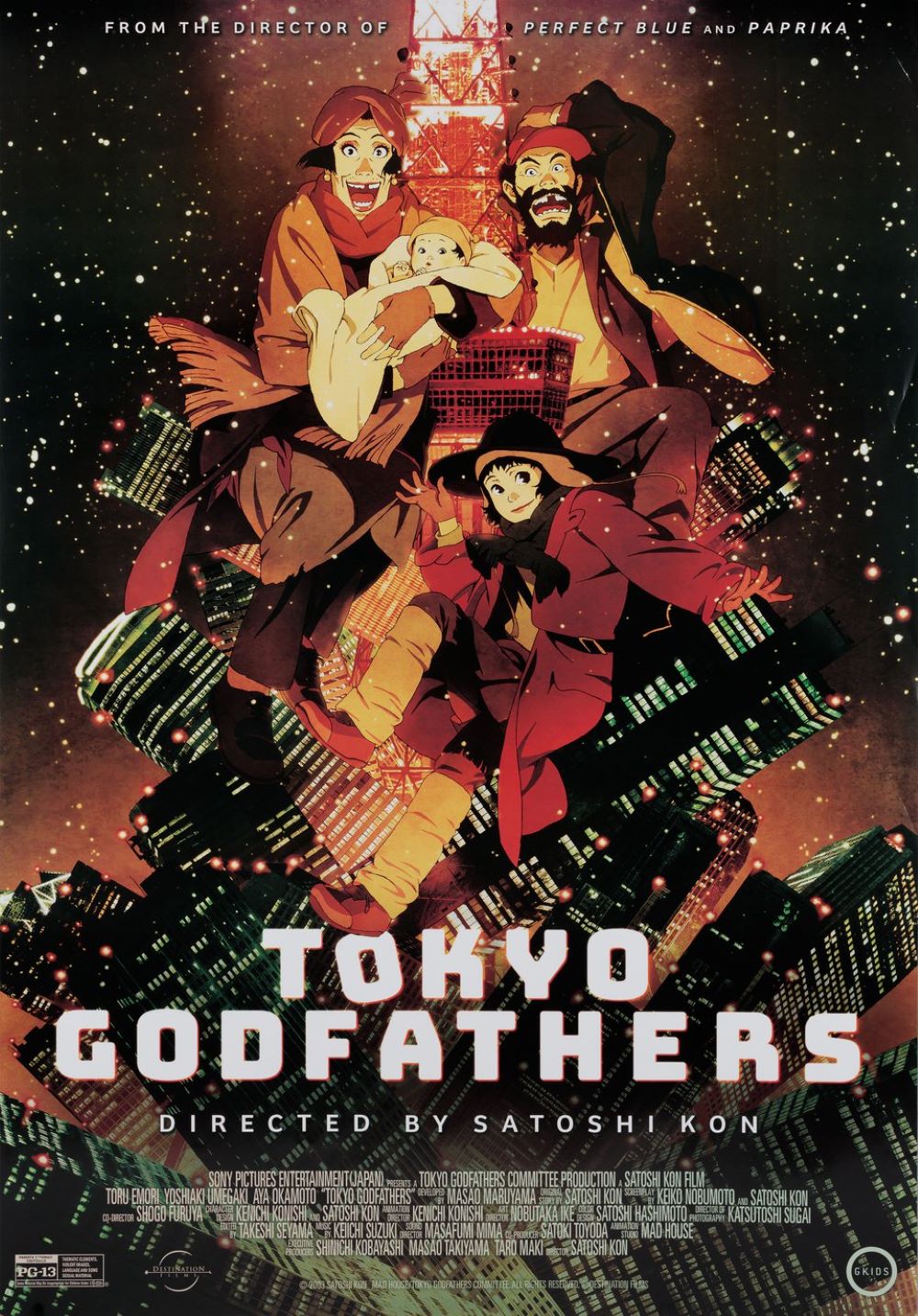
Tokyo Godfathers is a film that shows how hope and kindness can be found in the most unexpected places, all wrapped up in a hilarious, chaotic, and heartwarming story set on Christmas Eve in Tokyo. Directed by Satoshi Kon, this 2003 anime follows three unlikely characters: Gin, a middle-aged alcoholic with a troubled past; Hana, a lively transgender woman who dreams of being a mother; and Miyuki, a guarded teenage runaway dealing with her own pain.

The adventure begins when the trio, scavenging through garbage for Christmas presents, discovers an abandoned newborn baby. Hana names the baby Kiyoko, meaning “pure child,” and the three set off on a mission to find the baby’s parents using a few clues left behind. Their journey takes them into the depths of Tokyo’s bustling city life—through snowy streets, a yakuza wedding, and encounters with all kinds of characters, from hitmen to estranged families.

What makes Tokyo Godfathers stand out is its perfect blend of humor and emotional depth. It’s easy to laugh at the trio’s bickering and mishaps, but the film also offers sincere moments of vulnerability and growth. Hana’s fierce protectiveness, Gin’s struggle for redemption, and Miyuki’s search for acceptance form a trio of deeply relatable characters. Their rough lives and personal regrets are shown honestly, but the warmth they create together feels genuine and touching.

The film doesn’t shy away from depicting the harsh realities of their world, including violence, abuse, and loss. Yet even in moments of hardship and conflict, acts of giving and empathy persist. Sometimes these harsh and tender moments intersect in the same sequence—such as tense confrontations that unexpectedly end in compassion, or scenes where despair is met with generosity. This layering creates a powerful sense of life’s complexity, showing that kindness can shine brightest amidst chaos and pain.

Visually, the film captures the chilly, neon-lit cityscape with beautiful detail. The animation highlights not only the busy and bright streets of Tokyo but also the subtle emotions of the characters, from shy glances to moments of frustration or tenderness. The film’s mix of grounded realism with moments of coincidence or miracle lends it a magical yet believable atmosphere.

At its core, the film explores what family really means. The three main characters, though not related by blood, support and care for each other in ways many traditional families don’t. The baby Kiyoko serves as a catalyst for each character to confront their past and rethink their relationships. The story gently shows that family can be chosen, formed through shared hardship and love rather than just genetics.

The film’s holiday setting works beautifully because it taps into the holiday themes of forgiveness, second chances, and hope. But it doesn’t shy away from showing the harsh realities of homelessness, loss, and loneliness—making the moments of joy feel even more earned. The characters are flawed but deeply human, and their journey toward reconciliation and connection is both honest and uplifting.

Though the story relies on some lucky coincidences and wild turns, these moments of serendipity feel like part of the film’s charm, highlighting how unpredictable and strange life can be. These surprises keep the story moving and weave a sense of wonder through the gritty city streets.

The supporting characters the trio meet add layers of complexity and humor, and small scenes—like Miyuki bonding with a single mother despite a language barrier or Hana’s reflections on her past love—enrich the narrative. These interactions remind us that no one’s story is simple and everyone carries hidden struggles.

By the end, each main character faces their own moment of truth—whether it’s Gin reconnecting with his daughter or Miyuki standing up to her past. The film leaves viewers with a hopeful message: even when life feels broken, it’s possible to find grace, redemption, and unexpected family.

Tokyo Godfathers is perfect if you want a holiday movie with heart, humor, and a refreshing dose of realness. You don’t need to be an anime fan to appreciate its warmth and message. It’s a touching reminder that kindness and connection can be found in the most unlikely places—even on the coldest winter nights.

Anime You Should Be Watching: Ninja Scroll (Jūbē Ninpūchō)


“If you so want the company of devils, you’d better hurry back to hell, Gemma.” — Jubei

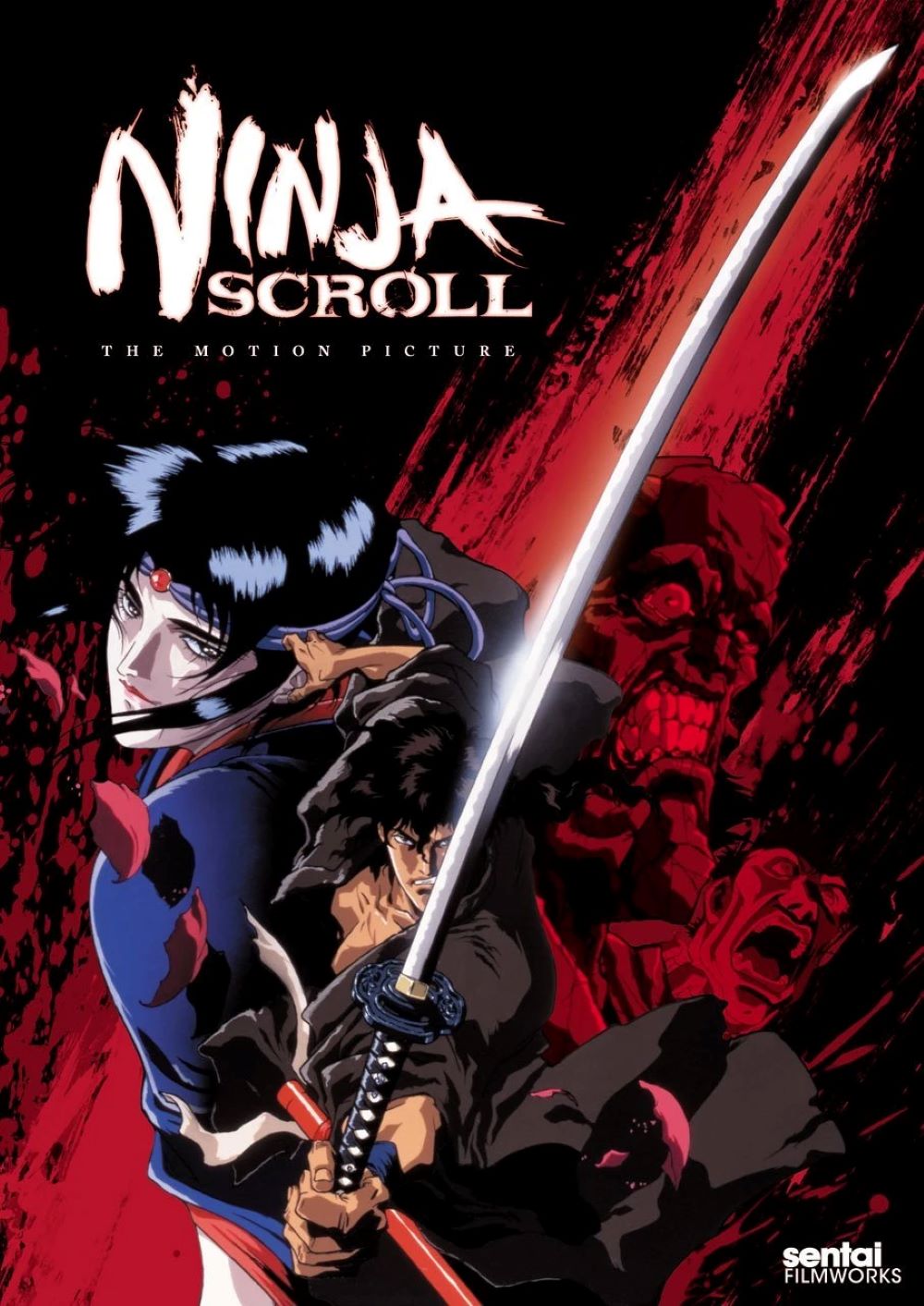
Ninja Scroll, the 1993 anime film directed by Yoshiaki Kawajiri, stands as a landmark in anime history for its groundbreaking animation, intense action, mature themes, and unique blending of historical fantasy with the supernatural. Its fluid, detailed hand-drawn animation vividly brings to life brutal sword fights and supernatural battles, while the richly textured 17th-century Japan setting immerses viewers in a dark, menacing world. This artistic achievement set a high benchmark, elevating anime’s global reputation as a cinematic art form beyond works like Akira.

The story follows Kibagami Jubei, a wandering mercenary ninja drawn into a plot involving the immortal villain Genma and the feared Eight Devils of Kimon. Though the plot remains straightforward—largely focused on Jubei’s confrontation with powerful enemies—it gains depth through morally ambiguous characters and mature themes of sacrifice, honor, and survival. A key emotional element is the relationship between Jubei and Kagero, a female poison ninja cursed to kill anyone who touches her, which sidesteps typical romance tropes and develops themes of vulnerability and resilience.

The voice acting, particularly in the English dub, is a significant highlight, delivering performances that imbue characters with seriousness and emotional nuance, broadening the film’s international appeal and cementing it as a gateway for adult animation in the West. While Ninja Scroll excels in action and atmosphere, it also courts controversy for its graphic violence and explicit sexual content. There is a notably disturbing sexual assault scene involving Kagero, which has long sparked discomfort and debate. However, it is important to clarify that while the film uses explicit sexual content to enhance its darker tone, it does not cross into hentai territory; the sexual content serves a narrative purpose rather than mere eroticism. This mature material intensifies the film’s psychological tension and power struggles, positioning it firmly within adult-oriented anime.

Sexual violence directed mostly at female characters has been a persistent source of controversy surrounding Ninja Scroll. While the sexual content is relatively tame compared to many contemporary non-hentai anime, its depiction of sexual assault and coercion has never lost its provocative edge. The character Kagero, despite being a formidable and dangerous figure, is victimized through sexual violence that many viewers and critics find disturbing. Scenes such as her being captured and violated by monstrous enemies contribute to an uneasy juxtaposition of empowerment and victimhood, with Kagero often used as a plot device to motivate male protagonists rather than as a fully autonomous character. This imbalance and the graphic nature of these depictions have led to censorship in some countries and sparked ongoing debates around the ethics of such content in adult media. Critics often argue that these portrayals risk glamorizing or exploiting sexual violence, while defenders contend that the shocking nature heightens the dark tone of the film’s world, reflecting its brutal and morally fraught universe. Nonetheless, these themes remain divisive, challenging viewers to grapple with how mature animation handles issues of gendered violence and trauma.

One of Ninja Scroll’s defining strengths lies in its animation style. The kinetic action sequences are not only meticulously choreographed but also executed with an extraordinary fluidity and dynamism that were revolutionary for the early 1990s. The hand-drawn fight scenes feature sweeping, graceful movements punctuated by sharply detailed strikes and counterattacks, bringing a visceral sense of speed and impact seldom achieved in other works of the period. This fluidity is complemented by innovative techniques like the use of deleter dot screens for shading and shadow effects, which add texture and depth without sacrificing motion smoothness.

The animation’s prowess extends beyond just the fight choreography. The film’s use of lighting and atmospheric effects creates a hauntingly dreamlike world that feels simultaneously realistic and mythical. Backgrounds are richly painted with a softness that evokes Impressionistic influences, enveloping characters in an environment that accentuates the eerie and supernatural tone. The balance between detailed character animation and these painterly settings builds a distinct visual identity that has aged gracefully over decades.

This combination of fluid, kinetic action and richly atmospheric artistry contributed significantly to Ninja Scroll being considered one of the modern classics of anime. It elevated expectations for what animated films could achieve in terms of dynamic movement and aesthetic sophistication. The influence of its animation style can be traced through numerous subsequent anime productions, as well as Western media inspired by anime’s visual storytelling techniques.

Ninja Scroll’s legacy is extensive and multifaceted. Its DNA can be seen clearly in later samurai-themed anime such as Samurai Champloo and Afro SamuraiSamurai Champloo echoes Ninja Scroll’s stylistic blending of Edo-period Japan with anachronistic influences—infusing hip-hop culture with samurai narratives—while maintaining intense, fluid sword fights and a mix of humor and gravitas. Afro Samurai shares its dark tone, violent action, and lone-protagonist vengeance quest, carrying forward the mood and narrative style originally forged by Ninja Scroll. Director Kawajiri’s subsequent works, including his segments in The Animatrix, further pursue this blend of hyper-realistic violence, dark fantasy, and mature storytelling. His visual style and thematic preoccupations continue to set standards for adult anime storytelling.

Beyond anime, Ninja Scroll substantially impacted Western filmmakers. Its dynamic animation and mature tone influenced the Wachowskis’ Matrix trilogy, particularly in its kinetic martial arts choreography and philosophical depth. This cross-cultural influence helped establish anime as a vital creative wellspring for global media, encouraging Hollywood to adopt similar stylistic and narrative innovations. The film’s success helped popularize ninja and samurai mythologies worldwide, inspiring Hollywood action films and series exploring similar themes.

In conclusion, Ninja Scroll is a seminal work blending technical brilliance, compelling voice performances, stark mature themes, and memorable characters. Its relatively simple yet focused plot allows intense action and emotional depth to shine. While its graphic sexual content remains controversial, especially due to its depiction of sexual violence toward women, this aspect underscores the dark world the film portrays rather than serving gratuitous ends. Its influence spans subsequent anime like Samurai Champloo and Afro Samurai and extends into Western filmmaking, confirming Ninja Scroll’s importance as a groundbreaking and enduring classic that shaped adult animation globally.

Anime You Should Be Watching: Space Battleship Yamato (Uchū Senkan Yamato)


 “Duty calls us to give more than our lives; it calls us to give our very souls.” — Capt. Juuzo Okita

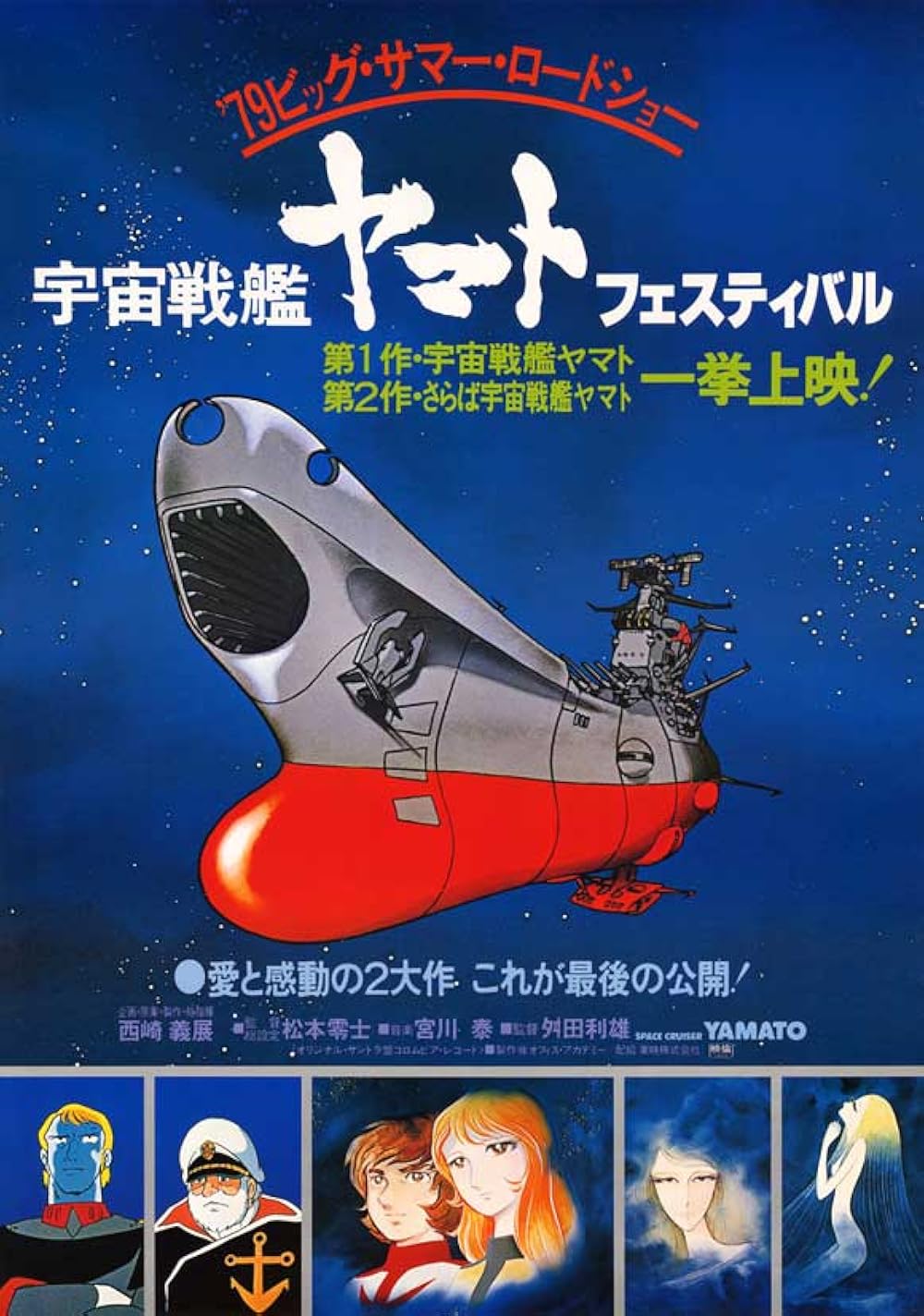
Space Battleship Yamato, which aired from 1974 to 1975, is a monumental anime series that shaped the medium’s evolution and continues to resonate deeply with audiences today. Directed by Leiji Matsumoto and produced by Yoshinobu Nishizaki, this 26-episode space opera follows the crew of the Yamato—a resurrected World War II battleship transformed into a spacefaring vessel—on a desperate mission to save an irradiated Earth.

Set in the late 22nd century, Earth has been devastated by radiation from relentless attacks by the alien Gamilas. The surface is inhospitable, and humanity is forced underground. Salvation arrives in the form of a message from the distant planet Iscandar, promising a technology that can cleanse Earth’s radiation. The Yamato, captained by Juuzo Okita and crewed by a band of determined officers including the impetuous but brave Susumu Kodai, must make a perilous journey through hostile space to retrieve this salvation device. Along the way, they face not just merciless enemies but internal struggles, moral dilemmas, and the constant pressure of a ticking clock: the Earth will perish within a year if they fail.

In many ways, Yamato broke the mold for 1970s anime. At a time when most shows were episodic and targeted mainly at children, this series presented serialized storytelling with a complex, continuous narrative arc. This format created genuine dramatic tension and emotional stakes that kept viewers invested episode after episode. While some parts drag with melodrama or technical exposition, the story steadily builds toward a moving climax filled with sacrifice, hope, and bittersweet heroism.

Animation-wise, the series shows its age, with occasionally stiff character movements and production shortcuts like reused backgrounds—typical of 1970s TV budgets. Yet, Leiji Matsumoto’s designs and the Yamato ship itself remain iconic, blending Japan’s wartime history with futuristic sci-fi technology in a compelling aesthetic. The space battles are sweeping and cinematic for the era, supported by Hiroshi Miyagawa’s rousing and emotional musical score, which perfectly balances military pride and somber reflection.

The characters inhabit archetypal but evolving roles. Captain Okita embodies the bushido spirit—noble, self-sacrificing, and burdened by duty—while Kodai matures from impulsive youth to responsible leader molded by loss. Supporting characters bring warmth and conflict, though the presence of women like Yuki Mori reflects dated 1970s gender norms, often limiting them to stereotypical and occasionally objectified roles, which jars against the show’s mature themes.

Beneath its sci-fi veneer, Yamato is a profound meditation on postwar Japanese identity. The revival of the WW2 Yamato as a vessel of salvation symbolizes a desire to transform defeat and shame into hope and renewal. The series navigates the duality of glorifying martial courage while confronting war’s tragic costs. The alien Gamilas are also complex antagonists, featuring honorable figures as well as villains, introducing a nuanced moral landscape rare for its time.

The influence of Space Battleship Yamato on anime is immense and multifaceted. It essentially invented what became the “serious,” serialized sci-fi anime format, making way for legends like Mobile Suit Gundam, which took the treatment of war, politics, and character drama to new levels, and Macross, which played with themes of enemies-turned-allies. Notably, Hideaki Anno, creator of the psychologically rich Neon Genesis Evangelion, cites Yamato as a formative influence, incorporating its emotional and philosophical themes. The series also impacted video games, with elements of its design and story inspiring creators well beyond animation.

The Yamato universe has expanded through numerous sequels, side stories, spin-offs, and remakes. The modern reboot Space Battleship Yamato 2199 is a fan favorite, refreshing the original plot with updated animation and added depth, proving the story’s continued resonance. Other adaptations include OVAs, manga expansions, and a live-action movie, each exploring various facets of the original mythos while bringing Yamato to new audiences.

On the international stage, the series’ English-dubbed adaptation, Star Blazers, was among the first serialized anime to reach Western audiences, planting early seeds for global fandom. Its mature storytelling, serialized arcs, and emotional depth influenced how anime was perceived outside Japan, paving the way for wider acceptance of anime as serious storytelling.

Though the animation style and representations may feel dated now, Yamato’s strengths remain powerful: its epic storytelling, rich themes of sacrifice and renewal, unforgettable characters, and visionary world-building. The show exemplifies how anime can weave thrilling adventure with meaningful thematic exploration, laying groundwork that countless series have followed.

Space Battleship Yamato (1974-1975) stands as a cornerstone of anime history. It transcended its era to become a storytelling template and cultural touchstone whose legacy endures through its influence, spin-offs, and remakes. For fans of sci-fi, anime enthusiasts, and cultural historians alike, it remains an essential watch—a stirring saga of resilience, hope, and the human spirit against cosmic odds.

Anime You Should Be Watching: Akira


“The future is not a straight line. It is filled with many crossroads. There must be a future that we can choose for ourselves.” — Kiyoko

Akira is a landmark anime film that has left an indelible mark on both the medium and popular culture, widely regarded as a masterpiece blending dystopian cyberpunk aesthetics with potent social and political themes. Directed by Katsuhiro Otomo and released in 1988, it is an adaptation of Otomo’s own manga of the same name, adding layers of depth from its source material. The film remains a touchstone for its groundbreaking animation, complex narrative, and deep thematic explorations that resonate decades after its release.

At its surface, Akira tells the story of a post-apocalyptic Neo-Tokyo, a city ravaged by past destruction and on the brink of chaos again due to psychic powers unleashed unexpectedly on its streets. The narrative centers around two childhood friends caught in this upheaval: Kaneda, a rebellious gang leader, and Tetsuo, whose sudden acquisition of devastating psychic abilities leads to uncontrollable transformation and societal breakdown. This conflict draws viewers into a gripping tale of friendship, power, and loss.

Beneath the action-packed plot lies a rich tapestry of themes. One of the most striking is the exploration of loss of humanity through power. Tetsuo’s descent into madness as his psychic abilities spiral beyond his control serves as a visceral metaphor for how absolute power corrupts and alienates. The transformation he undergoes, from a troubled youth into a monstrous entity, dramatizes the fear of losing oneself when faced with forces that cannot be tamed. Meanwhile, the other characters and factions, including the military and resistance groups, depict varying responses to such disruptive power, from authoritarian control to emergent heroism among society’s outcasts and delinquents, emphasizing resilience in adversity.

Akira’s setting is crucial to understanding its impact. Unlike other dystopian sci-fi that glamorizes technology, Neo-Tokyo is raw and unpolished—a place of grime, corruption, and social decay. This lack of fetishization makes the depicted world more relatable and unsettling, reflecting post-World War II anxieties in Japan. The narrative draws clear analogies between the trauma of nuclear devastation and the cyclic nature of destruction and rebirth. The film and manga respectively underline how societies can be dehumanized by catastrophe yet still harbor hope for renewal and change.

The adolescent characters also embody a universal coming-of-age struggle, where uncertainties of identity, power, and responsibility mirror Japan’s own postwar societal shifts. Tetsuo’s monstrous growth and Kaneda’s protective yet rebellious nature capture the complex emotions of fear, resentment, and desire for control, making the story as much about internal battles as external ones. This allegorical layer brings timeless relevance, inviting viewers to reflect on personal and collective growth in times of turmoil.

From a technical and artistic standpoint, Akira set new standards for animation. The film’s fluid motion, attention to detail, and atmospheric world-building were revolutionary for the time and still hold up remarkably well. Otomo’s insistence on lip-syncing dialogue and meticulous frames elevated the cinematic experience far beyond typical anime productions of the 1980s. Its high-budget production values and painstaking artistry make every scene visually immersive, from frenetic gang fights to apocalyptic psychic battles.

One of the film’s most iconic and influential moments is the “Akira slide”—the flawless and stylish maneuver where Kaneda slides his motorcycle to a perfect stop amidst a high-speed chase. This scene has become emblematic not only of Akira’s kinetic energy and visual prowess but also of the potential for animation to convey dynamic motion with a sense of weight, style, and personality. The technique has been endlessly referenced and homaged in both anime and live-action works worldwide, shaping how filmmakers portray fast-paced chase and action scenes. Its balance of fluid animation, camera angles, and character flair set a new benchmark for kinetic storytelling, inspiring generations of animators and directors to capture similar moments of cool, precise motion.

Moreover, Akira’s soundtrack and sound design contribute significantly to its gritty and intense atmosphere, reinforcing the emotional beats and tension throughout the film. The score blends pulsating electronic music with haunting melodies, capturing the film’s blend of futuristic dread and human vulnerability.

Critically, Akira is celebrated not just for its technical achievements but also for its complex storytelling and thematic depth. It does not offer neat resolutions or clear heroes; instead, it portrays a morally ambiguous world where power is both destructive and transformative. The lack of easy answers enhances its emotional and intellectual resonance, making it a powerful narrative of destruction, evolution, and hope.

Akira stands among the most influential works in animation and film, a piece that’s carved its place indelibly in cultural history. Its influence isn’t just in the stunning visuals or the groundbreaking animation techniques; it’s also in how it expanded the horizons of what anime could achieve on a global scale. Otomo’s dystopian vision challenged viewers to confront uncomfortable truths about power, chaos, and societal resilience. Years after its debut, the film continues to inspire and provoke new generations of creators—each eager to capture some fragment of its raw energy and layered storytelling. Akira’s legacy is not just that of a cinematic masterpiece but as a catalyst that reshaped the possibilities for animated storytelling, making it a timeless beacon for artists and audiences alike.

Anime You Should Be Watching (Horror Edition): Blood: The Last Vampire


 “I am a vampire, and that is the truth.” — Saya

In 2000, Blood: The Last Vampire made quite an impact as a visually stunning and atmospherically intense anime horror film. It expertly combines military tension with supernatural thrills in a compact, sharply executed story. Directed by Hiroyuki Kitakubo and produced by Production I.G, this film helped define the vampire-action subgenre by delivering a haunting tale that’s as much about loneliness and identity as it is about monster hunting.

The story unfolds in 1966 at the Yokota U.S. Air Base in Japan, a setting infused with Cold War anxiety and the looming shadow of the Vietnam War. You follow Saya, a seemingly ordinary schoolgirl with a dark secret: she’s been enlisted by a secretive agency to hunt down bloodthirsty chiropterans—demons disguised as humans. Saya isn’t your typical vampire; she’s the last of her kind, wielding a katana with deadly precision while carrying the heavy burden of her immortal existence. Her cold, detached demeanor makes her an intriguing character, caught between humanity and monsterhood.

One of the film’s standout features is its incredible art and animation. Production I.G used a mix of traditional hand-drawn animation and early CGI to create a look that’s both detailed and immersive. In fact, James Cameron was an early fan, admiring the film’s innovative blend of 2D and 3D animation techniques that pushed technological boundaries to craft a visually striking experience. The backgrounds—military bases, grim hallways, and moody night scenes—feel tangible, while the fluid movements of the characters add grit and weight to every action sequence. The colors are muted but striking, with shadows dominating the frame and bold splashes of red that echo classic horror imagery.

While watching Blood: The Last Vampire, one can also spot clear influences from Western vampire horror, especially the live-action film Blade, which came out a few years prior, and the TV series Buffy the Vampire Slayer. The character of Saya shares traits with Buffy— a young, powerful woman wrestling with her role as a vampire hunter—melding gothic sensibilities with modern action heroine tropes. Director Hiroyuki Kitakubo has acknowledged in interviews that such Western influences, along with classic vampire literature like Dracula, shaped the film’s tone and character design. This fusion creates a uniquely cross-cultural vampire narrative that appeals broadly.

When it comes to horror, Blood goes for a raw, physical kind of fear rather than romanticized gothic vibes. Its monsters are grotesque and disturbing, bristling with sharp teeth and distorted faces. The fight scenes are swift and brutal, with blood sprayed in a way that’s more artful than gratuitous. The film wastes no time with filler; each moment serves to ramp up tension or deepen the mystery.

Saya herself is surprisingly well developed for such a short film. Her isolation and internal conflict give her depth beyond standard vampire tropes. You can sense the loneliness beneath her impassive exterior, along with a kind of weariness about her role as predator. Though the film leaves plenty unsaid, it effectively uses these shadows in the story to hint at a broader tragedy driving Saya on.

However, the film does have its drawbacks. Clocking in under 50 minutes, its brevity feels like a hindrance. The story’s short runtime leaves many threads underexplored, especially the wider world-building and deeper character background that fans of such a rich universe might crave. Some may find the pace hurried, with the narrative skimming over potentially fascinating lore and emotional beats. Additionally, Blood: The Last Vampire was mostly voiced in English, a decision by Production I.G. aimed at making the film more accessible to Western audiences. However, the English voice acting can be hit or miss, which may become distracting for anime viewers who prefer mostly Japanese voice acting with English subtitles.

Despite these flaws, the film’s soundtrack remains atmospheric and effective, supporting tension without overwhelming the visuals. The mix of Japanese and English dialogue fits the multicultural military setting, even if some performances falter.

Importantly, Blood: The Last Vampire served as a critical gateway for Western audiences at a time when anime was predominantly known through late-night broadcasts of child-friendly series like Sailor Moon and Dragon Ball Z. As one of the few adult-themed, violent anime films to achieve mainstream success in the West, it opened the door for a wider acceptance of mature anime stories. This paved the way for major franchises such as Attack on Titan and Demon Slayer, which have become some of the biggest and most influential anime series worldwide over the last 25 years.

Over time, Blood: The Last Vampire has gained a devoted cult following and inspired sequels like Blood+ and Blood-C, as well as live-action adaptations. Yet few have matched the original’s moody atmosphere and stylistic innovation.

All in all, Blood: The Last Vampire is a memorable and gripping piece of horror anime. It skillfully blends postwar unease, body horror, and existential themes into a sleek, powerful package that leaves a lasting impression. Whether you’re a fan of vampire tales, Japanese gothic horror, or intense animated action, this film proves that you don’t need hours to make a horror classic. It’s short, sharp, and packs a serious punch. It may not have delivered on every narrative promise, but its innovative visuals and haunting tone secure it as a must-watch for genre enthusiasts.

Anime You Should Be Watching (Horror Edition): Angel of Darkness (Injū Kyōshi)


shokushu zeme: “tentacle attack” erotica that explores taboo themes using tentacle-based sexual fantasy as a narrative and visual motif to circumvent Japanese censorship laws.

Angel of Darkness (Injū Kyōshi) holds a notorious place in the lineage of erotic horror anime, bridging the transgressive extremities of Chōjin Densetsu Urotsukidōji and the occult eroticism that would later define Bible Black. This four-episode OVA series from 1994 encapsulates the tentacle horror subgenre with uncompromising explicitness, wrapping its unsettling imagery in a narrative set within the seemingly innocent confines of a girls’ boarding school. The series exemplifies a distinctive moment in adult anime history, when grotesque sexuality and supernatural horror merged to explore themes of control, corruption, and forbidden knowledge.

Like UrotsukidōjiAngel of Darkness does not shy away from cataclysmic violence or graphic sexual transgression. However, rather than sprawling cosmic battles and apocalyptic carnage, it opts for a claustrophobic setting where the boundaries between predation and education collapse. The boarding school, an archetype of sheltered innocence, becomes a crucible for spiritual decay where evil—in the form of demonic possession and twisted rituals—lurks beneath routine façades. This subversion of a sacred educational environment highlights the series’ investment in moral and sexual transgression as intertwined forces.

The plot centers on Professor Goda, whose discovery of a strange stone beneath a campus tree unleashes an ancient, tentacled spirit that begins a viral corruption throughout the school. His transformation into a monstrous sex demon initiates an escalating cycle of ritual abuse and possession among the students and faculty. Against this backdrop, the developing relationship between Sayaka and Atsuko—the relatively innocent lovers trying to find connection amid chaos—provides a tragic human center to the nightmarish events unfolding. The series’ focus on lesbian romance adds emotional depth while diverging from typical harem or fetishistic formulas, instead using sexuality as both refuge and vulnerability under the shadow of demonic influence.

The narrative frequently returns to graphic scenes of domination, bondage, and forced extraction of bodily fluids, imagery that serves symbolic purposes as much as titillation. The recurring S&M rituals, scenes of rape by tentacles, and the desecration of once-hallowed spaces—such as the chapel turned site of torment—communicate a profound collapse of innocence and spirituality. This fusion of sex, violence, and the supernatural positions Angel of Darkness not as mere pornography, but as a stark allegory for power, control, and the corruption of purity.

Visually, the series operates within the constraints of mid-1990s adult OVA budgets, but its simplistic, shadow-heavy animation effectively evokes a mood closer to gothic horror than glossy erotica. The color palette is muted, alternating between the sterile luminescence of the school’s daytime routine and the ominous shadows of ritual scenes. This dichotomy underscores the narrative’s tension between surface normality and subterranean evil. Though the character designs lack the polish of contemporary works like Bible Black, with rougher lines and stilted motion, these limitations amplify the uncanny atmosphere, making the viewer uneasy in a way polished animation rarely achieves.

Sexual content dominates explicitly and persistently, refusing to separate eroticism from horror. This integration exemplifies Angel of Darkness’ commitment to challenging viewer boundaries and expectations. The tentacle horror motifs—ubiquitous in the genre but here rendered with disturbing severity—represent not just physical assault but a symbolic invasion of autonomy and identity by dark forces. The series’ interest in bodily horror situates it firmly within the tradition of Japanese erotic horror, yet its blend of sexuality with a narrative of supernatural possession elevates it beyond titillation toward a meditation on corruption and loss of self.

The series’ narrative and visual style contributed significantly to the evolution of adult anime as a genre willing to explore complex themes within erotic content. It is a clear spiritual predecessor to later occult-erotic works such as Bible Black, which would refine this formula with denser storytelling and atmospheric lighting but owe much to Angel of Darkness’ bold fusion of sex and the supernatural. The taboo-challenging spirit of the series also helped popularize tentacle pornography as a distinctive fetish category internationally, with Angel of Darkness frequently cited as a touchstone in underground anime communities.

Critically, Angel of Darkness remains polarizing. Its extreme explicitness and depiction of violent, non-consensual acts alienate many viewers while fascinating others with its raw thematic ambition. While it is impossible to discuss the anime without acknowledging its deeply problematic content, dismissing it purely as objectionable obscenity overlooks its place as a cultural artifact that pushes the limits of storytelling in adult animation. Indeed, the series critiques institutional complicity and the violation of trust—from teacher to student, from sacred institution to corrupted shrine—embedding its sexual horror within a larger allegory for power abuse.

Despite—or perhaps because of—its intense imagery, Angel of Darkness has maintained a lasting cult status for nearly three decades. Its influence reaches beyond hentai audiences, with many anime historians and scholars referencing it as a foundational work in the erotic horror niche. Its legacy is one of transgression not just for shock, but as a deliberate aesthetic and narrative strategy that challenges the viewer’s comfort zones and probes darker aspects of desire and domination.

Ultimately, Angel of Darkness is a complex and disturbing work that defies simple categorization. It is a horror anime that uses explicit sexuality and supernatural menace to explore themes of corruption, power, and forbidden love. As a historical piece, it represents both the creative ambition and the social taboos of 1990s adult Japanese animation, offering a grim yet compelling experience for those prepared to confront its darkness.

Anime You Should Be Watching: Farming Life In Another World (Isekai Nonbiri Nouka)


The last anime I recommended was the mature and very dark MONSTER. It’s time to lighten and chill things down a bit with my next recommendation. This series is one of my recent favorites that I’ve re-watched several times since the 12-episode season came out January 2024. The series I am talking about is Farming Life In Another World (Isekai Nonbiri Nouka).

The series is quite light-hearted and almost a fantasy version of farming life sims like Stardew Valley. Like many isekai (trans. another world), Farming Life In Another World is about a random person (usually from Japan) who has been transported to another world either through the mistake of some multiversal god/goddess or through the machinations of a certain truck-kun.

What or who is a truck-kun? Well, I’m glad you asked. Truck-kun is literally a truck that has become the go-to implement in sending a poor person from our would and into another by running them over while they are not looking. If there was ever a perfect example of why we should always look both ways before crossing the street it is that truck-kun is always out there lurking, waiting for the right time to pounce and claim another victim. Except, truck-kun wasn’t the culprit this time around but health problems from literally being overworked to death that sends out protagonist reincarnating to another world.

So, back to Farming Life In Another World, our protagonist has been accidentally taken to another world by God and apologizes to our main character for the unfortunate turn his life had taken by sending him to this new world. God’s generosity he asks Hikaru for one wish to make his life easier on this new world and Hikaru, in his past-life as an overworked, middle-aged office worker from Japan, asks for long-life and a chance to live a quiet and arboreal life this second time around. With his new found abilities and the Omnipotent Farming Tool to help fulfill Hikaru’s wish, God sends him off to this new world, dropping him off in the Forest of Death where Farming Life In Another World begins in earnest.

This anime is definitely one of the lighthearted ones with a bit of the fan-service thrown in to add to the comedic aspect of the story being told. Farming Life In Another World was adapted from the light novel of the same name by author Kinosuke Naito. The source material made more use of Hiraku’s endless stamina courtesy of God by having him literally sleep with every female that joins the village he ends up building in the middle of the Forest of Death. The anime lightens up on this aspect of the light novel and turns it into a running joke in that he gets nervous and tries to forget the fact that every female (from vampires, killer angels to all types of elves) want to have sex with him. The anime adaptation is the PG-version of what was a very raunchy light novel.

Yet, despite the apparent change in tone with the anime adaptation compared to the light novel source material, Farming Life In Another World does actually work as a slice-of-life comedy isekai. Fans of the light novel may cry that the changes from the sex comedy that was the light novel was too much of a change for fans who have never read the light novel will not miss anything. What they will get instead is a lighthearted series that eases new fans to anime into a new genre of the medium that has dominated the industry for the past decade or so.

Just like any adaptation of a written source material there will always be those who complain that the adaptation should be slavishly faithful to the original material. Yet, I always say that even if the adaptation has made drastic changes to the source material it doesn’t change the fact that the original still exists to be enjoyed. Sure, the ecchi and heavy fanservice of the light novel has been changed to be more PG-rated but it doesn’t detract from the fun and chill vibes of the anime version.

Farming Life In Another World works, in my opinion, because it does minimize the more raunchier side of the story to concentrate on the day-to-day and slice-of-life tone of the source material. The anime focuses on the world building and comedy side of Hiraku’s journey with his companions as they build what amounts to as an advanced and powerful village in the middle of what his new world considers the most dangerous area in the world. He does this with the help from Rurushi Ru (vampire mage) and Tia (angel aka the Annihilation Angel) who start off as frenemies but turn into close friends and friendly rivals (the show hinted at Hiraku marrying both which is a compromise the show makes to the source material).

Isekai is a genre in anime that has been very prevalent each new season for the past decade or so. Some would say that this genre has been the bane of the anime industry since we see knock-offs after knock-offs every year with most being bad (though some I would consider bad but enjoyable enough to be guilty pleasures). Yet, the genre has produced some of the best series in that same time frame. They’re not the majority, but they’re there enough in number to wash the taste of the awful ones.

Does Farming Life In Another World count as one of the best in genre? I say no, but it doesn’t have to be one of the best. It just had to be the best in what it had to be and that’s a slice-of-life comedy with some clever world building that would make any one who is a fan of sims games giddy. While we don’t get the raunchy and fanservice heavy anime adaptation of the light novel (if one wanted to know what such a version would look like I suggest they watch 1980’s sex comedies like Porky’s or Revenge of the Nerds).

Plus, the anime has a banger of an opening song.

“Flower Ring” by Shino Shimoji and Aya Suzaki

Faming Life In Another World Series Trailer

Anime You Should Be Watching: MONSTER


Naoki Urusawa is widely considered one of the great mangaka (comic artist who illustrates and/or writes manga) and some sees him as one of the great storytellers of our time. His work ranges from science fiction (20th Century Boys) to sports (Happy!) and to psychological thriller (MONSTER). It is his foray into the psychological thriller realm that we are here today.

MONSTER was originally published through 18 volumes from December 1998 to December 2001. This is a rarity amongst non-shonen manga which tend to be the type of manga that remains the most popular and non-ending publishing run. Urusawa’s psychological thriller wasn’t initially seen as something that would become popular and well-received when he first approached his editor about the idea for the epic story. Yet, despite his editor’s misgivings, MONSTER gained not just critical-acclaim but a strong following not just from manga readers, but from those who usually do not subscribe to what some would see as just another comic. It is this crossover appeal along all types of readers that would see Urusawa’s dark work sell over 20 million copies sold.

Like all popular manga, MONSTER would get an anime adaptation that ran from early April 2004 and to the series’ finale late September 2005. Just like its manga, the anime series would come to be known as one of the great anime series of the past 25 years. Where some anime adaptations of popular and critically-acclaimed works tend not reach the same level quality, MONSTER avoids the pitfalls of telling such a dense and heavy story by taking on the challenge and letting the series run for as long as it needs to be able to tell a faithful adaptation.

MONSTER the anime I would put up with all the other great live-action thrillers whether film or tv and for the most part would surpass most of them. The sophistication of its execution from the making the complex plot of the story easy to follow without dumbing it down for the general audience and, this is where MONSTER hits the mark, in keeping a steady and pace that neither rushes things or keep scenes last longer than they should before boredom begins to creep in.

Those who are not big on the cutesy and/or the hyper-action of most anime that tend to be popular with the general public, I suggest taking on MONSTER and just see just how mature and sophisticated the medium can be in addition to the rest.

Anime You Should Be Watching: Nichijō


nichijou-arawi-keiichi-wallpaper

Anime comes in many varying degrees of flavor, so to speak. On one extreme are some of the more dramatic and serious offerings such as Grave of the Fireflies and original films from Miyazaki and others from Studio Ghibli. On the other side of the equation would be what some would call disposable entertainment which could range from fantasy, horror, mecha to the ever-popular mahou shoujo (aka Magical Girl) anime.

Somewhere in-between these two extremes is where some surprising anime series and films tend to pop out of nowhere to become fan-favorites in the industry. One such series is the underrated “slice-of-life” anime simply called Nichijō. The title has a literal translation of “Regular Life” and the show takes that concept of the regular lives of high school girls and adds a dose of the irreverent and the ridiculous to help highlight some of the life lessons that actually resonate beneath the show’s more over-the-top trappings.

That reason alone should be why this is one anime that people should really be watching.

Yet, the show brings more to the table than just funny and entertaining little stories. The main characters of the show are also well-written and go beyond the usual one-dimensional stereotypes of most anime. We have Aioi Yuko who one would consider as the lead girl of the show. One would think that she would be the so-called “straight man” in a show full of eccentric characters, but she herself brings her own quirks to the proceedings. These character quirks comes out more clearly when she deals with her friend Mio who, at first, comes off as the otaku of the show, but actually seems more like your typical high school girl with a talent for art. Though her obsession at drawing yaoi and trying to keep it secret makes for some of the more hilarious scenes on the show.

Even the more over-the-top characters on the show come off as more fully developed than some of the live-action “high school” shows in the west. There’s Hakase, the 8-year old genius girl who happens to have Nano, a life-life android she herself created, taking care of her and acting more like her mother than as an automaton. This pairing makes for my favorite on the show which also includes their back cat Mr. Sakamoto who also happens to talk due to the red scarf that acts like a translator that Hakase invented.

The series ended after 26-episodes and no more were ordered afterwards due to some very low sales of the subsequent video. It’s a shame since the series has since gained quite the following. Nichijō is a series that’s been able to combine the more serious and well-meaning life-lesson storytelling of your typical high school shows with the manic and ridiculous nature that some anime tend to have to help visualize particular reactions and emotions (in reality this show makes over-the-top seem like a tame description). The show has so many classic scenes that watching it becomes almost an exercise in abstract comedy.

So, if you ever come across an anime called Nichijō I recommend you check it out. You won’t be disappointed. Below is just one such scene where a normal, everyday event turns into the surreal.