Anime You Should Be Watching: That Time I Got Reincarnated as a Slime (Tensei Shitara Suraimu Datta Ken)


“If I happen to die because of this, get rid of my PC.” — Satoru Mikami

That Time I Got Reincarnated as a Slime (Tensei Shitara Suraimu Datta Ken or just Tensura) is one of those anime that sounds ridiculous until you actually watch it—and then it wins you over completely. At first glance, it looks like just another overpowered-protagonist isekai: an average guy dies, wakes up in a fantasy world, and immediately breaks every rule of balance by becoming borderline divine. But the secret of Slime is that it plays the genre cliché knowingly, twists it in clever ways, and wraps it around a surprisingly heartfelt story about kindness, leadership, and how to build a community from the ground up. Adapted from the smash-hit light novel series by Fuse, this anime manages to blend humor, politics, action, and emotional sincerity into something both epic and easy to love.

The plot starts simply enough. Satoru Mikami, a 37-year-old office worker in Tokyo, leads an unremarkable life—no family, no glory, just gray daily routine. When he’s stabbed while saving a coworker from an attack, his story seems over. But in those final moments, a disembodied voice (which fans will come to know as the “Great Sage”) grants him strange abilities based on his dying wishes—resist pain, store knowledge, devour anything—and rebirths him in another world. Only there’s a catch: he’s not reborn as a mighty warrior or a handsome prince—he’s a slime. A small, bouncy, blue blob.

And that’s the brilliance of Slime. Right from the start, it refuses to take itself too seriously. Satoru—now officially calling himself Rimuru Tempest—reacts to his new form with more curiosity than despair. He experiments with his strange “Predator” skill, realizing he can absorb monsters, materials, and abilities. What could have been a story about survival quickly becomes something much more strategic and creative. Rimuru uses his curiosity and intelligence—his distinctly human mindset—to adapt and thrive. Rather than treating this world like his personal video game playground, he studies how it works, learns its rules, and decides to reshape it with compassion instead of domination.

The premise is standard isekai dressing, but the execution sets it apart. Instead of endless dungeon fights or brooding antiheroes, Rimuru’s first big win is domestic: helping a desperate goblin tribe survive by organizing them into an early community. That act of leadership kickstarts the show’s core theme—world-building not just in the literal sense, but in the moral one. Rimuru’s journey isn’t just “how strong can I get?” It’s “how can I make life better for everyone who trusts me?”

Season 1 captures this beautifully. It’s full of warmth, humor, and charm, balancing genuine emotional stakes with endlessly creative fantasy world-building. Each new episode adds another layer: goblins evolve, wolves unite, ogres become loyal allies, and soon Rimuru’s little settlement turns into the thriving “Tempest Federation.” Watching this society grow feels oddly satisfying—like SimCity mixed with The Lord of the Rings. Rimuru’s mix of modern knowledge and genuine empathy makes him an ideal leader, not because he’s undefeatable, but because he listens. And yes, he is overpowered—but his strength never alienates him from others. Instead, it’s his compassion that keeps everyone orbiting around him.

Then Season 2 hits, and that’s where Slime surprises anyone who thought it was just a feel-good story. Without spoiling any major turns, the narrative expands dramatically, weaving in politics, moral conflict, and real emotional stakes. We see the pressures that come with leadership—and that building a nation means dealing with jealousy, greed, and betrayal from other powers. Rimuru faces choices that test his entire philosophy: when kindness clashes with survival, which wins? It’s during this stretch that Slime truly proves it’s not all fluff. It’s not afraid to explore tragedy, anger, and questions of responsibility while still maintaining that core optimism. The emotional moments hit harder precisely because the first season was so upbeat—when darkness strikes, it matters.

By Season 3, the show evolves from a fun fantasy romp into full-blown epic world-building. The stage grows larger as Tempest becomes recognized as a power equal to human nations and even the Demon Lords themselves. The scale of the story starts to echo grand political and military dramas, yet Slime never loses its charm or humor. New characters arrive, alliances form, and the world Fuse created in the light novels starts unfolding in earnest, rich with lore and history. The storytelling becomes more intricate, drawing on themes of diplomacy, governance, and the tension between peace and power. Rimuru, now balancing the weight of nations, remains empathetic, even as he stands toe-to-toe with gods and demons. The anime’s pacing gets sharper in these seasons—the stakes feel higher, but every step still connects back to Rimuru’s original dream of coexistence.

What’s striking is how Slime manages to mature without losing its brightness. Other isekai get darker as they grow “serious,” but Slime earns that depth while keeping its warm soul intact. You still get the lovable banter, the laugh-out-loud humor, and the chaotic cooking incidents with Shion’s questionable meals—but now those lighthearted scenes are contrasted by moments of real tension, making the highs and lows hit harder. It’s a tonal balance most anime fumble, but this one handles gracefully.

Credit where it’s due: Studio Eight Bit deserves massive praise for consistency. Across multiple seasons, the animation remains vibrant, colorful, and fluid. Rimuru’s slime form has this elastic motion that never stops being oddly satisfying to watch, while the battle choreography builds steadily in intensity. The later large-scale fights—especially those involving entire armies—carry real cinematic weight, made possible by polished direction and careful scaling of power levels. And yet, some of the most memorable sequences aren’t the battles at all—they’re moments of world expansion, where the show slows down to reveal a new nation, a festival, or a simple shared meal. The world feels tangible, lived-in, and surprisingly peaceful when it needs to be.

The voice acting is equally excellent. Miho Okasaki’s performance as Rimuru captures the rare balance of leadership and levity—cool-headed yet warm, curious yet confident. Other standouts like M.A.O. as Shion and Makoto Furukawa as Benimaru bring distinctive energy to their roles, adding emotion even to comedic exchanges. The soundtrack enhances everything—rousing orchestral pieces for the grand battles, gentle piano and flute motifs for Tempest’s everyday life. The music, like the story itself, isn’t just about big moments; it’s there to remind you of what’s worth protecting.

Where the series really shines, though, is in how it redefines heroism. Rimuru isn’t a lone knight, a destined savior, or a man on a revenge mission. He’s a builder. He wins through collaboration, understanding, and logic as much as through magic or might. That makes him one of the most endearing protagonists in contemporary anime—a soft-spoken optimist who’d rather talk his way to peace than fight needlessly, but who won’t hesitate to defend what matters when push comes to shove. His brand of leadership feels quietly revolutionary, showing strength through empathy rather than ego. That’s the underlying hook of Slime: it’s power fantasy done with heart.

Supporting characters thrive within that dynamic. Shion’s unfiltered enthusiasm, Benimaru’s steady confidence, Shuna’s intelligence and warmth—each plays a vivid role in making Tempest feel like a real, breathing community. Even the side characters grow, gaining new depth as the seasons roll on. By the time you reach Season 3, the relationships built from earlier episodes pay off emotionally. Tempest doesn’t just survive because Rimuru’s strong—it endures because everyone around him shares his vision.

And just when it feels like the story has covered everything, the best news arrives: there’s much more coming. A massive fourth season has already been announced, set to include 60-plus episodes—one of the largest season plans in recent anime memory. This next arc is expected to dive deep into the light novels’ later storylines, some of the most complex and thematically rich in Fuse’s entire saga. Fans can expect broader conflicts, new continents, cosmic-level stakes, and a deeper dive into the philosophical questions the anime hints at. If Seasons 1 through 3 show Rimuru learning how to rule, Season 4 promises to show what it truly means—to lead, to balance ideals and pragmatism, and to face the cost of utopia head-on.

What’s most exciting is that the groundwork is already there. The anime’s consistent quality, expanding world, and loyal fanbase suggest that these upcoming arcs could elevate it into one of the great long-form fantasy anime—something closer to a serialized epic than a simple adventure. It’s rare for an anime adaptation to not just match its light novel source material but to build upon it visually and emotionally, and Slime continues to do exactly that.

So, why call That Time I Got Reincarnated as a Slime a must-watch? Because it does what few modern fantasy anime manage—it believes in its own heart. It’s smart without being cynical, hopeful without being naive, and endlessly entertaining while still exploring meaningful ideas about leadership, identity, and what it means to build something lasting. Rimuru’s world might be made of magic and myth, but his struggles and principles feel deeply human. Every season expands that truth in new directions, and the best part is, the story isn’t even close to over.

Whether you’re a long-time anime fan or someone looking for a genuinely uplifting escape, this series is pure comfort with real depth—a rare blend of world-building, intelligence, and soul. If you’ve overlooked it before because of its funny title, now’s the perfect time to dive in. With a massive new season on the horizon and Rimuru’s journey only getting grander, That Time I Got Reincarnated as a Slime isn’t just an isekai success story—it’s growing into one of the defining fantasy epics of this generation.

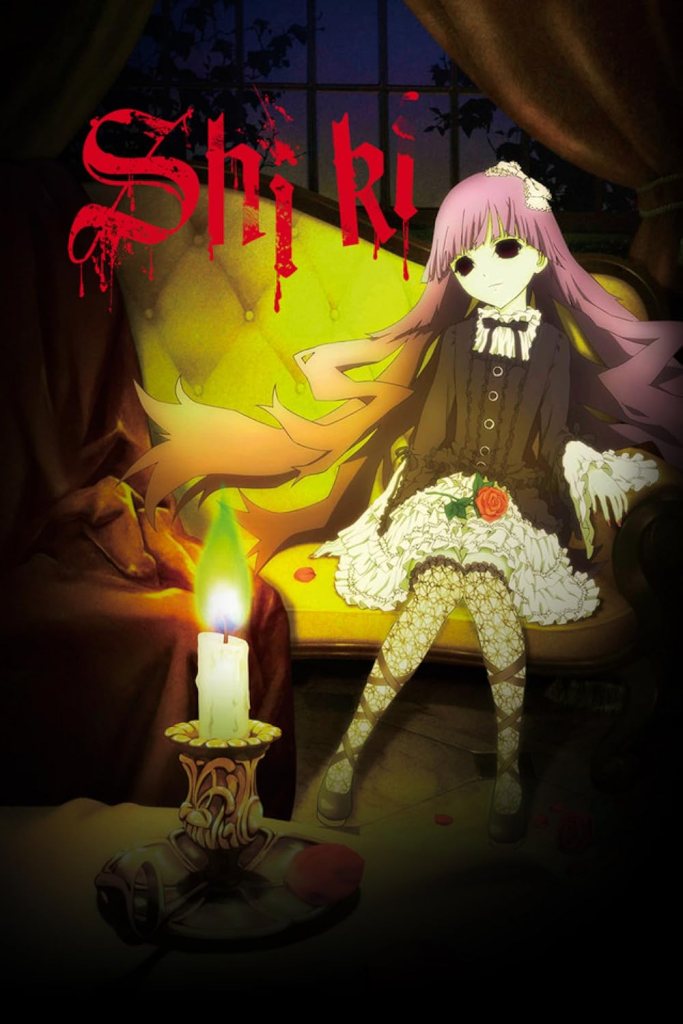
Anime You Should Be Watching (Horror Edition): Shiki (dir. by Tetsurō Amino)


The anime adaptation of Shiki, based on Fuyumi Ono’s acclaimed horror novel and directed by Tetsurō Amino, stands as a rare specimen in the horror genre. Rather than relying on quick shocks, excessive gore, or typical jump scares, Shiki unsettles its audience through atmosphere, moral erosion, and the slow, relentless unraveling of human conscience. Premiering in 2010, the series unfolds at a measured, almost meditative pace, transforming what could have been a simple vampire tale into a profound meditation on survival, faith, fear, and the delicate boundary between life and death when everything is pushed to the brink.

The story is set in Sotoba, a small, isolated village nestled precariously near a larger modern metropolis. The residents of Sotoba live tightly woven lives, their routines and social bonds preserved with careful attention over generations. This fragile peace shatters when a mysterious wave of deaths begins sweeping through the population. At first, these fatalities are dismissed as consequences of the harsh local climate—heatstroke, seasonal illnesses, and the inevitable toll of old age. Yet, as the body count rises, the truth reveals itself to be much darker: the deceased are rising as vampires, known locally as “shiki” or “corpse demons,” creatures that survive by feeding on the living.

What distinguishes Shiki from many other vampire narratives is its refusal to paint the conflict in stark black-and-white terms of good versus evil. The shiki are portrayed not as mindless monsters but as tormented souls, burdened by memories, emotions, and guilt over what they have become and the horrors they must commit to survive. Conversely, the human villagers—once caring and close-knit neighbors—succumb to suspicion, fear, and eventually cold-hearted survival instincts. The real horror emerges as morality frays and the line between human and monster becomes irrevocably blurred.

Unlike classic horror tales set in small towns—such as Stephen King’s ’Salem’s Lot, where a seemingly idyllic village hides sinister supernatural forces—Shiki offers a nuanced inward gaze. For instance, the novel They Thirst situates vampirism within a sprawling urban landscape, where anonymity accelerates chaos and alienation. In contrast, Shiki uses the microcosm of Sotoba to emphasize intimate, communal decay. The focus is not just on the physical threat, but on the erosion of social bonds and moral fabric, revealing how fragile human civility truly is under stress.

While ’Salem’s Lot depicts vampires as a pure evil contaminating a tight-knit community—highlighting themes of moral corruption and contamination—Shiki explores moral ambiguity with far greater depth. The vampires, including the enigmatic Sunako Kirishiki, retain their memories, emotions, and even remorse. Both vampires and humans carry guilt and anguish, complicating simplistic notions of villainy. The villagers—their friends, family, and neighbors—begin to see the suffering of the vampires while realizing their own brutal deeds. The narrative challenges viewers to question whether survival excuses the loss of morality or if it is possible to retain one’s spirit even amid brutal chaos.

At the heart of the series are characters who embody competing moral philosophies. Natsuno Yuki, a cynical teenager newly transplanted to Sotoba from the city, provides both an insider and outsider’s perspective. His disillusioned view highlights how fear, suspicion, and grief can unravel even the most intimate relationships. Natsuno serves as a rational voice within a community unraveling into paranoia and despair, offering a reflection of the audience’s own struggle to comprehend the incomprehensible.

Dr. Toshio Ozaki exemplifies the desperate human desire for order amid chaos. Initially, he seeks to explain away the deaths with rational, scientific explanations grounded in medicine. However, when superstition and supernatural realities intrude, Ozaki is compelled to confront truths beyond his understanding. His leadership in trying to save Sotoba begins with scientific resolve but soon descends into moral compromise. As hysteria spreads, the villagers’ collective violence explodes into ruthless slaughter, justified as necessary to preserve survival. Ozaki’s internal conflict—balancing ethical convictions against brutal necessity—reflects the series’ central question: at what point does the will to survive erode the soul?

Set against this turmoil is Sunako Kirishiki, the quiet yet profoundly troubled leader among the shiki. Though she has lived for centuries and suffers deeply from a sense of divine rejection—believing God has forsaken her—Sunako retains a core spirituality that anchors her sense of morality. Even as she is forced to kill in order to survive, she wrestles with guilt and her faltering faith. Her belief that divine rejection is not synonymous with divine abandonment acts as a form of moral defiance, preserving her fragile humanity amid brutal circumstances.

This spiritual resilience is deepened through her relationship with Seishin Muroi, a local junior monk and published author. Muroi, gentle and introspective, offers a unique perspective on the tragedy unfolding in Sotoba. His dual roles as a religious figure and a thoughtful writer allow him to interpret the crisis with spiritual depth and philosophical insight. His literary works—admired by the Kirishiki family, especially Sunako—explore mortality, suffering, and the search for meaning beyond pain. As a monk, Muroi embodies faith and compassion; as an author, he grapples with existential ambiguities, granting him a rare wisdom in navigating the village’s descent.

Muroi’s role makes him both observer and actor in Sotoba’s unraveling. His spiritual duties compel him to provide comfort and guidance, while his writings deepen his understanding of human and supernatural suffering. This duality shapes his interactions with Sunako and others, serving as a pathway for faith and empathy to endure amid horror and despair.

Sunako’s friendship with Muroi becomes central to her moral endurance. In contrast to Tatsumi, the Kirishiki family’s pragmatic and ruthless jinrō guardian who views survival through a cold, utilitarian lens, Muroi offers a moral counterpoint grounded in mercy and hope. Through his compassionate presence and reflective insights, Sunako finds a way to renew her faith. Although she feels forsaken, Muroi’s influence rekindles the fragile spark of belief in her that prevents her humanity from being swallowed by despair.

The thematic contrast between Muroi and Tatsumi becomes a fulcrum for Shiki: survival devoid of soul versus survival with spirit. Muroi’s continuing faith—soft, tentative, but persistent—demonstrates that even in the bleakest conditions, moral conviction need not fade entirely. His dual lens as monk and author enriches the narrative, bridging theology and philosophy while threading through the story’s core existential dilemmas.

Amino’s direction amplifies these themes through patient pacing and subtle storytelling. The mounting tension grows slowly through quiet, contemplative moments and lingering visuals—the hum of cicadas, shifting light through leaves, the barely audible footsteps in the dark. Ryu Fujisaki’s stylized character designs convey unease with elongated features and a surreal sheen, while Yasuharu Takanashi’s sparse, mournful score melds choral lamentations with haunting silences. Together, these elements create an immersive atmosphere steeped in dread and melancholy.

By the series’ climax, the distinction between human and shiki dissolves into near indistinguishability. Both sides bear the scars of survival—physical, psychological, and spiritual. The violence ceases, but the damage lingers, leaving survivors hollow, burdened by guilt and loss. Yet amidst the ruins of a shattered community, Sunako’s renewed faith, forged under Muroi’s guidance, flickers faintly—an emblem of hope that refuses to be extinguished.

The final scene distills this weighty truth without grandiosity or closure. There are no victors, no absolutes—only profound loneliness in survival. The living bear wounds deeper than any inflicted by fang or bullet. But in this quiet aftermath, Sunako’s fragile faith, buoyed by Muroi’s steadfast compassion, pulses as the last vestige of what it means to remain human: choosing faith and empathy even when everything else seems lost.

Shiki closes not with resolution but with a haunting reminder: survival is incomplete without humanity, and faith—however delicate—is the courage to hold onto that humanity when all else has fallen away.