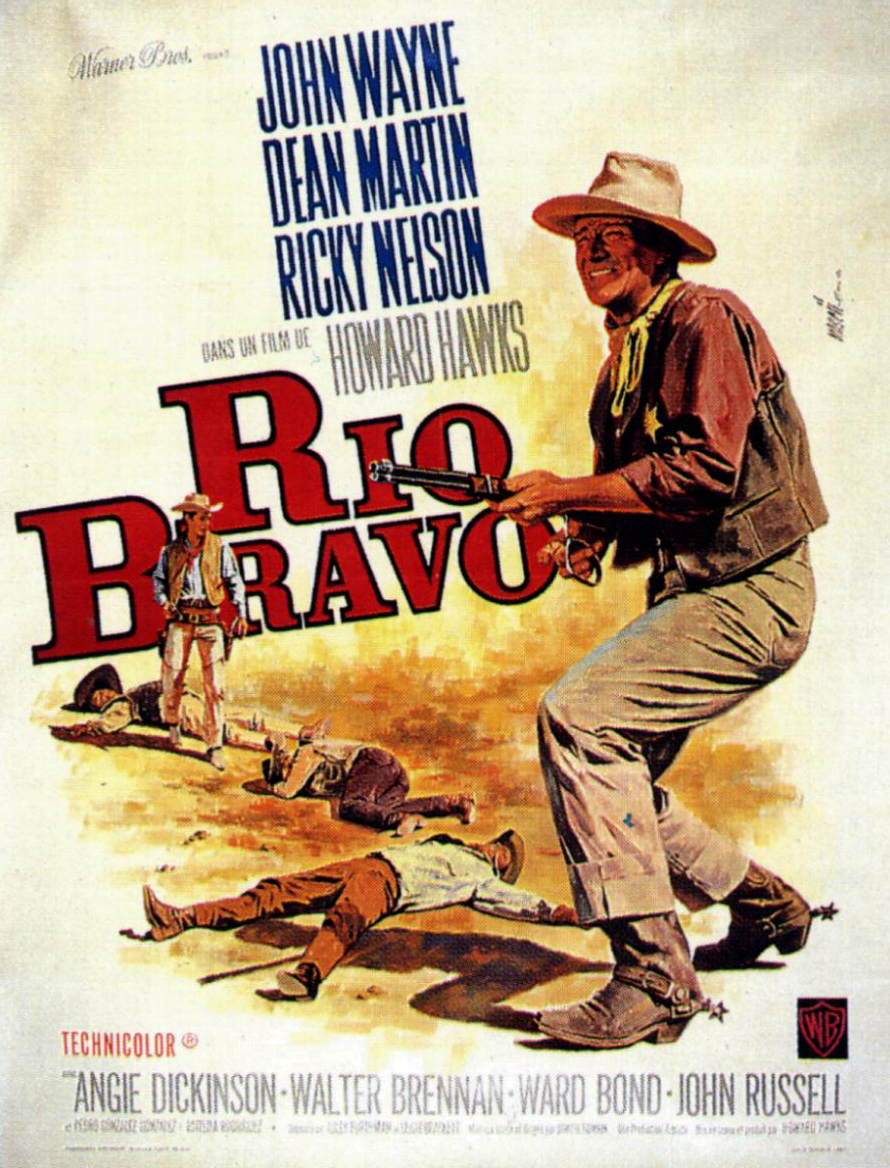
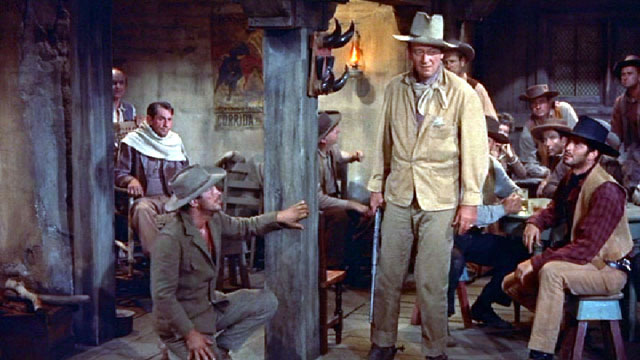
If there’s such a thing as the quintessential “John Wayne Movie”, RIO BRAVO may very well be it. Producer/director Howard Hawks created the perfect blend of action and humor, leading an all-star cast through this tale of a stand-off between the good guys and the bad guys. RIO BRAVO’s theme has been done over many times, most notably by John Carpenter in 1976’s ASSAULT ON PRECINCT 13. Hawks himself remade the film, with Wayne again starring, as EL DORADO and RIO LOBO, but the original remains the best of the bunch.
The plot itself is pretty basic. When disgraced deputy Dude (called Borrachon, Spanish for ‘big drunk’) walks into a saloon looking for booze, no-good Joe Burdette tosses a silver dollar into a spittoon for kicks. Sheriff John T. Chance stops Dude from embarrassing himself, only to receive a whack in the head for his efforts. Dude goes after Joe and a fight breaks out, and Joe kills…
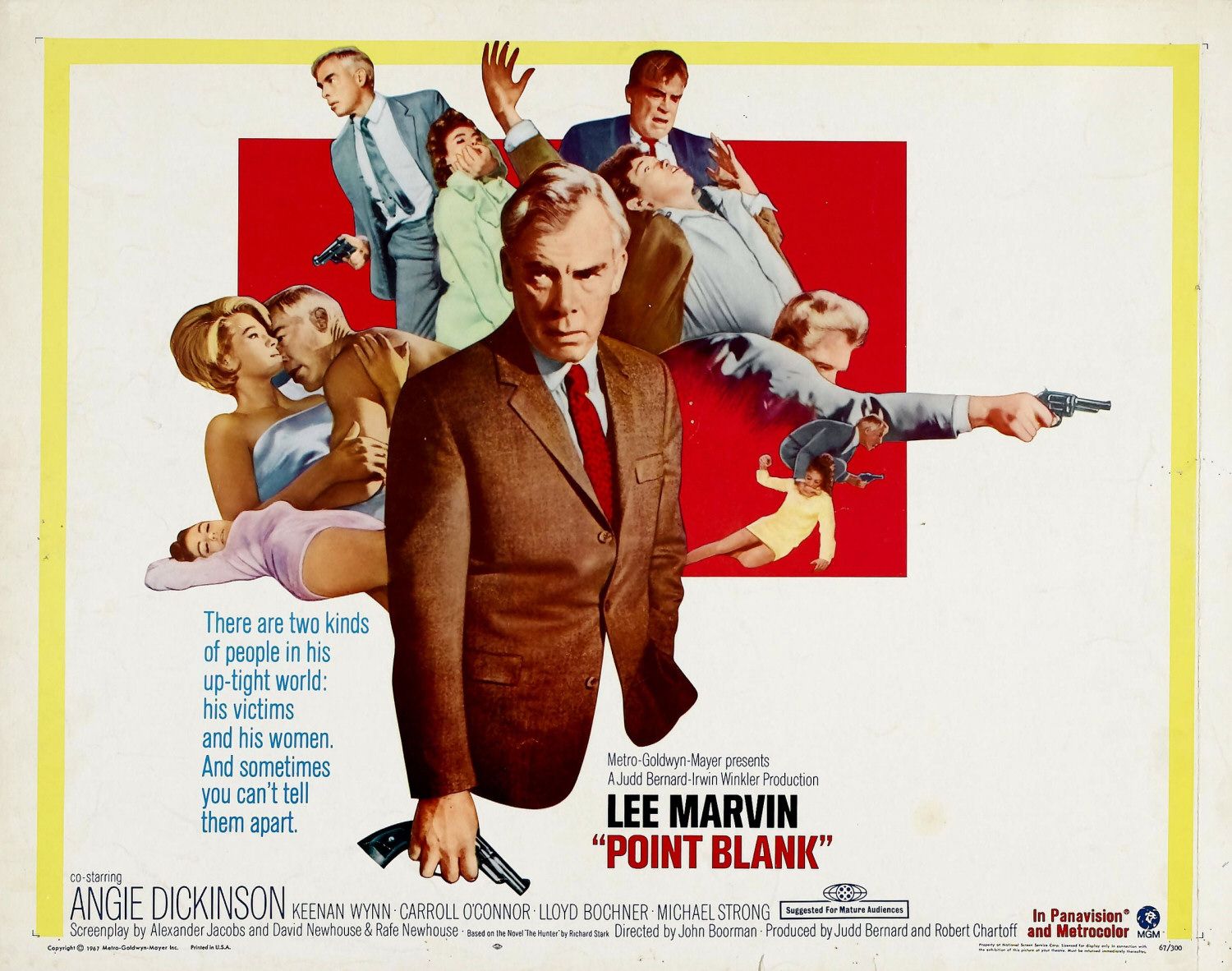
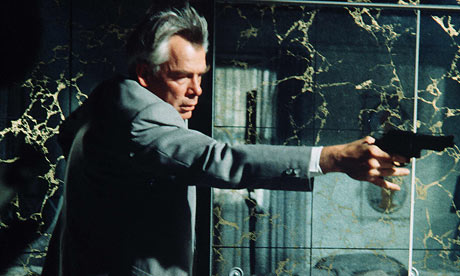
Lee Marvin was one tough son of a bitch both onscreen and off, awarded the Purple Heart after being wounded by a machine gun blast in WWII. The ex-Marine stumbled into acting post-war, and Hollywood beckoned in the 1950’s. His imposing presence typecast him as a villain in films like HANGMAN’S KNOT, THE BIG HEAT , and BAD DAY AT BLACK ROCK. A three season stint in TV’s M SQUAD brought Marvin more acclaim, and he solidified that with his Oscar-winning role in CAT BALLOU, parodying his own tough-guy image. Marvin was now a star that could call his own shots, and used that clout in POINT BLANK, throwing out the script and collaborating with a young director he had faith in, John Boorman.
POINT BLANK is a highly stylized revenge drama centering on Marvin’s character of Walker. The nightmarish opening sequence shows how Walker was left for dead on deserted Alcatraz Island by…
Today’s Horror on the Lens is The Norliss Tapes, a 1973 made-for-TV movie that was also a pilot for a television series that, unfortunately, was never put into productions.
Reporter David Norliss (Roy Thinnes) has disappeared. His friend and publisher, Stanford Evans (Don Porter), listens to the tapes that Norliss recorded before vanishing. Each tape details yet another paranormal investigation. (Presumably, had the series been picked up, each tape would have been a different episode.) The first tape tells how Norliss investigated the mysterious death of an artist who apparently returned from the grave.
For a made-for-TV movie, The Norliss Tapes is pretty good. It’s full of atmosphere and features a genuinely menaching yellow-eyed zombie monster.
Today is Angie Dickinson’s 84th birthday. One of Angie’s best remembered films is Big Bad Mama, an entertaining and fast-paced gangster film that was produced by Roger Corman.
The year is 1932 and the setting is Texas. Wilma McClatchie (Angie Dickinson) is a poor single mother with two teenage daughters (Susan Sennett and Robbie Lee) to support. When Wilma’s bootlegger lover, Barney (Noble Willingham), is killed by the FBI, Wilma takes over his route. Wilma wants her daughters to be rich like “Rockefeller and Capone” and soon, they graduate from bootlegging to bank robbery. During one robbery, they meet and team up with Fred (Tom Skerritt). Wilma and Fred are lovers until Wilma meets alcoholic con man, Baxter (William Shatner). With Fred and Baxter competing for her affections and her youngest daughter pregnant, Wilma plans one final job, the kidnapping of a spoiled heiress (Joan Prather).
Big Bad Mama is one of the many Bonnie and Clyde rip-offs that Roger Corman produced in the 70s. (Corman also gave us Bloody Mama and Crazy Mama.) Big Bad Mama is a typical Corman gangster film, with fast cars, blazing tommy guns, Dick Miller, and plenty of nudity. Angie was in her 40s at the time and, justifiably proud of her body, her full frontal nude scenes created a lot of publicity for the film. William Shatner also strips down for the film and his sex scene with Angie is just as weird to watch as you would expect it to be.
The whole film changes as soon as William Shatner makes his first appearance. He may be speaking with a Southern accent and he may be playing a sniveling coward but he is still William Shatner, with all that implies. Watching Shatner, it is hard not to imagine that Big Bad Mama is actually a lost Star Trek episode where Kirk goes back in the past and meets special guest star Angie Dickinson. Far more effective is Tom Skerritt, who is thoroughly believable as a Dillinger-style bank robber.
In the style of Bonnie and Clyde, Big Bad Mama presents its outlaws as being counter-culture rebels. Every authority figure that Wilma meets — from a preacher played by Royal Dano to a corrupt sheriff to Dick Miller’s incompetent FBI agent — is presented as being hypocritical and arrogant. Angie plays Wilma as a strong-willed and sexually liberated woman who refuses to allow anyone to tell her how to live her life or raise her daughters. In the gang, both Fred and Baxter are subservient to her. Big Bad Mama’s tag line was “Hot lead! Hot legs! Hot damn!” and that is a perfect description of Angie Dickinson’s performance.
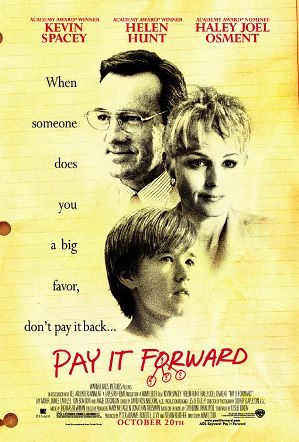
Listen, I’m not going to say too much about the 2000 film Pay It Forward because it’s such a terrible movie that I feel like writing too much about it would be like the equivalent of having sex in It Follows. Seriously, you talk too much about Pay It Forward and you’ll end up with some sort of shape-shifting demon following you around, doing you favors and demanding that you do three more favors for three other people and then those people have to do three more favors and pretty soon, everyone in the world is doing favors for everyone and…
AGCK!
Okay, okay — I know that probably doesn’t sound too bad to some people. “People being nice to each other!? What could be wrong about that?” Well, watch the damn film and find out.
In Pay it Forward, Haley Joel Osment plays a creepy little kid who basically “saves” the world. At the end of the film, he’s violently murdered and the entire population of Las Vegas gathers outside of his house with candles. His mother Helen Hunt is truly touched that everyone was so moved by Haley’s mission. That said, if Haley had never decided that everyone should pay it forward, he probably wouldn’t be dead. I mean, let’s just be honest here.
Before he died, Haley was challenged by his social studies teacher, Kevin Spacey. Mr. Spacey challenged an entire class of 7th graders to come up with an idea that will change the world. (Honestly, don’t 7th graders already have enough to deal with?) Haley’s idea is that he’ll do a favor for three random people and then those three people will do three nice things for three people and then…
BLEH! God, I hate this movie!
Anyway, Haley gives money to a homeless man and then that homeless man keeps a woman from committing suicide and then that woman does something nice for Angie Dickinson and then somehow, this all eventually leads to some rich guy giving Jay Mohr a car and telling him to “pay it foward.”
And Jay’s a reporter!
So, naturally, he starts to work his way backwards on the chain of good deeds. Along the way, he meets a prison inmate who has been converted to Pay It Forwardism. “This is going to change the world!” he tells Jay. “I’m even getting the brothers in here in on it!”
By the way, there’s exactly one person of color in Pay It Forward and he’s a prison inmate who thinks that other inmates will want to do random favors for each other.
Oh, but Haley has to do two other favors! So, he sets Helen Hunt up with Kevin Spacey and when he catches his teacher coming out his mom’s bedroom, Haley gets really, really excited and … well, it’s pretty creepy.
At first, Helen thinks that Kevin thinks that she’s not smart enough to date him. When Helen asks him point blank if he thinks that she’s dumb, he responds by giving a really long monologue about the time that his father set him on fire. Kevin does not mention what his father was attempting to pay forward…
And then Jay shows up in town and interviews Haley and oh my God, Haley’s going to change the world! Yay! But then Haley spends his third favor trying to protect a kid (played by Degrassi‘s Marc Donato) from some bullies and ends up getting stabbed to death.
But fear not! Along with that candlelight vigil, we also hear an anchorwoman breathlessly reporting that there have been reports of “Pay it Forwardism” across the country.
Now, there’s a lot of negative things that I could say about Pay It Forward but … well, I kinda already did. Pay It Forward pops up on TV a lot and there’s a lot of idiots who always get excited about it.
OMG, can't believe there are people on twitter talking about how much they love Pay It Forward. It actually makes me angry.
— Lisa Marie Bowman (@LisaMarieBowman) May 30, 2015
Here’s my fear concerning the whole Pay It Forward idea. It seems like anybody can just do anything and then go, “Pay it forward,” and suddenly, you are obligated to go do three favors. You may be running late. You may have other things you need to do. But no, you’ve been told to pay it forward and now, you have to! Because of one creepy little kid who wanted his social studies teacher to have sex with his mom, you have now been inconvenienced.
There doesn’t seem to be any rule about how big of a favor anyone actually has to do before they can smugly order you to “Pay it forward.” Think about this. You’re trying to get a Coke from a vending machine but all of your dollars are all crumbled up and the machine won’t accept them. You’re about to give up and go home when suddenly, a stranger walks up and deposits three quarters in the machine and punches a button.
He tosses you a grape drink. You wanted a Coke but, because you’re nice and you think he was selflessly trying to help you out, you smile and say, “Thank you.”
“Pay it forward,” he replies before walking away.
Well, now, you’re screwed, aren’t you?
Now, suddenly, you have to go find three people who need a favor. You didn’t want grape. You wanted a Coke and, even if you had never gotten that Coke, it would not have been the end of the world. But, because you were polite and said thank you, you are now obligated.
As you look for people to help, it occurs to you that stranger really didn’t care about whether you wanted a Coke. What he cared about was completing his third favor so he could actually get on with his life. So, no, he wasn’t trying to help you or trying to make the world a better place. Instead, he was just trying to free himself of a nagging obligation.
So, after a long search, you’ve finally found your three strangers and you’ve done your three favors and you’re finally free of your obligation. And then suddenly, another stranger runs up and tosses you the keys to one of those stupid looking Smart cars and yells, “Pay it forward!”
SERIOUSLY, IT NEVER ENDS!
Don’t tell me about paying it forward.
Just leave me alone and let me drink my damn Coke.
Pretty Maids All In A Row, which — as should be pretty obvious from the trailer above — was originally released in 1971, is a bit of a historic film for me. You see, I love movies. And, as a part of that love, I usually don’t give up. Regardless of how bad a movie may turn out to be, once I start watching, I stick with it. I do not give up. I keep watching because you never know. The film could suddenly get better. It could turn out that what originally seemed like a misfire was actually brilliant satire. If you’re going to talk or write about movies, you have an obligation to watch the entire movie. That was a rule that I had always lived by.
And then, one night, Pretty Maids All In A Row popped up on TCM.
Now, I have to admit that I already knew that Pretty Maids was going to be an extremely 70s film. I knew that it was probably going to be more than a little sexist. I knew all of this because the above trailer was included on one of my 42nd Street Forever DVDs. But I still wanted to see Pretty Maids because the trailer hinted that there might be an interesting hiding underneath all of the cultural baggage. If nothing else, it appeared that it would have some sort of worth as an artifact of its time.
(If you’re a regular reader of this site, you know how much I love my cinematic time capsules.)
So, the film started. I logged onto twitter so that I could live tweet the film, using the hashtag #TCMParty. And from the moment the film started, I knew it wasn’t very good. It wasn’t just that the film’s camerawork and music were all extremely 70s. After all, I like 70s music. I don’t mind the occasional zoom lens. And random psychedelic sequences? WHO DOESN’T LOVE THOSE!? No, my dislike of the film had nothing to do with the film’s style. Instead, it had to do with the fact that there was absolutely nothing going on behind all of that style. It wasn’t even style for the sake of style (which is something that I usually love). Instead, it was style for the sake of being like every other “youth film” that came out in the 70s.
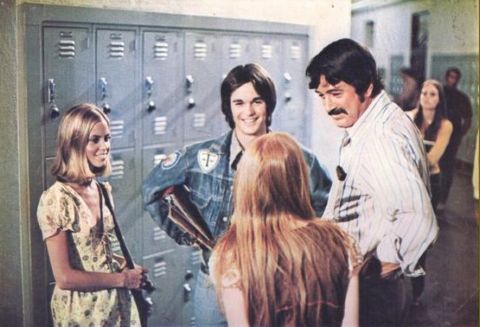
And then there was the film’s plot, which should have been interesting but wasn’t because director Roger Vadim (who specialized in stylish decadence) had no interest in it. The film takes place at Oceanfront High School, where the only rule is that apparently nobody is allowed to wear a bra. We meet one student, Ponce De Leon Harper (played by an amazingly unappealing actor named John David Carson), who is apparently on the verge of having a nervous breakdown because, at the height of the sexual revolution, he’s still a virgin.
(Because, of course, the whole point of the sexual revolution was for losers like Ponce to finally be able to get laid…)
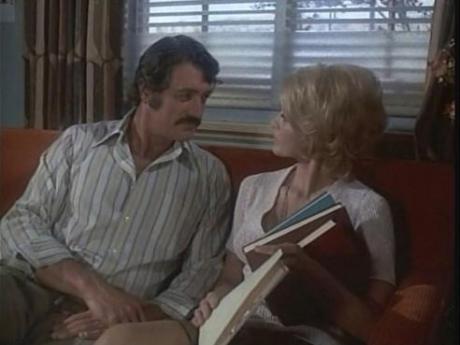
Ponce is taken under the wing of high school guidance counselor Tiger McDrew (Rock Hudson, complete with porn star mustache). Quickly figuring out exactly what Ponce needs, Tiger sets him up with a teacher played by Angie Dickinson. However, Tiger has other concerns than just Ponce. Tiger, it turns out, is a sex addict who is sleeping with nearly every female student at the school. But, American society is so oppressive and puts so much pressure on the American male that Tiger has no choice but to kill every girl that he sleeps with…
This is one of the only film I can think of that not only makes excuses for a serial killer but also presents him as being a heroic character. And, while it’s tempting to think that the film is being satirical in its portrayal of Tiger and his murders, it’s actually not. Don’t get me wrong. The film is a very broad comedy. The high school’s principal (Roddy McDowall) is more concerned with the football team than with all of the girls turning up dead at the school. The local sheriff (Keenan Wynn) is a buffoon. The tough detective (Telly Savalas) who investigates the murders gets a few one liners.
But Tiger, most assuredly, is the film’s hero. He’s the only character that the audience is expected to laugh with, as opposed to at. He is the character who is meant to serve as a mouthpiece for screenwriter Gene Roddenberry’s view on America’s puritanical culture. If only society was less hung up on sex, Tiger wouldn’t have to kill. Of course, the film’s celebration of Tiger’s attitude towards sex is not extended towards the girls who sleep with him. Without an exception, they are all presented as being empty-headed, demanding, shallow, and annoying, worthy only of being leered at by Vadim’s camera until Tiger finally has to do away with them.
(The film’s attitude towards women makes Getting Straight look positively enlightened.)
Rock and Angie
ANYWAY! I spent about 40 minutes watching this movie before I gave up on it. Actually, if you want to be technical about it, I gave up after 5 minutes. But I stuck with it for another 35 minutes, waiting to see if the film was going to get any better. It didn’t and finally, I had to ask myself, “Why am I actually sitting here and wasting my time with this misogynistic bullshit?” So, I stopped watching and I did so with no regrets.
What I had forgotten is that I had set the DVR to record the film while I was watching it, just in case I later decided to review it. So, last week, as I was preparing for this series of Back to School posts, I saw Pretty Maids All In A Row on my DVR. I watched the final 51 minutes of the film, just to see if it ever got better. It didn’t.
However, on the plus side, Rock Hudson does give a good performance in the role of Tiger, bringing a certain seedy desperation to the character. (I’m guessing that this desperation was Hudson’s own contribution and not an element of Roddenberry’s screenplay, which more or less presents Tiger as being a Nietzschean superman.). And beyond that, Pretty Maids serves as evidence as to just how desperate the Hollywood studios were to makes movies that would be weird enough to appeal to young people in the early 70s.
Watching the film, you can practically hear the voices of middle-aged studio executives.
“What the Hell are we trying to do with this movie!?” one of the voices says.
“Who cares!?” the other voice replies, “the kids will love it!”
Earlier today, when I was talking about which trailers I was thinking of including in this edition, Jeff asked me if I had included any Sonny Chiba trailers. The way he asked the question seemed to indicate that it was the most important thing he had ever asked so, understandably, I was a little nervous when I answered, “N-no, I don’t think so.”
Well, apparently, that wasn’t the right answer because Jeff’s eyes just about popped out of his head and he’s lucky that he’s s0 cute because I might otherwise have taken his reaction personally. Instead of taking offense, I’m going to start this edition off with Sonny Chiba in The Streetfighter.
This one is from one of the great, unacknowledged directors of British cinema, Peter Walker. I think it’s always strange for Americans to hear grindhouse dialogue being delivered in an English accent.
This is a trailer for an Italian film that is also known as “House 4,” “Witchcraft,” “Ghost House,” and “Demons 5.” In Italy, it was promoted as a sequel to Sam Raimi’s Evil Dead 2. For all I know, they may have tried to sell this as an installment in the Zombi series as well. I saw this film a few years ago when I was first starting to explore the world of Italian horror and oh my God, it gave me nightmares. Seriously, don’t let the presence of David Hasselhoff fool you. This is a disturbing movie that was produced (and some day actually directed) by the infamous Joe D’Amato.
Apparently, the trailer is disturbing as well as I tried to show it to my sister Erin earlier and she asked me stop it around the time the gentleman with the weird mouth showed up.
“Even a peaceful man…can get fighting mad!” Peter Fonda looked good playing archer. This is an early film from Jonathan Demme who directed one of my favorite films ever, Rachel Getting Married.
I’m scared to death of rollercoasters so I probably won’t be seeing this film anytime soon. Still this film has a surprisingly good cast — George Segal, Richard Widmark, Henry Fonda — for a movie about a rollercoaster.
Not to be confused with Crazy Mama or Bloody Mama, Big Bad Mama features Angie Dickinson, Tom Skerritt, William Shatner, and a lot of tommy guns. It’s not a great film but it is a lot more fun than Public Enemies.




 Through the Shattered Lens