4 Shots From 4 Films: Beauty #2, Poor Little Rich Girl, Outer and Inner Space, Lupe


4 Shots from 4 Films is just what it says it is, 4 shots from 4 of our favorite films. As opposed to the reviews and recaps that we usually post, 4 Shots from 4 Films lets the visuals do the talking!

75 years ago today, Edie Sedgwick was born in Santa Barbara, California.

While at a party in 1970, Edie ran into a palm reader who grabbed her hand and then stepped away, shocked at just how short her lifeline was.  “It’s okay,” Edie sweetly told him, “I know.”  One year later Edie Sedgwick would pass away, with the cause of death officially being an overdose of barbiturates.  She only lived 27 years but, for a brief few years, she was one of the most famous women in America.  She was a model and an actress and, in her way, a revolutionary.  She died before she had a chance to play the roles that she truly deserved.  Instead, we have only a few films that she made with Andy Warhol and a lot of speculation about what could have been.

This post is dedicated to Edie on her birthday.

These are…

4 Shots From 4 Films

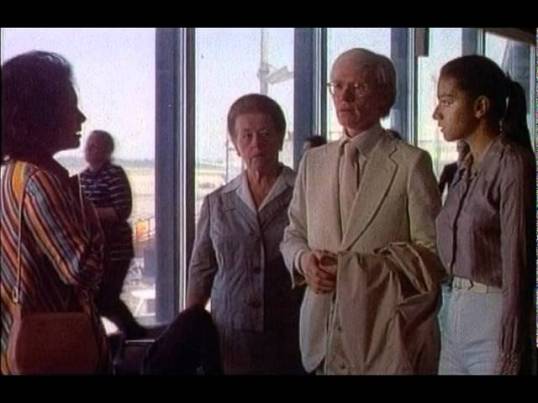
Beauty #2 (1965, dir by Andy Warhol)

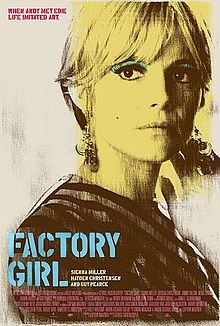
Poor Little Rich Girl (1965, dir by Andy Warhol)

Outer and Inner Space (1966, dir by Andy Warhol)

Lupe (1966, dir by Andy Warhol)

Celebrate Easter With Andy Warhol and Edie Sedgwick!


To those who observe the holiday, happy Easter!

Above, we have a picture of Edie Sedgwick and Andy Warhol posing with two rabbits.  I’m not really sure whether or not this picture was actually taken for Easter but let’s pretend like it was.  Andy certainly doesn’t look very happy with his rabbit.

Fortunately, he appears to be in a better mood in the picture below, which also features both Edie and Catherine Deneuve.

And, finally, in this next picture, Andy is finally actually smiling.  How couldn’t you smile with that many rabbits around?  Seriously, rabbits are incredibly cute.

Finally, let’s end this with Andy Warhol’s 1982 painting, Eggs:

4 Shots From 4 Films: The Creation of the Humanoids, Award Presentation to Andy Warhol, Vinyl, Basquiat


4 Shots from 4 Films is just what it says it is, 4 shots from 4 of our favorite films. As opposed to the reviews and recaps that we usually post, 4 Shots from 4 Films lets the visuals do the talking!

Happy Pop Art Day!

4 Shot From 4 Films

The Creation of the Humanoids (1962, dir by Wesley Barry)

Award Presentation to Andy Warhol (1964, dir by Jonas Mekas)

Vinyl (1965, dir by Andy Warhol)

Basquiat (1996, dir by Julian Schnabel)


A Blast From The Past: You Are The One (dir by Andy Warhol)


Pop artist Andy Warhol wasn’t just a painter and a celebrity.  He was also a filmmaker.

Below, you’ll find Warhol’s final film.  In 1985, using a type of early computer known as an Amiga, Warhol made a 2 and a half-minute movies called You Are The One.  It’s a strange little movie, one that features Marilyn Monroe and a disembodied voice repeating, “You are the one.”  It’s atmospheric and, when viewed under the right circumstances, kind of creepy.

This movie was believed to be lost until 2007, when it was found hidden away in Warhol’s studio.

Here is Andy Warhol’s final film:

Film Review: Empire (dir by Andy Warhol and John Palmer)


“The Empire State Building is a star!” 

— Andy Warhol, reportedly on the night of filming Empire (1964)

On the night of July 24th, 1964, Andy Warhol, John Palmer, Jonas Mekas, Gerald Malanga, Marie Desert, and Henry Romeny gathered in an office on the 41st floor of the Time-Life Building in New York City.

As the sun went down, they pointed a camera out a window and at the Empire State Building, which was the tallest building in the world at that time.  As they filmed, the upper 30 floors of the building were lit up in honor of the opening of the 1964 World’s Fair.  Behind the Empire State Building, the beacon atop the Metropolitan Life Insurance Company tower blinked on and off.  Otherwise, the entire skyline was invisible in the night.

They started filming at 8:06 pm and stopped at 2:42 am.  Projected in slow motion (which was either per Warhol’s specifications or the result of an error on the part of the projectionist, depending on which source you read), the final film — entitled Empire — lasted for 8 hours and five minutes.  Originally, Warhol planned to have voices in the background but ultimately, Empire would be a silent film.  Three times you can very briefly spot the faces of Warhol and the crew reflected in the window of the office.  When the tower’s skylights were eventually switched off, Warhol filmed darkness.

Believe it or not, Empire is available, in its entirety, on YouTube.  I watched about two and a half uninterrupted hours of it, along with skipping to the brief glimpses of Warhol and to the film’s end.  Believe it or not, Empire does have a definite hypnotic power.  When you spend hours staring at the same image, you do start to become fascinated by things like a blinking beacon or the occasional bird flying by the Empire State Building.  (The film was so grainy that I assumed it was a bird.  It could have just as easily been a speck of dust.)  You find yourself thinking about what it would have been like to be in New York in 1964 and to see that one brilliantly lit tower rising high above the city.  The tower does take on a life of its own.

On that night in 1964, there was no bigger star in New York City than the Empire State Building.


Music Video of the Day: Hello Again by The Cars (1984, dir by Andy Warhol)


Happy Pop Art Day!

Today seems like a good day to share a music video that was directed by one of the most important pop artists, Andy Warhol!

Hello Again was the first of three music videos that Warhol would direct before his death in 1987.  According to Greg Hawkes, who played keyboards on the song, “I think [Warhol] mainly did some of the conceptualizing and showed up to be an extra. And he invited his various friends to be in it. It was like any video shoot, but with a more interesting cast of characters. And you could always look over on the set and go ‘Hey that’s Andy Warhol.'”

And, of course, Warhol plays a role in the video.  He appears as a bartender, one who is intently watching a special on sex, violence, and rock music.  Among the patrons sitting in the bar is a young but instantly recognizable Gina Gershon.

Enjoy!

Artwork of the Day: Flag With Legs


(Andy Warhol, 1985)

Originally, when I was thinking about what I wanted to say in this post, I was going to open by saying that, right after the 4th of July, Thanksgiving is the most American of all holidays.

But, actually, that’s not totally true.  Though Thanksgiving may have been first been celebrated in the States, many nations have days specifically set aside for giving thanks.  Canadian Thanksgiving has been celebrated since 1879.  Some people in The Netherlands, from which many of the pilgrims originally came, celebrate the holiday.  Liberia observes Thanksgiving on the first Thursday of November.  In Grenada, a Thanksgiving holiday is observed on October 25th.

That said, Thanksgiving always makes me think of America.  Later today, I’ll be at my uncle’s, having a huge meal.  Because the weather’s getting cold, we’ll probably eat inside.  If we did happen to go outside to eat, we’d be eating in the shadow of an American flag, one that’s much larger than the one in this picture.  That’s right — on Thanksgiving, my uncle actually lowers his Texas flag and replaces it with an American flag.  That’s the power of this holiday.

(Rest assured, at midnight exactly, the Texas flag will go back up.)

As for today’s artwork of the day, this picture was taken by Andy Warhol in 1985, two years before he passed away.  As with much of Warhol’s work, it somehow manages to be both earnest and satiric at the same time.  It was this combination that made Warhol such a uniquely American artist.

Enjoy this uniquely but not solely American holiday!


4 Shots From 4 Underground Films: Vinyl, Beauty No. 2, Kitchen, Chelsea Girls


4 Shots From 4 Films is just what it says it is, 4 shots from 4 of our favorite films. As opposed to the reviews and recaps that we usually post, 4 Shots From 4 Films is all about letting the visuals do the talking.

We survived Tuesday the 13th!

To celebrate, here are 4 shots from 4 underground films!

4 Shots From 4 Films

Vinyl (1965, directed by Andy Warhol)

Beauty No. 2 (1965, dir by Andy Warhol)

Kitchen (1966, dir by Andy Warhol)

Chelsea Girls (1966, dir by Andy Warhol and Paul Morrissey)

Film Review: Factory Girl (dir by George Hickenlooper)


Oh God.  Factory Girl.

Released in 2006, Factory Girl was a biopic about Edie Sedgwick, the tragic model/actress/artist who was briefly both Andy Warhol’s muse and one of the most famous women in America.  Before I talk too much about this film, I should probably admit that I’m probably the worst possible person to review a movie about Edie Sedgwick.

Why?

Allow me to repost something that I wrote when I reviewed Edie’s final film, Ciao Manhattan:

“In the late 60s, Edie Sedgwick was a model who was briefly the beautiful face of the underground.  Vogue called her a “youthquaker.”  She made films with Andy Warhol, she dated the rich and the famous and for a brief time, she was one of the most famous women in America.  But a childhood full of tragedy and abuse had left Edie fragile and unprepared to deal with the pressures of being famous.  She was fed drugs by those who claimed to care about her, she had numerous mental breakdowns, and, when she was at her most vulnerable, she was pushed away and rejected by the same people who had loved her when she was on top of the world.  Edie died because, when she asked for help, nobody was willing to listen.
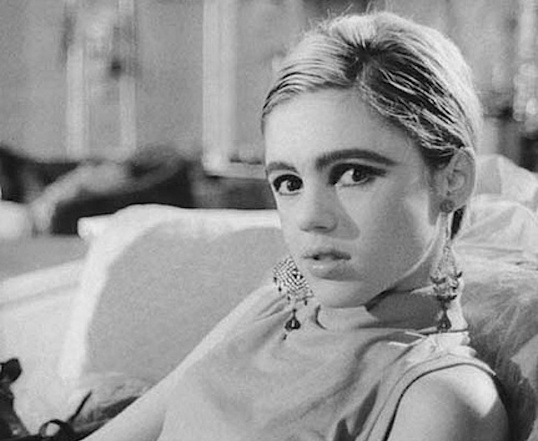
 

Edie Sedgwick (1943 — 1971)

I guess I should explain something.  I don’t believe in reincarnation but if I did, I would swear that I was Edie Sedwick in a past life.  Of all the great icons of the past, she, Clara Bow, andVictoria Woodhull are the ones to whom I feel the closest connection. (Edie is the reason why, for the longest time, I assumed I would die when I was 28.  But now I’m 29, so lucky me.)”

(Incidentally, I wrote that two years ago and I’m still alive so, once again, lucky me.)

Anyway, my point is that I’m always going to be a hundred times more critical of a film about Edie Sedgwick as I would be about any other film.  If you’re already guessing that I didn’t particularly care for Factory Girl, you’re right.  However, there are some people whose opinions I respect and some of them love this film.

Anyway, Factory Girl is a biopic that’s structured so conventionally that it even opens with Edie (played by Sienna Miller) narrating her story to an unseen interviewer.  I can count on one hand the number of successful biopics that have featured someone telling the story of their life to an unseen interviewer.  It’s a conventional and kind of boring technique.  Anyway, the film follows all of the expected beats.  Edie arrives in New York.  Edie is spotted by Andy (Guy Pearce).  Edie makes films with Warhol.  Her famous dance in Vinyl is recreated.  Edie becomes Andy’s platonic girlfriend but then, she meets and falls in love with Bob Dylan…

Oh, sorry.  He’s not actually Bob Dylan.  According to the credits, his name is Folksinger.  He says Bob Dylan type stuff.  He rides around on a motorcycle.  He carries a harmonica.  Oh, and he’s played by Hayden Christensen.

See, the first half of Factory Girl is actually not bad.  Sienna Miller gives a pretty good performance as Edie, even if she never comes close to capturing Edie’s unforced charisma.  Despite being several years too old, Guy Pearce is also credible as Andy Warhol.  The film itself is full of crazy 60s clichés but, even so, that’s not always a terrible thing.  Some of those 60s clichés are a lot of fun, if they’re presented with a little imagination.

But then Hayden Christensen shows up as Bob Dylan and the film loses whatever credibility it may have had.  Hayden, who gave his best performance when he played a soulless and largely empty-headed sociopath in Shattered Glass, is totally miscast as a musician who once said that if people really understood what his songs were about, he would have been thrown in jail.  The film attempts to portray Dylan and Warhol as two men fighting for Edie’s soul but Christensen is so outacted by Guy Pearce that it’s never really much of a competition.  Even though the film makes a good case that Edie’s relationship with Andy was ultimately self-destructive, Guy Pearce is still preferable to Hayden Christensen trying to imitate Dylan’s distinctive mumble.

Anyway, Factory Girl doesn’t really work.  Beyond the odd casting of Hayden Christensen, Factory Girl is too conventionally structured.  In its portrayal of the Factory and life in 1960s New York, the film never seems to establish a life beyond all of the familiar clichés.  (Before anyone accuses me of contradicting myself, remember that I said that the old 60s clichés are fun if they’re presented with a little imagination.  That’s a big if.)  At no point, while watching the film, did I feel as if I had been transported back to the past.  If you want to learn about Edie Sedgwick, your best option is to try to track down her Warhol films.

Edie!

Film Review: Basquiat (dir by Julian Schnabel)


Basquiat.  I love this movie.

I Shot Andy Warhol was not the only 1996 film to feature Andy Warhol as a character.  He was also a prominent supporting character in Basquiat.  In this film, he’s played by David Bowie and Bowie gives a far different performance than Jared Harris did in I Shot Andy Warhol.  Whereas Harris played Andy as a detached voyeur, Bowie’s performance is far more sympathetic.  (Of course, it should be noted that Harris and Bowie were playing Andy Warhol at very different points in the artist’s life.  Harris played the younger, pre-shooting Warhol.  Bowie played the older, post-shooting Warhol.)

Then again, it’s not just Andy Warhol who is portrayed more positively in Basquiat than in I Shot Andy Warhol.  The entire New York art scene is portrayed far more positively in Basquiat.  Whereas I Shot Andy Warhol was a film about an outsider who was destined to forever remain an outsider, Basquiat is a film about an outsider who becomes an insider.  On top of that, Basquiat was directed by a fellow insider, painter Julian Schnabel.

The film itself is a biopic of Jean-Michel Basquiat (very well played by Jeffrey Wright), the graffiti artist who, in the 1980s, briefly became one of the superstars of the New York art scene.  However, it’s less of a conventional biopic and more of a meditation on what it means to be an artist.  Throughout the film, Basquiat looks up to the New York skyline and sees a surfer riding a wave across the sky.  The image itself is never explicitly explained.  We never learn why, specifically, Basquiat visualizes a surfer.  But then again, that’s what makes the surfer a perfect symbol of Basquiat’s artistic sensibility and talent.  It’s a reminder that, while we can appreciate an artist’s work, only the artist can truly understand what that work is saying.  All attempts to try to explain or categorize art are as pointless as trying to understand why that surfer is in the sky.  Ultimately, the why is not as important as the simple fact that the surfer is there.

The film follows Basquiat as he goes from living on the streets to being a protegé of Andy Warhol’s and, until he overdosed on heroin, one of the shining lights of the New York art scene.  Along the way, Basquiat struggles to maintain a balance between art and the business.  In one of the key scenes of the film, an empty-headed suburbanite (Tatum O’Neal) looks at Basquiat’s work and whines that there’s too much green.  She just can’t handle all of that green.

Basquiat’s friendship with Andy Warhol provides this film with a heart.  When Bowie first appears — having lunch with a German art dealer played by Dennis Hopper — one’s natural instinct is to assume that Bowie as Warhol is stunt casting.  However, Bowie quickly proves that instinct to be wrong.  As opposed to many of the actors who have played Andy Warhol over the years, Bowie gives an actual performance.  Instead of resorting to caricature, Bowie plays Warhol as being mildly bemused by both his fame and the world in general.

Basquiat also develops a close friendship with another artist.  Gary Oldman may be playing a character named Albert Milo but it’s obvious from the moment that he first appears that he’s playing the film’s director, Julian Schnabel.  If there was any doubt, Schnabel’s studio stands in for Milo’s studio.  When Milo shows off his work, he’s showing off Schnabel’s work.  When Albert Milo introduced Basquiat to his parents, the nice old couple is played by Julian Schnabel’s actual parents.  It’s perhaps not surprising that Albert Milo is presented as being one of the most important and popular artists in New York City.  In a film full of bitchy characters, Albert Milo is unique in that literally everyone likes and respects him.  And yet Gary Oldman gives such a good and heartfelt performance that you can’t hold it against the character that he happens to be perfect.  There’s a small but touching scene in which Albert Milo and his daughter share a dance in front of one of Schnabel’s gigantic canvases.  Of course, Milo’s daughter is played by Julian Schnabel’s daughter.

The entire cast is full of familiar actors.  Willem DaFoe appears as a sculptor.  Christopher Walken plays a hilariously vapid interviewer.  Courtney Love plays a groupie.  Benicio Del Toro plays Basquiat’s best friend.  Parker Posey shows up as gallery owner Mary Boone.  Michael Wincott plays Rene Ricard, the somewhat infamous art critic who was among the first to celebrate the work of both Basquiat and Schnabel.  For once, the use of familiar actors does not sabotage the effectiveness of the film.  If anything, it helps to explain why Basquiat was so determined to make it.  There’s a magical scene where a then-unknown Basquiat peeks through a gallery window and sees Andy Warhol, Albert Milo, and Bruno Bischofberger.  However, the film’s audience sees David Bowie, Gary Oldman, and Dennis Hopper.  What both Basquiat and the audience have in common is that they’re both seeing bigger-than-life stars.

Basquiat is an often magical and poignant film and I absolutely love it.