October True Crime: Judgment Day: The John List Story (dir by Bobby Roth)


In 1971, a 46 year-old account named John List committed a shocking crime.

To the outside world, John List was a normal suburbanite.  He was perhaps a little bit strict but then again, it was 1971 and all of the traditional morals that John List had grown up with were being challenged in the streets and in the movies.  Neither he nor his family were particularly sociable but again, it was assumed that they just liked the privacy that was afford to them by the mansion in which they lived.  List was married to Helen.  They lived with their three teenage children and List’s 84 year-old mother.  John List was a hard worker, he taught Sunday School, and, again, he was seen as being perfectly normal.

On November 9th, 1971, John List methodically murdered his wife, his children, and his mother.  He left his mother in her upstairs apartment while the rest of his family was laid out, in sleeping bags, in the ballroom.  (Detectives later surmised that List stopped in the middle of his murder spree to have lunch and then attended his son’s soccer game before taking him home and killing him.)  List left behind several notes, explaining that he was in a bad financial situation and that he feared that his family was heading down an immoral path that would have condemned their souls to Hell if he hadn’t killed them first.  And then, John List vanished.

For the rest of the 70s and the 80s, John List was phantom.  Some speculated that he had committed suicide while others thought that he had changed his identity and had probably remarried.  In 1987, the classic thriller The Stepfather was released in theaters.  Inspired by List’s crimes, The Stepfather starred Terry O’Quinn as Jerry Blake, a real estate agent who was obsessed with creating the perfect family.  The Stepfather imagined its killer as a friendly but rigid man who snapped whenever his illusion of perfection was threatened.  It also imagine him as someone who moved from town to town, searching for a new family that wouldn’t let him down.

As for the real John List, it turned out that those who suspected him of having changed his identity were correct.  And, just as The Stepfather suggested, he had remarried and was actually now a real stepfather.  List remained free until his story was included in a 1989 episode of America’s Most Wanted.  A forensic scientist included a bust of what John List might have looked like in 1989 and a viewer realized that the bust looked a lot like an accountant named Bob Clark.  “Bob Clark” was arrested and eventually, he confessed that he was actually John List.  Despite his attorney’s attempt to argue that he was not guilty by reason of insanity, John List was eventually convicted of five counts of murder.  He spent the rest of this life in prison, dying of natural causes in 2008.

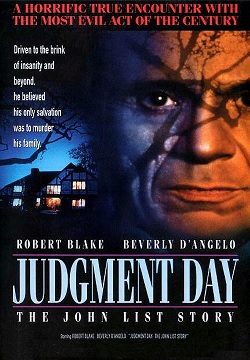
The 1993 film Judgement Day: The Story of John List tells the story of List’s crimes and his subsequent attempt to build a new life for himself.  John List is played by Robert Blake, which turns out to be a bit of a problem as Blake gives such a twitchy and obviously unstable performance that it’s hard to believe that he could have successfully gone into hiding for 18 years.  Carroll Baker and Beverly D’Angelo are not given much to do as, respectively, List’s mother and List’s first wife while David Caruso appears as the detective who is determined to catch List.  Though this film was made long before CSI: Miami, I still found myself expecting Caruso to say something quippy and put on his sunglasses.

Judgment Day doesn’t add much to the story of John List.  It certainly doesn’t offer up any new insight into what led to List becoming a murderer, beyond the fact that List himself was just kind of a jerk.  It’s pretty much a by-the-numbers production that’s only interesting today because of Blake’s subsequent legal problems.  (For the record, I’ve always felt Robert Blake was innocent.)  When it comes to John List films, stick with The Stepfather.

Horror Film Review: Silent Hill (dir by Christophe Gans)


Oh, Silent Hill.

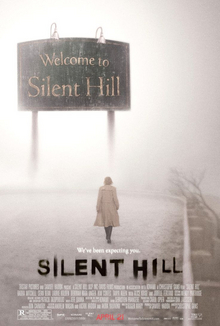
I first saw this movie way back in 2006, when it was first released into theaters.  At the time, I knew nothing about Silent Hill, beyond the fact that it was based on a video game that a lot of my friends seemed to like.  I have to admit that I had a really hard time following the plot and yet the film still totally creeped me out.  The film was one of those movies that created such an atmosphere of impending doom that the real world looked and felt different when I left the theater.  For the rest of that night, I found myself feeling paranoid about any sudden shadows.

I’ve watched Silent Hill or, at the very least, parts of Silent Hill a few more times over the years.  The plot still makes little sense to me, though I am now a bit more familiar with the game that inspired the film.  Over the years, a handful of the special effects have aged a bit poorly, with many of the once-fearsome monsters now looking somewhat cartoonish.  And yet, when the film works, it really, really works. There are certain scenes in this film that still surprise and frighten me, even though I’ve already seen them.  One character, for instance, is burned alive and I still have to look away when the fire consumes them.  The thing is that, even if the CGI now looks a bit cartoonish, the atmosphere remains.  That feeling dread continues to snake its way through every scene in the film and into the consciousness of the viewer.

I rewatched the film earlier today.  I’m feeling nervous tonight.  Maybe it’s just because I’ve got a lot of writing to do and we’ve got some home repair people coming by tomorrow to do some work.  Or maybe, it’s because I’m worried that I’m suddenly going to find myself in some sort of shadow world, being menaced by blind but stabby nurses.

The film opens with Rose (Radha Mitchell) and her husband, Christopher (Sean Bean) trying to figure out why their adopted daughter, Sharon (Jodelle Ferland), is sleepwalking and having nightmares about a town called Silent Hill.  Silent Hill is in West Virginia and was abandoned after a mysterious natural disaster.  Rose decides that visiting the town is the best way to solve the mystery.  However, after an automobile accident, Sharon disappears and Rose finds herself wandering around the town and getting attacked by monsters and occultists.  Meanwhile, Christopher is also wandering around Silent Hill, accompanied by a helpful deputy (Kim Coates), but it’s hard not to notice that his Silent Hill seems to be signifcantly difficult from the Silent Hill that Sharon and motorcycle police officer Cybil (Laurie Holden) have found themselves in.

It’s a confusing plot but director Christopher Gans does such a good job of creating and maintaining the film’s creepy atmosphere that it doesn’t matter that you’re not always sure what’s going on.  And while it’s true that there’s perhaps too many scenes of Sharon walking from place to place, there’s also some truly frightening scenes, like the one with all of those killer nurses.  The film plays out like a dream and, as we all know, you don’t question dream logic.  Instead, you just go with it.

And so, 15 years after the film was first released, I’m usually willing to just go with Silent Hill.  I’m at peace with never quite understanding it.  Instead, I appreciate it for what it is: a creepy and surreal experience that will make you think twice before stepping out into the fog.

Film Review: King David (dir by Bruce Beresford)


A film about David, the young shepherd and musician who eventually became the second king of Israel?

That sounds like a great idea!

After all, David is one of the most compelling figures in history.  Whether it’s the slaying of Goliath or his ill-fated friendship with Jonathan or his uneasy relationship with Saul, every detail about David’s youth feels perfect for cinematic drama.  And then, once David become king of Israel, the drama doesn’t end.  David finds himself dealing with both politics and temptation.  He falls in lust with Bathsheba and, in a moment of terrible weakness, he arranges for her husband to be killed in battle.  His own son, Absalom, turns against him and then, despite David’s very clear orders to the contrary, Absalom is executed while he helplessly hangs from a tree.  For every triumph in David’s life (like the time he used a slingshot to take down Goliath), there’s a tragedy.  For all of David’s attempts to be a good and wise king, he still struggles with his own weaknesses.  Every detail of David’s life seems like it belongs on the big screen.

So, now that we’ve agreed that the life of David would be perfect for a movie, consider this: A film about David, a master of both poetry and politics who was known for his deep emotions, starring Richard Gere?

Uhmmmm….

The 1985 film, King David, has all the potential to be a great film but it’s pretty much doomed by the fact that David is played by Richard Gere.  Today, of course, Richard Gere is an above average character actor who is well-cast as older, seemingly successful men who have never quite conquered their own self-doubt.  That’s not the Richard Gere who shows up in King David.  The Richard Gere who shows up in King David is the blank-faced, youngish Richard Gere who was best-known for films like An Officer and a Gentleman and American Gigolo.  Richard Gere is so miscast as David that just the sight of him takes you out of the film’s reality.  While the film plays out, you find yourself saying, “Richard Gere just killed Goliath.  Richard Gere just spied on Bathsheba.  Richard Gere is dancing through the streets of Jerusalem.”

There are a few good things about King David.  Edward Woodward gives a good performance as Saul, who has always been overshadowed David but who was, in his own way, almost as compelling a character.  The film does a credible-enough job recreating the ancient world and it’s entertaining to see the iconic Italian actor George Eastman show up as Goliath.  Far too often, though, King David becomes one of those films where every big action scene is shown in slow motion and there’s too many close-ups of swords being tossed into the air.

According to Wikipedia (that’s right, I did some “serious” research for this review), King David was actually made because it was felt that the film would be able to draw in the same audience that loved Star Wars.  That turned out to not be true as the film was a huge flop and apparently damaged a lot of careers.  But, flop or not, it was still on TV last night, which just proves that movies are forever.

Horror Film Review: Ghost Story (dir by John Irvin)


ghoststory

A Fred Astaire horror movie!?

Yes, indeed.  Ghost Story is a horror movie and it does indeed star Fred Astaire.  However, Fred doesn’t dance or anything like that in Ghost Story.  This movie was made in 1981 and Fred was 82 years old when he appeared in it.  Fred still gave an energetic and likable performance and, in fact, his performance is one of the few things that really does work in Ghost Story.

Fred Astaire isn’t the only veteran of Hollywood’s Golden Age to appear in Ghost Story.  Melvyn Douglas, John Houseman, and Douglas Fairbanks, Jr. all appear in the movie as well.  They play four lifelong friends, wealthy men who have formed an informal little club called The Chowder Society.  They gather one a week and tell ghost stories.  Myself, I’m wondering why these four intelligent and accomplished men (one is a lawyer, another a doctor, another a politician, and another is Fred Astaire) couldn’t come up with a better name than Chowder Society.

(But I guess that’s something that people do up north.  Harvard has something called the Hasty Pudding Club, which just sounds amazingly annoying.)

Unfortunately, the members of the Chowder Society have a deep, dark secret.  Way back in the 1930s, the boys listening to too much jazz and they all ended up lusting after the mysterious and beautiful Eva Galli (Alice Krige).  As Astaire explains it, “We killed her, the Chowder Society.”

(Of course, there’s more to the story.  It was more manslaughter than murder but either way, it was pretty much the fault of the Chowder Society.)

And now, decades later, a woman named Alma (Alica Krige, again) has mysteriously appeared.  When she sleeps with David (Craig Wasson), the son of a member of the Chowder Society, David falls out of a window and ends up splattered on the ground below.  David’s twin brother, Don (also played by Craig Wasson), returns to their childhood home and attempts to make peace with his estranged father.

However, now the member of the Chowder Society are starting to die.  One falls off a bridge.  Another has a heart attack in the middle of the night.  Fred Astaire thinks that Eva has come back for revenge.  John Houseman is a little more skeptical…

I pretty much went into Ghost Story with next to no knowledge concerning what the film was about.  I thought the plot desription sounded intriguing.  As a classic film lover, I appreciated that Ghost Story was not only Fred Astaire’s final film but the final film of Douglas and Fairbanks as well.  Before he deleted his account, I had some pleasant interactions with Craig Wasson on Facebook.   I was really hoping that Ghost Story would be a horror classic.

Bleh.

Considering all the talent involved, Ghost Story should have been great but instead, it just fell flat.  Alice Krige is properly enigmatic as both Alma and Galli and really, the entire cast does a pretty good job.  But, with the exception of exactly three scenes, the film itself is never that scary.  (Two of those scary scenes involve a decaying corpse and it’s not that hard to make decay scary.  The other is a fairly intense nightmare sequence.)  Largely due to John Irvin’s detached direction, you never really feel any type of connection with the characters.  I mean, obviously, you don’t want to see the star of Top Hat die a terrible death but that has more to do with the eternal charm of Fred Astaire than anything that happens in Ghost Story.

Add to that, Ghost Story‘s special effects have aged terribly.  There are two scenes in which we watch different characters fall to their death and both times, you can see that little green outline that always used to appear whenever one image was super imposed on another.  It makes it a little hard to take the movie seriously.

Sadly, Ghost Story did not live up to my expectations.  At least Fred Astaire was good…

Horror Film Review: Sleepwalkers (dir by Mick Garris)


Sleepwalkers_Motivational_by_Hailtothechimp

So, last night, I was looking for something to watch and I came across Sleepwalkers, a horror film from 1992.  And you know what?  I could sit here and I could get all snarky about Sleepwalkers and I could be hypercritical and all that other stuff.  It’s tempting because the film was written by Stephen King and Stephen King has had so much success that it’s easy to be overly critical of anything he’s involved with.

But I’m not going to do that.  Or, at least, that’s not my main objective with this review.  No, with this review, I want to pay tribute to cat named Clovis.

You see, there are several humans and humanoids in Sleepwalkers.  The film is about two energy vampires — Charles (Brian Krause) and his mother Mary (Alice Krige) — who have an icky incestuous relationship and who need to suck energy from virgins in order to survive.  Charles, who appears to be a teenager, has selected Tanya (Madchen Amick) as his latest target.  Tanya has loving parents (Lyman Ward and Cindy Pickett, who also played Ferris Bueller‘s parents) and there’s also a creepy English teacher (Glenn Shadix) who tries to blackmail Charles and ends up losing a hand as a result.  There’s several police officers, one of whom is killed when a corncob is driven into his spine.  And Steven King appears in an awkward cameo, along with Clive Barker and Tobe Hooper.

That’s right — there’s a lot of people in this movie but none of them made as big an impression as Sparks, the talented little kitty who plays Clovis.  Seriously, check Clovis out!

You see, there’s only one thing that can kill Charles and Mary and that’s the scratch of a cat.  From the minute that Charles and Mary move into their latest home, cats start to gather outside the house, meowing and just waiting for their chance to pounce.  And, when it comes time for the cats to finally make their movie, who is their leader?

CLOVIS!

After Charles kills Clovis’s owner, Clovis gathers every other cat around and we watch as, in slow motion, they run through the streets of the town.  That’s right — whatever else you may want to say about Sleepwalkers, this is a movie where cats finally get to kick some ass.

And who is the main ass kicker?

Little Clovis, of course!

At the end of the film, Tanya might not have many people left in her life but she’s got Clovis and, because of that, you know that everything’s going to be okay.

sleepwalkers1

As for the rest of Sleepwalkers … well, it’s watchable but it still really doesn’t make a huge impression.  And, to be honest, that really is the fault of the script.  It’s hard to know who (out of the humans) you’re supposed to care about.  Charles and Mary are pure evil and Charles has a really bad habit of speaking in lame one liners.  Tanya, meanwhile, is well-played by Madchen Amick but, as written, she’s a bit of a nonentity.  There is one fun scene when Tanya dances but then again, you have to wonder why movies, regardless of when they were made, always insist on making teenagers dance to songs that were written decades before they were born.

Fortunately, the film has Clovis.  Not only does he save the day but he saves the movie as well!

GO CLOVIS!

Clovis

Lisa Watches An Oscar Winner: Chariots of Fire (dir by Hugh Hudson)


Chariots_of_fire

It took me two viewings to really appreciate the film Chariot of Fire.

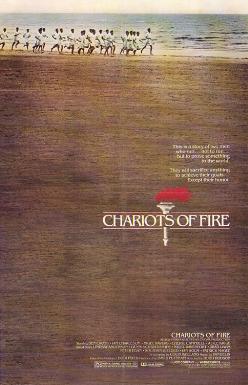
First released in 1981, Chariots of Fire won the Oscar for best picture.  It’s also one of the few British productions to take the top award.  (British films are regularly nominated but the winner is usually an American production.)  A few nights ago, it was broadcast on TCM and I watched it for the first time.  And I have to admit that I struggled to follow the film.

It’s not that the film’s story was exceptionally complicated.  At heart, it’s an inspirational sports film and it features all of the clichés that one usually associates with inspirational sports films — i.e., come-from-behind victories, eccentric trainers, athletes who are determined to compete under their own terms, training montages, and a memorable score.  (The score for Chariots of Fire was so effective that it’s still used as the background music for countless Olympic specials.)

No, I struggled to follow the film because it really was just so extremely British, featuring everything from Cambridge to Gilbert and Sullivan to a rigidly enforced class system to casual anti-Semitism,  This may have been a sports film but it was a very reserved sports film.  If Chariots of Fire had been an American film, we would have gotten countless shots of people screaming, “YESSSSS!  GO! GO! GO! GO!” Instead, the characters in Chariots of Fire are far more likely to say, “Good show, old boy.”  Whereas an American sports film would have scored a montage of competition to the sound of “Eye of the Tiger,” Chariots of Fire features a men’s chorus singing, “For he is an Englishman….”

It takes a bit of getting used to and perhaps I knew that because, even as I was watching Chariots of Fire, I still set the DVR to record it.  The first time I watched the film, I was overwhelmed by the culture shock and the resolute Britishness of it all.  My reaction was to think that, much like The Big Chill, Chariots of Fire was a “you just had to be there” type of film, the type of film that was once impressive but now just inspires you to go “meh.”

And I was prepared to write a review stating just that.  But, somehow, in the back of my mind, I knew that I should give Chariots of Fire another chance before I dismissed it.  Maybe it was the fact that I couldn’t get the damn music out of my head.  Who knows?  But I couldn’t think about the film’s opening — with all those men running on the beach and getting mud all over their white uniforms — without smiling.

So, seeing as how I am currently snowed in for the weekend, I spent this morning watching Chariots of Fire for a second time and I’m glad that I did.  Because you know what?  Chariots of Fire is actually a pretty good film.  It tells the story of Eric Lidell (Ian Charleson) and Harold Abrahams (Ben Cross), two British runners who competed at the 1924 Olympics.  Harold is a student at Cambridge.  He’s an angry young man who is running to prove all of the anti-Semites wrong.  (Of course, Harold is angry in a very sort of upper class British way).  Eric is the son of missionaries who views running as a mission from God and who refuses to run on a Sunday.  The film looks gorgeous, Charleson and Cross both give good performances, and that music demands an emotional response.  While Chariots of Fire may not be a great film, it’s definitely a likable film and there’s something to be said for that.

Plus, did I mention that the music’s great?

http://www.youtube.com/watch?v=L-7Vu7cqB20