Cave of Forgotten Dreams by Werner Herzog (Official Trailer)


One of the films to be announced after the success of James Cameron’s Avatar that would also make use of 3D cameras came from an individual who many wouldn’t consider as a proponent of 3D filmmaking. Even during and after the production of this documentary film this filmmaker still is not a total convert to the process. What he did do is use the most advanced filmmaking technique to capture on film exactly what he wanted and 3D filmmaking was the only to give his vision justice.

The filmmaker I’m talking about is the great German director Werner Herzog. The film in question is his documentary about the cave paintings in the Chauvet Cave, Cave of Forgotten Dreams.

In an unprecedented move the French government allowed Herzog to film this documentary in the Chauvet Cave but with some heavy restrictions on what sort of equipment he  and his crew could use. They were also limited in where they could stand to film scenes within the cave. Despite these restrictions what scenes people saw during a showing at the 2010 Toronto International Film Festival gave enough people an impression of Herzog’s vision.

The documentary will be released by IFC films this Spring of 2011 with the History Channel getting the rights to show it on TV. This is one of the films of 2011 of which I am very interested in seeing and the fact that it’s Herzog working in 3D is something that needs to be experienced on the big-screen.

Review: Piranha 3-D (directed by Alexandre Aja)


Yesterday, I had two concerns about going to see the new horror film, Piranha 3-D.

First off, I know that 3-D has been hailed as “the future of movies” and that apparently, Webster’s is considering whether to recognize 3Dgasm (which is the response that certain film goers have to 3-D regardless of whether the movie itself is actually good or if it’s just Avatar) for inclusion in the next edition of the dictionary.  However, 3-D often makes me sick to my stomach and I mean that literally.  3-D makes me feel car sick.  Considering that I love movies, if 3-D is the “future” than I’m probably being punished for something.  That’s right.  Avatar was just a result of my bad karma. 

As for the second concern, I can’t swim and I am terrified of being underwater.  Hanging onto the edge while wading in the shallow side of my uncle’s swimming pool is about as submerged as I can get without having a major freak out.  It’s not just drowning that scares me.   When I was 17, my family spent the summer in Hawaii and my sisters (being the meanies that they are) had a lot of fun with the fact that I’d spend hours lying out on the beach but I refused to even step into the ocean.  It made sense to me.  There were jellyfish and sharks and those weird little black coil things just floating around in the ocean.  Thanks to seeing Piranha 3-D, I now know that there are also cute little fish that will eat you.

I dealt with my fear of the water by asking my sister Erin (who can actually swim because she’s cool and I’m not) to see the movie with me and to keep me calm if I started to have a panic attack.  She agreed and she did an admirable job.  She also helped me deal with my fear of 3-D when, during the coming attractions, she said, “Why don’t you take a Dramamine?”  Now, according to Erin, the only reason she said this was because apparently I was “going on and on” about it.  That’s not how I remember it but I just happened to have some Dramamine in my purse and I quickly popped a few.

If you’ve ever taken Dramamine then you know the way that it works is by basically kicking your ass until you pass out for a few hours.  (I occasionally resort to using it whenever I’m getting hit with insomnia.)  Within minutes of taking it, the Dramamine was saying, “Sleep, Lisa…”  “But I want to see the movie,” I replied.  “That wasn’t a request,” the pill responded.  “Dammit, will you two shut up!?” Erin snapped.  (That may have not actually happened.) 

The point of all this is that I stayed awake through the entire movie, despite having taken the most powerful sleeping pill in existence.  True, my mind did go a little bit goofy (Erin says I was “babbling” through the entire film) but it never shut down.  That’s the type of movie Piranha 3-D is.  The story moves so quickly and the mayhem is so over-the-top and excessive that the brain never gets a chance to relax enough to check out.

Piranha 3-D begins with an earthquake in Arizona.  The earthquake opens up a passageway to an underground lake.  As look would have it, the underground lake is full of a bunch of prehistoric piranha.  These piranha quickly move up to an above-ground lake where they promptly eat Richard Dreyfuss.  Having gotten a taste of Dreyfuss, they apparently decide to eat every other human being they come across and who can blame them?

Actually, the bloody and graphic demise of Richard Dreyfuss was the first clue I had that this film was going to work.  Needless to say, Dreyfuss is the last surviving star of the original killer fish movie, Jaws.  In Jaws, Dreyfuss is plays a character named Matt Hooper.  In Piranha, he’s just named Matt.  By introducing him and then promptly killing him off, Piranha lets us know that it understands the legacy of previous horror blockbusters (like Jaws) but that it has no intention of respecting it.  In other words, this scene lets us know early on that the film is on the side of the fish.

Anyway, it turns out that its spring break and as a result, Lake Victoria, Arizona is full of stupid, drunken college students who are determined to hang out in the water no matter how many people get eaten.  Sheriff Julie Forrester (Elisabeth Shue) struggles to maintain order on the streets with the help of her loyal deputy (a very likeable Ving Rhames).  Julie is also a single mother and, the morning after ol’ Richard Dreyfuss gets devoured, her oldest son Jake (Steven R. McQueen, grandson of the star of Enemy of the People) blows off his baby-sitting duties and agrees to help sleazy Derrick Jones (Jerry O’Connell) film the latest installment of Girls Gone Wild on the lake.  Sleazy, speedo-clad Derrick (and the fact that O’Connell looks really good in it doesn’t make that red speedo any less ludicrous) attempts to initiate Kelly (Jessica Szhor), the “good” girl who Jake likes into the world of straight-to-video, jailbait porn.  Kelly, by the way, kinda has a boyfriend, a guy named Todd who will eventually end up killing a lot of people with a motorboat.  Even before this, we know he’s a bad guy because he’s named Todd.  Nobody named Todd or Tad is ever good in a horror movie.

Director Alexandre Aja doesn’t take much time introducing his cast of characters and he takes even less time in letting the fish devour them.  So, no, the characters aren’t exactly all that developed.  But it doesn’t matter really.  With what little they have to work with, the cast works wonders.  They know exactly what type of film that they’re in and they know why they are there and they embrace their roles as piranha fodder with an impressive sense of commitment.  Best of all is O’Connell who turns sleazy, coke-fueled egomania into some sort of art form.

The real star of the film, of course, is director Alexandra Aja who takes a mainstream genre piece and who, much like his fellow French director, Jean Rollin, transforms it into a piece of pure grindhouse exploitation.  Aja may use the clichés of the genre but he never blindly embraces them.  Instead, he uses them to comment on both the genre and the audiences expectations of what those cliches mean.  Aja takes everything we’ve come to expect — the blood and gore, the standard plot device of Shue’s children being stranded out on the lake, and the sudden death of nameless extras — and he then pushes them just a little further than the audience is expecting,  As a result, he not only comments on those expectations but he forces the audience to question them as well.

This is never more apparent than in the film’s climatic piranha attack.  This is when the piranha finally get around to attacking all of the swimmers at once.  This is the scene that we all know is coming and that we’ve all been expecting and Aja does not disappoint.  Things start out as you might expect.  Close-up of bikinis.  Drunk idiots in the water.  A wet t-shirt contest.  Rhamas and Shue come up in a boat and start yelling, “Everybody out of the water!”  Because they’re a bunch of drunk dumbfugs, everyone responds by jumping into the water.  Cut to an ominous piranha point-of-view shot.  Suddenly, one woman — floating out in an inntertube — shouts, “Something bit me!”  And suddenly, all Hell breaks loose.

This is the scene you knew was coming and you’ve seen it a hundred times before.  What makes it memorable here is just how far director Aja takes things.  These fish don’t just bite their victims.  They literally devour them while the camera lingers over every piece of flesh that floats through the ocean.  As everyone struggles to get out of the water, they get their skulls split open by passing boats.  In the background, we see various feet, hands, and other body parts randomly floating in the water.  One older man pulls his friend’s torso onto the beach and cradles it while screaming, “I love you, man!  I love you!”  As Shue tries to pull people out of the water, we see a teenager that’s already on the boat start to shake as his life expires.  As I mentioned before, Todd tries to escape by forcing his motorboat through the crowd of terrified swimmers and graphically dismembers a lot of people in the process.  It’s an incredibly graphic sequence, one that starts out as fun but which just keeps going and going,  Director Aja understands that the audiences is expecting — probably even looking forward to — seeing a little blood.  So, instead he assaults us with a lot of blood and he does so in such a way that the audience is forced to question why a little blood is fun but a lot of blood is disturbing.  It’s as if Aja is saying, “You wanted to see people die, well — here they are, dead.  You feel better now?”

As for the 3-D, Aja proves himself to be one of the few filmmakers to understand that 3-D is not the future of movies.  It’s just another gimmick to be exploited and exploit it he does.  However, he does so brilliantly and he is so shameless about it that watching Piranha 3-D simply serves to reiterate just how silly the whole 3-D craze really is.  Every short is a tracking shot.  The CGI piranha float across the screen, stopping momentarily to stare straight out at the audience and almost wink.  The men in the audience seemed to be especially happy about all the boobs that literally seem to swing out of the screen and across the theater but they were a bit less enthused when a disembodied penis came floating out of the screen.  By not only fully embracing the ludicrous possibilities of 3-D but by also doing so without any shamefaced attempts to justify its use, Piranha 3-D is perhaps the greatest 3-D movie ever made.

Del Toro and Cameron to Climb “The Mountains of Madness”


It looks like the unnamed horror project Guillermo Del Toro was quite coy about during this past week’s San Diego Comic-Con may turn out to be one of his dream projects finally getting a chance to be up on the big-screen. Mike Fleming over at Deadline has reported that Del Toro’s next directing project since leaving The Hobbit will indeed be his long-gestating project to adapt H.P. Lovecraft’s classic scifi novella, At The Mountains of Madness.

He will not be going alone in this project as best buddy and confidant James Cameron has also joined Del Toro on his dream project as producer. Fresh off of the humngous success of Avatar has made Cameron the King of Hollywood once again and his name and clout should be able to give Del Toro the necessary muscle to get Universal not just to move the project forward but give Del Toro the budget he wants and the hands-off treatment he works best under.

Fleming also reports that the film will be in 3D which makes sense with Cameron being on-board and someone who can give Del Toro all the assistance he needs with the 3D tech Cameron has developed from his work with Avatar. The fact that Cameron will let his name be used in the promoting of the film speaks volumes as Cameron is known to be very choosy as to which projects he lends his name out to that he doesn’t direct.

There will be some moans and groans to the mention of 3D. Del Toro has never dismissed 3D, but didn’t see himself as having a particular project that worked best with it. Like any visually-gifted filmmaker, Del Toro knows how to use the tools of his trade both new and old so I don’t think Cameron’s 3D film-tech will be something he wouldn’t want to try out. Plus, if there was ever a story to be adapted onto the big-screen that would not just work well with Cameron’s 3D tech but also look beautiful it would have to be a Lovecraft tale and especially one with a setting and plot that’s not just epic but cosmic in scale. From the massive vistas of the non-Euclidean structures of the Elder Gods to the Plateau of Leng which may or may not have been the base for Cthulhu and his Star-spawns. Plus, we can’t forget the amorphous beings the “Shoggoths” which definitely would become even more terrifying in 3D.

I really hope that this project moves forward and with the speed with which Del Toro works I won’t be surprised if during San Diego Comic-Con in 2011 we get to see good footage of the film as a sneak-peek for a 2012 release.

Source: Deadline

Ghost in the Shell Live-Action Script On the Way


This week we saw news that the potential live-action Battle Angel Alita was one-step closer to becoming reality as script collaborator Laeta Kalogridis was working on a draft for James Cameron. Now comes more news of another manga classic getting closer to getting it’s own live-action adaptation being made with her about to turn in a script in a few weeks. This classic manga is Ghos in the Shell.

Masamune Shirow’s Ghost in the Shell has always been one of those manga/anime works which has continued to gain fans despite all the new anime/manga properties churned out in the dozens every year in Japan. It, like Katsuhiro Otomo’s Akira, has become one of the classics in the medium and plans to create a live-action version has been rumored and talked about for over a decade. With hollywood hungry for new properties and ideas to put on film they’ve suddenly turned to the Japanese manga and anime well for such ideas.

The rights to develop a live-action adaptation of GitS was acquired by Dreamworks a couple years ago with Steven Spielberg being the main engine to get the project up and running. In a couple weeks we’ll find out just how feasible this adaptation will be as the script by Laeta Kalogridis will be delivered to Dreamworks and Spielberg. If they like what they see of Kalogridis’ work then production can quickly begin as a planned 2011 release is still on the table. As a blowback to the success of Cameron’s Avatar, it looks like Dreamworks plans to have the film done in 3D right from the start and not something tacked on after production. If this is the case then Spielberg gets it when it comes to 3D and exactly how Cameron thinks 3D should be used.

I wonder if the oft-rumored and planned Akira live-action will get new traction and finally get made. That’s another anime/manga live-adaptation that will probably look great in 3D.

Source: Anime News Network

Battle Angel possible next Cameron 3D-epic


With the success of Avatar there’s an ongoing speculation as to what will be James Cameron’s follow-up project. This is a man whose last two films has made a combined 4.2billion dollars (unadjusted) worldwide in theater box-office. There’s already talk of him doing a sequel (or prequel) to Avatar with him as producer and someone else directing.  The one project which seems to be popping up again and gaining traction as Cameron’s next directing gig is the film adaptation of the classic manga title, Battle Angel Alita.

Jon Landau, producer of Cameron’s last two film’s, have spoken to MTV Splashpage about the possibility that Cameron will make the film adaptation of Battle Angel Alita as his next 3D-epic with script collaborator Laeta Kalogridis helping flesh out the screenplay. If the film does become the next Cameron gig then the script will concentrate on the early volumes of the nine-volume manga. A part of the series where the character of Alita has lost her memories and no idea of where she came from and who she really is. One aspect of using this part of the series’ as the core part of the script includes Alita’s time as a participant in the Motorball games. Motorball being a combination Rollerball and NASCAR but with cyborg participants. As the Youtube video of an example of how Motorball looks like it would definitely translate into an awesome sequence in Cameron’s hands and in 3D.

Everyone who has read about Avatar and it’s history knows by now that Cameron originally wanted to do this film adaptation of Battle Angel Alita as his follow-up to Titanic but decided against it when he realized the technilogy to properly do it wasn’t ready. Cameron opted for Avatar instead and used that film to develop and test the tech he needed for Alita. Now that his new film techniques and equipment have succeeded with flying colors there should really be no reason why Cameron should delay adapting Battle Angel Alita.

I, for one, think this manga and Cameron are perfect for each other. Strong female character, dynamic action story and one that needs a filmmaker at home in doing a huge film heavy on tech. Sounds like a Cameron film to me.

Source: MTV Splashpage

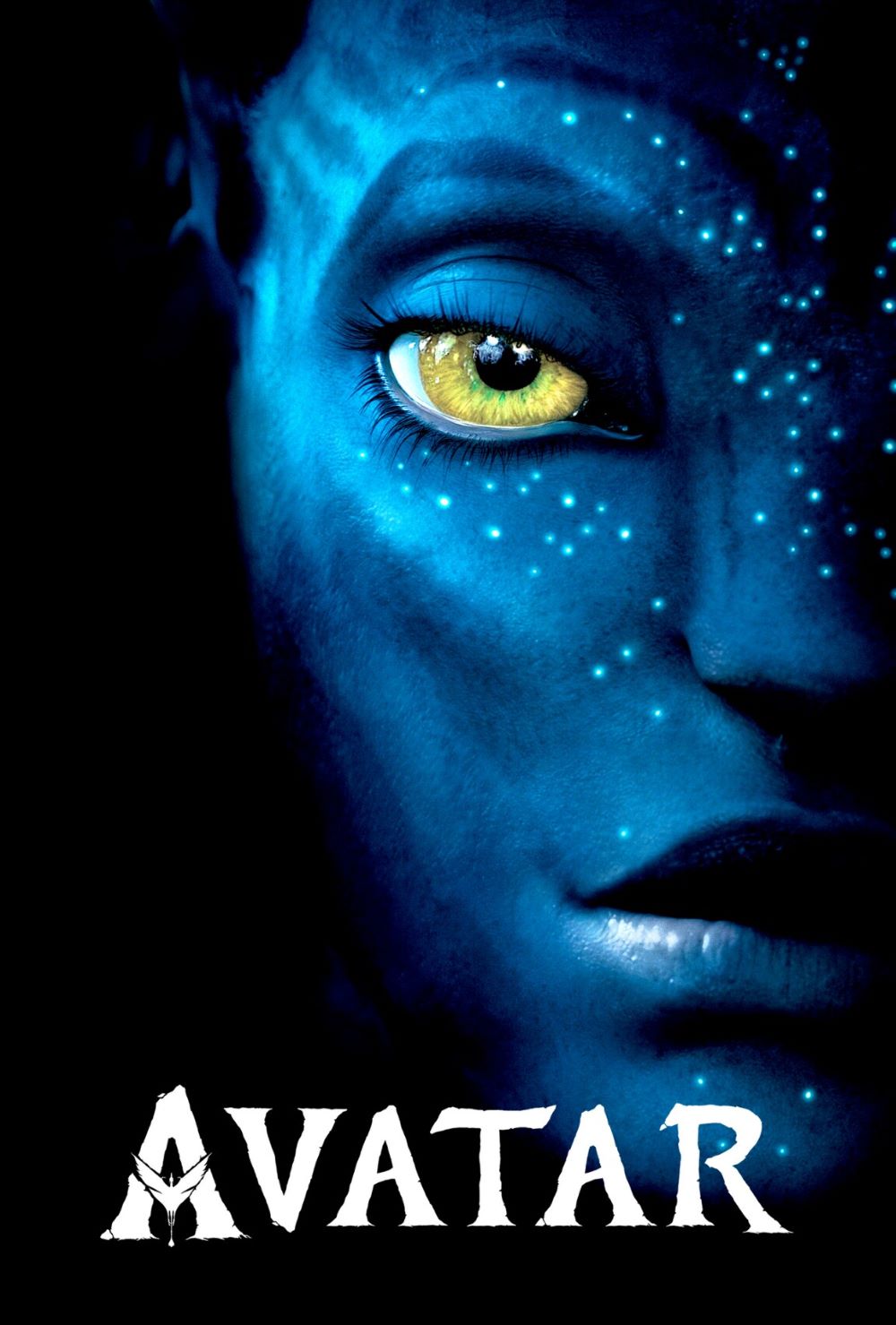
Film Review: Avatar (directed by James Cameron)


“Everything is backwards now, like out there is the true world, and in here is the dream.” — Jake Sully

When was the last time a film became an experience for you—not just a story that made you think, but one that swept you up and immersed you completely? The most hyped film of 2009, and likely of this decade, was such an experience for me. James Cameron’s Avatar, a project over fifteen years in the making, more than lived up to the hype that followed it from the earliest production leaks.

Avatar is not the greatest film ever made, nor does it revolutionize filmmaking the way Technicolor did in the late 1950s and early 1960s. What Cameron has accomplished is providing a blueprint for how filmmakers can bring audiences closer to the stories they tell. Stories and ideas once considered unfilmable due to technological limitations are now within reach. Avatar is an experience that should be seen, regardless of whether one embraces its story. The narrative is not original—some may be reminded of an Oscar-winning film directed by Kevin Costner or an animated feature with “Gully” in the title. While the lack of originality is noticeable, the story works within the context of Cameron’s vision. Clichéd and hackneyed dialogue aside, it serves the film well. Cameron’s writing may not rival that of Kaufman or Mamet, but he knows how to tell a simple story and keep the audience engaged.

With that flaw acknowledged, I haven’t felt this way about a film—nor even the best I’ve seen this year—since the first time I watched The Fellowship of the Ring or, before that, Spielberg’s Jurassic Park. Only a few films truly sweep me into their world and hold me there. It didn’t matter that Avatar wasn’t the second coming of Rashomon or this generation’s Citizen Kane. What I watched, I fully bought into. The world of Pandora, imagined by Cameron and brought to life by WETA Digital and ILM, felt real. The detail, clarity, and dedication in its creation gave me hope that creative boundaries once thought uncrossable are now being stepped over.

While the film is also available in 2D for theaters without 3D capabilities, it must be seen in 3D, ideally in IMAX 3D. Cameron’s use of the new “emotion capture” cameras he helped develop achieves a level of CGI photorealism that avoids the “Uncanny Valley” effect seen in films like The Polar ExpressBeowulf, and A Christmas Carol. The groundbreaking “mo-cap” technique, refined by WETA Digital for The Lord of the Rings trilogy, convinced Cameron it was time to make Avatar as he envisioned. The Na’vi are now the most realistic CGI characters ever put on screen, surpassing even Gollum. Cameron demonstrates that the limit of CGI use is not quantity, but how it is implemented. Lucas, Bay, and others who have misused CGI have much to learn from Cameron’s achievement.

It took a few minutes to adjust to the 3D effect, but once my eyes adapted, the film’s magic took hold. The distinction between CGI and live-action scenes blurred and eventually disappeared. Even the best CGI-heavy films sometimes break immersion, but Avatar never did. This total immersion helped me overlook the story’s familiarity and, for some, its ordinariness.

Despite the material, the performances ranged from good to excellent. The villains, while written one-dimensionally, were played with enough conviction to be believable. Giovanni Ribisi’s corporate weasel, a clear echo of Burke from Aliens, was cartoonish in motivation, but Cameron is not known for deep, well-rounded characters. The standout was Stephen Lang as Colonel Miles Quaritch. His scenery-chewing performance was riveting, stealing the film from Sam Worthington’s “hero on a journey.” While Lang’s performance may not win awards, it stands as one of the year’s most memorable, joining the ranks of characters audiences love to hate.

Some may think I’ve joined the Cameron fan club, but I can’t explain why I love this film despite its flaws: the familiar story, clichéd dialogue, and one-dimensional characters. Is Avatar just a technical and visual marvel? Yes, and more. Does the CGI and bombastic climax overshadow the storytelling? No, it actually propels the story forward, much like Jake Sully’s own fragile legs.

In the end, my love for Avatar comes down to the experience it provided—a rare occurrence in modern cinema. Cameron didn’t make a perfect film, nor one better than sliced bread. But he created a filmgoing experience that will be remembered decades from now, much like the first time audiences saw Star Wars and believed in Jedi and space battles, or Superman and believed a man could fly. Cameron’s Avatar made me believe in Pandora, a place I hope to visit, or at least experience through his eyes. I’m eager to see what he—and other filmmakers inspired by his work—will create next.