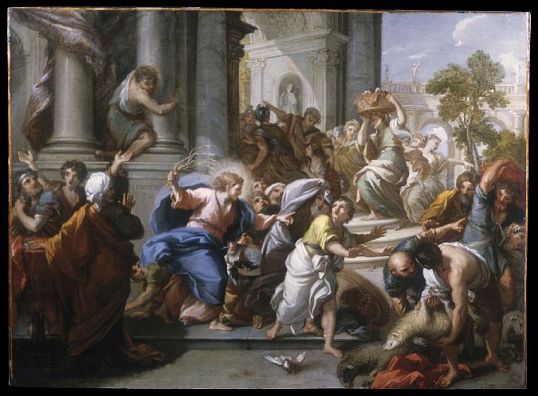
by Giuseppe Passeri
Painted in 1714, this painting depicts Jesus driving the money changers and the sellers of sacrificial animals out of the Temple. This painting currently hangs in the Walters Art Museum.
by Giuseppe Passeri
Painted in 1714, this painting depicts Jesus driving the money changers and the sellers of sacrificial animals out of the Temple. This painting currently hangs in the Walters Art Museum.
Today’s music video of the day comes from a Finnish band named after a village in Estonia.
Enjoy!
Welcome to Late Night Retro Television Reviews, a feature where we review some of our favorite and least favorite shows of the past! On Sunday, I will be reviewing the Canadian series, Degrassi: The Next Generation, which aired from 2001 to 2015! The series can be streamed on YouTube and Tubi.

Don’t watch this episode if you have a weak stomach.
Episode 2.9 “Mirror In The Bathroom”
(Dir by Paul Fox, originally aired on July 18th, 2003)
This is the one where Toby decides that the only way to get people to notice him in school is to join the wrestling team. However, when he discovers that he and Sean are in the same weight class (and there’s no way that Toby could ever beat Sean), Toby decides to lose a lot of weight in a very short amount of time.
Yep, this is the episode were Toby starts taking laxatives and throwing up his lunch.
Ugh. Yes, I know that eating disorders are serious. It’s nice that Degrassi did an episode about a guy doing something stupid instead of a girl. If there’s anything I get sick of, it’s the assumption that some people have that any woman who isn’t fat must have an eating disorder. Seriously, you can’t win. If you gain weight, you endanger your health. If you don’t gain weight, everyone assumes you’re throwing up everything you eat. This episode featured a guy struggling with body issues and I appreciated the change of pace.
That said …. ugh! Toby using laxatives! Ugh, ugh, ugh!
While Toby is losing weight, Terri is using her weight to get rich as a plus-sized model. Good for her, I guess. Terri’s kind of a boring character so, for now, it’s difficult to really care about her storylines. In season 3, she’ll start dating Rick Murray and everything will change. But we’ve still got a while to go.
Anyway, as always happens when someone gets an eating disorder, Toby ends up fainting in front of the entire school. He’s off the wrestling team but at least he’ll never take another laxative.
Seriously, ugh!
Here’s what I watched last week!
Films I Watched:
Live Tweets:
Links From Last Week:
News From Last Week:
Links From The Site:
Click here to check out what I watched last week!
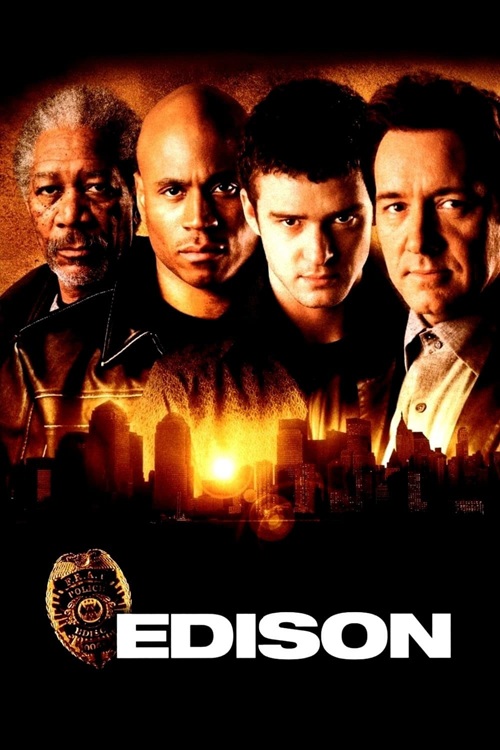

“To know the future is to be trapped by it.” — Leto II Atreides
Children of Dune is one of those sci-fi miniseries that feels a little rough around the edges, but still manages to hit with real ambition, atmosphere, and a lot more emotional weight than its modest TV budget might suggest. It is based on Frank Herbert’s Dune Messiah and Children of Dune, aired on the Sci Fi Channel in 2003 as a three-part miniseries, and it serves as a continuation of the 2000 Frank Herbert’s Dune adaptation.
What makes this version stand out is that it doesn’t just try to retell a story about desert politics and giant worms. It digs into legacy, prophecy, religious fanaticism, and the terrifying cost of being treated like a messiah. That sounds heavy, and it is, but the miniseries keeps moving with enough drama, betrayals, and strange mythic energy that it rarely feels static.
The opening section works especially well because it immediately reminds you that Paul Atreides’ victory was never a clean one. By the time the story gets going, his empire is already rotting from the inside, and the series makes a strong case that power on Arrakis is always poisoned by something, whether it is politics, faith, or the sand itself. The shift from Paul’s once-legendary rise to the unraveling of the world around his children gives the story a tragic tone that fits Herbert’s universe perfectly.
A big reason the miniseries works is that it understands Dune is not really about flashy action, even though it has some. It is about ideas, and this adaptation is willing to spend time on them. The show’s best material comes from the way it frames religion as both weapon and trap, especially once the myth of Muad’Dib starts consuming the people who worshiped him. That theme gives the whole thing a haunted feeling, like everyone is living inside a prophecy they do not fully understand.
The cast does a lot of heavy lifting, too. Alec Newman brings a wounded, exhausted quality to Paul that fits the role well, and his scenes carry real sadness because he feels like a man who has seen too far and cannot unsee it. Jessica Brooks, James McAvoy, and Julie Cox all help ground the family drama, while Susan Sarandon brings a cold intensity that gives the political side of the story some bite. Even when the dialogue gets stiff, the actors usually sell the material better than the script itself does.
One of the most interesting choices in Children of Dune is how it treats the twins, Leto II and Ghanima, as more than just plot devices. Their importance is obvious from the beginning, but the series gradually builds them into the real center of gravity. That works because the story is partly about inheritance, and these kids are inheriting not just a throne, but a nightmare of destiny, expectation, and manipulation. The series knows that the most dangerous thing in this universe is not a blade or a bomb, but a future someone insists is already written.
The production design is another area where the miniseries earns a lot of goodwill. It has that early-2000s TV look, sure, and some effects are clearly limited by the era, but the sets, costumes, and overall visual imagination give it a strong sense of place. Arrakis feels harsh and ceremonial at the same time, which is exactly what it should feel like. The costumes also help sell the political divide between factions, making the whole thing look more like a living empire than a generic sci-fi stage.
There are moments where the miniseries feels very theatrical, almost to a fault. Characters occasionally deliver lines with so much seriousness that the show risks sounding like it is declaring its themes instead of dramatizing them. That said, this is also part of the charm. Children of Dune is not embarrassed by its own scale or its own weirdness, and that confidence helps it pull off material that could easily have collapsed under a more self-conscious approach.
The pacing is mostly solid across the three parts, though it does have the usual miniseries issue of compressing a very large story into a limited runtime. Because it covers most of Dune Messiah in the first installment and then adapts Children of Dune in the later parts, some transitions feel abrupt and some developments move faster than they probably should. Still, the adaptation largely keeps its focus, and it is impressive how much story it packs in without turning into total chaos.
If there is a weakness here, it is that the miniseries can sometimes feel like it is working harder to explain the mythology than to make you feel it. Herbert’s world is notoriously dense, and this version does not always smooth that out for viewers who are not already familiar with the books. A newcomer could easily feel like they have been dropped into the middle of a dynastic collapse with very little hand-holding. But for a follow-up to Frank Herbert’s Dune, that density is more of a feature than a bug.
The best compliment I can give Children of Dune is that it respects the seriousness of its material without becoming completely lifeless. It has the courage to be grand, strange, and a little mournful all at once. Even when the execution is uneven, the miniseries understands that the heart of this saga is not a simple battle for power. It is the burden of seeing the future and realizing it may be worse than the present.
As a sequel, it improves on the sense of scale and emotional consequence from the earlier adaptation. It feels less like an introduction to a universe and more like the tragic fallout of one. That makes it a more satisfying watch for viewers who want Dune to feel like an epic family tragedy instead of just a sand-covered political thriller. The fact that it does this on TV, with all the limitations that implies, makes the achievement even more impressive.
In the end, Children of Dune is a flawed but memorable miniseries that succeeds because it commits to its own strange seriousness. It may not be sleek, and it may not always be easy to follow, but it has ideas, mood, and a genuine sense of doom that suits Herbert’s universe. For fans of the books, it is one of the more interesting screen adaptations because it is willing to lean into the philosophical and tragic side of the saga rather than sanding it down into something safer. For everyone else, it is still a fascinating piece of early-2000s sci-fi television that swings bigger than most shows of its era.
Welcome to Retro Television Reviews, a feature where we review some of our favorite and least favorite shows of the past! On Sundays, I will be reviewing Homicide: Life On The Street, which aired from 1993 to 1999, on NBC! It can be viewed on Peacock.
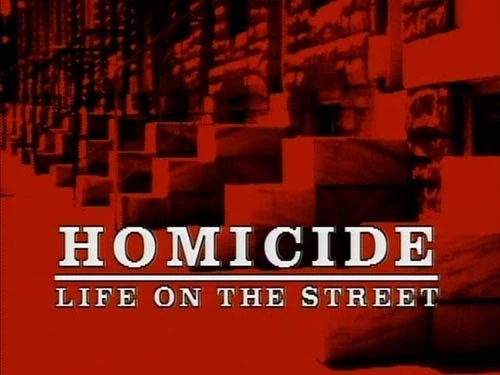
This week, we have one of Homicide’s best episodes.
Episode 5.3 “Prison Riot”
(Dir by Kenneth Fink, originally aired on October 18th, 1996)
At the Maryland State Prison, convicted murderer Claude Vetter (Mark Rogers) accidentally bumps into another murderer, James Douglas (Tim McAdams), in the cafeteria. James pulls a knife and stabs Vetter in the stomach. As Vetter collapses, a riot breaks out. By the time the guards have forcefully restored order, Vetter and James Douglas are dead. Everyone knows who killed Vetter. But who stabbed James in the back?
Lewis, Munch, Howard, Bayliss, Kellerman and Giardello head down to the scene. (Pembleton, who is still struggling with his up-coming shooting test, is left behind.) Munch and Lewis don’t care about solving Douglas’s murder. As far as they’re concerned, both Claude Vetter and James Douglas got what they deserved. Munch gets annoyed and returns to the station. Lewis sticks around to help Bayliss with a few interrogations before he also leaves. Bayliss, however, is determined to solve the murder of James Douglas and Kellerman, looking to make up all the ill will that has existed between him and Bayliss, does his best to help.
Bayliss is convinced that Elijah Sanborn (Charles S. Dutton) saw who killed James. Sanborn is serving a life sentence for shooting a drug dealer who previously shot and killed Elijah’s wife in drive-by. (Elijah’s wife was an innocent bystander.) Elijah has been in prison for 14 years. He’s never getting out and he sees no reason why he should help the police. However, when Elijah’s 14 year-old son is arrested for a petty theft, Bayliss offers a deal. If Elijah tells Bayliss who killed James Douglas, Elijah’s son will only do 6 months at a juvenile facility. If Elijah refuses to talk, his son will be charged as an adult.
Elijah is outraged that Bayliss would “use my own son against me!” It’s only after his estranged daughter (Heather Alicia Simms, giving a wonderful performance) visits that Elijah agrees to share what he knows. He has one condition. He wants to see his son. When Elijah’s son turns out to be a sullen and uncommunicative wannabe gangster who tells his father that he doesn’t care about him, Elijah announces, “I killed James Douglas.”
Bayliss knows that Elijah is lying but he also knows that Elijah’s confession is enough to send him to the gas chamber. With no prospects of ever walking free and having been rejected by both his daughter and his son, Elijah has decided to use the system to kill himself.
Fortunately — or unfortunately, depending on how you look at things, another prisoner, Tom Marans (Dean Winters), beats Trevor Douglas (John Epps) into a coma. Trevor was James’s cousin and Marans reveals that Trevor is also the one who killed James because he thought James had stolen a carton of cigarettes from him. Marans explains that he was James’s “wife” in prison.
As the episode ends, Giardello congratulates Bayliss before adding that it’ll only be a matter of time before Trevor’s people seek revenge and they all have to return to the prison to investigate the murder of Tom Marans.
This was a great episode. After spending the past few seasons as Pembleton’s sidekick, Bayliss finally got a chance to step up and show off his own abilities as a homicide detective. Kellerman assisting him turned out to be an inspired move, as it allowed Kellerman to finally be something more than just a kind of goofy frat boy detective. Working together, Kyle Secor and Reed Diamond had great comedic timing, which kept this rather grim episode from getting too dark. (Kellerman: “Do you want a hug?” Bayliss: “Do you and Lewis often hug?”)
One thing that made this episode interesting was that the victims, the suspects, and most of the witnesses were all murderers who were previously arrested on this show. It was interesting to see how prison had changed or, in some cases, not changed them. The once preppy Tom Marans now had bright yellow hair, scarred knuckles, and some really nasty facial sores. Meanwhile, James and Trevor Douglas were still the same punks that they were on the outside, when they used to film themselves committing murder.
Finally, what made this episode truly powerful was the performance of Charles S. Dutton. A Baltimore native who served time in prison before becoming an acclaimed stage actor, Dutton has not always been served well by television and the movies. He’s very much a theatrical actor and, when cast in the wrong role, he can come across as being a bit over-the-top. In this episode, though, Dutton is perfectly cast and he gives a truly moving performance of as an inherently decent man who does what he has to do in order to survive as a prisoner in a system that has been constructed specifically to break and destroy him. Elijah’s fury feels earned and deserved but, in the end, he’s ultimately just a father who wants things to be better for his son and his daughter. When Elijah’s son rejected him, it was one of Homicide’s most heart-breaking moments.
Prison Riot has a reputation for being one of Homicide’s best episodes. The reputation is very much deserved.
As today is Terence Hill’s birthday, it seems only appropriate that our song of the day should come from Ennio Morricone’s score for My Name Is Nobody.
Today, the Shattered Lens wishes a happy birthday to Italian film star, Terence Hill!
This scene that I love comes from 1973’s My Name Is Nobody. It features Terence teaching a cocky gunslinger a thing or two about how to win a slap fight.
4 Or More Shots From 4 Or More Films is just what it says it is, 4 shots from 4 of our favorite films. As opposed to the reviews and recaps that we usually post, 4 Shots From 4 Films lets the visuals do the talking!
Today, let’s celebrate the year 1970! It’s time for….
4 Shots From 4 1970 Films
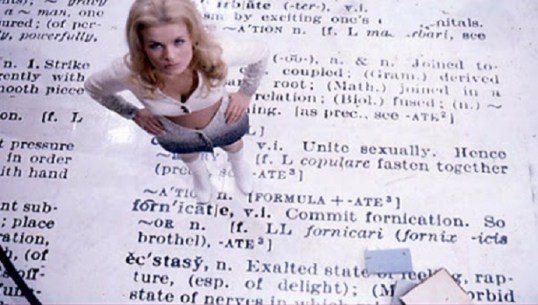
The Lickerish Quartet (1970, dir by Radley Metzger. DP: Hans Jura)
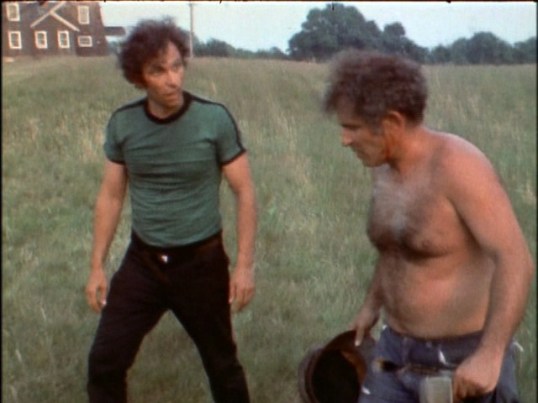
Maidstone (1970, dir by Norman Mailer, DP: D.A. Pennebaker)
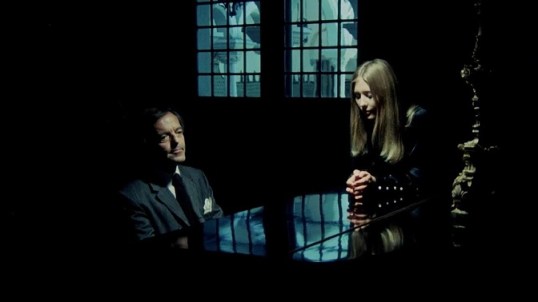
A Virgin Among The Living Dead (1970, dir by Jess Franco, DP: anyone’s guess)
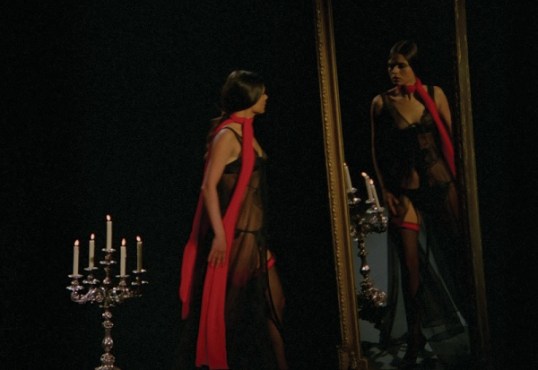
Vampyros Lesbos (1970, dir by Jess Franco, DP: Manuel Merino)
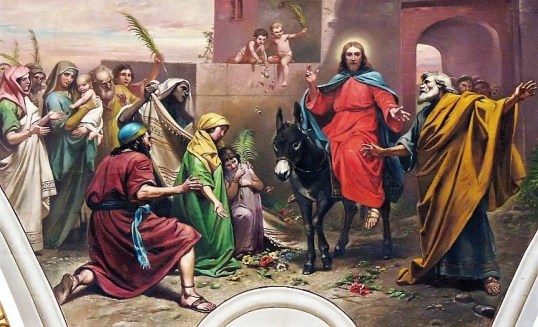
by Giuseppe Cali
This painting hangs in a church in Malta.
 Through the Shattered Lens