
Artist Unknown
This daring cover is from 1965.
Artist Unknown
This daring cover is from 1965.
What better way to start the week than with something loud?
Enjoy!
Welcome to Late Night Retro Television Reviews, a feature where we review some of our favorite and least favorite shows of the past! On Thursdays, I will be reviewing Highway to Heaven, which aired on NBC from 1984 to 1989. The entire show is currently streaming on Tubi and several other services!
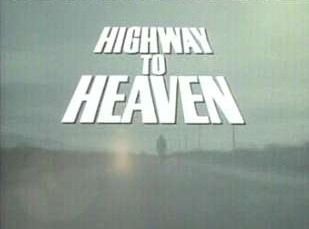
This week, Jonathan and Mark take on prejudice.
Episode 4.4 “The People Next Door”
(Dir by Michael Landon, originally aired on October 21st, 1987)
Dr. William Martin (David Spielberg) is living a double life. His family and his neighbors know him as a white doctor who lives in a suburban community and who is a part of the homeowner’s community. He’s told his wife and his son that his parents died before he met them.
His mother knows him as Dr. Guillermo Martinez, who works at the free clinic in the economically disadvantaged area of town. Anna Martinez (Mariam Colon) works as a maid and has no idea that her son is married and that she’s a grandmother.
Guillermo changed his name and lied about his ethnicity so that he could get ahead as a doctor and it’s worked for him. His best friend is Brad Bowman (John Lawlor), the real estate agent who is dedicated to making sure that only “the right people” move into the neighborhood. But when Jonathan and Mark show up as rival real estate agents and hire Anna to help them clean up the house next door, William/Guillermo is forced to face the truth about who he is.
At the start of this episode, Jonathan tells Mark that their assignment is not only to show William the foolishness of denying his heritage but to also help William’s neighbors become more tolerant. They definitely help out William but they don’t really seem to have much luck with the neighbors. Brad Bowman (no relation!) is as much of a bigot at the end of the show as he was at the start. Jonathan and Mark do arrange for a black family to move into the empty house and then Jonathan and Mark promptly leave the neighborhood. So, I guess the responsibility for teaching everyone else tolerance is going to be on the new homeowners. This is one of those episodes where you wish Jonathan had actually gone to extremes to make his point, instead of just arranging for people to run into each other while wandering around the neighborhood. I know that some people would say, “Well, Brad’s just a bad person,” but wasn’t one the original themes of this show that everyone had the potential to see the light, learn the errors of their ways, and be redeemed?
While the show suggested that there was no hope for Brad to see the error of his ways, it also let Guillermo off way too easy. His wife was surprisingly understanding about her husband lying to her for years. And, in the end, his mother was surprisingly forgiving about him lying about the fact that she had a grandson. Jonathan scolded him briefly but that was pretty much it. My grandmother, who came to this country from Franco’s Spain, would not have been as forgiving.
This episode was well-intentioned but didn’t quite work.
Korean Actor Gong Yoo was born on July 10th, 1979, in Busan, Korea. He stars in one of my favorite South Korean films, TRAIN TO BUSAN, which also happens to be one of my favorite zombie films. I highly recommend it, and for those interested, it’s currently streaming on Netflix. In honor of Gong Yoo’s birthday, enjoy this graphic and intense scene from TRAIN TO BUSAN.
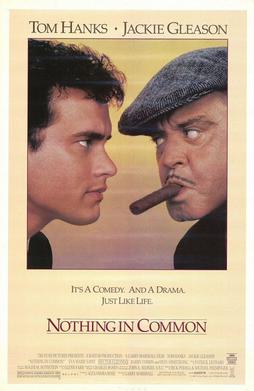 Tom Hanks plays David Basner (Tom Hanks), an advertising executive whose immature lifestyle gives him insight into what sells but has also left him totally unprepared to deal with the fallout when his mother (Eva Marie Saint) leaves his father, Max (Jackie Gleason). David, who is struggling to come up with the perfect commercial for a demanding client (Hector Elizondo), has to come to terms with both his father’s bad health and his history of infidelity.
This isn’t my favorite Tom Hanks movie. It comes from that awkward period when Hanks was trying to make the transition from comedy to drama and its attempt to mix the two genres is not always successful. The scenes of Hanks at the ad agency are often so cartoonish that they don’t seem like they belong in a movie where Jackie Gleason loses a foot to diabetes and realizes that he spent his entire marriage emotionally abusing his wife. The movie, though, is worth watching for the teaming of Hanks and Gleason, two comedic actors who eventually proved themselves to equally as skilled at playing it serious. Gleason, especially, gives a strong performance. This was his final film and Garry Marshall convinced him to take it by asking, “Do you really want to go out on Smokey and the Bandit 3?” Gleason would die a little over a year after the release of Nothing In Common and this film, even if it wasn’t perfect, gave the world a chance to see what a good actor he really was.
This film is often cited as the the movie that started Hanks on the way to becoming a dramatic actor. Like Punchline, Nothing In Common played a role in Hanks becoming more than just a comedian but I think Big was ultimately the better showcase for Hanks’s ability to mix pathos with laughs. Nothing In Common was directed by Garry Marshall and, as was usually the case with Marshall, he often doesn’t trust the audience to figure things out for themselves. He goes overboard trying to force an emotional response instead of just trusting the material. Tom Hanks still does a good enough job in Nothing In Common. Hanks is as likable as always and you can see the dramatic actor emerging in Hanks’s performance even if Hanks still wasn’t totally comfortable with it.
Nothing In Common is flawed but it was definitely a better swan song for Jackie Gleason than Smokey and the Bandit 3.
Tonight, I’m starting my summer job of writing about Big Brother for the Big Brother Blog. In honor of that, today’s song of the day is the little-remembered theme song from the first season of Big Brother!
After listening to this, you’ll understand why they’ve gone with an instrumental theme song from season two on.
Welcome to Retro Television Reviews, a feature where we review some of our favorite and least favorite shows of the past! On Thursdays, I will be reviewing Malibu CA, which aired in Syndication in 1998 and 1999. Almost the entire show is currently streaming on YouTube!

Yes, this is from the first season. I don’t care. I refuse to waste my time looking for a second season advertisement.
Soon, I will be finished with this show. I’m just trying to keep my spirits up.
Episode 2.21 “Parent Trap”
(Dir by Gary Shimokawa, originally aired on April 15th, 2000)
Peter is having a midlife crisis so Scott, Jason, and Traycee introduce him to Traycee’s mom, Candee (Wendi Winburn). Peter falls for Candee and decides to ask her to marry him. Traycee warns Scott and Jason that Candee has been proposed to by a lot of men — including Donald Trump! — and she always turns them down. But, for some reason, Candee accepts Peter’s proposal. But then, at the celebration dinner, Candee mentions that she wants to travel and Peter mentions that he wants to stay in Malibu and manage his restaurant (even though he tried to retire just a few episodes ago) and Candee and Peter decide not to get married. They both share a laugh over the whole thing which struck me as odd.
Meanwhile, Lisa gets upset when Murray paints a naked picture of her. She goes to Murray’s art showing and attempts to paint clothes on her body and seriously, I just wanted the police to arrest her and drag her away. What a stupid storyline. Lisa (the character, not me) is the worst.
This episode …. hey, it fit the running time and stuff happened. Apparently, by this point in the second season, that’s all anyone was demanding from Malibu CA. There’s an odd lack of conflict in this episode. Candee wants to go on safari. Peter doesn’t. They laugh and call the whole thing off. Uhmm, okay. Most engagements end on a bit more of a dramatic (or, at the very least, an emotional) note. When I was 18, I was briefly engaged until I found out that my fiancé’s family didn’t actually own all of those oil wells in South Texas, despite the fact that he claimed otherwise. That was not a happy breakup. Everyone in this episode is so agreeable that it’s boring. For someone who was totally in love, Peter certainly seem to be cheerful about never seeing Candee again. Seriously, he picked his tacky restaurant over the supposed love of his life. What an idiot.
Oh well, at least this show is nearly over.
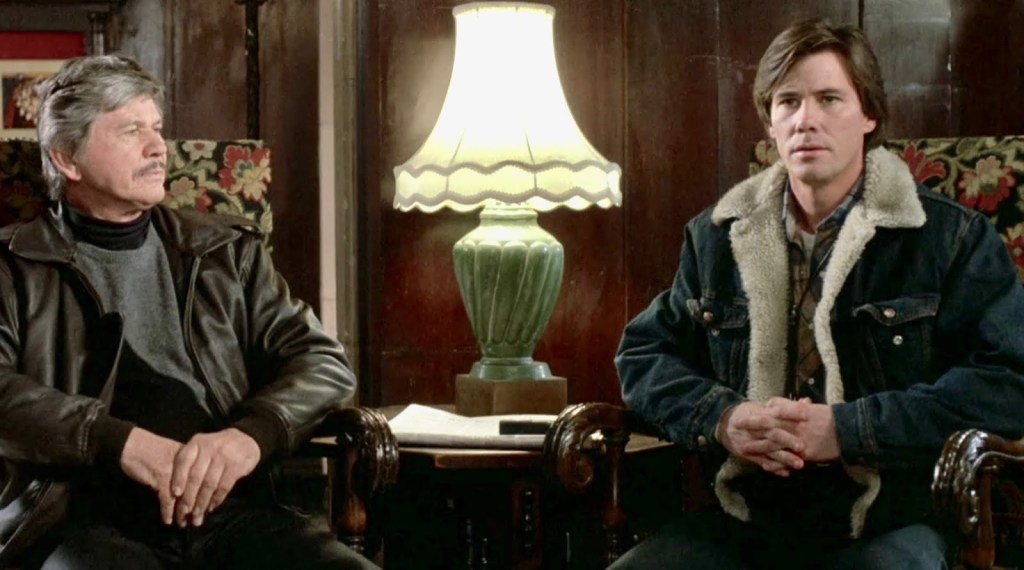
A couple of years ago, I decided I would rank my favorite Charles Bronson films. The rules were fairly simple… 1) only starring roles, so movies like THE MAGNIFICENT SEVEN and THE GREAT ESCAPE were excluded, 2) no TV movies were included, and 3) my rankings were based on how much I like watching the movies, and not on some BS critical consensus. It was an interesting undertaking, and while I’ve played around with the rankings a little bit, for the most part I’ve kept them the same from that initial ranking. Because I’m obsessed with Charles Bronson, it’s fun for me to write about him and share things about his movies. As such, about once a week or so, I’ll probably share a movie from my list, give my ranking, and talk a little bit about the films. These will not necessarily be reviews, but mostly just some basic thoughts on the films.
My first Bronson movie of the week is MESSENGER OF DEATH (1988), which I rank as 33rd out of 41 Bronson starring roles. What’s interesting is that even though that’s a pretty low ranking, I still enjoy the film for trying to do something different with Bronson at that point in his career in the late ’80s, mainly by casting him as a reporter and not as a cop. He destroys the opposition with superior investigative reporting skills, without having to resort to oversized handguns. Now that his filmography is complete, and has been for over 25 years, I’ve grown to appreciate the times Bronson tried something a little different (with the exception of LOLA). MESSENGER OF DEATH also benefits from a solid cast of veteran actors and actresses, including Trish Van Devere, Laurence Luckinbill, Daniel Benzali, Charles Dierkop, Jeff Corey, John Ireland, and Gene Davis. It’s fun watching these seasoned performers, many of whom have worked with Bronson in the past, do their thing. And last, but not least, with filming locations at the Colorado National Monument and the mountain town of Glenwood Springs, CO, it’s definitely a beautiful film to look at! The older I get the more I appreciate movies that get out of the cities and show us beautiful sights around the country and world. Jeff shared some of his own thoughts on MESSENGER OF DEATH back in 2017!
As of the date of this post, MESSENGER OF DEATH is streaming on Amazon Prime and Tubi if you want to watch it yourself. It’s a film that I’ve enjoyed more with repeat viewings. I’ve also included the trailer below for your viewing pleasure. Feel free to let me know your thoughts on MESSENGER OF DEATH, starring the legendary Charles Bronson!
4 Or More Shots From 4 Or More Films is just what it says it is, 4 shots from 4 of our favorite films. As opposed to the reviews and recaps that we usually post, 4 Shots From 4 Films lets the visuals do the talking!
Today, the Shattered Lens pays tribute to the year 1971!
4 Shots From 4 1971 Films
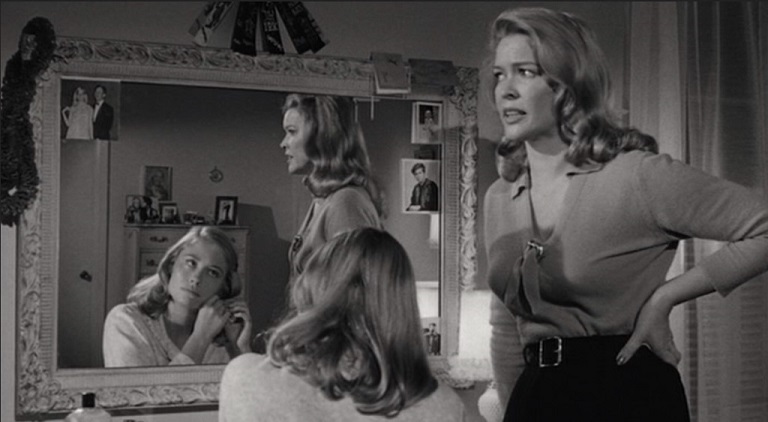
The Last Picture Show (1971, dir by Peter Bogdanovich, DP: Bruce Surtees)
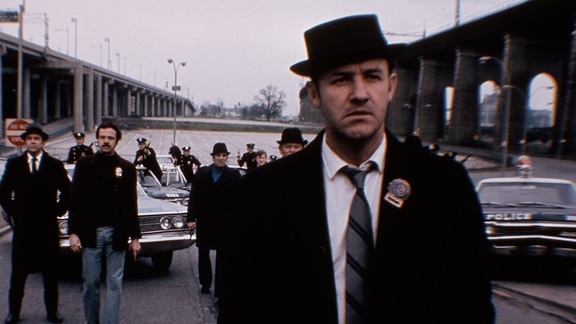
The French Connection (1971, dir by William Friedkin, DP: Owen Roizman)
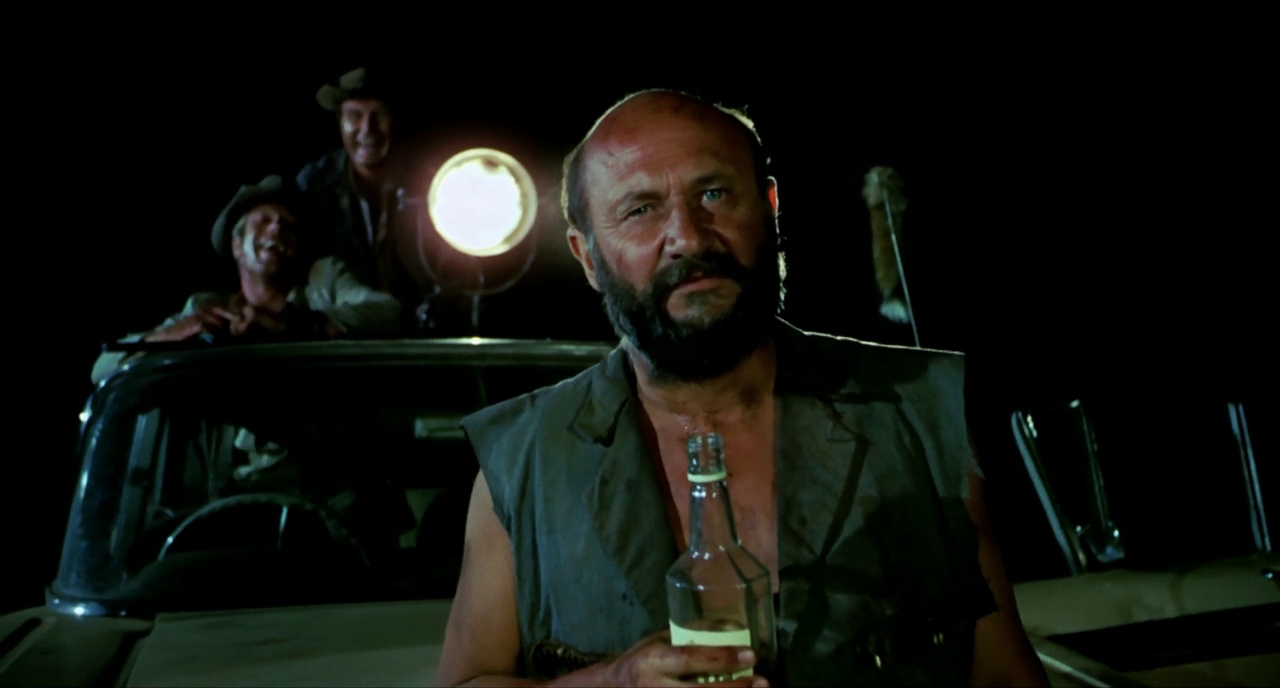
Wake in Fright (1971, dir by Ted Kotcheff, DP: Brian West)
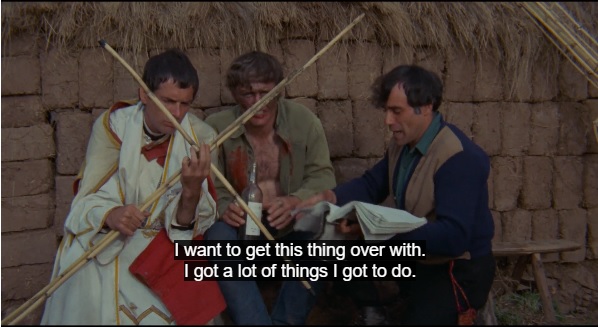
The Last Movie (1971, dir by Dennis Hopper, DP: Laszlo Kovacs)

by Mitchell Hooks
This down home cover is from 1953.

